
#art, Mujeres artistas – Women Artists Series: «Dorothea Tanning»

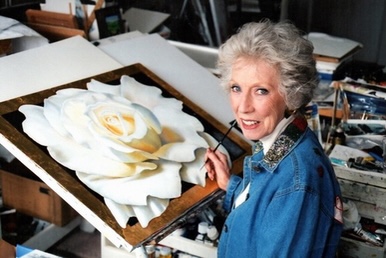
(Dorothea Tanning – Pic by unknown artist – source: My Daily Art Display)

Lo he dicho y redicho en este blog desde que comencé la serie, bueno, desde que comencé el blog, que a las mujeres artistas las habían dejado a un lado, las habían maltratado y mal pagado y les habían robado los puestos que se merecían…que se merecen…en los museos del mundo. Esta tendencia tiene que acabarse ya. Además de eso, también he dicho que a la historia del arte se le tiene que hacer una gran revision y a los museos también y muchos de esos artistas masculinos, mediocres que no merecen estar en las paredes de los museos, hay que quitarlos y poner cuadros de estas grandes mujeres artistas.

Una de estas grandes es Dorothea Tanning y aquí te muestro uno de sus cuadros mas famosos para que puedas percatarte de su gran talento, su filosofía surrealista y también porque digo lo que digo. El cuadro se llama Eine Kleine Nachtmusik, (si, yo se, como la pieza de Mozart), lo pintó en 1943, oleo sobre tela y mide 42 x 60 cm y está en la Tate Collection de Londres.

(Eine Kleine Nachtmusik – Dorothea Tanning – Foto/Photo dorotheatanning.org)

As I have been saying since the start of this series, well, the start of this blog, women artists are overlooked, underrated, underpaid and not occupying the same amount of spots on the walls of museums all over the world. This has been a trend and it must stop. Furthermore, I have stated that I believe…wholeheartedly and fervently…that art history must be revised, museums must be revised and many mediocre male artists must be removed and their paintings replaced with the paintings of the great women artists that have been purposely and maliciously left in obscurity.

One of these great ones is Dorothea Tanning and here I want to show you one of her most famous paintings so that you can judge for yourself as far as her talent and her surrealist philosophy goes and why I say what I say. The painting is titled Eine Kleine Nachtmusik, (yes, I know, like Mozart’s piece). Painted in 1943, oil on canvas and measuring 161/8″ x 24″ (US inches) and hangs at the Tate Collection, London.

OMNIA CAELUM STUDIOS VALENCIA PRESENTA/PRESENTS

(2020)

Gracias…

Cheers…

#art, Rembrandt inspiracion para tantos artistas – Rembrandt, Inspiration to Many Artists

(Autorretrato/Self-Portrait/Rembrandt/Foto/Photo Historia Arte)

Inspiración para tantos y considerado uno de los mejores artistas de la historia del arte y el más grade entre los grandes maestros de Países Bajos. Este gran pintor neerlandés nació en 1606 y murió en 1669. Hay que conocerlo y punto…

+++

He is an inspiration to many and considered one of the greatest artists in art history. Certainly the greatest of the Dutch Masters. This great painter from Netherlands was born in 1606 and died in 1669. You have to get to know him, no doubt about it…

(2022)

Gracias…

Cheers…

In Case You are a Fan (No Idea Why You Would Be)

(Foto/Photo Vanity Fair)

Si tuviera que ir a una exposición de este artista creo que me tomarían cinco segundos para verlo todo…

+++

If I had to go to an exhibition of this artist I think it would take me five minutes to see it all…

(2022)

Gracias…

Cheers…

Thursdays Middle of the Week Music

(From Imperial Records – Billboard, page 19, 10 July 1965, Public Domain)

These are…or were…The Hollies in a pic from 1965. They started in Manchester, England in 1962 and had plenty of hits but their success lasted barely to 1966. They were certainly a major group forming part of the «British Invasion» to the US in the early to mid sixties. Graham Nash was one of their most famous members.

The song «Bus Stop», recorded in May and released in June, 1966, was the hit that in many ways closed the Hollies Golden Era. It was very well received in the UK, the US and Canada, where it reached number one in the charts. It’s a hell of a song and how can we forget the lines that started it off: «Bus stop, wet day, she’s there, I say please share my umbrella…»

So, do you like it?

Cheers…

Cuadros famosos – Famous Paintings

(Leonardo da Vinci)

Bueno L’Ultima Cena de Leonardo da Vinci no es un cuadro, es un fresco, pero que se va hacer… Aquí os traigo algunos cuadros muy famosos que hay que conocer.

+++

Ok, so Leonardo’s Last Supper is not a painting, it is a fresco, oh well… But here I bring to you some of the most famous paintings in art history that we all should be acquainted with.

(2022)

Gracias…

Cheers…

Quizá este se te pasó – Maybe You Missed This One

(Foto El País – Autorretrato ‘à la Marat,’ Cerca de la bañera en la clínica del Dr. Jacobson, 1908-09 EDVARD MUNCH /CORTESÍA MUNCH MUSEUM/Photo El PaísSelf-portrait ‘a la Marat’, near the bathtub at the clinic of Dr. Jacobson, 1908-09 EDVARD MUNCH/COURTESY MUNCH MUSEUM)

Munch es uno de mis pintores favoritos y gran maestro del expresionismo cuya obra «El grito» es uno de los cuadros mas famosos de la historia del arte.

+++

Munch is one of my favourite painters and a great master of Expressionism. His painting «The Scream» is one of the most famous paintings in art history.

(2022)

Gracias…

Cheers…

Por si te perdiste este el año pasado – In Case You Missed This one Last Year

(Mural de Mariela Ajras en Buenos Aires/Mural by Mariela Ajras in Buenos Aires, Argentina)

Como ya sabemos a la mujer artista no se le ha dado, ni a través de la historia ni ahora, el puesto que se merece, o sea igualdad con el hombre y ya es hora que eso cambie. Estas son algunas mujeres artistas de Latino America que vale la pena conocer y destacar.

+++

As we already know women artists have not been given parity with male artists, not throughout art history nor now and it is time that this changes. These are some Latin American women artists that are worth knowing and also highlighting.

(2022)

Gracias…

Cheers…

#art, «La madre con su hijo» – «Madonna and Child»

(Foto de FBC/Catedral de Aya Sofia, Estambul/Derechos Reservados/Photo by FBC/Aya Sophia Cathedral, Istanbul/All Rights Reserved)

Ἁγία Σοφία, (Aya Sophia), Sancta Sapientia, o Santa Sabiduría… La catedral fue construida, entre el 532 y el 537 A.D., por el emperador romano Justiniano I para que sea la catedral de los cristianos de Constantinopla, la sede de la religion oficial del Imperio Romano.

+++

Ἁγία Σοφία, (Aya Sophia), Sancta Sapientia, or Holy Wisdom… The Cathedral was built between the years 532 and 537 (A.D.) by the Eastern Roman Emperor Justinian I so that it would be the Cathedral for the Christians of Constantinople, the official sede of the religion of the Roman Empire.

ISIS

(Isis con Horus/Foto The Walters Art Museum/Isis and Horus/Photo The Walters Museum)

Hace mas de cuatro mil años desde que se habló por primera vez de la diosa Isis del antiguo Egipto y del mundo Greco-Romano. Isis, también conocida como la ‘Reina del Cielo’ y ‘Stella Maris’, fue venerada hasta la llegada del cristianismo, que se hizo la religion oficial del mundo romano entre el cuarto y el sexto siglo (A.D.). Se puede llegar a suponer que porque a Isis la escupieron con el niño Horus que influyo a los cristianos a pintar a Maria igual con el niño Jesus, pero eso es discutible, además de ser un tema conflictivo. Aquí me limito a los aspectos puramente artísticos que si son muy interesantes y no tan problemáticos.

+++

It’s been more than four thousand years since first Isis, the goddess, was mentioned. She was greatly venerated throughout Egypt and the Greco-Roman world until the rise of Christianity around the fourth to the sixth Centuries (A.D.). Some may have concluded that because Isis was depicted sitting with the child Horus that this served to influence Christian belief and veneration of the Virgin and Child and also led to Mary and the infant Jesus being depicted in the same manner. However, that is debatable and as well rather controversial. So here I will limit myself to representations that are purely artistic. These are interesting and not so problematic.

+++

(Foto de Carole Raddato de Frankfurt, Alemania – Estatua romana de Isis en marmol con la situla y el sistrum en mano/dominio publico/Photo by Carole Raddato from Frankfurt, Germany – Roman statue of Isis in marble, the goddess holds a situla and sistrum/Public Domain)
(Foto de Miguel Hermoso Cuesta/Photo by Miguel Hermoso Cuesta – Own work, CC BY-SA 4.0 – Casa degli Amorini Dorati),

En este fresco de Pompeii, vemos a Isis con Harpócrates, Anubis y Serapis. Data del primer siglo A.D..

+++

In the above fresco, from Pompeii, we see Isis together with Harpocrates, Anubis and Serapis. Dated from the 1st Century A.D..

(Pintor desconocido-foto de 1927 tomada por un arqueologo de la Universidad de Michigan, proyecto dirigido por Francis W. Kelsey/Dominio publico – Painter of fresco unknown; photographed in 1927 by a University of Michigan archaeological project led by Francis W. Kelsey/Public Domain)

El fresco que acabamos de ver representa a Isis lactando (Lactans) con el niño Harpócrates en sus brazos. Procedencia: Egipto.

+++

This fresco above represents Isis lactating (Lactans) with the child Harpocrates in her arms. Origin: Egypt.

MARY AND JESUS

Maria,  desposada con José, vivió en Israel durante el primer siglo A.D. y es la figura central de la cristiandad. Es la Madre de Dios, la Reina del Cielo, aunque en ciertas sectas protestantes se le resta importancia y se le quita mucho del estatus que le da la Iglesia Católica, Ortodoxa, Anglicana y Luterana. Usualmente representada con su hijo Jesús.

(Pintura de Raphael-Madonna del Gran Duque/Painting by Raphael-The Grand Duke Madonna/photo Britannica)

La Madonna con su hijo también surge en los iconos…

+++

The Madonna and Child also surges in icons…

(Panagia Glykofilousa-La Virgen de la Ternura, Cretan School colección del gobierno Art UK/Virgin of Tenderness Cretan School Government Art Collection Art UK)

Las representaciones más antiguas de María aparecen en las catacumbas de Priscila, en Roma del Siglo III (A.D.).

+++

Some of the oldest representations of Mary (and child) are found in the catacombs of Priscilla in Rome dating from the 3rd Century (A.D.).

(Foto Aleteia/Photo Aleteia)

A través de la historia del arte se ha representado a la figura materna de muchas formas y en muchos contextos. Pueden ser diosas paganas o la Madre de Dios para los cristianos. Pero siempre ha sido un tema que ha provocado a los artistas, de todas las épocas, como ya hemos visto. Os urjo a seguir buscando más sobre este tema que es a la vez interesante y espiritual.

+++

Throughout Art History there have been many representations of the maternal figure in many ways and in various contexts. They may be pagan goddesses or the Mother of God for Christians. But it has always been a subject that has motivated artists of all times, as we have seen. I urge you to continue to search as this is both an interesting subject and a spiritual one as well.

Cosas de la vida Feliz 2023

(Derechos Reservados)

Bueno solo falta la cabalgata de los Reyes Magos y vuelve la tranquilidad hasta que empiecen las Fallas…

Mare meua…

Comienza el año sin IVA para algunos artículos de «primera importancia» pero parece que para el gobierno de España ni el pollo, ni el pescado ni la carne son importantes. ¿Serán alimentos solo para la clase pudiente y gobernante?

Pero bueno dicen que nos vamos a ahorrar un pastón, pero la verdad se impone y los ahorros son de menos de cinco euros a la semana…

Le han quitado el bono de descuento de 0,20 céntimos a la gasolina, así que ahora, cuando vayas a repostar usarás los cinco eurillos que te ahorraste en el pan…

Y también me sorprende como cambian las cosas, así con tanta autoridad y sapiencia. Escucho decir por la tele y por la radio (casi siempre en la rtve) nosotros y nosotras, los niños y las niñas, los pintores y las pintoras… ¿acaso no saben que en castellano el plural de varones y hembras siempre ha sido masculino?

Ahora hablan de violencia de género. ¿Que coño es eso? Toda la vida ha sido “violencia doméstica” y es la mejor manera de describir esos actos delictivos y desagradables que tenemos que eliminar. Hoy dijeron por el telediario que una mujer trató de asesinar a su marido, y no dijeron que eso fuese violencia de género. El otro día una madre ha matado a sus dos hijos y tampoco lo han clasificado de violencia de género. ¿Así que el género masculino es el único violento?

Pues yo propongo que cambien algunos otros términos y nombres. Por ejemplo, puta. No le digas puta aunque se acueste con el primero que le guiñe el ojo, no, es simplemente una chica experimentadora de la vida y fan del amor.

No le digas cornudo al marido de la chica del ejemplo anterior. No. Es un macho tolerante y pasivo, tierno y bondadoso.

Así está este puñetero mundo… Aunque hace tiempo que están las cosas al revés, acaso no lo dijo Raphael cuando cantó que ya no habían locos ni loqueros…