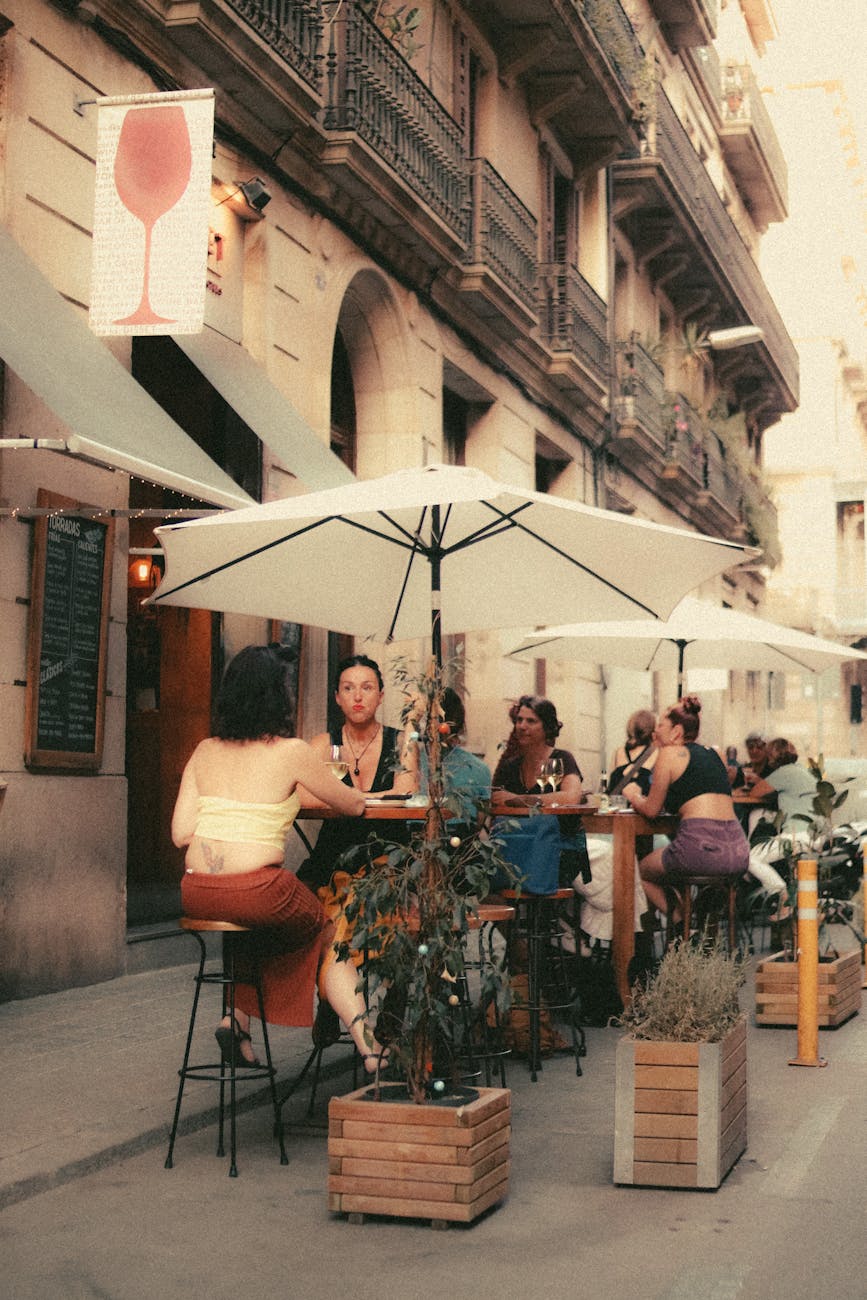
A las diez y media voy al bar de la esquina, donde la dueña me conoce y estima, me pone en la mesa el almuerzo: Pimentones, olivas, all i pebre, pa amb tomàquet, y dos cocas divinas… ¡Venga! Esmorzar es un lujo, todos lo dirían, y me siento feliz disfrutándolo todo con una cerveza bien fría.
Como era verano me senté en la terraza, pues el sol de Valencia sí arrasa, y lo vi en la otra mesa, periódico en mano, y delante de un vaso de agua. Lo miré y sonreí y le dije al anciano, “Lo invito a un café valenciano, a un cortado del tiempo o a un tallat si desea, o a un bombón, pida lo que usted quiera, también a un croissant o pan con mantequilla, o un pinchito e tortilla.”
Pasaron las horas y tres carajillos, hablando de tiempos pasados, de mujeres que tanto quisimos, de las otras que no nos amaron, del deporte, política, religión y la mítica luz de la luna, la luna de Valencia, si, por favor, como ella ninguna. Nos cagamos en diez, aplaudimos a dos, hasta que ya al fin la dueña nos dijo, “Mirad el reloj que la hora ha llegao de cerrar, a otra parte salaos, a otro bar a charlar.”
Nos despedimos al son de las tres de la tarde, y al anciano jamás volví a ver, hasta que un día yo almorzando y leyendo el periódico en sus páginas su foto encontré. Había muerto el anciano, y era millonario y para mí menuda sorpresa, pues dejó por escrito que a mí me dejaba su fortuna, su casa, y su herencia.
La moraleja aquí es esta: Esmorzar es un lujo, y ocasión para compartir, tu pan con tomate, tu pincho e tortilla, y tus cocas, con quien no las pueda comprar, pues que sabes tu si el que tienes delante es mendigo ambulante o un anciano buscando una miga e cariño, una sonrisa gentil, conversar un poquito, hablar de vivir…
Así que si ves a uno cerca, convídalo a un rato, y pide que pongan, bien frías y en la mesa, olivas, cortezas y un par de cervezas.
(Comenzado el 09 SEP 2023 y terminado el 22 de mayo 2024, Francisco Bravo Cabrera, Valencia, España)
NOTA BENE
L’esmorzar es el almuerzo en valenciano y se come usualmente entre las 1030 horas y las 1200. El all i pebre es ajo y pimienta, una salza muy popular, el pa amb tomàquet es nuestro tradicional pan con tomate con el cual suelen desayunar miles de valencianos todos los días. Las cocas son panes planos y redondos cubiertos con ingredientes frescos, como un pizza, digamos. El tallat es nuestro café cortado.
The POETS & WRITERS (Limited) Series is coming to a close this week with our last three protagonists. I know you will not want to miss them.
We wish to thank all the protagonists that have graced the series. The series was honoured by your participation. And we hope that our sense of community continues to grow and develop as we all grow and develop because art is a lifelong process that never stops and never ceases to amaze.
So we are announcing that on Tuesday, 11 JUN we will feature Pat Alderman from Virginia; on Wednesday, 12 JUN we will feature Cassa Bassa from Australia and on Friday, 14 JUN we will feature Sarfraz Ahmed from the UK to close out the list. We are thrilled to have featured 14 phenomenal poets/writers. Now we know a little more about each other.
To those who had shown an interest but did not reply, we are so sorry, but this is a limited time series.
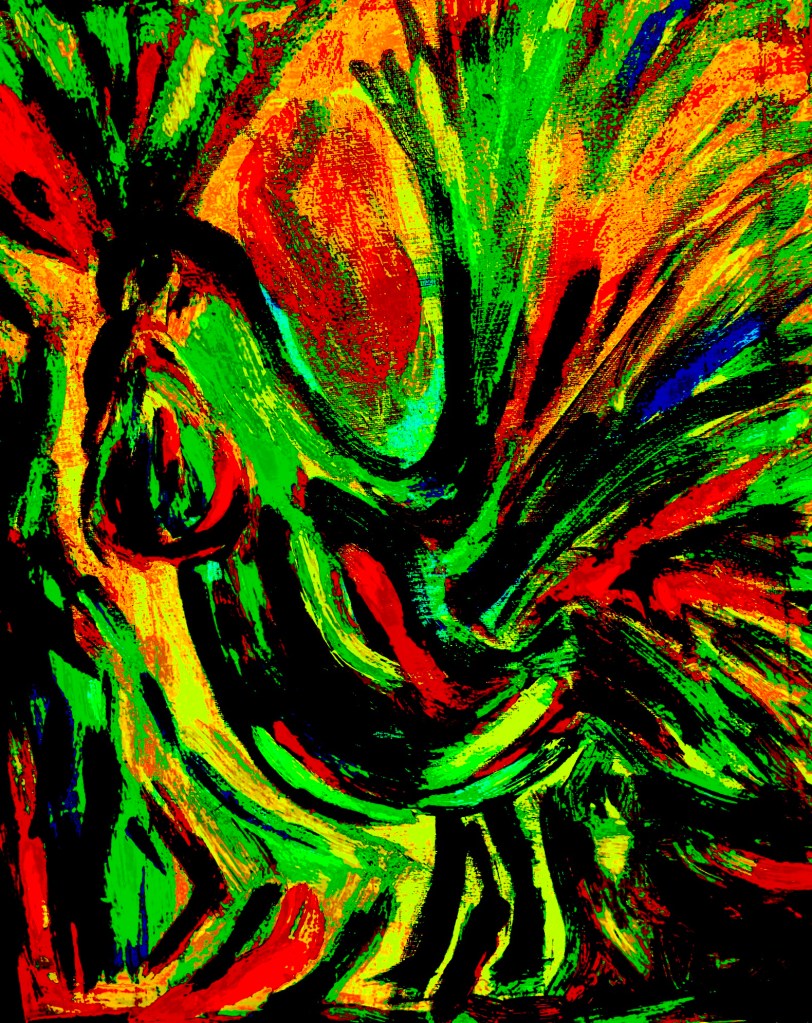
(“Rooster” by Francisco Bravo Cabrera/All Rights Reserved)
The POETS &WRITERS SERIES IS A LIMITED SERIES AND IT IS COMING TO A CLOSE…
So if you are a writer, poet, artist, photographer or engaged in any of the fine arts and you would like to be a protagonist of this series ALL YOU HAVE TO DO IS SEND US YOUR EMAIL ADDRESS and we will send you all the information.
We will feature an interview, your pictures, your bio and of course samples of your work.
We are open to all in our WordPress community and beyond.
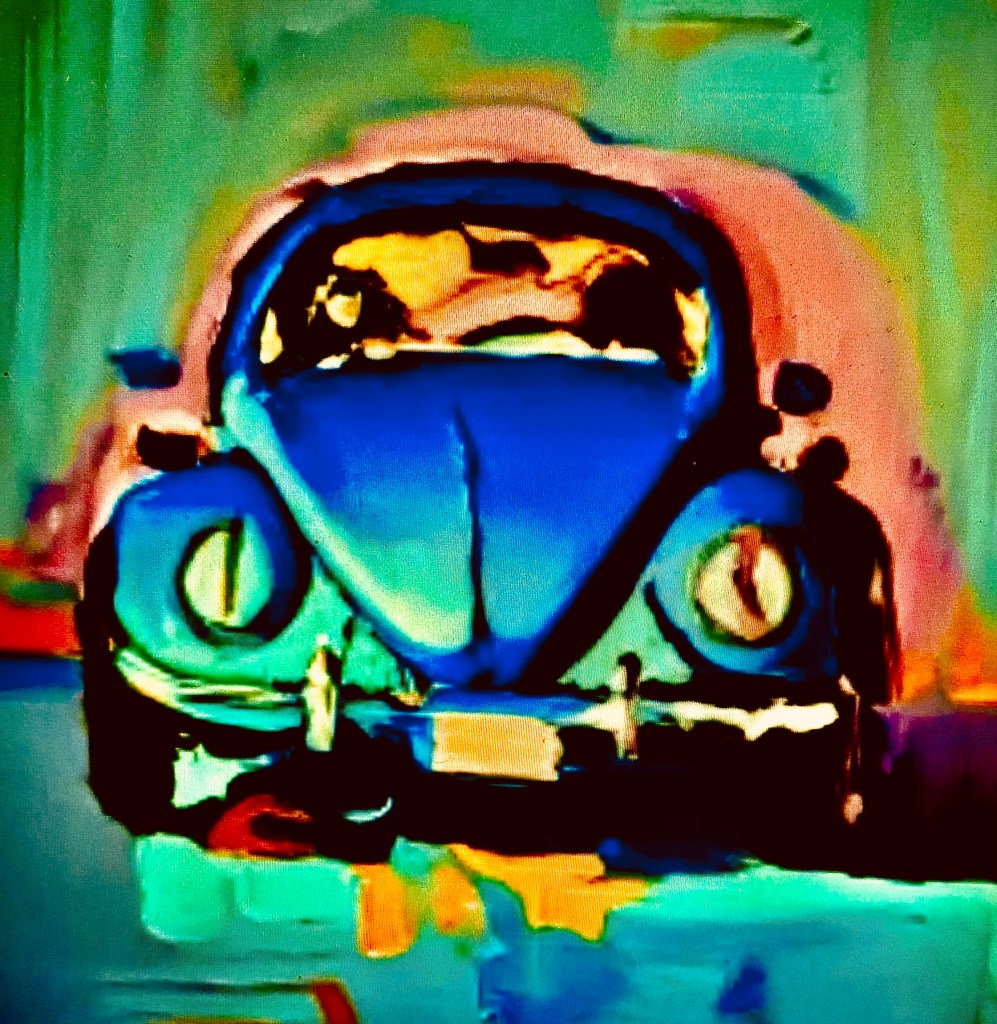
(«Escarabajo Azul No.2» by Francisco Bravo Cabrera/All Rights Reserved)
There are things in one’s life that are not forgotten, although they may eventually become confused with dreams. And there are dreams that most certainly will turn into memories. Such is the human condition, magical. Are we not complex, yet subtle beings? Sometimes pure of heart, some times purely corrupt. And although we may think of ourselves as the most beautiful things on Earth, we have so often become the most horrifying. However, we are searchers, inquisitive souls who never tire of seeking the connection between the profane and the sacred.
What I’m going to tell you is a memory, but it could be nothing more than a dream, or a fantasy that came true one day. I don’t know. What I do know is that it’s engraved in my mind. I’ve lived it. It is something real, something that was made manifest in my life. It’s part of me, belongs to me. And if it is a memory, aren’t we all a collection of memories? I think we are, so I’ll tell you one of mine.
This happened in Guatemala City.
I was in snug in the arms of Morpheus in those early hours of Wednesday, February 4, 1976, when precisely at 03:01 in the morning, a violent tremor woke me up and threw me from the bed to the floor. At the same time, a noise, devouring the atmosphere of my room…it seemed like a bombing…made everything shake and knock down everything that was on the walls and furniture. Even I ended up on the floor. I tried to get up several times but with the shaking it was impossible. I looked towards the window and saw the street lamp moving like a reed, then suddenly it went out. Instantly, it seemed like every light on Earth went out and finally the earth stopped trembling. The tremor lasted but thirty-three seconds, yet it was an eternity.
At first, I thought that the British had attacked Guatemala because in those days Guatemalan President Kjell Eugenio Laugerud Garcia had proclaimed that Belize belonged to Guatemala and had even included Belize in the official map of the Republic of Guatemala. I thought the bombing was payback, but no bombing, it was a 7.5 magnitude (Richter Scale) earthquake that affected the entire country.
But well, let’s get back to what was happening in my room. I got dressed in a snap. My clothes I always leave ready next to the bed with money and passport in the pockets, just in case. I made a beeline towards the front door. I saw that my few neighbours had done the same thing and now they were all shivering in the gardens. Fear? Cold? I don’t know but it was a cold February night. There were no lights in the entire national territory and for a moment I stopped to admire the millions of stars that in such an orderly fashion vibrated and shone in the sky while we on earth were stumbling through chaos, disorder, and horror. Surreal I thought.
There, in the garden that served as our parking lot, we all gathered to give thanks to God for keeping us safe and sound. No one understood what had happened. I had never felt an earthquake in my life, not even during the whole year I had already spent in Central America. This was a new experience for everyone, since all of us who lived in that neighbourhood were foreigners. But standing there, looking at each other, we knew that the terrifying effects of the earthquake had not fully sunk in yet. We were still surprised and confused, with a lingering question in our minds, will it quake again?
Now that you know what happened, a flashback…
I arrived in Guatemala City on an Aviateca Airlines flight from New Orleans on the first of February. At La Aurora airport, a co-worker picked me up to take me to my home in the neighbourhood of Vista Hermosa No. 2, which was about four kilometres outside the capital city. (I don’t mention the work I went to do in Central America because it has nothing to do with this story).
We tried to leave the capital, but since it was rush hour, the traffic wasn’t moving. I suggested to my companion that we stop at one of the downtown restaurants, grab a bite to eat, and give the traffic a chance to clear up. Besides, Guatemala in those years was full of old cars that emitted so much black smoke, the pollution they caused was unbearable. It made your eyes sting and even left a bad smell on your clothes. My companion agreed, so we parked and walked a few metres to a restaurant in the center, if I remember correctly, it was called «Il Focolare.»
We went straight to the bar and ordered two Gallo beers, the most popular in Guatemala at the time, and perhaps still so today. The only other customer in the bar was a well-dressed gentleman, also refreshing himself with a «gallito». The guy listens to us speaking English (my companion was Israeli and didn’t speak Spanish) and turns around and introduces himself.
«You have arrived in Guatemala at a bad, but a very bad time.»
I thought he was already a bit cocky, but I was intrigued by that comment he pulled out of thin air.
«How does you know we just arrived in Guatemala?»
«I see things and know things that others do not see or know.»
Well to each his own, but I wasn’t in the mood for a drunk so I told my friend that we’d better go sit at a table and have our beers in peace. But my companion, who had much more experience than me, signalled for me to sit and calm down. Okay, I did. I sat down and started to drink my cold and delicious beer. And the guy started to talk…
«Listen, I am an obstetrician, I deliver babies, do you understand? And this morning they brought to the clinic to an indigenous woman from Chichicastenango about to give birth. When I delivered the baby, I was horrified! The child was a monster, and the nurse, also horrified, blurted out a «How ugly!» from the depths of her soul. Then the new-born opened his mouth, full of teeth and filth, and replied, «Uglier is what will happen to Guatemala in three days,» and died.»
The doctor turned towards the bar, finished his beer in one gulp, ordered another, and got lost in his thoughts, leaving us in peace to drink ours and digest the absurdity he had just told us. Afterwards, we left; the streets were already free of traffic and we got home in no time. But what the doctor said kept spinning in my head…
The next morning I set out to explore the surroundings of my community. I walked along the road that leads to the main part of the capital taking the opposite direction, towards the mountain. After about two hundred meters, I saw a small detour where there was a little trail that went uphill, suitable for hiking, and I climbed up to the top of the hill. To the left, there was a path that continued to climb even higher, towards the mountains, and I headed in that direction. Suddenly, I heard a thunder and instantly, like if it had materialised out of thin air, there was a car, a blue Volkswagen Beetle, tumbling sideways downhill on the same road.
Quickly I jumped into the thicket just as the car rolled past. Then, right there, right in front of me, it did one last somersault and came to a stop with all four wheels on the ground. I could not even see dust or a scratch on it. No visible damage. I remained silent and observing. First, one must assess the situation, then take the necessary action. I saw the driver’s door open and out steps a tall, gorgeous blonde and she looked directly at me. She smiled at me and dropped an envelope on the ground. Then she got back in, started the car, and drove off like a bat out of hell, leaving behind a huge cloud of dust that, when it cleared, I noticed the car had disappeared.
«Where to, though? The path was too narrow for a car, even a VW Beetle. Well, there was nothing else I could do but pick up the envelope. It was an A4-sized manila envelope, unsealed. I open it up and inside there was a note: «Guatemala, your greatest enemy is the land you are on. Two days left.»
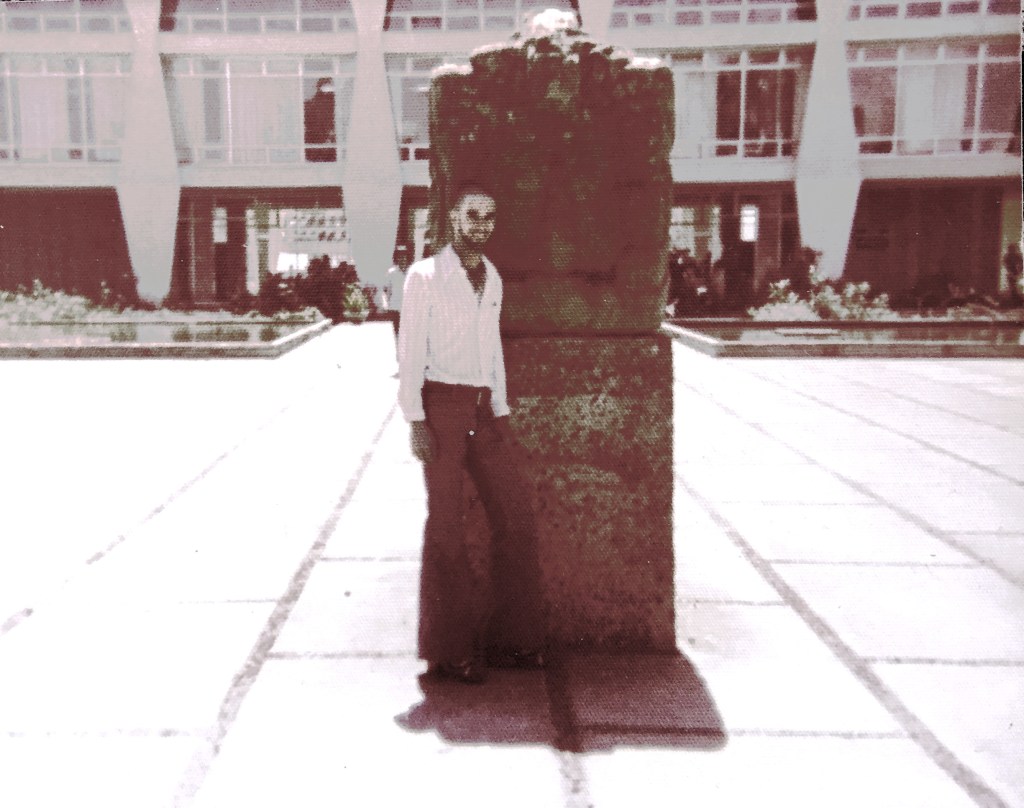
(Bodo/Francisco in Guatemala/Photo by JPD/All rights Reserved)
Conclusion
I’m a practical man, yes, I believe in God, the Virgin, and the saints, but not in oracles or fortune tellers. And at that time I didn’t believe in the supernatural or paranormal phenomena. But now I’m not so sure. After what I experienced that year in Guatemala, I think it’s possible that those things can exist and that, like so many other mysteries that surround us, they are part of our reality. After all, we humans don’t know where we come from or where we’re going. Everything we’ve been taught can be thought of as nonsense. They are stories invented by either priests or scientists, two groups where charlatans abound. We don’t know the truth. But I believe that someday we will come to know it, not here in this plane of existence, but in the next. We will be able to see ourselves as God sees us. And this is not a religious faith-based conclusion, it is simply my opinion.
In any case, the prophecies of those days in Guatemala did come true. The monster baby said on day 1 what Guatemala would suffer in three days. The note from the woman in the blue beetle said that Guatemala had two days left, and that was on the second of February. In the early hours of the fourth, that is the third day, the earth shook in Guatemala. The strength of the earthquake was such that it changed the country’s topography. Tens of thousands of people died during those devastating 30-something seconds that the earthquake lasted. The ground rose up against Guatemala, and it was an ugly, sad, and very unfortunate thing.
(Sierra Madre Mountains, Guatemala/Photography by Francisco Bravo Cabrera/All Rights Reserved)
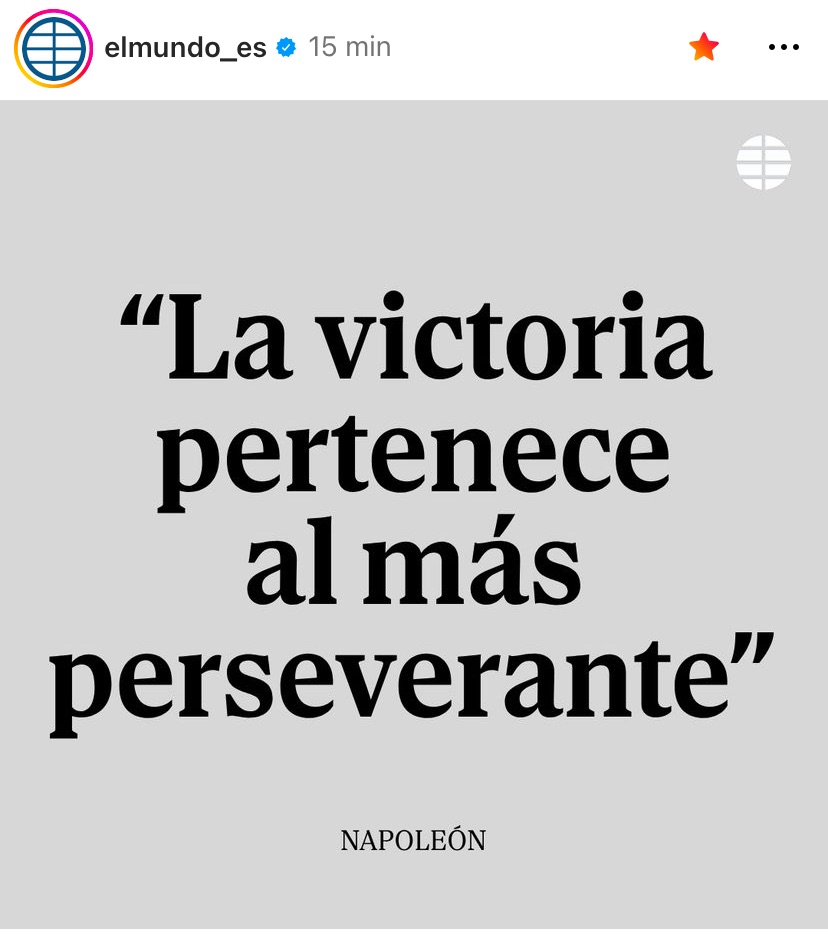
Al más perseverante… y en las elecciones, al que quiere la gente y los pueblos han hablado, y hemos rechazado a los izquierdistas y ultra izquierdistas, ganando la democracia, el verdadero progreso y la prosperidad. ¡Que viva Europa!
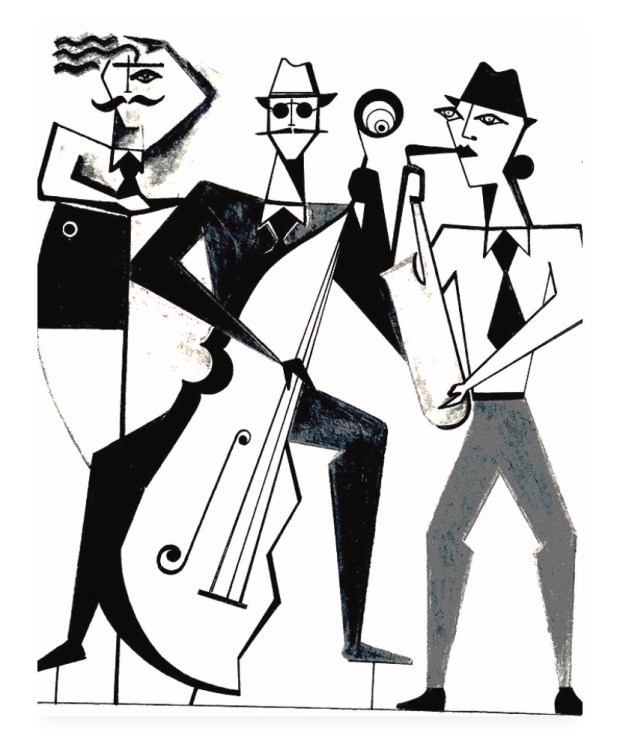
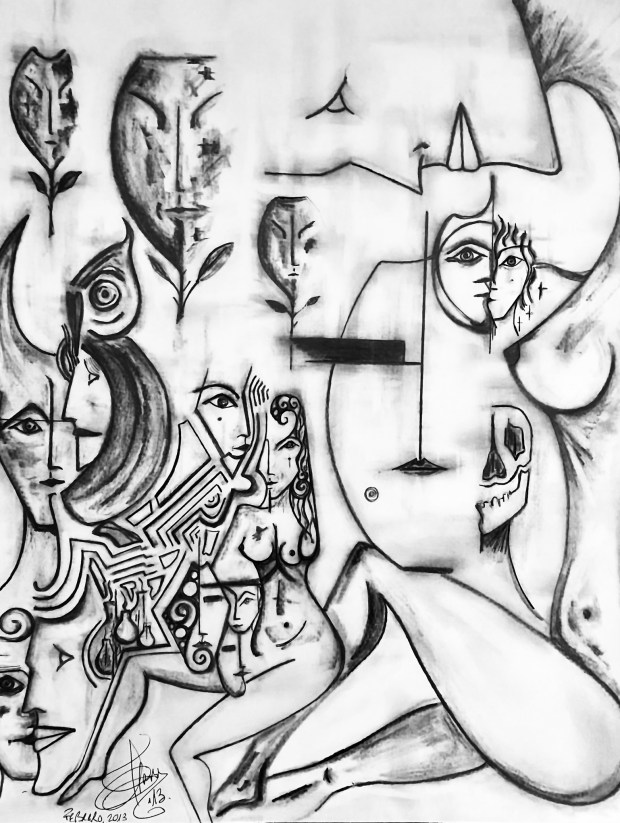
(Proto Jazz-Art de/by Francisco Bravo Cabrera/Derechos Reservados/All Rights Reserved)
Dijo Salvador Dalí que no hay que temerle a la perfección que jamás la vamos a alcanzar… Matisse, por otra parte, dijo que hace falta coraje para ser creativo… Mientras que Picasso pensaba que todos los críos eran artistas y lo importante era mantenerse asi después que crecieres… Giacometti pensando más filosóficamente dijo que el arte no debía reproducir la realidad si no crear una nueva con la misma intensidad… ¡Madre mía! ¡Como hablan los artistas! Venga, hablan como puros artistas… Yo digo solamente que el arte es la búsqueda, pero el artista no se puede pasar la vida buscando, tiene que encontrar. Además tiene que serle fiel a su época y a su cultura, que es el acumulado de sus experiencias, conocimientos, aprendizaje y desarrollar aquello que se llama buen gusto. Así su arte tendrá la espiritualidad para perdurar…
+++ ++ +++
Salvador Dalí said that we should not fear perfection because we will never achieve it… Matisse, on the other hand, said that it takes courage to be creative… While Picasso believed that every child is an artist and the important thing is to remain one as you grow up… Giacometti, on the other hand, was more focused on philosophy and said that art should not reproduce reality but create a new one with the same intensity… Wow! How artists speak! They talk like pure artists… I only say that art is the search, but artists cannot search forever, they must find. They also have to be loyal to their time and culture, which is the culmination of their experiences, knowledge, learning, and must develop that which is called good taste. That way, their art will possess the spirituality to endure…
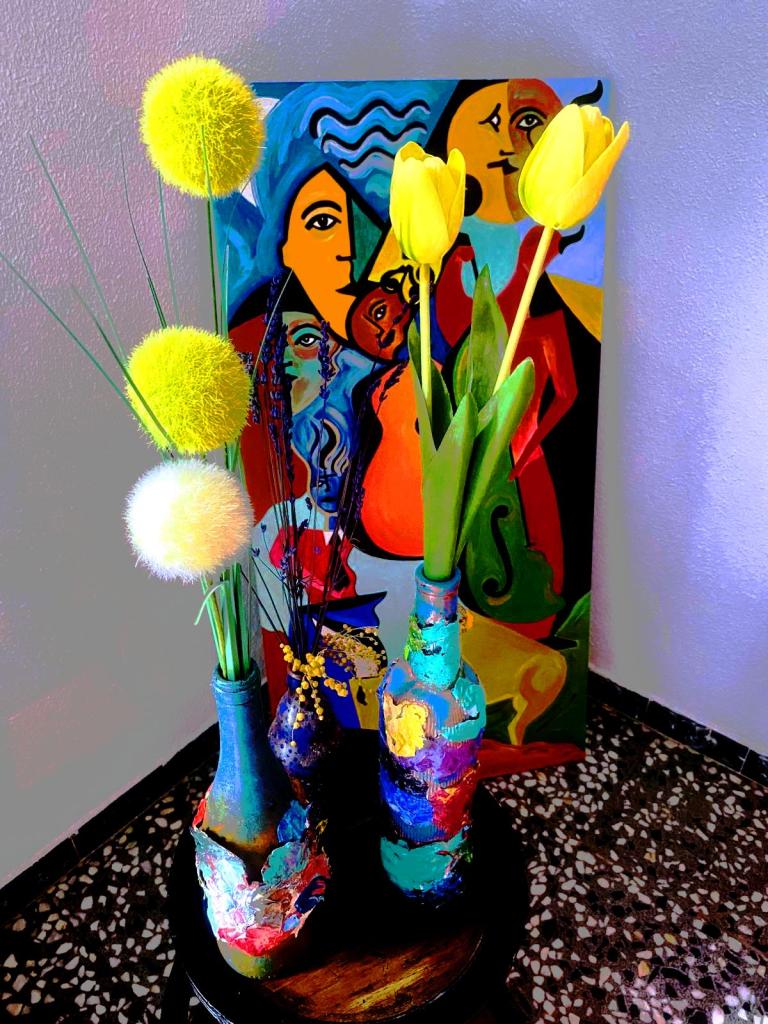
(El cuadro es/the painting is «Vivat» de/by Francisco Bravo Cabrera/botellas y flores/Flowers and bottles/de/by GAB/Derechos Reservados/All Rights Reserved/OMNIA CAELUM STUDIOS VALENCIA/foto/photo GAB)
Welcome back to POETS & WRITERS Series on VALENCIARTIST! Today we are so proud to present Janet Morrison. Me, personally, I have known Janet, via WordPress, for several years now and I can assure you that you will enjoy thoroughly today’s edition. Janet is from North Carolina and a writer of historical fiction as well as a fabulous southern…home-style…cookbook.
And, we are again sending out an invitation to all writers, poets, artists, photographers, dancers, etcetera to join the WRITERS & POETS Series on VALENCIARTIST. To join all you have to do is reply to this post with your email address and we will send you the information needed.
JANET’S INTERVIEW
1)Who are your major literary/artistic references?
In my much younger years when I was introduced to chapter books, I was impressed by Mark Twain’s writing. I was drawn to his humor, folksy writing style, and vivid characters.
As a young adult I was influenced by Centennial, by James Michener and Roots, by Alex Haley, although I preferred to read nonfiction over fiction. The thought passed through my mind that someday I would like to be able to write books like those two, but it was many years before I seriously considered being a writer of local history and southern historical fiction.
My favorite writers now include in no particular order: Erik Larson, Isabel Allende, Kate Quinn, Heather Morris, Mark T. Sullivan, Kristin Hannah, John Grisham, Vicki Lane, Colson Whitehead, Diane Chamberlain, Annette Saunooke Clapsaddle, John Hart, Mark de Castrique, Sally Hepworth, Sharyn McCrumb, Diana Gabaldon, Ann Patchett, Jefferson Bass, Laleh Chini, Kelly Mustian, V.S. Alexander, Susan Meissner, Andrew Gross, Kathy Reichs, Wiley Cash, and Sally Hepworth. These authors write in a variety of genres. Although I gravitate toward historical fiction, I enjoy reading and can learn pacing, tension, plotting, and character development from legal suspense, general fiction, and spy novels.
When it comes to trusting advice about the art and craft of writing, my go-to people include Rayne Hall, Janice Hardy, James Scott Bell, Sarah Rosett, Barbara Kyle, and Rachel Ballon.
For reliable historical information I rely on Kay K. Moss, Louise Pettus, LeGette Blythe, and Marcia D. Phillips, and James Alexander Thom among others.
I am sure I have failed to mention many others whose work influences and benefits my writing.
2)What makes you a writer? What do you like to write about? What is your plan for the next five years?
I did not pursue writing seriously until I was 50 years old. The last 20 years have been a journey of studying the craft, doing historical research, and writing local history and historical fiction. I draw on my genealogy, local history, and my love of history in general for my writing.
In the next five years I want to publish a quadrilogy of historical novels. That is a tall order in a short amount of time, but when you are in your seventies you cannot waste time! Novel number one is one-third written. Novel number two is a 95,000-word draft. Novels three and four are outlined.
I also want to publish a collection of historical short stories and a devotional book to help people who experience Seasonal Affective Disorder in the cooler months of the year.
If I am going to meet my goals in five years or even ten years, I will have to learn self discipline.
3)Do you write about your life, your feelings/emotions, yourself?
In my weekly blog I sometimes write about myself. I have read numerous times that a fiction writer – especially one who has not yet been published – should avoid topics such as politics. I abided by that advice in my blog for many years. However, times have changed.
My country, the United States of America, is in a precarious position politically. I majored in political science in college, and certain beliefs about democracy and our government are ingrained in me. I still try not to write a lot about politics, but sometimes it just has to come out!
God has led my writing journey – which includes a weekly blog – and I believe I have a responsibility to occasionally speak out against injustice, abuse of power, and threats to democracy.
(My apologies to Francisco, who asked for short answers to his three questions.)
Janet Morrison in North Carolina
JANET’S BIO IN HER OWN WORDS
Janet Morrison is a native of North Carolina. She holds a Bachelor of Arts degree in Political Science with a minor in History and a Master of Public Affairs degree. After a career in local government, Janet turned her attention to writing. The fiction writing course she took at Queens University of Charlotte was life changing.
For six years In the early 2000s Janet wrote a local history newspaper column. In 2022 and 2023 she published those newspaper articles in Harrisburg, Did You Know? Cabarrus History, Book 1 and Harrisburg, Did You Know? Cabarrus History, Book 2.
She is currently writing a collection of historical short stories and an historical novel set in colonial America.
Janet blogs weekly about history, the books she reads, and her journey as a writer. Look for her blog at https://www.JanetsWritingBlog.com. The relationships she has formed with bloggers all over the world have greatly enhanced her life.
Visit her website, https://www.JanetMorrisonBooks.com to find details about her books and to subscribe to her e-Newsletter. Subscribers will receive a free downloadable copy of her first short story, “Slip Sliding Away: A Southern Historical Short Story.”
Janet’s latest published short story, “Ghost of the Battle of Guilford Courthouse: An American Revolutionary War Ghost Story,” was inspired by experiences her sister had while living near that battleground.
Janet and her sister, Marie Morrison, published their collection of family recipes from four generations in 2023 titled The Aunts in the Kitchen: Southern Family Recipes.
In 1996, Janet and Marie published three Morrison genealogy books about the descendants of the Morrisons from Campbeltown, Scotland who settled in North Carolina in the mid-18th century.
Janet’s local history books and short stories are available as e-Books and in paperback on Amazon and the cookbook is available in paperback.
Janet enjoys playing the dulcimer, diving deeper into her family’s history, reading a variety of genres in addition to historical fiction, and trying her hand at various crafts.
+++++
Opening paragraphs from “Slip Sliding Away: A Southern Historical Short Story,” by Janet Morrison
Southern Appalachian Mountains, 1875
It was what you might call a hard place to keep a secret. Strangers were warned, “Don’t say anything bad about anybody here. Everybody’s kin to everybody.”
The fire crackled and hissed as the flames danced and uncovered hidden pockets of sap in the logs in the Johnsons’ fireplace. Melted snowflakes sizzled as they fell down the stone chimney. The late March wind howled. It had been snowing off and own for three days.
Such a late spring snowstorm was not unheard of, but it was not commonplace. There had not been a blizzard this late in the spring in any of the six years the Johnsons had lived in this southern Appalachians cove. Everyone was staying close to home. Farm work had to be done, such as feeding and watering the horses and livestock, but most folks were just trying to stay warm.
Hannah Johnson blew a series of long, hot breaths on the windowpane and then rubbed a small area of the glass in vigorous circular motions with the hem of her blue wool shawl. Her efforts to clear a peephole in the one-room log cabin’s lone window were all for naught. Although the inside of the window was just glazed over with frost, the outside was covered in a sheet of ice.
Several days earlier, Hannah had found the intricate patch of white frost on her window to be interesting. But as the days dragged on and the cold and snow were unrelenting, she had begun to worry that her sister would not be able to come perform her midwife duties if her time came before the thaw began.
Hannah’s husband, Daniel, had strained himself severely a few days ago and had taken to bed. The moving of the log he was working with would have been a difficult task for two strong men, so Hannah had scolded him for not seeking help from her brother or one of his brothers who all lived nearby…..
The closeness of the frosty window and the air seeping in around its loose frame sent a shiver through Hannah’s body. She tugged at her shawl and pulled it more tightly around her neck and shoulders. She walked over to the corner cupboard where she kept her most prized possessions and reached for a small wooden box. It was Hannah’s private repository of treasures. It held her mother’s wedding band, the lace-trimmed handkerchief Hannah had carried on her wedding day, a piece of paper on which an old beau had written a poem, and a small yellowed, paper handmade envelope.
Hannah removed the envelope from the box and squinted in the dim firelight to see how much of the rich, fine, powdery contents remained. She poured a cup of hot tea for Daniel at the hearth and carefully sprinkled some of the powder into it….
SOME OF JANET’S OTHER BOOKS
We wish to thank Janet for being today’s protagonist in the series. We invite you all to visit Janet’s website/blog: https://janetswritingblog.com/
We at VALENCIARTIST do not edit, censure or change any word, phrase or composition provided by our protagonists. We publish as you have written. The only things we will not accept and will not publish are offensive remarks, insults or vulgarities. We invite all participants in the arts to join us. All you have to do is reply here with your email address and we will contact you with the information.
(“Rooster” by Francisco Bravo Cabrera/All Rights Reserved)
If you are a writer, poet, artist, photographer or engaged in any of the fine arts and you would like to be a protagonist of this series ALL YOU HAVE TO DO IS SEND US YOUR EMAIL ADDRESS and we will send you all the information.
We will feature an interview, your pictures, your bio and of course samples of your work.
We are open to all in our WordPress community and beyond.