
Welcome back to POETS & WRITERS Series on VALENCIARTIST! Today we are so proud to present Janet Morrison. Me, personally, I have known Janet, via WordPress, for several years now and I can assure you that you will enjoy thoroughly today’s edition. Janet is from North Carolina and a writer of historical fiction as well as a fabulous southern…home-style…cookbook.
And, we are again sending out an invitation to all writers, poets, artists, photographers, dancers, etcetera to join the WRITERS & POETS Series on VALENCIARTIST. To join all you have to do is reply to this post with your email address and we will send you the information needed.
JANET’S INTERVIEW
1) Who are your major literary/artistic references?
In my much younger years when I was introduced to chapter books, I was impressed by Mark Twain’s writing. I was drawn to his humor, folksy writing style, and vivid characters.
As a young adult I was influenced by Centennial, by James Michener and Roots, by Alex Haley, although I preferred to read nonfiction over fiction. The thought passed through my mind that someday I would like to be able to write books like those two, but it was many years before I seriously considered being a writer of local history and southern historical fiction.
My favorite writers now include in no particular order: Erik Larson, Isabel Allende, Kate Quinn, Heather Morris, Mark T. Sullivan, Kristin Hannah, John Grisham, Vicki Lane, Colson Whitehead, Diane Chamberlain, Annette Saunooke Clapsaddle, John Hart, Mark de Castrique, Sally Hepworth, Sharyn McCrumb, Diana Gabaldon, Ann Patchett, Jefferson Bass, Laleh Chini, Kelly Mustian, V.S. Alexander, Susan Meissner, Andrew Gross, Kathy Reichs, Wiley Cash, and Sally Hepworth. These authors write in a variety of genres. Although I gravitate toward historical fiction, I enjoy reading and can learn pacing, tension, plotting, and character development from legal suspense, general fiction, and spy novels.
When it comes to trusting advice about the art and craft of writing, my go-to people include Rayne Hall, Janice Hardy, James Scott Bell, Sarah Rosett, Barbara Kyle, and Rachel Ballon.
For reliable historical information I rely on Kay K. Moss, Louise Pettus, LeGette Blythe, and Marcia D. Phillips, and James Alexander Thom among others.
I am sure I have failed to mention many others whose work influences and benefits my writing.
2) What makes you a writer? What do you like to write about? What is your plan for the next five years?
I did not pursue writing seriously until I was 50 years old. The last 20 years have been a journey of studying the craft, doing historical research, and writing local history and historical fiction. I draw on my genealogy, local history, and my love of history in general for my writing.
In the next five years I want to publish a quadrilogy of historical novels. That is a tall order in a short amount of time, but when you are in your seventies you cannot waste time! Novel number one is one-third written. Novel number two is a 95,000-word draft. Novels three and four are outlined.
I also want to publish a collection of historical short stories and a devotional book to help people who experience Seasonal Affective Disorder in the cooler months of the year.
If I am going to meet my goals in five years or even ten years, I will have to learn self discipline.
3) Do you write about your life, your feelings/emotions, yourself?
In my weekly blog I sometimes write about myself. I have read numerous times that a fiction writer – especially one who has not yet been published – should avoid topics such as politics. I abided by that advice in my blog for many years. However, times have changed.
My country, the United States of America, is in a precarious position politically. I majored in political science in college, and certain beliefs about democracy and our government are ingrained in me. I still try not to write a lot about politics, but sometimes it just has to come out!
God has led my writing journey – which includes a weekly blog – and I believe I have a responsibility to occasionally speak out against injustice, abuse of power, and threats to democracy.
(My apologies to Francisco, who asked for short answers to his three questions.)
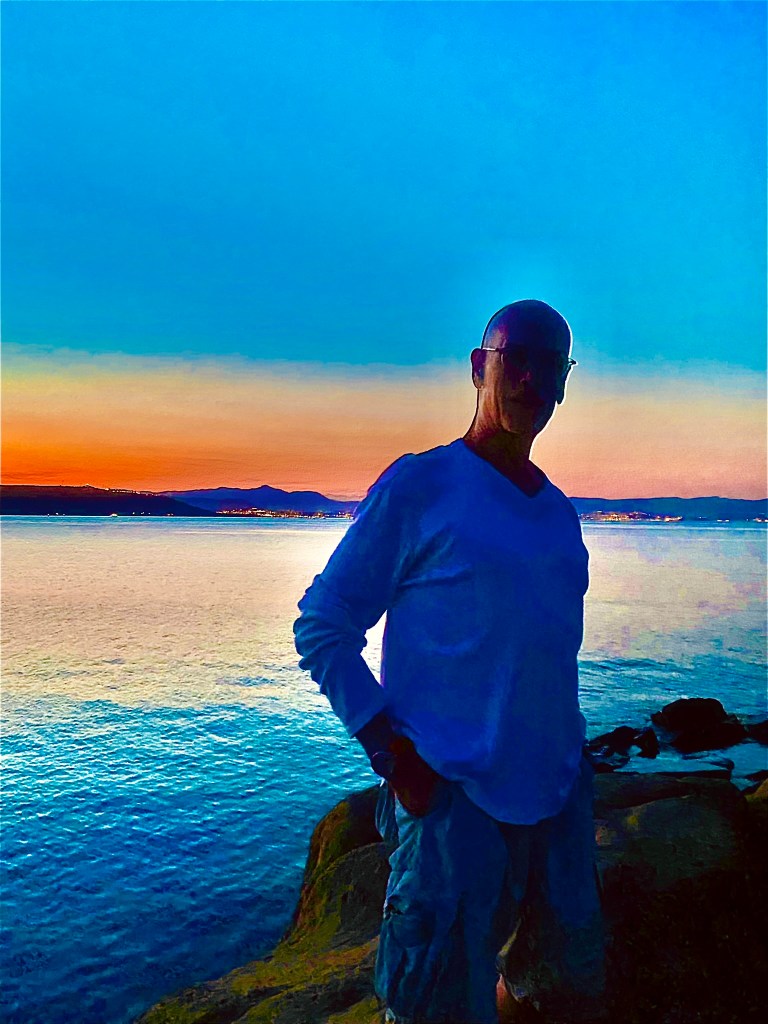
Janet Morrison in North Carolina
JANET’S BIO IN HER OWN WORDS
Janet Morrison is a native of North Carolina. She holds a Bachelor of Arts degree in Political Science with a minor in History and a Master of Public Affairs degree. After a career in local government, Janet turned her attention to writing. The fiction writing course she took at Queens University of Charlotte was life changing.
For six years In the early 2000s Janet wrote a local history newspaper column. In 2022 and 2023 she published those newspaper articles in Harrisburg, Did You Know? Cabarrus History, Book 1 and Harrisburg, Did You Know? Cabarrus History, Book 2.
She is currently writing a collection of historical short stories and an historical novel set in colonial America.
Janet blogs weekly about history, the books she reads, and her journey as a writer. Look for her blog at https://www.JanetsWritingBlog.com. The relationships she has formed with bloggers all over the world have greatly enhanced her life.
Visit her website, https://www.JanetMorrisonBooks.com to find details about her books and to subscribe to her e-Newsletter. Subscribers will receive a free downloadable copy of her first short story, “Slip Sliding Away: A Southern Historical Short Story.”
Janet’s latest published short story, “Ghost of the Battle of Guilford Courthouse: An American Revolutionary War Ghost Story,” was inspired by experiences her sister had while living near that battleground.
Janet and her sister, Marie Morrison, published their collection of family recipes from four generations in 2023 titled The Aunts in the Kitchen: Southern Family Recipes.
In 1996, Janet and Marie published three Morrison genealogy books about the descendants of the Morrisons from Campbeltown, Scotland who settled in North Carolina in the mid-18th century.
Janet’s local history books and short stories are available as e-Books and in paperback on Amazon and the cookbook is available in paperback.
Janet enjoys playing the dulcimer, diving deeper into her family’s history, reading a variety of genres in addition to historical fiction, and trying her hand at various crafts.
+++++
Opening paragraphs from “Slip Sliding Away: A Southern Historical Short Story,” by Janet Morrison

Southern Appalachian Mountains, 1875
It was what you might call a hard place to keep a secret. Strangers were warned, “Don’t say anything bad about anybody here. Everybody’s kin to everybody.”
The fire crackled and hissed as the flames danced and uncovered hidden pockets of sap in the logs in the Johnsons’ fireplace. Melted snowflakes sizzled as they fell down the stone chimney. The late March wind howled. It had been snowing off and own for three days.
Such a late spring snowstorm was not unheard of, but it was not commonplace. There had not been a blizzard this late in the spring in any of the six years the Johnsons had lived in this southern Appalachians cove. Everyone was staying close to home. Farm work had to be done, such as feeding and watering the horses and livestock, but most folks were just trying to stay warm.
Hannah Johnson blew a series of long, hot breaths on the windowpane and then rubbed a small area of the glass in vigorous circular motions with the hem of her blue wool shawl. Her efforts to clear a peephole in the one-room log cabin’s lone window were all for naught. Although the inside of the window was just glazed over with frost, the outside was covered in a sheet of ice.
Several days earlier, Hannah had found the intricate patch of white frost on her window to be interesting. But as the days dragged on and the cold and snow were unrelenting, she had begun to worry that her sister would not be able to come perform her midwife duties if her time came before the thaw began.
Hannah’s husband, Daniel, had strained himself severely a few days ago and had taken to bed. The moving of the log he was working with would have been a difficult task for two strong men, so Hannah had scolded him for not seeking help from her brother or one of his brothers who all lived nearby…..
The closeness of the frosty window and the air seeping in around its loose frame sent a shiver through Hannah’s body. She tugged at her shawl and pulled it more tightly around her neck and shoulders. She walked over to the corner cupboard where she kept her most prized possessions and reached for a small wooden box. It was Hannah’s private repository of treasures. It held her mother’s wedding band, the lace-trimmed handkerchief Hannah had carried on her wedding day, a piece of paper on which an old beau had written a poem, and a small yellowed, paper handmade envelope.
Hannah removed the envelope from the box and squinted in the dim firelight to see how much of the rich, fine, powdery contents remained. She poured a cup of hot tea for Daniel at the hearth and carefully sprinkled some of the powder into it….
SOME OF JANET’S OTHER BOOKS


We wish to thank Janet for being today’s protagonist in the series. We invite you all to visit Janet’s website/blog: https://janetswritingblog.com/
We at VALENCIARTIST do not edit, censure or change any word, phrase or composition provided by our protagonists. We publish as you have written. The only things we will not accept and will not publish are offensive remarks, insults or vulgarities. We invite all participants in the arts to join us. All you have to do is reply here with your email address and we will contact you with the information.
Coming up next: Pat Alderman
CHEERS