#art, Grace Hartigan

(Heather James Fine Art)

Grace Hartigan was an abstract expressionist painter of the so-called «School of New York». She was born in 1922 in the beautiful city (that I know quite well) of Newark, New Jersey. She hung out with all the artists, poets, writers of the time and of New York. Her good friends were Jackson Pollock, and Helen Frankenthaler. But she also frequented with Willem y Elaine de Kooning, as well as with others. Actually she was the only female artist to be part of the legendary exhibition «The New American Painting» that toured Europe in the 1950’s.

And I know you will ask me, what the hell is ABSTRACT EXPRESSIONISM? And I will tell you that it was a movement in painting that developed within the vanguard movement which was ABSTRACT ART. It was first called abstract expressionism in Germany (1919) when the magazine Der Sturm published an article about German Expressionism. In the US it was Alfred Barr (the first director of the Museum of Modern Art, the MoMA in Manhattan) that first used the term (1929) to classify Wassily Kandinsky’s paintings.

Abstract expressionists usually work with large canvasses. Their work is abstract, yet at times there can be traces of figuration. But it’s most important characteristic is what they call the «all over» effect, meaning that they cover every single centimetre of the canvas. The colours are few, mostly whites and blacks or primary colours like yellow, magenta and cyan. Some painters used only one colour, possibly anticipating minimalism. The paintings are done with violent brush-strokes without caring about the superiority of a horizontal or a vertical composition. Philosophically and psychologically, the artist tries to reproduce the anguish, conflict and strife that he feels exists and which he imagines surges from within society. Imagine that…

So to get to know Grace Hartigan a little better, I will tell you that she got married at the age of 19. In 1942 her husband was drafted to fight in WWII. She studied mechanical drafting and became a draftsman in an airplane factory. Later Hartigan studied painting with Isaac Lane Muse (American artist) with whom she got to know the work of Henri Matisse. Studying Kimon Nicolaïdes’s «The Natural Way to Draw» influenced her work as a painter.

Hartigan, who had struggled with alcoholism for many years, died at the age of 86 from liver failure in 2008.

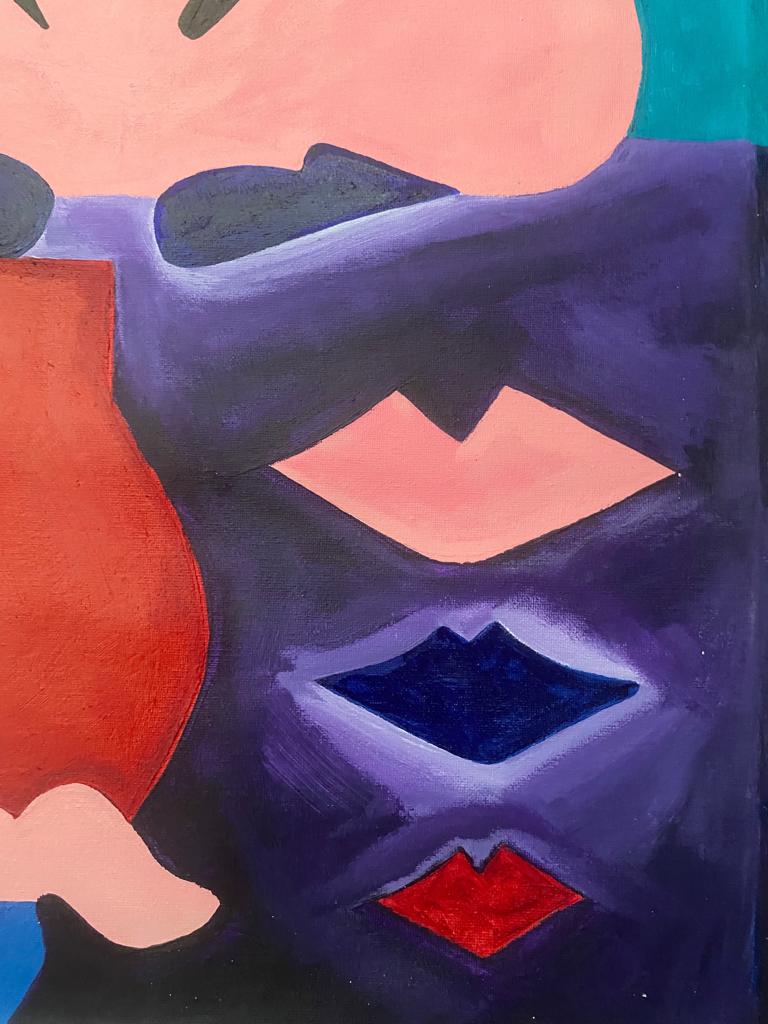
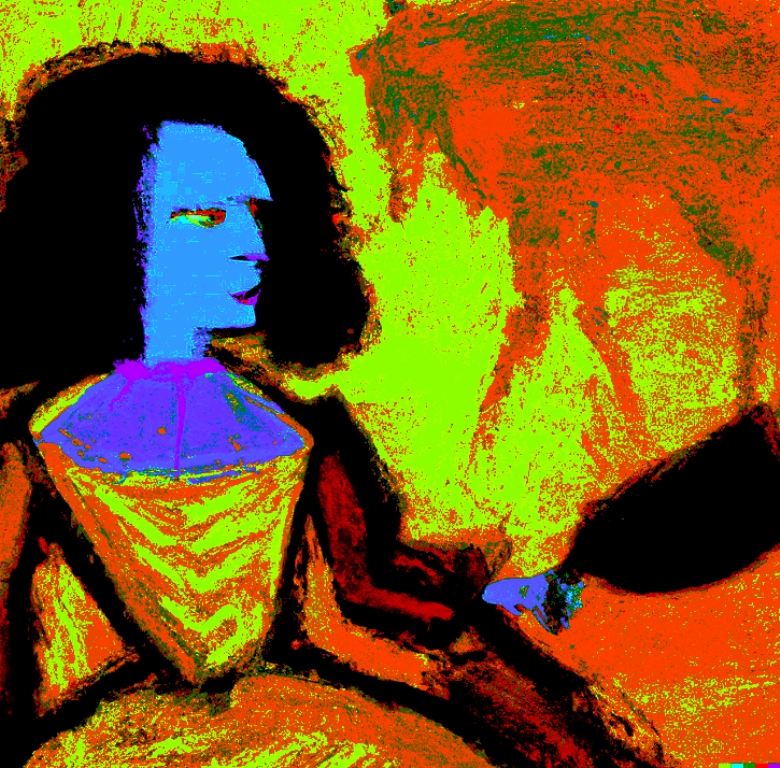
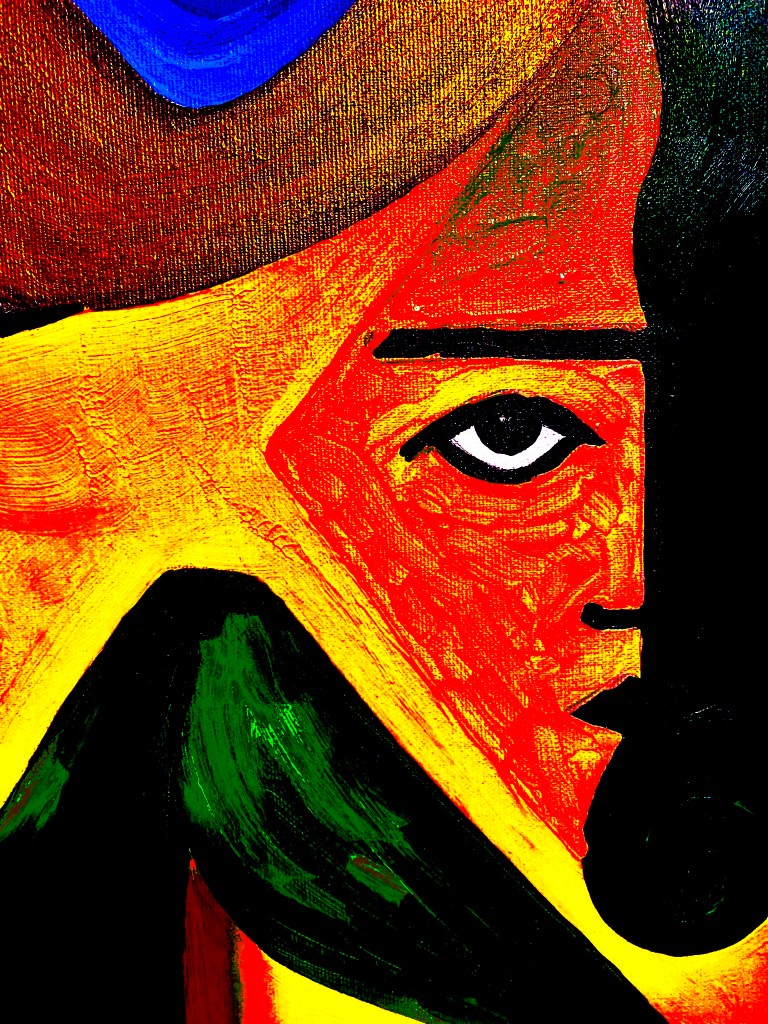
Now for a look at some of her paintings…

(Guggenheim Museum/»Ireland»)
(Copias de Arte/»Untitled»)
(Whitney Museum/»Sweden»)

CHEERS

#sports, ¡No al racismo!

Parece mentira, pero cierto es. No somos un país de revistas, pero en España, como en cualquier otro país del mundo, racistas hay y se atreven a estas barbaridades. Los que no quieran aprender ni superarse por sí mismos, lo tendrán que hacer a manos de la justicia, con multas o cárcel, o las dos cosas. Somos una sola raza en un mundo multi-étnico y mixto. No hay raza superior, ni hay blancos ni negros ni moros, habemos seres humanos.

#poem, «Reasons» (An Euro-Ku)

(Image by and property of FBC/OCS Valencia/All Rights Reserved)

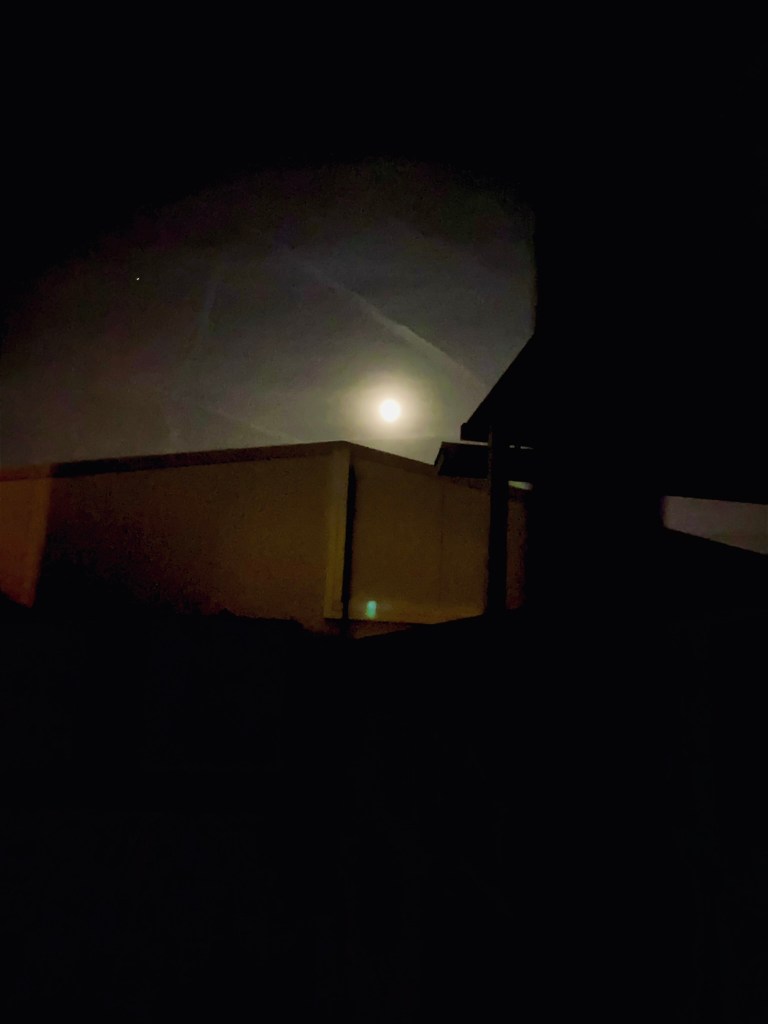
Convince me that a rainbow is not an act of God.

Convince me that Love is not His nature and you’ve convinced me that I don’t exist.

Reasons can’t disturb my faith.

C.2024, Francisco Bravo Cabrera – 24 OCT 2024 – Valencia, Spain

#poem, «The Silence of the Bay» (An Euro-Ku)

(Photo by GAB/OCS Izmir/All Rights Reserved)

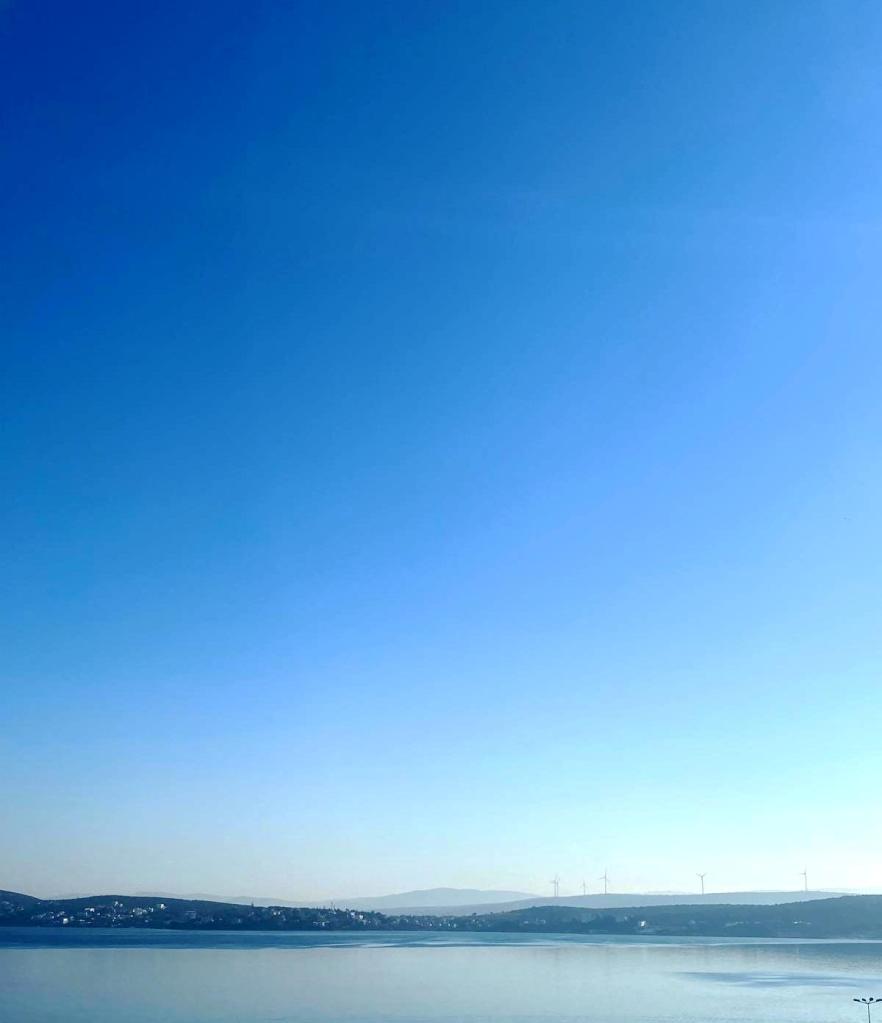
Brilliant are the bright black notes that fill the pentagram with the thrill of the allegretto and the fluid melody of the adagio, the andante, the largo,

and suspenseful is the beat of the snare, the cymbal or the tympany, and the double beats of the conga drum, the bongos or the tambourine,

but blessed is the silence that awakes me each morning when I rise to greet the sea…

C.2024, Francisco Bravo Cabrera – 28 OCT 2024 – Valencia, Spain

NOTA BENE

Although I think you probably know what an Euro-Ku is, in case you don’t, I will tell you…

I invented the Euro-Ku in February 2022 to be able to fulfil my desires to write a Haiku. But when I realised what a Haiku is, I understood that being a Westerner, I had not the culture or the history of the great Japanese poets who specialise in Haiku. So, I decided to honour the style by manipulating it and the result was what I called the Euro-Ku, being that I, as a European, is writing it. I know that my good friend and fellow poet, Joni Caggiano, has written in the style, but being an American, her poems are Ameri-Ku. Both are the same as both are expressions of Westerners on something invented by Easterners…

The Euro-Ku (and Ameri-Ku as well) is composed of three verses, stanzas, paragraphs, however you want to classify them. But the idea has to be clearly, and logically, transferred from one verse to the next without floating off into space. Keep the poem concise, like a conversation. And there is no limits as to how many syllables you can use. The verses can be as long or as short as you need to make them to get your message across. The only other requirement is that there be an un-edited illustration of your creation as well, or for which you have the rights of publication.

So, you do these simple things and you have written an Euro- or Ameri-Ku…

CHEERS

Buenos días

Y mira que nos mienten, siempre y continuadamente…

¿Estáis de acuerdo? ¿No?

#poem, «Ya no te espero»

(Foto de Francisco Bravo Cabrera/Derechos Reservados)

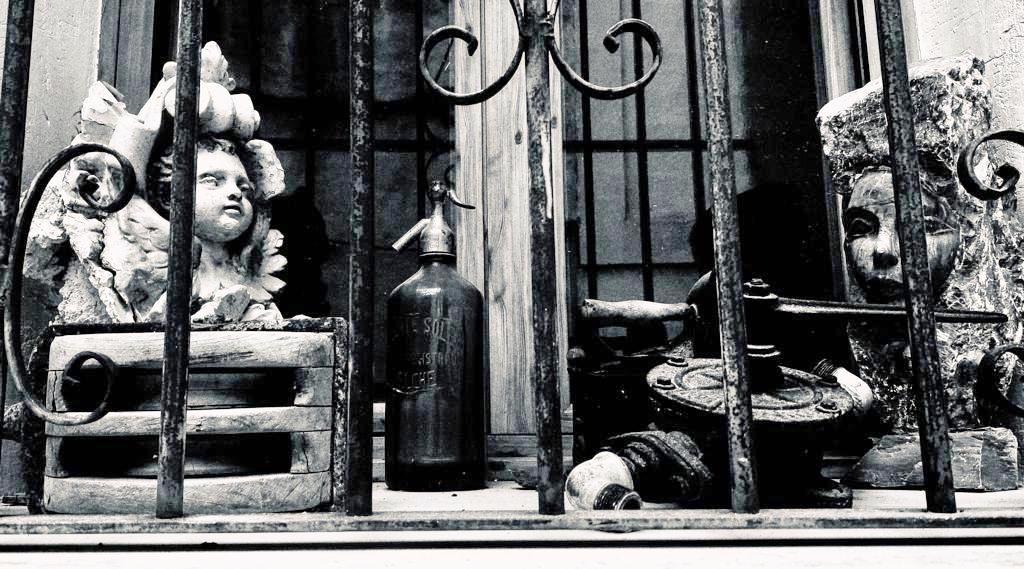
Ya no te espero,
¿Para qué hacerlo?
si esperar es algo inútil…

Nunca me siento ni para tomar café,
ni para esperar el tren.
Porque soy humo que siempre flota,
o quizá una gota,
pues gota a gota lleno los ríos de tu memoria,
ya que tu puerta,
vetusta y desgastada, no me la abres.

Tu corazón, cerrado por averías irreparables
que tu voluntad no pudo evitar,
yace tras la vieja puerta triste,
detrás del telón de hierro
que pones frente a la vida,
y así de sola vives y así sangra tu herida.
Ya no quieres que ese caudal,
rojo tormentoso, deje de fluir.

Y yo, parado frente al sol tan mañanero,
pido mi café,
feliz,
porque ya no te espero.

C.2022, Francisco Bravo Cabrera, 30 AUG 2022/27 OCT 2024, València, España

#art, La pintura expresionista – Expressionist Paintings

(«Pink Drummer»/Francisco Bravo Cabrera/Derechos Reservados/All Rights Reserved)

¿Conoces realmente lo que es el expresionismo cuando se refiere a la pintura? Bueno, yo te lo voy a explicar. Sencillamente es la manera que el pintor escoge para representar la composición, o la idea de una composición, que va poner sobre la tela. No es lo que está viendo el pintor, o sea el modelo, o lo que recuerda haber visto, no, lo que pinta es la impresión que le causo y como lo ha visto por dentro. Así expresa la forma y la pinta bien sea usando la figuración o la abstracción. Claro, el expresionismo nació en Alemania con los famosos expresionistas alemanes, i.e. Otto Dix et al. Luego se extendió a Austria y ahí están los expresionistas austriacos, entre ellos Oscar Kokoschka, uno de mis preferidos. El expresionismo, vanguardia del Siglo XX, surgió también en el cine, en el teatro y en la danza. Rápidamente el expresionismo se extendió por toda Europa y por América, el gran continente y aún es una de las formas interesantes que un artista puede utilizar para plasmar una idea, una forma, o una abstracción sobre un lienzo.

+++

Do you really know what expressionism in painting is? Well, I’m going to explain it to you. Simply put, it is the way the painter chooses to represent the composition, or the idea of a composition, that he is going to put on the canvas. It is not what the painter is seeing, meaning the model, or what he remembers having seen; no, what he paints is the impression that it caused him and how he hast seen it from within. This is how the painter expresses form and colour, whether using figuration or abstraction. Of course, expressionism was born in Germany with the famous German expressionists, i.e., Otto Dix et al. It then spread to Austria, where the Austrian expressionists are found, including Oscar Kokoschka, one of my favourites. Expressionism, as one of the vanguards of the 20th century, became popular also in cinema, theatre, and dance. Quickly, expressionism spread throughout Europe and throughout the great American continent. And it is still one of the very interesting forms that an artist can use to convey an idea, a shape, or an abstraction onto a canvas.

+++++

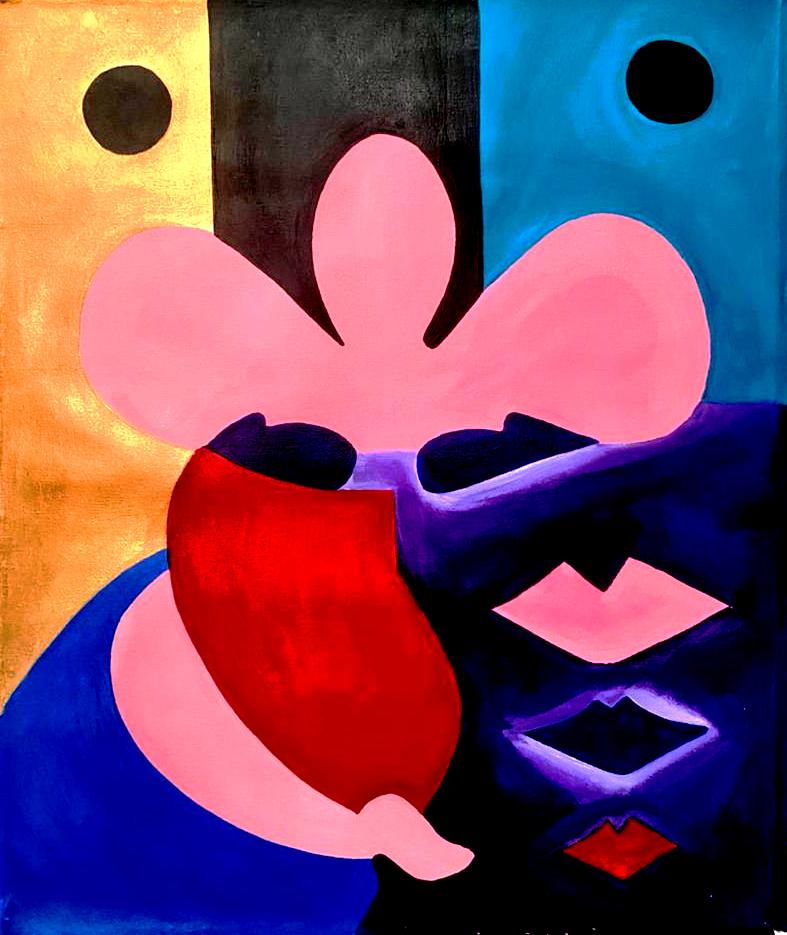
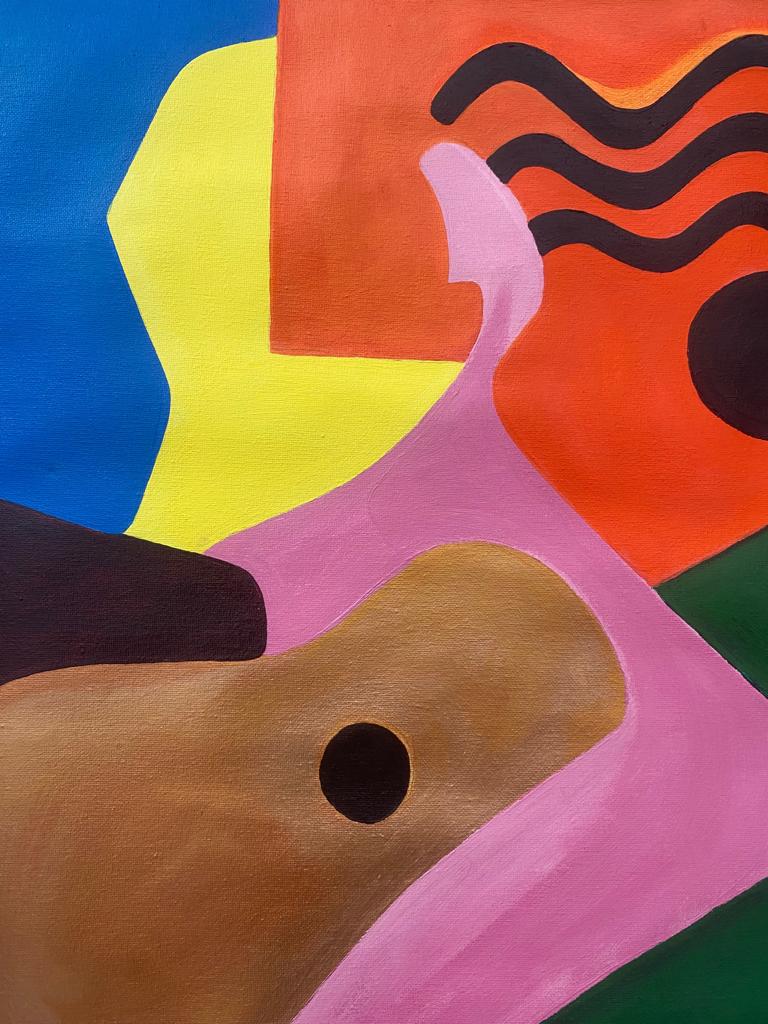
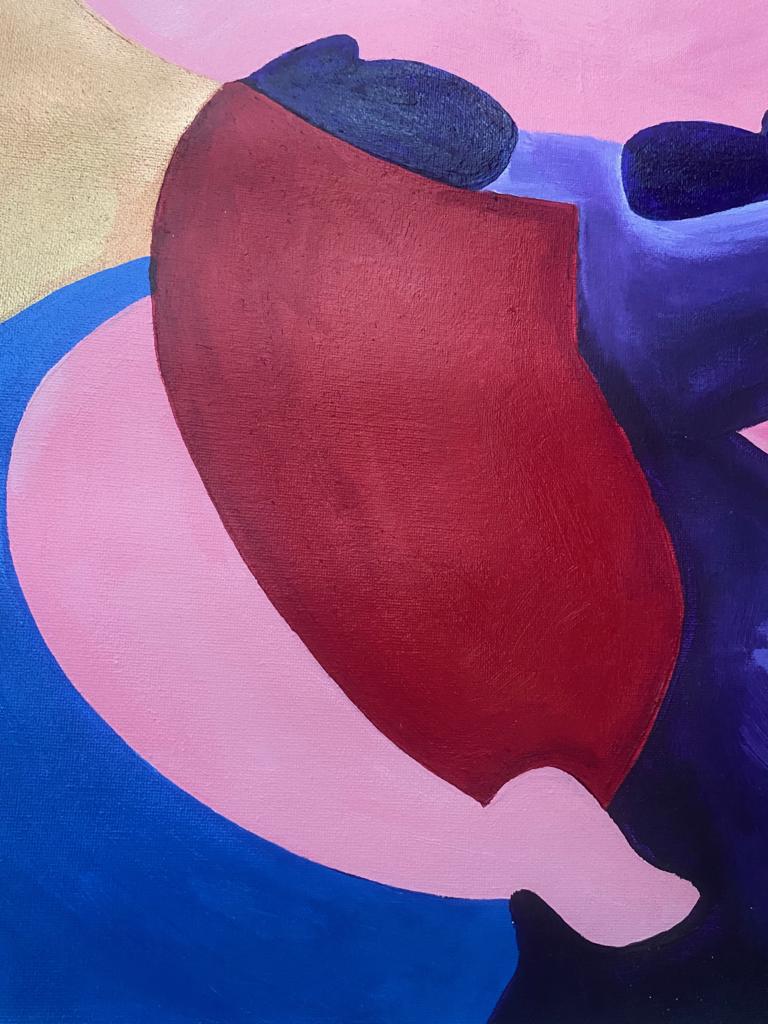
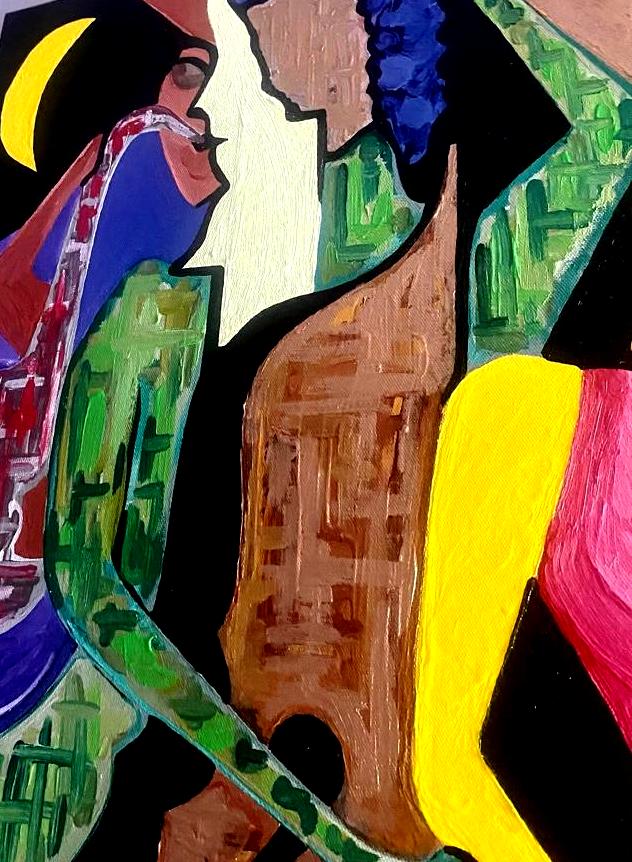
Yo he trabajado mucho el expresionismo en mis pinturas. Me gusta la idea y la libertad que me da para representar sin los limites que impone el «realismo» en las pinturas. Aqui os muestro algunas obras expresionistas y fragmentos y detalles de otras. Estas obras son de los principios del Siglo XXI…

+++++++

I have worked a lot with expressionism in my paintings. I like the idea and the freedom it gives me to represent without the limits imposed by «realism» in paintings. Here I show you some expressionist works along with fragments and details of others. These works are from the early 21st century…

GRACIAS – CHEERS

#art, Artistas latinoamericanas – Latin American Women Artists…

(Roser Bru – Foto El Independiente)

Han habido muchas (quizás tu no lo sepas porque no te lo han enseñado en la escuela de bellas artes) y siguen habiendo, cada día más, aunque en la facultad no las mencionen, pero yo aquí te las voy a presentar, al menos algunas de ellas.

+++

There have been quite a few, though you might not know them because no one has ever talked to you about them. But there are more and more every day, although you won’t hear about them at Uni. But here you will as I am going to introduce you to, at least, a few of them…

(No olvides darle el «like», compartir y comentar-Don’t forget to like, share and comment)

GRACIASCHEERS

#music, Great American Bands Part 7: Chicago!

(Photo Telemadrid)

Got to say that Chicago has always been up there with me as far as great, phenomenal, bands go. I first heard them when they released Chicago Transit Authority (1969). They were jazzy, bluesy and rocked like hell, with an incredible guitar player (Terry Kath), the record included songs like «I’m a Man» and «Beginnings«. They came to Europe in the same year…

(Wikipedia/Public Domain)

Then came 1970 and Chicago II was released with one of my faves, «25 or 6 to 4«… Then 1971 and Chicago III with Kath singing «An Hour in the Shower«… Then in 1978 Terry Kath dies from an accidental shooting… And the band transforms into the Chicago of the 1980’s a soft rock band producing hit after hit. Although I was never a fan of soft rock, I did love their music. I remember telling younger friends that the «real» Chicago was the one from the 1970’s…

Yet, Chicago is definitely a super-group, a legend… Terry Kath’s amazing guitar solos is classic… And the voice of Peter Cetera is iconic in rock as is the sound of Chicago’s brass section…

What do you think? This or that?

CHEERS