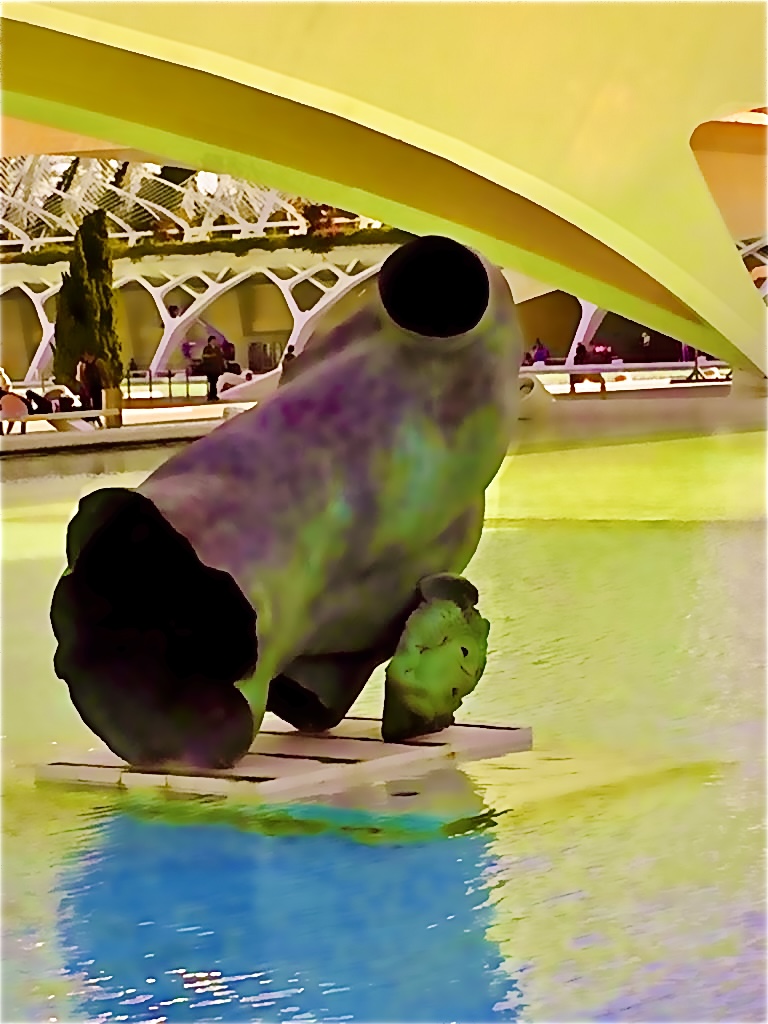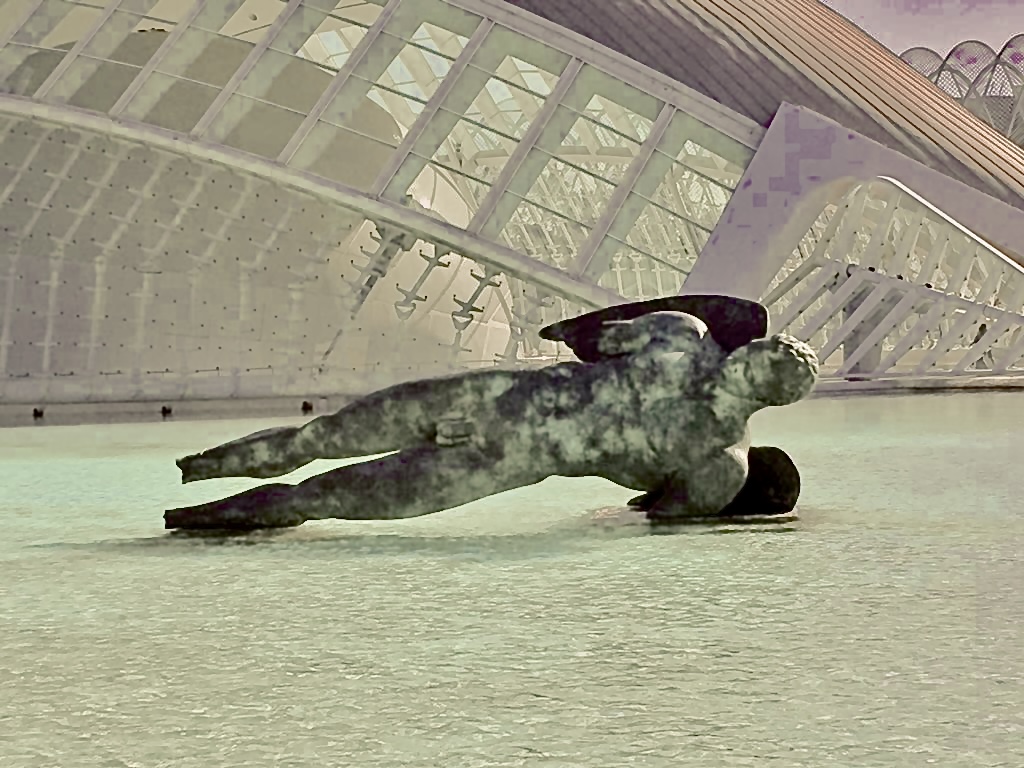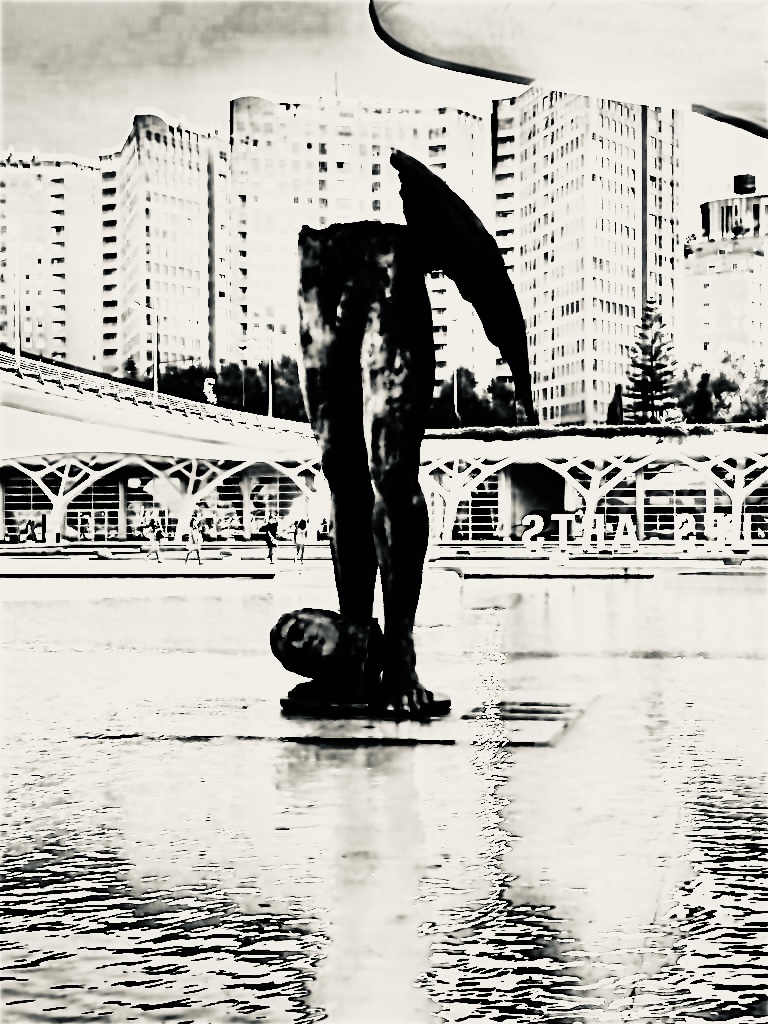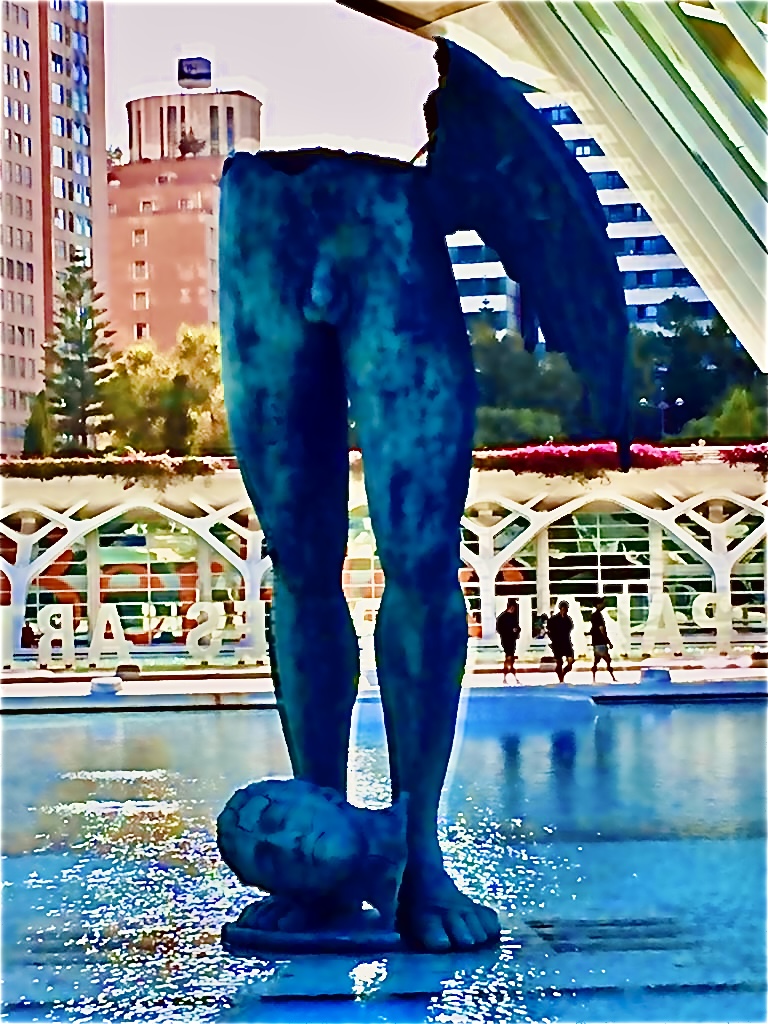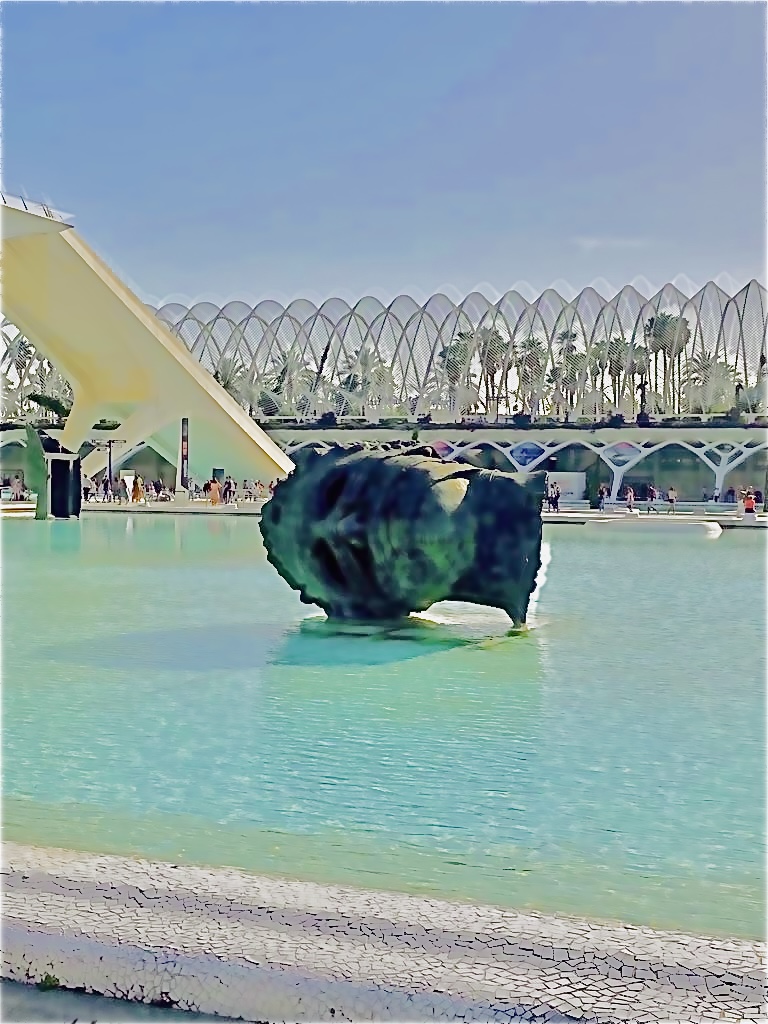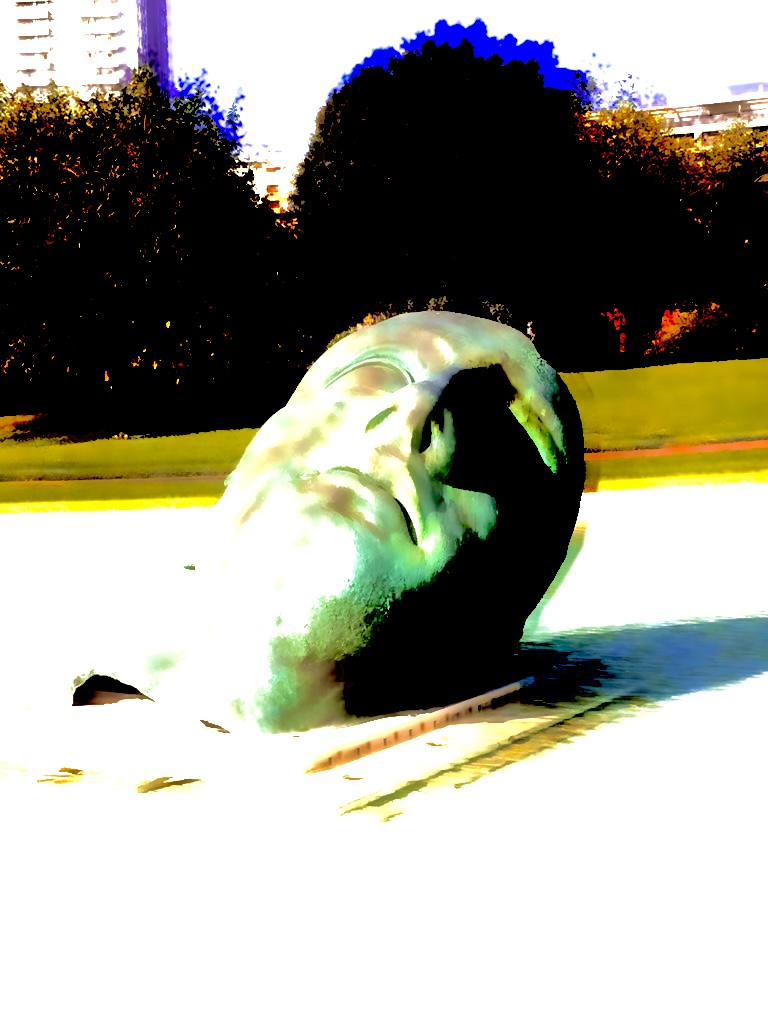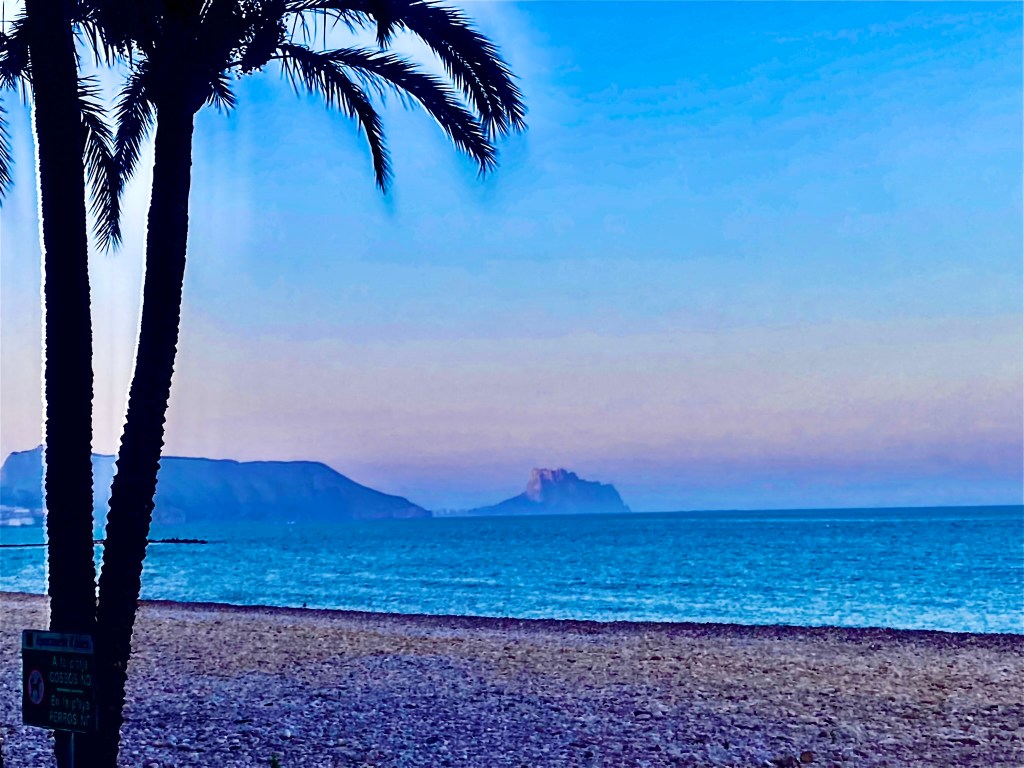
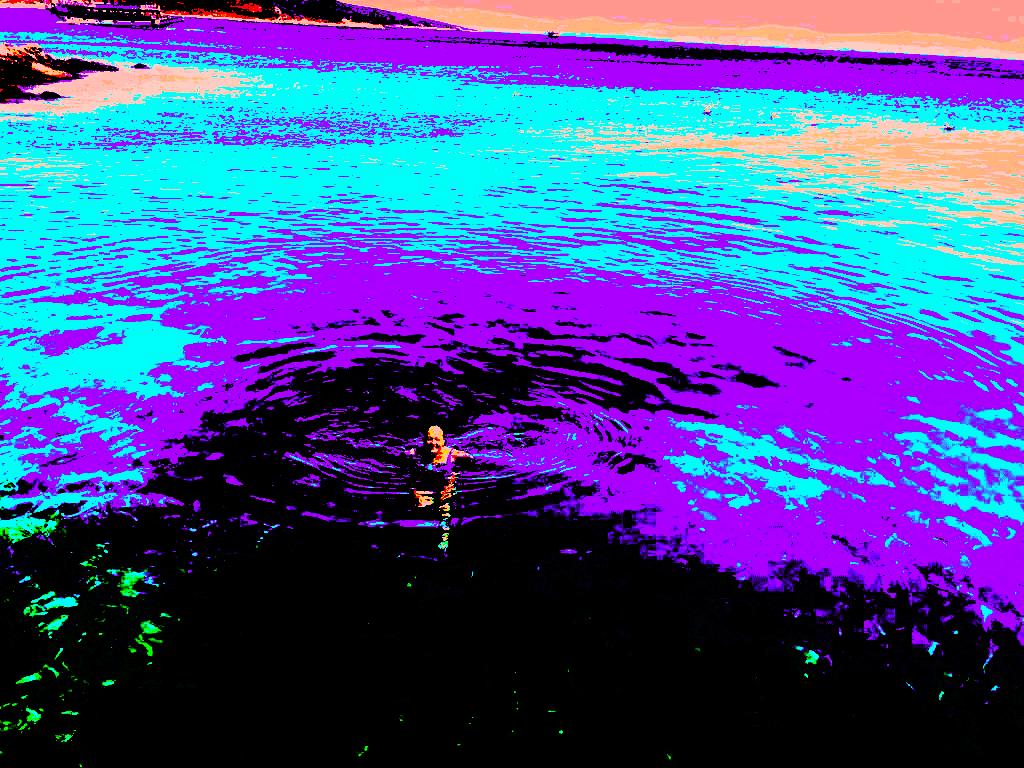
En las orillas del Mar d’Ella – On the Shores of the Sea of She…

(Image property of FBC, Omnia Caelum Studios Valencia. All Rights Reserved)

Todo lo ha dominado el hombre…

¡Pues claro! Desde que existe el universo nos han dicho que Él creo a él y de la costilla de él, Él hizo a ella. Ella no era más que una mujer, y muy desobediente pues fue a comer de la fruta prohibida y le dio también a él y eso causó que ellos, y por ende la humanidad, fuesen expulsados del Eden, o sea, del paraíso. Bueno, algo así…

La Grecia antigua, Roma, Egipto, Persa, China, y los demás imperios de los tiempos de la antigüedad remota fueron todos dominados por grandes hombres, e.g. Alejandro Magno, Julio Cesar, Ramsés II, Ciro el Grande, Kangxi el Grande…

¿Querría decir esto que no habían mujeres capaces de regir sobre un imperio?

¡Vamos! ¡Claro que no! Pero no las dejaban hacer nada de eso. Si, claro que conocemos cuentos de la Reina del Sur, de Cleopatra, de Juana de Arcos, y de otras reinas del medioevo y del renacimiento, pero fueron pocas.

Y, ¿La mujer común y corriente, que ni era reina ni santa? ¿La que hubiera querido ser escritora, pintora, científica, medico?

Pero ya ha cambiado la cosa y se están tomando los pasos necesarios para garantizar la igualdad y se está respetando mas y mas a la mujer y también a otros seres discriminados.

Por eso me detuve a la orilla del Mar d’Ella a verla nadar como una sirena…

__________________________________________________________________________________

Man dominated everything…

Of course! Since the dawn of the Universe we have been told that He created he, and from a rib He took from he, He made her, a woman. And quite disobedient she turned out to be. She ate of the forbidden fruit and gave he to eat as well. This caused he and she to be expulsed from Eden, or Paradise. Well, something like that…

Ancient Greece, Rome, Egypt, Persia, China, and the rest of the great empires of antiquity, were all dominated by men, e.g. Alexander the Great, Julius Caesar, Ramses II, Cyrus the Great and Kangxi the Great…

Can this mean that there were no women capable of governing an empire?

Come on! Of course not! But they were not allowed to do anything like that. Yes, we have heard about the Queen of the South, Cleopatra, Joan d’Arc and other queens of medieval times and the Renaissance, but there weren’t really that many.

And what about the normal, common woman, who was neither a queen or a saint? The one who wanted to be a writer, a painter, a scholar or a scientist?

But things have changed. Steps are being taken towards equality. Women are respected more as are others who have always been discriminated.

Because of that I stood at the shores of the Sea of She to watch her swim like a mermaid…

Francisco Bravo Cabrera, 16 AUG 2022, Valencia, España.
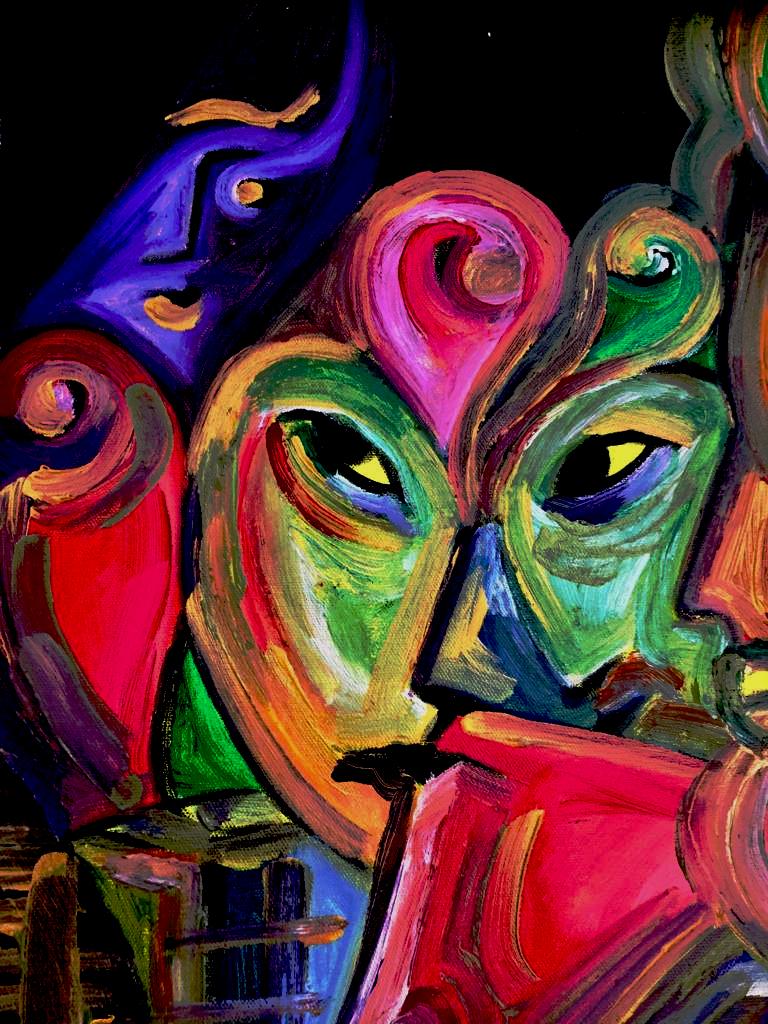
#poem, «Struggle»

(«La lucha» oil on canvas, original work by Francisco Bravo Cabrera/All Rights Reserved)

STRUGGLE

They’ve attacked like wild marauders in the night
that lay siege to a walled, medieval city.
They swarm in, capture us,
and throw us in the deepest, darkest dungeon…
But soon, like devil hornets they come in and break
the darkness of this hole and bind us…
By the light of the rising sun they take us and throw us off the cliff,
and we fall upon the rocks below,
our bodies now crushed are washed clean by the waves of the sea.

Violently we have been treated,
love and kindness quite defeated.
Cruel harsh blows we have received,
and our dreams have all been seized.
We are thunder without lightning,
clouds without rain,
dust without wind,
fire without heat…

Who will come to render aid?
Who will be the brave Samaritan?
Who will lend us one brief moment
and a handful filled with water
to alleviate this heat?

(Francisco Bravo Cabrera, Valencia, 01 NOV 2022)

+++++++++++++++++++++++++++++++++++++++++++

The ‘struggle’, a ‘struggle’… Something dynamic, honourable, heroic, well, I would even say necessary in this day and age… No, it isn’t any of those. It is merely a manifestation of the dream we are all dreaming. The reverie we inhabit and find so appealing that we do not even want to consider waking up.

When you hear someone say “we must fight!” Or “life is a struggle!” Or they talk about the “struggle of the working class” or the “struggle for equality”, or other such slogans that have become like the cries of the new prophets, remind them that what you see is what you get. Remind them that life is and one need do nothing more than breathe to live. And to those who fall in love with those causes, for the which one must struggle, tell them to bugger off because workers are and will continue to be the slaves of the capitalists. The only place where they are allowed to struggle is at the factory.

And if they talk about the struggle to liberate the poor, remind them that the lot of the poor has never changed. They will always be pathetically trying to live, disgusted and sick of their poverty. But nothing changes. There were poor at the beginning, they are now and will be at the end.

Human beings are not valued for their humanity, for their likeness to God. They are valued for what they have. There has never been a government, left wing or right wing, that has ever opted on behalf of people. No society has ever valued a man or a woman for the miracle that they are. No one values life.

I would like to illustrate my thoughts with a short story that someone told me once in a country far, far away. I met this person briefly, admired him and never saw him again.

It seems that there was a travelling salesman who fancied himself a jolly joker. So one afternoon he arrives at a pumpkin patch owned by a farmer and his small family. Seeing that no one was around he decided to play one of his practical jokes. He sees a pumpkin that was close to ripening and he unceremoniously defecates within it and leaves.

However, upon his return through that same part of the country, he passes by the pumpkin patch and sees the farmer. He approaches him and with a brave smile on his face says,

“You know I passed by here a couple of weeks ago, and I defecated on the pumpkin that was about to be ripened. I hope you understand, it was only a joke…”

The farmer turned, looked towards his little home and shouted to his wife,

“Eleanor, remember that pumpkin pie we said tasted like shit?

“Yes!” She shouts back.

“Confirmed! It was shit!”

So well, my friends, when something tastes like shit, it most probably is and don’t let them tell you it’s a pumpkin pie…

#travel, Andando por Tarragona – Walking Around Tarragona

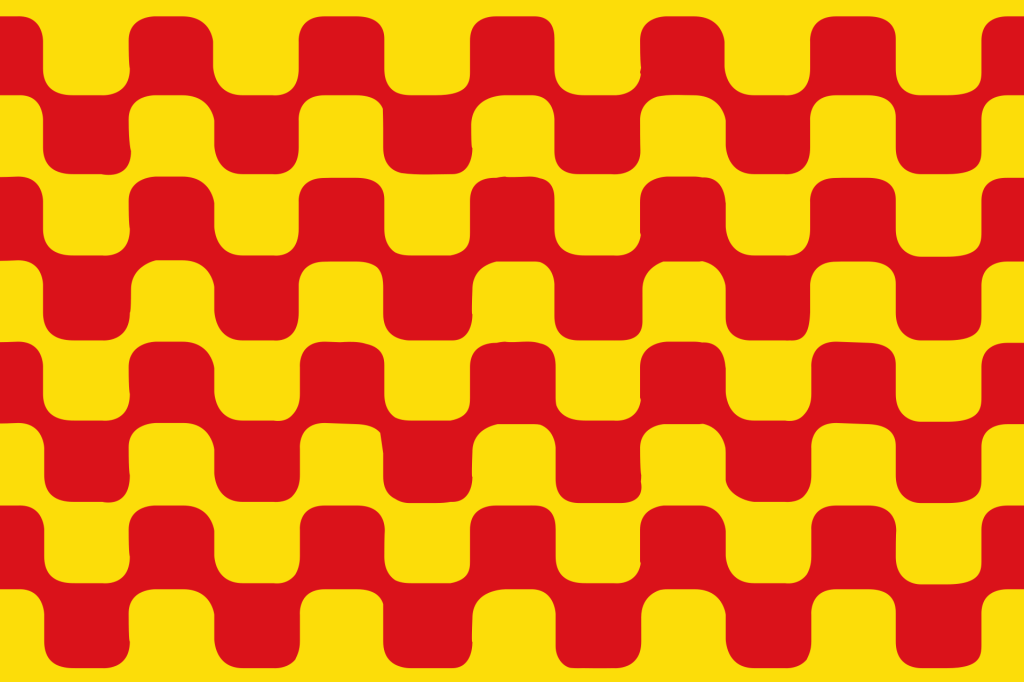
(Ebrenc(ca)/https://commons.wikimedia.org)

Llegamos un día bastante nublado, pero aún así, Tarragona brillaba con sus encantos… Diría que la ciudad te invita a pasear sus ramblas y su passeig maritim, a su parte alta, siendo esta la ciutat vella, romana, medieval, misteriosa y definitivamente histórica… Tarragona es la capital de la provincia de Tarragona y de la comarca del Tarragonés… Tarraco fue una de las ciudades más importantes de la Hispania romana… Tarragona fue declarada Patrimonio de la Humanidad por la UNESCO en el año 2000…

+++

We arrived on a rather cloudy day, but even so, Tarragona was shining with its charms… I would say the city invites you to stroll its ramblas and passeig maritim… Walk up to its upper part, which is the ciutat vella, Roman, medieval, mysterious, and definitely historical… Tarragona is the capital of the province of Tarragona and the Tarragonés region… Tarraco was one of the most important cities in Roman Hispania… Tarragona was declared Patrimony of Humanity by UNESCO in the year 2000…

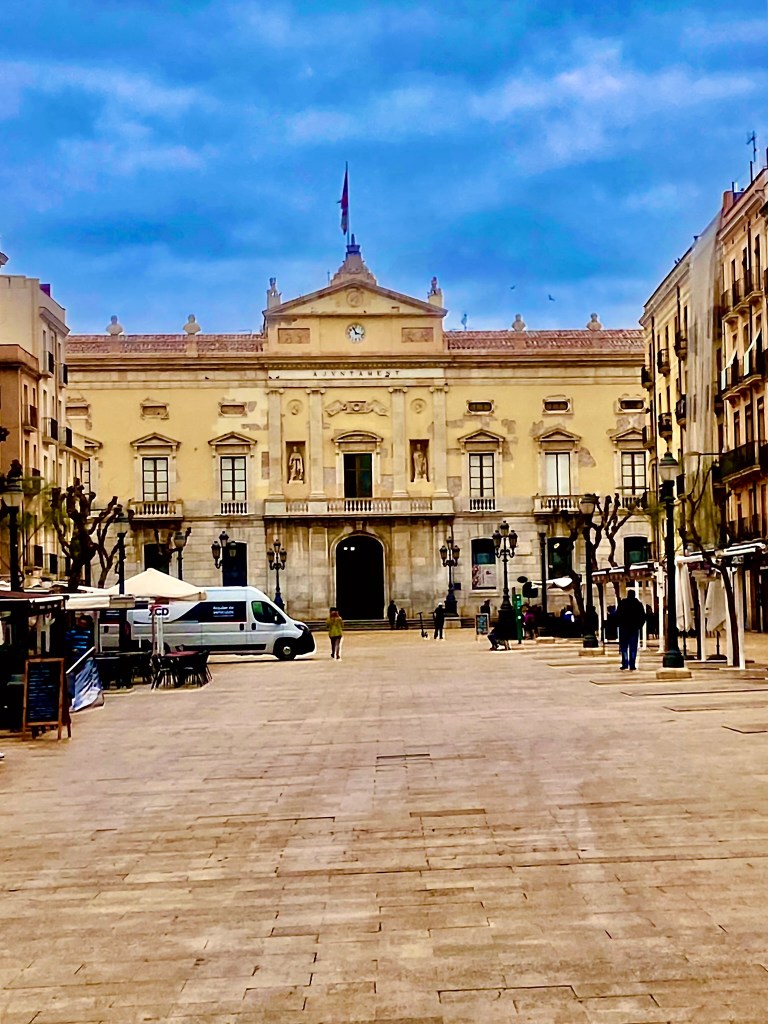
(Plaza de l’Ajuntament/City Hall Plaza/Foto/Photo Francisco Bravo Cabrera/Derechos Reservados/All Rights Reserved)
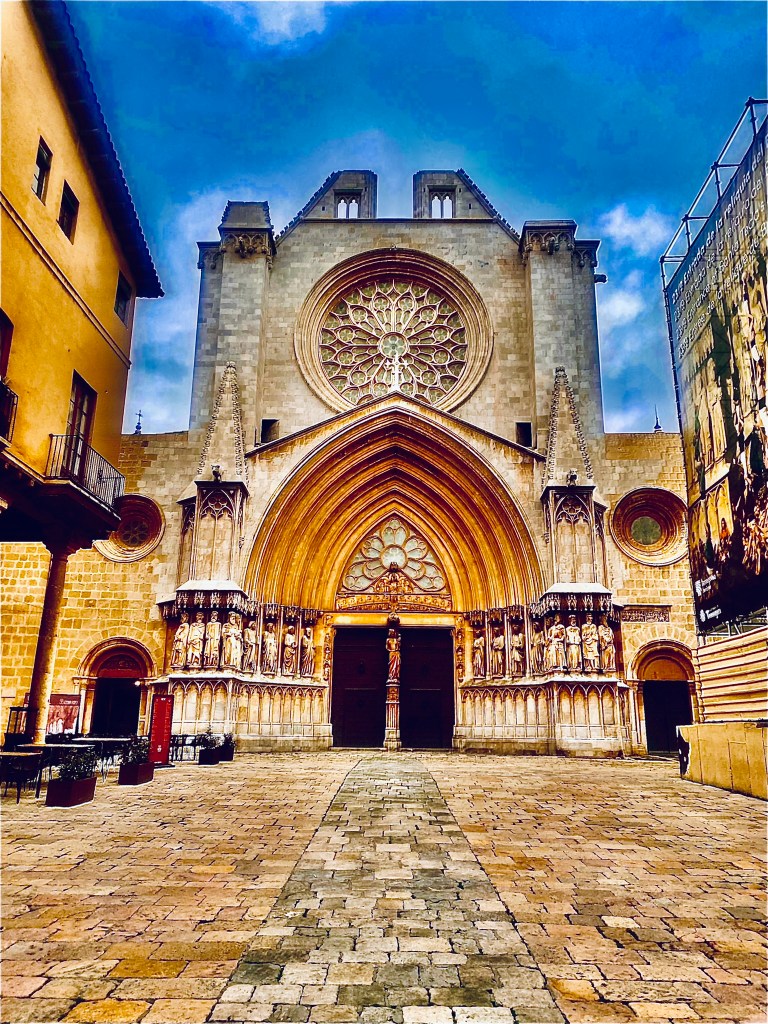
(Catedral de Santa Tecla/Cathedral of Saint Thecla/Foto/Photo Francisco Bravo Cabrera/Derechos Reservados/All Rights Reserved)
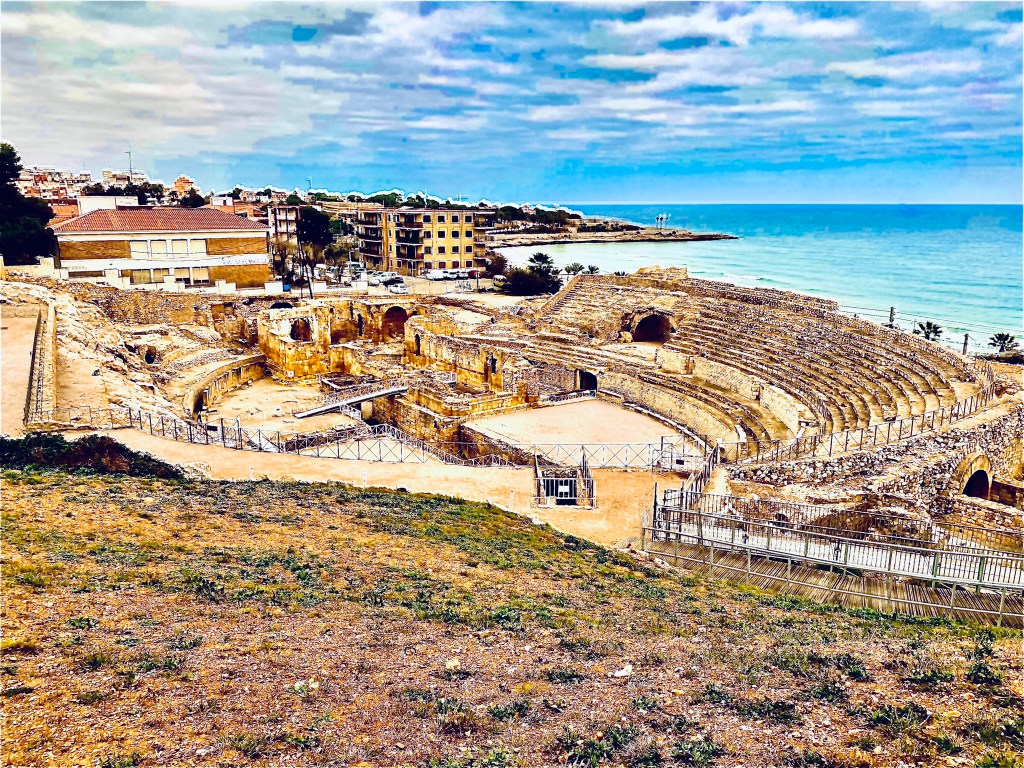
(Anfiteatro romano del segundo siglo A.D./Roman Amphitheatre from the Second Century A.D./Foto/Photo Francisco Bravo Cabrera/Derechos Reservados/All Rights Reserved)

+++

(no olvides darle el «like», comentar y compartir – don’t forget to like, comment and share)

GRACIAS – CHEERS

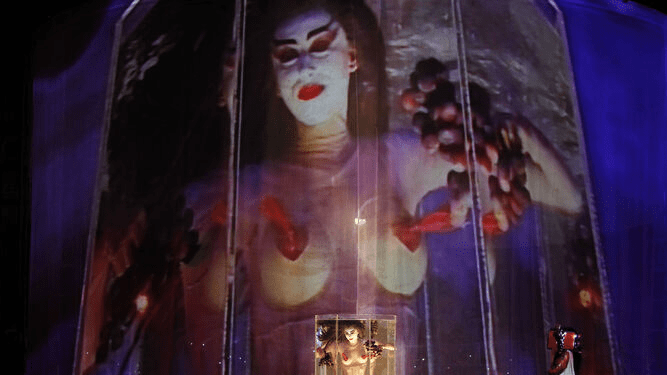
#culture, #music, #art, CARMINA BURANA

(Photo Granada Hoy)

The Codex Buranus – The chants of the Beuern Monastery

The Codex Buranus, also known as the Carmina Burana, is a medieval manuscript that contains a collection of poems and songs. It was created in the early 13th century by the monks of the Benedictine monastery of Beuern (modern-day Benediktbeuern) in present-day Germany.

The codex consists of 254 parchment leaves and contains a total of 315 songs, written in Latin and Middle High German. The content covers a wide range of topics, including love, springtime, gambling, and the fickleness of fate.

The collection is known for its lively and often satirical nature, as well as its frank and sometimes explicit language. The songs express a range of emotions, from joy and celebration to sorrow and longing.

One of the most famous pieces from the Codex Buranus is «O Fortuna,» a powerful and dramatic hymn that has been widely performed and adapted in popular culture.

The Codex Buranus is an important source for understanding medieval music and poetry. It provides valuable insights into the cultural and artistic expressions of the time and continues to captivate audiences with its timeless themes and captivating melodies.

In 1847, Johann Andreas Schmeller gave the title Carmina Burana to the manuscripts. Carl Orff, a German neoclassical composer born in Munich (1895), chose 24 of the songs to compose the homonymous cantata. Carl Orff’s Carmina Burana premiered in Frankfurt in 1937.

I had the opportunity two years ago to attend a performance of Carmina Burana here in my city by a very strong and excellent company La Fura dels Baus. It was truly an enjoyable event. I would urge you, if you like opera-style musical theatre that you do not miss it if a performance comes to your town.

Here is «O Fortuna» for you… Not only is it performed and played by classical music groups, but, as you will hear here, by Therion, the Swedish symphonic metal band. Enigma also interpreted it and in 1981 it was used in the movie Excalibur.

CHEERS

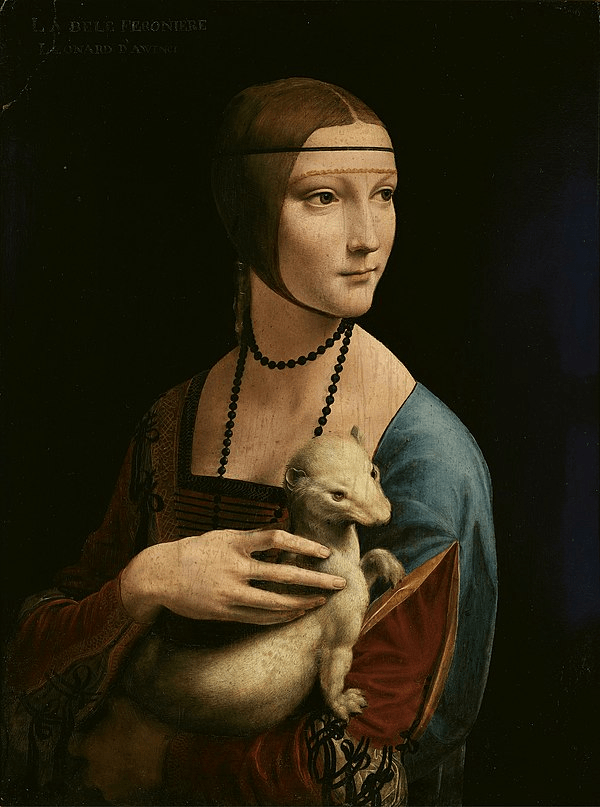
El mejor retrato de Leonardo: «La dama del armiño»

(La dama del armiño/The Lady with an Ermine)

En italiano se titula «La dama con l’ermellino». La dama es Cecilia Gallerani, amante de Ludovico Sforza, duque de Milán. Leonardo, cuando pintó el cuadro estaba al servicio del duque. Cecilia nació en 1473 y no era de familia perteneciente a la nobleza. Llegó a la corte con 15 años e inmediatamente se convirtió en la amante de Ludovico…bueno, una de ellas…y permaneció la preferida hasta que el duque se casó, en 1491 con Beatriz de Este.  La chica era tan guapa que la llamaban «Musa» y «Donna docta», además de ser comparada con las bellas clásicas como Aspasia de Mileto, esposa de Pericles, o Axiotea de Fliunte, filosofa y alumna de Platón.​

El cuadro está en el Museo Czartoryski y es propiedad del gobierno de Polonia.

Simbología: El armiño era un animal que identificaba la aristocracia y se asociaba con ella, quizá entonces era una alusión a la relación de Cecilia con el duque. Lo blanco puede ser símbolo de pureza. En los bestiarios medievales, el armiño iba asociado a virtudes tales como el equilibrio y la tranquilidad. Quizá esta fue la forma de Leonardo para describir a Cecilia Gallerani y darle las mismas características que el armiño. También tenemos que en el emblema de Ludovico estaba «L’Ermellino», o sea, un pequeño armiño. Igualmente podríamos decir que Leonardo igual estaba haciendo alusión al apellido de Cecilia (Gallerani) ya que en griego es galé.

Bueno, aparte de todos estos datos históricos…importantes e interesantes…pienso que el cuadro es muy superior al de «La Gioconda». En primer lugar tiene mas puntos de referencia. La modelo tiene una mirada clara, pero misteriosa. Mira hacia un lado mientras acaricia al animalito, el armiño (o puede haber sido un hurón). Como ya hemos visto, el armiño, ya que aparece en el escudo de Ludovico Sforza, representa la casa ducal milanesa y ella, la amante niña, lo acaricia, pero con una mano que casi parece una garra…

Para mi estas cosas hacen del cuadro una delicia. Es uno de los que menos daños tenia, aunque si sufrió algunos durante las guerras. Bueno, esa es mi opinion, y ahora quiero saber la vuestra. Yo se que hay por doquier muchos amantes de Leonardo y de la «Mona Lisa» y que van a defender sus criterios y eso yo lo respeto, siempre que sea con argumentos solidos, validos y bien expuestos. Decidme, ¿que pensáis?

Aquí os dejo algunas cosillas mas de Leonardo…

(2021)

Gracias…

Andando por València – Walking Around València

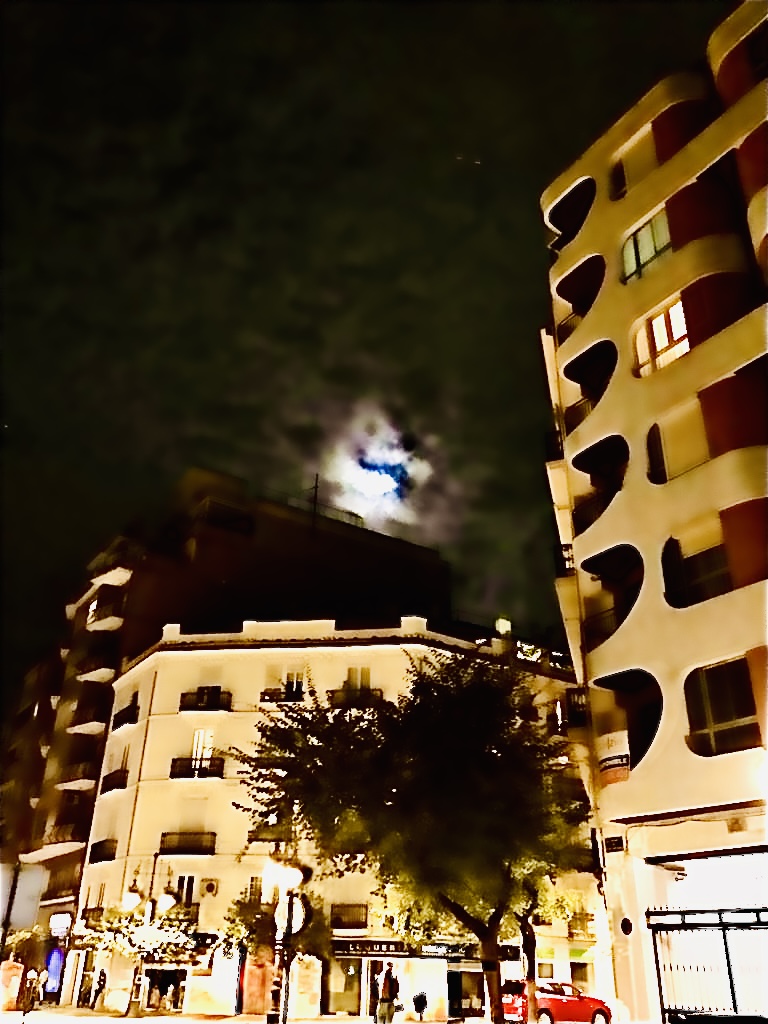
(La luna de València/The Moon of València/Foto de FBC/Photo by FBC/Derechos Reservados/All Rights Reserved)

La luna de València… para el que se quedara sin entrar a la ciudad, en tiempos medievales, las cosas le podrían ir muy mal y podría pasar una mala noche mirando la luna de València…

The Moon of València… For those who did not enter the city, in Medieval times, things might not go that well and they could have a terrible night indeed looking at the moon over València…

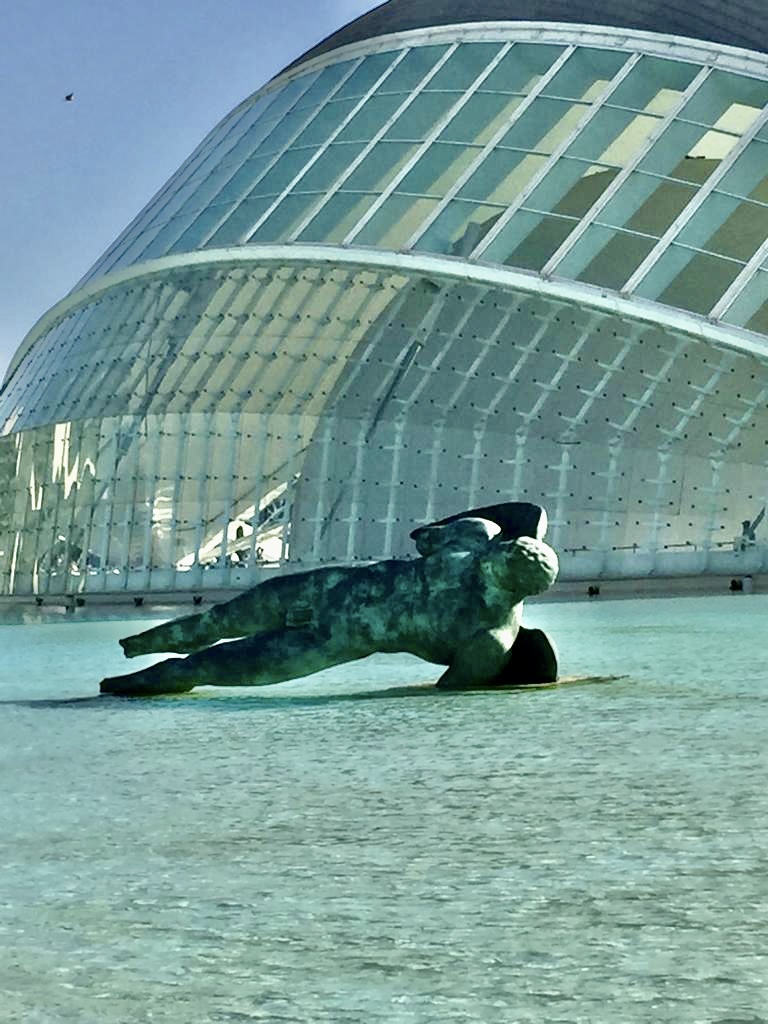
Pero esos tiempos ya han pasado y ahora nadie se queda sin mirar la luna de València tranquilos, en casa, en un bar o donde les parezca mejor. Y de día, podrán pasar por uno de los lugares mas emblemáticos de nuestra moderna ciudad, Ciutat de les Arts i les Ciències. Esta belleza de edificios creada por el arquitecto valenciano Santiago Calatrava esta situada en los Jardines del Turia, o el río , como le decimos nosotros.

But those days are long gone and now everyone can enjoy our moon from home, the bar or from anywhere one pleases. And during the day one can spend time in one of our most emblematic places the City of Arts and Sciences. This beautiful group of buildings, created by Valencian architect Santiago Calatrava, is located in the Gardens of the Turia, or simply «the river» as we call it.

Aquí lo que hoy he visto…

Here is what I saw today…

Ojalá os haya gustado… En el próximo vídeo podrías ver todo el complejo de la Ciudad de las artes y las ciencias…

Hope you liked it… In the following video you can see the whole complex of the City of Arts and Sciences…

(2020: Si lo has visto y te ha gustado no olvides darnos el «like»/If you watched and liked, please don’t forget to give us a «like»/Gracias/Thank you)

Gracias…

Cheers…

#travel, Do You Know Altea?

(Photo by and property of Francisco Bravo Cabrera/All Rights Reserved)

And Altea, in Alicante province of Comunitat Valenciana, is not just for summer, it has a most beautiful medieval city that is a must to see during your visit to Spain…

(2023)

Cheers…

#opinion, Lo que dice Bodo Vespaciano – What Bodo Vespaciano Says…

(Bodo Vespaciano/Represenstado por un actor/Actor portrayal)

¿Censura o Estupidez?

Creo que esto ya es el colmo de los colmos, ¡Increíble! Pero cierto. Pues resulta que la famosísima y bellísima “Mary Poppins” es ahora peli no apta para todos los públicos del Reino Unido y todo por una palabrilla, “hottentot”, palabra despectiva que se usaba para describir a los negros del África… Esto une a “Mary Poppins” a una lista enorme de pelis, libros, obras de teatro etcétera que han sufrido también censura, cambios y revisiones para hacerlas “políticamente correctas” según la nueva moral…  Ya han sufrido este vejamen los personajes de “Looney Tunes”, y las películas clásicas tales como “Lo que el viento se llevó ,”  “Lolita” de Stanley Kubrick, “Manhattan” de Woody Allen y un montón mas…  Los moralistas, peores diría yo que los de la época de la Santa Inquisición, han decidido que todas estas…y más…se tienen que depurar de contenido sexual, racista, inmoral o despectivo antes de que las nuevas generaciones las vean y se vayan a podrir… Ya se acabo la libertad de expresión, la revolución sexual, la creatividad sin fronteras. Ahora hay que marchar al ritmo del tambor de los nuevos estalinistas y maoístas que imponen su moralidad y lo hacen a través de la censura.  Pero yo me pregunto, ¿Quiénes son estos tíos y por qué les hacen caso? Al menos yo me cago en la noticia…

+++

Censorship or Stupidity?

This is the epidemy of stupidity! Unbelievable but true! Check this out, «Mary Poppins» is now rated PG and not suitable for all audiences in the United Kingdom! And it’s all because of one insignificant little word: «hottentot.» This places «Mary Poppins» among many other movies, books and theatre pieces that have been banned, revised or otherwise «cleansed» so that new audiences won’t be polluted by their bad, politically incorrect examples, themes or words used. They were made «politically correct» by the new Inquisitors, who, in my opinion, are worst than the ones from the Middle Ages… Others have suffered the same or a worse fate like the characters of «Looney Tunes”, and movies such as «Gone With the Wind», Stanley Kubrick’s «Lolita» and Woody Allen’s «Manhattan», to name but a few. The new moralists have decided that the sexual content, racial content or violence in these (and all the others not here mentioned) must be purged and they’ve done so. Books have also suffered the same lunatic censorship… So folks, Medieval times is here again! Forget about the sexual revolution, freedom of expression, creative liberties, now you march to the drums of the new Stalinists and Maoists which have imposed their morality upon you! And all I really ask myself is who the feck are these guys and why do people listen to them?

GRACIAS – CHEERS

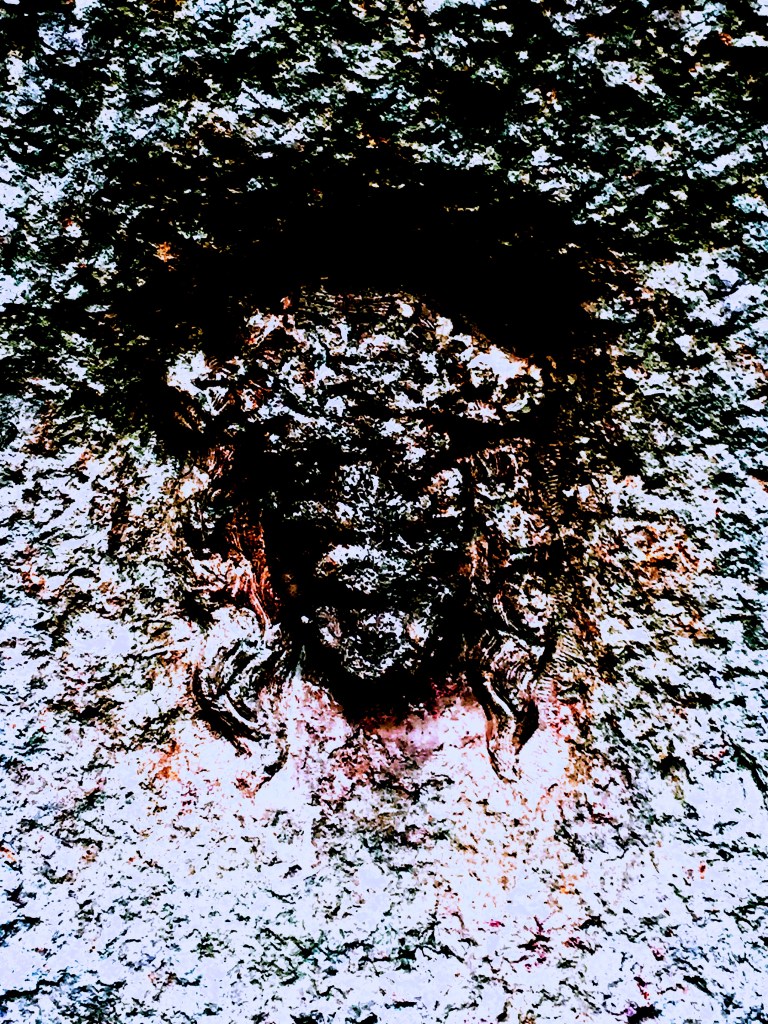
Poetry Sunday: (Euro-Ku) «Carved in Stone»

(Image property of FBC, Omnia Caelum Studios Valencia, All Rights Reserved)

As timeless as space and in spaces within moments that surround us, filling our miseries with gladness,

his power is carved into the rocks of the Earth, with a love so long, so deep, so ageless,

that it guides our life with light though hidden in the mountains, carved into the cliffs or sculpted in the bottom of the Sea…

C.2022, Francisco Bravo Cabrera, 19 March 2022, Valencia, Spain

__________________________________________________________________________________

The Euro-Ku is a form of poetry that I developed very recently, see: (https://paintinginvalencia.wordpress.com/2022/02/23/my-new-poetic-invention-the-euro-ku/)

Basically it is my homage to the traditional Japanese Haiku. I’ve always loved its simple structure, its short verses and the way that Haiku poets used the power of synthesis to express a thought intimately linked with nature, or with daily life and turn it into a meditation.

Of course the «Euro-Ku» does no such thing. On the contrary, it seeks simple words, easily understood verses and the language of the common man/woman. It still has only three verses, but there is no need to count syllables, the verses can be as long as they need to be to allow the content message to be developed. Rhyming is optional. One thing that the Euro-Ku must have is an accompanying original photograph that also, in its own unique way, illuminates the message that the verses transmits.

The reason why I’ve called it «Euro-Ku» is because it is written from the philosophical perspective of a European and not with the mind of an Oriental. There are vasts differences. That is why, even though I loved the Haiku, I knew that I could not do it justice writing from the perspective of how I think as a European. The sister form is the Ameri-Ku, of course, the same rules apply but the perspective might differ quite a bit in new and exciting ways.

Cheers…

FOLLOW US HERE AT OMNIA CAELUM STUDIOS VALENCIA:

Web/Gallery: https://www.fbcart.wixsite.com/jazzart

YouTube: https://www.YouTube.com/@FranciscoBravoCabrera

Instagram: @Francisco_Bravo_Cabrera

Twitter (X): @euskadi_bakero

Artist Representative: “By Guloshka”

Instagram: @Guloshka

E-Mail: guloshka404@gmail.com

#poem, “Gertrudis Morejón” (Euro-Ku)

(Imagen propiedad de FBC, Omnia Caelum Studios València, Derechos Reservados)

Ya no se enfrenta a las sombras de humo que poblaban sus recuerdos,

ya sabe resistir y ya resiste sin temor, su compromiso, su valor,

es el futuro que la espera con abrazos y con besos y ella, con el filo intransigente de su coraza, conoce su razón.

C.2022, Francisco Bravo Cabrera, 08 de marzo de 2022, Valencia, España

Sígueme:

Web/Gallery: https://www.fbcart.wixsite.com/jazzart

YouTube: https://www.YouTube.com/@FranciscoBravoCabrera

Instagram: @Francisco_Bravo_Cabrera

Twitter (X): @euskadi_bakero

Artist Representative: “By Guloshka”

Instagram: @Guloshka

E-Mail: guloshka404@gmail.com