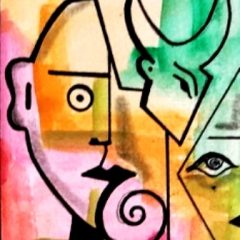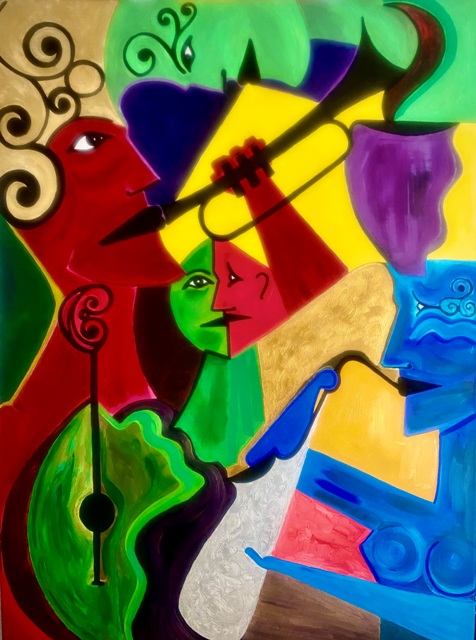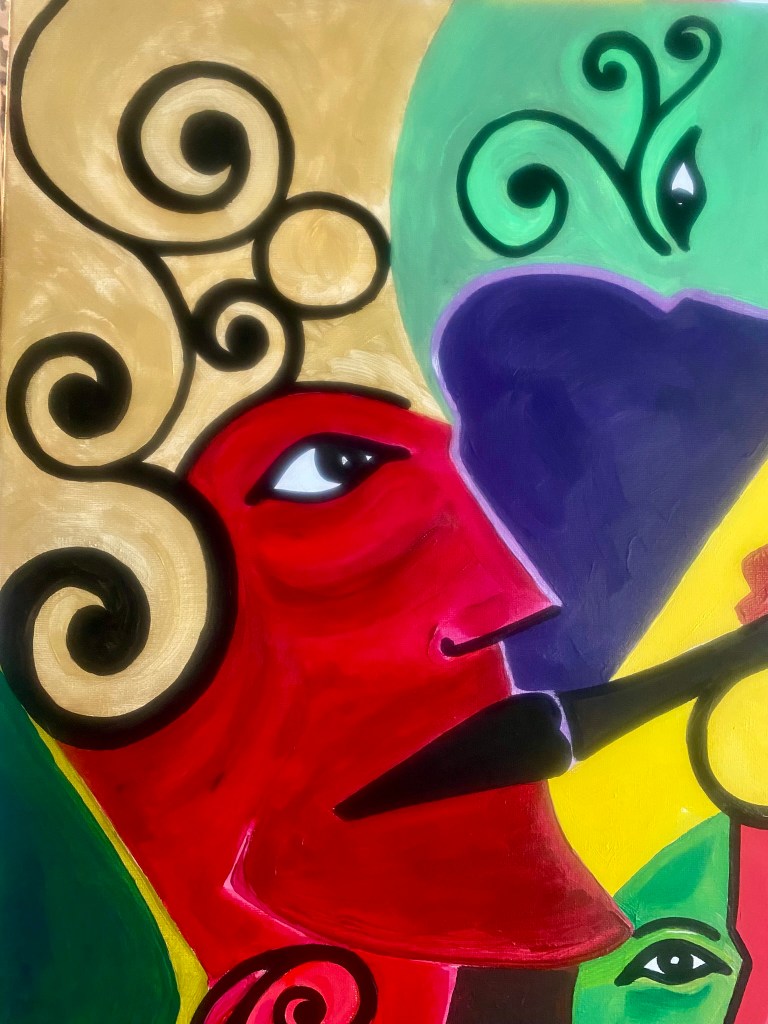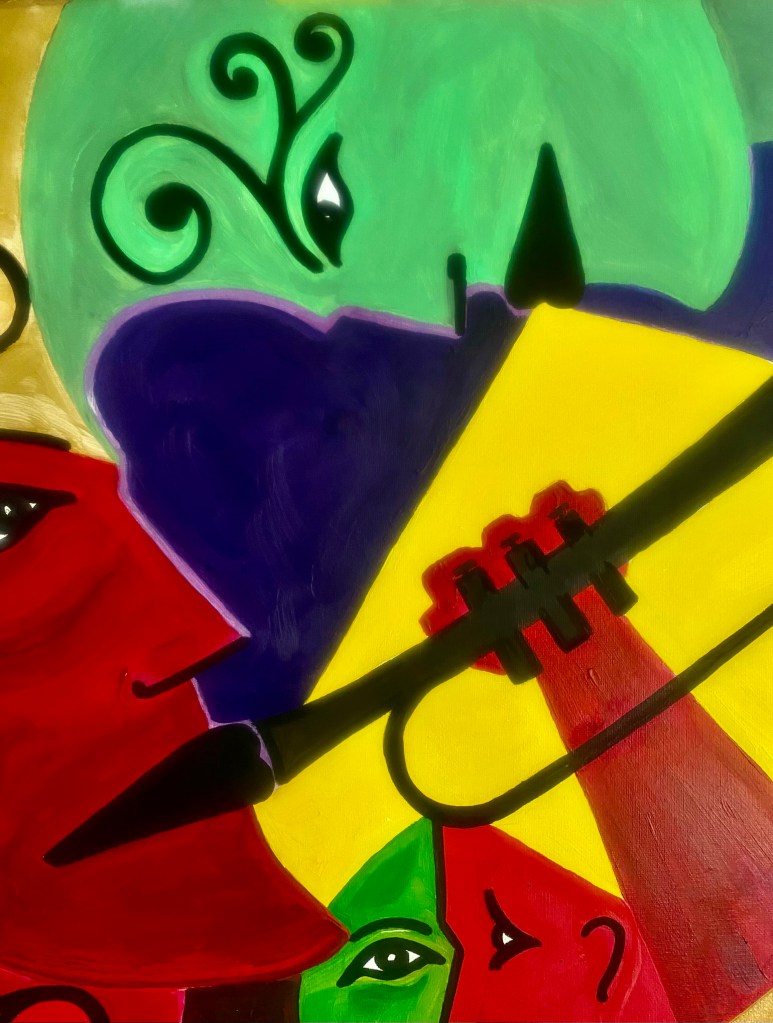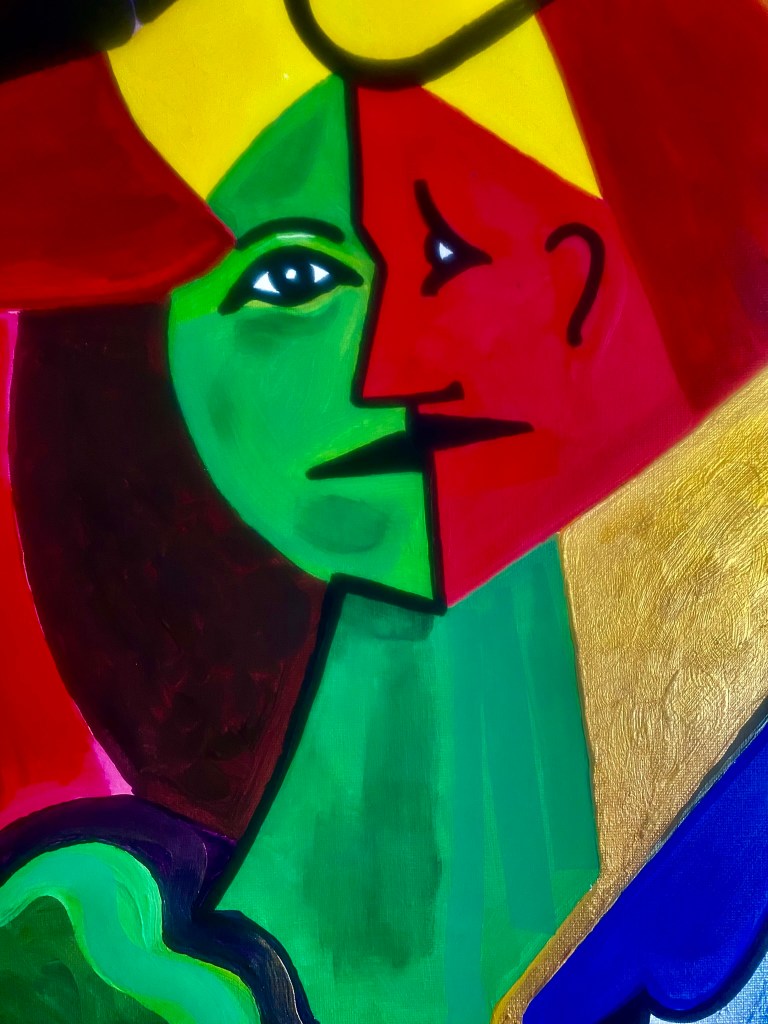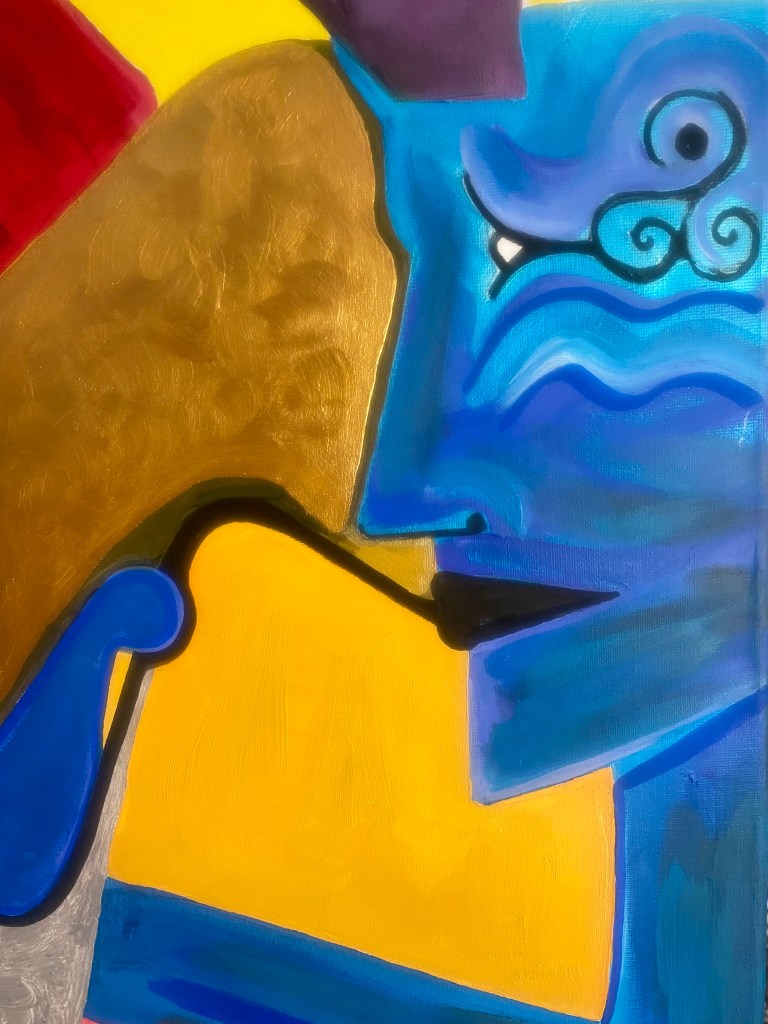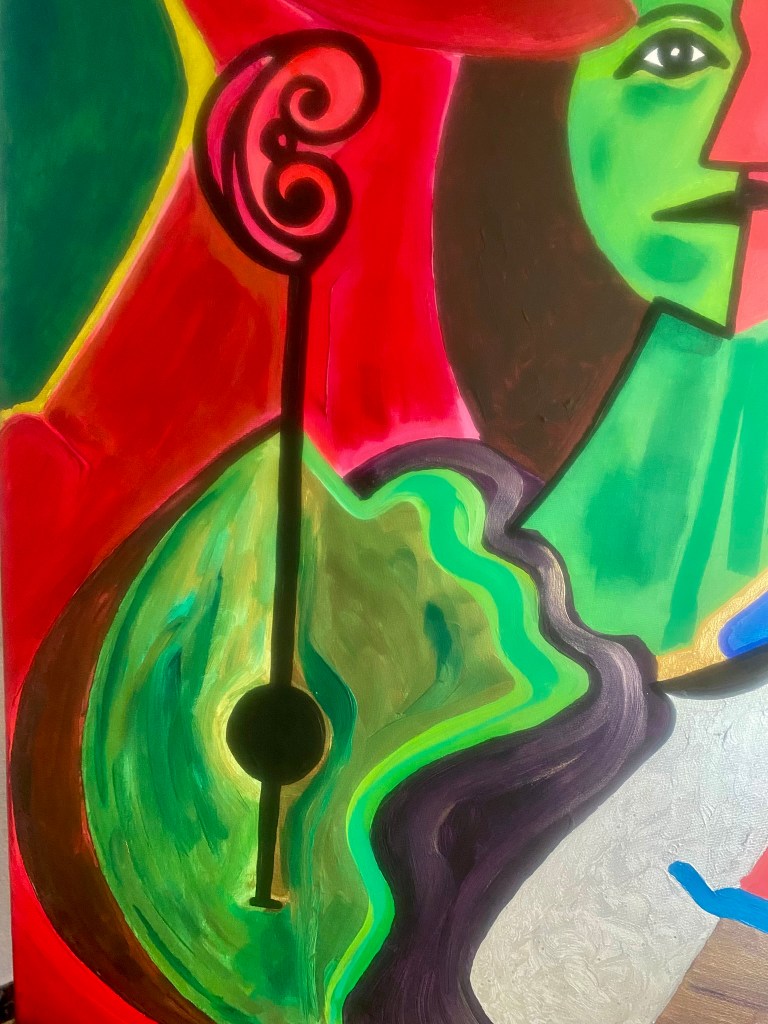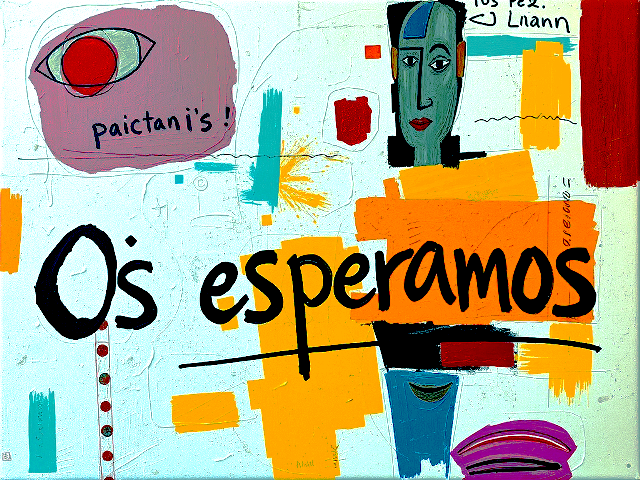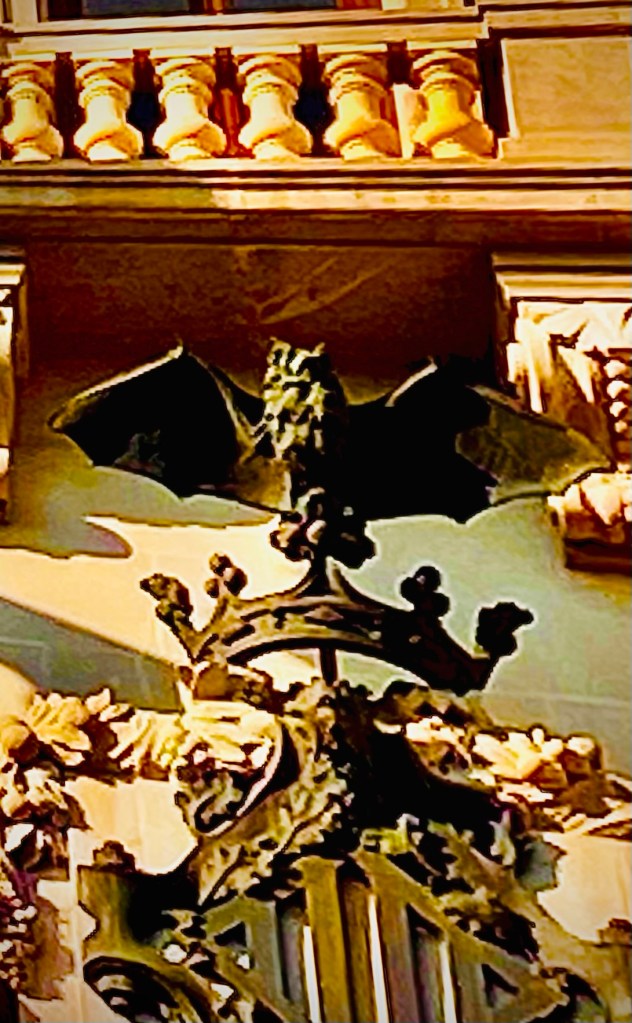
(«Jazz Dreams»/Francisco Bravo Cabrera/All Rights Reserved/Derechos Reservados)
Yo no busco que nadie entienda mi arte; el arte no necesita ser entendida. No hay que buscarle la quinta pata al gato, ni esperar algo lógico, racional o realista. Lo único que necesita el arte es un componente emocional y que logre una reacción visceral y emocional en el observador. Tiene que existir esa comunicación…
+++
I do not seek for anyone to understand my art; art does not need to be understood. There is no need to split hairs , nor to expect something logical, rational, or realistic. The only thing art needs is an emotional component that achieves a visceral and emotional reaction in the observer. That communication must exist…
(Can I get you to help our channel by giving us a like, a share and a comment, and even better, a subscription? Thanks!)
A veces vemos una obra supuestamente de arte y decimos «qué mierda» y quizá lo sea, pero es que hay obras de arte que realmente son de mierda. Si no lo sabias te invito a que veas el vídeo…
+++
How many times have we looked at a supposed artwork and thought it was complete shit? Many… But did you know that some art is really shit? Well, take a look at the video…
7) Marina Abramović. The «grandmother» of performance «art». Frankly speaking I didn’t always feel the same way about this grandmother, but once her complete life of «art» played out I saw that she was no artist that I could call valuable or useful to art history. The way she uses people is akin to abuse and the way she manipulates the observers (or admirers) is a total farce. Her supposed «chance» meeting with Ulay, her one time partner, was contrived. And contriving art is okay by me, but don’t pass it off as real. Therefore she makes my list. Perhaps I am not as disgusted with her as I am with many of the others that populate this top ten, but…
(ELLE Decor)
8) Tracy Emin. Let’s start by saying that her claim to fame came when her «Bed» became a work of art. Frankly it is a disgusting piece and it may just show how untidy and unclean she could be or could have been. I don’t know, I’ve never met her. At least if she did sleep on such a bed. The bed is surrounded with vodka bottles, used condoms and all manner of rubbish. Whatever it is, if art it is, it is bad, useless art. She cannot draw or paint, as you can plainly see in the photograph below. Yet, she is held as one of the great artists of the UK.
(Magazine Artsper)
9) Fernando Botero. The painter of volume, as he calls himself. But those silly little fat figures that he paints are not representative of volume. If you want volume look at the figures of Rubens or the portraits by Jenny Saville. Botero’s do not even represent cartoons. Everything he paints is the same. All the figures have the same blank or withdrawn expression. There is no magic, no power, no charm in his work, therefore he is most definitely in my list.
(Galeria Duque Arango)
10) Keith Haring. This artist and social activist made it to the top of the art world by making doodles. Yes, similar to the ones we all made in our high school notebooks when we were bored in class. There is no aesthetics in his work, and absolutely no rhyme or reason. They could have easily been made by a seven year old. And for a seven year old they might have seemed like art, but really, it is not good art at all for someone that considers himself an artist. He started out making these doodle on or close to galleries. Why didn’t he make them on truck stops on an interstate highway?
(Financial Times)
Well here it is my top 10 most useless artists. I can re-arrange them as they are all really number one. And please understand that my words (passionate as they might be) are not meant to cast any aspersions on the artists themselves. I dislike their work. I do not know them, never met any of them and do not know anything about their lives or personalities. This is for sure not an attack ad hominem. It is an attack on their supposed «art».
(Image Public Domain/Unknown photographer/All rights remain with its owner)
4) Romero Britto. Well Britto should take up a lot, if not most, of the slots in my ranking of my worst ten artists (my opinion). Really I should not even include him as an artist, because he is not. He is a mystery. I cannot understand why or who would purchase one of his atrocities. He stands next to the great bad ones like Miró and Kahlo. Yet those were simply bad artists, Britto is not an artist. And if you search, you find nothing about hi, He says he never studied art, and that is quite evident when you see his «works» which resemble a kindergartner’s colouring book. I will let you be the judge.
There really is no reason to put any more as they are all the same.
5) Jean-Michel Basquiat. The «enfant terrible» of the 1980’s. The boy-man who wanted to become famous and rich, and who managed it. I must say that I do respect him a bit more than most of the others, but I still consider him a terrible artist. His mother trained him in the arts and he profited from it, to a certain extent. He was a «graffiti artist» for a while, an abstract musician, a painter, a bohemian, a bum on the streets, and a spoiled brat who did not know how to live and ended up the way he did. Suicide by overdose of drugs. His works are uninspiring and quite cliché, boring to the max and do not, nor have they ever proffered anything to art history. The fact that he was always around the «greats» of his time contributed to his posthumous success. As to the value of his works, well, that is a mystery just like with Britto.
(Public Domain)
6) Damien Hirst. If anyone can be called a non-artist (besides the ones I have already mentioned) is Mr. Hirst. He thought he had invented the circles of colour, he put a shark in formaldehyde (which he did not mix well and the shark began to rot and had to be replaced) and he made a skull with diamonds who no one bought and who was secretly purchased by a group which included himself… He does not know anything about painting, drawing, well, nothing about art at all. Well, if I could put all the «artists» I have mentioned as number one on my list, I would.
(Image La Razon/Good grief, he even lied about the date of the animals he put in formaldehyde)
1) Frida Kahlo. Mediocre, did not know how to draw or paint. At best a naïve artist, but hardly even there. It is hard for me to even call her a bad artist, because I tremble to use the word «artist» when referring to her. However, since her death they have converted her into the «queen of merchandising».
(Frida Kahlo Halloween costumes for girls and dogs/photo Jolly Green)
Need I say more about this supposed artist that never added anything to art history? (Sorry if you are a fan. I am hot here to discourage you. This is simply my opinion).
2) Joan Miró. Boring to the extreme. He never experimented, he never searched. He did not even mix colours. What for? Buy the tubes, they already come mixed and then «create» a series of paintings using simply the colours (primary ones) as they come out of the tube. Finish series in ten minutes. If his family had not opened the Joan Miró foundation where would all those canvases be? I suspect collecting dust in some attic or basement. However, I do believe he was a smashing good sort of chap.
(The incredibly «creative» Blue Immersion paintings by Joan Miró/image CAB WordPress)
3 A + B) (A)Yoko Ono. If she had not married John Lennon (who she did her best to seduce back in the late 1960’s), nobody would have ever heard of her. And that would have been hunky dory. The only thing she does worse than art is singing, composing and performing. Cannot say anything else about this woman, except that she may actually also be Yayoi Kusama, there is a likeness, no? That allows me to segway to #3 (B), Yayoi Kusama. Great curtain designs for the home of a blind man…
(Yoko Ono/Gala)
(Yayoi Kusama/The Washington Post)
Let me be clear on this very important point. I am judging only the art that these artists have brought to the world. I do not know these people personally therefore I make no judgements on their personality, lifestyle or anything like that. It is nothing personal. If you are a fan of any of these or of any of the ones in the forthcoming part 2, I am so sorry, but this is my opinion based upon a lifetime of study in art and art history. And I also base these opinions on common sense and good taste.
I will start with this piece, this invisible sculpture you «see» above and the featured image. Believe it or not, this invisible work of «art» (read bullshit) was sold by the artist, Salvatore Garau, for 18.000 USD. This is what the Sardinian born artist said about his «work»: “The vacuum is nothing more than a space full of energy, and even if we empty it and there is nothing left, according to the Heisenberg uncertainty principle, that ‘nothing’ has a weight…therefore, it has energy that is condensed and transformed into particles, that is, into us.”
Does anyone understand what he said? He added that although you do not see it, it is there, it is made of air and spirit. If this isn’t having us on, tell me, please, what is!
And here is a second example by our famous artist Damien Hirst.
(Fairuse/https://en.wikipedia.org)
It is called «For the Love of God» and created in 2007 with flawless diamonds (I am not going to go further into the craftsmanship and who actually made it). But the «artist» said it had been sold to an anonymous consortium for £50 million. However, it was quickly discovered the «artist» was among the buyers. He bought it to keep his prices high and to keep the thing from collecting dust in some basement. In my opinion, and I love skulls as you may know, it is hideous. What do you think?
And number three…
This one I really like, not for the subject matter, but because I think the artist, in this case Piero Manzoni, was having «them» on. In my opinion he was goofing the whole crowd that gets wowed by these «conceptual artists» that think we are so stupid that we are incapable of understanding the stupidities they write and the subtleness of the message included in their «art».
Piero Manzoni created (and sold) Artist’s Shit in 1961. They were 90 sealed tin cans, (looking like tuna cans), allegedly containing his own excrement. He sold it by the cost of its weight in gold. I know some think this was the epitome of conceptual art, but I found it refreshingly smart and a way to goof the ones that are always trying to goof us. What do you think?
(«Portrait of Ophelia as a Magritte Painting»/Bodo Vespaciano/All Rights Reserved)
The Art World Today: Failed, Advancing, or Stagnant?
The art world is not failed, but neither static: it is going through a deep transformation, with clear stagnation at the “super-sales” level, alongside growing dynamism at more accessible tiers, driven by new generations, emerging regions, and technology. Here’s a detailed overview:
Decline at the High-End Market
In 2024, the global art market fell 12%, reaching around USD 57.5 billion.
Works above USD 10 million dropped sharply: both volume and value fell between 39–45%.
Resale returns are at their lowest point in 20 years: more than half sell at a loss.
Traditional auction houses, especially in London, face difficulties with plunging sales and profits.
Ultra-high-value art investments lost appeal: sales of works over USD 10 million fell 44%, and art’s share in wealthy portfolios shrank from 24% to 15% (2022–2024).
In short: the luxury tier is stagnating or declining.
Renewal at Accessible Levels
Total transactions actually rose 3%, driven by small works (<USD 5,000).
The mid-market (USD 100k–1 million) is holding strong and shows potential.
Affordable art segments grew in both value and number: low-cost works rose up to 7% in revenue and 13% in lots sold.
Online sales now make up 18–20% of the total, with many new buyers entering this way.
This shows a democratization of the market, with broader access and participation.
New Protagonists: Generations, Regions, and Formats
Millennials and Gen Z are reshaping the market: they dominate auctions, buy for cultural value more than investment, and prefer authenticity and transparency.
Diversity is accelerating: emerging artists — especially women and creators from Africa, Latin America, and Southeast Asia — are gaining visibility.
Geography is shifting: U.S. leads (~43%), U.K. rebounds (~18%), China collapses (~31%), while the Middle East, India, and Africa gain traction.
Fairs like Art Basel Paris and Liste Basel highlight focus on emerging talent.
This global recalibration suggests a more inclusive and culturally rooted future.
Technology, Innovation, and Immersive Art
Immersive art — interactive, multi-sensory formats — is on the rise, from Tokyo to immersive exhibitions like LOWRY 360.
NFTs and digital art are evolving: less speculation, more emphasis on curation, authenticity, and artistic value.
Digital platforms and AI are opening new paths in creation, pricing analysis, and accessibility.
Technology isn’t replacing art but expanding it.
Voices from the Art Community
On forums like Reddit, artists and gallerists stress the fatigue of the traditional market, post-COVID financial strain, and a disconnect between contemporary art and collectors:
“It’s been the worst couple of years for many artists… I showed 23 new paintings and only sold two…” Calls for transparency and decentralization are rising: “democratize art and make it part of the community, with reasonable prices.”
Conclusion: Failed, Advancing, or Stagnant?
Not failed, but the elite tier is struggling.
Advancing in breadth: more transactions, new buyers, greater accessibility.
Transforming, driven by new regions, younger generations, technology, and values like inclusion and sustainability.
The art world is restructuring its center, shifting from the spectacular to the meaningful, from speculative to authentic.
These are facts, and supposedly the opinion of «experts» (good grief experts!) who offer opinions according to who knows what «expertise». Most of these so-called experts are not artists but «analysts», who, like the talking heads that want to interpret the news for us, want to tell us that what they think is the truth.
In my opinion the art world, per se, does not exist any more. It is the art business (as you can tell by the facts provided above). Artists today have an opportunity to set their own pace as successful outsiders. No one needs a gallery any more if one knows how to use the internet to advantage. Your gallery is the world wide web and your collectors come from all over the world. You set your prices, you create your trends, you develop your style and if you are successful, well, then it is your new «vanguard of the 21st Century».
And yes, digital programmes and AI are tools and if one is wise one will use them wisely and create. There is no stopping the creative process so do not be afraid of technology. Just do not get sold on fads and on those who laud and applaud mediocre and bad artists.
One from the 17th Century and one from the 18th to 19th Centuries, but both phenomenal artists. VALENCIARTIST has featured something very important that occurred recently reference one of the paintings of one of these artists Aniella di Beltrano… I hope you enjoy this special edition of the «Art History in One Minute (videos)» limited series…
(We ask you kindly that you subscribe, comment, like and share)
(Bodo eating ice cream for it’s philosophical value/actor portrayal/All rights Reserved)
Art is objective, do not doubt it. Art possesses inherent qualities: form, structure, composition, skill, harmony and originality. These qualities can be judged independently of personal taste. I do not argue with taste. Individual likes and dislikes are subjective,. But the value of art is rooted in these objective elements that give it enduring power and universal resonance, and this goes way beyond the shifting opinions of art lovers.
To say “art is subjective” is making of art a non-standardised, non-professional endeavour and it is a refuge for people unwilling to face standards. Taste, for sure is subjective, and people can still have good or bad taste, and not just in their breath. Art is not like that. A painting or a symphony is not a matter of preference in the same way as choosing vanilla or chocolate. Works of art embody objective qualities: proportion, rhythm, innovation, mastery of medium, coherence of vision. These are measurable and comparable, regardless of whether one “likes” them.
To reduce art to opinion is ridiculous and to distorts the difference between genius and banality. It’s like saying Mozart’s music is equal to elevator music, or that a Rembrandt is equal to child’s doodle. The serious study of art, as an academic pursuit and as a profession, recognizes that, although taste fluctuates, the core of art does not and it endures based upon objective principles. Without them even the word art would lose its meaning.
CHEERS
COMING SOON
Part 2: Art can only be divided into GOOD and BAD art.