As technology continues to innovate and interrupt the way we work, four women experts reveal how it has impacted their professions. — Read on http://…
Has technology made classical industries better for women? – Catawiki
#art, WHAT WE DID IN 2022 AND IN THE FIRST QUARTER OF 2023 IN ART
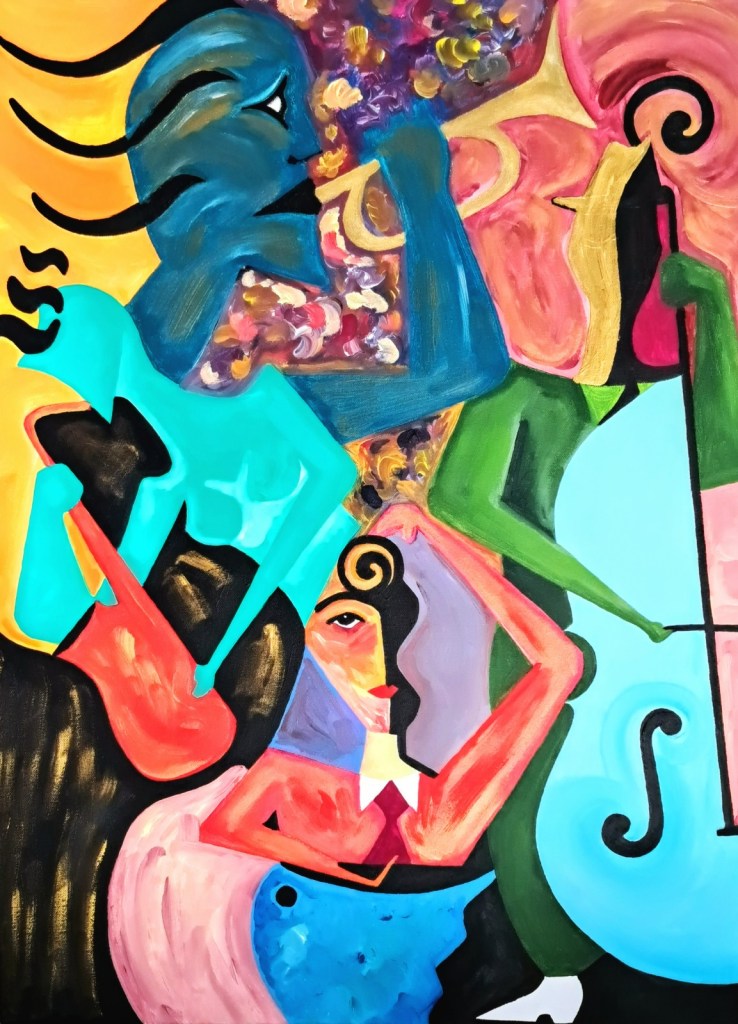
Here is a little video, with original music, that shows just some of the work we have been doing here at the studio. I hope you enjoy it and I hope you tell me what you think.
Please visit our Instagram pages for more images and perhaps a more complete picture of what we have done throughout the years at Omnia Caelum Studios Valencia and Omnia Caelum Studios Miami:
Instagram: @Guloshka (artist representative,
E-Mail: Guloshka404@gmail.com)
Instagram: @Francisco_Bravo_Cabrera
Cheers…
Interview with Francisco Bravo Cabrera

Francisco is a blogger, poet, artist, composer, videographer, and businessman. He has also been introducing us to women artists and creators in a …
Interview with Francisco Bravo Cabrera
What is happening a Omnia Caelum Valencia Behind the scenes..

Cheers…
Arte: PARA QUE CONOZCAS MEJOR EL “GUERNICA” UNO DE LOS CUADROS MAS FAMOSOS DEL MUNDO

By Francisco Bravo Cabrera,València 10 de marzo de 2023, escuchando Avishai Cohen Trio
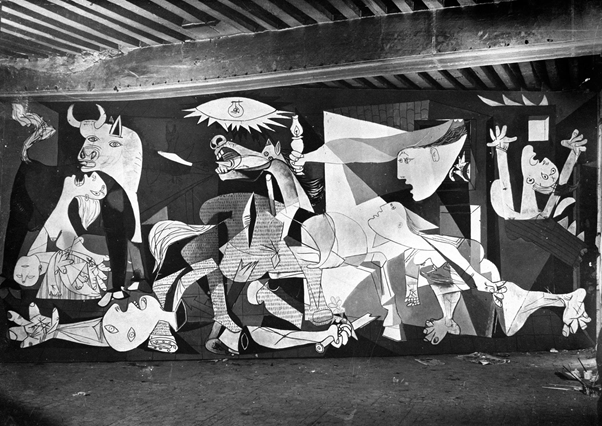
(Foto Dora Maar – Museo Nacional Centro de Arte Reina Sofía)
Para aquellos que se preguntan, ¿Por qué el Guernica? o ¿No entiendo este cuadro? También para aquellos que les gusta, o no les gusta, os haré un análisis para ver si os resulte más interesante el cuadro y quizá cuando lo valléis a ver os parecerá algo diferente.
“Guernica” está considerada una de las pinturas más conmovedores jamás hechas en contra de la guerra y que describe claramente el horror de las mismas. Su poder conmovedor parece ser que viene de los colores, blanco y negro, y de su forma, genérica, universal.
Pero no vayáis a pensar que Pablo Picasso era un pintor que se preocupaba mucho por la expresión política, pues no era un pintor político. Ni tampoco se interesó mucho por la guerra…
Ver la entrada original 626 palabras más
#art, “Nuestra señora del río” – “Our Lady of the River”
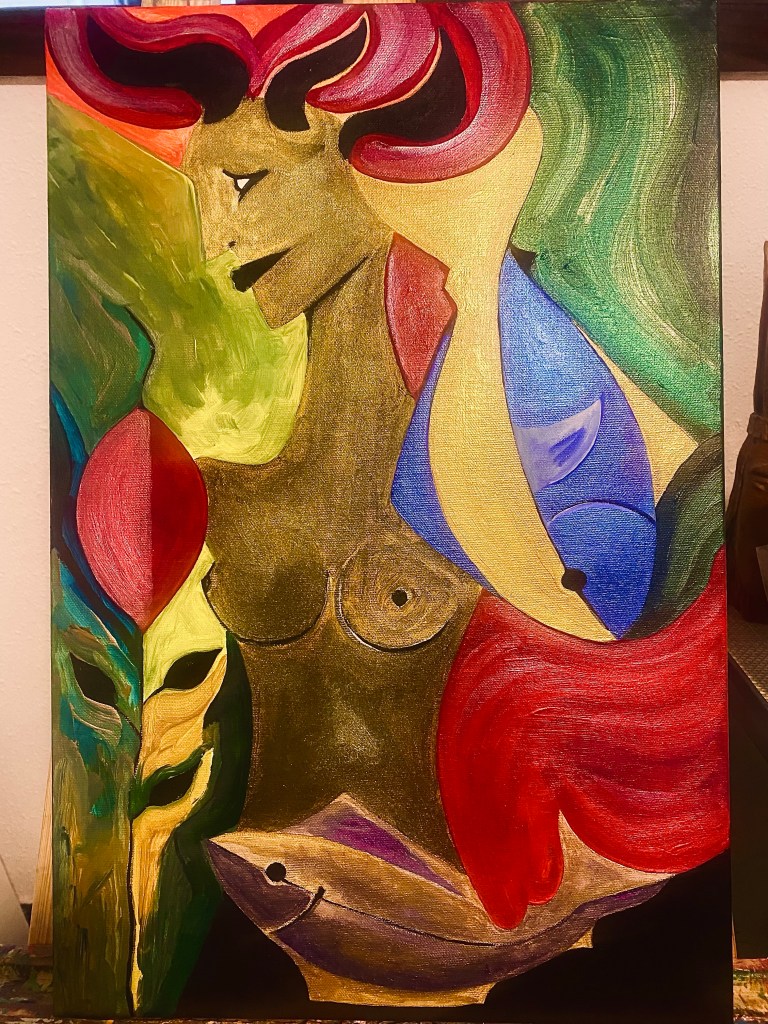
Algo nuevo en Omnia Caelum Studios València…
Something new at Omnia Caelum Studios València…
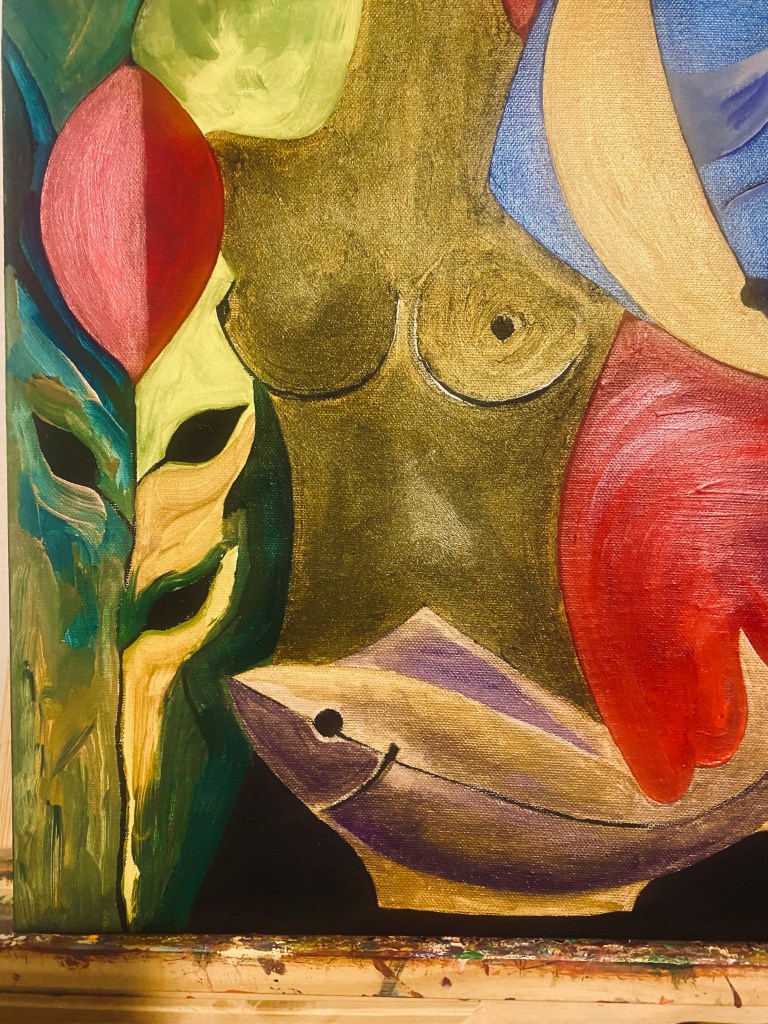
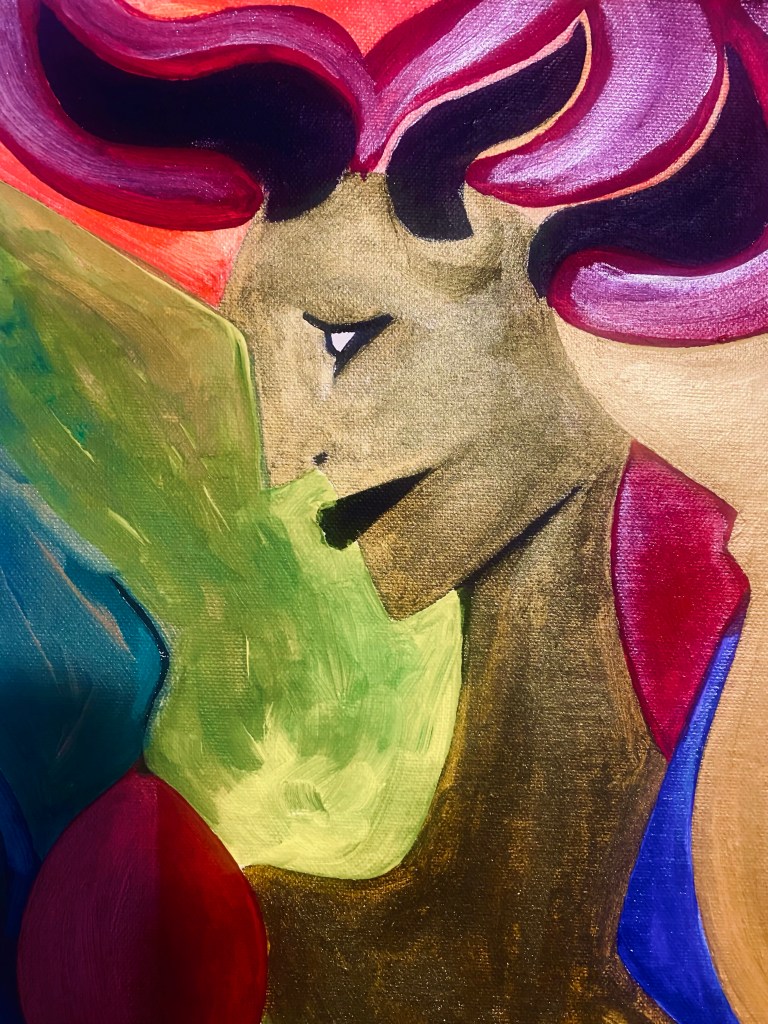
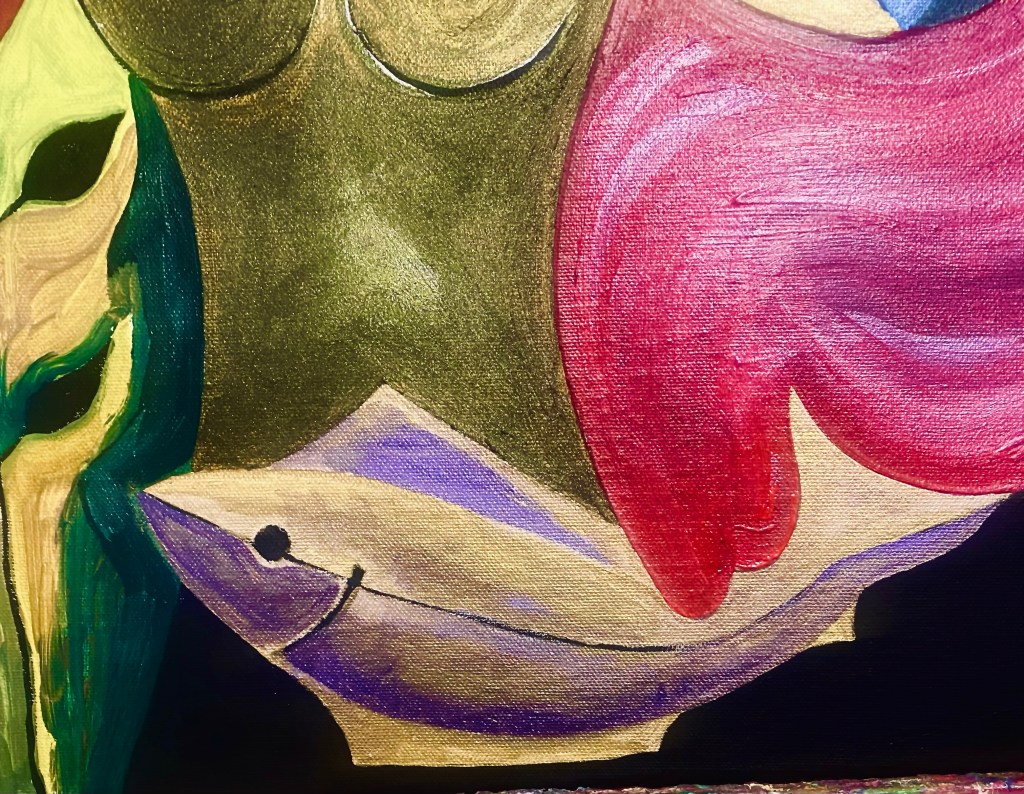
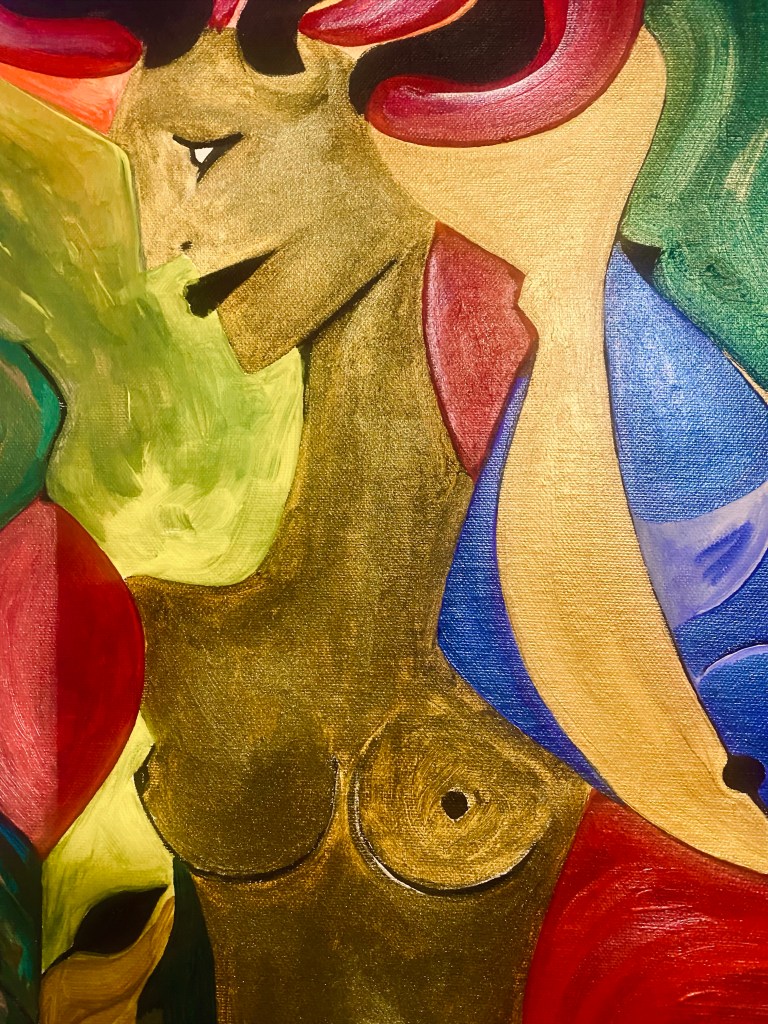
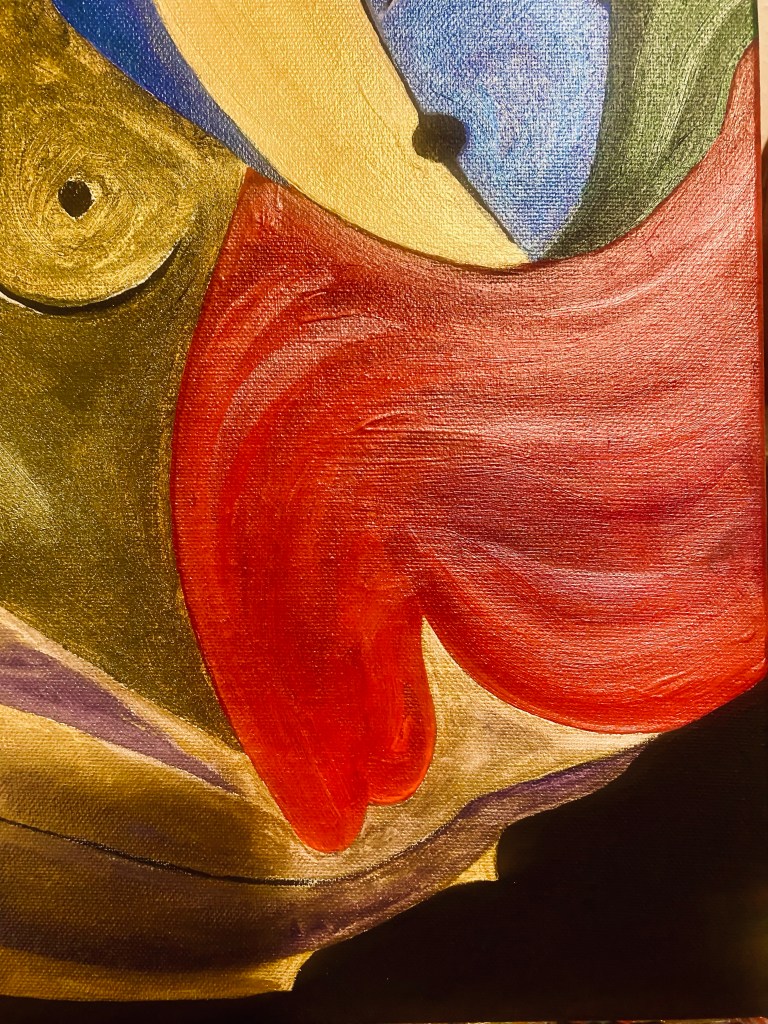
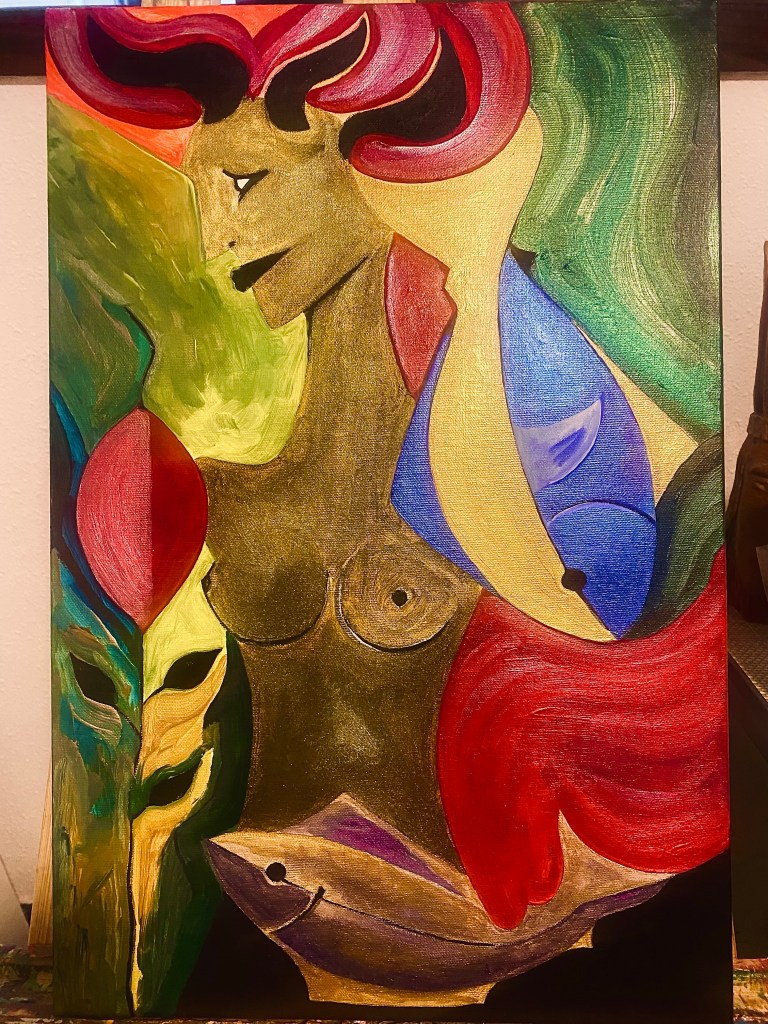
OMNIA CAELUM STUDIOS PRODUCTIONS
Gracias…
Cheers…
#poem, “Fiesta y alegría”
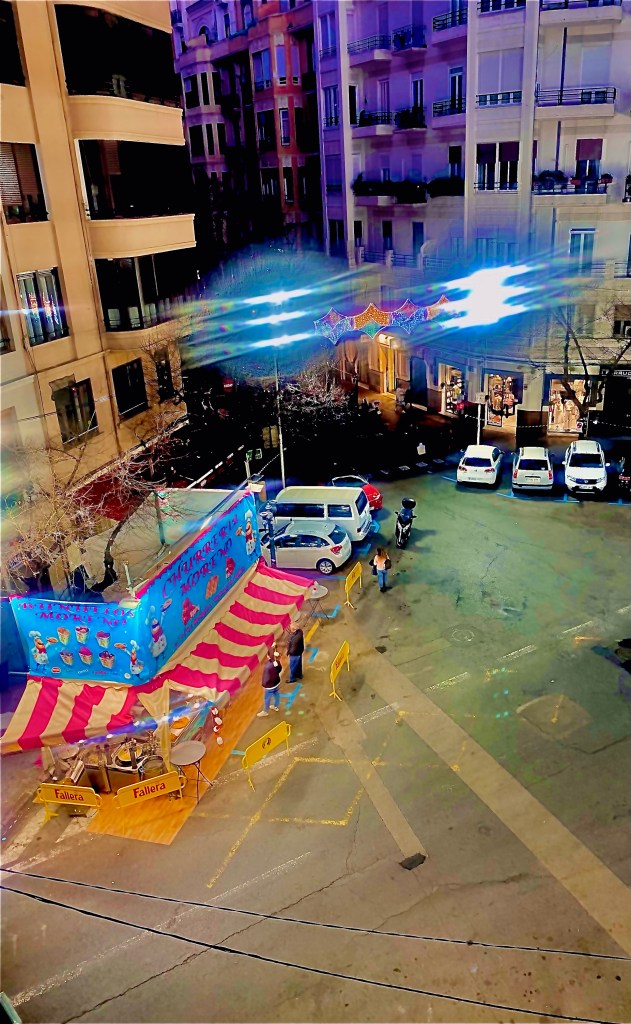
Que bueno sería
si todos los días
aquí encontrarías
fiesta y alegría…
Que todas las noches alumbren el barrio
con muchos colores,
que toquen guitarras,
cajón, panderetas,
y bailen y gocen
nocturnas mascletás.
Y que fluyan los vinos,
blancos, tintos, rubios,
Ginebras y güisquis,
cervezas y vodkas,
y las olivitas,
pida usted, escoja.
Que broten gladiolos a la medianoche
y las calles, cerradas a coches,
reflejen el lujo de vivir las fiestas,
pero ahora a dormir
que si no,
no despiertas.
Y que bueno sería si todos los días
despertemos en ferias,
fiestas y alegría
2029, Francisco Bravo Cabrera, 10/03/2023, València, España
#art, “En València” acrílico sobre tela – “In València” acrylic on canvas…
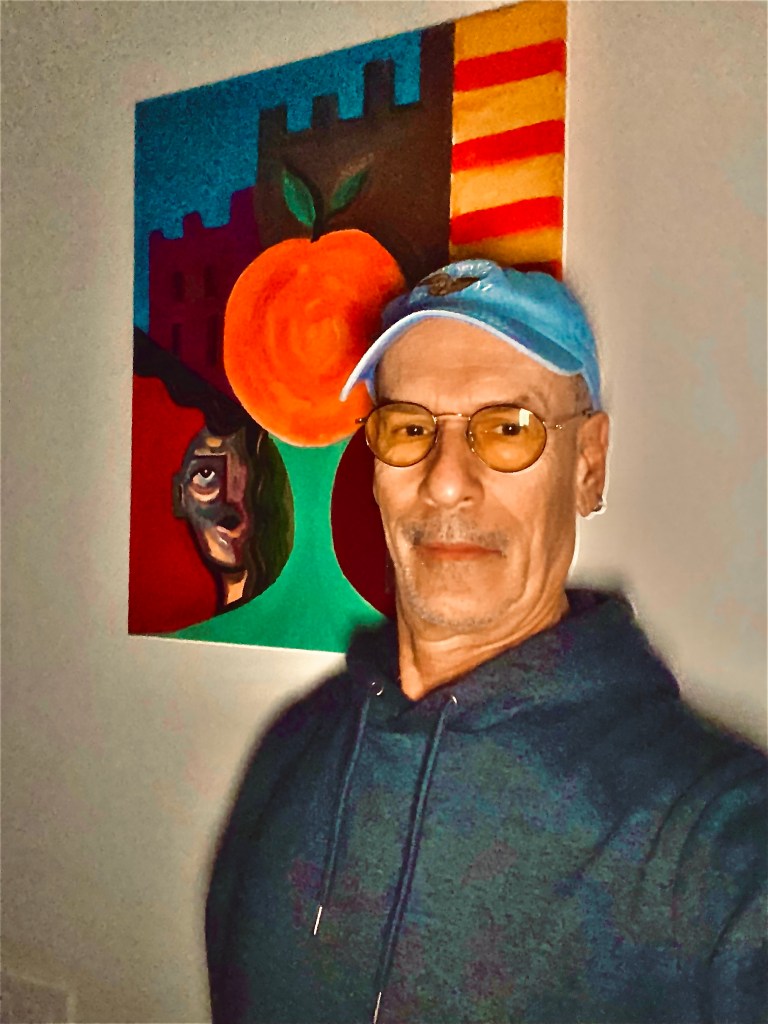
Este cuadro, que ya está en la pared de un gran coleccionista, lo hice utilizando algunos de los símbolos icónicos de nuestra ciudad. Además los aspectos más reconocidos de nuestra senyera valenciana.
+++
This painting, that is already hanging on the wall of a great art collector, I made utilising some of the most iconic symbols of our city. Additionally it contains the most recognisable aspects of the flag of our country, Valencia.
Gracias…
Cheers…
#art, La espiritualidad de los cuadros: La abstracción
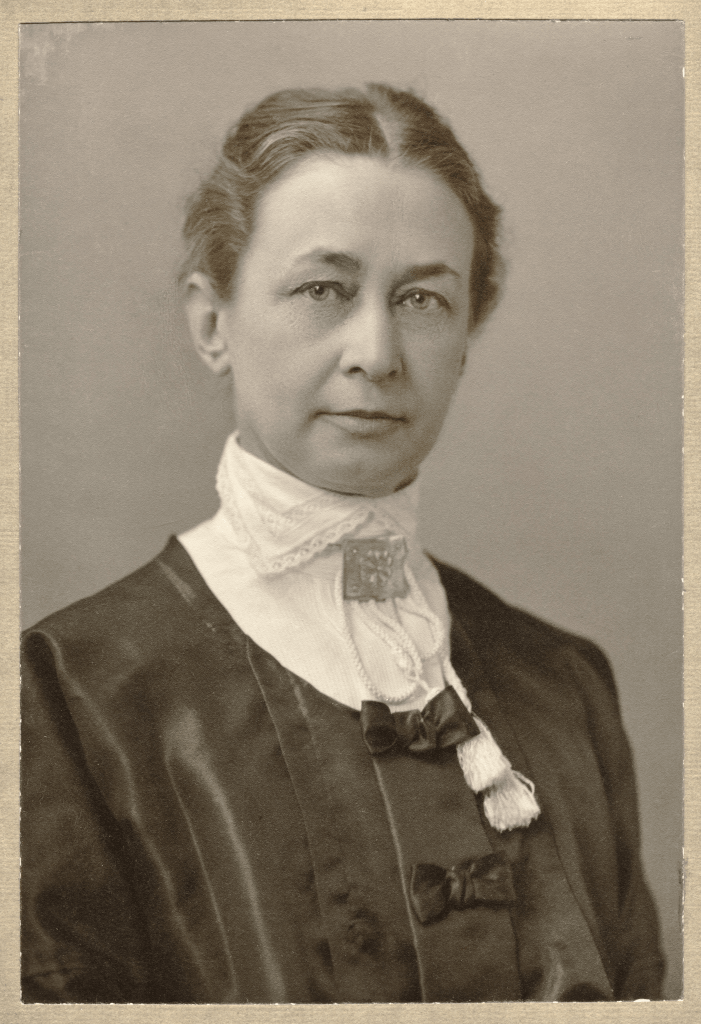
Wassily Kandinsky (1866-1944), el gran pintor ruso, considerado el padre de la abstracción e identificado íntimamente con la invención de la misma, no lo fue. Ya sabemos que la inventó, curiosamente una mujer, la artista sueca Hilma af Klint (1862-1944). Pero Kandinsky sí nos alertó a que existía la espiritualidad en el arte, queriendo decir que los cuadros hechos en su época cargan una espiritualidad que los hace eternos, poderosos, emotivos e importantes. Un cuadro hecho al «estilo» del renacimiento, a estas alturas de la historia y de la historia del arte, no tiene alma, y Kandinsky dijo que era como un niño que muere antes de nacer, o sea, un aborto.
Un pintor del S. XXI no puede, por mucho que sepa imitar, pintar como lo hacían los pintores renacentistas, o barrocos o medievales, o como ningún otro que no sea de su misma época en la historia. La imitación no tiene el mismo poder de evocar emociones que lo original. Y no quiero decir original dirigiéndome a algo inédito, jamás visto, sino a algo que pertenece al mundo y a la historia del pintor, digamos, lo contemporáneo. Todos los cuadros fueron contemporáneos en un momento dado.
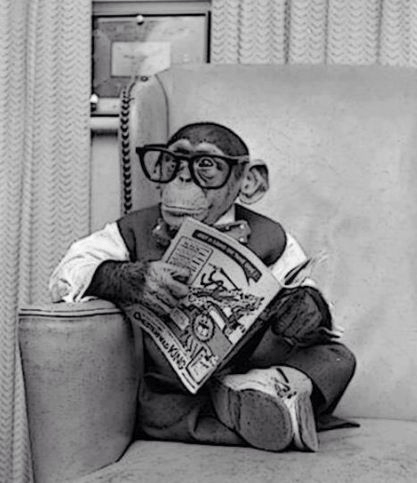
Kandinsky dijo que imitar era como lo que hace un mono. Los simios se parecen mucho a los humanos y nos saben imitar, ¿No has visto a un mono vestido, con gafas y «leyendo» un periódico? La imitación no es la realidad ni tampoco tiene la misma carga emotiva, espiritual que la realidad…
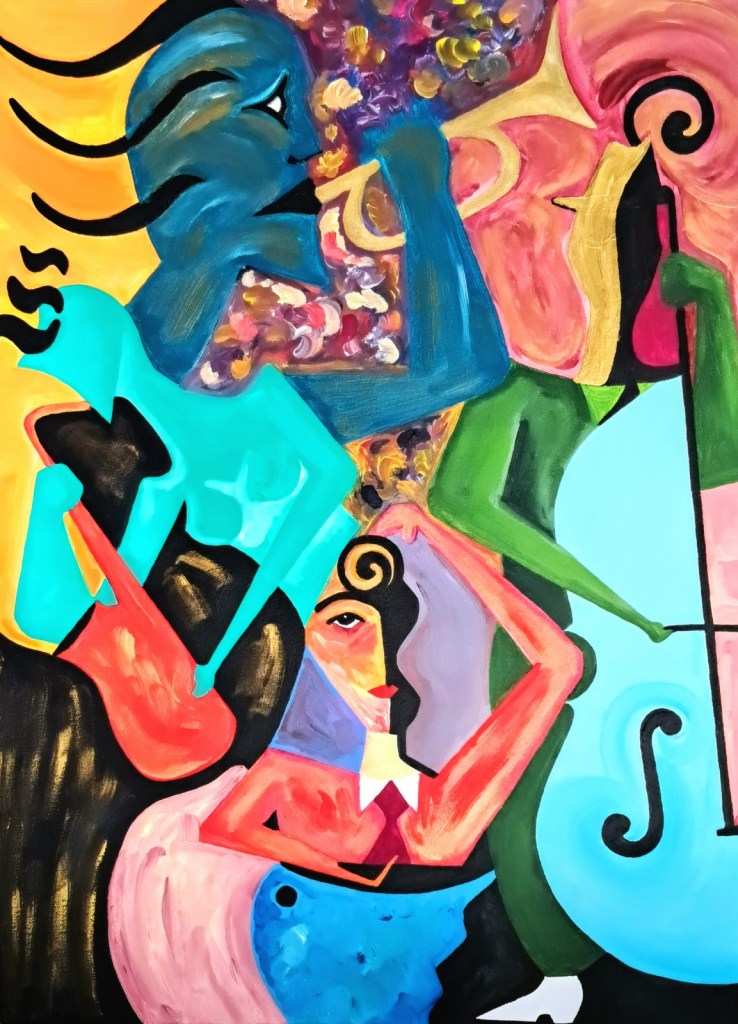
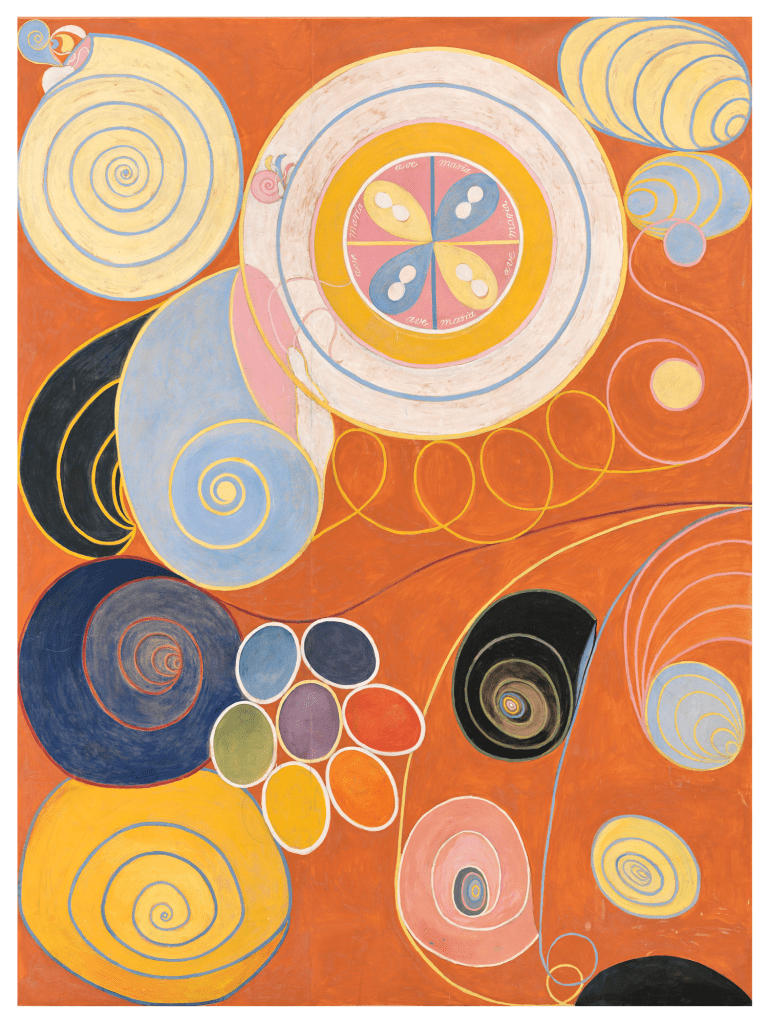
Ahora nos vamos a la abstracción. He puesto un cuadro, «Quatre» de ejemplo, pero no es una abstracción. Es un cuadro figurativo. ¿Por qué es figurativo y no abstracto? Simplemente porque contiene elementos identificables y de nuestro entorno material. El arte abstracto no puede tener ningún elemento que se parezca a uno real. Pero he puesto este ejemplo porque aunque es un cuadro figurativo tiene muchos elementos abstractos.
Por ejemplo, el fondo es abstracto completamente pues no se parece a nada en la vida, nada le es igual. La abstracción suele distanciar al observador porque no hace una conexión directa con su mente lógica, con su intelecto, aunque si debe hacerlo con su mente ilógica, abstracta, artística y emotiva. Pero lo más importante es que tiene que tener una referencia y esa referencia es interna en el autor de la obra y para el observador, según como absorba los colores y donde lo lleven.
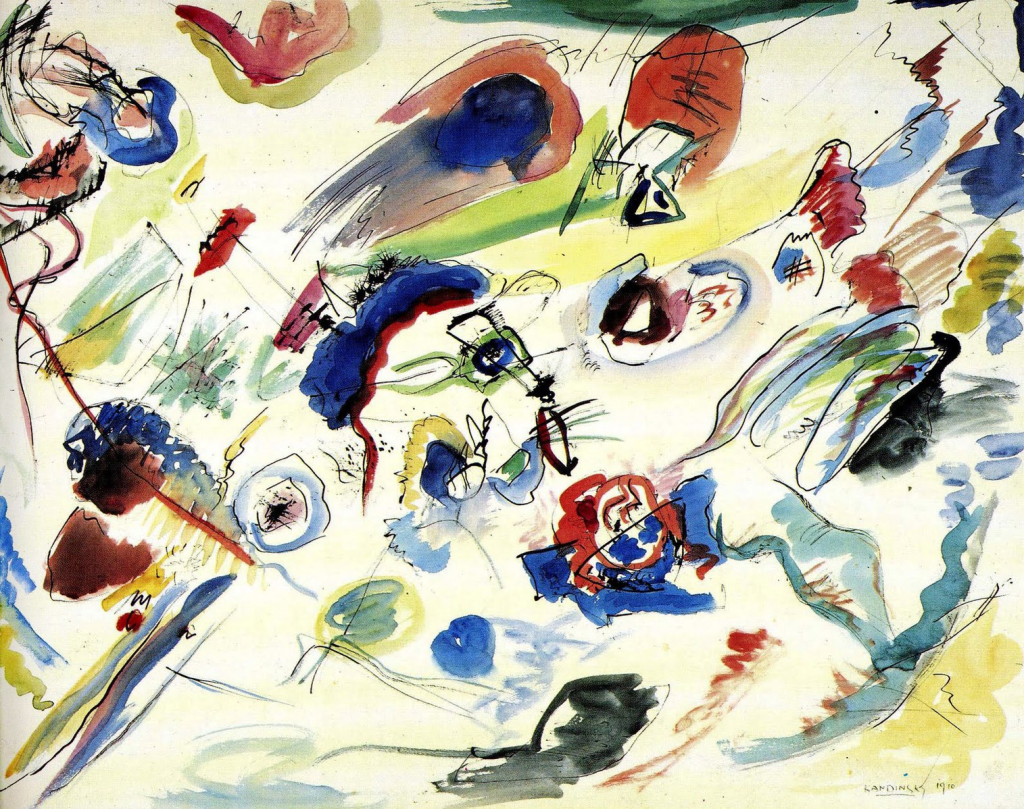
Y sí, ya sabemos que Hilma af Klint pintó una serie de cuadros, considerados ahora abstractos, mucho antes de la primera acuarela abstracta de Kandinsky, «Sin titulo» de 1913, pero Kandinsky impulsó el género y lo defendió en su libro «De lo espiritual en el arte» (1912), aunque él no siempre fue pintor de abstracción, pues sus inicios en el arte lo llevaron a muchos estilos, todos figurativos. No fue hasta unirse a la teosofía…junto con Piet Mondrian, su contemporáneo y también pintor abstracto…que comenzó a teorizar acerca del color, del poder del color y de los sonidos de los colores.
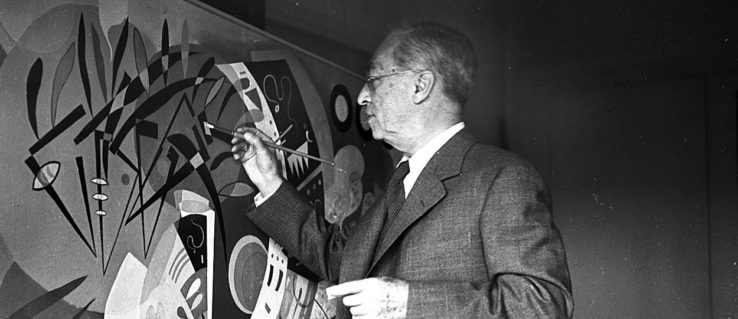
Kandinsky decía que escuchaba tonos y acordes al pintar, que el amarillo es el sonido de una trompeta, el negro, el color del cierre, digamos el fin de las cosas. Pensaba…y yo muy de acuerdo…que al combinar colores el artista creaba frecuencias vibratorias, como los acordes que se pueden tocar en un piano. Explicó esto y otras cosas relacionadas a las figura geométricas en su otro libro «Punto y línea sobre el plano.» (1926).
OMNIA CAELUM STUDIOS PRODUCTIONS PRESENTA:
Gracias…
#art, Spirituality in paintings: Form, Colour and Abstract Art…
Kandinsky, in his book «Concerning the Spiritual in Art» poses the idea that art must reflect its own time. To make art that seeks to emulate or copy, say the art of the ancient Egyptians is to make art, like he said, that is a baby dead before birth. Or to paint like a monkey. Ridiculing those who simply copy, as would a monkey, the gestures of a human, but without any real thought or intention behind the gestures. For art to have spirit, for a painting to become «immortal», it has to have spirit and intention, and not simply technical perfection. Technical perfection will create a painting that says nothing, that does not elicit a visceral and intellectual reaction in the viewer.
Art is complex. Art is philosophy in colour, movement and style. A painting is not art everlasting if it does not carry with it the spirit of the time in which it was painted and the culture which it represents…
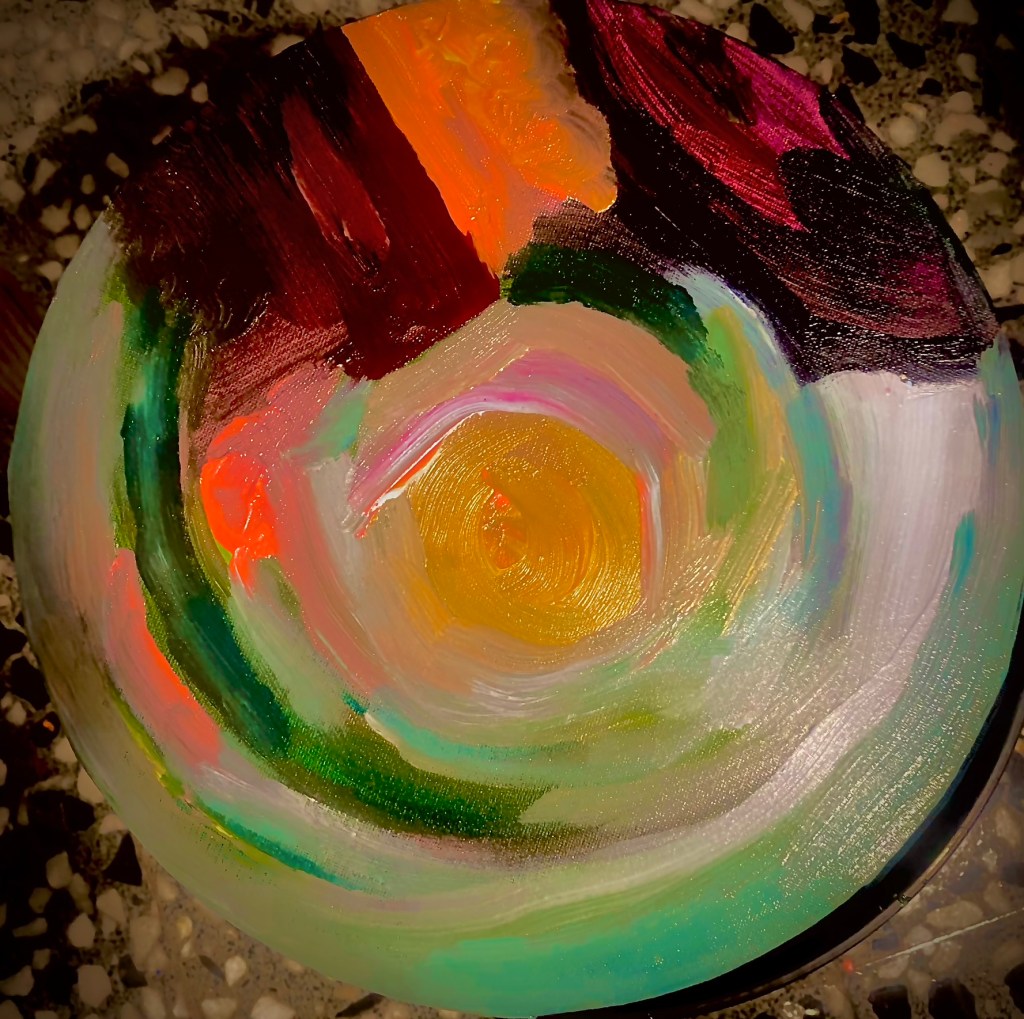
In the painting «Within the Light» (see above), an abstract painted with acrylics on canvas, I have chosen to represent the «idea» of «light» by creating light with an optical illusion created by colour. Colour is energy. Colour is light refracted in such a way as to make the human eye see different shades and tones, even though, technically (meaning physiologically) there are only three. The rest of the colours are brought to our senses with the help of light.
Colour is also sound. Kandinsky (again) referred to the sounds of colours to create his symphonies on canvas or paper. There are people with a specific disorder that makes them hear colour, so perhaps Kandinsky was not so far off the mark with that idea. In any event colour is a source of power as colours are linked to emotions, feelings, and ideas.
When an artist paints an abstract piece the reference may be completely lost to the viewer. There is not a direct relationship between the painting and the observer and the observer may simply stand in front of the painting and wonder what it is, or ask the artist or curator. But the artist must have a definite and precise reference for his work, be it abstract or figurative (the only two types of art there is). This identification with the reference and representing it in an abstract work unites the artist with the piece and gives it spirit. The spirit of the times when it was painted which in turns makes the painting eternal, powerful, meaningful and capable of eliciting emotions from the observer.
This, to me, is the spirituality of and in art…
OMNIA CAELUM STUDIOS PRODUCTIONS PRESENTS:
Cheers…
 JaZzArt en València