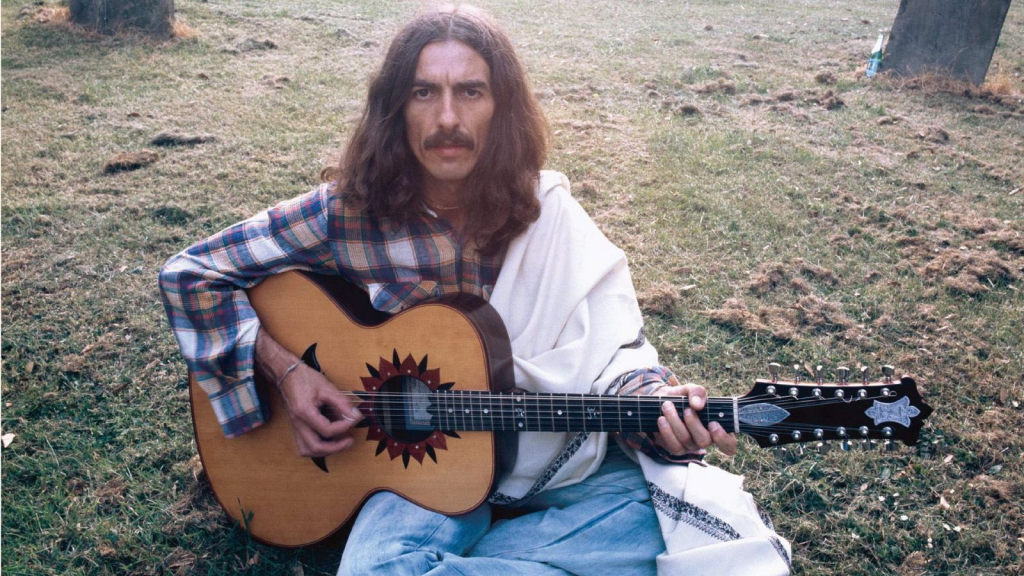
Siempre fue uno de mis músicos, compositores y cantantes favoritos, aún en los tiempos de los Beatles. Un tío de puta madre, un gran compositor, venga que para mi compuso algunas de las mejores canciones de los Beatles, «Something«, «Here comes the Sun«, «While My Guitar Gently Weeps» y otros temas que son autenticas joyas… Su carrera después de los Beatles comenzó con el triple álbum All Things Must Pass y continuo con muchos más y hoy quiero recordaros de la canción «When We Was Fab» (George Harrison/Jeff Lynne) del álbum Cloud Nine (1987) y la lanzaron como un single en 1988.
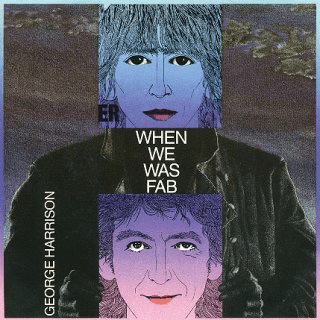
«When We Was Fab» habla de la época de la Beatlemania. La portada del sencillo utiliza el dibujo de George Harrison que dibujó Klaus Voorman para la portada de Revolver, álbum de los Beatles (1966)…
(Dominio público/Public Domain)
Aqui os dejo el vídeo, que también está muy bueno y en el verás a Jeff Lynne, Elton John y Ringo Starr…
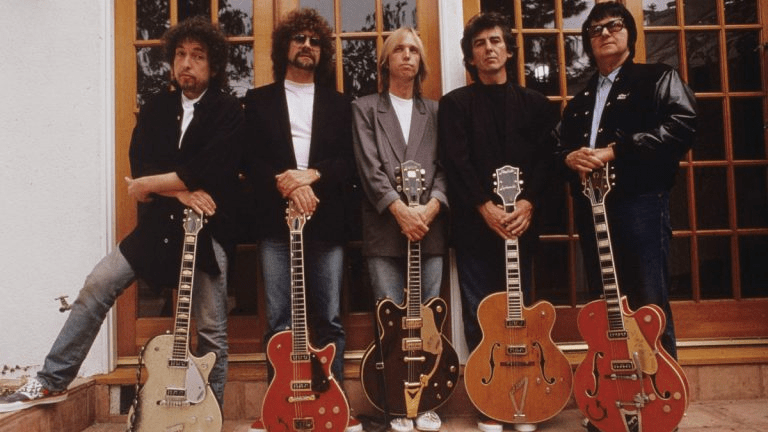
This was a benefit album recorded by George Harrison and the Traveling Wilburys in 1990… The album, Nobody’s Child, was done in an attempt to help Rumanian children under the auspicies of the Romanian Angel Appeal Foundation… The song «Nobody’s Child» was written by Cy Coben and Mel Foree. The song was first recorded by Hank Snow (1949) and it exemplifies the plight of Rumanian children suffering the transition from communism to the chaos that ensued while the country tried to re-organise itself into a democracy… Wilburys member Bob Dylan suggested the song for the album because it’s lyrics were relevant to the reason for the album. Harrison did not know all the words to the song so he asked his colleague Joe Brown who supplied the first verse. Harrison wrote the second verse to directly address the situation of the children in Rumania. The song ends like this: «They’ve long since stopped their crying, as no one ever hears / And no one’s there to notice them or take away their fears»... Vocals courtesy of Bob Dylan, George Harrison, Tom Petty and Jeff Lynne.
The album Nobody’s Child includes songs from Elton John, Van Morrison, Paul Simon, The Bee Gees, Billy Idol, Stevie Wonder, Eric Clapton, Duane Eddy, Ringo Starr, Guns N’ Roses and more…
And if you want a bit more of the Traveling Wilburys, I got it…
(Bodo/Francisco/Representado por un actor/Actor portrayal/D.R./All Rights Reserved)
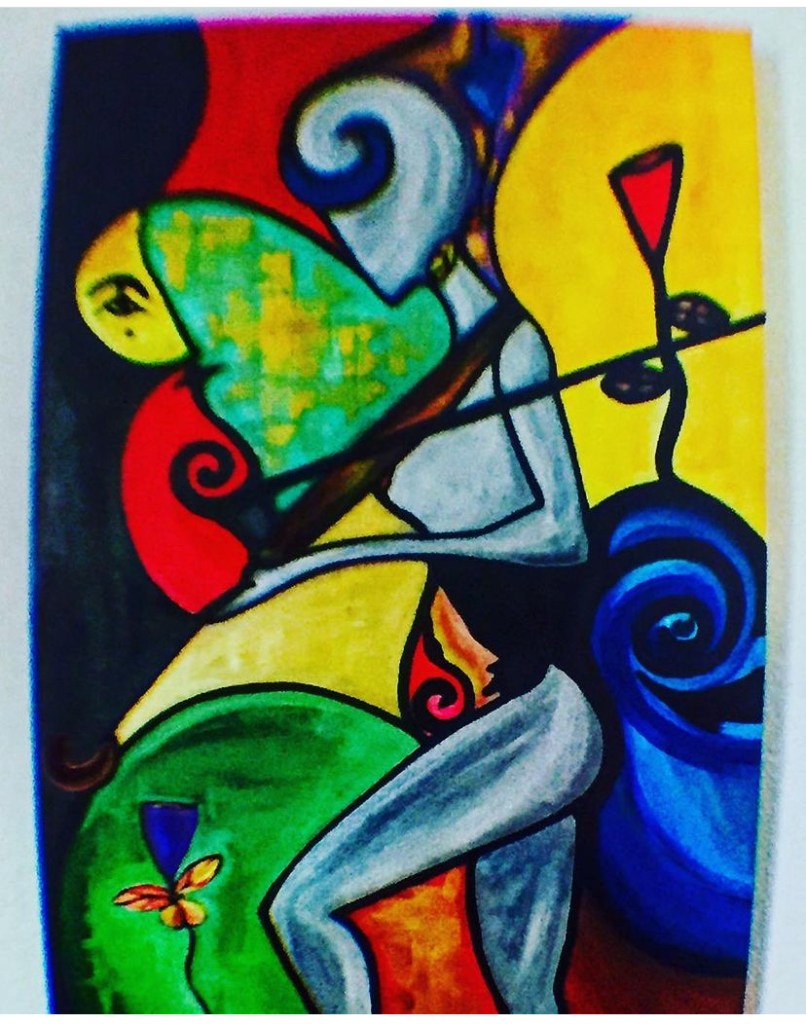
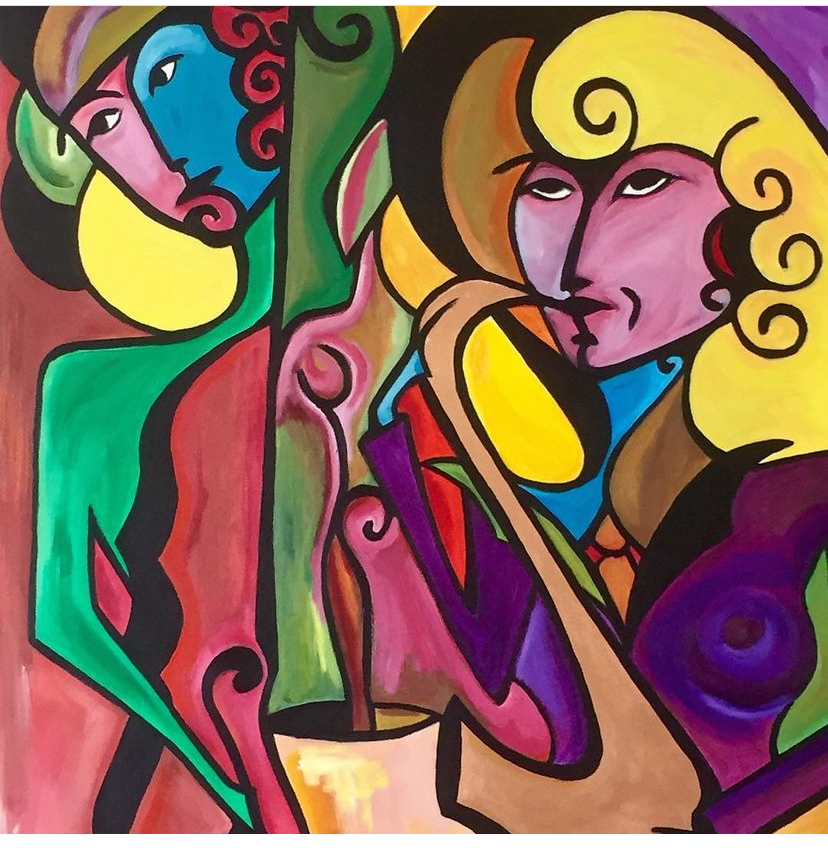
Pues hoy nos remontamos al 2005… Estas son algunas de las obras que pinté ese año en Miami, Florida…
+ + +
Well, today we take a look back to 2005… These are some of the paintings I did that year in Miami, Florida…
(«Huracán»/D.R./All Rights Reserved)(«La violinista»/D.R./All Rights Reserved)(«Listening»/D.R./All Rights Reserved)(«Yellowheads»/D.R./All Rights Reserved)(«Mírame»/D.R./All Rights Reserved) (Obras originales/Original works/de/by Francisco Bravo Cabrera/Bodo Vespaciano/Derechos Reservados/All Rights Reserved)
“Jazz is really America’s classical music,” he said. “Like our country itself and especially like the people who created it, jazz is a music born of struggle but played in celebration.” (Bill Clinton at the 40th anniversary of the Newport Jazz Festival)
Well, if Bill Clinton said it I am buying it! The greatest president that ever served the US talking about the greatest musical invention of the US! Wow! It cannot get better than that! Unless Jerry Lewis was there to dance and sing…
(NPR)
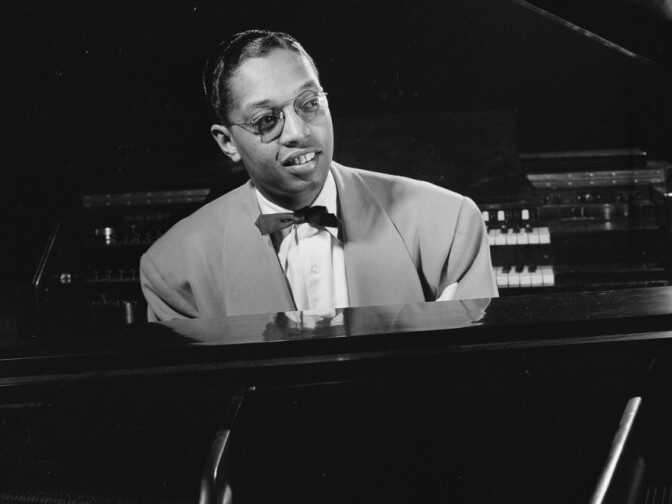
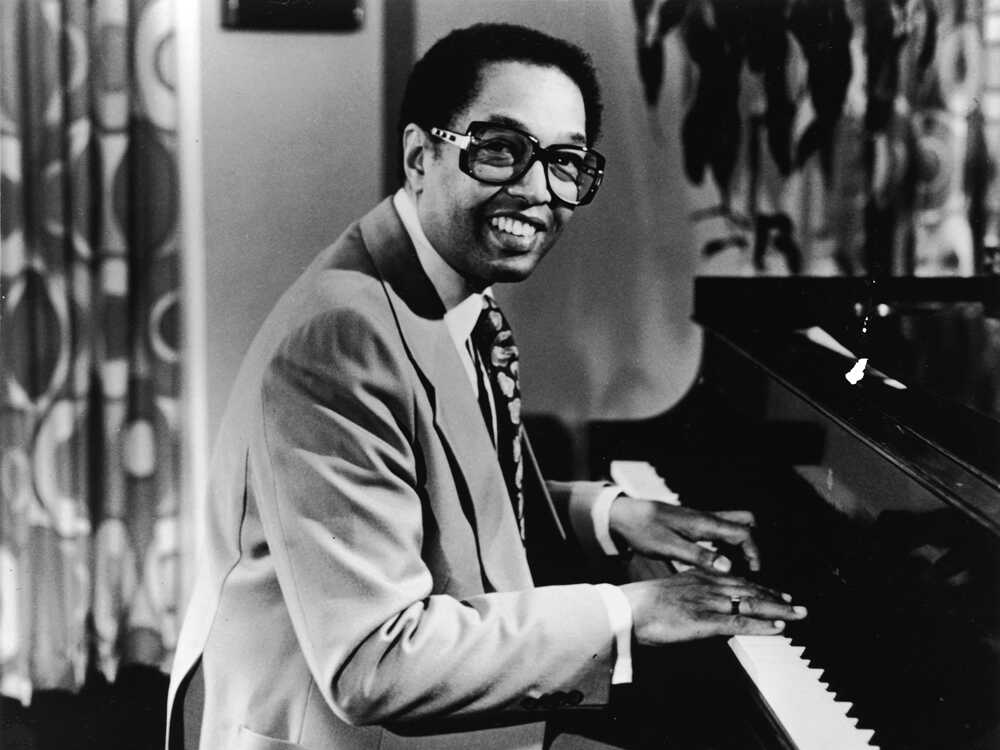
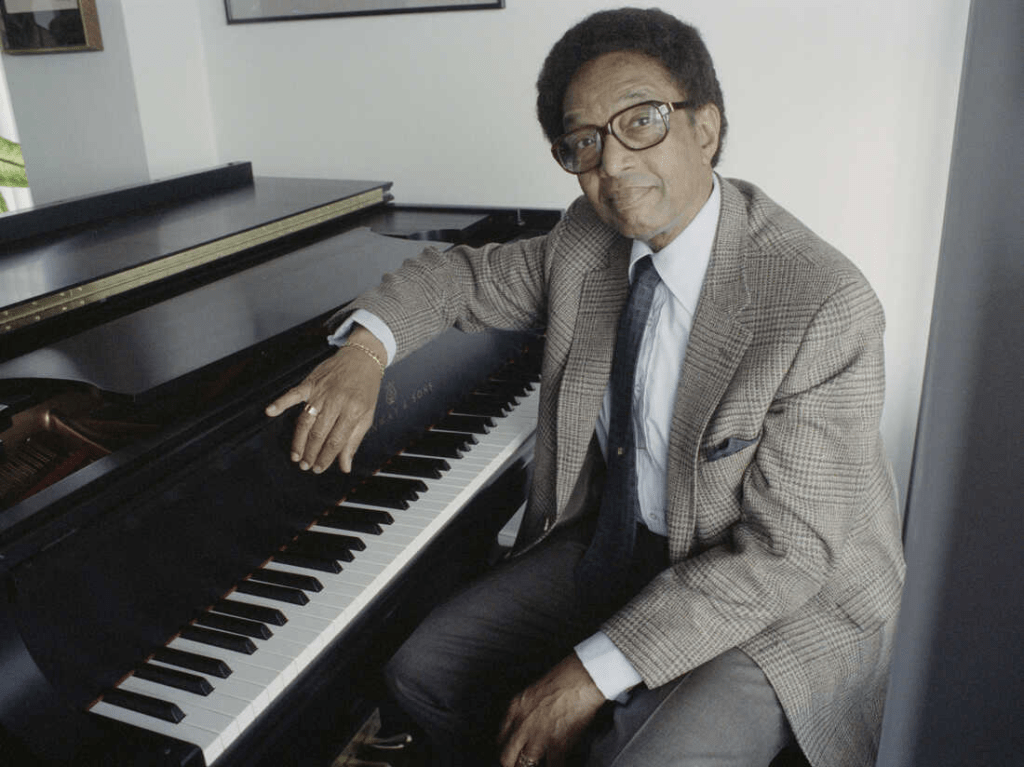
But I want to bring you the music of Billy Taylor, a great ambassador of Jazz. He was an American pianist, composer, broadcaster and educator. He was a distinguished Professor of Music at East Carolina University in Greenville. And since 1994 the artistic director for jazz at the John F. Kennedy Center for the Performing Arts in Washington, D.C. So I think this man is a true authority on music, as well as on the prevalence, complexity and compositional qualities of Jazz.
Dr. Billy Taylor, (he received his Masters and Doctorate degrees from the University of Massachusetts at Amherst) was a jazz educator. He gave lectures in many colleges and universities and served on panels, travelling the world as an authentic jazz ambassador. It was said by critic Leonard Feather that «It is almost indisputable that Dr. Billy Taylor is the world’s foremost spokesman for jazz.»
(NPR)
Dr. Billy Taylor was born in North Carolina in 1921… In 1944 he moved to New York City and started playing piano professionally with Ben Webster’s Quartet and on his first night with the boys he met Art Tatum. He also worked with Machito and developed a love for Latin Jazz… By 1946 he was the house pianist at Birdland and played with major stars like Charlie Parker, J.J. Johnson, Stan Getz, Dizzy Gillespie and Miles Davis. Actually he was Birdland’s longest lasting piano player… In 1949 he published his first book, a textbook about bebop piano styles… Then in 1952 Billy Taylor composed one of his best known tunes, «I Wish I Knew How It Would Feel to Be Free«. This tune (song), recorded by Nina Simone was known in the UK as a piano instrumental for the BBC’s «Film…» programme… Dr. Billy Taylor died of a heart attack in Manhattan in 2010.
So, although «classical» music is intrinsically, historically and culturally European, Jazz is intrinsically, historically and culturally American, especially having been «born» in the USA.
Estudio no solo arte, que bien que se la estudio en su Suiza y en Alemania, pero en Zurich (1914) estudió danza y entonces en 1915, también en Zurich, comenzó a diseñar tapices que expuso en la Exposición Internacional de Tapices Modernos y es allí donde conoce al artista/poeta Jean Arp que a su vez la introduce al grupo Dada…
Sophie Tauber-Arp nació en Davos, Suiza en 1889. Su madre, que tenia ideas muy liberales, notó que Sophie tenia una gran disposición hacia el arte y la matricula en los Lehr- und Versuchs-Ateliers für angewandte und freie Kunst (Talleres de aprendizaje y de ensayo para las artes libres y aplicadas), en Munich (1910), luego en Hamburgo en la Kunstgewerbeschule (1912), donde se especializó en diseño textil y escultura en madera.
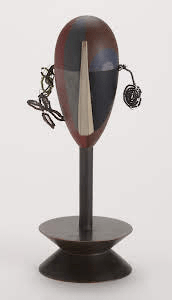
Sophie Tauber-Arp está considerada como una de las artistas dadaístas más importantes de su generación. Fue pintora, escultora, diseñadora de escenografía de danza y teatro, tapices, constructora de marionetas, interiorista de casas y centros culturales y por sus cabezas dada… Muere en 1943 por un envenenamiento accidental… Su imagen aparece en los billetes de 50 francos suizos desde 1995. Es la única mujer que aparece en los billetes suizos.
+++++
She not only studied art, which she did well in Switzerland and Germany, but also studied dance in Zurich (1914) and then, in 1915, also in Zurich, she began designing tapestries that she exhibited at the International Exhibition of Modern Tapestries. It was there that she met the artist/poet Jean Arp, who in turn introduced her to the Dada group…
Sophie Tauber-Arp was born in Davos, Switzerland in 1889. Her mother, who had very liberal ideas, noticed that Sophie had a great disposition towards art and enrolled her in the Lehr- und Versuchs-Ateliers für angewandte und freie Kunst (Workshops for Applied and Free Arts) in Munich (1910), and later in Hamburg at the Kunstgewerbeschule (1912), where she specialized in textile design and wood sculpture.
Sophie Tauber-Arp is considered one of the most important Dadaist artists of her generation. She was a painter, sculptor, designer of dance and theatre sets, tapestries, puppet maker, interior designer for houses and cultural centers, and for her Dadaist heads… She died in 1943 from accidental poisoning… Her image appears on the 50 Swiss franc banknotes since 1995. She is the only woman to appear on Swiss banknotes.
+++++++
(Cabeza Dada/Dada Head/1920/MoMA)
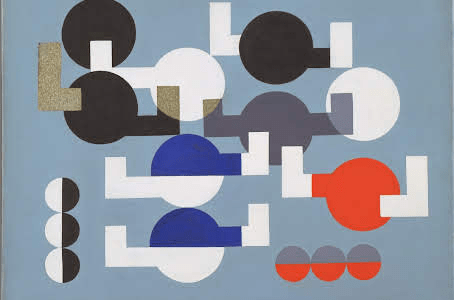
(Composicion de circulos y angulos superpuestos/Composition of Circles and Overlapping Angles/1930/MoMA)
(«Painter in the Sea» Original art digital by Francisco Bravo Cabrera/All Rights Reserved)
I’ve heard your voice… I’ve heard your voices. (I am strong, a rebel, and your commands I will defy) I know your vile intention, to crucify the man within, to rub away creation. You’ve carved a path beneath my skin and travelled through by blood, attempting to destroy my spirit you’ve dragged me through the mud. But you know I have a secret weapon, something you ignore, I wasn’t born of flesh and bone, and you I won’t adore. (I am a soldier I’ve been well trained) You won’t silence my revolution, I will settle the score, I’ve been around the block like you, I’ve done all this before. The things you teach, the things you say to lie, confuse and conquer, I’ll turn them round the other way they’ll last as long as thunder, that one minute is strong and loud and fast the next forgotten, and so will your vile intentions which will end up like the dreams you’ve broken. I stand before all those I love, to love them and to tell them, that words are cheap when they become simply icons we remember. So… I’ve heard your voice, pathetic sounds, resounding in the void, it sounds like nothing that I love and all that I avoid… (pause) We are standing on the other side of the river, no bridges now to let us be one with the other. But we must see, feel, understand, that time is something that will set us free, that truth is written to ease hard times, the prophets spoke, the children cried, and I won’t ever be satisfied without a smile…
C.2021, Francisco Bravo Cabrera, 05 APR 2021, Valencia, España
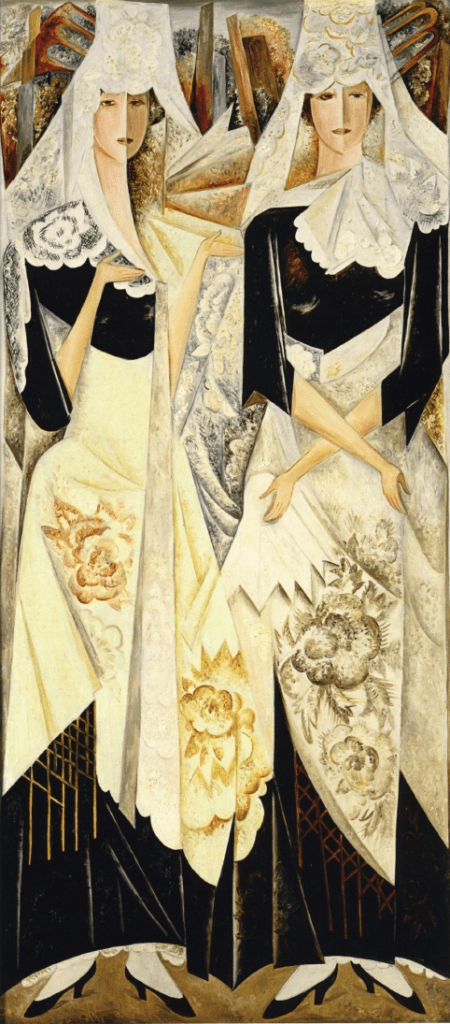
Esta artista, Natalia Goncharova, comenzó a pintar en 1904 después de estudiar pintura, arquitectura y escultura en Moscú… Aunque sus obras fueron inicialmente influenciadas por el arte folclórico, se intereso por el arte de los fovistas, Paul Cezanne y el cubismo también… En 1910 fue una de las fundadoras del grupo Sota de Diamantes, una agrupación de artistas que buscaban algo más, algún estilo diferente pero basado principalmente en sus re-interpretaciones de las obras de Cezanne y Matisse… Goncharova nació en Nagaevo-Karbonier, Rusia (1881)… Con el otro vanguardista ruso, Mijaíl Lariónov, organizan la exposición La cola del burro (1912) en Múnich. En esa monumental e histórica exposición también expusieron Kazimir Malécih, Marc Chagall y los que formaban parte del grupo Der Blaue Reiter (fundado por Kandinsky en Munich, 1911). Con La cola del burro, rompían filas con el arte europeo estos artistas rusos queriendo desarrollar un estilo artístico único y una escuela rusa e independiente, aunque Gonchova seguía siendo influenciada por el futurismo ruso, los iconos y el rayonismo… En 1913 presento una gran exposición de 800 cuadros en Moscú y el año se marchó a París… Natalia Goncharova murió en Francia en 1962… Fue pintora y diseñadora de los ballets y teatro…
+ + + + +
Artist, Natalia Goncharova, began painting in 1904 after studying painting, architecture, and sculpture in Moscow… Although her works were initially influenced by folk art, she became interested Fauvism, the work of Paul Cezanne, and Cubism as well… In 1910, she was one of the founders of the Jack of Diamonds group, an association of artists seeking something more, some different style but mainly worked on their reinterpretations of the works of Cezanne and Matisse… Goncharova was born in Nagaevo-Karbonier, Russia (1881)… Along with the another Russian avant-garde artist, Mikhail Larionov, she organized the Donkey’s Tail exhibition (1912) in Munich. In that monumental and historic exhibition, Kazimir Malevich, Marc Chagall, and those who were part of the Der Blaue Reiter group (founded by Kandinsky in Munich, 1911) also exhibited. With the Donkey’s Tail, these Russian artists broke ranks with European art, aiming to develop a unique artistic style and an independent Russian school, although Goncharova continued to be influenced by Russian Futurism, icons, and Rayonism… In 1913, in Moscow, she presented a major exhibition of 800 paintings and the following year she moved to Paris… Natalia Goncharova died in France in 1962… She was a painter and designer for ballets and theater…






.jpg)