#art, Art Without Art, It Does Not Even Rank as Bad Art…

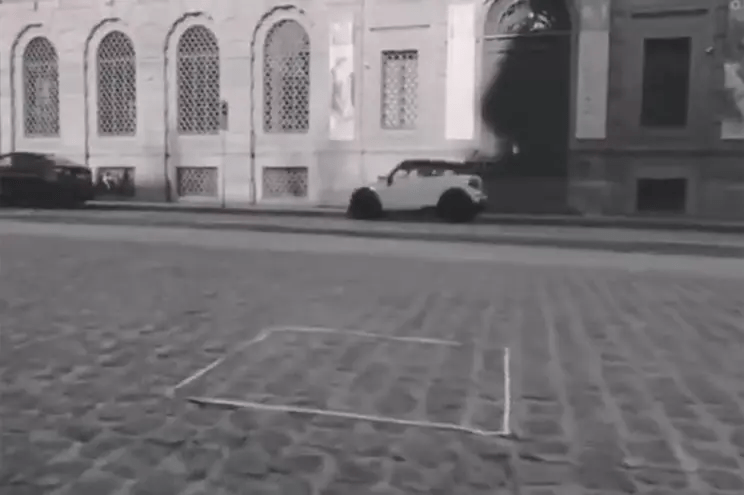
[Salvatore Garau/“Io Sono” (I am)]

I will start with this piece, this invisible sculpture you «see» above and the featured image. Believe it or not, this invisible work of «art» (read bullshit) was sold by the artist, Salvatore Garau, for 18.000 USD. This is what the Sardinian born artist said about his «work»: “The vacuum is nothing more than a space full of energy, and even if we empty it and there is nothing left, according to the Heisenberg uncertainty principle, that ‘nothing’ has a weight…therefore, it has energy that is condensed and transformed into particles, that is, into us.”

Does anyone understand what he said? He added that although you do not see it, it is there, it is made of air and spirit. If this isn’t having us on, tell me, please, what is!

And here is a second example by our famous artist Damien Hirst.

(Fairuse/https://en.wikipedia.org)

It is called «For the Love of God» and created in 2007 with flawless diamonds (I am not going to go further into the craftsmanship and who actually made it). But the «artist» said it had been sold to an anonymous consortium for £50 million. However, it was quickly discovered the «artist» was among the buyers. He bought it to keep his prices high and to keep the thing from collecting dust in some basement. In my opinion, and I love skulls as you may know, it is hideous. What do you think?

And number three…

This one I really like, not for the subject matter, but because I think the artist, in this case Piero Manzoni, was having «them» on. In my opinion he was goofing the whole crowd that gets wowed by these «conceptual artists» that think we are so stupid that we are incapable of understanding the stupidities they write and the subtleness of the message included in their «art».

Piero Manzoni created (and sold) Artist’s Shit in 1961. They were 90 sealed tin cans, (looking like tuna cans), allegedly containing his own excrement. He sold it by the cost of its weight in gold. I know some think this was the epitome of conceptual art, but I found it refreshingly smart and a way to goof the ones that are always trying to goof us. What do you think?

(Jens Cederskjold, CC BY 3.0, https://commons.wikimedia.org)

Ok, so now it is your turn. What do you think? Art? or Bullshit?

CHEERS
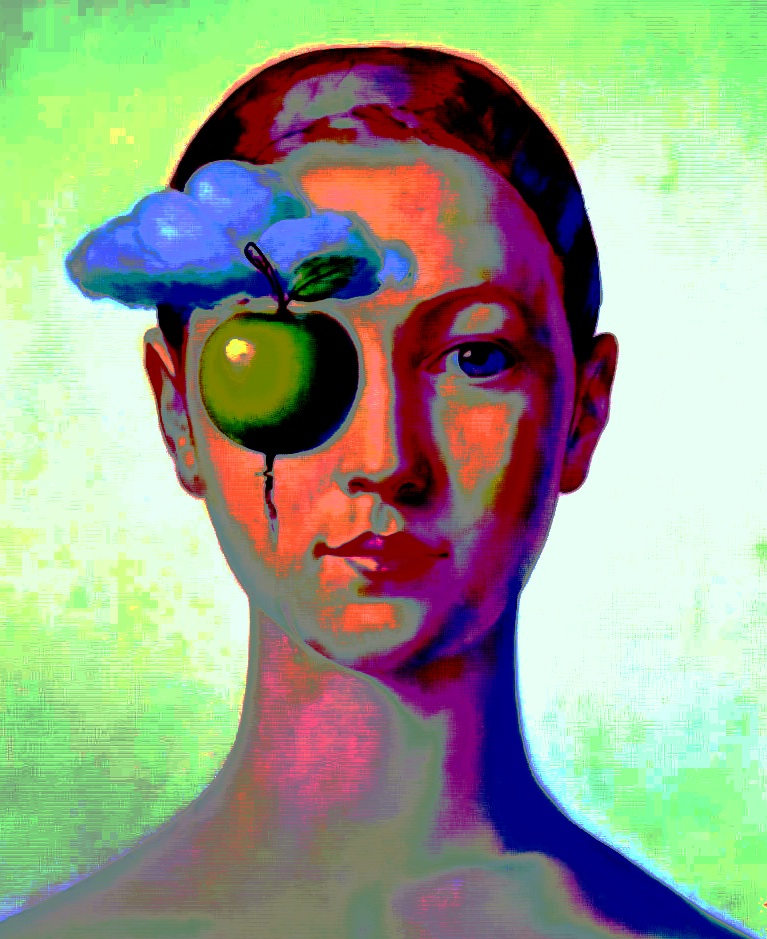
#art, This Little…and confused…World of «Art»

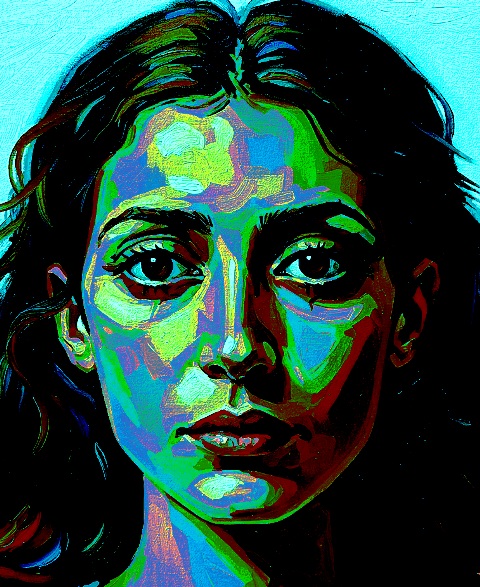
(«Portrait of Ophelia as a Magritte Painting»/Bodo Vespaciano/All Rights Reserved)

The Art World Today: Failed, Advancing, or Stagnant?

The art world is not failed, but neither static: it is going through a deep transformation, with clear stagnation at the “super-sales” level, alongside growing dynamism at more accessible tiers, driven by new generations, emerging regions, and technology. Here’s a detailed overview:


Decline at the High-End Market

  • In 2024, the global art market fell 12%, reaching around USD 57.5 billion.
  • Works above USD 10 million dropped sharply: both volume and value fell between 39–45%.
  • Resale returns are at their lowest point in 20 years: more than half sell at a loss.
  • Traditional auction houses, especially in London, face difficulties with plunging sales and profits.
  • Ultra-high-value art investments lost appeal: sales of works over USD 10 million fell 44%, and art’s share in wealthy portfolios shrank from 24% to 15% (2022–2024).

In short: the luxury tier is stagnating or declining.


Renewal at Accessible Levels

  • Total transactions actually rose 3%, driven by small works (<USD 5,000).
  • The mid-market (USD 100k–1 million) is holding strong and shows potential.
  • Affordable art segments grew in both value and number: low-cost works rose up to 7% in revenue and 13% in lots sold.
  • Online sales now make up 18–20% of the total, with many new buyers entering this way.

This shows a democratization of the market, with broader access and participation.


New Protagonists: Generations, Regions, and Formats

  • Millennials and Gen Z are reshaping the market: they dominate auctions, buy for cultural value more than investment, and prefer authenticity and transparency.
  • Diversity is accelerating: emerging artists — especially women and creators from Africa, Latin America, and Southeast Asia — are gaining visibility.
  • Geography is shifting: U.S. leads (~43%), U.K. rebounds (~18%), China collapses (~31%), while the Middle East, India, and Africa gain traction.
  • Fairs like Art Basel Paris and Liste Basel highlight focus on emerging talent.

This global recalibration suggests a more inclusive and culturally rooted future.


Technology, Innovation, and Immersive Art

  • Immersive art — interactive, multi-sensory formats — is on the rise, from Tokyo to immersive exhibitions like LOWRY 360.
  • NFTs and digital art are evolving: less speculation, more emphasis on curation, authenticity, and artistic value.
  • Digital platforms and AI are opening new paths in creation, pricing analysis, and accessibility.

Technology isn’t replacing art but expanding it.


Voices from the Art Community

On forums like Reddit, artists and gallerists stress the fatigue of the traditional market, post-COVID financial strain, and a disconnect between contemporary art and collectors:

“It’s been the worst couple of years for many artists… I showed 23 new paintings and only sold two…”
Calls for transparency and decentralization are rising: “democratize art and make it part of the community, with reasonable prices.”


Conclusion: Failed, Advancing, or Stagnant?

  • Not failed, but the elite tier is struggling.
  • Advancing in breadth: more transactions, new buyers, greater accessibility.
  • Transforming, driven by new regions, younger generations, technology, and values like inclusion and sustainability.

The art world is restructuring its center, shifting from the spectacular to the meaningful, from speculative to authentic.


These are facts, and supposedly the opinion of «experts» (good grief experts!) who offer opinions according to who knows what «expertise». Most of these so-called experts are not artists but «analysts», who, like the talking heads that want to interpret the news for us, want to tell us that what they think is the truth.

In my opinion the art world, per se, does not exist any more. It is the art business (as you can tell by the facts provided above). Artists today have an opportunity to set their own pace as successful outsiders. No one needs a gallery any more if one knows how to use the internet to advantage. Your gallery is the world wide web and your collectors come from all over the world. You set your prices, you create your trends, you develop your style and if you are successful, well, then it is your new «vanguard of the 21st Century».

And yes, digital programmes and AI are tools and if one is wise one will use them wisely and create. There is no stopping the creative process so do not be afraid of technology. Just do not get sold on fads and on those who laud and applaud mediocre and bad artists.

CHEERS

#art, Two Women Artists From Far Back in Art History…

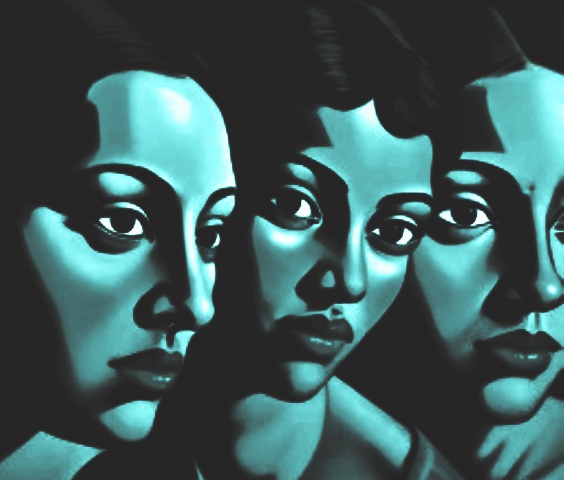
(«Two Women»/Francisco Bravo Cabrera)

One from the 17th Century and one from the 18th to 19th Centuries, but both phenomenal artists. VALENCIARTIST has featured something very important that occurred recently reference one of the paintings of one of these artists Aniella di Beltrano… I hope you enjoy this special edition of the «Art History in One Minute (videos)» limited series…

(We ask you kindly that you subscribe, comment, like and share)

CHEERS

#art, Art is Objective; Taste is Subjective – Art Philosophy by Bodo

(Bodo eating ice cream for it’s philosophical value/actor portrayal/All rights Reserved)

Art is objective, do not doubt it. Art possesses inherent qualities: form, structure, composition, skill, harmony and originality. These qualities can be judged independently of personal taste. I do not argue with taste. Individual likes and dislikes are subjective,. But the value of art is rooted in these objective elements that give it enduring power and universal resonance, and this goes way beyond the shifting opinions of art lovers.

To say “art is subjective” is making of art a non-standardised, non-professional endeavour and it is a refuge for people unwilling to face standards. Taste, for sure is subjective, and people can still have good or bad taste, and not just in their breath. Art is not like that. A painting or a symphony is not a matter of preference in the same way as choosing vanilla or chocolate. Works of art embody objective qualities: proportion, rhythm, innovation, mastery of medium, coherence of vision. These are measurable and comparable, regardless of whether one “likes” them.

To reduce art to opinion is ridiculous and to distorts the difference between genius and banality. It’s like saying Mozart’s music is equal to elevator music, or that a Rembrandt is equal to child’s doodle. The serious study of art, as an academic pursuit and as a profession, recognizes that, although taste fluctuates, the core of art does not and it endures based upon objective principles. Without them even the word art would lose its meaning.

CHEERS

COMING SOON

Part 2: Art can only be divided into GOOD and BAD art.

Part 3: Good and bad artists and art

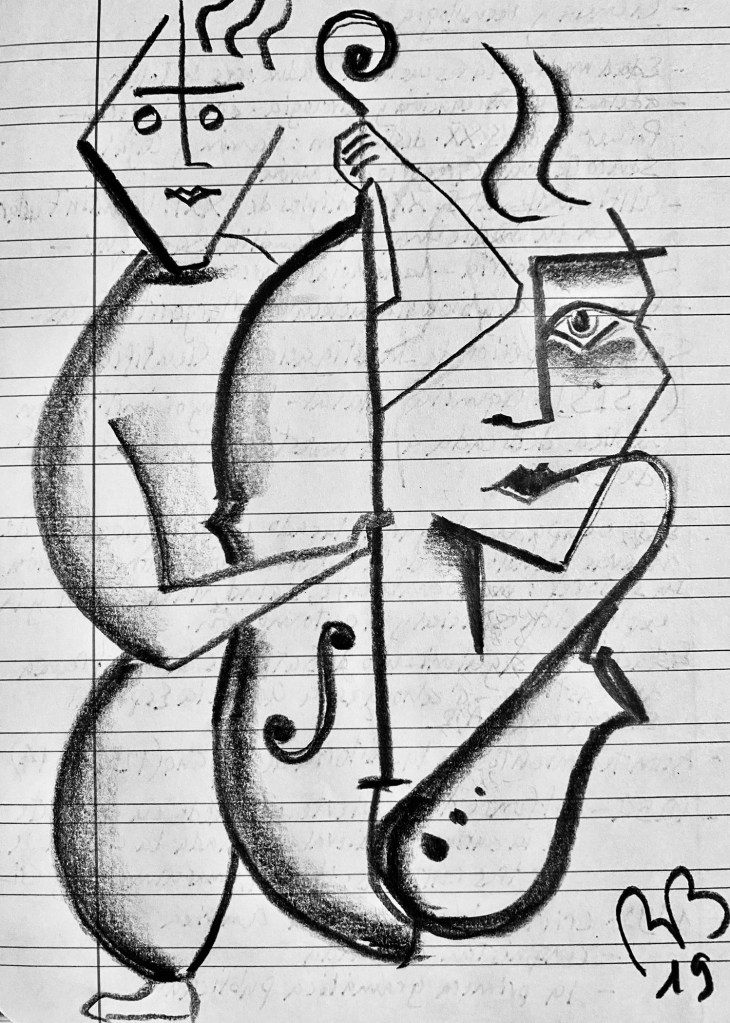
#art, Querido diario, página 88 «Arte»- Dear Diary, page 88 «Art»

(Original sketch by Francisco Bravo Cabrera/All Rights Reserved – Boceto original de Francisco Bravo Cabrera/Derechos Reservados)

Bueno, hace unos días en subasta, se vendió un cuadro de Jean Michel Basquiat por la friolera de 48 millones de dólares (USD)… Así son las millonadas que pagan coleccionistas por obras de arte, y dicho sea de paso, casi todas son obras tradicionales, digamos pinturas, y la mayoría figurativas. Eso dice mucho… En primer lugar que el mundo del arte gira en un espacio controlado por el dinero, y bueno, dinero en abundancia. Desde que un jeque árabe pagó mas de 400 millones por el «Salvator Mundi» (Atribuido a Leonardo), los millones han fluido como el agua. Yo diría como fluye el agua sucia por entre las manos de los pobres en en tercer mundo que tienen que beber agua sucia con estiércol y tierra y comer migajas, si las encuentran, vivir en chozas y defenderse de los depredadores humanos que los usan como carne de cañón… Los pobres del mundo que también hacen arte, pero ese arte no lo ve nadie, ni lo compra nadie, y si es bueno, muy bueno, y lo descubre uno de estos depredadores, se lo roba para luego subastarlo en Christie’s o Sothebys por millones… Estamos llegando a la época de la navidad, debemos pensar un poquitin en los demás.

+++

Well, a few days ago at auction, a painting by Jean Michel Basquiat was sold for the staggering amount of 48 million dollars (USD)… This is the kind of money collectors pay for works of art, and by the way, almost all of them are traditional works, meaning paintings, and most are figurative. That says a lot… Firstly, it indicates that the art world operates in a space controlled by money, and well, an abundance of it… Ever since an Arab sheikh paid more than 400 million for the «Salvator Mundi» (Attributed to Leonardo de Vince), millions have flowed like water. I would say it flows like dirty water through the hands of the poor in the Third World, who have to drink filthy water mixed with faeces and dirt and eat scraps, if they can find any, living in shacks and defending themselves against human predators who use them as cannon fodder… The poor of the world also create art, but that art goes unseen, unsold, and if it’s good, very good, and discovered by one of these predators, it is stolen to later be auctioned at Christie’s or Sotheby’s for millions… We are approaching the Christmas season; we should think a little about others.

GRACIAS – CHEERS

#art, Las Pinturas de Alejandra Pizarnik – The Paintings of Alejandra Pizarnik

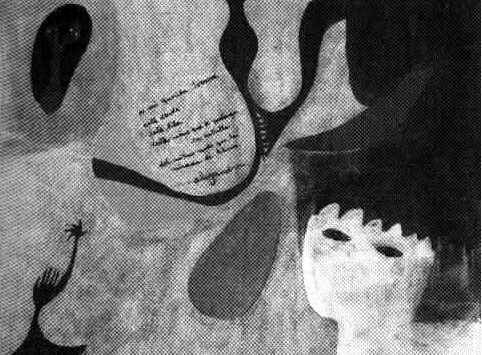
(«Alejandra P»/Francisco Bravo Cabrera/Derechos Reservados/All Rights Reserved)

Una gran poetisa y pintora, ya veréis…

Nació en Avellaneda, una ciudad de la provincia de Buenos Aires, Argentina en 1936. Estudio Filosofía y Letras en la Universidad de Buenos Aires, pero también estudio pintura con Juan Batlle Planas, pintor surrealista argentino. De 1960 al 1964 Pizarnik vivió en París y trabajó para la revista Cuadernos. Además publicó poemas y críticas en varios diarios, estudió historia de las religiones y literatura francesa en La Sorbona. Cuando regresó a Buenos Aires, Pizarnik publicó tres de sus principales volúmenes: Los trabajos y las noches, Extracción de la piedra de locura y El infierno musical, y su trabajo en prosa La condesa sangrienta.

Aunque en 1969 recibió una beca Guggenheim, y en 1971 una Fullbright, Alejandra, el 25 de septiembre de 1972, mientras pasaba un fin de semana fuera de la clínica psiquiátrica donde estaba internada, se suicidó ingiriendo cincuenta pastillas de Seconal, un barbitúrico. Fue una gran escritora que dejó un valioso legado para la literatura latinoamericana.

Pero, hoy y aquí, vamos a fijarnos en el trabajo visual, o sea, vamos a echarle una mirada, breve, a Alejandra como poetisa de los pinceles y los colores…

+++

A great poetess and painter, you will see…

She was born in Avellaneda, a city in the province of Buenos Aires, Argentina in 1936. She studied Philosophy and Literature at the University of Buenos Aires, but also studied painting with Juan Batlle Planas, an Argentine surrealist painter. From 1960 to 1964, Pizarnik lived in Paris and worked for the magazine Cuadernos. Additionally, she published poems and critiques in various newspapers, studied the history of religions and French literature at the Sorbonne. When she returned to Buenos Aires, Pizarnik published three of her main volumes: Los trabajos y las noches, Extracción de la piedra de locura, and El infierno musical, as well as her prose work La condesa sangrienta.

Although she received a Guggenheim Fellowship in 1969 and a Fulbright in 1971, Alejandra committed suicide by swallowing barbiturates, specifically Seconal, on September 25, 1972, while spending a weekend away from the psychiatric clinic where she was hospitalized. She was a great writer who left a valuable legacy for Latin American literature.

However, today and here, we are going to focus on the visual work, that is, we are going to take a brief look at Alejandra as a poetess of brushes and colors…

(«En un pueblo perdido/1970/Infobae)
(Pinterest)
(Infobae)

GRACIAS – CHEERS

#art, A List of Five «Great Living Artists»

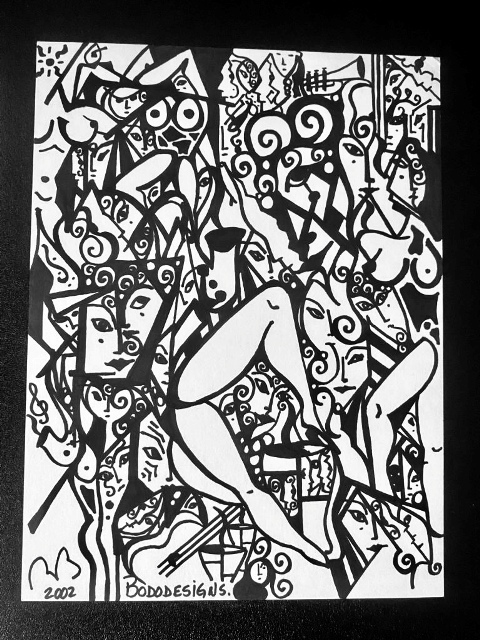
(«Bododesigns 2002″/Francisco Bravo Cabrera/All Rights Reserved)

This is certainly not a top 5 for me at all, but it is a top 5 according to many sources in the current art world. So, if you ask me if I agree, I would say I did not, at least not entirely.

David Hockney (UK)
Hockney was born in Bradford, UK in 1937. His style is consistent, always with bright colours, emotional realism I would venture to say, and he also does a lot of iPad paintings, in other words digital art and exploration (I do a lot of that and I do like Hockney).

He matters because he is considered a modern master of perception and colour (by «experts»). He seems to be quite able to bridge classic British painting with a new digital optimism. His signature works: A Bigger Splash, Portrait of an Artist.

Jenny Saville (UK)
Saville was born in Cambridge in 1970. Her style is to create monumental figurative paintings of the human body. Her paintings are raw, visceral, unapologetic and quite impressive I may add. (This painter I do really admire).

She matters (and I agree) because she is one of the strongest contemporary voices in figurative painting today. She has reclaimed the human body in art and paints her subjects without objectification but with her own tenderness and visual force. Her signature works are Propped and Plan.

Cecily Brown (UK/US)
Brown was born in London in 1969. Her style is abstract expressionism with a merging of figuration, that also blends with movement, emotion, and sensual chaos. (Although I am not a fan, I do respect her work).

This artist does matter as she has become quite influential as an abstract painter, and many consider that she breaks new life into painting itself. (Not too sure about that last statement).

Njideka Akunyili Crosby (Nigeria/US)
Njideka was born in Nigeria in 1983. Her style is what is called layered portraits which combine painting with collage and photographic transfers. (I am not too thrilled with her work). However, she matters, I suppose, because “they” say she is a leading voice of global contemporary art, exploring identity, diaspora, and memory.

Kerry James Marshall (US)
Marshall, born in Alabama (US) in 1955, paints large, deeply narrative portraits of Black life and beauty. He matters because he is hailed as one of the most important American painters of our time; his work reshapes how history and presence are painted. (Not to me)

Well, next time I will do a full top 10, but now I want to know what you think. Do you agree with the «experts» or do you have your own opinions, or even agree with me? Let me know so that we can keep the conversation on art going.

CHEERS

#art, Two Women Artists From Far Back in Art History…

(«Two Women»/Francisco Bravo Cabrera)

One from the 17th Century and one from the 18th to 19th Centuries, but both phenomenal artists. VALENCIARTIST has featured something very important that occurred recently reference one of the paintings of one of these artists Aniella di Beltrano… I hope you enjoy this special edition of the «Art History in One Minute (videos)» limited series…

(We ask you kindly that you subscribe, comment, like and share)

CHEERS

#art, Art History in One Minute (videos), part 10: Salvador Dalí…

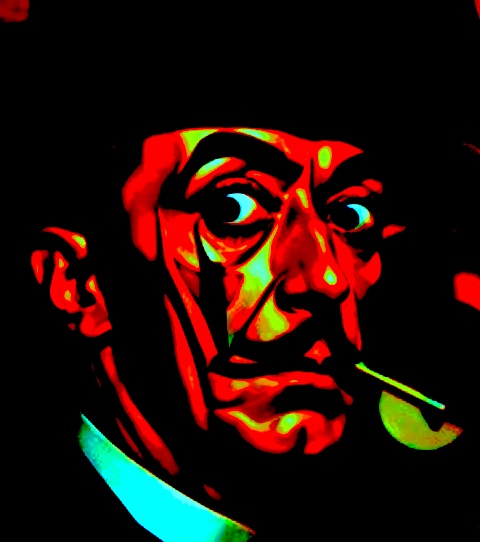
(«Dalilili»/Francisco Bravo Cabrera/All Rights Reserved)

Welcome to part 10 of «Art History in One Minute (videos)» and on this one we are referring to an artist who, no one said was a genius, so he told everybody that he was… Salvador Dalí, the man who said that he was surrealism, is a great artist to many, not so much to me. Personally, I have read some of his books and I think he was a better writer…

Now I want to know what you think. Genius or bufoon?

(We ask you kindly to please subscribe, comment, like and share)

CHEERS