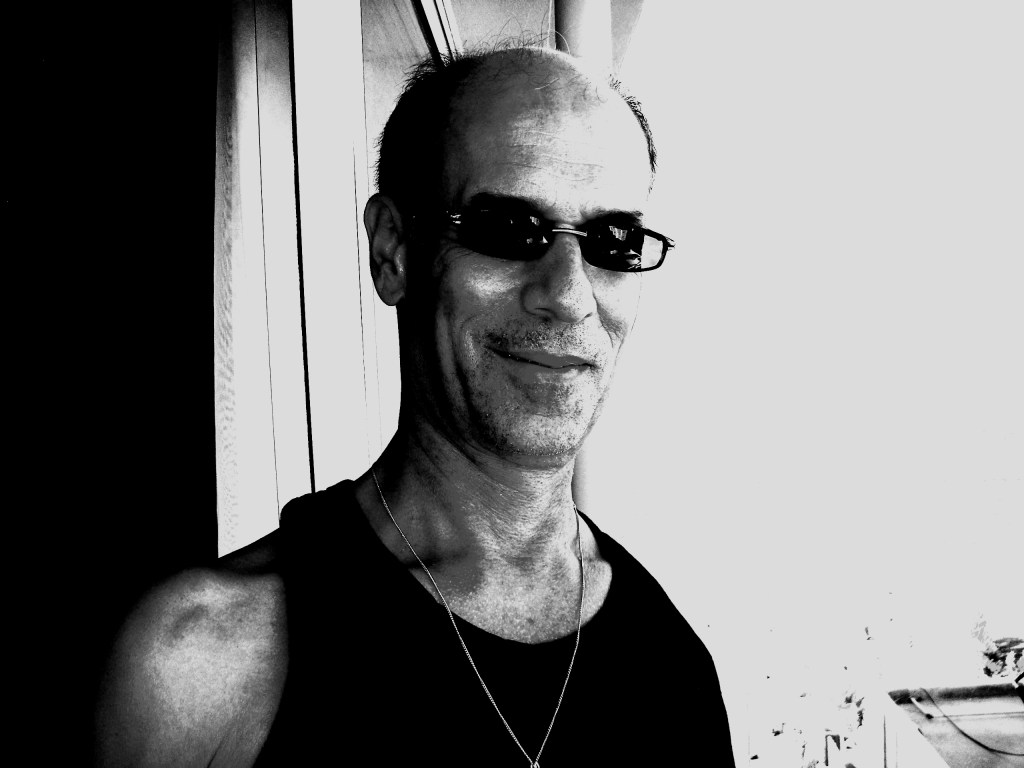
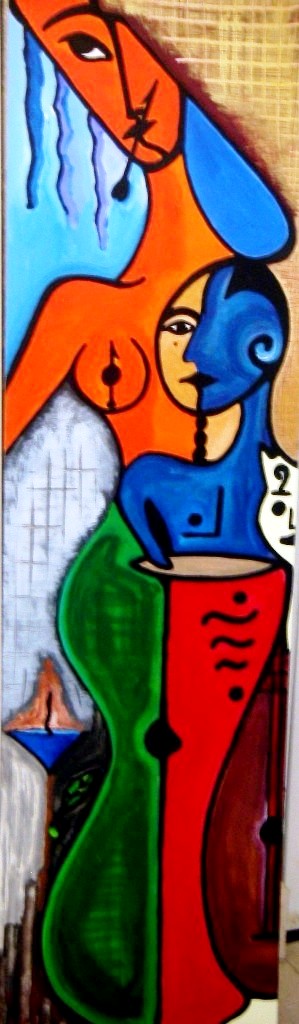
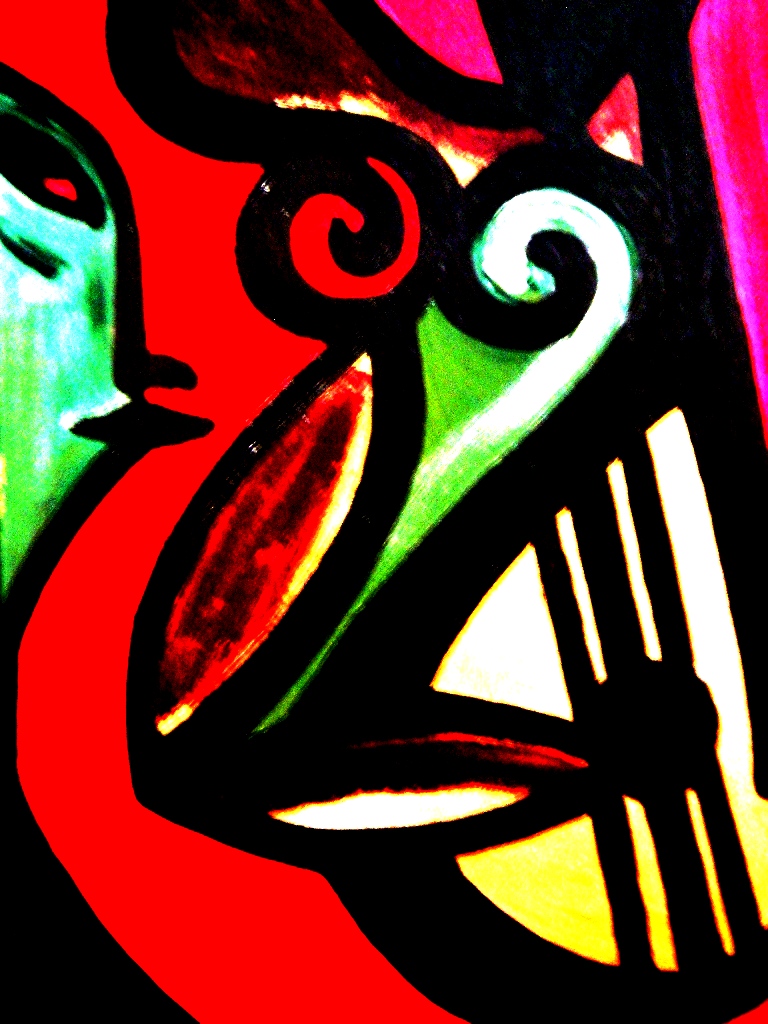
Those were hectic years, travelling to many places, many shows, many art events… And here are some of my creations from 2006 and 2007…
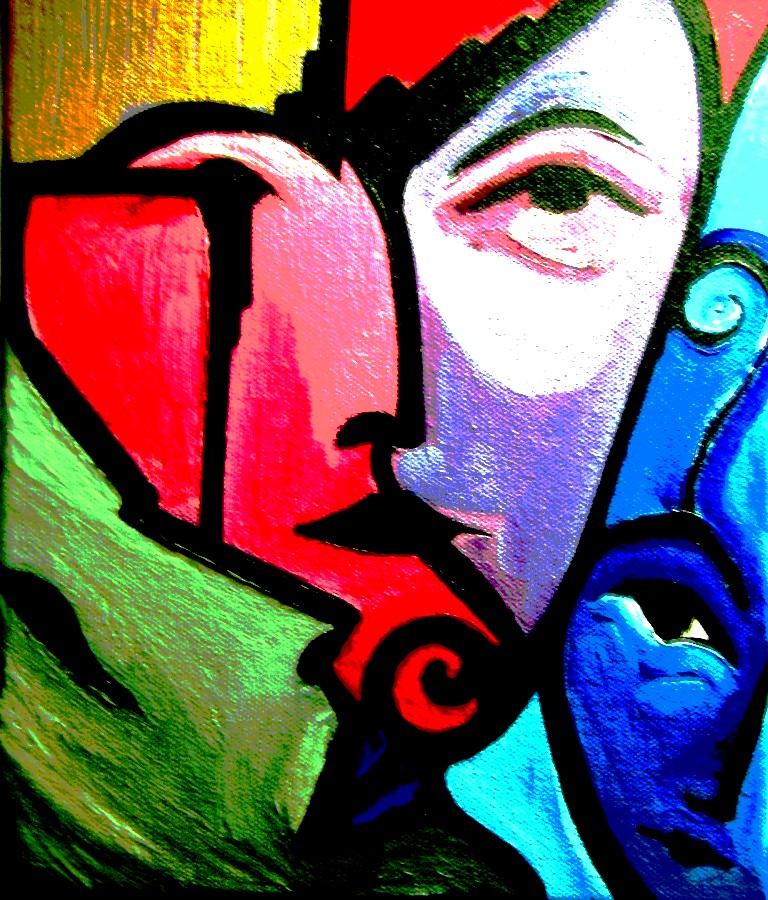
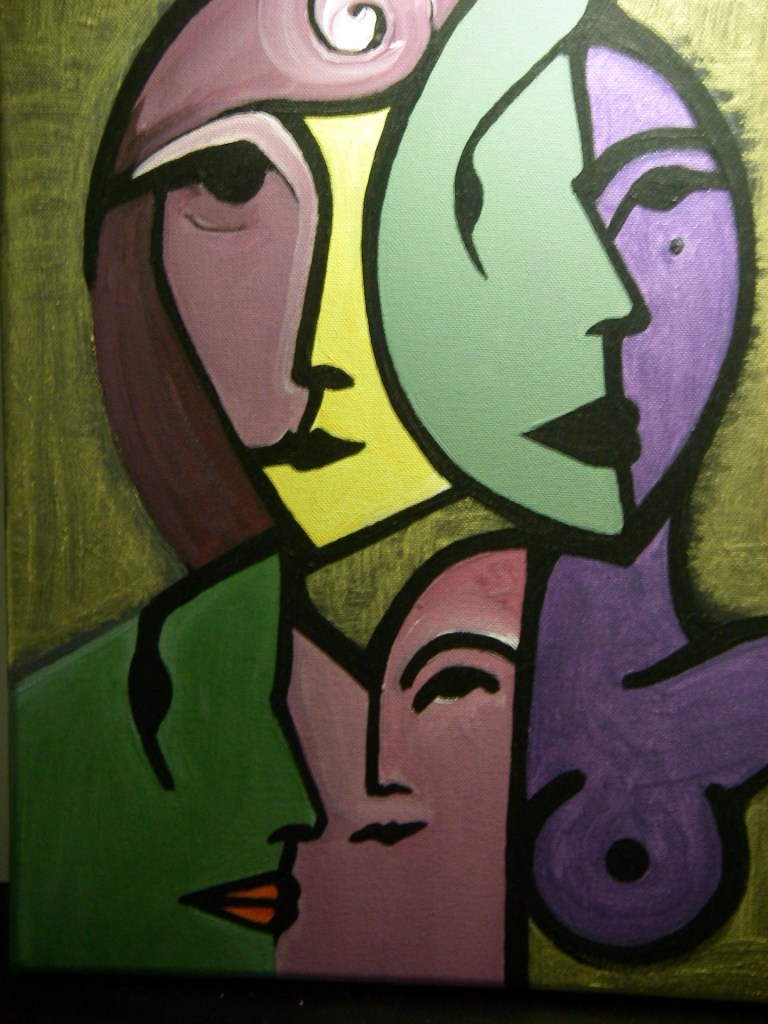
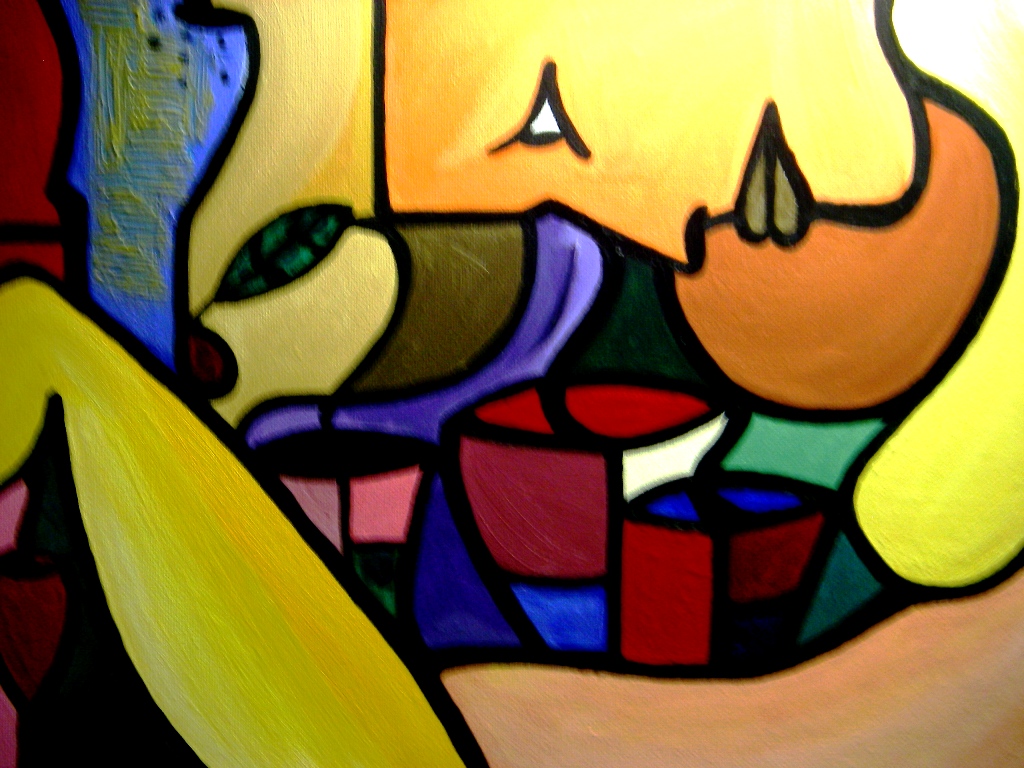
GRACIAS – CHEERS
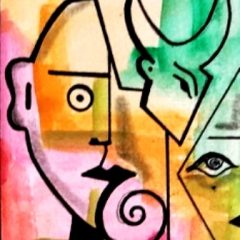
Faith saved us from the savages that we were, losing faith makes us savages again
Those were hectic years, travelling to many places, many shows, many art events… And here are some of my creations from 2006 and 2007…
GRACIAS – CHEERS

Eileen Gray fue viajera y aventurera. Viajó desde su Irlanda natal a Londres, Dresde, París , Africa y Estados Unidos… Estudió arte y dibujo en Londres (Slade School of Fine Arts/1901) y luego continuó su búsqueda en París… Es reconocida como la primera mujer en hacer un gran impacto en el diseño industrial… Eileen nació en 1878 en Enniscorthy, Irlanda… Después de una gran gira por EEUU, donde viajó en tren desde Nueva York a California, estalló la Primera Guerra Mundial. Eileen condujo una ambulancia durante la guerra… En 1913 tuvo su primera exposición en el Salon des Artistes Décorateurs… Finalmente vino su gran reconocimiento en 1922, ganándose fama en el diseño y abrió su tienda de decoración, la galería Jéan Désert, donde mostró sus alfombras y diseños de mobiliario… En 1926 comenzó a construir su casa E1027 Menton, (Alpes Maritimos) cerca de Castellar, Francia. La terminó en 1934 y pasó mucho de su tiempo en el sur de Francia… Gray murió a los 98 años, en 1976 en París y está enterrada en el cementerio de Père Lachaise.
+++++
Eileen Gray was a traveller and adventurer. She travelled from her native Ireland to London, Dresden, Paris, Africa, and the United States… She studied art and drawing in London (Slade School of Fine Arts/1901) and then continued her quest in Paris… She is recognized as the first woman to make a major impact on industrial design… Eileen was born in 1878 in Enniscorthy, Ireland… After a major tour of the US, where she travelled by train from New York to California, the First World War broke out. Eileen drove an ambulance during the war… In 1913, she had her first exhibition at the Salon des Artistes Décorateurs… Finally, her great recognition came in 1922, earning fame in design and opening her decoration shop, the Jéan Désert gallery, where she displayed her carpets and furniture designs… In 1926, she began to build her house E1027 in Menton, (Alpes-Maritimes) near Castellar, France. She finished it in 1934 and spent much of her time in the south of France… Gray died at the age of 98 in 1976 in Paris and is buried in the Père Lachaise cemetery.


GRACIAS – CHEERS
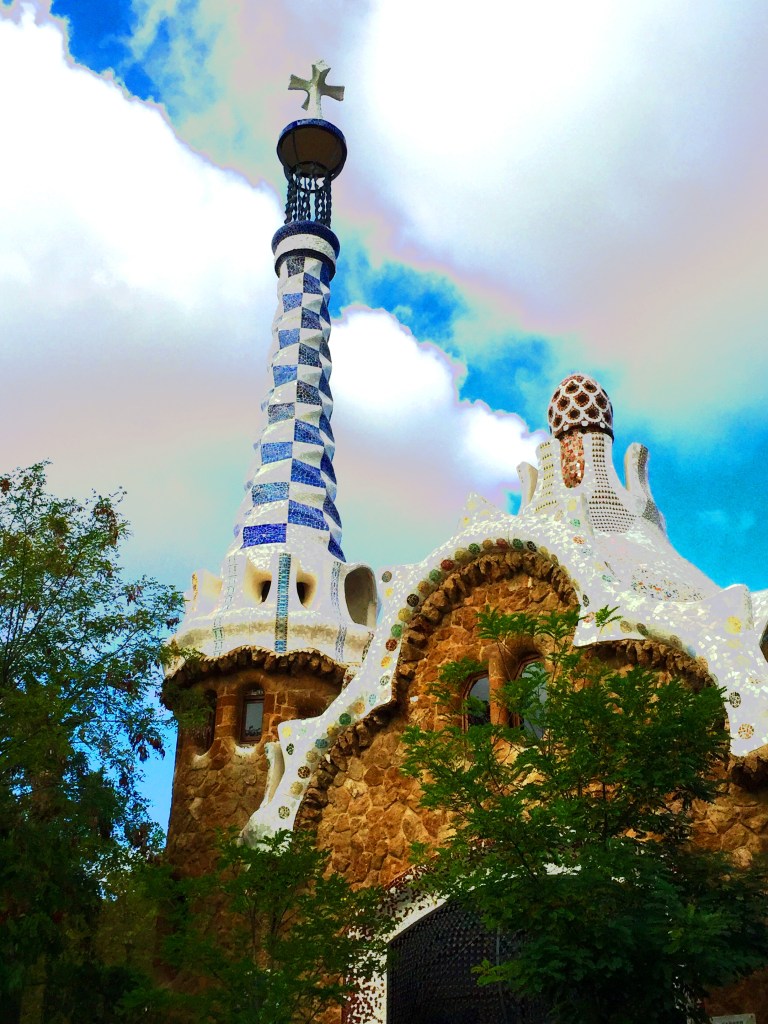
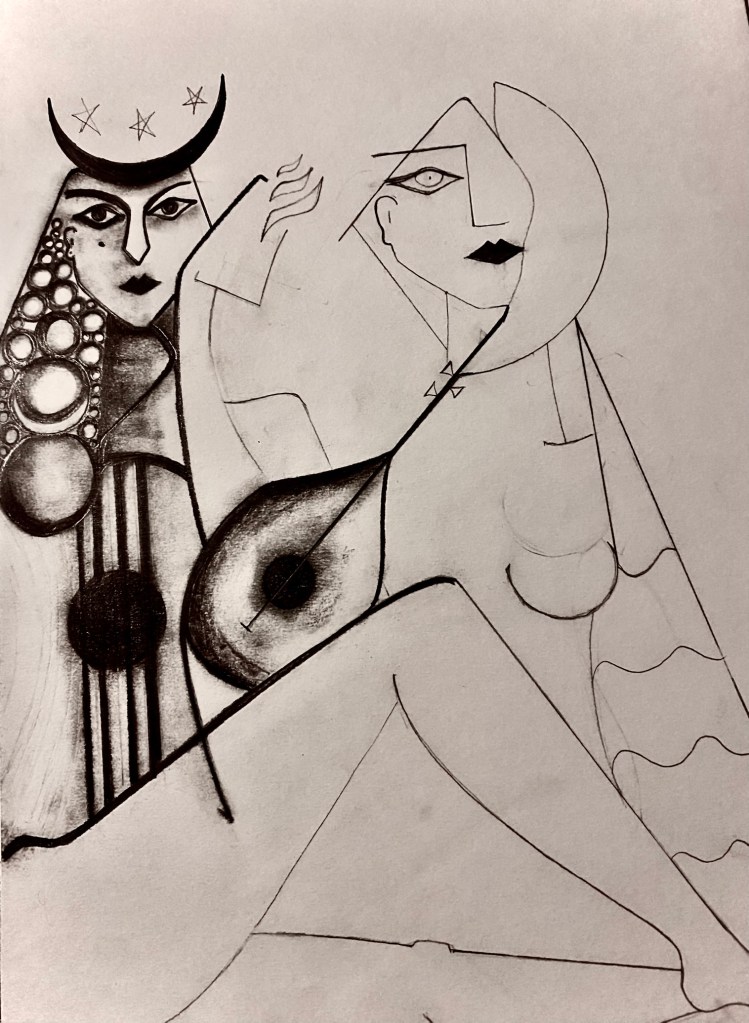
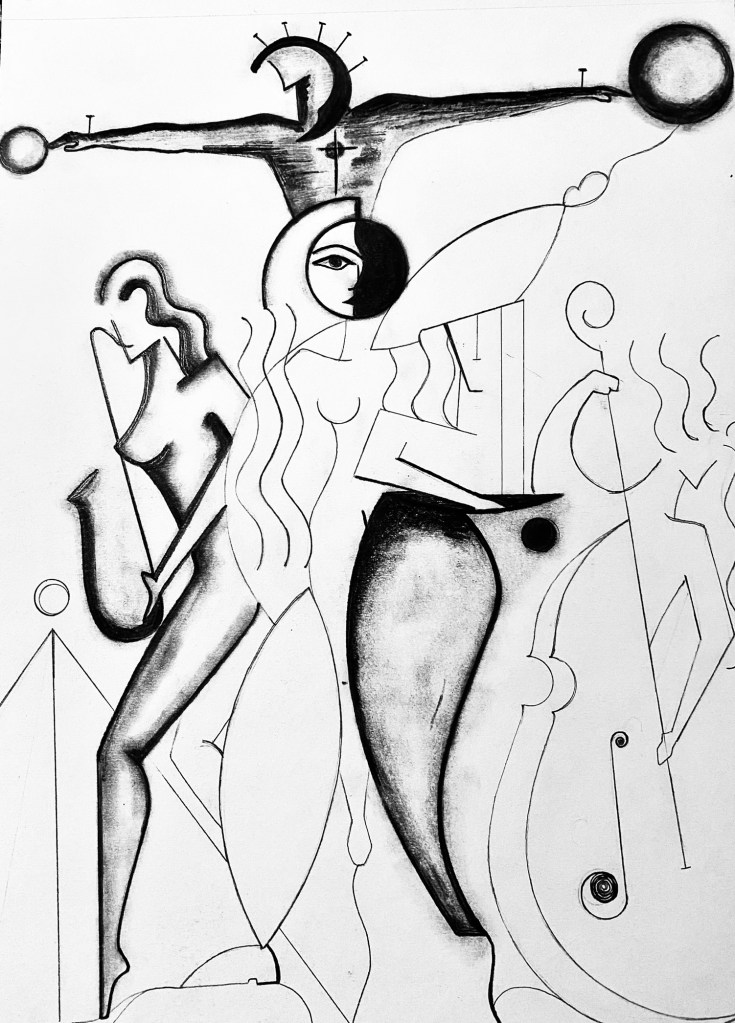
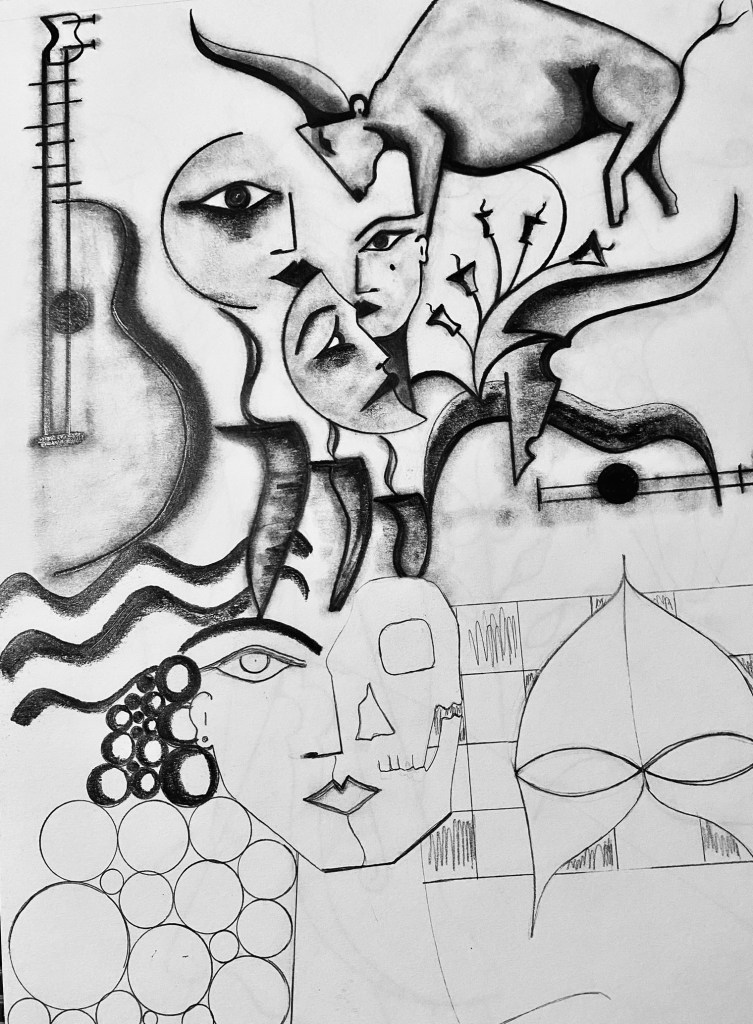
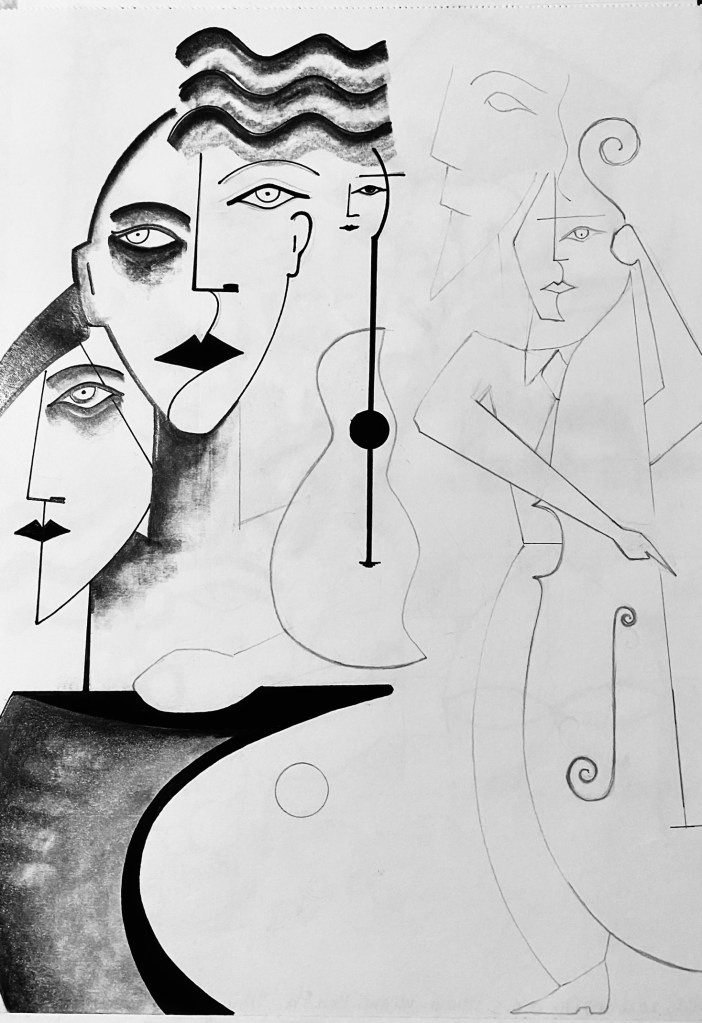
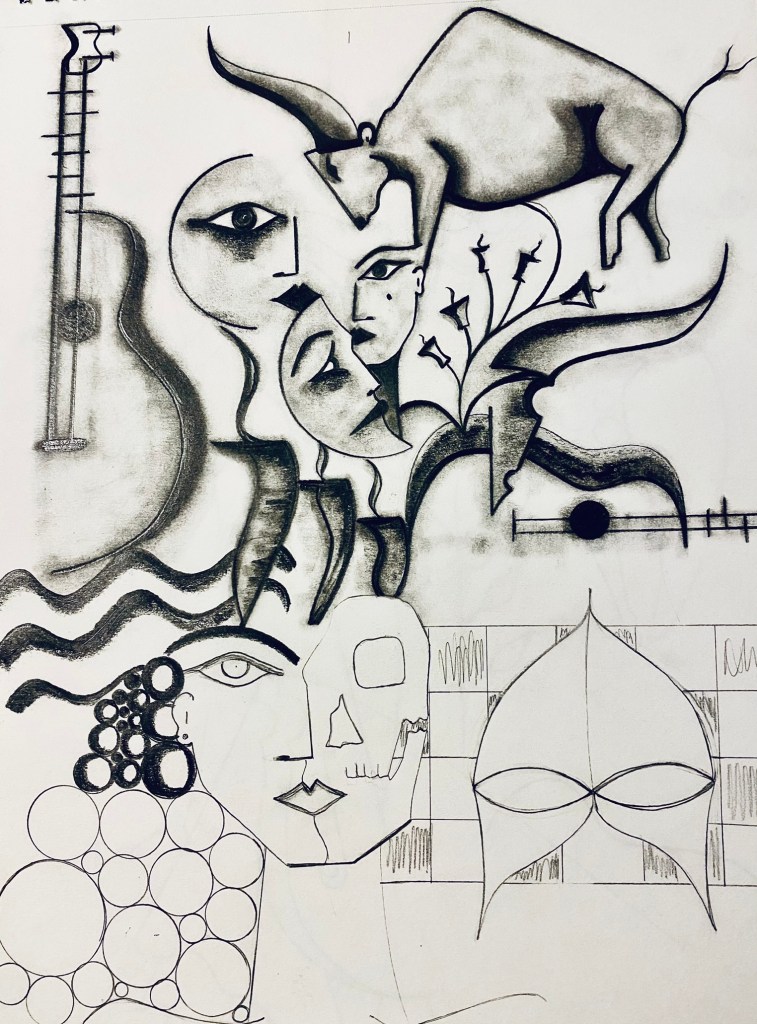
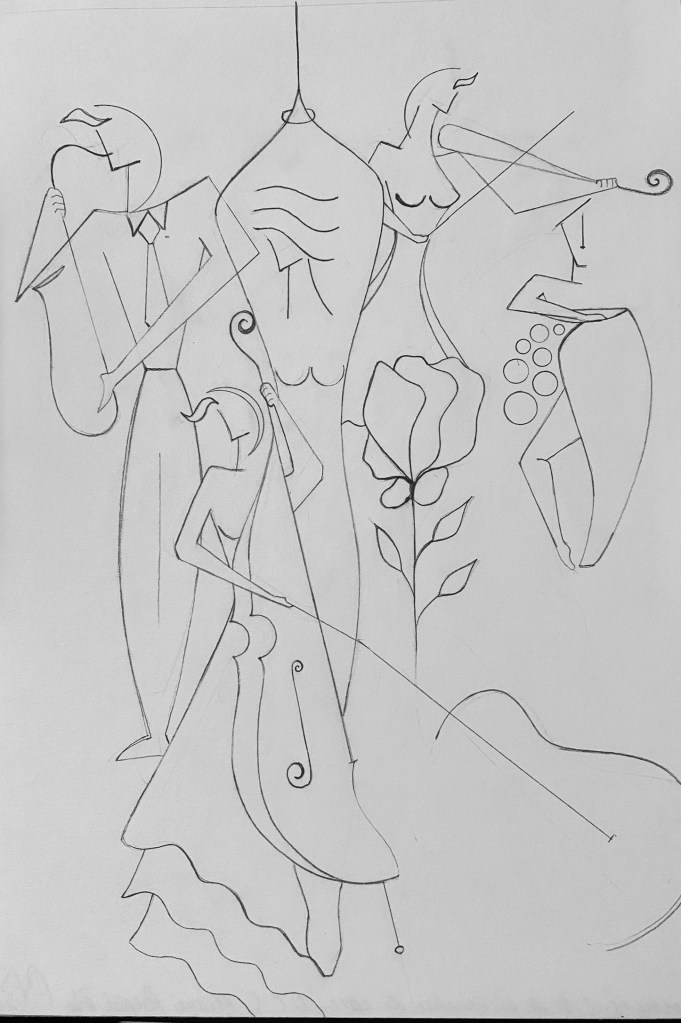
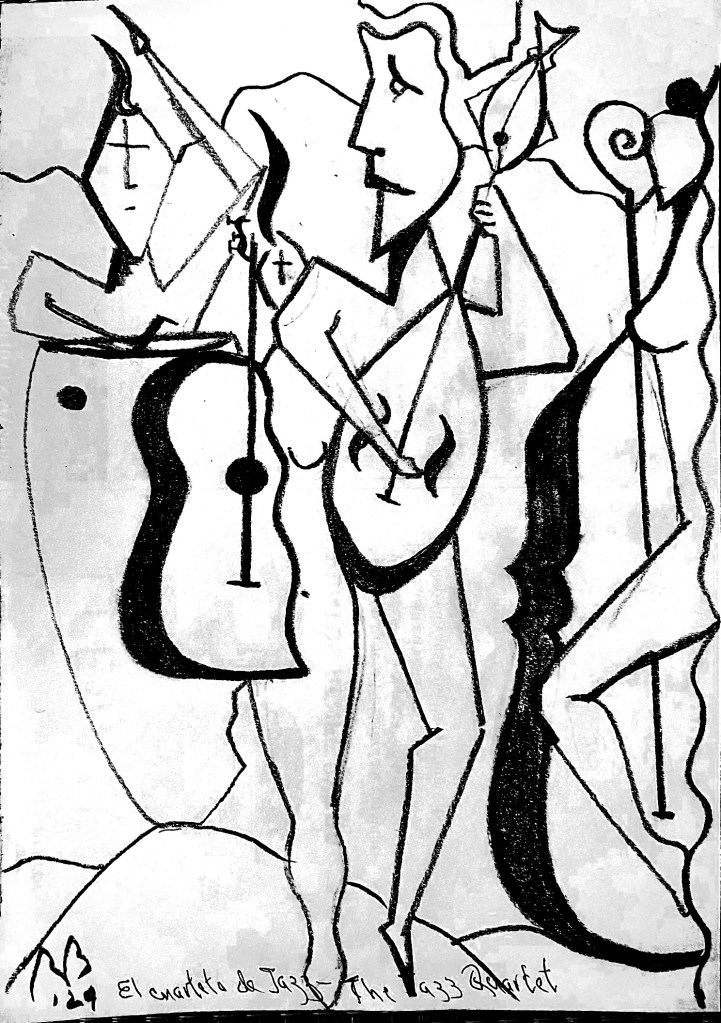
Barcelona sempre ha estat per a mi, una ciutat molt especial. No només perquè part de la meva família en procedeix, però perquè des del primer dia que vaig arribar a Barcelona vaig sentir el poder seductor de la seva gent, la seva història, la seva llengua, els seus barris, els seus carrers i la seva Mediterrània. Doncs llavors no podia faltar que hi em posés a desenvolupar idees amb paper i llapis i encara que vaig viure poc temps en aquesta ciutat dels meus amors, em va servir per continuar la recerca, que com ja vosaltres sabeu, és art…
+ + + + +
Barcelona siempre ha sido para mí, una ciudad muy especial. No solo porque parte de mi familia procede de ella, pero porque desde el primer día que a Barcelona llegué sentí el poder seductor de su gente, su historia, su lengua, sus barrios, sus calles y su Mediterráneo. Pues entonces no podía faltar que en ella me pusiera a desarrollar ideas con papel y lápiz y aunque viví poco tiempo en esa ciudad de mis amores, me sirvió para continuar la búsqueda, que como ya vosotros sabéis, es arte…
+ + + + + + + + +
Barcelona has always been a very special city for me. Not only because part of my family comes from there, but mostly because from the first day that I arrived in Barcelona, I felt the seductive power of her people, her history, language, neighbourhoods, streets, and her Mediterranean. So it was inevitable, in Barcelona I started developing ideas that I placed with pencil on paper. And even though I lived a short time in that beloved city, it served me to continue the search, which as you already know, is art…
gràcies – gracias – cheers

(La pintura que aparece es obra del autor) El arte, o simplemente ARTE, es algo abstracto, tiene que serlo por ley y por su naturaleza porque aunque …
Memorias: BARCELONA, 2016, SANT GERVASI by Francisco Bravo Cabrera
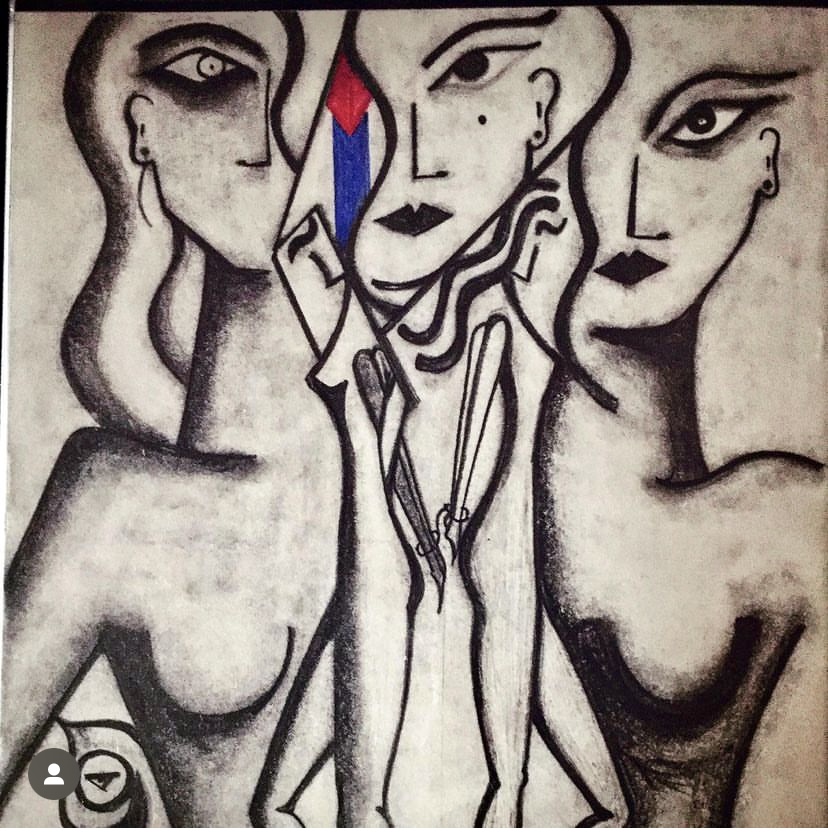
ART is something abstract, it has to be because of its nature, although it is a creative act. That being, it is still simply the creation of an artist, and the artist has taken that with which he will create art from the complete and perfect creation of God. The artist takes the forms and ideas, turns them into designs, and makes works of art with them, creating new worlds which he puts on canvas with paint, graphite on paper, or sculpts them in rock, bronze, or wood. So all the artists’ works are abstracts, extracted from the great creation of God.
To triumph in art, an artist must be able to harmonize with nature and, most importantly, become devoted to humility. And for a painting to triumph…especially over time…requires spirituality and that depends on how the artist has painted it. If the artist is faithful to his era and to his history, the painting will possess great spirituality and be forever fresh. So, if the artist is working faithfully within the history that is passing him by and the one he is creating, he can approach the purity of art. And he will create either by seeing, perceiving, or feeling the reality…and the truths…that surround him. Conscious of that, the artist will represent his theme, subject, composition and message just as it appears to him (Impressionism) or as he feels it should be deep within himself (Expressionism). The artist’s work is slow but maintains itself in constant motion, imitating the Universe, which, like God, always moves but never hurries.
Now…
I see worlds merging in the gaze of the artist who seeks…not to beautify what is already perfect and beautiful…to delve into the Great Work that is Nature. He understands that Nature does not concern herself with fitting, matching, or planning. No, because Nature simply exists, God created her complete and perfect. And although she manifests herself in myriad ways, growing, changing shapes and colours, never repeats herself…although it may seem she does to us…Nature always stays the same. Nature, like art, does not evolve, it is.
«I have come to realize that memories…and memory itself…are fragile, very fragile, and we take very poor care of them. I want to work and create, artistically, to honor Mother Earth, God, and their great work, and all those whom God has given me to care for and love.»
In my flat on Carrer de Casanova in Sant Gervasi, I enjoyed the magic of of one of the most phenomenal cities I’ve ever known, Barcelona. It was the year 2016, and while there I managed to develop many ideas, which I captured well with pencil and India ink in several sketchbooks. I drew in the living room, on the balcony, and later in the studio that I set up in one of the empty rooms of the flat.
But the year 2016, although one of great creativity, was a year of much movement. I travelled to several cities. The first one I visited was Cienfuegos (Cuba), where I spent the month of March. In September it was Athens, in October, Turkey and finally Miami, Florida (USA) in November. In all of them, I took the opportunity to add more and more pages to my sketchbooks and to fill my head with ideas that I later managed to turn into drawings, poems, and memories in Barcelona.
Most of the drawings were part of a collection… already sold… titled «Islands of Jazz,» and others were part of another called «Cuba Song.»
That’s why I conclude as I began, asserting that art, even figurative art, is abstract. As the figurative artist that I am, I’ve extracted the shapes, the colours, the movement…the jazz…from the God’s creation and painted it, as it was created and «seen» by my «mind’s eye», but on a smaller scale. That’s all. That is art.
(Francisco Bravo Cabrera – 7/10/2016, Barcelona, Catalonia/Listening to Stan Getz)
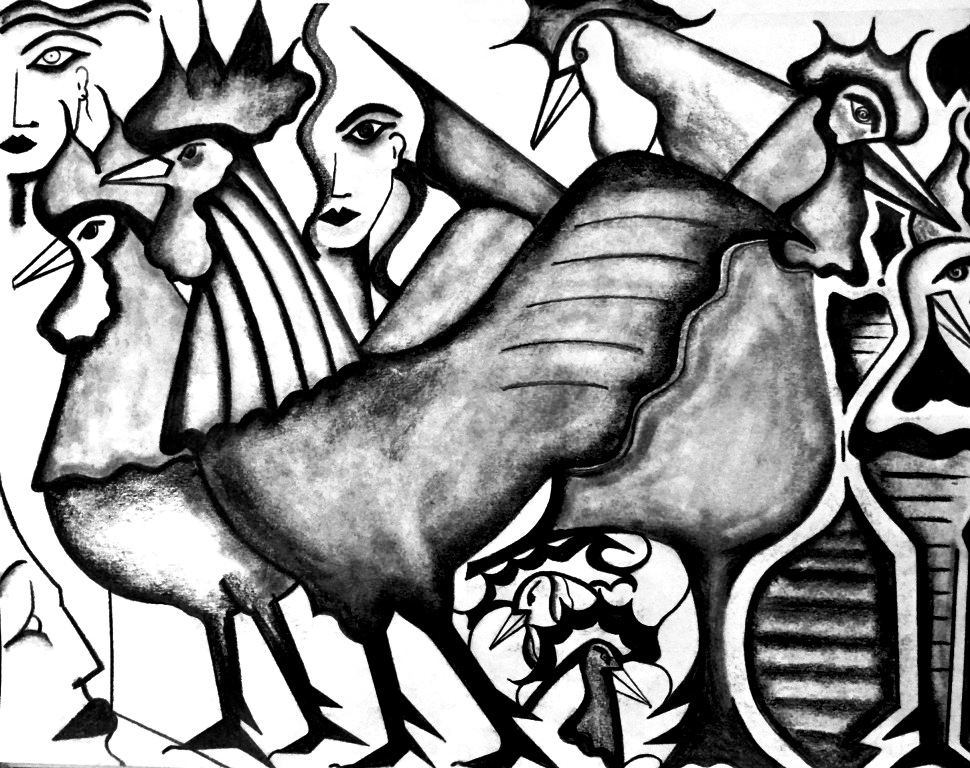
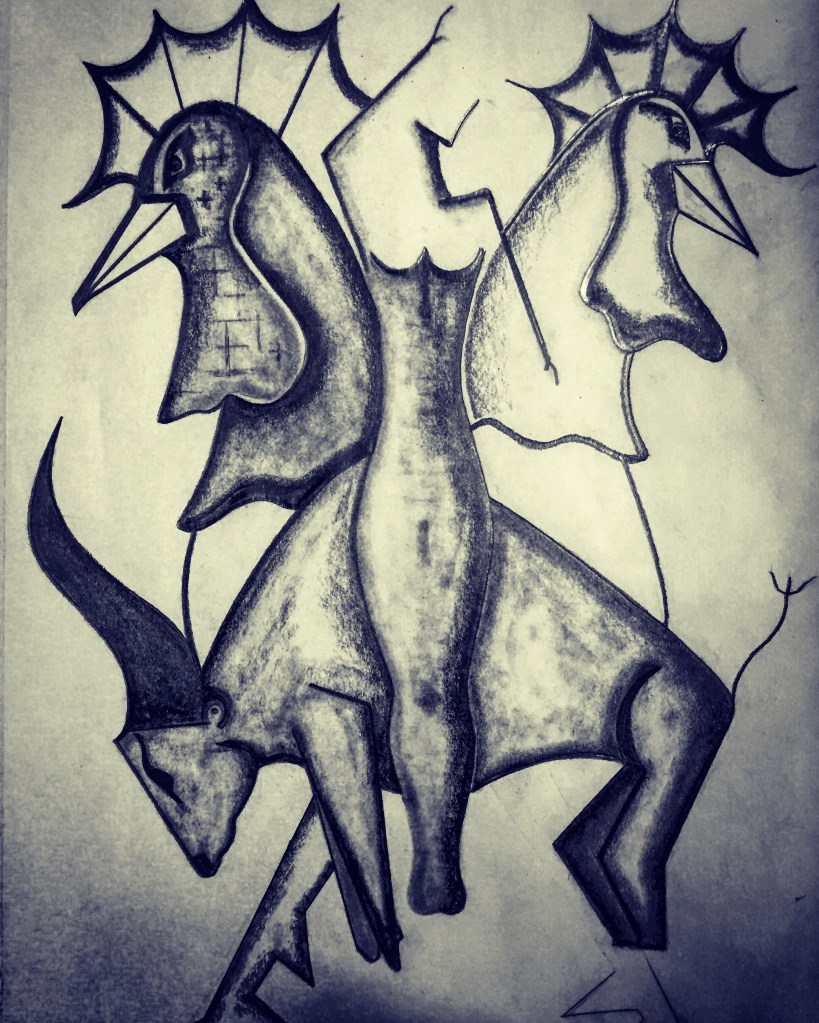
Dibujar un gallo es dibujar la fuerza de un animal extraordinario… Muchos piensan que el gallo es el símbolo nacional de algún país pero yo no los miro como símbolo nacional de nadie, sino del que los adopte como el suyo. A veces somos como los gallos y a veces no… La vida va dando vueltas y nosotros con ella y tenemos que estar prestos a improvisar, a adaptarnos y a sobreponernos. Los animales domesticados son como nosotros, los hombres civilizados, que usualmente no tenemos que enfrentarnos a las cosas más duras de la vida, vivimos cómodamente y aunque nos imaginamos que estamos combatiendo a gigantes, en verdad no son ni molinos… No se porque, pero durante el 2015/16 me dio por dibujar gallos…
+ + + + + + +
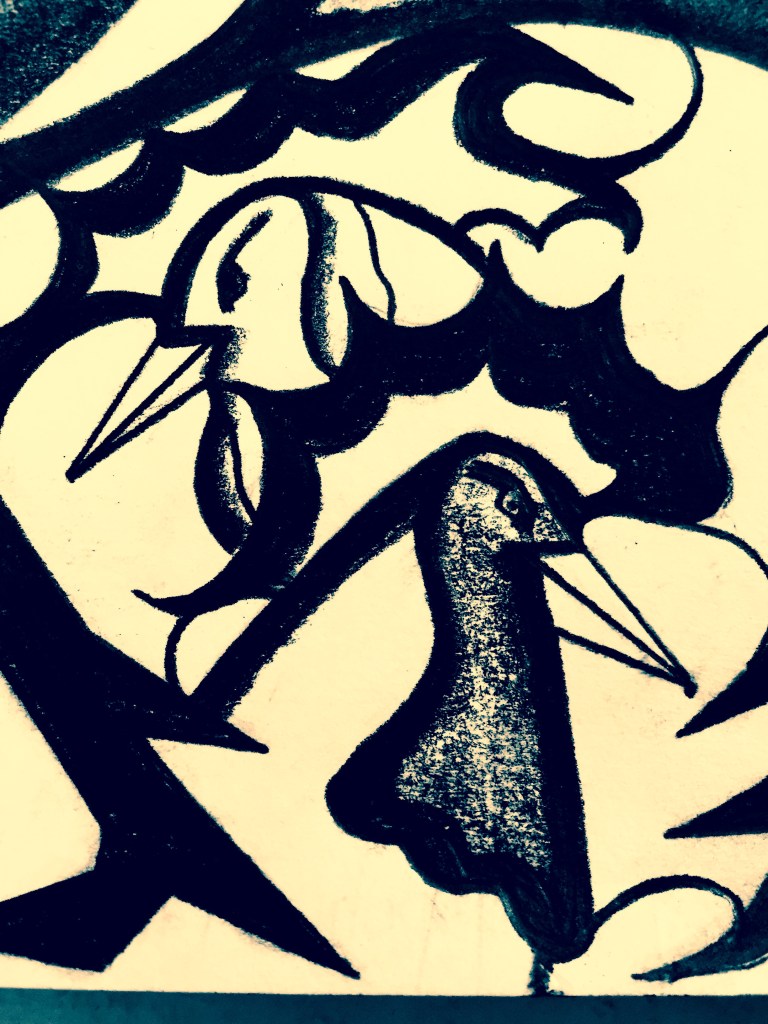
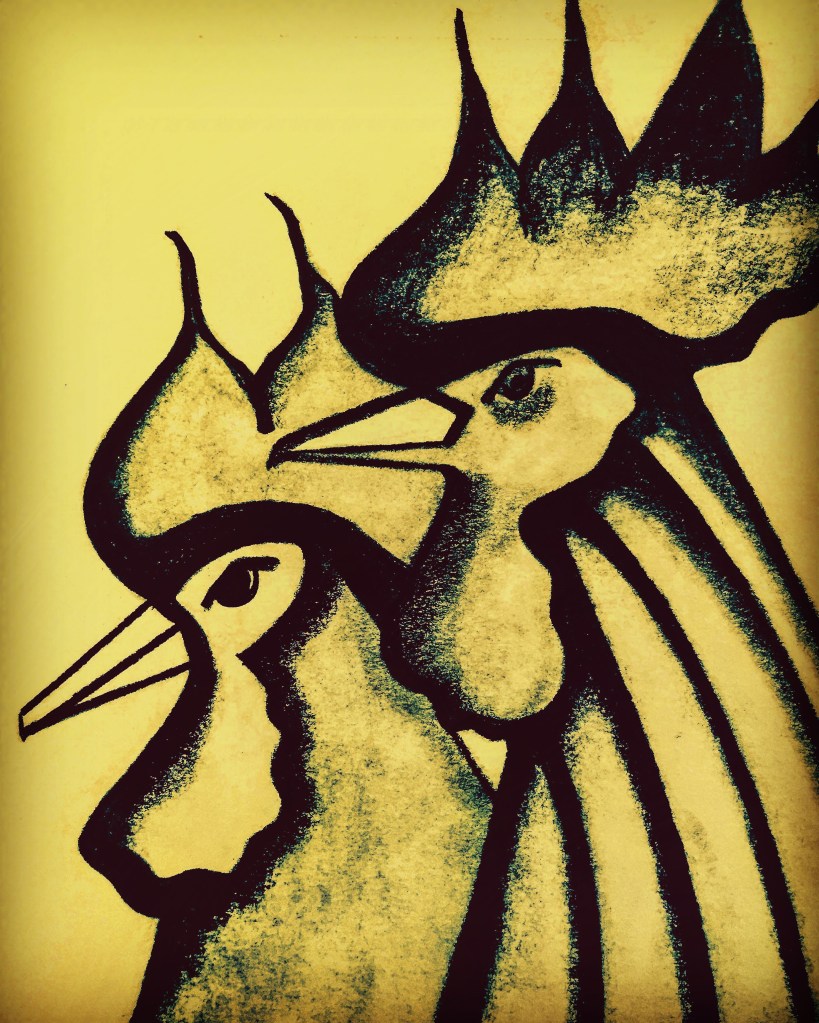
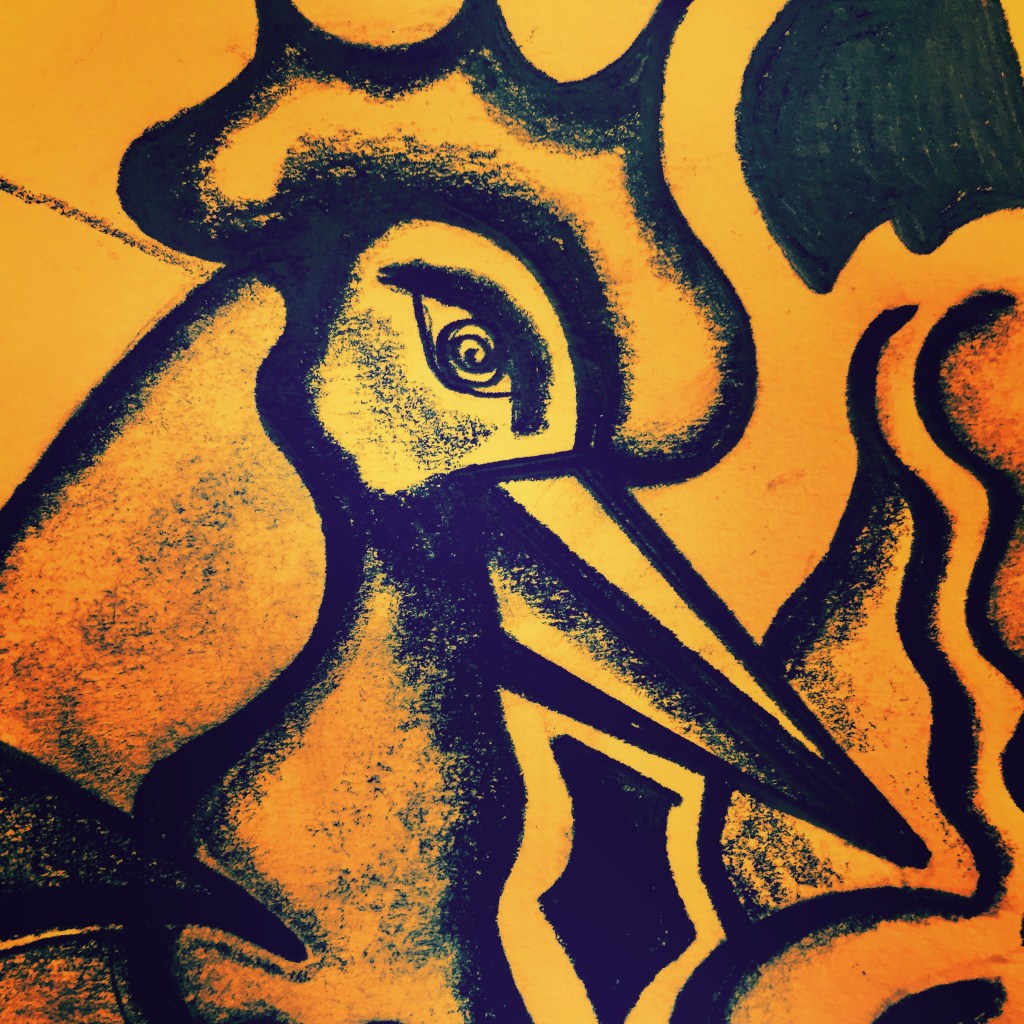
Drawing a rooster is drawing the strength of an extraordinary animal. Many people think the rooster is someone’s national symbol… I don’t see them as a national symbol for anyone, but rather for whoever adopts it as their own, because sometimes we are like roosters and sometimes we’re not. Life takes us on twists and turns and we have to be ready to improvise, adapt, and overcome. Domesticated animals are like us, civilized men; we don’t usually have to face the hard things in life, we live comfortably, and even though we imagine we are battling giants, they’re not really even windmills… I don’t know why, but during 2015/16 I had a phase of drawing roosters…
GRACIAS – CHEERS
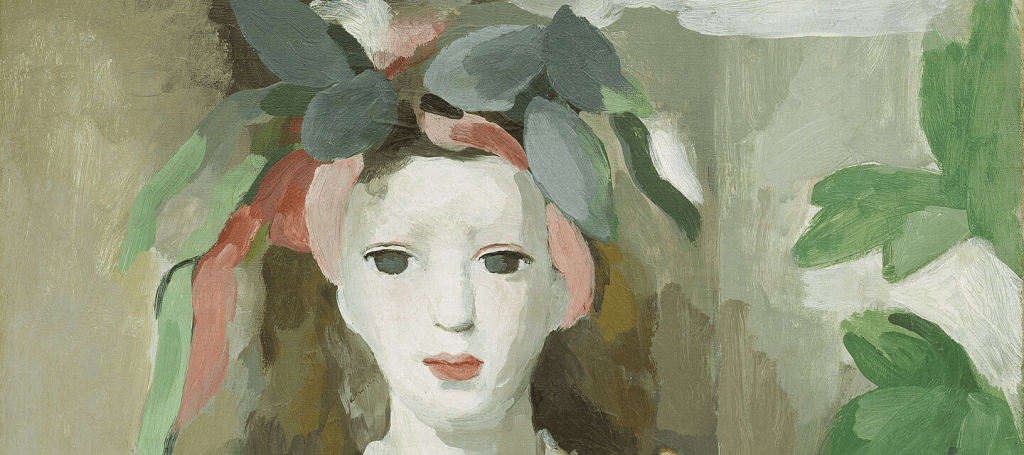
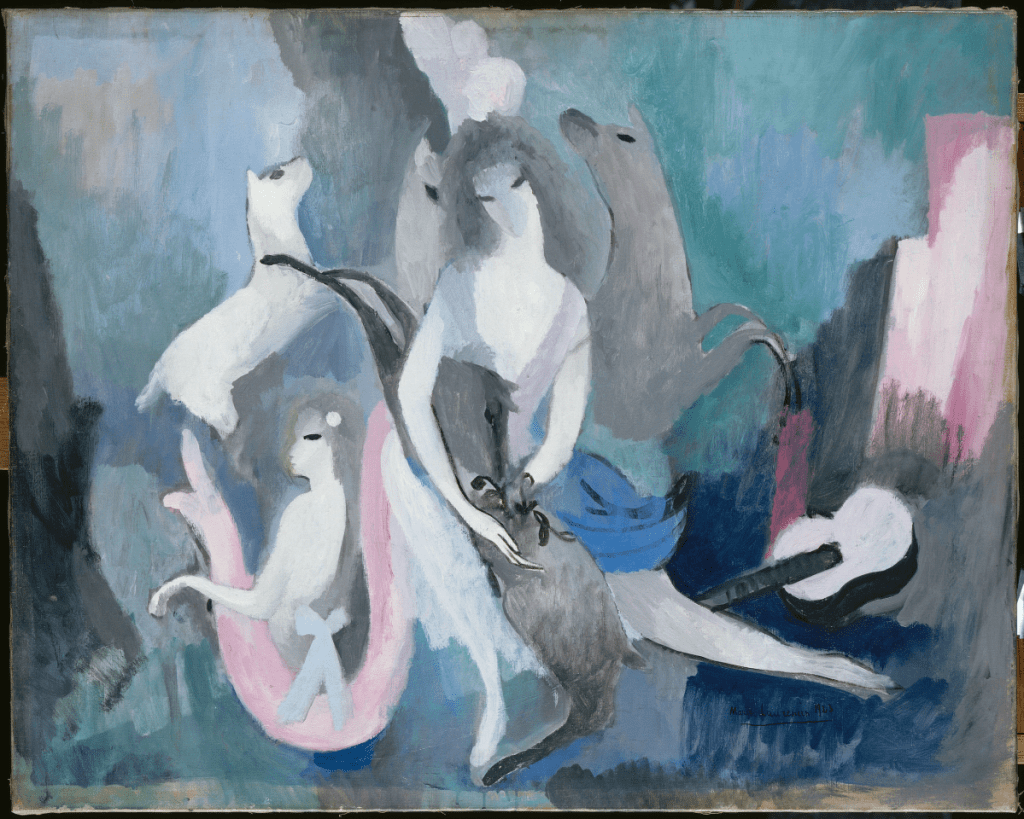
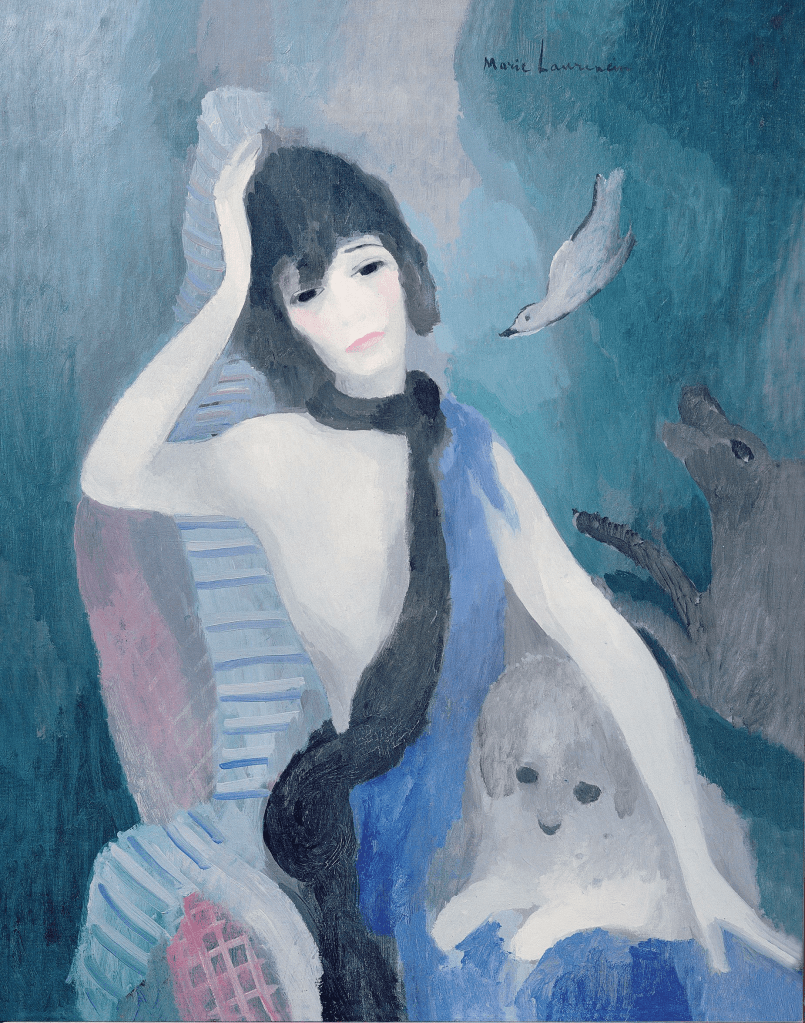
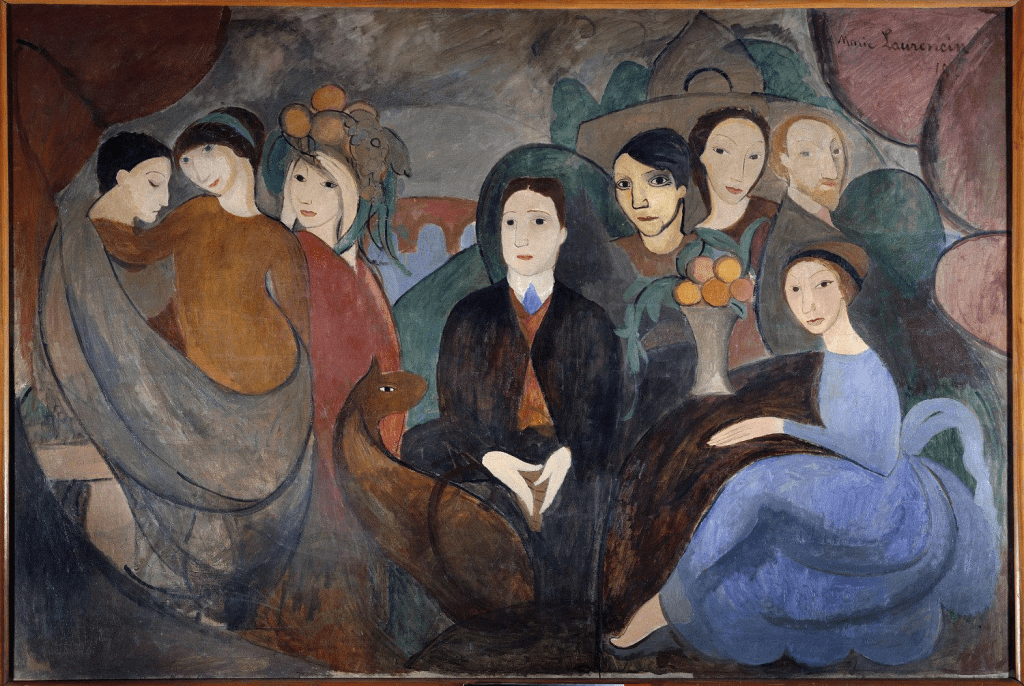
En París toma clases de dibujo en la Académie Humbert de 1903 al 1904, y fue allí donde conoció a Georges Braque… Su primera exposición fue en1907 en el Salón de los Independientes, y así llegó a conocer a Pablo Picasso, y a todo el grupo del Bateau-Lavoir de Montmartre. Picasso la presentó a Guillaume Apollinaire, y con el tuvo una relación hasta el 1912… Sus referentes fueron los fovistas y los cubistas (hasta cierto punto), pero también las miniaturas persas les interesaron como el arte del rococó… Marie nació en Paris en 1883 y murió igual en París en 1956… En la década de los años 1920 pintaba figuras femeninas en tonos pastel, utilizando colores fluidos y muy suaves. Sus composiciones eran sencillas y en ellas prevalecían formas femeninas y eso le dio mucha fama en el París de los años 1920… Laurencin también fue ilustradora de libros, entre ellos «Alicia en el país de las maravillas» de Lewis Caroll, pero también libros de André Gide, Max Jacob, Saint-John Perse, Marcel Jouhandeau, y Jean Paulhan… Laurencin fue una artista completa, pues también fue retratista de mujeres famosas como Helen Rubenstein, Coco Chanel y Colette… Además de todo esto, decoró y diseñó vestuarios para famosos ballets de la Opéra-Comique, los Ballets Rusos, La Comédie Française y los ballets de Roland Petit en el Teatro de los Campos Elíseos… En Nagano, Japón, se abrió un museo dedicado a su arte que alberga 500 obras suyas… Sin más, Laurencin es una artista extraordinaria que admiro grandemente, ojalá os guste su obra…
+++++++++
In Paris she took drawing classes at the Académie Humbert from 1903 to 1904, and it was there that she met Georges Braque… Her first exhibition was in 1907 at the Salon des Indépendants, where she met Pablo Picasso and the entire group of the Bateau-Lavoir artists, poets, writers of Montmartre. Picasso introduced her to Guillaume Apollinaire, and they had a relationship until 1912… Her influences were the Fauvists and the Cubists (to a certain extent), but she also took interest in Persian miniatures and Rococo art… Marie was born in Paris in 1883 and passed away there in 1956… In the 1920s, she painted female figures in pastel tones, using fluid and very soft colours. Her compositions were simple, with a prevalence of feminine forms, which brought her much fame in the Paris of the 1920s… Laurencin was also an illustrator of books, including «Alice in Wonderland» by Lewis Carroll, as well as books by André Gide, Max Jacob, Saint-John Perse, Marcel Jouhandeau, and Jean Paulhan… Laurencin was a versatile artist, painting portraits of famous women such as Helen Rubenstein, Coco Chanel, and Colette… In addition to all this, she decorated and designed costumes for famous ballets at the Opéra-Comique, the Ballets Russes, La Comédie Française, and Roland Petit’s ballets at the Théâtre des Champs-Élysées… A museum dedicated to her art containing 500 of her works was opened in Nagano, Japan… In sum, Laurencin is an extraordinary artist whom I greatly admire; I hope you enjoy her work as well…
GRACIAS – CHEERS
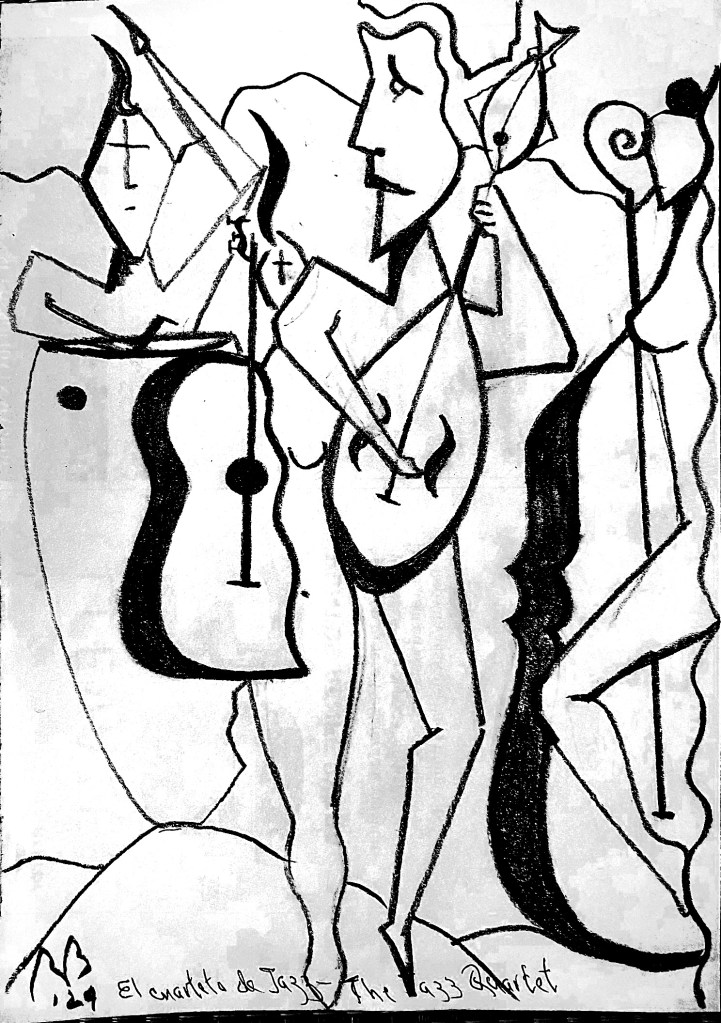
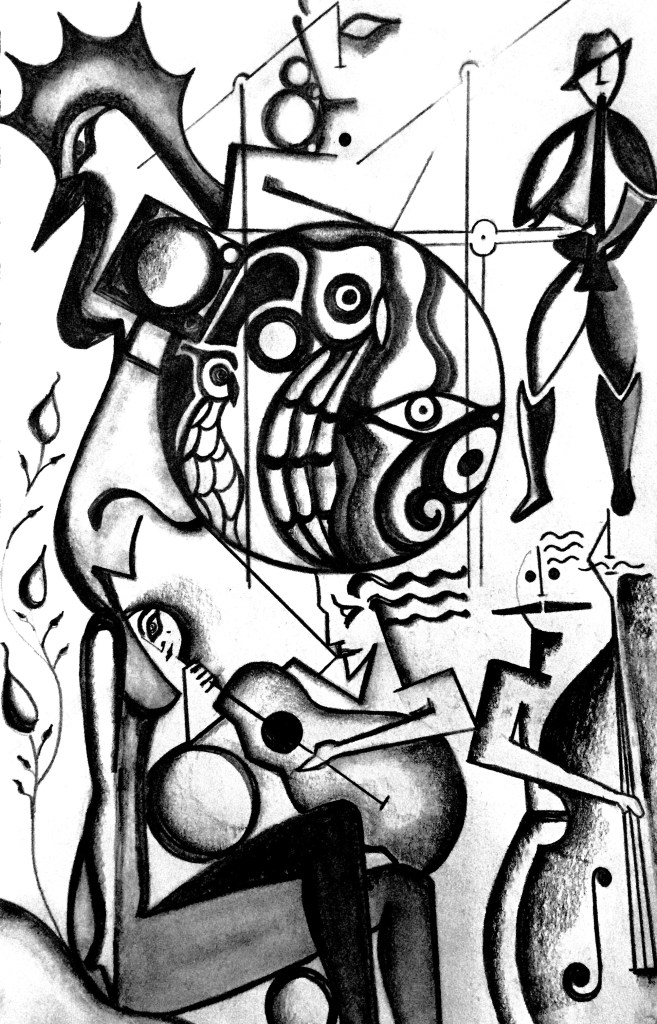
No estoy seguro pero supongo que por ahí deambulen algunos que piensan que la vida se parece a un cuarteto de Jazz. Al menos me planteo eso como una posibilidad y quizá los que lo piensen tengan razón. Todos sabemos que la vida tiene su ritmo, se habla siempre del «ritmo de la vida», bueno pues esa es la primera coincidencia entre la vida y el cuarteto pues uno de los integrantes del cuarteto, el percusionista, va marcando el ritmo de las piezas que tocan. Además del compás, esta la melodía, o sea lo que en la vida seria el pasar del tiempo, el va y ven de las estaciones, de los días, los meses, los años. El cuarteto está compuesto por cuatro seres completamente distintos. Pueden ser cuatro hombres, cuatro mujeres o combinados de cualquier otra manera, como lo somos en la vida. En la vida todos somos únicos y por mucho que nos podamos parecer unos a otros, somos diferentes de los demás. Finalmente diría que el cuarteto cumple con una función que es hacer música, para ella sus integrantes se han preparado, han elegido las piezas a tocar, han estudiado, ensayado y luego las han presentado ante el público. Igual nosotros vamos poco a poco aprendiendo, estudiando, preparándonos y cuando nos toque, nos presentamos ante los demás y somos vida. Pero este cuarteto que os veis no es un cuarteto, es una ilusión, una idea, un cuadro. Entonces ¿Se parecerá mejor a cuadro la vida y no a un cuarteto de Jazz?
+ + + + + + + + +
I’m not sure but I suppose there are some who think that life is like a jazz quartet. At least I consider that as a possibility and perhaps those who think that are right. We all know that life has its rhythm, we always talk about the «rhythm of life», well that’s the first coincidence between life and the quartet because one of the members of the quartet, the percussionist, sets the rhythm of the pieces they play. In addition to the rhythm, there is the melody, which is what in life would be the passage of time, the coming and going of the seasons, days, months, years. The quartet is composed of four completely different beings. They can be four men, four women, or combined in any other way, as we are in life. In life, we are all unique and no matter how much we may resemble each other, we are different from others. Finally, I would say that the quartet fulfils a function, which is to make music, for which its members have prepared, chosen the pieces to play, studied, rehearsed, and then presented them to the public. Similarly, we gradually learn, study, prepare, and when it is our turn, we present ourselves to others for we are life. But this quartet that you see is not a quartet, it is an illusion, an idea, it is just a picture. So, could life resemble a picture better than a jazz quartet?
GRACIAS – CHEERS
ART is something abstract, it has to be because of its nature, although it is a creative act. That being it is still simply the creation of an artist, and the artist has taken that with which he created art from the complete and perfect creation of God. The artist takes the forms and ideas, turns them into designs, and makes works of art with them, creating new worlds which he puts on canvas with paint, graphite on paper, or sculpts them in rock, bronze, or wood. So all the artists’ works are abstracts, extracted from the great creation of God.
To triumph in art, an artist must be able to harmonize with nature and, most importantly, become devoted to humility. And for a painting to triumph…especially over time…it requires spirituality and that depends on how the artist has painted it. If the artist is faithful to his era and to his history, the painting will possess great spirituality and be forever fresh. So, if the artist is working faithfully within the history that is passing him by and the one he is creating, he can approach the purity of art. And he will create either by seeing, perceiving, or feeling the reality…and the truths…that surround him. Conscious of that, the artist will represent his theme, subject, composition and message just as it appears to him (Impressionism) or as he feels it should be deep within himself (Expressionism). The artist’s work is slow but maintains itself in constant motion, imitating the Universe, which, like God, always moves but never hurries.
Now…
I see worlds merging in the gaze of the artist who seeks…not to beautify what is already perfect and beautiful…to delve into the Great Work that is Nature. He understands that Nature does not concern herself with fitting, matching, or planning. No, because Nature simply exists, God created her complete and perfect. And although she manifests herself in myriad ways, growing, changing shapes and colours, never repeats herself…although it may seem she does to us…Nature and always stays the same. Nature, like art, does not evolve, it is.
«I have come to realize that memories…and memory itself…are fragile, very fragile, and we take very poor care of them. I want to work and create, artistically, to honor Mother Earth, God, and their great work, and all those whom God has given me to care for and love.»
In my flat on Carrer de Casanova in Sant Gervasi, I enjoyed the magic of of one of the most phenomenal cities I’ve ever known, Barcelona. It was the year 2016, and while there I managed to develop many ideas, which I captured well with pencil and India ink in several sketchbooks. I drew in the living room, on the balcony, and later in the studio that I set up in one of the empty rooms of the flat.
But the year 2016, although one of great creativity, was a year of much movement. I travelled to several cities. The first one I visited was Cienfuegos (Cuba), where I spent the month of March. In September it was Athens, in October, Turkey and finally Miami, Florida (USA) in November. In all of them, I took the opportunity to add more and more pages to my sketchbooks and to fill my head with ideas that I later managed to turn into drawings, poems, and memories in Barcelona.
Most of the drawings were part of a collection… already sold… titled «Islands of Jazz,» and others were part of another called «Cuba Song.»
That’s why I conclude as I began, asserting that art, even figurative art, is abstract. As the figurative artist that I am, I’ve extracted the shapes, the colours, the movement…the jazz…from the God’s creation and painted it, as it was created and «seen» by my «mind’s eye», but on a smaller scale. That’s all. That is art.
(Francisco Bravo Cabrera – 7/10/2016, Barcelona, Catalonia/Listening to Stan Getz)
Dibujar un gallo es dibujar la fuerza de un animal extraordinario… Muchos piensan que el gallo es el símbolo nacional de algún país pero yo no los miro como símbolo nacional de nadie, sino del que los adopte como el suyo. A veces somos como los gallos y a veces no… La vida va dando vueltas y nosotros con ella y tenemos que estar prestos a improvisar, a adaptarnos y a sobreponernos. Los animales domesticados son como nosotros, los hombres civilizados, que usualmente no tenemos que enfrentarnos a las cosas más duras de la vida, vivimos cómodamente y aunque nos imaginamos que estamos combatiendo a gigantes, en verdad no son ni molinos… No se porque, pero durante el 2015/16 me dio por dibujar gallos…
+ + + + + + +
Drawing a rooster is drawing the strength of an extraordinary animal. Many people think the rooster is someone’s national symbol… I don’t see them as a national symbol for anyone, but rather for whoever adopts it as their own, because sometimes we are like roosters and sometimes we’re not. Life takes us on twists and turns and we have to be ready to improvise, adapt, and overcome. Domesticated animals are like us, civilized men; we don’t usually have to face the hard things in life, we live comfortably, and even though we imagine we are battling giants, they’re not really even windmills… I don’t know why, but during 2015/16 I had a phase of drawing roosters…
GRACIAS – CHEERS

 JaZzArt en València