#art, What a Portrait!

(Reddit)

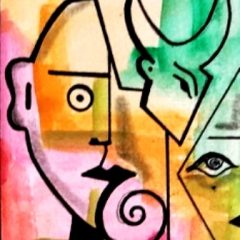
This amazing portrait of Gina Rinehart (the richest women in Australia) was painted by Vincent Namatjira, an aboriginal Australian painter from Alice Springs, Northern Territory. The 40 year old Namatjira is well recognised in his native land, having won the Archibald Prize several times. He is also the great-grandson of watercolourist Albert Namatjira. He began painting in 2012 and was taught art by his wife Natasha. His foray into portrait painting began the following year and his first portrait was of his great-grandfather Albert. Since he began painting his work has been exhibited… When asked about his style or of comparisons with his great-grandfather, this is what Namatjira had to say: «…I paint the way I paint, with acrylic, and he paints with watercolour. And I paint bold portraiture figuratives and modern, and he paints watercolour. He paints about the land; I paint about the people and the Country

Reference the portrait of Gina Rinehart, well she has responded rather angrily and approached the National Gallery of Australia (NGA) to request that her portrait be taken down, according to local media… Aboriginal artist Vincent Namatjira has replied, «We are all equal in Australia… No matter what heritage you are, or where you come from… We are all Australian.» Apparently there have been other complaints about the portraits that hang in the gallery, but the artists replies simply that he paints the world as he sees it… Although it is good to have public discussions on art and on what hangs in public galleries, removing the portrait (or portraits) would be tantamount to censorship and it cannot happen. The paintings must stay whether the subjects like them or hate them.

OTHER PORTRAITS BY NAMATJIRA:

(National Gallery of Australia)
(«Elizabeth on Country»/2021/Artsy)
(«Vincent and Donald – Happy Birthday»/2018/Art Basel)

C H E E R S

#art, Artista armenio Gorky – Armenian Artist Gorky…

(Aurora Humanitarian Initiative)

Este artista, que apuesto que no lo conocéis, nació en Van (1904) y es armenio. De hecho nació en la Armenia otomana y en realidad no se sabe la fecha exacta de su nacimiento. Pero si sabemos que adquirió nacionalidad estadounidense (1920) y trabajo extensivamente el arte abstracto. A los 31 años y para encajar bien en su entorno norteamericano, se puso el nombre Arshile Gorky. Gorky estudio en el New School of Design de Boston (1922), ya que vivía con su hermana en Watertown, Massachusetts… Fue profesor de pintura y uno de sus alumnos fue Mark Rothko. Fue influenciado grandemente por Paul Cézanne. De ese periodo se destacan cuadros como «Paisaje al estilo de Cézanne» (1927) y «Paisaje, Staten Island» (1927-1928). Luego, después de atravesar por una época cubista, se decantó por el surrealismo. El fin de Gorky es triste y trágico. Sufrió de cáncer y de un accidente que lo dejó lisiado de tal manera que ya no podía pintar. Su mujer lo abandonó y se llevó consigo sus hijos. Finalmente, en 1948, Gorky se ahorcó. Tenía 44 años al morir en Connecticut.

+ + + + +

This artist, whom I bet you don’t know, was born in Van (1904) and is Armenian. In fact, he was born in Ottoman Armenia and the exact date of his birth is not known. Presently Van is a Turkish city. But we do know that he acquired American citizenship (1920) and extensively worked his art. At the age of 31, in order to fit in well with his American environment, he took the name Arshile Gorky. Gorky studied at the New School of Design in Boston (1922), since he lived with his sister in Watertown, Massachusetts… He was a painting teacher and one of his students was Mark Rothko. He was greatly influenced by Paul Cézanne. Notable works from that period include paintings such as «Landscape in the Style of Cézanne» (1927) and «Landscape, Staten Island» (1927-1928). Later, after going through a cubist period, he leaned towards surrealism. Gorky’s end is sad and tragic. He suffered from cancer and an accident that left him so disabled that he could no longer paint. His wife left him and took their children with her. Finally, in 1948, Gorky hanged himself. He was 44 years old when he died in Connecticut.

(«El artista con su madre»/»The Artist With His Mother»/1936/Dominio Público/Public Domain)
(«Jardín en Sochi»/»Garden in Sochi«/1941/Dominio Público/Public Domain)
(«Sin título»/»Untitled»/1948/Dominio Público/Public Domain)

GRACIAS – CHEERS

#art, Mi universo – My Universe

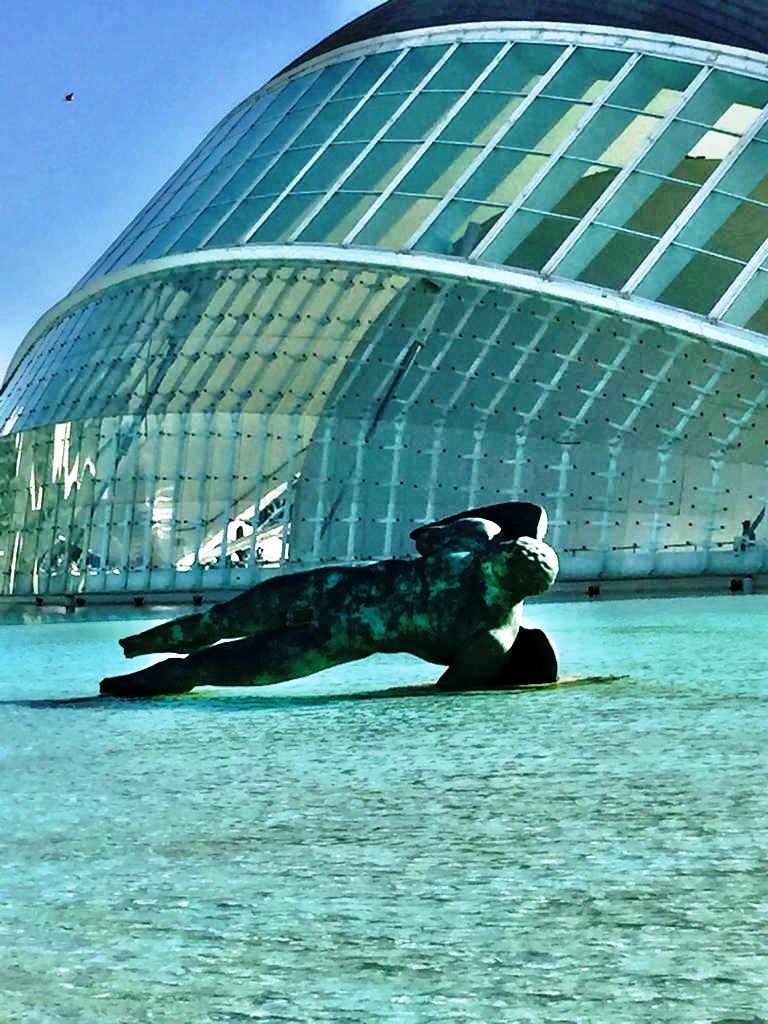
(Foto*/Photo de/by Francisco Bravo Cabrera/Derechos Reservados/All Rights Reserved)

El arte de la pintura y la escultura… Los museos se llenan… Por muchos barrios de nuestras ciudades murales anuncian que el are le encanta a la gente… Se subastan cuadros por millones y millones de euros… Las academias particulares están por doquier y entrenando a futuros artistas… Y hasta las facultades de Bellas Artes se llenan de aspirantes, jóvenes de todas las edades que quieren llegar a ser artistas. Por eso digo que el arte es un universo y aquí está el mío…

+++

Art, painting and sculpture… The museums are always full… On the walls of our cities murals announce that art is loved by people… Paintings are auctioned for millions and millions of pounds… Private academies are everywhere training future artists… And even the Schools of Fine Arts are filled with aspirants, young people of all ages wanting to become artists. That’s why I say that art is a universe and here’s mine…

(2024)

GRACIAS – CHEERS

#poem, «Streets»

(«Carrer de la Pau»/photo by Francisco Bravo Cabrera/All Rights Reserved)

Perpetual motion in black and white scenes that glow in the dark,

continue to flow towards puzzles and dreams that end in the dark,

and rivers and streets guide lonely hearts seemingly towards a straight path,

that tumbles and falls,

bounces and rolls,

fades in the light,

erases itself

as your footsteps

lead you towards

the tower

afar,

towards your

neighbourhood

bar…

C.2024, Francisco Bravo Cabrera, Valencia, Spain, 15 MAY 2024

#poem, «Calles» – «Streets»

(«Carrer de la Pau»/photo by Francisco Bravo Cabrera/All Rights Reserved)

Sin detenerse, en perpetuo movimiento surge la brillantez del blanco y el negro, que fluyen con ritmos sanguíneos hasta el puzle que los ata en tus sueños,

y los ríos y las calles son las venas de tristes corazones,

caminos que te guían hasta el tropiezo,

la caída,

el rebotar de las paredes blancas y el rolar cuesta abajo,

desvaneces si te da la luz,

y las huellas que can hacia el cielo se borran

pero otras veras que te llevaran

hacia la torre

lejana,

y reconocerás las calles

de tu barrio

y la luz de tu

bar…

+++++++++++

Perpetual motion in black and white scenes that glow in the dark,

continue to flow towards puzzles and dreams that end in the dark,

and rivers and streets guide lonely hearts seemingly towards a straight path,

that tumbles and falls,

bounces and rolls,

fades in the light,

erases itself

as your footsteps

lead you towards

the tower

afar,

towards your

neighbourhood

bar…

C.2024, Francisco Bravo Cabrera, Valencia, Spain, 15 MAY 2024

#art, Tarsila do Amaral – Serie de mujeres artistas – Women Artists Series 2024

(Escola das Artes)

El cuadro Abaporu (1928) de Tarsila do Amaral dio pie al Movimiento Antropofágico para los pintores de Brasil… Estudio arte y pintura con grandes pintores en Brasil y luego en París… Tarsila nació en São Paulo, Brasil en 1886 y murió en la misma ciudad 86 años después… Se le reconoce como una artista modernista… Ha expuesto su obra en Europa y en las bienales de São Paulo y el MoMA expuso su obra siendo Tarsila la primera mujer artista latinoamericana y la octava retrospectiva a nivel latinoamericano después de Diego Rivera, Cándido Portinari, Roberto Matta, Manuel Álvarez Bravo, Armando Reverón, José Clemente Orozco y Joaquín Torres García.

+ + + + +

The painting Abaporu (1928) by Tarsila do Amaral gave rise to the Anthropophagic Movement for Brazilian painters… She studied art and painting with great artists in Brazil and later in Paris… Tarsila was born in São Paulo, Brazil in 1886 and passed away in the same city 86 years later… She is recognized as a modernist artist… She exhibited her work in Europe and in the São Paulo biennials, and her work was displayed at MoMA, making Tarsila the first Latin American woman artist to have a retrospective at that level, following Diego Rivera, Cândido Portinari, Roberto Matta, Manuel Álvarez Bravo, Armando Reverón, José Clemente Orozco, and Joaquín Torres García.

(«Abaporu»/1926/Historia Arte)
(«Obreros»/»Workers»/1933/Historia Arte)
(«Maternidade»/»Motherhood»/1938/Dominio Público/Public Domain)

GRACIAS – CHEERS

#music, George’s Last Song…

(Antologia Radio)

«Brainwashed» is the last album by George Harrison. It is rather obscure for many but I’ve been listening to it for many years and I find quite a lot of charm, peace, love and fab songs in it. I will feature this one for you but if you are a fan, you should look for it and have a listen. The album was released by Dark Horse Records in 2002.

(2002)

Brainwashed took a rather spiritual approach and Hindu prayers and chants are included as well as older pieces like «Rockin’ Chair in Hawaii» from All Things Must Pass, and «Any Road» from 1987. «Between the Devil and the Deep Blue Sea» (Harold Arlen) was recorded live in 1992. Although George died before the album was completed, his son Dhani and his friend and bandmate Jeff Lynne finished the album according to the instructions George had left behind.

(So long George, you left us too soon, we hardly knew you)

CHEERS

#music, George Harrison, un gran musico – A Great Musician…

(AARP)

Junto a Paul McCartney y John Lennon, y un poco más tarde Ringo Starr, formó parte de la asociación musical mas famosa de la historia de la música moderna, The Beatles… George era el guitarrista principal de la banda, aunque no el mejor pues Paul McCartney era…y es…un excelente guitarrista además de bajista y tecladista… Nació un 25 de febrero de 1943 en Liverpool, Inglaterra… Todos sabemos que la mayoría de los hits y demás canciones grabadas por The Beatles fueron escritas por el duo-dinamico de John Lennon y Paul McCartney, pero quizá desconozcamos que George Harrison escribió un montón de canciones, incluyendo algunas de las mejores del cuarteto, como «Something», «Here Comes the Sun» y «While My Guitar Gently Weeps», entre otras… De hecho en la banda anterior a The Beatles, integrada por John Lennon, Paul McCartney, George Harrison, John Duff, y Colin Hanton, llamada The Quarry Men, Harrison compuso una canción titulada «In Spite of All the Danger» co-escrita con McCartney. La pieza fue grabada en 1958. Lowe conservó el disco hasta vendérselo a McCartney en 1981 y la version de 1958 fue lanzada por The Beatles en 1995 en su disco Anthology I… «Don’t Bother Me» fue la primera canción de Harrison incluida en un disco de The Beatles. Salió en With The Beatles en 1963. En EEUU en Meet The Beatles (1964)… Otro dato curioso es que Harrison también compuso una canción, «Cry for a Shadow» con John Lennon en 1961. La grabaron en Alemania cuando junto a Lennon, McCartney y Pete Best formaban la banda de acompañamiento a Tony Sheridan bajo el nombre de The Beat Brothers. La canción también forma parte del disco Anthology I de 1995… George Harrison murió un día 29 de noviembre de 2001 en Los Los Ángeles (Estados Unidos) de cáncer del pulmón y tumor cerebral. Tenia 58 años. Siguiendo sus últimos deseos sus cenizas fueron regadas en los ríos Ganges y Yamuna de la India.

+ + + + + + + + + + +

Alongside Paul McCartney and John Lennon, and a little later Ringo Starr, he was part of the most famous musical association in the history of modern music, The Beatles… George was the lead guitarist of the band, although not the best because Paul McCartney was… and is… an excellent guitarist as well as a bassist and keyboardist… He was born on February 25, 1943, in Liverpool, England… We all know that most of The Beatles’ hits and other songs were written by the dynamic duo of John Lennon and Paul McCartney, but we may not realize that George Harrison wrote a bunch of songs, including some of the quartet’s best, such as «Something,» «Here Comes the Sun,» and «While My Guitar Gently Weeps,» among others… In fact, in the band prior to The Beatles, made up of John Lennon, Paul McCartney, George Harrison, John Duff, and Colin Hanton, called The Quarry Men, Harrison co-wrote a song titled «In Spite of All the Danger» with McCartney. The piece was recorded in 1958. Lowe kept the record until selling it to McCartney in 1981, and the 1958 version was released by The Beatles in 1995 on their Anthology I album… «Don’t Bother Me» was Harrison’s first song included in a Beatles record. It appeared on With The Beatles in 1963. In the US on Meet The Beatles (1964)… Another interesting fact is that Harrison also co-wrote a song, «Cry for a Shadow,» with John Lennon in 1961. They recorded it in Germany when, along with Lennon, McCartney, and Pete Best, they were the backing band for Tony Sheridan under the name The Beat Brothers. The song is also included on the 1995 Anthology I album… George Harrison passed away on November 29, 2001, in Los Angeles (United States) from lung cancer and brain tumor. He was 58 years old. In accordance with his last wishes, his ashes were scattered in the Ganges and Yamuna rivers in India.

(1958)
(1961)
(1963)

GRACIAS – CHEERS

#music, «Something» The Beatles

(The Telegraph)

Actually this could be one of the best Beatles songs and it was, most assuredly, written by George Harrison. Even though Frank Sinatra, who recorded a cover version, said it was his favourite Lennon & McCartney piece! Hehehe… Well that shows how little in importance George was to many people. But he was important, and quite a phenomenal songwriter, although he had to learn on the stride, but when he did, he was every bit as good as Paul and John.

«Something» is from the Abbey Road album of 1969 and the first George Harrison song to be a Side A in a Beatles single also the first George song to top the charts in the US. «Something» has been covered by more than 150 artists, from Elvis Presley to Julio Iglesias, from Smokey Robinson to James Brown and of course by Old Blue Eyes, Frank Sinatra. After «Yesterday» it is the most covered Beatles song.

Curiously, George gave the song to Joe Cocker, who released the song before The Beatles… And no, George denied that the song was about Patti Boyd, his girlfriend at the time… If you listen carefully you will hear a very complex, and perfect, bass line by McCartney, who, since he didn’t have anything else to do in the song, decided to really shine with the bass, and he did. All in all the song is an authentic jewel and it will remain fresh for all time. A true classic, and in my opinion, it is one of the best Beatles songs.

CHEERS

#music, George Harrison on a Thursday, Middle of the Week…

(Pintertest)

One of my favourite of George’s songs (from The Beatles) is «You Like Me Too Much«. Yes, I know it is not considered one of his best, actually it is supposed that it is one from the days when he was still learning and trying to catch up to Lennon & McCartney, but I just like it…

The song is part of the Help! album from 1965. Although the song might be rather simple, the Beatles were never a simple band. The intro is played on a Steinway piano with George Martin and Paul McCartney playing on both sides of the same piano, while John Lennon plays an electric piano and the sound is going through revolving Leslie speakers which can be heard being turned off at the end of the intro. This little studio trick with the sound of instruments was something the Beatles innovated back in those days…

I hope you enjoy this one, and now that I’ve told you that this is one of my fave George songs (from Beatles days), maybe you will tell me yours…

CHEERS