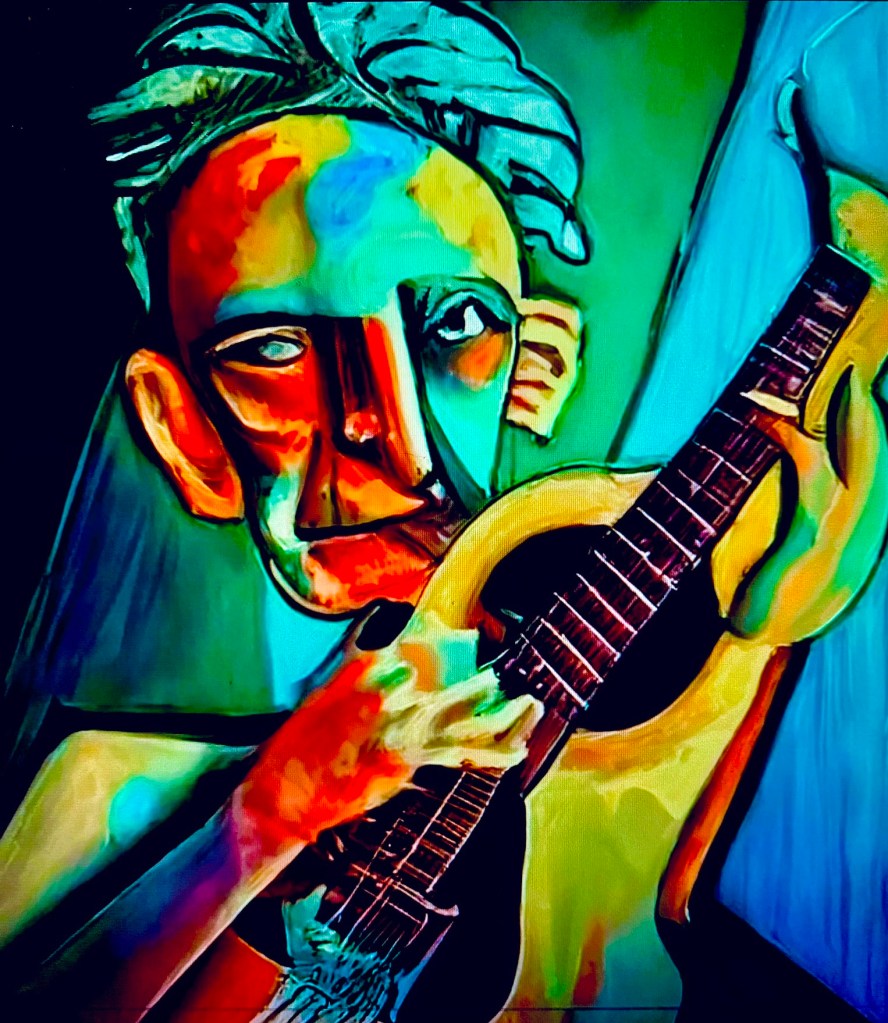
Check out this guitarman…
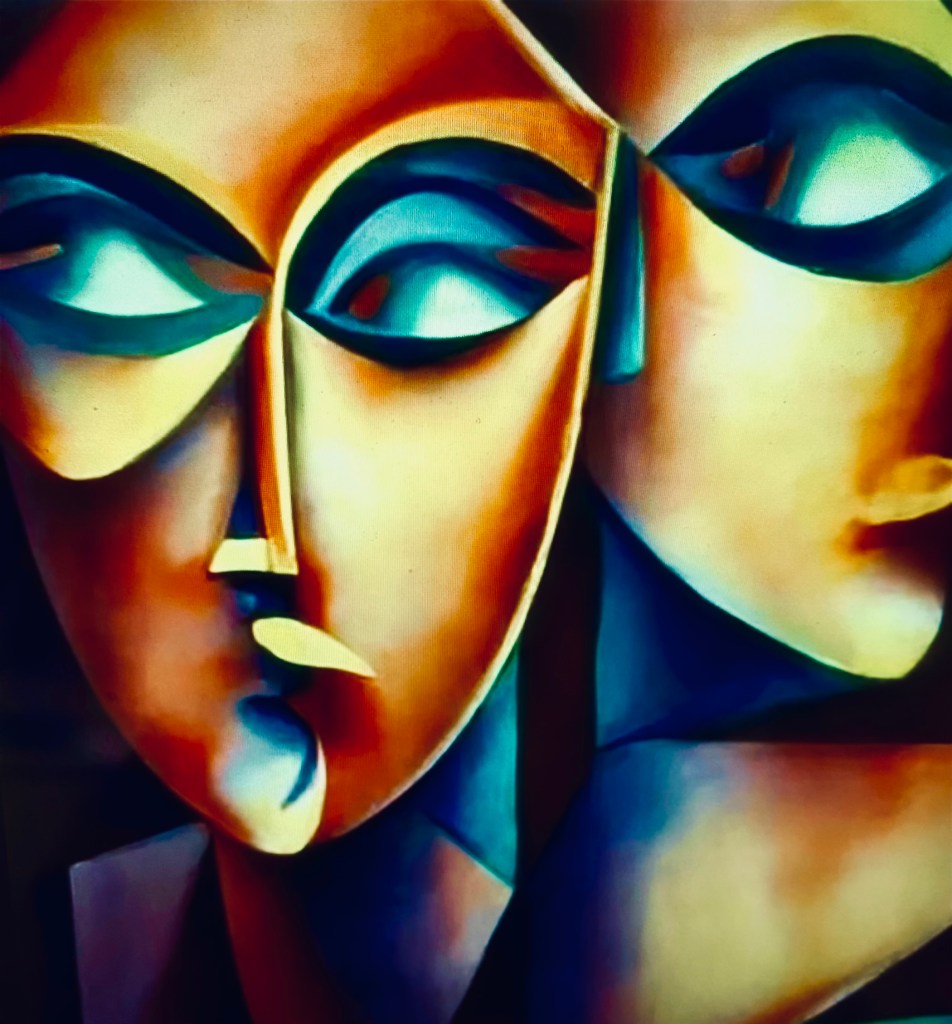
CHEERS
Faith saved us from the savages that we were, losing faith makes us savages again
Check out this guitarman…
CHEERS

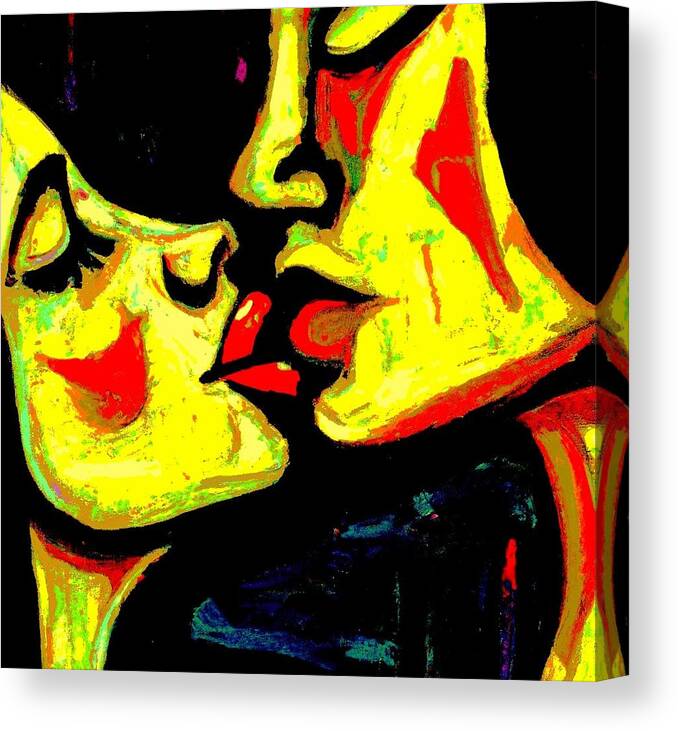
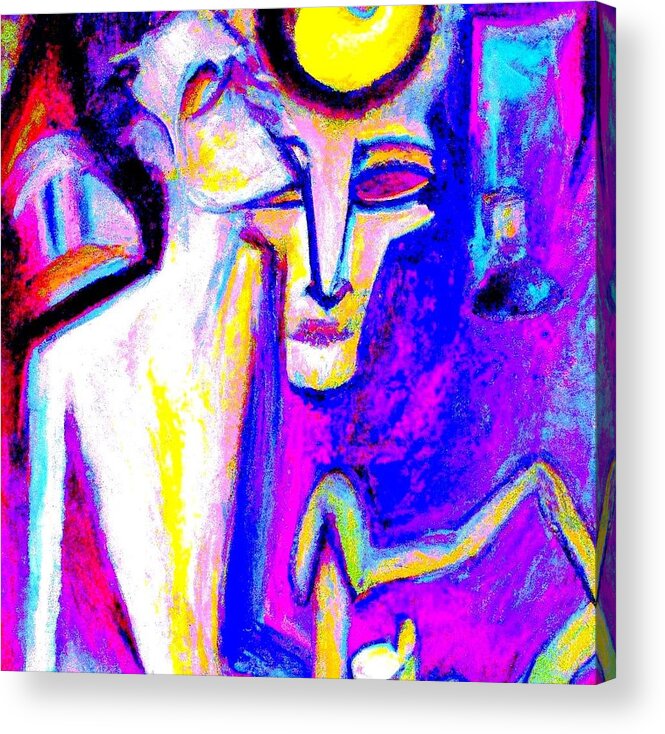
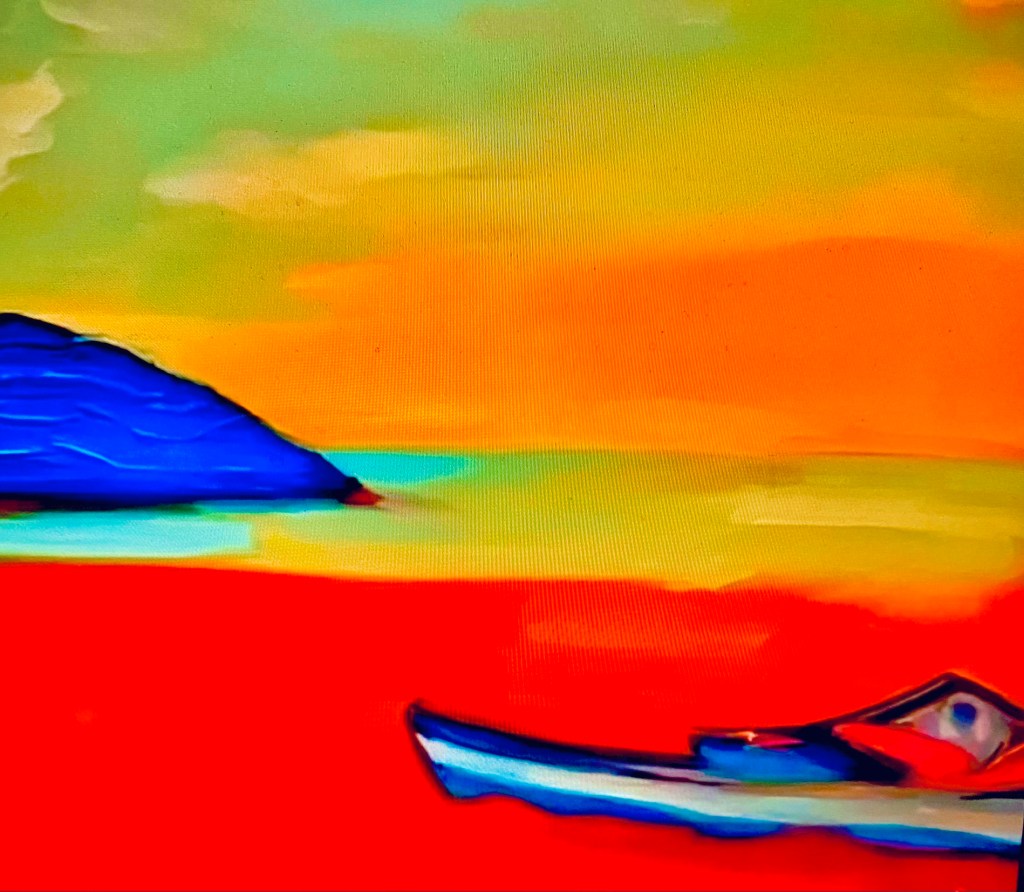
Check them out at my gallery at Fine Art America, the only company I use to create fine art prints (of various types) of my images and designs. These are some, but there are more…

CHEERS
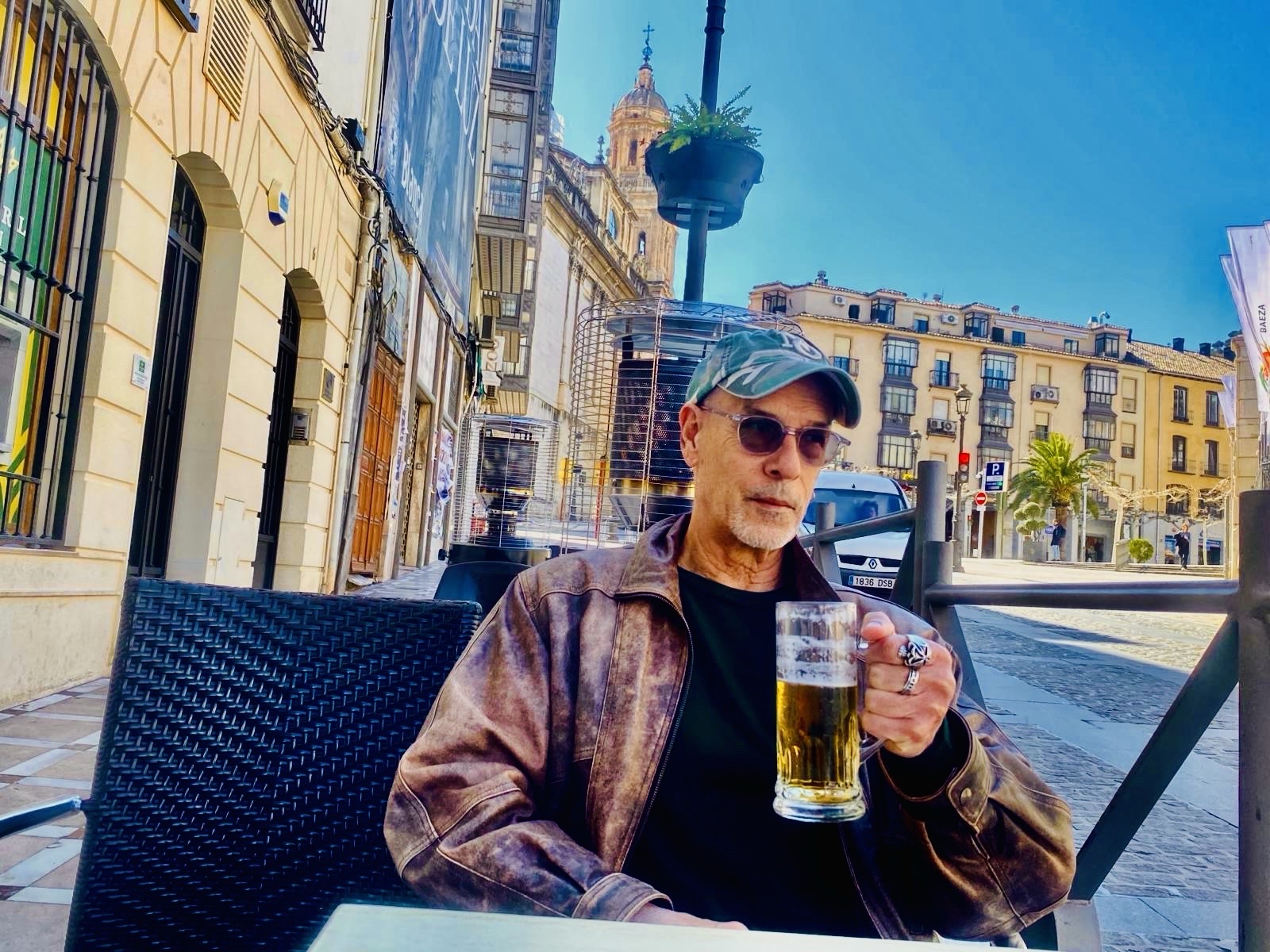
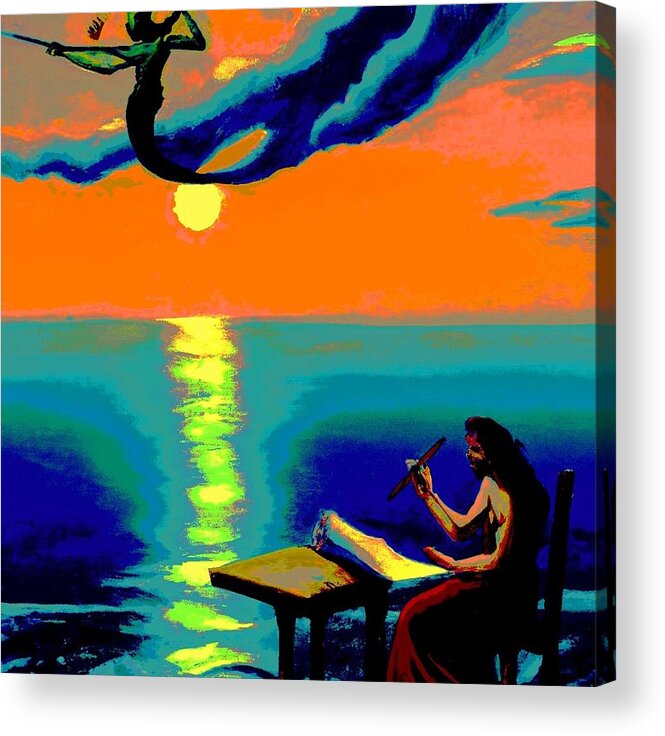
Spillwords.com presents: No te Olvides de Mi, a poem by Francisco Bravo Cabrera, a poet who uses words, music and paints on a canvas …
Source: No te Olvides de Mi


From Málaga to A Coruña and from there to Barcelona… From the prestigious Real Academia de Bellas Artes de San Fernando (Madrid), to Els Quatre Gats and from Barcelona to Paris… From a start at the «bateau lavoir» in Montmartre (1900) to the end at Mougins in 1973…
In a «nutshell» this was Pablo Picasso’s life. The child prodigy who grew up to be the «genius» of the 20th Century, the inventor of the collage, cubism and who opened the door to many of the art vanguards of the 20th Century was a card-carrying communist (but I won’t hold that against him), a womaniser, a…supposed…abuser and an infatigable artist who towards the end of his life decided to cannibalise most of art history…
Welcome to this post about my main and most important reference (as an artist), Pablo Ruiz Picasso. He was born in 1881 in Málaga, a small, provincial city in Andalucía, Spain. He died in a castle in southern France 91 years later. He lived life with abundance. He painted voraciously. His passion for life extended to many things including bullfighting, wine, women and clowning around. He must have had quite a unique sense of humour.
They say he was a child prodigy, but I don’t really think so. It’s hard to judge him against other children as we’ve no samples to view. But I can say that his father…who was an artist and an art professor…trained him well and taught him all he knew. So the young Pablo had a huge advantage over other children who might have also aspired to be the «genius» of art that Pablo ultimately became.
Here are some of his early works…


Although the last two show signs of knowledge, ability and technique, the first one doesn’t strike me as being the work of a child prodigy. Actually none of them do. With the training Pablo received, the coaching and the supervision of his father, it is no surprising he painted so well as a youth.
Part two coming very soon!
CHEERS…
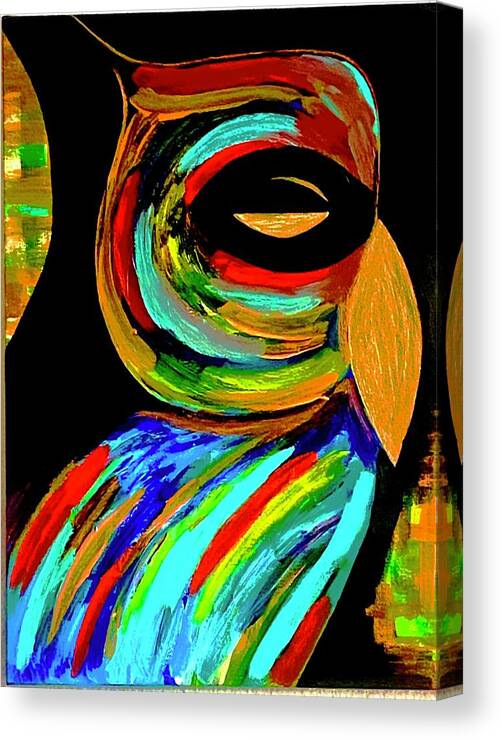
This is the canvas print of «The Owl», there are other types of prints. Get it only at my gallery through Fine Art America.
CHEERS
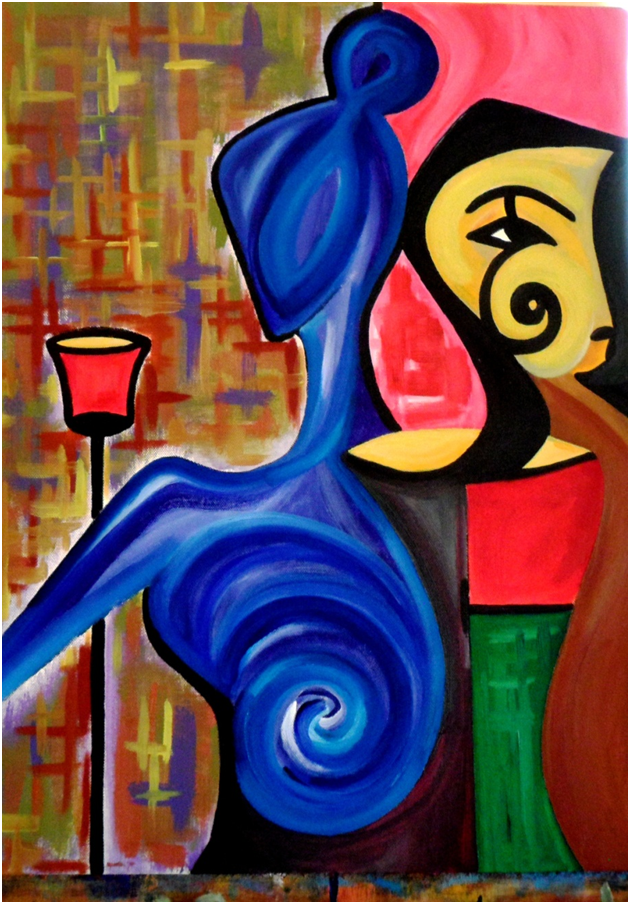
Un ejemplo de mi Surreal-Expresionismo en sus primeras etapas y que se ajusta cabalmente a la idea de JaZzArt. Fue en 2007 y todavía estaba investigando ambos temas cuando pinté «Moño Azul«. Lo pinté con acrílicos sobre lienzo. El fondo es abstracto; todo color. La parte principal de la composición es la silueta azul de una mujer cuyo cabello está recogido en un moño. Ella está mirando hacia su derecha, hacia una flor estilizada de estilo egipcio. A la izquierda de la parte principal de la composición se aprecia el aspecto más surrealista del cuadro, donde un rostro parece flotar sobre un tambor de mano. Esto simboliza la creación de música que se eleva, como humo negro del tambor.
+++++
This painting is an example of my Surreal-Expressionism in its early stages. And which keeps up precisely with the idea of JaZzArt. It was 2007 and I was still researching both at the time when I painted «Moño Azul». I painted it with acrylics on canvas. The background is abstract; all colour. The principal part of the composition is the blue silhouette of a woman whose hair is combed into a bun. She is looking to her right towards a very stylised, Egyptian-style flower. To the left of the main part of the composition one sees the more surreal aspect of the painting where a face seems to hover above a hand-drum. This symbolises the creation of music which rises, like black smoke from the drum.
+++++
GRACIAS – CHEERS
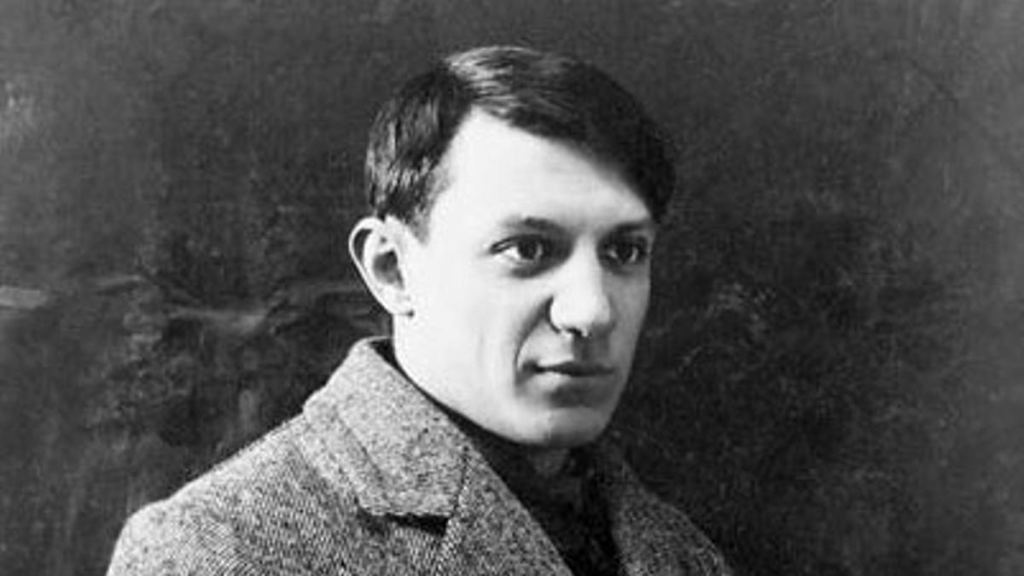
Well, he arrived in Paris with a few other Spaniards and he knew he would conquer this city, the mecca of all artists, the most important capital wherein to become an internationally recognised artist, and rich… He used to sign Pablo Ruiz Picasso, then Pablo R. Picasso, but in 1901, he started signing his work «Picasso». He was becoming Picasso…
Now let us not get carried away with the legend(s) about Picasso. He was a very well trained and educated artist who had a rather comfortable existence in Spain. He was trained, not only by his father but by the greatest art academy of Spain, the Royal Academy of San Fernando in Madrid. And he was an unusually lucky young man. In 1895, his father landed a job at the Escuela de Bellas Artes de Barcelona (Barcelona School of Fine Arts) and Picasso was admitted as a student there as well. He studied two years at the Academy gaining knowledge of the classical style of painting, in other words, academicism. So you can see that he did not lack schooling or training…
Another «legend» (although it is a fact) is that, at the age of 14 years, he was able to ace the entrance examinations to the Escuela de la Lonja and complete all the assignments in a single day. But what where these assignments? They were renditions in academism, something Picasso had been well trained in doing, so it was not such a difficult task for the lad at all. He had the advantage of having been prepared for it. And who knows how many other art students had done…and are doing…the same thing…
One more legend (the last one I’ll refer to) is that his father, after recognising the extraordinary work of his child…a painting of pigeons that Pablo had finished for him…laid his brushes in front of him and swore never to paint again. I don’t know if that ever happened or if it happened that way or that his father simply did not need to paint any more, after all he had a cushy job at a prestigious academy and that might have been all he was after. Who knows…
In 1900 he travels to Paris. One of his paintings had been selected to the 1900 Paris Exposition. This was a very important world’s fair… In Paris he stayed with the Catalan artist Isidre Nonell, who, along with the works of Toulouse-Lautrec, influenced his early works greatly. He also met his first merchant, Pere Mañach who offered him 150 francos per month for a all the paintings he could do in one year and was also introduced to Berthe Weill, a well-known gallerist. All in all, he was in Paris less than three months and he had already set himself up quite well.
By 1912, settled in Paris, Picasso managed to surround himself with the cream of the intellectuality and artistry. His friends were the poet André Breton; Guillaume Apollinaire, the writer, as well as Alfred Jarry; y Gertrude Stein. Gertrude Stein practically adopted him and continuously invited him to her gatherings where everybody who was anybody in the art circles of Paris attended. She also commissioned a portrait from him which has become one of his most famous portraits…
IN PART THREE WE WILL DELVE INTO THE «PERIODS», THE «WOMEN» AND «DEATH».
CHEERS…
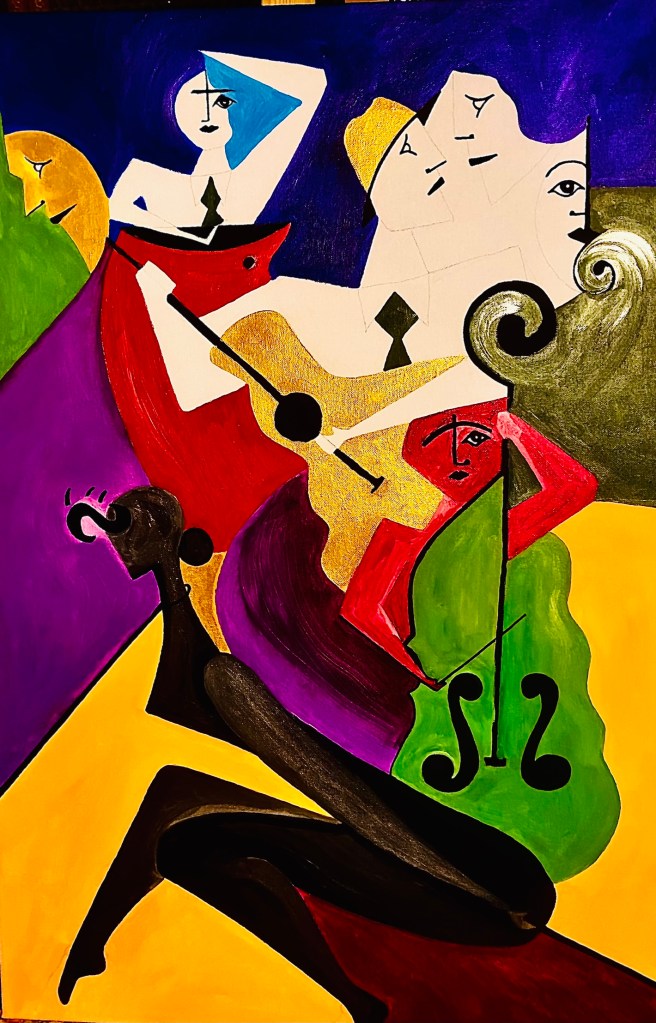
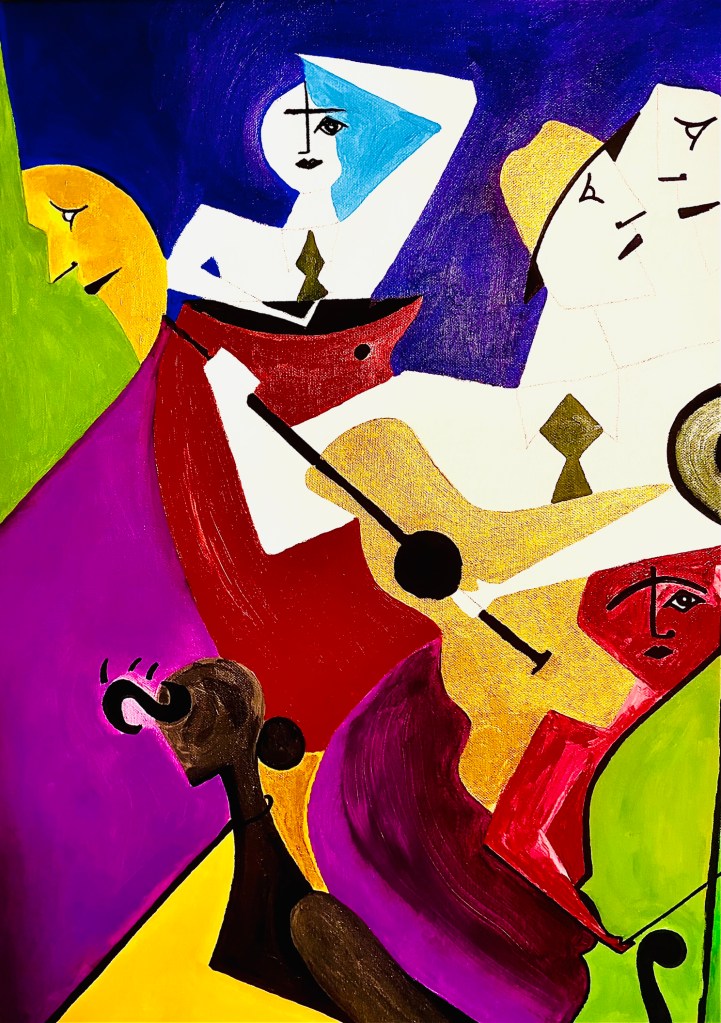
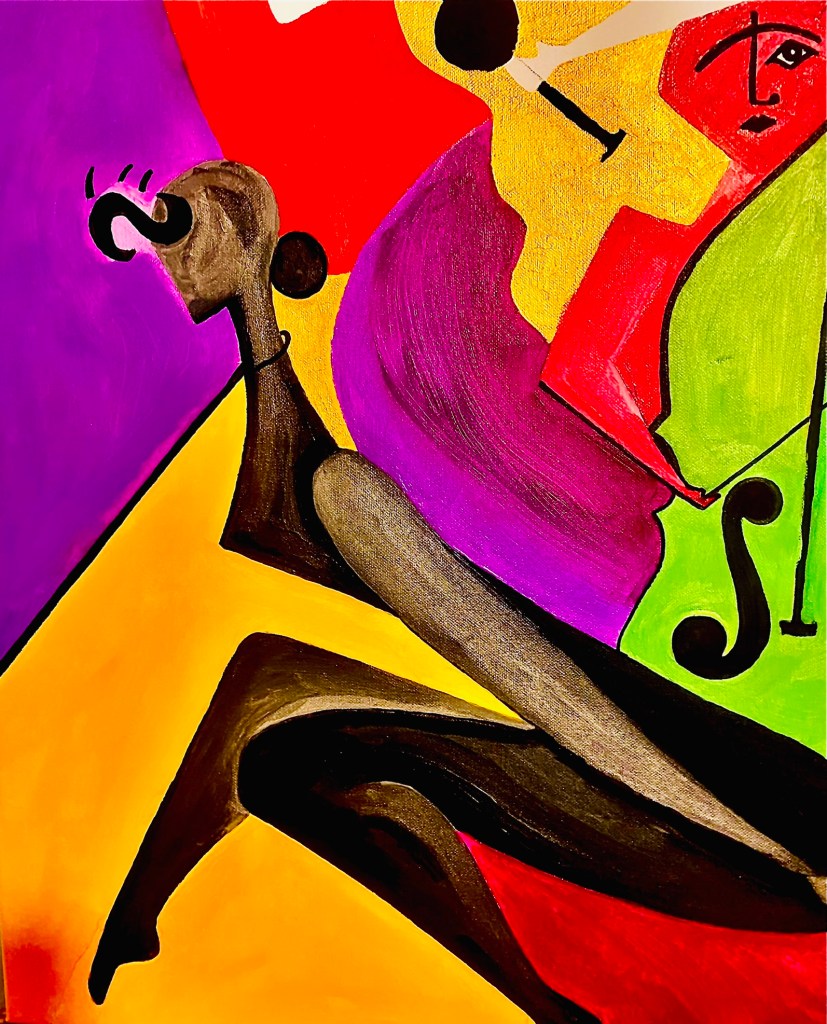
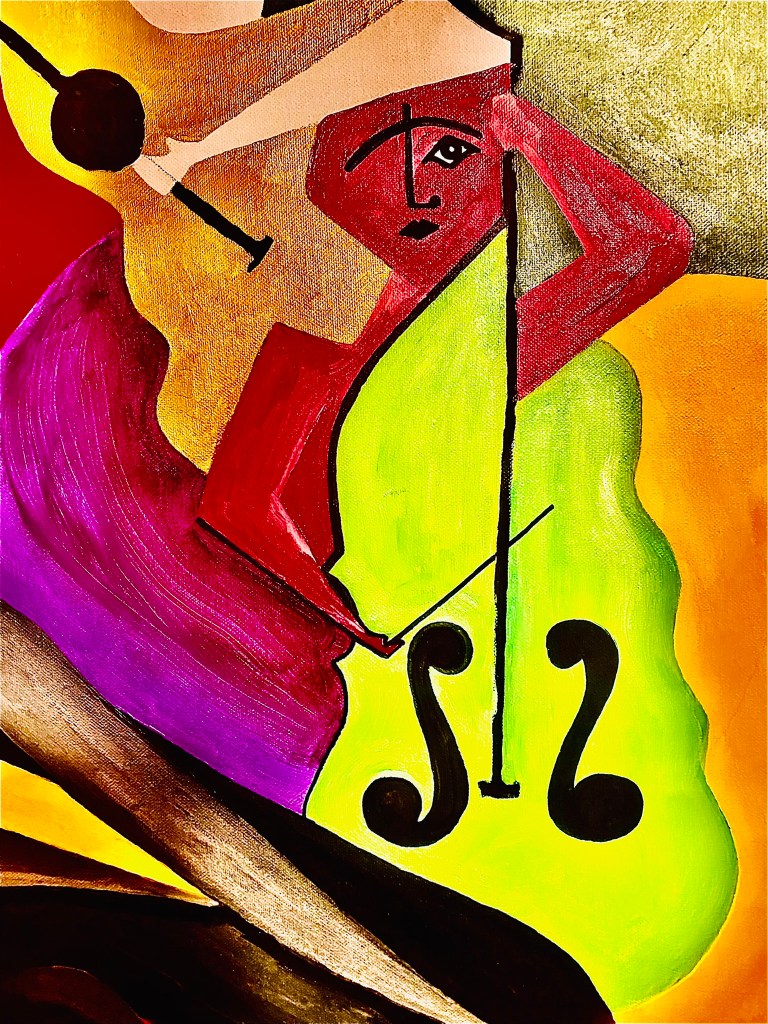
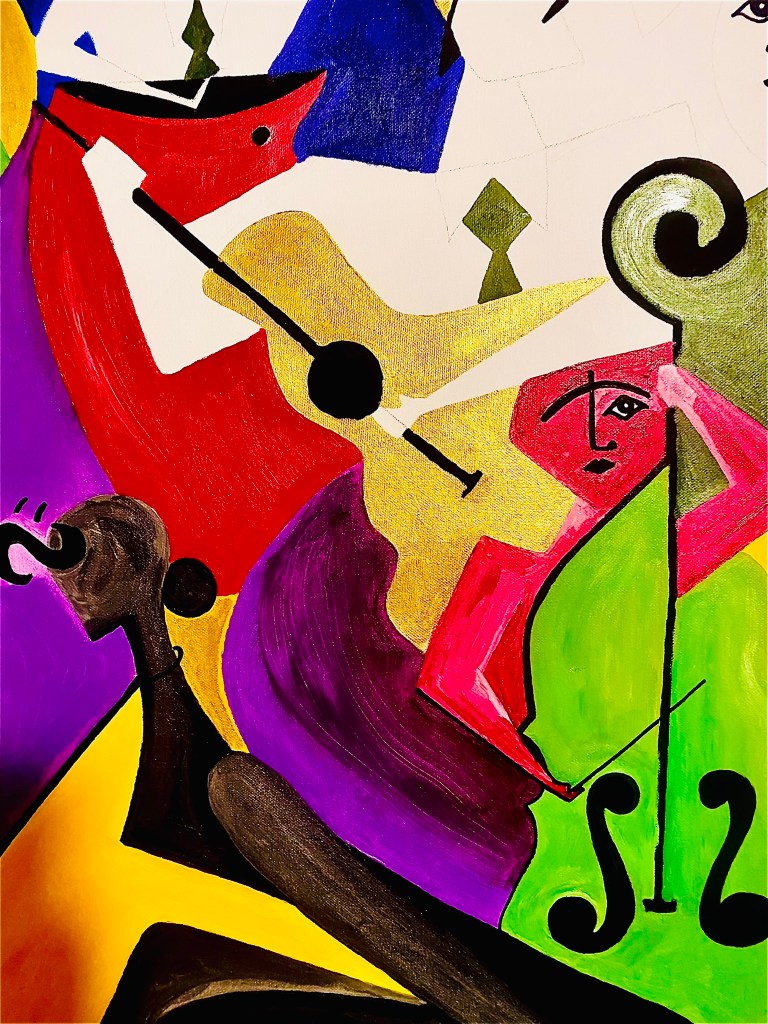
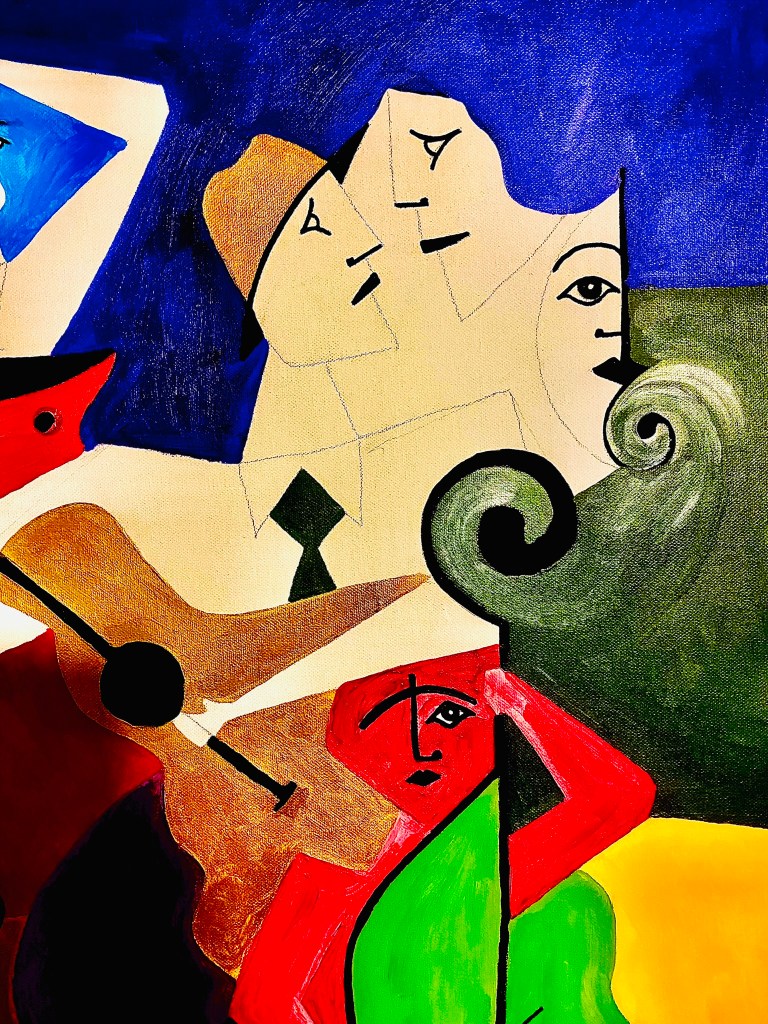
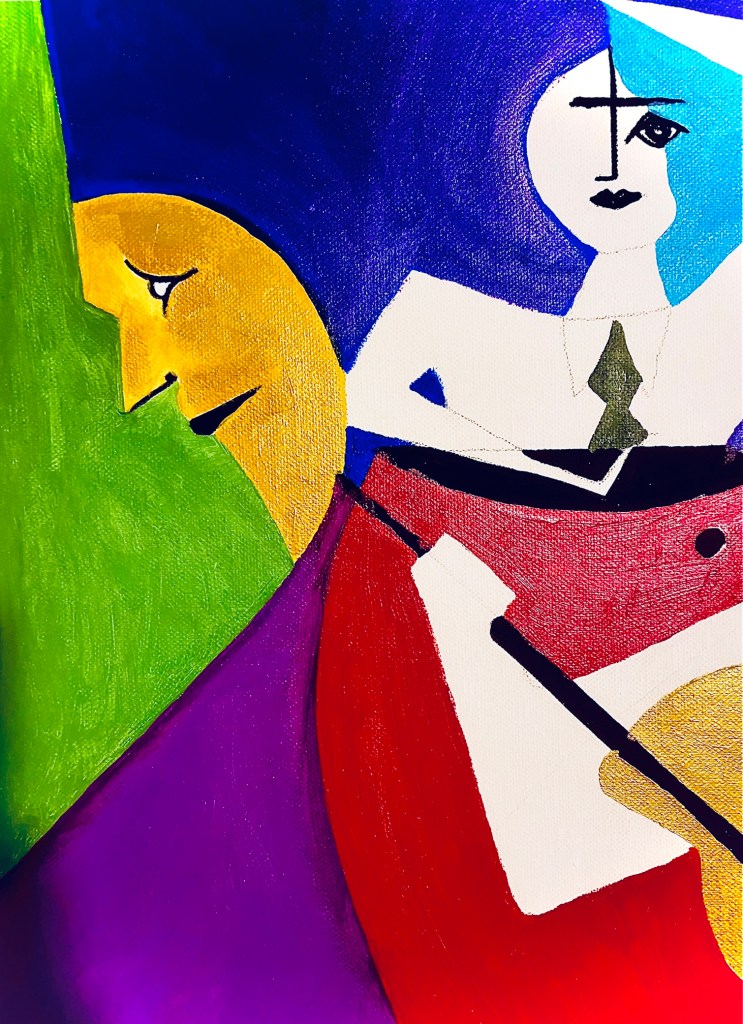
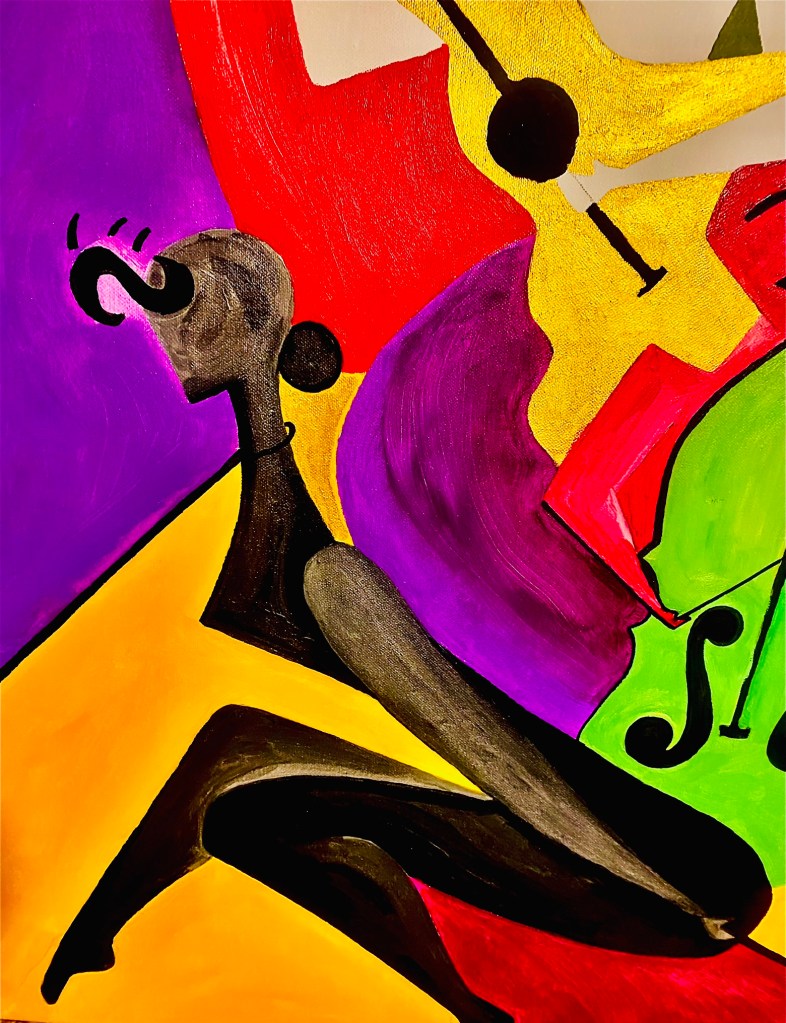
Por aquí voy… no he terminado porque el cuadro no me ha dicho que termine. pero me está hablando y yo lo estoy escuchando. Venga, os presento mi ultimo trabajo artístico, «Los Robis«. La obra mide 60 X 80 cm, y la estoy pintando con pintura acrílica sobre tela. Es un cuadro surreal-expresionista, sin dudas, donde los colores y su fondo abstracto se convierten en los promotores idóneos para transmitir la idea tras la composición. Y ¿Qué es esa idea, cual es el mensaje? ¿Qué significado tienen los colores y la simbología que yace oculta entre las figuras y los espacios vacíos? Pues os diré que yo no hablo de eso. Mi faena es pintar. Descifrar el contenido…usualmente…es faena de los observadores y los críticos de arte. Al fin y al cabo cada quien encuentra en un cuadro algo muy personal, y muy diferente a lo que encuentran los demás. Esto siempre ocurre con mis cuadros surreal-expresionistas que prácticamente son obras abstractas, pero hechas con plena figuración. Si te suena esto a una paradoja es porque lo es..
+++++++++++
This is as far as I have gotten. I haven’t finished because the painting hasn’t told me to finish it, but it’s talking to me and I’m listening to it. I present to you my latest artistic work, «The Robis«, which measures 60×80 cm, and which I am painting with acrylic paint on canvas. It is a surrealist-expressionist painting, without a doubt. The colours, and its abstract background, become the perfect promoters of the idea behind the composition. But what’s the idea? And what message does it transmit? What do those colours, and the symbolism hidden between figures and empty spaces, really mean? Well, I don’t speak about things like that in my paintings. I limit myself to the job of painting it. Deciphering the content is usually the task of the observers and art critics. Everyone finds something very personal in a painting, and very different from what others find. Especially in my surrealist-expressionist paintings that are practically abstract works but made with full figuration. If this sounds like a paradox to you, it’s because it is.
GRACIAS – CHEERS

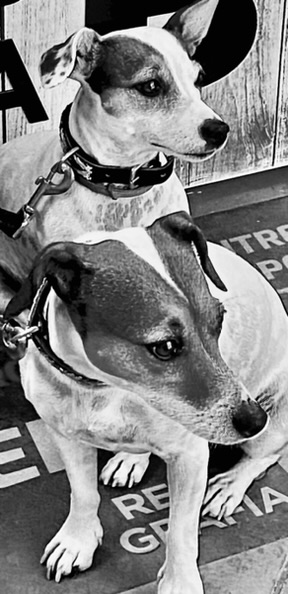
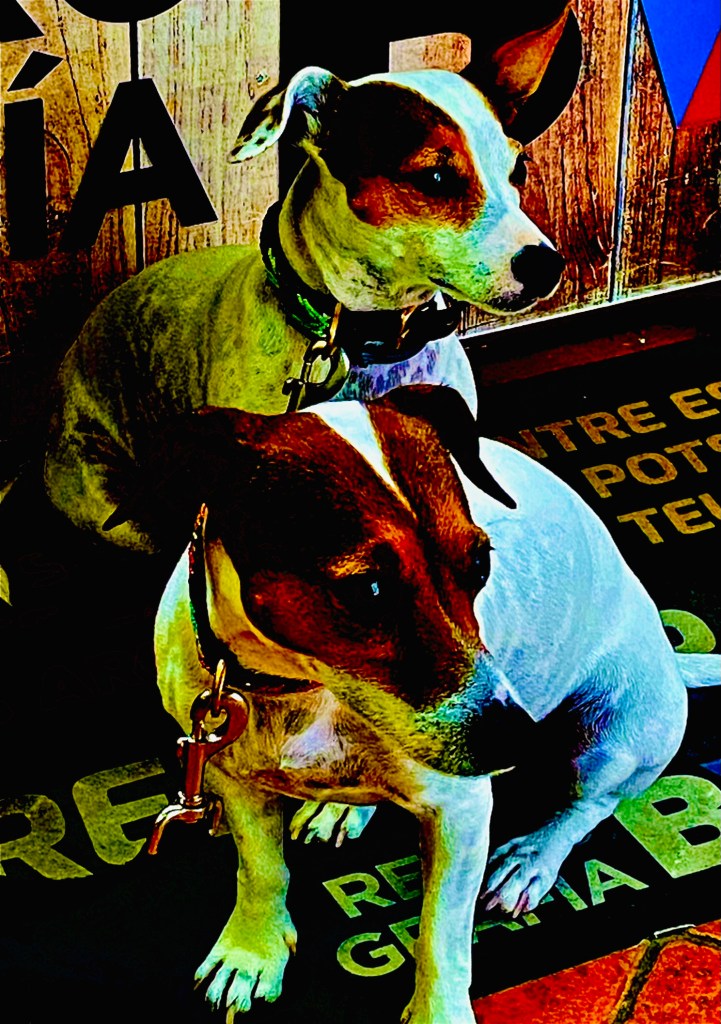
Los perricos de mi amigo son una autentica pasada. Son más listos que él y yo juntos. Claro, si son Jack Russel Terrier! Madre mía! Pero aunque sean una gozada, yo prefiero mis gatos que son animales superiores, no importa lo listos que sean estos canes.
+++++
My friend’s little dogs are amazing. They are smarter than him and me put together. Of course, they are Jack Russel Terriers! Good grief! But even though they are a delight, I prefer my cats, who are superior animals, no matter how smart some dogs may be.
GRACIAS – CHEERS

 JaZzArt en València