#poem, #prose, ¡Arriba con la filosofía! – Up With Philosophy!

(Image from unknown author: «The essence of philosophy is that man should live in a way that his happiness does not depend highly on external things» Epictetus)

HAY QUE BUSCAR LA FILOSOFÍA DEL ARTE EN LA VIDA

Si vives simplemente porque respiras te estás perdiendo la mitad de la vida, y digo la mitad, pero puede ser mucho más. Ciertamente te perderás la mejor parte. Si eres artista, digamos pintor, escultor, poeta, bailarín, coreógrafo, músico, compositor, actor, escritor o practicas cualquier combinación de estas, las bellas artes, eres un ser espectacular. Diría yo, un autentico fenómeno porque haces lo que otros ni sueñan. Pero el artista sabe, instintivamente, que el arte no es solo para decorar o para recrear la vista. El artista reconoce que una obra de arte tiene que ir acompañada de una filosofía que le de valor, trascendencia y espíritu. Entonces podemos decir que el artista es una especie de filosofo que transmite sus ideas visualmente, como los compositores y los músicos lo hacen con la música que componen y que tocan. El artista entonces se nutre de lo que tiene dentro, lo que cultiva con pensamientos y aprendizajes y no en lo que le rodea, o sea lo externo. Epícteto tiene razón.

+++++++++++

ONE MUST HAVE A PHILOSOPHY OF ART IN LIFE

If you live simply because you are breathing, you are missing half of life. I say half, but it probably is much more and I guarantee you will miss the best parts. If you are an artist, let’s say a painter, sculptor, poet, dancer, choreographer, musician, composer, actor, or practice any combination of these, the fine arts, you are a spectacular being. I would say, a true phenomenon because you do what others don’t even dream of. But the artist knows, instinctively, that art is not just for decoration or to create a pretty picture to please the eye. The artist recognizes that a work of art has to be accompanied by a philosophy that gives it value, transcendence, and spirit. So we can say that the artist is a kind of philosopher who visually transmits his ideas, like composers and musicians do with the music they compose and play. The artist, in so doing, nourishes himself with what he has cultivated inside, what his thoughts and learning have provided. Not with what surrounds him, possessions and other things external. Epictetus is right one hundred percent.

GRACIAS – CHEERS

#poem, FEATURES by VALENCIARTIST Presents Gary Gautier

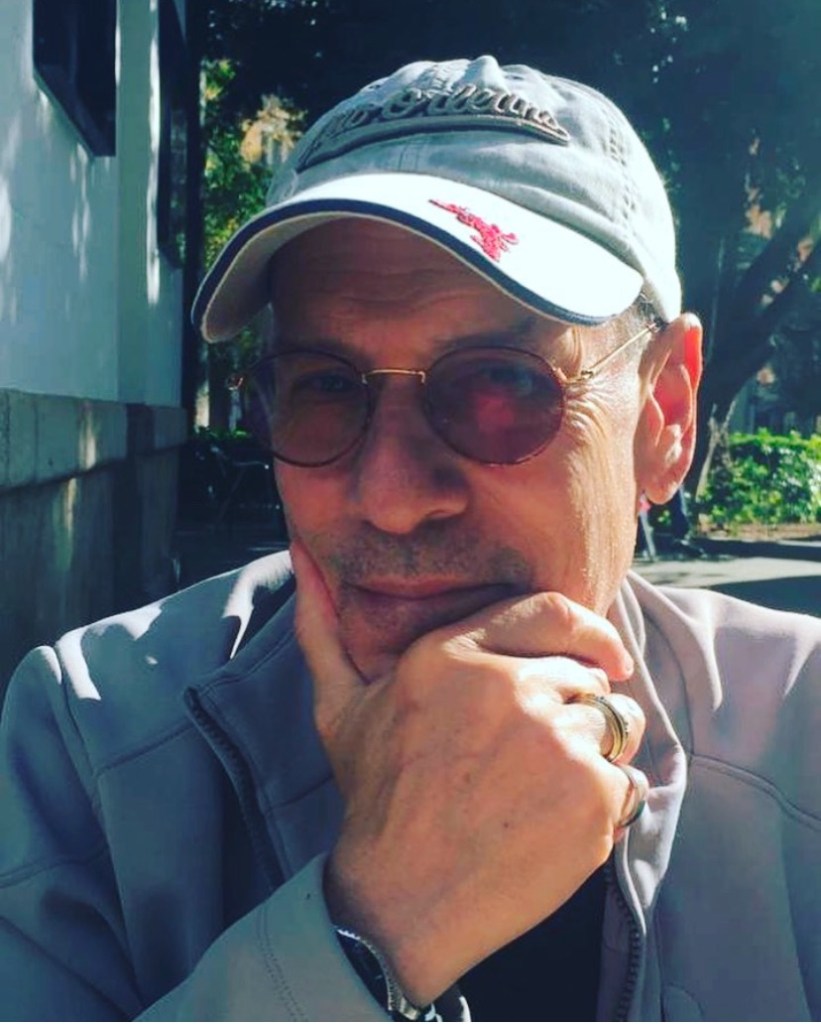
(Gary Gautier/photo by GG)

Welcome! Today on FEATURES by VALENCIARTIST we are so very proud to present to you the words and the work of Gary Gautier. Gary is a writer, a poet and an educator and we are absolutely sure you will greatly enjoy this interview and post.

And, if you, yes you, if you are a writer or somehow involved in the fine arts, would like to be a protagonist of FEATURES by VALENCIARTIST, all you have to do is to reply to this post with your email address so that we can send you the information.

Here is Gary, whom you may know from his WP blog Shakemyheadhollow and perhaps from many other sources, in his own words:

1) How do you define the art of the writer, or the poet or the painter or of anyone involved in the creative process of the fine arts?

The cultural anarchist in me resists rules and definitions, but since you are pushing me, Francisco, I’ll use poetry as my representative art, and I’ll tiptoe around a definition with two images: a garden and a toolbox. Novels and poems are essentially suggestive, not propositional. Propositional language looks for fixed answers. Literary language avoids fixed answers in order to open a range of possibilities. Immersion is more important than meaning. A novel or poem is a garden made of words. You just enjoy the beauty, the smells, the contrasts and surprises as you turn down a path. The artist has planted a garden; now you are free to get lost in it.

 Some literature, of course, does rely on meaning, but it’s usually not a fixed meaning. It’s more like a cloud of meaning that condenses around the words, the history of words and phrases, the lines, the sounds. A well-written poem is layered with possible meanings, many of which the poet knew nothing about. Each reader brings the poem to life and imbues it with meaning from their own orientation point on life.

This brings me to the toolbox image. A poem or novel is a toolbox readers can use to create beauty and/or meaning. Don’t worry too much over what the poet intended. What really counts is what you can do with it. Has the poet arranged for you a rich set of materials – images, sounds, ideas, emotional triggers – for reflection? If so, run with it. If you really want to, you can go back later and revisit those building blocks, the tools in the toolbox, to see how they fit together and carry possible meanings and values. But you don’t have to 😊


2) Do you think writers/poets/artists et al, should proffer political opinions publicly?

No rules. It’s up to them. They have as much right to do so as lawyers, clerks, or fry cooks. Some may want to do so; some may not. They both have their own good reasons. The only thing they should not do is reduce their own art to a fixed politics. Sure, some art has strong political components, but once you go public, it’s not yours to say. The world decides how to mine significance from those political components. At that point, the artist’s opinion is just one of the many opinions. If the artist is lucky, the range of significance is much more complicated than the artist had intended.


3) How do you see the current state of affairs with regards to literature and poetry?

I’m totally incompetent here. I read mostly classics from Greeks through maybe the 1980s, then I’m very hit and miss. I’d rather read Woolf’s To the Lighthouse 5 times and find 5 completely different geological strata of imagery and meaning and symbolism than read widely among my contemporaries. Two negatives do occur to me, but I’m only guessing. In the age of self-publishing platforms and Twitter marketing, it seems writing books in series has become a marketing strategy of choice – where someone might write a 3-book series every 6 months. This is good for entertainment but probably a net negative for art. Good books can be written in series, but great books are usually standalones. The other negative – and here I’m looking at the traditional publishers and academics – is the full-on politicization of literature, where crops of newly empowered young editors and liberal arts curricula people screen out books that don’t have the same cookie-cutter politics as themselves in the honest belief that they are doing the world a favor. Again, I am not very qualified to answer this question, and could be wrong about both of my points, but I offer them as starting points for discussion. I defer to your more knowledgeable readers to carry that discussion forward.

+++++++

And here is an excerpt from his book Alice

In my own writing. I try to hone to the standard of art above in my own poems and novels, with what success your readers can tell. Because that standard is not genre-specific, my novels can probably be lumped together as “literary fiction” while touching on other genres – “Hippies” might cross-categorize as historical, “Goodbye Maggie” as Southern regional, and so on. I’ll save my poetry books for another day. For my sample, I’ll link to the opening scene of my post-apocalyptic adult hippie fairy tale, Alice.

ALICE, page 1

Alice sat by the pond cupping her hand in the water, as if searching for an undersea plant or animal. The sun was going down. She stripped off her gown and dove in to do something but she could not remember what. When she came up, something was in her hand and the stars were above. They were the same stars as ever, but the constellations were different. Virgo and Scorpio and all the others were gone, and some new arrangement had begun. Something moved in the woods beside the pond. Not really in the woods. In a juniper bush. It was too big to be a fairy. Alice did not know what it was that moved in the juniper bush.

As Alice approached the shack, she could hear in the dark the whispering of the forest. She saw the lovely silhouette of Evelyn through the window, sleeping in bed. She entered, and Evelyn opened her eyes.

“I was at the pond,” Alice said.

“Was the rain king there?” asked Evelyn.

“No. Not today. But something happened. I dove in and the whole cosmos changed. The stars are still there but all the old constellations are gone. Virgo and Scorpio are gone now.”

Evelyn sat up. She was taller than average, with a nobility of stature that contrasted with the petite Alice.

“So then it’s a new age,” said Evelyn.

“Yes.”

Alice sat on the bed. Evelyn leaned toward her, pushed a brown curl from the brown eye of Alice, and kissed her twice. Once on her favorite birthmark in the whole world, the pink crescent moon on Alice’s neck just above the collarbone. And once on the mouth.

“We can hope,” she whispered.

“Yes,” said Alice. “And when we can’t hope, we can love.”

And they lay down together in the wood frame bed in the wood frame house in the woods.

The next day, John Wilson came over to the shack. No one ever called him “John.” They always said, “John Wilson.”

“Something happened with the fairies last night,” said John Wilson.

“I knew it,” said Alice . . .

A post-apocalyptic adult hippie fairy tale by two-time Faulkner-Wisdom Prize finalist, Gary Gautier

And to keep in touch with Gary and his current writing projects please visit:

web: http://www.garygautier.weebly.com
blog: http://www.shakemyheadhollow.com
facebook: https://www.facebook.com/gary.gautier.3
instagram: https://www.instagram.com/drggautier/

BIOGRAPHICAL INFORMATION

Gary Gautier has taught university writing and literature and given numerous radio interviews. Both his poetry and fiction have been shortlisted for the Faulkner-Wisdom Prize, and his novels have earned a #1 Amazon bestseller rank in two categories. His latest novel, Alice, was selected for the Innovative Fiction Book Club, and a screenplay version of his novel, Mr. Robert’s Bones, made the second round (top 10%) at the Austin Film Festival. Gary has hitchhiked through 35 states and 18 countries, and he will soon leave his current quarters in Tokyo for the pueblos mágicos of central México.

CHEERS

#art, Remember Dora Maar?

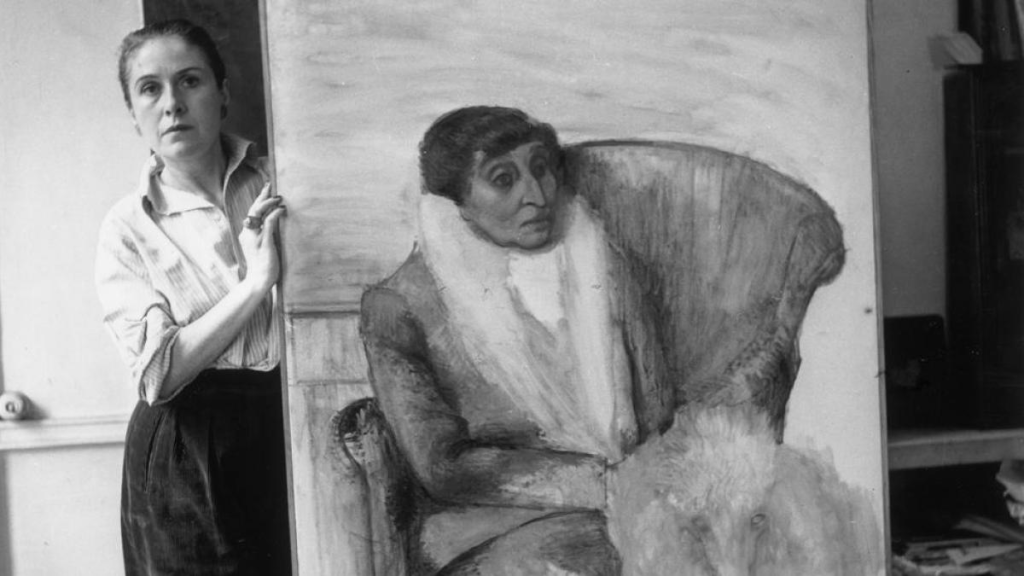
(Serbian Times)

You might remember her as one of Picasso’s women. Or you might seem to recall that she was a little off, or perhaps totally crazy. Perhaps you know something about her history as a stubborn, difficult woman that ended up in various psychiatric facilities. But I will remind you that she was a genuine artist and a brilliant, intelligent woman.

She started off studying art (painting) and later changed to photography. She even had her own photo studio in Paris. She is recognised as a surreal photographer. Her photographs are ethereal, mysterious, engaging, well, simply brilliant.

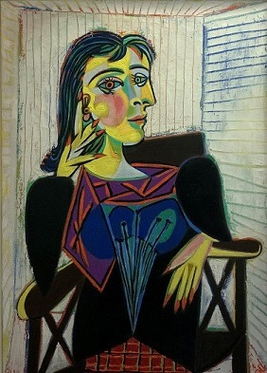
(Portrait of Dora Maar/Pablo Picasso/Fair use)

She was born in Paris in 1907 and lived a very long life. She died in 1997. She is responsible for the photographic documentation we have of Picasso creating Guernica. But her work, both in photography and in painting, is phenomenal.

Although Picasso discarded her saying she was absolutely crazy and put her in a mental ward. Her friend Paul Éluard helped her cope and took her out of the institution. Picasso bought her the house where she lived until her dying day and he also gave her many paintings which he allowed her to sell if she needed money. When she died she had 130 Picasso paintings and a large collection of her photographs.

(This is how Picasso later saw her, as The Weeping Woman/Public Domain/Fair use)

I thought you might want to look into a most interesting woman such as Dora Maar, so I will leave you with this video…

(2022)

CHEERS

Buen día

From the heart and mind d of the greatest US President to the people! Besides, no matter what you think Kamala is it might be, the opponent is worse, a nut and much worse!

#art, De un coleccionista turco – From a Turkish Collector

(Derechos Reservados/All Rights Reserved)

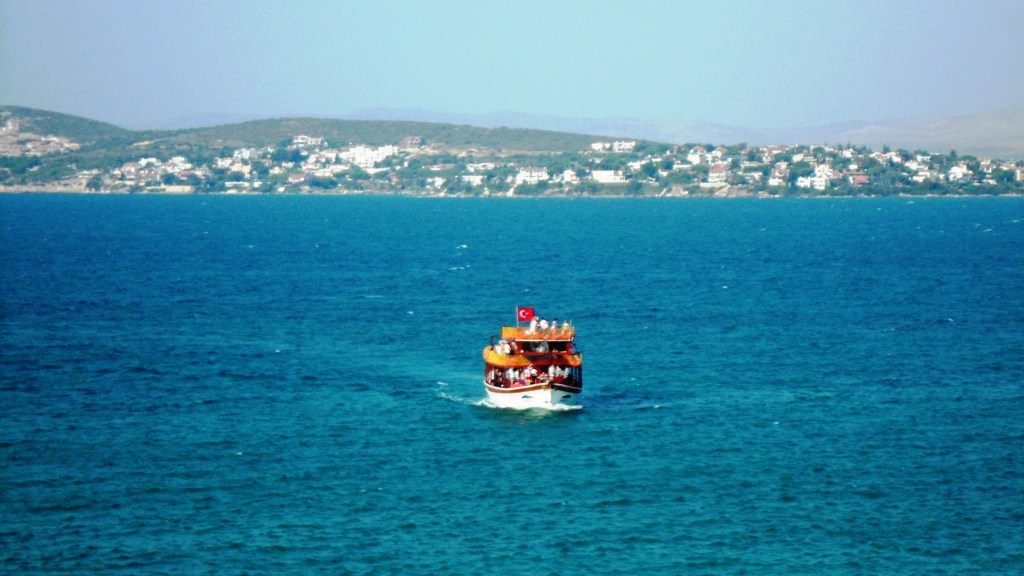
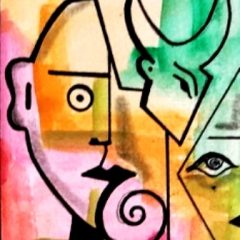
Esta foto me la ha mandado un coleccionista de Esmirna, Turquía. Fueron dos cuadros que adquirió para su colección en 2022. Son de la JaZzArT, Serie III. Estos los había estado pintando (acuarela con tinta china y grafito) durante mis estancias de verano aquí en Turquía y en Grecia. Siempre se agradece mucho que un coleccionista le mande a uno una foto del cuadro, o de los cuadros, ya incorporados en la colección.

+++++++++++

The paragraph was sent to me by a collector from Izmir, Turkey. It concerns two paintings that they acquired for their collection in 2022. The paintings are from my JaZzArT, Series III. I had been working on these during my summer stays here in Turkey and Greece using watercolour, Indian ink, and graphite. It’s always very much appreciated when a collector sends a photo of the artwork, or artworks, already incorporated into the collection.

GRACIAS – CHEERS

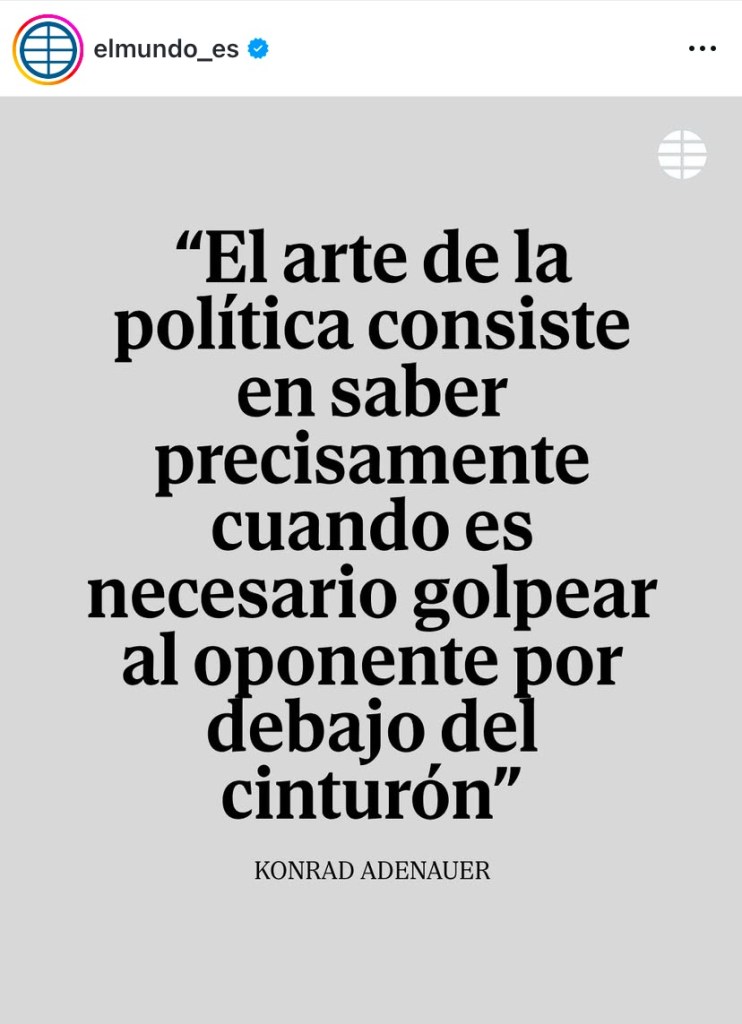
#poem, #prosa, #opinion, «La croqueta»

(de una cuenta de Instagram)

Esto me lo encontré en una cuenta de Instagram y me pareció interesante la analogia…

Pero bueno a mi me han hecho feliz las croquetas toda la vida asi que no dudo que también harán feliz al mundo entero. Yo supongo que si nosotros, los españoles, comenzaremos a enviarles nuestras croquetas al resto del mundo, el mundo seria auténticamente un mundo mejor.

Bueno os dire que el dia de la croqueta es el 16 de enero.

Que hacer la croqueta es rodar sobre uno mismo.

Si te dicen croqueta es porque te aman.

Se dice C R O Q U E T A y no c o c r e t a.

La palabra croqueta proviene del francés, croquette y significa crujiente.

Una croqueta es «un bocado de bechamel, debidamente frito. Su sabor viene dado por un picadillo de diversos ingredientes —carnes, verduras, nueces, frutas…— y para poder freírla es necesario darle un rebozado adecuado en huevo y apanadura» (según lo describió alguien).

En japonés croqueta es korokke.

Las croquetas llegaron a la peninsula ibérica a finales del siglo XIX.

En España, anualmente comemos 3.700 millones de croquetas. (las que yo me como son gran parte de esta cifra).

El inventor de la croqueta fue Louis Bechamel, cocinero del rey Luis XIV de Francia, también creador del delicioso relleno actual de las croquetas, la bechamel.

Las provincias que más consumen croquetas son: Ciudad Real, le sigue Tarragona, Toledo, Alicante y Castellón. Pero ahora que yo vivo en Valencia, pronto figurará en la lista.

Bueno y aquí os dejo porque ya llegaron las croquetas así que me piro. Venga, a comer croquetas se ha dicho!

Que vivan las croquetas, la paella valenciana y el bacalao a la vizcaína! Y arriba Pamplona!

#poem, «Del otro lado del mar» (Lamentos, p#1)

(Art Digital de Francisco Bravo Cabrera/Derechos Reservados)

DEL OTRO LADO DEL MAR
(Lamento sub-sahariano)
(escrito mientras escuchaba a Art Pepper)

Ahora me enfrento a los tiempos,
a los vientos,
y mis sueños,
estallan en mi alma como truenos.
Me estremecen,
y estas ganas de volar no me dejan
tranquilo,
y me roban la calma.
Mi cuerpo entero me pide que vaya al norte,
el norte y con su elegancia,
y estoy soñando con el día
cuando viviré en España.

En Francia, Andorra, Noruega,
Italia o en Alemania,
no importa, allá todo es muy bueno,
son las tierras de abundancia…

Pienso yo que todo aquello es la tierra prometida
donde fluye leche y miel.
Que la besan otros mares,
no el mismo que a estos lares.
Aquí me abruman los polvos,
las lluvias y me quema el sol.
Aquí los sueños se mueren
entre el hambre y el calor.
Mi sueño es llegar muy lejos
en mi barco sobre el mar,
a costas donde mi alma agotad,
al fin pueda descansar…

A Suecia, Holanda, Suiza,
Bélgica o Portugal,
No importa allá todo muy es bueno
En un bendito lugar…

Un día, cuando sea valiente,
me subiré a una patera,
a jugarme así la suerte,
quizá hasta la vida entera,
porque tengo que saber
si es verdad
o una quimera,
lo que creo que existe allá,
en praderas y riberas,
al otro lado del mar,
en el continente aquel
de donde vino la muerte,
del imperialistas tan cruel.

Nos robaron hasta el aire que iba hinchando nuestras velas,
las velas de nuestras barcas
que al futuro ya no llegan.
Hombres blancos, ellos
Hombres negros, nos.
Luchando ellos por lo santo,
creyendo en su Dios y credo.

¿Y nos?
Viviendo en el fango,
en lo inmundo de este suelo.
Yo no quiero estar aquí,
ni probabilidad de muerte,
ni miedo,
me quita el fuerte deseo de fugarme,
al otro lado del mar,
a ser libre, a ser feliz,
eso, eso,
es lo que quiero….

Francisco Bravo Cabrera – 21de julo de 2024, Esmirna, Turquía

#art, VALENCIARTIST, verano de 2024 – Summer of 2024

(“JaZzArT” 2024/Francisco Bravo Cabrera/Derechos Reservados/All Rights Reserved)

En el verano me dedico más al dibujo…

In the summertime I dedicate more time to my drawings…

GRACIAS – CHEERS

#art, «I Hear You Want to Be an Artist?

(Henri Rousseau)

If it is true and you want to be an artist, I would suggest that you become educated in the techniques, art history and the colour theory. Art is not a pastime, although we do pass the time painting. To be a serious, professional artist requires formal education. Yes, I know that now many are saying that we are all artists, that there are no rules in art, that we don’t need to learn anything, but all I can say to that is bullocks!

Art is an academic subject. Art is a profession. Art has rules (definitely!). Art has a language and if you want to be an artist you must learn it. And one of the most important subjects that you cannot ignore at all is Art History.

So, since I am not your teacher, I will only give you a brief introduction at some of the things you should know if you want to paint. The theory of colour.

The PRIMARY COLOURS are: Red, green, and blue

The SECONDARY COLOURS are: Yellow, cian, and magenta

The TERCIARY COLOURS are: Orange, lime (yellow/green), violet, fucsia, and blue cian.

Hope it helps. Go to an academy if the uni is not your thing. Learn from videos, books, other artists. Read about Art History. Actually any book you see about art, buy it, borrow it, nick it, and read it! And after you have learned all there is to know about ART, you can then, ignore the rules and CREATE. 😊

CHEERS