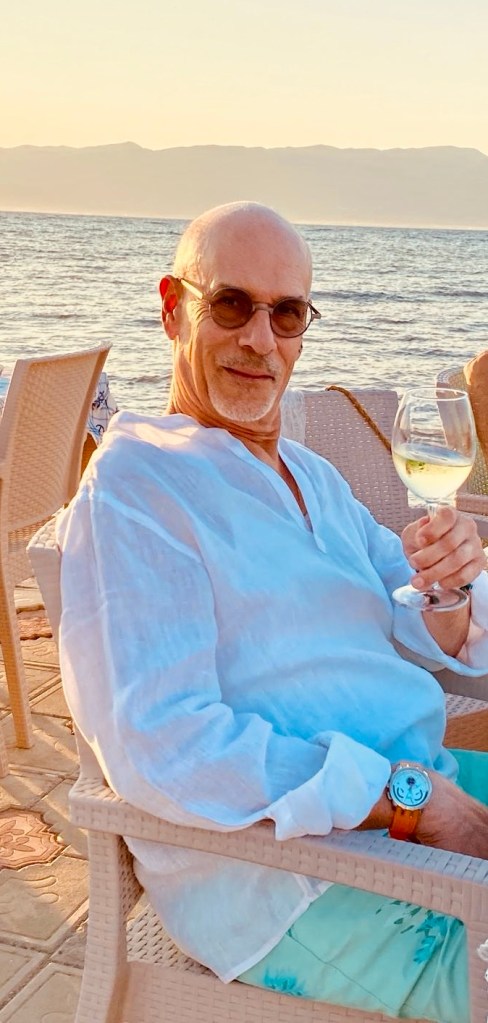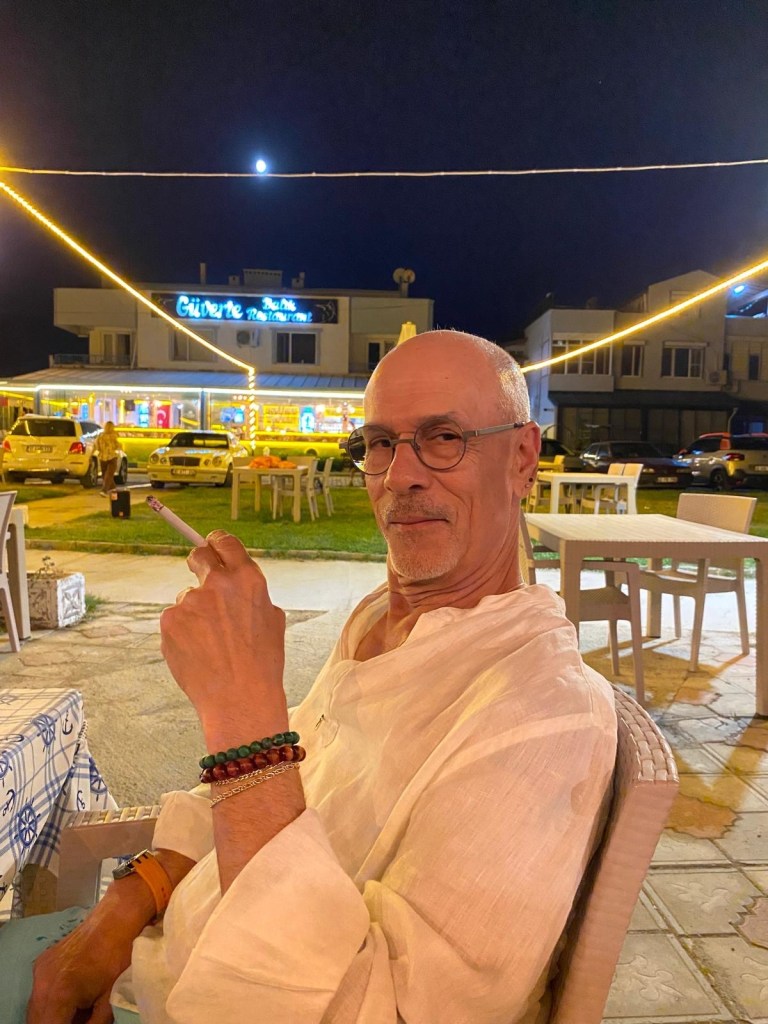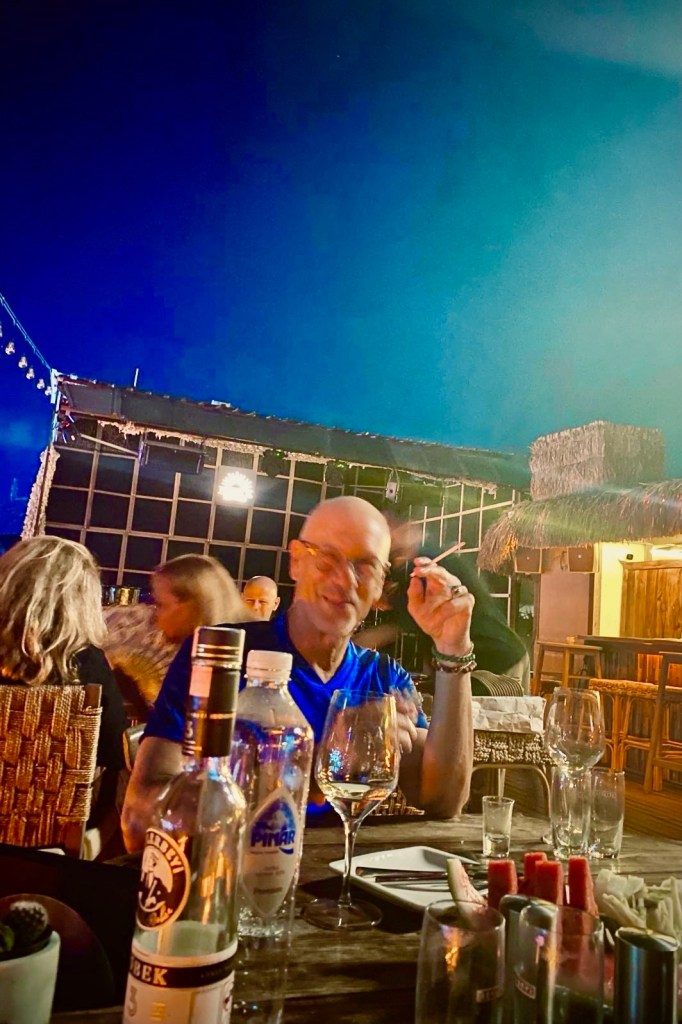
(Imagen de FBC/Derechos Reservados – Image by FBC/All Rights Reserved)
¿Se podrá decir que el arte es un proceso espiritual? ¿Es el arte una de las herramientas esenciales en la búsqueda espiritual? ¿Podemos comparar el proceso artístico con una oración o con una meditación? Pregunto…
+++
Canwe say that art is a spiritual process? Is art one of the essential tools used in the search for spirituality? Can we compare the artistic process with a prayer or with a meditation?I ask…
OMNIA CAELUM STUDIOS VALENCIA PRESENTA/PRESENTS
MAGDALENAPROJECT
(Si te ha gustado por favor dale «like» y gracias/If you liked it please give it «like» and thank you)
(Francisco Bravo Cabrera/Bodo Vespaciano/Derechos Reservados/All Rights Reserved)
Jazz Art, el arte al compas y al ritmo del Jazz, bailando, creciendo, buscando. Eso es el JaZzArt, la búsqueda, pero con el poder de la improvisación…
+++
Jazz Art is art beating to the rhythm of Jazz. Dancing, growing, searching. This is JaZzArt, the search, but with the power of improvisation…
(Imagenes propiedad de FBC/Derechos Reservados – Images property of FBC/All Rights Reserved)
Hay muchas mas en mi Instagram, donde publico todas mis obras, id y echadle un vistazo: @Francisco_Bravo_Cabrera (también @Guloshka mi representante).
+++
There are many more in my Instagram where I post all my works, go and check them out: @Francisco_Bravo_Cabrera and at Instagram @Guloshka, my artist representative.
OMNIA CAELUM STUDIOS VALENCIA PRESENTS
(Si te ha gustado dale el «like» y gracias/If you liked it give it a «like» thank you)
(Francisco Bravo Cabrera/Bodo Vespaciano/representado por un actor/actor portrayal)
Sus raíces son el blues y el ragtime… se originó el Nueva Orleans al comienzo del Siglo XX… Lo caracterizan la improvisación, el ritmo y el hecho de que el musico al tocar va componiendo… Primero le decían Jass y luego, quizá por la influencia de Broadway, le llamaron el Jazz y fue considerada la «palabra del Siglo XX» por American Dialect Society, entidad que se dedica al estudio del idioma ingles de Norteamérica y otros lenguajes y dialectos… Para mí el Jazz es una referencia, una inspiración y una fuente de ideas, principios y practicas utiles para crear y por eso gran parte de mi trabajo artístico no solo lo llamo, pero es, «JaZzArT«.
+++
Its roots are in blues and ragtime… it originated in New Orleans at the beginning of the 20th century… It is characterized by improvisation, rhythm, and the «player composer»… First, it was called Jass and then, perhaps due to the influence of Broadway, it became known as Jazz and was considered the «word of the 20th century» by the American Dialect Society, an organization dedicated to the study of the English language in North America and other languages and dialects… For me, Jazz is a reference, an inspiration, and a source of ideas, principles, and useful practices for creation, which is why a large part of my artistic work is not only called, but is, «JaZzArT«.
(2020)
Aquí os traigo algunas de mis mas recientes obras de «JaZzArT» realizadas en noviembre y diciembre de 2023 en Omnia Caelum Studios Valencia…
+++
Here are some of my most recent «JaZzArT» paintings done throughout November and December of 2023 in Omnia Caelum Studios Valencia…
(«Jazz Night No.2»)(«Jazz Night No.3»)(«Jazz Night No.4»(«Jazz Night»)(Obras de Francisco Bravo Cabrera/Derechos Reservados – Works by Francisco Bravo Cabrera/All Rights Reserved)
Síguenos en nuestras redes sociales – Follow us on our social media
“Jazz is really America’s classical music,” he said. “Like our country itself and especially like the people who created it, jazz is a music born of struggle but played in celebration.” (Bill Clinton at the 40th anniversary of the Newport Jazz Festival)
Well, if Bill Clinton said it I am buying it! The greatest president that ever served the US talking about the greatest musical invention of the US! Wow! It cannot get better than that! Unless Jerry Lewis was there to dance and sing…
(NPR)
But I want to bring you the music of Billy Taylor, a great ambassador of Jazz. He was an American pianist, composer, broadcaster and educator. He was a distinguished Professor of Music at East Carolina University in Greenville. And since 1994 the artistic director for jazz at the John F. Kennedy Center for the Performing Arts in Washington, D.C. So I think this man is a true authority on music, as well as on the prevalence, complexity and compositional qualities of Jazz.
Dr. Billy Taylor, (he received his Masters and Doctorate degrees from the University of Massachusetts at Amherst) was a jazz educator. He gave lectures in many colleges and universities and served on panels, travelling the world as an authentic jazz ambassador. It was said by critic Leonard Feather that «It is almost indisputable that Dr. Billy Taylor is the world’s foremost spokesman for jazz.»
(NPR)
Dr. Billy Taylor was born in North Carolina in 1921… In 1944 he moved to New York City and started playing piano professionally with Ben Webster’s Quartet and on his first night with the boys he met Art Tatum. He also worked with Machito and developed a love for Latin Jazz… By 1946 he was the house pianist at Birdland and played with major stars like Charlie Parker, J.J. Johnson, Stan Getz, Dizzy Gillespie and Miles Davis. Actually he was Birdland’s longest lasting piano player… In 1949 he published his first book, a textbook about bebop piano styles… Then in 1952 Billy Taylor composed one of his best known tunes, «I Wish I Knew How It Would Feel to Be Free«. This tune (song), recorded by Nina Simone was known in the UK as a piano instrumental for the BBC’s «Film…» programme… Dr. Billy Taylor died of a heart attack in Manhattan in 2010.
So, although «classical» music is intrinsically, historically and culturally European, Jazz is intrinsically, historically and culturally American, especially having been «born» in the USA.
(«Wolfgang»/Francisco Bravo Cabrera/All Rights Reserved)
Today Featuring The Magic Flute
Mozart’s The Magic Flute (Die Zauberflöte) is a two-act opera blending magical fantasy, Enlightenment ideals, and Masonic symbolism. Which equals phenomenal! The story follows Prince Tamino, who is tasked with rescuing Princess Pamina, daughter of the Queen of the Night, from the high priest Sarastro. Alongside the comical bird-catcher Papageno, Tamino undergoes a series of spiritual and moral trials to prove his worthiness. Ultimately, the opera reveals that Sarastro represents wisdom and light, while the Queen embodies darkness and deceit. Love, virtue, and enlightenment triumph as Tamino and Pamina are united, and order is restored. Isn’t that wonderful?
I have seen various versions and interpretations of this opera, which is my second favourite from Mozart (who is my favourite classical composer), the first one is Don Giovanni. And one of my favourite versions was the one by Ingmar Bergman as a film adaptation from 1975…
Mozart’s Life and Works
Wolfgang Amadeus Mozart (1756–1791) phenomenal Austrian composer of the Classical era. He was extremely talented even at a very young age. A child prodigy, and a genius. At the age of five he began composing and performing across Europe guided by his father, Leopold. Mozart was a master of all genres existing in his time, and composed over 600 works that include symphonies, concertos, operas, chamber music, and sacred pieces. His most famous works include The Marriage of Figaro, Don Giovanni, Symphony No. 40, Requiem, and of course, The Magic Flute. Despite his musical genius, Mozart struggled financially and died at 35, leaving behind a legacy that continues to shape Western music. The true sign of genius.
I hope you enjoy this rendition of The Magic Flute arranged for strings.
(Image by and property of Francisco Bravo Cabrera/All Rights Reserved)
A painting can take so long…
Thoughts guide the process, they are the weight that holds the ideas down just long enough for the brain to capture them. Once an idea creates a spark, the spark travels down via sinapsis and before you know it you are standing in front of the canvas with a brush in hand ready to create.
The process is fluid…
Have to allow room for mistakes. Mistakes allows the brain to create different alternatives, and these alternatives are the genesis of improvisation. And my art, being «JaZzArT» must have improvisation. Improvisation creates energy and movement in the composition and soon a part of the composition begins to create all by himself. This is like a brilliant saxophone solo by Stanley Turrnetine…
And then you dance…
Got to get the rhythm of the work. Without swing there’s no jazz…
Here are some new works from the Summer of 2025 in the Aegean.
(We kindly ask you to please like, comment, share and subscribe as this helps our channel)
(Original Art by Francisco Bravo Cabrera/All Rights Reserved)
“AUTUMN LIGHT REMEMBERED” (Inspired by Brahms Symphony No. 3, Mvt. III Poco Allegretto)
In the silence sewn between two heartbeats, a violin begins to stir, a gentle softness, as evening’s silken hair brushing over the river’s flowing silence, warm as a name no longer spoken, a name never forgotten.
The melody walks the silver path that lovers do when they fear the world might vanish if they float through here too quickly.
The violins, cellos and violas carry the ache of an autumn’s evening light, amber and trembling, so faint but yet remembering everything it ever held in its soft glow.
Here love whispers love, yet knows of joy’s fragile membranes, and how easily it slips through even the most faithful hands.
Stillness… Settles evenly beneath the sighs of strings, while promises move the pulse of hope threading through the shadows, to tell you: I am with you, even in the places where we cannot remain.
And then the music ends as love oftentimes does, not broken, but evaporated, like darkness on a brilliant morning, leaving ghosts to fill the air with thoughts, creating the final chord that echoes endlessly through the indifference of a sunny day.
C.2025, Francisco Bravo Cabrera, 6th of December 2025, Valencia, España