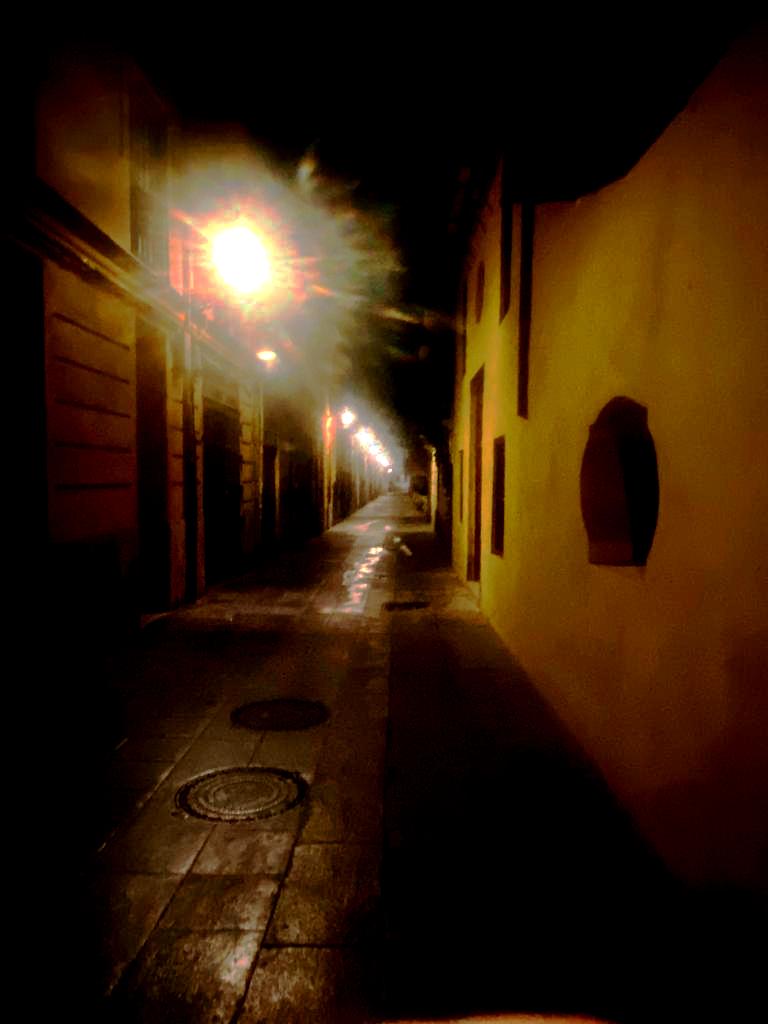
Travelling…
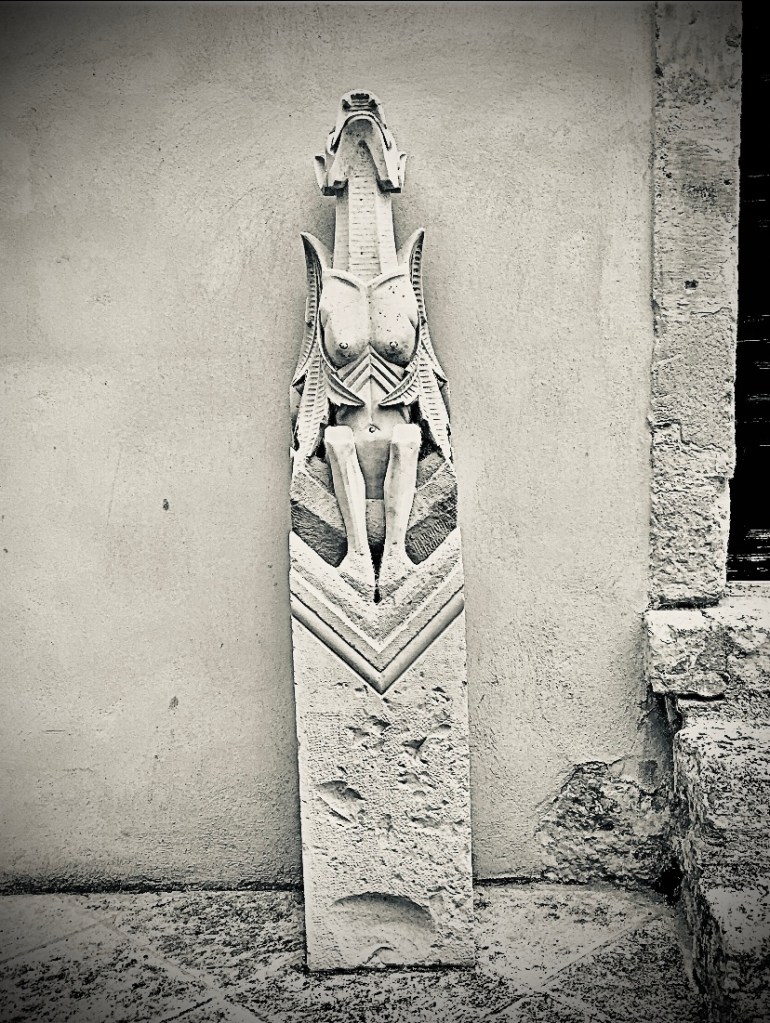
The movement forward is the catalyst for the motivation
and the motivation is to seek the dreams lost in the night, in an old medieval street of a bustling, modern town…
(C.2023, Francisco Bravo Cabrera, 03 NOV 2023, Valencia, Spain)
Faith saved us from the savages that we were, losing faith makes us savages again
Travelling…
The movement forward is the catalyst for the motivation
and the motivation is to seek the dreams lost in the night, in an old medieval street of a bustling, modern town…
(C.2023, Francisco Bravo Cabrera, 03 NOV 2023, Valencia, Spain)

BAILA Ven,baila que hemos llegado al centro del salmo,y allí nuestro aliento es el signo,y la carne reza.Báilame al ritmo de los astroscuando nadie …
“Baila”, un poema de Francisco Bravo Cabrera
Pincha el enlace para leer el poema completo.
GRACIAS
THE TIMELESS CIRCLE OF MASTERS
(of art)
Usually most people think of the great masters of the Renaissance when asked about their favourite artist. Others look more to the recent past or even to the present. But knowledge of art history is very sketchy among most people and even among many artists who have not gained from the vast amount of knowledge that art history contains. So, the solution is to study art history?
Well, yes, but no, not necessarily. You can subscribe to my blog and to my YouTube channel (www.YouTube.com/@FranciscoBravo Cabrera) and I think you will learn enough. That is if you are simply a lover of art. But if you are, or aspire to be, an artist, then you should study art history, as well as painting, drawing and other techniques. Education and preparation is essential for an artist.
So, let us look at what I am calling the “timeless circle of masters.” These are greats that not many dispute their inclusion in such a special group:
Leonardo da Vinci – mindful, experimental, the searcher
Michelangelo – impetuous, powerful, indefatigable worker, mystic
Rembrandt van Rijn – light and human truth.
Diego Velázquez – visionary, technical perfection, spiritual quest
Johannes Vermeer – seeking the light and its impact on the world and people
Francisco de Goya – painter of reason, nightmare and social criticism
Claude Monet – the birth of perception as art.
Vincent van Gogh – emotion as flame and colour as the medium
Pablo Picasso – inventing new ways to create, innovations, the search without end
I would say, unequivocally, that all of these, (whether I like them or not), redefined the meaning of a painting, or what painting was before them. They did not only work through their good taste and the search for beauty but of art being.
Here are some more that some art historians would probably add to the above “super” group:
• Caravaggio – light, darkness, and violence turned into revelation
• Frida Kahlo – capitalising on being a “martyr”
• Sandro Botticelli – a true maser of light, colour, image and greatness
• Salvador Dalí – self-agrandising, narcissist, non-genius who called himself a genius
And although these painters are now famous, some of them were not famous in their time, although some, like Velázquez and Goya excelled in the courts of kings and Michelangelo was commissioned by popes to decorate churches…
Some would say, and I would agree, that fame is only the faintest reflection of what truly matters in art…
Most of the “greats” did not live to chase recognition. On the contrary, their search, their quest was for truth, light, and the feeling of art, and used a canvas, or a wall, to find themselves within that search. Painting is seeing, and one must see with honesty and if you accomplish that, then you will walk the same path of the great ones even if only a few people know your name, or no one at all. As an artist you add colour to the world and things that did not exist before you picked up a brush, dipped it in paint and placed it on a surface. And that is no small thing. It is a search and it is the expression of what you found.
I have heard it say that, «Art is the quiet echo of the soul made visible. It asks nothing but attention, and in return, it teaches us how to see ourselves and the world anew.» I can subscribe to this statement only if I can add that art is also an academic/professional pursuit which demands of the student/artist education, preparation, discipline and good taste. And also the hunger to exhibit, sell and live off of his art. Art, can also, like a soft brushstroke across still water, stay with you if you let it…
So you, yes, you, what are you chasing in art?
CHEERS
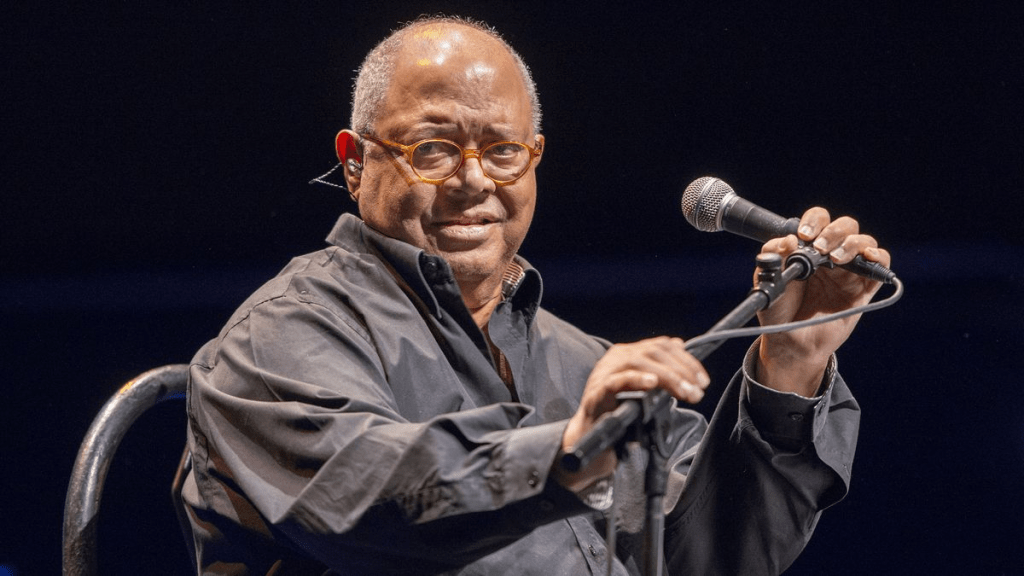
Una de les seves cançons que més m’agrada: Si ella me faltara alguna vez.
Us convido a escoltar-la:
+++
Una de sus canciones que más me gusta: «Sie ella me faltara alguna vez» . Os convido a escucharla:
Pablo Milanés (1943–2022) R.I.P.
Moltes gràcies…
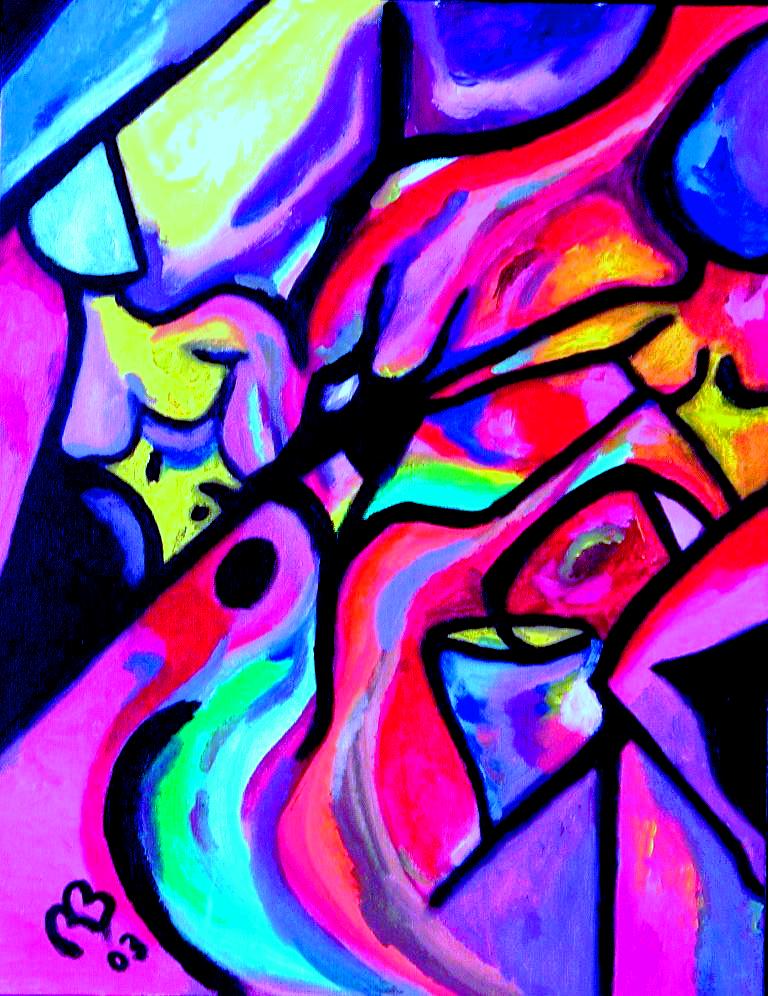
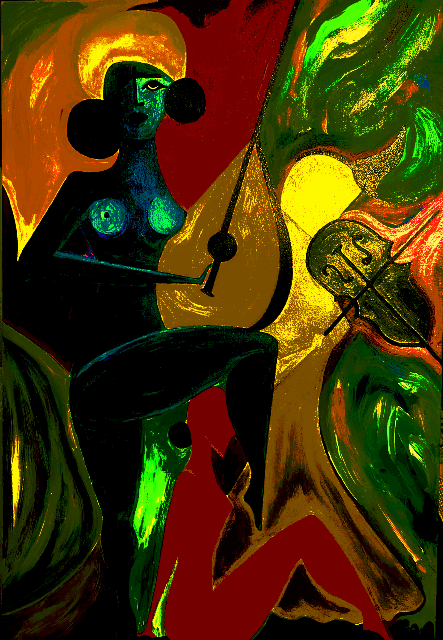
This one is really full of colours, almost an abstract but quite figurative indeed. So I decided it will make a good fine art print and it is available here at Fine Art America.
But there are many more works that may or may not make available as prints. Check them out here:
Cheers…
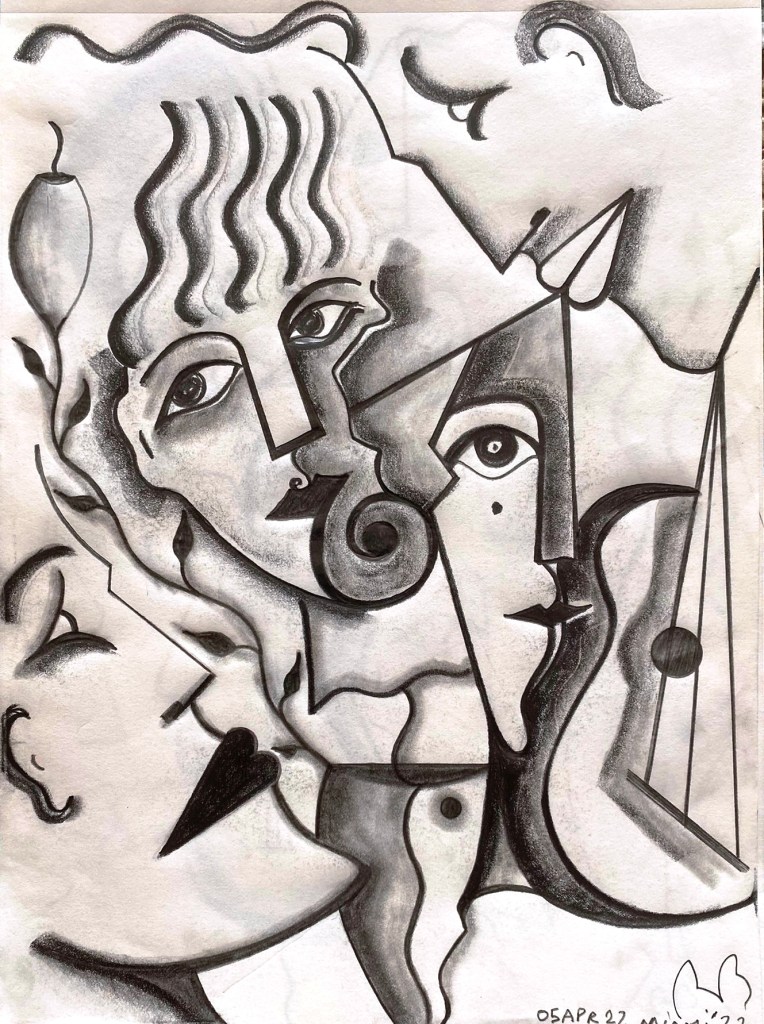
I love to teach, (seen my video series on Art History? No? Follow the link, (there’s another one below), but there are some things that I just won’t teach to artists, or students, or art lovers, and that is how to draw. To learn to draw you have to take classes specifically geared at getting you acquainted with the different forms of graphite (pencils), charcoal, Conté Crayons, pastels etcetera etcetera. Then you learn to «see» and to «look» at your subject. Classes are good because they usually have models and I cannot do that from this blog…
But I will say that there are a few things that I can reach out and teach from this vantage point of mine, i.d. my blog, and that is I can try to guide you to think as an «artist» (whatever that is). First, there has to be an incredible urge to express, to reach out, to talk to someone out there, or to everyone. Musicians do that, and of course, their method (song, musical piece) is much more immediate, but we can do that with our art as well, now much easier thanks to the Internet.
Second, you have to know how to dominate and master your craft. That comes only with practice and time. And intimately tied to that is the development of talent. Talent is not something magical that is given to some and denied to others. Talent is a muscle that is developed through hard work. The more you draw the better you get, the more talented you get. Ever heard of «practise makes perfect»?
Don’t worry too much about creativity, imagination, originality or other such terms used by many to talk about art. Art does not depend upon creativity or on the artist’s imagination. And originality? What is that? Is there anything that has not been done before? Originality is not important. What is important is how you approach your subject matter and how you bring it to life on the canvas or the paper or with clay, bronze or even gold.
Art is created by the artist as a discipline, as a job well learned and well developed. It does not flow intuitively, like a child would do. And yes, intuitive art exists but it should exist solely as an experiment, or an exercise. But mainly as a way to get to a real work of art, which is something contrived and controlled, from beginning to end, by the will of the artist.
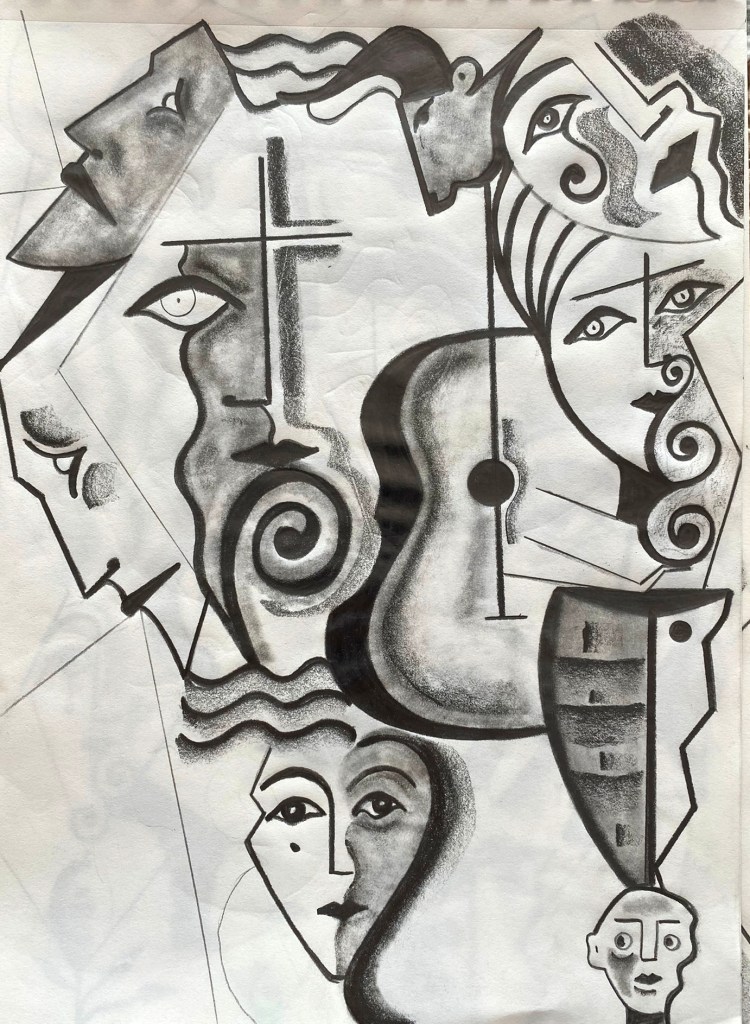
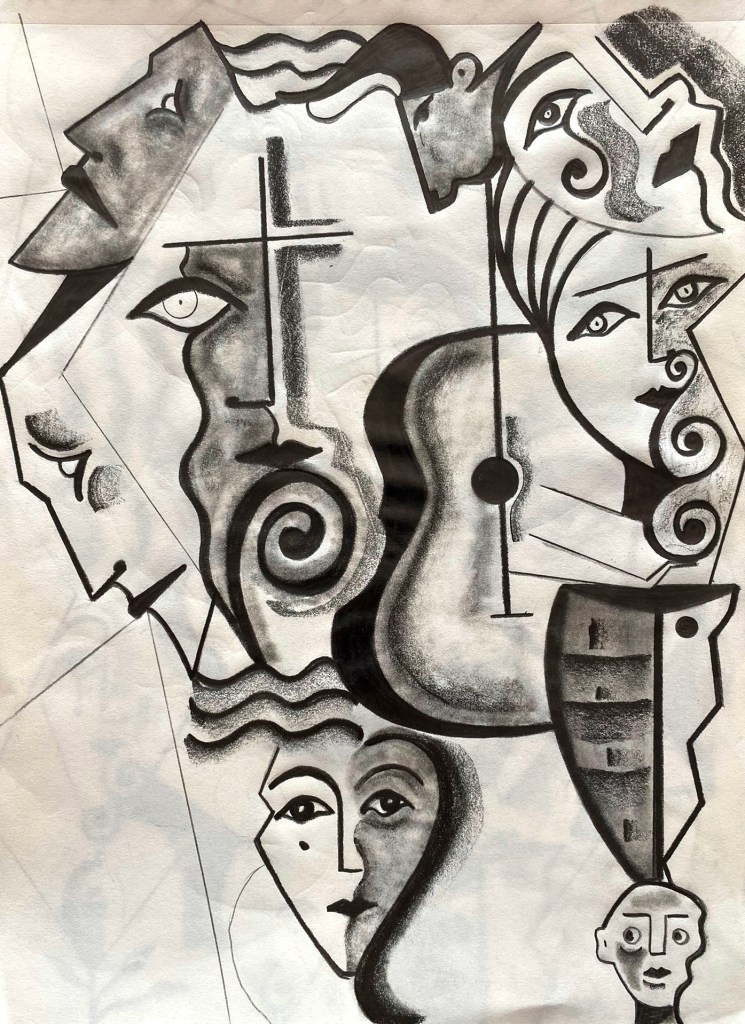
Here are some examples of some of the drawings I have been working on lately. Notice the line, and notice the development of the composition and how, after you know where your drawing is going, shadows are created, lines are reinforced or removed, altered, changed, in other words, turning the sketch into a finished work. And, of course, these are exercises, they are meant to be a finished work, but not something other than that, being a fully developed idea.

I will leave behind one of the Art History videos that I have been doing and from that one you can find in my channel many more.
Cheers…

AND LET US NOW TALK ABOUT «BAD» ARTISTS
(in my opinion)
This is simply my subjective opinion, although I will support it with some facts as I have been able to discover them.
I have to start with Jeff Koons. To me he is not an artist, but a businessman that has capitalised on thinking himself an artist and creating works that, well, you know them, and if you don’t, you will have to look them up because they are too hideous to be placed in this post. The official data on him from “experts” is: Koons is criticized for being more of a brand than an artist, outsourcing most of his work to assistants. Well the experts here are right, although they could have said more.
Moving right along we have Damien Hirst, and the experts say: Some see his work (like the diamond-encrusted skull or preserved animals) as shock value over substance. Here is another artist that employs lots of assistants to do his work. With these experts I do agree.
Damien Hirst created a series of what he called “Spot Paintings” (actually it was done by his assistants, mostly) and then British Airways budget arm Go used a design of multiple coloured spots to the tagline “Go, the new low-cost airline from British Airways.” (The Independent). Hirst stated that the advertisement “bears a striking resemblance” to his own “spot paintings” series. (The Independent). He actually tried to sue the airline but the case never progressed. I mean, hasn’t he ever seen the flamenco dresses of the women at Sevilla’s April Fair? Good grief!

Then we have Thomas Kinkade, and what do the art experts say: Kinkade is hugely popular for his glowing cottage paintings, but widely dismissed by critics as overly sentimental “mall art.” And about this Californian I’ve nothing to say except that he was a trained and technically sound artist but his style and his art is not something I spend much time on. And this is another case in which I agree with the “experts.”

Some other things that art history talks about are artists that are famous but are, or were, “bad” people. Let’s check out these three that can be thought of as being ethically or personally controversial:
• Caravaggio – literally murdered someone.
• Wagner – (in music) was notoriously anti-Semitic.
• Picasso – was brilliant but also famously cruel to women. (although none of the supposed “victims” ever complained and he supported them all generously)
Of course the «list» does not stop there, but this post does, so look for part 2 coming soon.
CHEERS

Flor de aloe. Comencé mezclando el amarillo y el rosado.Sin dudar le puse un poco de blanco nácar y dorado.Parecía similar, pero, cuando lo deslicé …
Os presento a Paola Jiménez Rivas (Editor Francisco Bravo Cabrera)
Pincha el enlace para leer los poemas.
GRACIAS
Parece que hoy sigo los pasos sigilosos de los santos,
que tercos como asnos siguieron su verdad,
y por ser sempiternos, testarudos, inocentes,
ingenuos, perturbados,
alucinantes y fieles soldados,
se ganaron el cielo…
Y yo, desde mis pasos,
desde mi caminar,
andante que soy,
quiero soñar,
pero en vez de soñar voy pensando,
pensando en el polvo,
pensando en las piedras,
y sobre las hierbas que alivian mis huesos viajeros,
sueño pensando,
detengo mi andar,
así espero poder descansar…
C.2022, Francisco Bravo Cabrera, 30 de abril de 2022, Miami Beach, Florida, EEUU.
GRACIAS

 JaZzArt en València