Art, Hypocrisy, and the Heroes of the Proletariat
Francisco Bravo Cabrera
I. A Necessary Distinction
Conceptual art is not, properly speaking, a branch of the visual arts. This is not a denial of its artistic legitimacy — which few serious critics contest — but a question of correct classification. In its essence, conceptual art is a performative and theatrical practice. Its closest affinities are not with painting or sculpture but with gesture, duration, and staged presence. That many fine arts departments have encouraged students to abandon technical mastery in favour of installations and actions has produced a generation of artists who talk fluently about their work but execute it with little craft. I refer to artists like Koons, Hirst, Amin and many others.
II. Yoko Ono: Myth and Reality
But few “careers” better illustrate these contradictions than Yoko Ono’s. Born into a wealthy Tokyo family, she arrived in New York with the means to penetrate the avant-garde circles of SoHo and the East Village. Her first marriage to composer Toshi Ichiyanagi — a recognized figure in Japan’s experimental scene — opened the first doors. Her second, to producer and art promoter Anthony Cox, consolidated her position: it was Cox who took her to Tokyo’s Sogetsu Hall and arranged her 1965 appearance at Carnegie Recital Hall.
At Carnegie she presented “Cut Piece” (1965), inviting the audience to interact with her freely on stage. When a man attempted to cut her bra strap, Ono pressed it to her chest and stopped him. The moment is telling. Compare it with Marina Abramović’s “Rhythm 0” (1974), in which the artist declared herself an object available to the audience and did not intervene even when threatened with a loaded pistol. That is commitment to the work; that is risk as an internal condition of the piece, not a decorative afterthought.
III. John Lennon and the Millionaire Rebel
When Ono met Lennon in London in 1966, she gained a platform that none of her work had earned on its own. Their “Bed-In for Peace” at Amsterdam’s Hilton Hotel in 1969 — conducted from a luxury suite, surrounded by press — was presented as protest against the Vietnam War. Several journalists noted the obvious at the time: discomfort is not a form of resistance when practiced from opulence. Checking into a five-star hotel to declare solidarity with the war’s victims is, at best, naïveté; at worst, mockery.
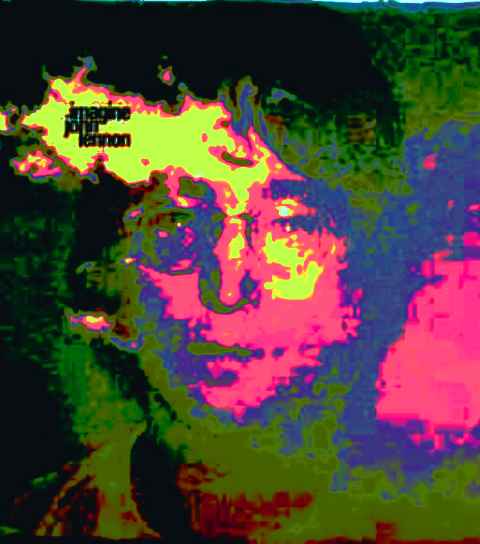
The same contradiction runs through Lennon’s output in those years. When he released “Working Class Hero” in 1970, an ex-Beatle who had never been poor or working-class was appropriating an identity that was not his. The plea in “Imagine” to renounce possessions, delivered from his luxury Manhattan apartments, is not merely a biographical inconsistency: it is the aesthetics of privilege dressed as radicalism. Lennon was, in the very early Beatles years, a genuine innovator. But the figure of the wealthy rebel who preaches renunciation from the safety of wealth is one of the most durable and least interrogated poses in twentieth-century popular culture.
IV. Conclusion
Conceptual art, when practiced with genuine rigor and real risk, can be as valid a form of knowledge as any other. The problem lies not in the genre but in its capture by those who find in it a shortcut to celebrity without the demand of mastery. Ono and Lennon are, each in their way, paradigmatic examples of this operation: the conversion of posture into legacy, and of fame into retroactive artistic credential. Pointing this out is not cynicism. It is simply the obligation to look with open eyes.
(Stay tuned for part 2 coming to VALENCIARTIST real soon)

CHEERS


A thought-provoking and boldly argued essay, Sir,
What I found most interesting is that you do not simply critique conceptual art itself, but rather question the gap that can emerge between artistic claims and artistic practice. Your distinction between conceptual art as a performative discipline and the traditional visual arts raises important questions about craft, intention, and the role of technical mastery in contemporary art.
Me gustaLe gusta a 1 persona
Thank you Sir. I know this is a polemic subject, but sometimes it really hurts when you see people that have struggled through years mastering their craft and then someone comes along with a simple minded idea and calls it art. I am not refusing that simple ideas cannot be art, but…
Me gustaLe gusta a 2 personas
Very interesting. Never a Beatles fan though.
Me gustaLe gusta a 1 persona
Thank you Anna. Actually I have been a lifelong Beatles fan but the truth is the truth. The heart and lungs of the Beatles was always Paul, and John knew it.
Me gustaMe gusta