Estamos saturado de imágenes, relatos y formas. Pensar en la idea de la originalidad es una chalada. Los artistas siempre han dialogado constantemente con el pasado, apropiándose de estilos, temas y técnicas para darles un nuevo significado. Esto no es una limitación, es una verdad fundamental: el arte no avanza mediante rupturas totales, ni vanguardias, sino a través de reinterpretaciones. Ser un artista creativo no significa que sepas o puedas inventar desde cero, sino como puedes transformar lo ya existente.
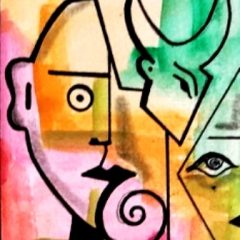
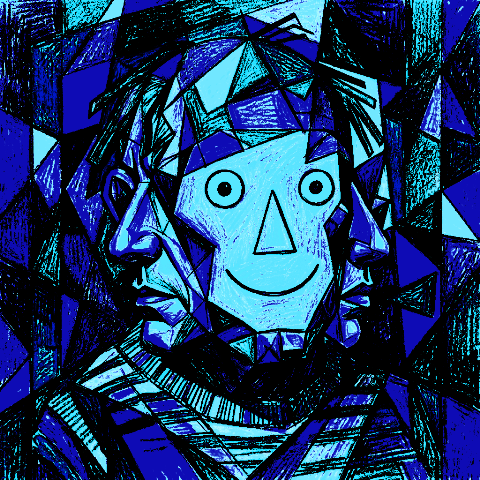
La famosa frase atribuida a Picasso —“los buenos artistas copian, pero los grandes artistas roban”— apunta precisamente a esta idea. Copiar implica reproducir superficialmente una obra; “robar” es absorberla, entenderla y reconfigurarla hasta hacerla propia. El artista que “roba” no oculta sus influencias, las integra de tal forma que el resultado final adquiere una identidad nueva. Así, lo importante no es la novedad del material, sino la singularidad de la mirada. Al fin y al cabo, todo lo que tocó Picasso lo convirtió en algo genial y superior a lo anterior.
En nuestra era, marcada por el acceso ilimitado a referencias culturales, esta perspectiva es muy importante. La originalidad ya no es la invención de formas inéditas, está en la capacidad de establecer conexiones inesperadas entre elementos conocidos. Un creador actual trabaja, en cierto modo, como un editor: selecciona, combina y resignifica fragmentos del inmenso archivo cultural disponible.
Por eso no te frustres pensando o lamentando la “falta de ideas nuevas”, sino reconoce que el arte siempre ha sido un proceso de reciclaje creativo. La innovación no es que desaparezca, es que cambia de lugar: deja de estar en el origen de las ideas y pasa a manifestarse en su reinterpretación. El verdadero valor del arte radica en cómo cada artista logra convertir lo heredado en algo vivo, personal y relevante para su tiempo.
+++
We are saturated with images, narratives, and forms. The idea of originality is a delusion. Artists have always engaged in a constant dialogue with the past, appropriating styles, themes, and techniques to give them new meaning. This is not a limitation; it is a fundamental truth: art does not advance through total breaks or even art vanguards, but through reinterpretations. Being a creative artist does not mean that you can invent from scratch, but rather how you can transform what already exists.
The famous phrase attributed to Picasso —“good artists copy, but great artists steal”— precisely points to this idea. Copying means superficially reproducing a work; “stealing” is to absorb it, understand it, and reconfigure it until it becomes one’s own. The artist who “steals” does not hide their influences but integrates them in such a way that the final result acquires a new identity. Thus, what matters is not the novelty of the material but the uniqueness of the perspective. After all, everything Picasso touched became something brilliant and superior to what came before it.
In our era, marked by unlimited access to cultural references, this perspective is very important. Originality is no longer the invention of unprecedented forms; it lies in the ability to establish unexpected connections between known elements. A contemporary creator works, in a way, like an editor: selecting, combining, and resignifying fragments from the immense cultural archive available.
That’s why you shouldn’t get frustrated thinking or lamenting the «lack of new ideas,» but rather recognize that art has always been a process of creative recycling. Innovation doesn’t disappear; it changes location: it ceases to be at the origin of ideas and instead manifests itself in their reinterpretation. The true value of art lies in how each artist manages to transform what is inherited into something alive, personal, and relevant to their time.
+++++
GRACIAS – CHEERS
 JaZzArt en València
I agree with this, Francisco. Art exists in this collective stream, and it is constantly being reinterpreted, added to, etc. Techniques and technology may bring new approaches and inevitably new perspectives, but tomorrow’s creatives will be borrowing from us, just as we have borrowed from those before us.
New ways of interpretation don’t devalue what was, I think it encourages us to revisit a piece with new eyes.
Me gustaLe gusta a 1 persona
You have said it precisely and very well my friend. Thank you for participating in this exchange about art. And this truth applies to all the arts as well, no exceptions. All the best to you!
Me gustaLe gusta a 1 persona
Yes, across the board. Always a pleasure, Francisco. Have a great day, sir.
Me gustaLe gusta a 1 persona
Thank you my friend and you too, a great weekend to you and many blessings.
Me gustaMe gusta
This is a deeply thoughtful and well-articulated reflection on creativity. What makes it compelling is how confidently you challenge the romantic idea of “pure originality” and replace it with something more grounded—and arguably more honest. You don’t diminish creativity; you redefine it.
Your use of Pablo Picasso’s famous quote is particularly effective. You unpack it in a way that goes beyond the cliché and actually clarifies the distinction between imitation and transformation. That idea of “stealing” as deep understanding and reinvention is presented with clarity and conviction.
Me gustaLe gusta a 1 persona
Thank you! I am truly happy and grateful for your collaboration and participation in this exchange about art! All the best!
Me gustaLe gusta a 1 persona