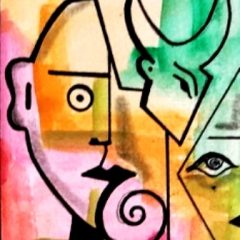
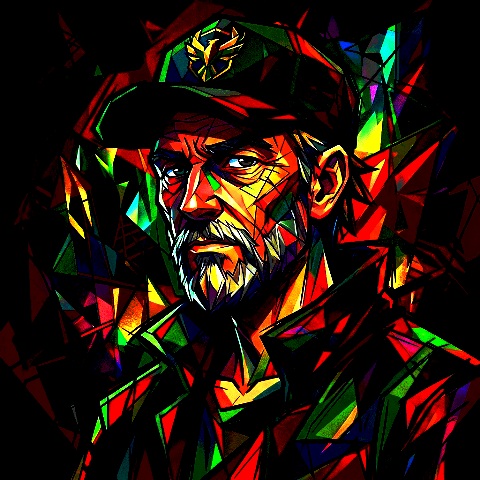
Una manera humana de expresarse…hoy en dia también de forma artificial…con un idioma idóneo que llega, no solo al intelecto, sino a las emociones, al espíritu. Creo que lo más importante para un artista no es buscar la originalidad (no hay nada nuevo bajo el sol) sino buscar el espíritu del cuadro (o de la obra) y para ello hay que saber ser contemporáneo. ¿Qué es ser contemporáneo? Simplemente que trabajes con lo que te rodea, con el espíritu de tu época, con lo que se expresa y se hace en tu entorno y no trates de remontarte a otras épocas u otros siglos. Tus cuadros tienen que tener la manera de transmitir una idea. No importa la idea, pero tiene que estar presente como referente visto o interno. Los colores (o el blanco y negro) importan mucho también pues le añaden ese toque emocional que llega a los sentimientos del observador. Para eso tienes que conocer (al menos un poco) la teoría de los colores y saber cuando y como usar los colores complementarios o los colores similares o análogos, además de la temperatura del color. Esto sin perjudicar ni debilitar la fuerza de la composición.
+++
WHAT IS ART? It is a human way of expressing oneself… today also in an artificial way… with an ideal language that reaches not only the intellect but also emotions and spirit. I believe that the most important thing for an artist is not to seek originality (there is nothing new under the sun) but to seek the spirit of the painting (or the work), and for that, one must know how to be contemporary. What does it mean to be contemporary? Simply to work with what surrounds you, with the spirit of your time, with what is expressed and done in your environment, and not to try to look back to other eras or centuries. Your paintings must have the ability to convey an idea. The idea doesn’t matter, but it must be present as a seen or internal reference. Colors (or black and white) are also very important as they add that emotional touch that reaches the observer’s feelings. For that, you need to know (at least a little) about color theory and understand when and how to use complementary colors or similar or analogous colors, in addition to the temperature of the color. This should not harm or weaken the strength of the composition.
+++++
Instagram: @Francisco_Bravo_Cabrera
GRACIAS – CHEERS
 JaZzArt en València
Well said, Francisco.
Me gustaLe gusta a 1 persona
Thank you so much Mitch. I am glad the piece resonated with you. And thanks for the visit.
Me gustaLe gusta a 1 persona