I have some questions for all who wish to reply…
- Does art mix with politics?
- Should artists get involved with politics?
- Can art, (not that which is made for political propaganda) influence others politically or socially?
- If you thought that artists should not get involved with politics, can you tell me who should?
- If you thought that art does not mix with politics, can you tell me what does mix with politics and what mixes with art?
I look forward to your opinions, and please, always remember that the only thing we proffer is opinions, there are very few facts out there.
Cheers…
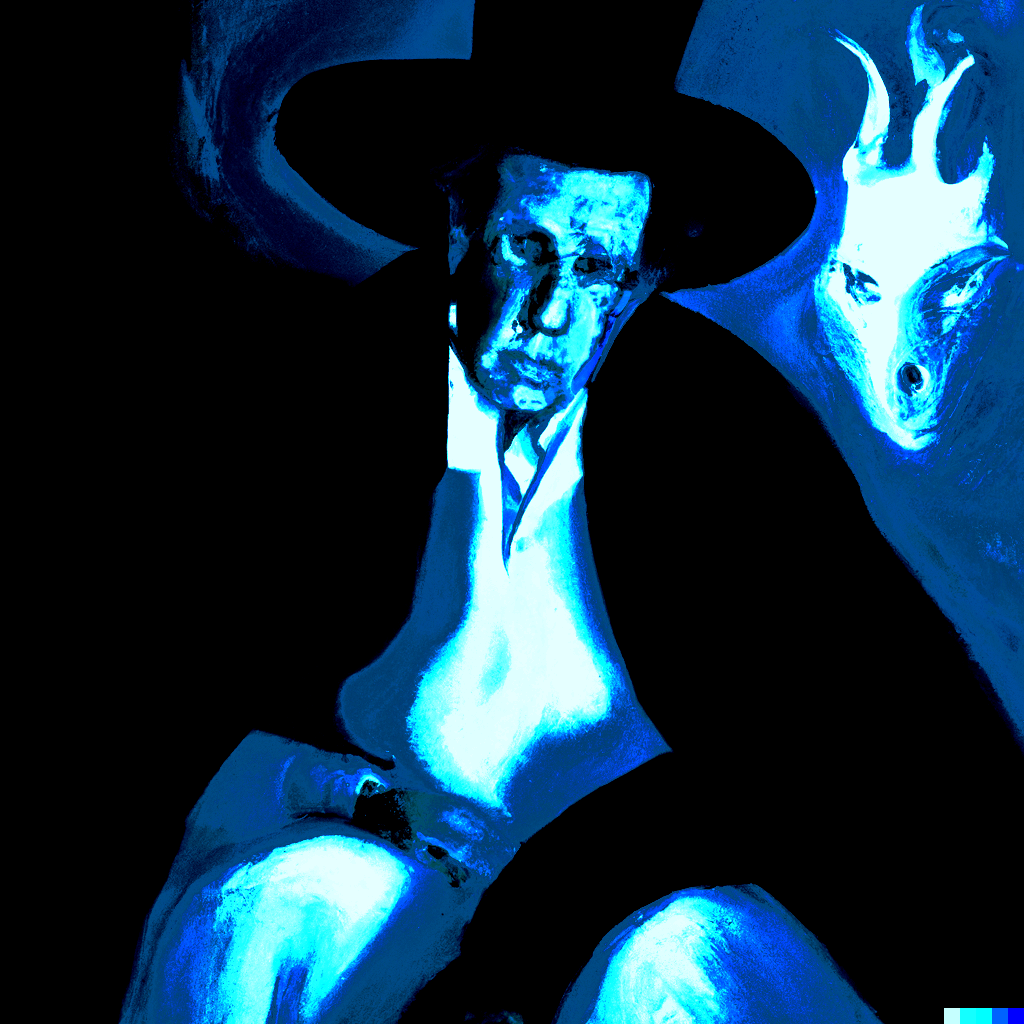
* This painting depicts the artist (I thought about doing a portrait of Francisco Goya) in a pensive mood, seemingly floating on the blue waters of a «creative» sea, while the «muse» looks from the side, taking on a rather sinister appearance…
 JaZzArt en València
Politics and art do mix. That is one stream of water. Another flowing stream is the mixing of art and politics. They influence one another the way streams of water flow past their banks, then converge into another stream. How we perceive the streams, if you will, is shaped by the culture we live in. A person focused on painting landscapes, for example, is either consciously or subconsciously making a statement about the environment that can prompt the viewer to reflect on their personal and our communal relationship to nature. That has social ramifications, and the potential for political action, say how they change their habits, or how they vote. Artists who focus, say, through portrait paintings, photography, or music, raise social issues in how they present people and the human condition. Our political thinking as individuals influences our worldview, just as our faith does. But our individual art can and often does influence how others think politically and spiritually. Art fails when it is overtly political, too intent on forcing a statement. Then it becomes propaganda, which merely attempts to manipulate. One of the problems today for many artists, regardless of their form of expression, is that they are intent on manipulating others into thinking their way. Then art is merely a scream in our face. Goya makes profound political statements, but I don’t think they’re propaganda. They are about the human condition. He disquiets us at times. Other times, he speaks of human nature, our ideals, and vitality. He often places his art in a historical context to speak to the future from the past. He reminds us of where we have been and where we have the potential to go to be fully human. Who is the Satan he portrays? I often think he was saying that satan is within us, not merely a being outside of us. This is an ongoing struggle to control the evil impulse. Look at the horror we are capable of, but also look at our potential to be our better angels. The two streams flow and converge without being propaganda.
Me gustaLe gusta a 2 personas
Thank you Charles, I truly do appreciate your participation and your input into this question. And you raised valid points and I like the example of Goya, who did paint about the ills and the consequences of his society’s greatest flaws and also about the atrocities committed by the French troops in their siege of Madrid.
Me gustaLe gusta a 2 personas