
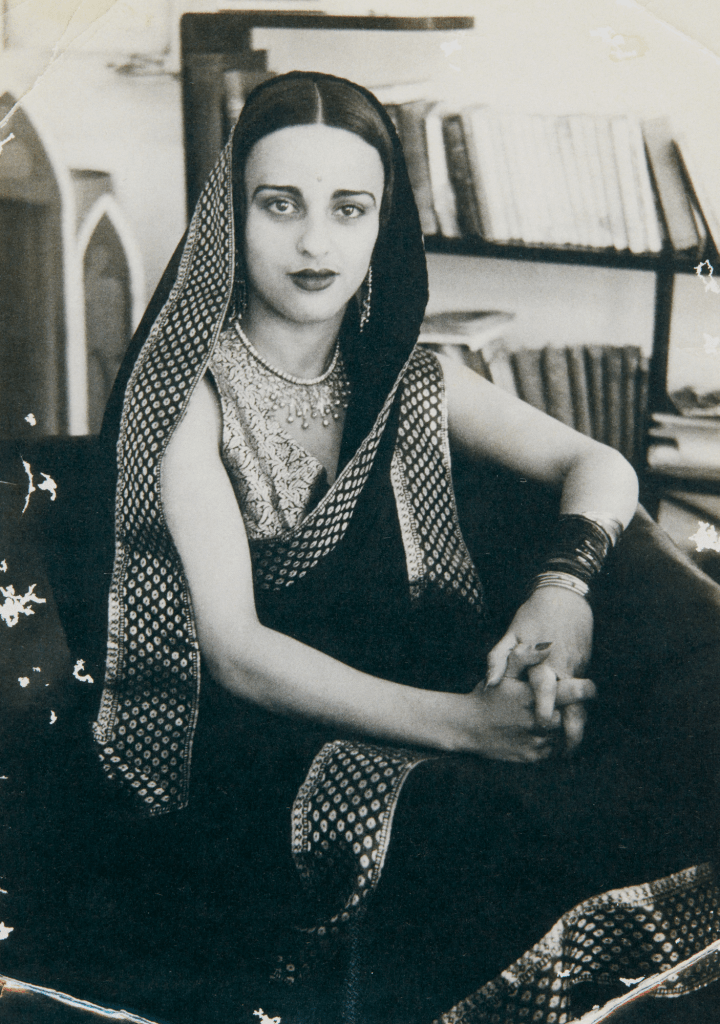
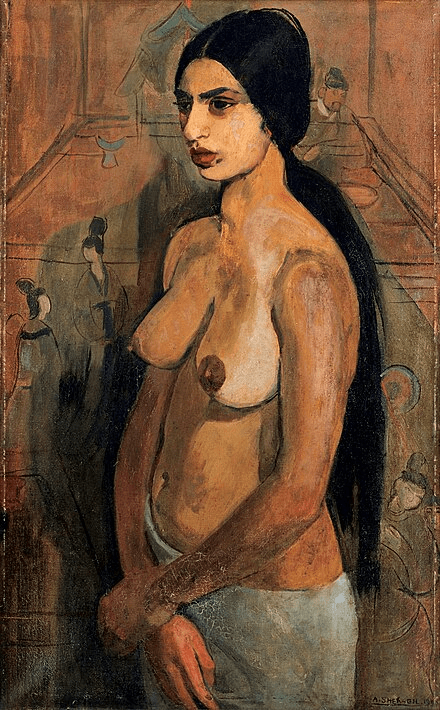
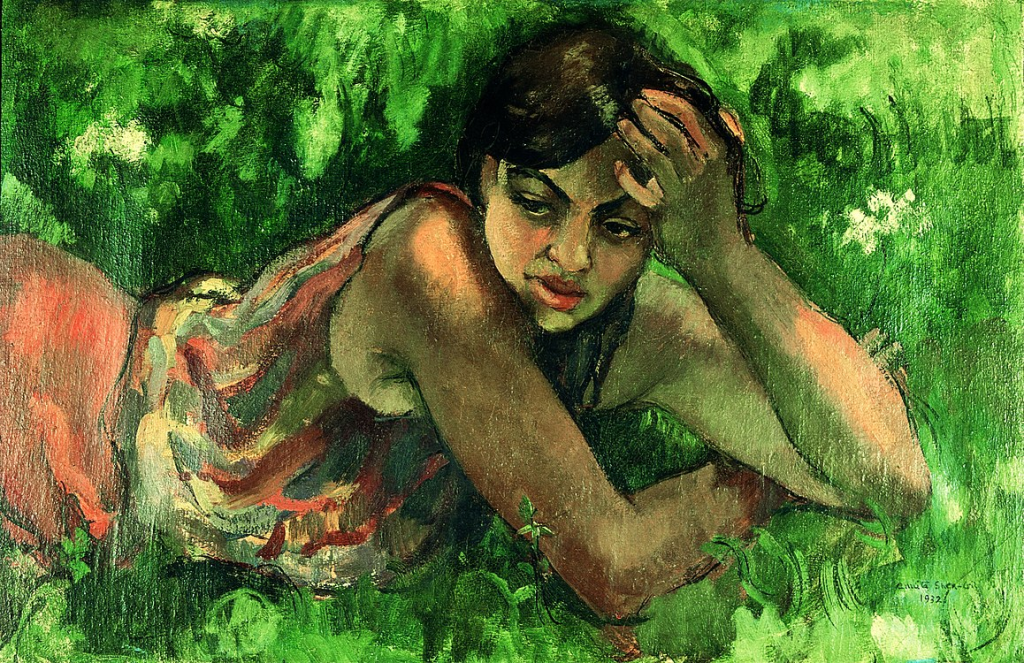
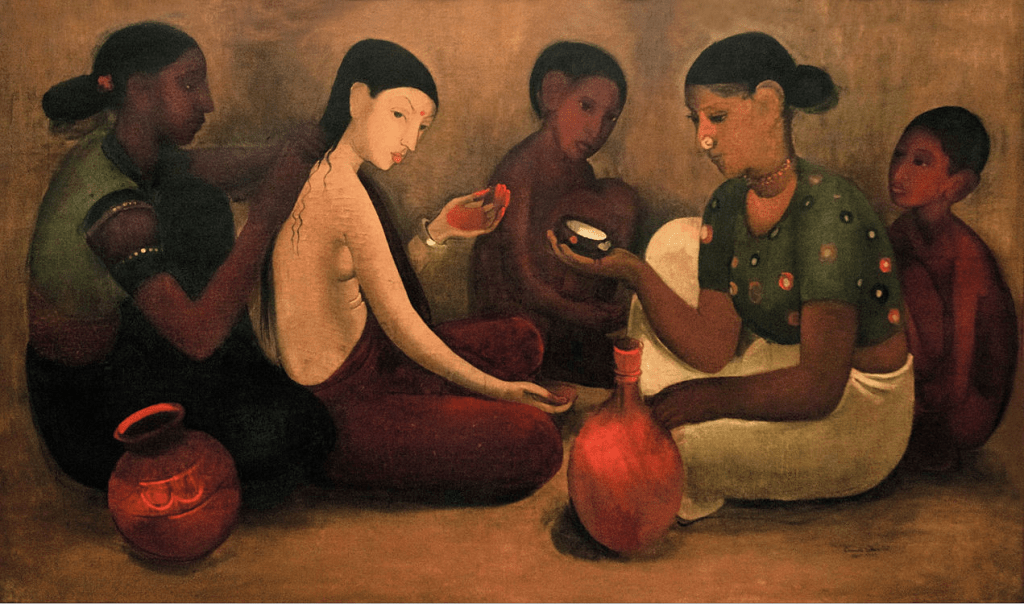
Amrita nació en Hungría (1913) y murió en Pakistan (1941), pero se le considera una artista india. Su padre era punjabi sikh y su madre húngara de origen judío. Se le conoce como la «Frida Kahlo» de la India y al mismo tiempo se dice que es la pintora india más importante del siglo XX. Bueno, esto no lo entiendo porque si es la más importante no puede tener relación alguna con una tan poco importante como Frida Kahlo. Amrita fue la única asiática que expuso en el Gran Salón de París… Estudio pintura en París… sus referentes fueron Renoir, Modigliani, Cézanne y Gauguin, de este ultimo se inspiro para pintar su Autorretrato como tahitiana (1934)… En 1934 regresó a la India y comenzó a pintar escenas de su país. En 1937 se traslado a Hungría. En 1941 se mudo a Lahore donde en pocos días murió inesperadamente. Tenía 28 años de edad.
+++++
Amrita was born in Hungary (1913) and died in Pakistan (1941), but is considered an Indian artist. Her father was Punjabi Sikh and her mother was Hungarian of Jewish origin. She is known as the «Frida Kahlo» of India, yet it is said that she is the most important Indian painter of the 20th century. Well, I don’t understand this because if she is so important, she cannot have any relation with someone as unimportant as Frida Kahlo. Amrita was the only Asian to exhibit at the Grand Salon of Paris… She studied painting in Paris… her influences were Renoir, Modigliani, Cézanne, and Gauguin, from the latter she drew inspiration to paint her Self Portrait as a Tahitian (1934)… In 1934, she returned to India and began painting scenes of her country. In 1937, she moved to Hungary. In 1941, she relocated to Lahore where she unexpectedly passed away after a few days. She was 28 years old.
GRACIAS – CHEERS
 JaZzArt en València
Incredible art
Me gustaLe gusta a 1 persona
For sure! Thank you!
Me gustaLe gusta a 1 persona
This is a compelling and thought-provoking reflection on Amrita Sher-Gil—rich in detail and unafraid to question the labels history assigns to artists. I appreciate how you lay out her complex identity so clearly: geographically, culturally, and artistically she resists easy categorisation, and your text honours that tension rather than smoothing it over.
Your challenge to the “Frida Kahlo of India” comparison is especially striking. It invites readers to think critically about how art history often frames non-Western or hybrid artists through familiar Western references, sometimes diminishing rather than illuminating their originality. By doing so, you restore Amrita’s autonomy as an artist who stood on her own merit, shaped by European modernism yet deeply transformed by her return to India.
Me gustaLe gusta a 1 persona
I fully agree Sir. And thank you so much for your input and insight into the article. All the best!
Me gustaLe gusta a 1 persona
A mi me gusta bastante
Me gustaLe gusta a 1 persona
Sì, muy buna su obra… gracias
Me gustaMe gusta
I’ve never heard about the artists, but just by looking at her beautiful art, you can tell that she enjoyed freedom like a flying bird. Thanks for sharing, and have a good day 🙂 Aiva xx
Me gustaLe gusta a 1 persona
Always a pleasure my friend! Thank you for the visit and I’m glad you enjoyed the post.
Me gustaLe gusta a 1 persona
😊😊😊
Me gustaLe gusta a 1 persona