JaZzArT enters another phase, this time exploring another of the art vanguards of the XXth Century, abstract expressionism. Having already delved into surrealism and expressionism (properly speaking) now engages the «search» in this new style. But here I have found a path full of ideas, philosophy, psychology and ample room for advanced creativity. A genuine treasure trove of artistic ideas…
Abstract expressionism developed early in the 20th century, but it did not gain momentum until the late 1940s. Its main proponent was Jackson Pollock, along with Lee Krasner, his wife, and others. The movement is definitely part of abstract art, informalism (meaning abstract expressionism in Europe), and matterism (the same in France). All these styles emerged in Europe after the Second World War. The term was first used in Germany in 1919 in an article published in the magazine Der Sturm about German expressionism. Ten years later (1929), Alfred Barr, the first director of the MoMA Museum of Modern Art in New York, referred to Wassily Kandinsky’s works as abstract expressionism.
Features of the movement, sometimes known as the New York School: Large sizes; although they are abstract, that is, without figuration, there are exceptions and many contain traces of figuration; the canvases contain a lot of geometry; the coverage of the entire surface of the canvas (all over) without hierarchy between the different parts of the canvas; chromaticism, often limited to black and white but many are also done with primary colours; one can also find canvases with a single color (minimalism); the strokes of color are violently made, representing anguish and emotions.
+++++
I was always confused because abstraction is, well, abstract art. And for expressionism to make visual and visceral sense, it has to have figuration. So I wondered, if it’s an abstract painting, how can it also be expressionist? Why not just call it abstract art and be done with it?
Since I couldn’t make heads or tails of it, I did what I should have done from the beginning, paint one. When I painted my first abstract expressionist canvas, I searched for the difference and I found it; I learned. The revelation is that the difference between painting an abstract (properly speaking) and painting an expressionist abstraction is experienced and discovered while painting it.
Pure abstraction is relatively passive, while abstract expressionism is active and requires much more physical involvement from the painter. Even when making strokes of color, creating geometric shapes, and other purely abstract aspects on the canvas, you are filling it with emotion, movement, and action. In addition, hints of figuration are allowed, and this already changes the whole panorama and clearly shows the difference between pure abstraction and abstract expressionism.
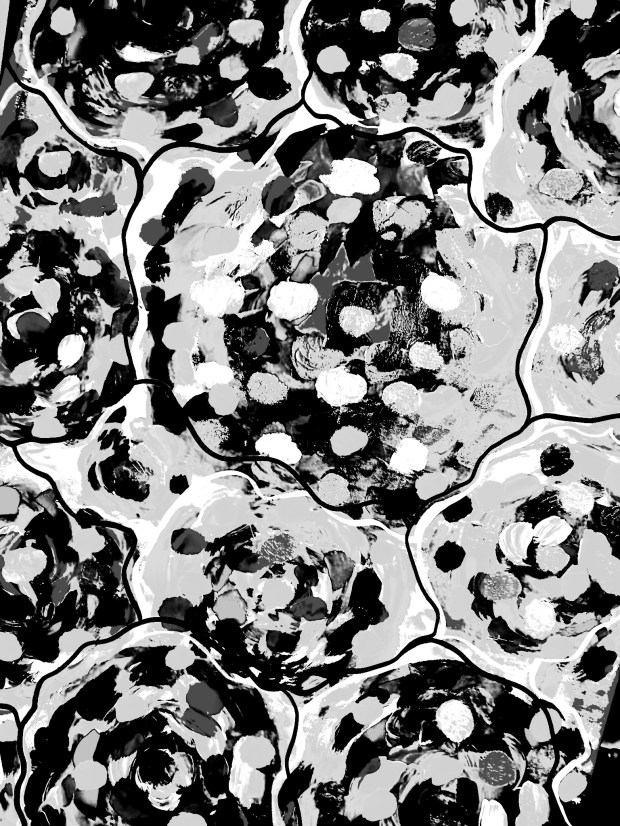
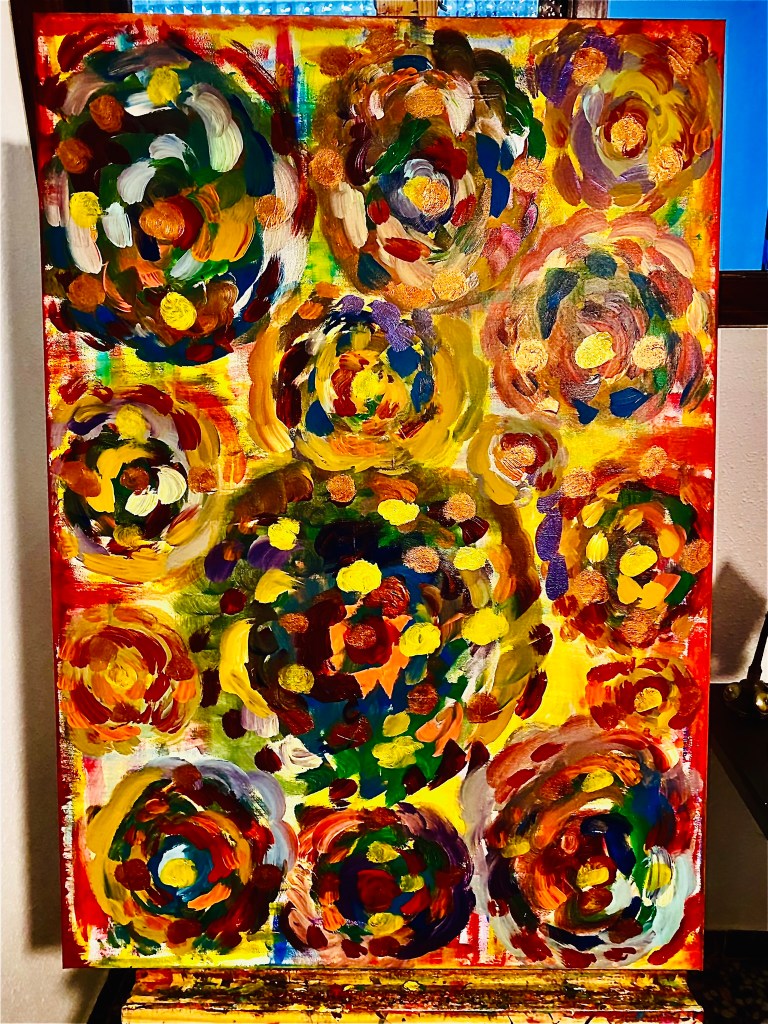
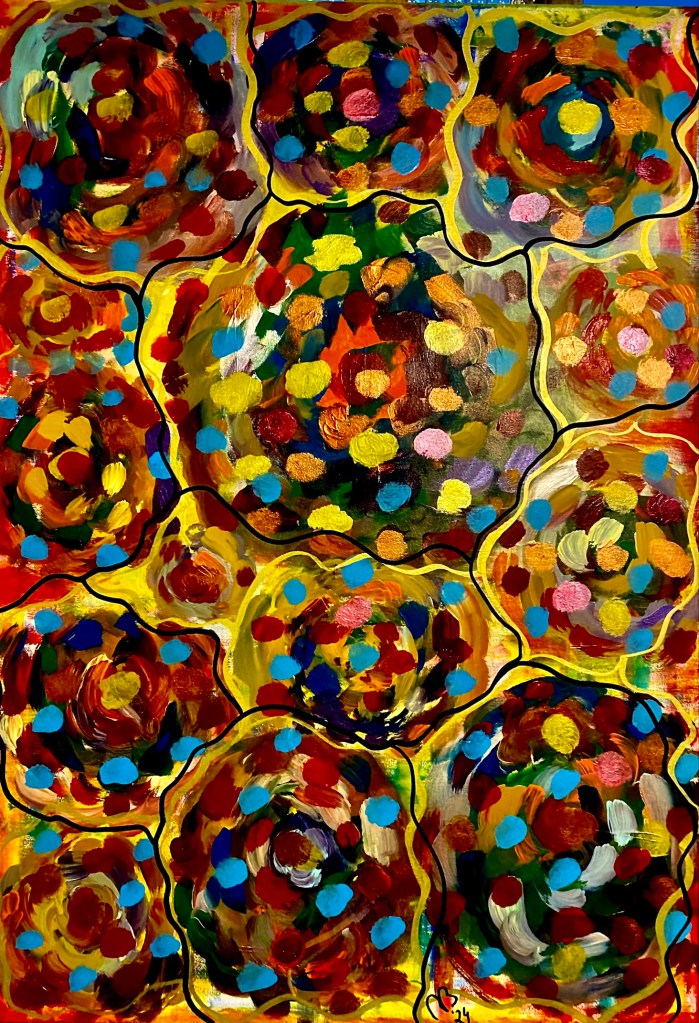
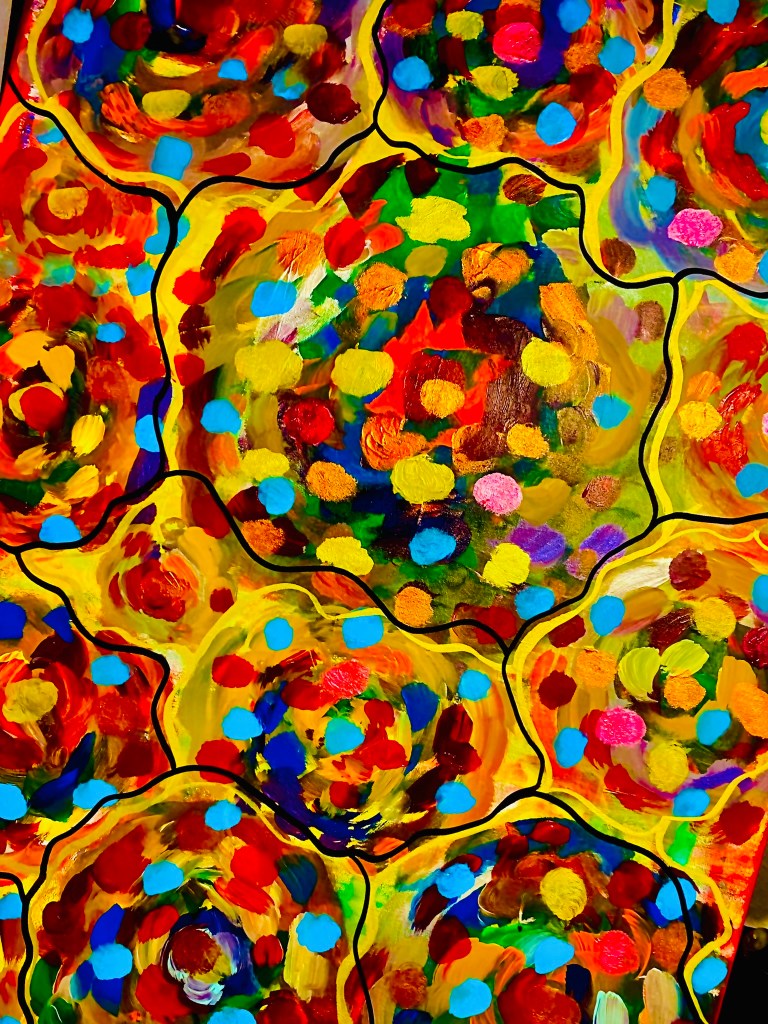
«Here, in its three stages of development, is my first painting of the genre:»
«Flors«
CHEERS


Uno, como persona normal y corriente, admirando pinturas de estos autores famosos, no tenía la menor idea de como surgió este movimiento. Con tu reseña, la pintura se acerca más a uno. Saludos Francisco. Tus pinturas son lo máximo. Me gusta la combinación de colores. Un gran abrazo.
Me gustaLe gusta a 2 personas
Mil gracias Manuel. A veces la historia del arte nos ayuda a apreciar más las obras que nos han llamado la atención toda la vida. Un abrazo.
Me gustaLe gusta a 1 persona