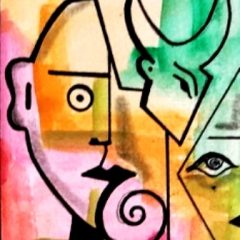
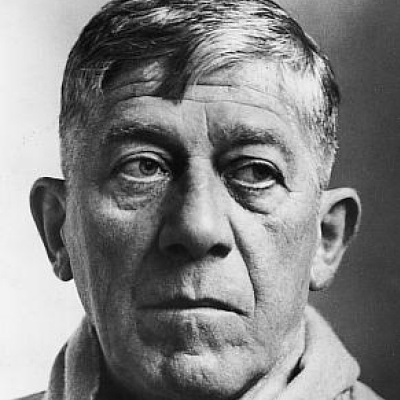
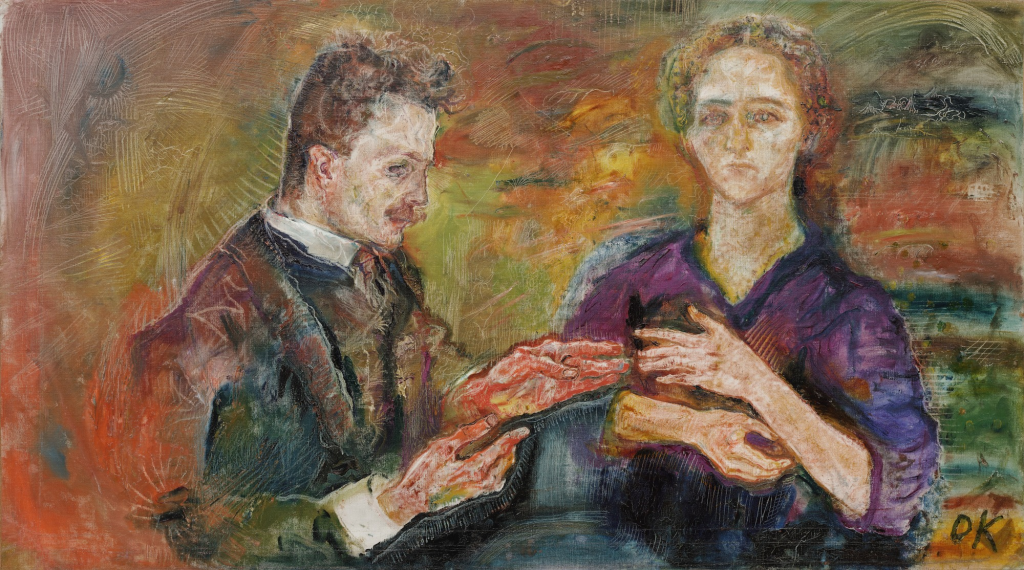
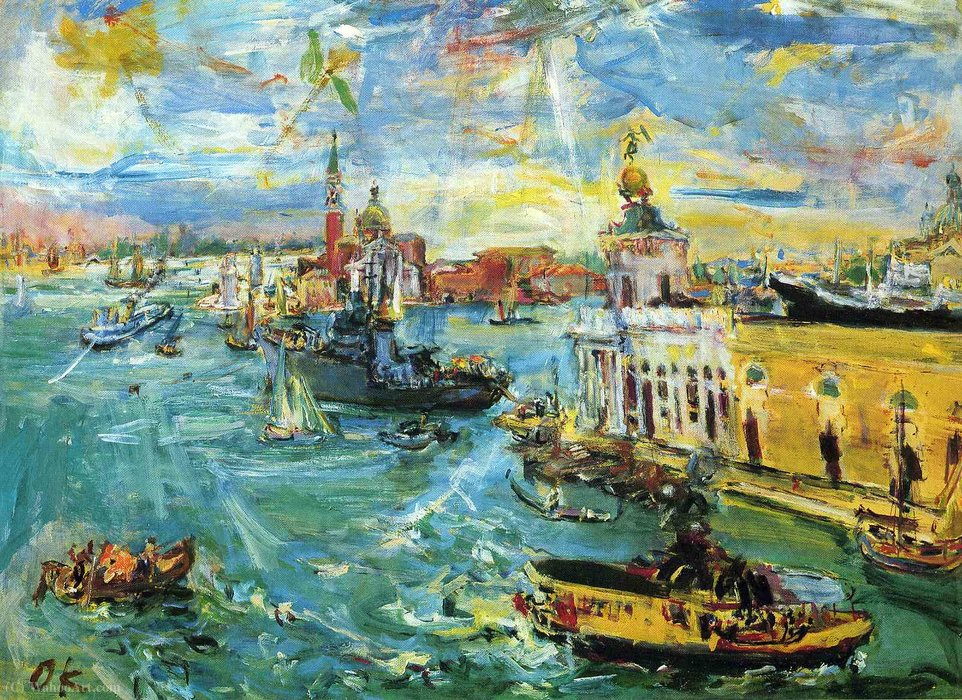
Uno de los expresionistas que llevó el expresionismo a un nivel diferente al de los demás. Oskar Kokoschka, nacido en el Imperio Austrohúngaro en 1886, distorsionaba la naturaleza en sus lienzos, pero no porque renegaba de ella, como sus contemporáneos, sino porque la amaba. Es uno de los grandes del genero. Estudió tres años (1905-1908) en la Escuela de Artes y Oficios de Viena… Sus referentes, Gustav Mahler, Gustav Klimt y Sigmund Freud, se hacen muy relevantes, y obvios en sus pinturas, especialmente en sus retratos y autorretratos… Kokoschka fue pintor, dibujante, poeta, dramaturgo , Kokoschka y escritor, publicó su primer libro en 1908, «Los muchachos soñadores», un libro de poemas.
En 1912 publicó su ensayo titulado “Von der Natur der Gesichte” («Sobre la naturaleza de las visiones») en la Akademischen Verband für Literatur und Musik en Vienna. El ensayo esquematizaba su concepto del arte y la relación entre la visión interna y la que el ojo (externo) ve. Kokoschka decía que la inspiración artística brotaba de lo que el artista ve en su ambiente diariamente, pues lo que ha visto deja una huella en el subconsciente y esta estimula la imaginación. Así creaba Kokoschka. Además creía que el observador tenía que interpretar la obra basándose en su experiencia y sus vivencias. Plegado al pensamiento de Wassily Kandinsky y su teoría de la espiritualidad en el arte, Kokoschka fue el pintor psicoanalista de su época.
Ahora, si no sabias esto, ya lo sabes y si lo comprendes comprenderás no solo a los expresionistas vieneses pero a todos los expresionistas.
Oskar Kokoschka vivió no solo en Viena, pero también en Dresden, Berlin y como veremos, en muchas otras ciudades. Ingresó al ejercito de voluntario cuando estallo la primera guerra mundial incorporándose a un regimiento de caballeria. Fue herido gravemente en batalla, pero siguió pintando y desarrollando su talento… En 1934 tuvo que fugarse de Austria porque los Nazis lo consideraban un degenerado, debido a su arte, y partió hacia Praga. Pero pronto el ejercito Aleman comenzó a reclutar en Checoslovaquia y Kokoschka tuvo que volver a fugarse esta vez al Reino Unido… Después de la guerra viajo a EEUU y no regreso a Europa hasta 1953, eligiendo vivir en Suiza hasta el fin de sus días. Murió en 1980 en Montreux.
+++
I present to you one of the expressionists who took expressionism to a different level than most of the others, Oskar Kokoschka. He was born in the Austro-Hungarian Empire in 1886. Kokoschka distorted nature in his canvases, not because he rejected it, or despised it, like many of his contemporaries, but because he loved it. He is one of the greats of the genre. He studied for three years (1905-1908) at the Vienna School of Arts and Crafts… His influences, Gustav Mahler, Gustav Klimt and Sigmund Freud, become very relevant, and obvious in his paintings, especially in his portraits and self-portraits… Kokoschka was a painter, draftsman, poet, playwright, and writer, he published his first book in 1908, «The Dreaming Boys», a book of poems.
In 1912, he published his essay titled «Von der Natur der Gesichte» («On the Nature of Visions») in the Akademischen Verband für Literatur und Musik in Vienna. The essay outlined his concept of art and the relationship between internal vision and what the (external) eye sees. Kokoschka stated that artistic inspiration sprang from what the artist sees in their daily environment, which leaves a trace in the subconscious and stimulates the imagination. This is how Kokoschka created. Furthermore, he believed that the observer had to interpret the work based on their own experiences and life events. Aligned with Wassily Kandinsky’s thinking and his theory of spirituality in art, Kokoschka was the psychoanalyst painter of his time.
Now, if you didn’t know this, you know it now, and if you understand it, you will understand not only the Viennese expressionists but all the expressionists.
Oskar Kokoschka not only lived in Vienna, but also in Dresden, Berlin, and as we will see, in many other cities. He joined the army as a volunteer when the First World War broke out and served in a cavalry regiment. He was gravely wounded in battle, but continued to paint and develop his talent… In 1934, he had to flee Austria because the Nazis considered him a degenerate due to his art, and he headed to Prague. But soon the German army began recruiting in Czechoslovakia, and Kokoschka had to flee again, this time to the United Kingdom… After the war, he travelled to the US and did not return to Europe until 1953, choosing to live in Switzerland until the end of his days. He died in 1980 in Montreux.

GRACIAS – CHEERS


A very informative post Francesc, but I still can’t make up my mind about the Austrian expressionists. If I was to jump off the fence for a moment though I think Schiele would be first choice.
Me gustaLe gusta a 1 persona
A great choice it would be Malc, for sure!
Me gustaLe gusta a 1 persona
I am very excited about the opportunity of yet another incredible artist, Francisco. If I had to choose my favourite piece of expressionism, it would be Edvard Munch’s Scream because not a whole lot else needs to be said to justify the inclusion. Thanks for sharing, and have a great day. I hope it’s nice and sunny in Valencia 🙂 Aiva xx
Me gustaLe gusta a 1 persona
Munch’s «Scream» series (there are 4 of them) is the quintessence of Expressionism. Well chosen Aiva. Also for me it is one of my favourite paintings. Cheers and all the best.
Me gustaLe gusta a 1 persona