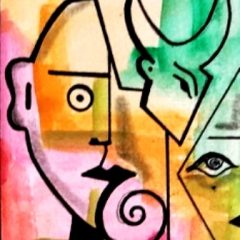
Jazz, as most know, is a kind of music, a genre, which was invented in the United States (hence US Classical Music) at, or around, the beginning of the XX Century. Some musicologists say that it «developed» from the singing of the Negro slaves and from their «blues», while others include in Jazz’s development European rhythms. Whatever the case might be, Jazz (first called Jass) surged from New Orleans and conquered the United States, then Europe, then the world.
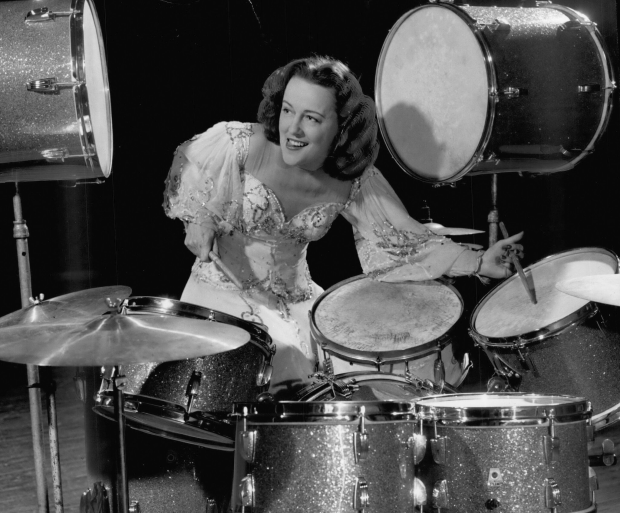
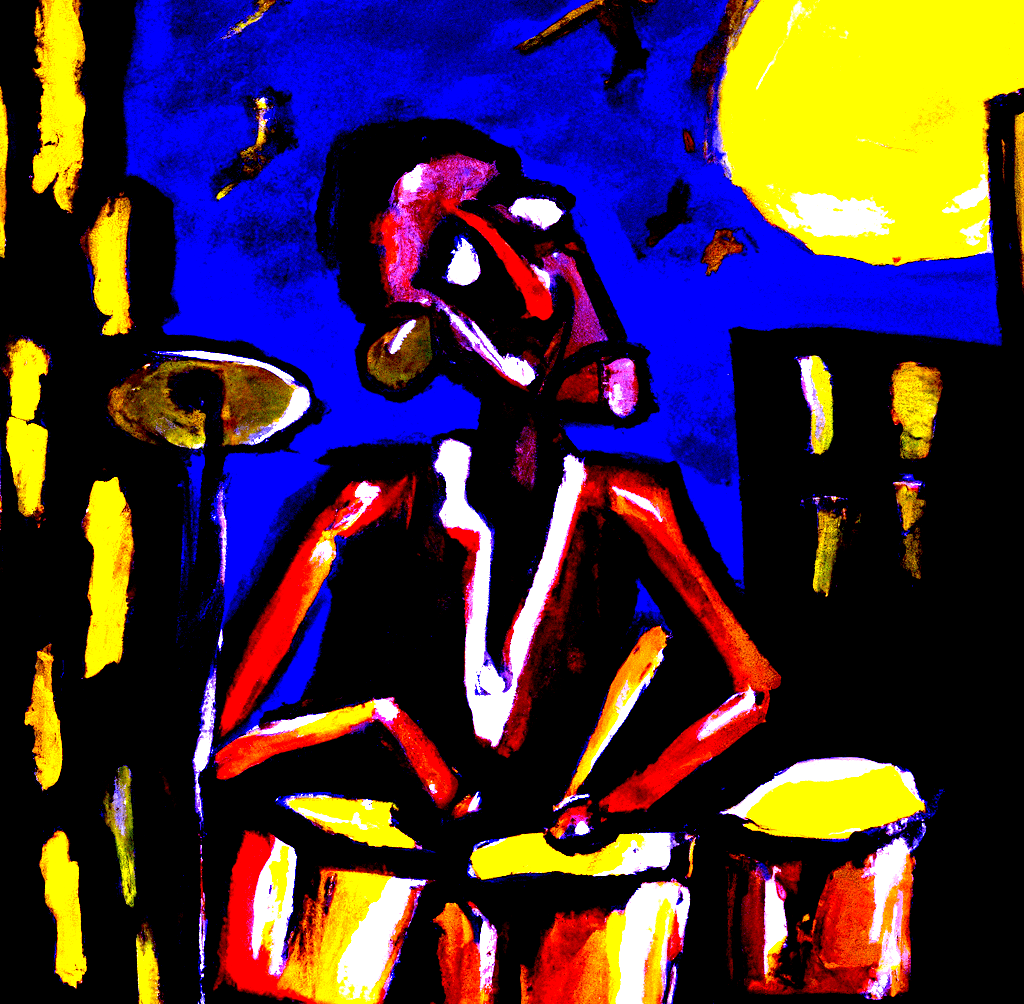
I love the simplicity of the idea and the complexities of its manifestations. It is highly complex music, but obeys only three principles: 1) Improvisation; 2) The musician as composer onstage; 3) Swing (or rhythm). That is all you need to create Jazz. So I have applied these three principles to my art and I do «Jazz Art» or «JaZzArT» as I like to call it.
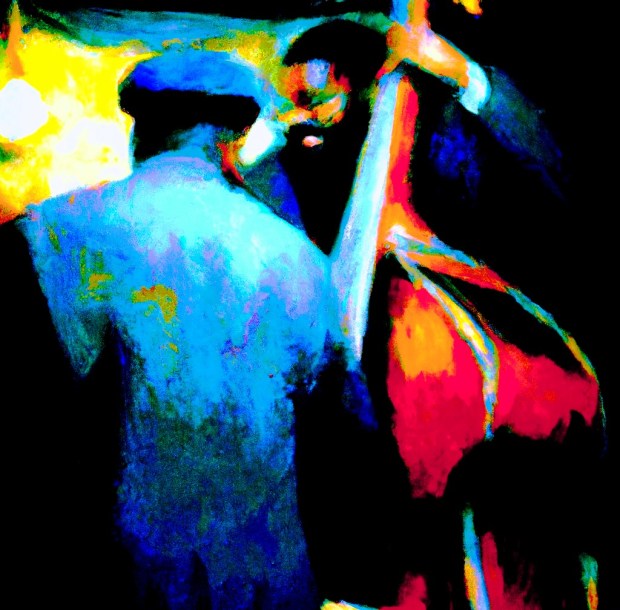
To me the colours are just as important as the figures in the composition. The colours are the «musician onstage being player and composer» within my jazzy structure. The idea of improvisation comes in as I am transferring the context of the composition from the sketchbook to the canvas, and the rhyth, or the «swing»? Well, that comes into play when I make the colours move, when I paint with powerful brushstrokes leaving behind their undisputable tracks so one can picture (and imagine) movement. Also the composition itself can represent a swinging jazzman jamming away onstage…



💛
Me gustaLe gusta a 1 persona
😊🙏😊
Me gustaMe gusta
Jazzy indeed…
Me gustaLe gusta a 1 persona
Thank you!
Me gustaMe gusta
Me encantan las pinturas y las imágenes.
Me gustaLe gusta a 2 personas
Gracias Azurea20! Un saludo y feliz semana.
Me gustaMe gusta
Well done. As usual.
Me gustaLe gusta a 1 persona
Thank you so much my friend!
Me gustaLe gusta a 1 persona
Beautiful artwork and excellent colour ☺️ Well shared 💐
Me gustaMe gusta
Great explanation, Francis. I always see and feel movement in your paintings.
Me gustaLe gusta a 1 persona
Thank you so much Janet! All the best.
Me gustaLe gusta a 1 persona
Love the explanation of your art work. I am surprised that you classify Jazz as American Classical Music.
Yes, it is a homegrown genre, but between Improv and the natural progress of any art form, I do not personally view it as classical based upon my years of studying classical music when taking piano lesson. Can you please expand on why you consider it classical music so that I may better understand the rational?
Me gustaLe gusta a 2 personas
Thank you so much Pat. It is not just me, many in the music world classify Jazz as American classical music. One, because it was invented in America (US) and constitutes a family of musical forms and practices; two because it is compositional and unique; three because it is just as complex and deeply entrenched in the US national roots.
Here is one of my references:
In 1984, the critic Grover Sales published Jazz: America’s Classical Music, which portrayed a grand artistic heritage. Sales saw jazz as a “miraculous cathedral” for all Americans, which “served as a fulcrum to overturn centuries-old fears and misunderstandings between white and black America that poisoned our national life.”Footnote 1 In this upbeat story, appealing narratives of art and nation subsumed sticky questions of race. Sales was not alone. From the mid-1980s, many critics and musicians presented affirmative, elevating, and tradition-conscious ideas of jazz, which were so conspicuous that it has become usual to periodize the years since as a “jazz renaissance.” Preeminent in this era are the trumpeter Wynton Marsalis, his mentors Albert Murray and Stanley Crouch, and their founding of Jazz at Lincoln Center. Even politicians got involved. In 1987, the US Congress passed the Jazz Preservation Act, which declared the music “a rare and valuable national American treasure.”Footnote 2 And, in 1993, Bill Clinton told a White House gathering that “jazz is really America’s classical music.”
Me gustaMe gusta
Thanks for providing all of that info. I appreciate the effort you put into answering my question.
Me gustaLe gusta a 1 persona
Just wanted to fill you in, because classical music is considered European, so Jazz is then the American version of classical music. It makes sense, no?
Me gustaLe gusta a 1 persona
Makes sense, yes. Thanks again. Wine time today?
Me gustaLe gusta a 1 persona
And I’ve never been good at learning the names of plants, flowers or vegetables, in Spanish, Valencian or English… Wine time? Hmm… wasn’t thinking about it but now that you’ve mentioned it, it sounds like a smashing good idea… Thank you!
Me gustaLe gusta a 1 persona
Salud. 🍷🍷🍷
Me gustaLe gusta a 1 persona
Salud! 🍷🍷🍷
Me gustaLe gusta a 1 persona
Thanks for explaining the connection between jazz and art! Fascinating.
Me gustaLe gusta a 2 personas
Thank you so much Vanya!
Me gustaLe gusta a 1 persona
Uno nunca termina de aprender. Tu explicación, bien sustentada, al relacionar sl Jazz con la música clásica, va abrir un debate muy interesante. Saludos Francisco. Es una satisfacción única disfrutar de tus pinturas.
Me gustaLe gusta a 1 persona
Muchísimas gracias Manuel, te agradezco mucho tus palabras. Si, se deben generar debates (civilizados) sobre el arte, la música y otros aspectos de la cultura.
Me gustaLe gusta a 1 persona
Eso engrandece nuestro conocimiento sobre todo para los que no somos expertos en esos temas. Gracias por compartir.
Me gustaLe gusta a 1 persona
Gracias a ti amigo mío. Feliz día.
Me gustaLe gusta a 1 persona
Very cool approach to your artwork! If you’re interested in the history of American music, you might enjoy the film «Rumble: The Indians Who Rocked the World.» It deals a lot with the unsung contributions of Native American musicians to jazz. 🙂 http://www.rumblethemovie.com/home
Me gustaLe gusta a 1 persona
Thank you very much Camilla. And I will look into the «Rumble» movie, sounds interesting and I appreciate the information. All the best!
Me gustaLe gusta a 1 persona