(«Qué»/Francisco Bravo Cabrera/All Rights Reserved)
When I started uni as a Fine Arts major conceptual art, in other words, performance art, was pretty strong. We had the performances of Marina Abramović and Ulai as well as of others. And of course we all knew about the conceptual «art» of Yoko Ono. But in our art school we had no classes, nor where we ever led towards that branch of «art.» And even when I switched to the Theatre Arts Department, the university did not consider teaching classes on how to be a performance artist. And I think they had the right approach. To me, in my opinion, performance art is more akin to theatre than to art, and conceptual art is more akin to nothing. I’ve no use for it. It is simply a way for talentless «artists» to «create» art that no one understands and that says nothing important. And do not forget, these are my personal feelings and opinions. Yours might be different and I will respect them.
So, here is a comparison:
Aspect
Traditional Art
Conceptual Art
Primary Focus
Skill, technique, and aesthetics (form, color, composition, craftsmanship)
Idea, concept, or social statement; the concept is often more important than the execution
Yoko Ono, Fluxus artists, Duchamp, Sol LeWitt, Abramović
Criticism
Can be conservative or formulaic; sometimes prioritizes aesthetics over ideas
Can appear pretentious, naive, or inaccessible; sometimes “idea-heavy” and lacking sensory impact
* I strongly disagree as I think it is pretentious, naive, meaningless and a useless experiment in elitism displayed as mediocrity. It might be interesting for the performer or the conceptual «artist» but pure rubbish to the rest of us.
What they teach at uni (nowadays) is that traditional art emphasises skill, execution and sensory impact (and I agree). And that conceptual art emphasises ideas and provocation, often at the cost of immediate clarity or beauty. Well, only very few of them bring forth ideas or provocation, some are just self-indulging machinations by talent-less «artists» having us all on.
(«Lázaro»/Francisco Bravo Cabrera/Derechos Reservados/All Rights Reserved)
LÁZARO (Escrita mientras escuchaba el piano concerto No. 20 de W. A. Mozart)
¿Quién ha soñado esto? Un sueño tan etéreo, yo envuelto en un sudario, y arropado en un misterio?
Ahora me sobra el tiempo, ¿Qué tiempo? El tiempo que ayer no tuve, pero que hoy me acaricia y me besa las mejillas, con unos trocitos de hielo ardientes que no se derriten ni bajo el sol, el sol de maravillas que broncea mi piel hoy.
¿Qué cosa es el tiempo sino los pensamientos ociosos del creador, cuyo amor hoy siento?
El tiempo no lo mido con un reloj, lo atesoro en una caja fuerte.
No soy dueño de mis sueños, pero los archivo.
No soy dueño de mi vida, pero la saboreo dulcemente.
Enfrentándome a todo lo que no soy, grito ¡Soy Lázaro estoy despierto! He soñado en tu cabeza y tú me has dado este cuerpo.
Un hombre me despertó, y ahora no lo encuentro. El sueño no lo recuerdo, Quizá tu sí pues era tuyo.
Soy Lázaro ¿Eterno? Si…
Lo único que tengo es tiempo, pero el tiempo me acecha, me tortura, me horroriza, y me refugio en el regazo de una dama que cosecha flores con fragancias venenosas. Entre ellas, una que me inspira a imaginarme cosas que jamás serán..
Soy Lázaro… Si me ves por los jardines, entre flores venenosas y entre historias milagrosas, ¿Me conocerás?
Francisco Bravo Cabrera – 05 de agosto de 2025 – Esmirna, Turquía
Vemos lo que queremos, sin darnos cuenta que lo vemos no es lo que es.
¿Por qué?
Porque hemos pintado la realidad con el color de nuestros sueños, la hemos ahumado en el horno de nuestros deseos, y la hemos embellecido con el brillo negro de nuestro dolor, y…
Nuestra vida cotidiana la hemos llenado con esa sarta de tonterías que nos cuentan, como aquello de que hay plátanos aromáticos, y que los anacardos son dulces. El olor amargo de sus mentiras nos seduce y nos hace pensar que lo feo es hermoso, y aun así, insistimos, una y otra vez, con voluntad inquebrantable, que debemos deleitarnos con la aroma de los plátanos, verdes o maduros, de Canarias o del futuro.
Pienso que viajamos hacia las lunitas azules que otros han imaginado…
Vivimos rodeados de desconocidos, que creemos conocer, pero que no los conocemos… Y por mucho que nos queramos convencer que compartimos luz y amor, estamos engañando al señor que ocupa la silla turca, pues hacer lo que se puede no es crecer, es mantenerse firmemente en el purgatorio del presente, sin escape ni futuro…
No queremos a nuestros ancianos porque ya no nos parecen útiles. Hemos olvidado el amor que nos dieron y todo lo que fueron. Si aún fueran útiles, ¿Los seguiríamos queriendo? Lo dudo, porque ya bien convencidos estamos de que no sirven. Somos unos desalmados abusadores. A los ancianos los apartamos, los escondemos, y los condenamos a los rincones oscuros.
Y nos imaginamos lunitas azules bailando con nuestro mundo de estupideces e ilusiones…
Mira, toca, prueba, huele, y deja que el viento, que roza tu piel, te acaricie, y no temas ni pienses que al viento te envicies, pues solo Dios sabe de dónde viene y a dónde va.
El agua, que moja tu pies en la orilla, viene de un océano que llora, y la que con sed imploras, de un río frío que ruge. El mundo, guiado por la voluntad de la mayoría votante, gira como un trompo donde lo han creado científicos urdiendo su plan, que disfrazan de leyes, teorías y aguinaldos, para saciar nuestra curiosidad e iluminarnos, aunque yo estoy seguro que nos mienten…
Dicen que hay una sola, pero yo sé que hay muchas lunitas azules que bajan a beber el agua de esta orilla gris y pedregosa.
No sé por qué corremos tanto, para llegar y no hacer nada. Creemos en lo que no existe, y nos hartamos de chismes durmiendo entre laureles. Siempre reformando lo perfecto, en los tribunales, disputas argumentando, y en el lodo transformando la realidad en ilusiones cantando a coro viejas canciones…
¿No podemos convivir sin pelearos? ¡No, ¡Qué va! ¡Es imposible! Porque nosotros tenemos la razón, ¡Nosotros! Y los demás no existen.
Así que toma todas tus lunitas, azules, rojas o verdes, grandes o pequeñitas, pues lo que te diré, charlatán, lo juro, te las puedes ir metiendo por el mismísimo culo.
26 SEP 2025 – Francisco Bravo Cabrera – Esmirna, Turquía
(«Little Blue Moons»/Francisco Bravo Cabrera/All Rights Reserved)
LITTLE BLUE MOONS
(Written while listening to The Seasons by Pyotr Ilyich Tchaikovsky)
We see what we want, and yet nothing is real. What we think we are seeing are mere fragments extracted from our dreams. We have burned reality with the flames of our repressed desires, and seasoned it it with slag, and filled it with the nonsense we are fed, like when they told us bananas are pedantic, and robots romantic, and sugar-filled beaches with dunes and a man on the moon…
I think we have conjured little blue moons in a universe someone’s invented.
We live surrounded by strangers we fancy and think we know well. But you don’t really know all these friends and these neighbours, so let me explain. There are wounds that won’t heal, though we mend them throughout an eternity. While thinking we’re doing the best that we can, we neglect our dear elders, forgetting the years that they’ve given us, forgetting the love they’ve unconditionally given us. Utility comes first in the minds of abusers, and when they judge you’re no longer of use, those vile, heartless users, they cast you aside, to a lonely exile, in dark, scary corners.
And still, though you may not see them, there are little blue moons that surround us…
Look… Touch… Taste… Smell… Feel the wind that circles around you and that keeps eagles soaring, you don’t know where it came from or where it’s going. Dip your feet in the sea that is weeping; have a drink from a river that’s roaring, while the world, steered by the will of the voting majority, spins round in circles in a space that’s imagined by the experts of science and the masters of tales, who have jointly devised a scheme filled with lies to deceive us, to control us they’re trying, though I know, without a doubt, they are lying…
They say there is one, but I know there are more little blue moons on this grey, stony plane.
We rush and we fret as we try to arrive to a bland nowhere land barely alive, where there’s nothing to say and nothing to do, where there’s nothing to see, where nothing is true, where nothing’s of import, not me and not you, Where they’re always constructing, where other’s have built, Cannot we decide to coexist?
No, such thing! Quite impossible! For us, we right, and we stand tall and strong, and all others, sans doute, are obviously wrong!
So take all your moons, blue or little or large, and shove them quite deep, yes, quite deep up your arse!
23 SEP 2025 – Francisco Bravo Cabrera – Izmir, Türkiye
(«Little Blue Moons»/Francisco Bravo Cabrera/All Rights Reserved)
LITTLE BLUE MOONS
(Written while listening to The Seasons by Pyotr Ilyich Tchaikovsky)
We see what we want, and yet nothing is real. What we think we are seeing are mere fragments extracted from our dreams. We have burned reality with the flames of our repressed desires, and seasoned it it with slag, and filled it with the nonsense we are fed, like when they told us bananas are pedantic, and robots romantic, and sugar-filled beaches with dunes and a man on the moon…
I think we have conjured little blue moons in a universe someone’s invented.
We live surrounded by strangers we fancy and think we know well. But you don’t really know all these friends and these neighbours, so let me explain. There are wounds that won’t heal, though we mend them throughout an eternity. While thinking we’re doing the best that we can, we neglect our dear elders, forgetting the years that they’ve given us, forgetting the love they’ve unconditionally given us. Utility comes first in the minds of abusers, and when they judge you’re no longer of use, those vile, heartless users, they cast you aside, to a lonely exile, in dark, scary corners.
And still, though you may not see them, there are little blue moons that surround us…
Look… Touch… Taste… Smell… Feel the wind that circles around you and that keeps eagles soaring, you don’t know where it came from or where it’s going. Dip your feet in the sea that is weeping; have a drink from a river that’s roaring, while the world, steered by the will of the voting majority, spins round in circles in a space that’s imagined by the experts of science and the masters of tales, who have jointly devised a scheme filled with lies to deceive us, to control us they’re trying, though I know, without a doubt, they are lying…
They say there is one, but I know there are more little blue moons on this grey, stony plane.
We rush and we fret as we try to arrive to a bland nowhere land barely alive, where there’s nothing to say and nothing to do, where there’s nothing to see, where nothing is true, where nothing’s of import, not me and not you, Where they’re always constructing, where other’s have built, Cannot we decide to coexist?
No, such thing! Quite impossible! For us, we right, and we stand tall and strong, and all others, sans doute, are obviously wrong!
So take all your moons, blue or little or large, and shove them quite deep, yes, quite deep up your arse!
23 SEP 2025 – Francisco Bravo Cabrera – Izmir, Türkiye
Vemos lo que queremos, sin darnos cuenta que lo vemos no es lo que es.
¿Por qué?
Porque hemos pintado la realidad con el color de nuestros sueños, la hemos ahumado en el horno de nuestros deseos, y la hemos embellecido con el brillo negro de nuestro dolor, y…
Nuestra vida cotidiana la hemos llenado con esa sarta de tonterías que nos cuentan, como aquello de que hay plátanos aromáticos, y que los anacardos son dulces. El olor amargo de sus mentiras nos seduce y nos hace pensar que lo feo es hermoso, y aun así, insistimos, una y otra vez, con voluntad inquebrantable, que debemos deleitarnos con la aroma de los plátanos, verdes o maduros, de Canarias o del futuro.
Pienso que viajamos hacia las lunitas azules que otros han imaginado…
Vivimos rodeados de desconocidos, que creemos conocer, pero que no los conocemos… Y por mucho que nos queramos convencer que compartimos luz y amor, estamos engañando al señor que ocupa la silla turca, pues hacer lo que se puede no es crecer, es mantenerse firmemente en el purgatorio del presente, sin escape ni futuro…
No queremos a nuestros ancianos porque ya no nos parecen útiles. Hemos olvidado el amor que nos dieron y todo lo que fueron. Si aún fueran útiles, ¿Los seguiríamos queriendo? Lo dudo, porque ya bien convencidos estamos de que no sirven. Somos unos desalmados abusadores. A los ancianos los apartamos, los escondemos, y los condenamos a los rincones oscuros.
Y nos imaginamos lunitas azules bailando con nuestro mundo de estupideces e ilusiones…
Mira, toca, prueba, huele, y deja que el viento, que roza tu piel, te acaricie, y no temas ni pienses que al viento te envicies, pues solo Dios sabe de dónde viene y a dónde va.
El agua, que moja tu pies en la orilla, viene de un océano que llora, y la que con sed imploras, de un río frío que ruge. El mundo, guiado por la voluntad de la mayoría votante, gira como un trompo donde lo han creado científicos urdiendo su plan, que disfrazan de leyes, teorías y aguinaldos, para saciar nuestra curiosidad e iluminarnos, aunque yo estoy seguro que nos mienten…
Dicen que hay una sola, pero yo sé que hay muchas lunitas azules que bajan a beber el agua de esta orilla gris y pedregosa.
No sé por qué corremos tanto, para llegar y no hacer nada. Creemos en lo que no existe, y nos hartamos de chismes durmiendo entre laureles. Siempre reformando lo perfecto, en los tribunales, disputas argumentando, y en el lodo transformando la realidad en ilusiones cantando a coro viejas canciones…
¿No podemos convivir sin pelearos? ¡No, ¡Qué va! ¡Es imposible! Porque nosotros tenemos la razón, ¡Nosotros! Y los demás no existen.
Así que toma todas tus lunitas, azules, rojas o verdes, grandes o pequeñitas, pues lo que te diré, charlatán, lo juro, te las puedes ir metiendo por el mismísimo culo.
26 SEP 2025 – Francisco Bravo Cabrera – Esmirna, Turquía
(«Antonio V»/Francisco Bravo Cabrera/All Rights Reserved)
Let’s talk about a great composer, Antonio Vivaldi…
Antonio Vivaldi (1678–1741)… This Venetian Baroque composer was a virtuoso violinist, and a Catholic priest. This aspect of his life surprised me but did not scandalise me as I recognised that he was a very spiritual man. We know him mostly for his instrumental concertos, particularly for the violin, and cello. And also for his sacred choral works and over forty operas. His most famous work is The Four Seasons, a set of four violin concertos that musically depict scenes from each season of the year. My personal favourite you can hear in the video below, which is «Winter». I have chosen a version done with cello, one of my favourite string instruments. Vivaldi was a major influence on the development of Baroque music. His style was energetic, vivid and filled with imagery, and rhythmic innovation. This is his lasting legacy.
«Winter» from The Four Seasons
«Winter/L’inverno» is the final concerto in The Four Seasons, composed around 1723. It’s written in three movements:
Allegro non molto – Depicting harsh winds and shivering cold.
Largo – Slow, lyrical, portraying warmth and rest by the fire.
Allegro – Representing the way we slip, slide, and carefully walk on ice, and ending with a return to the stormy chill.
Each movement is accompanied by lines of a sonnet, possibly written by Vivaldi himself, vividly describing the season’s scenes. The music is highly descriptive, using rapid scales and dynamic contrasts to evoke the feeling of winter’s intensity.
This is the sonnet that accompanies «Winter«.
«Winter» – (This is my own free translation from the Italian original)
I. Allegro non molto
My lips tremble…
it is icy cold…
the breath of the wind rips through my skin
and I run stamping my feet
while my teeth chatter from the cold.
II. Largo
I find comfort by the warmth of the fire
through the window I see many soaked by rain.
III. Allegro
I walk slow and cautiously on the ice accumulated
on my sidewalk,
I fear falling,
yet every step I take is like I’m gliding
and I am falling, and falling once again
until the ice cracks, breaks and opens
and I feel the thrill of the winds as they battle one another
like me they feel the joy that winter brings!
Because the verses correspond to musical elements in the concerto, «Winter» is one of the earliest and clearest examples of program music. i.e. music that tells a story or paints a picture.




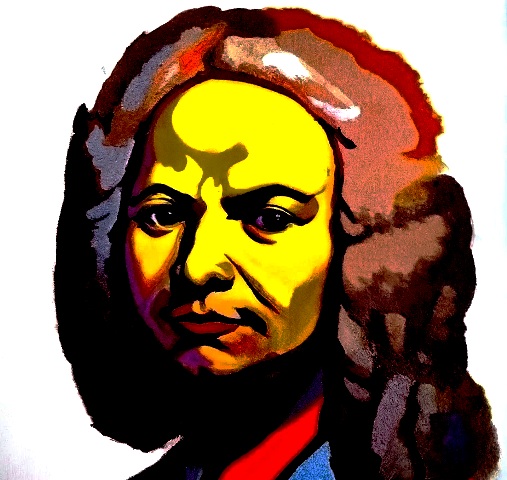
 JaZzArt en València