Y mare meva que desastre collons!
Faith saved us from the savages that we were, losing faith makes us savages again
Y mare meva que desastre collons!
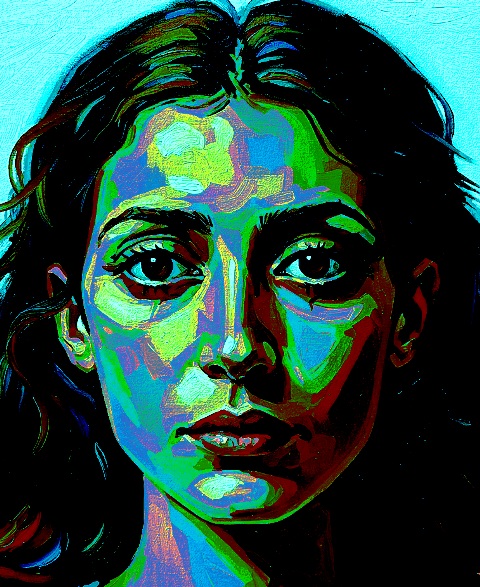
Una gran poetisa y pintora, ya veréis…
Nació en Avellaneda, una ciudad de la provincia de Buenos Aires, Argentina en 1936. Estudio Filosofía y Letras en la Universidad de Buenos Aires, pero también estudio pintura con Juan Batlle Planas, pintor surrealista argentino. De 1960 al 1964 Pizarnik vivió en París y trabajó para la revista Cuadernos. Además publicó poemas y críticas en varios diarios, estudió historia de las religiones y literatura francesa en La Sorbona. Cuando regresó a Buenos Aires, Pizarnik publicó tres de sus principales volúmenes: Los trabajos y las noches, Extracción de la piedra de locura y El infierno musical, y su trabajo en prosa La condesa sangrienta.
Aunque en 1969 recibió una beca Guggenheim, y en 1971 una Fullbright, Alejandra, el 25 de septiembre de 1972, mientras pasaba un fin de semana fuera de la clínica psiquiátrica donde estaba internada, se suicidó ingiriendo cincuenta pastillas de Seconal, un barbitúrico. Fue una gran escritora que dejó un valioso legado para la literatura latinoamericana.
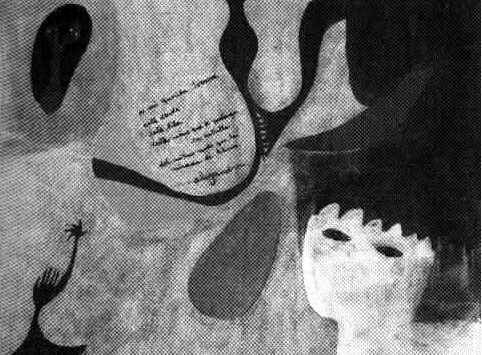
Pero, hoy y aquí, vamos a fijarnos en el trabajo visual, o sea, vamos a echarle una mirada, breve, a Alejandra como poetisa de los pinceles y los colores…
+++
A great poetess and painter, you will see…
She was born in Avellaneda, a city in the province of Buenos Aires, Argentina in 1936. She studied Philosophy and Literature at the University of Buenos Aires, but also studied painting with Juan Batlle Planas, an Argentine surrealist painter. From 1960 to 1964, Pizarnik lived in Paris and worked for the magazine Cuadernos. Additionally, she published poems and critiques in various newspapers, studied the history of religions and French literature at the Sorbonne. When she returned to Buenos Aires, Pizarnik published three of her main volumes: Los trabajos y las noches, Extracción de la piedra de locura, and El infierno musical, as well as her prose work La condesa sangrienta.
Although she received a Guggenheim Fellowship in 1969 and a Fulbright in 1971, Alejandra committed suicide by swallowing barbiturates, specifically Seconal, on September 25, 1972, while spending a weekend away from the psychiatric clinic where she was hospitalized. She was a great writer who left a valuable legacy for Latin American literature.
However, today and here, we are going to focus on the visual work, that is, we are going to take a brief look at Alejandra as a poetess of brushes and colors…


GRACIAS – CHEERS
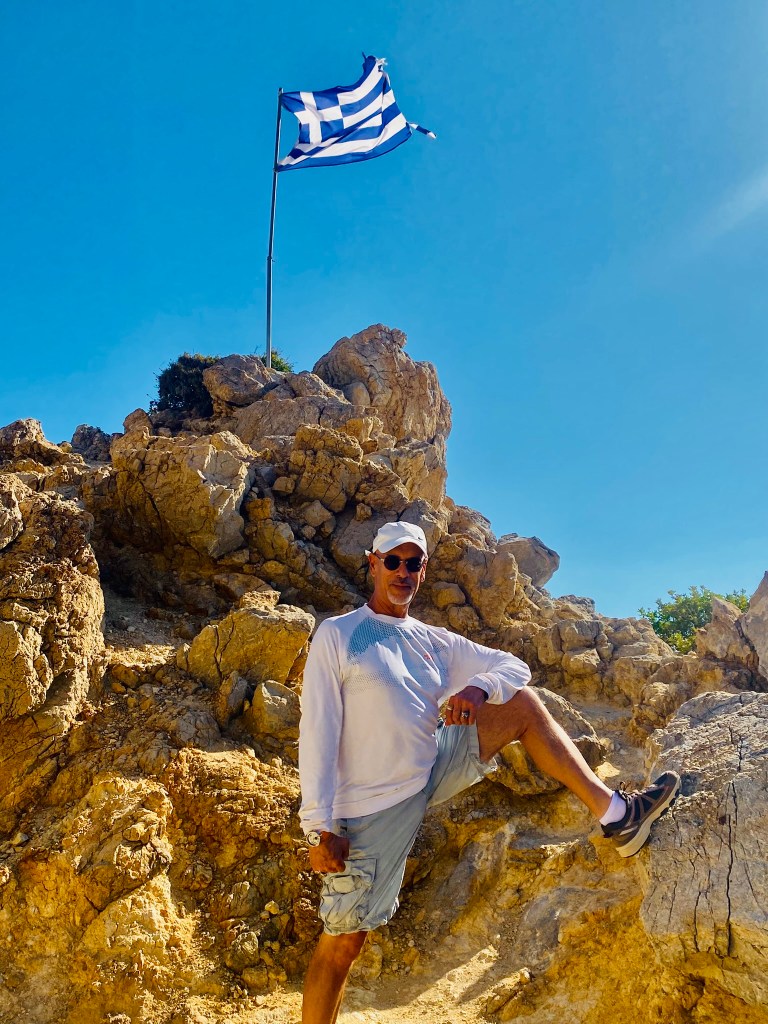
This is really my little paradise in the Aegean Sea…
CHEERS

Conversation with my Pen I was searching for my pen one evening,when I found her resting quietlybetween the pages of my diary. She seemed shy as I …
Introducing the Beautiful Poetry of Vijay Verma (Editor Francisco Bravo Cabrera)
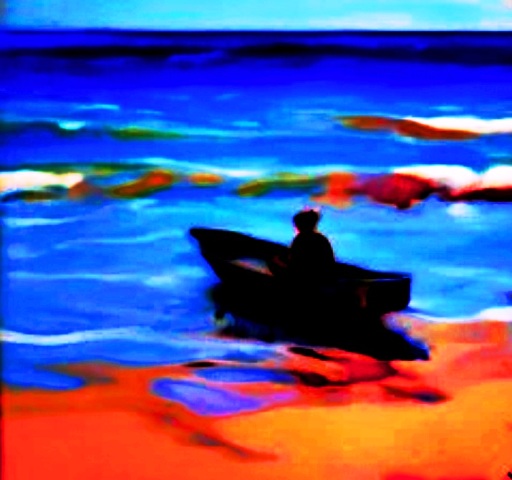
Más Allá, en la Orilla
Hay hombres que lanzan sus redes
en un mar donde el viento traiciona,
las mareas cambian,
y sus barcas, aunque parecen ir flotando,
sin rumbo van navegando,
y el fracaso los va agotando
y pierden el camino.
Porque el camino,
en la superficie del mar,
va ser camino cambiante.
¿Qué van a pescar?
Los peces se irán,
y las buenas intenciones
nunca serán suficientes
para llegar al cielo.
Yo me detengo a pensar y,
más allá, en la orilla,
inspirado por el Espíritu que me guía,
veo otro mar que no tiene fin,
y que cubre los caminos
limpiándolos con sus aguas,
que fluyen libremente.
Un mar donde la abundancia,
se manifiesta eternamente,
y que está siempre presente
delante de mí y detrás.
Un mar sin fin…
Lleno de peces que abundan…
El pescador despierta a la vida,
cuando abre alma y corazón,
pues la llama de la fe,
no se apaga,
ni se olvida,
de su ser
es la razón.
Yo,
con mucho entusiasmo,
le canto a todas las almas,
con la voz con la que rezo,
para enseñarles la calma,
la calma que va creciendo,
cuando en Su amor se descansa.
Respondiendo a su llamado.
he abandonado mi barca…
En la orilla vi las huellas
que en la arena había dejado,
el que me enseñó a rezar,
el que en el viento me ha hablado,
el que me mostró un camino,
el que siento aquí a mi lado.
Hay hombres que luchan
contra el viento y las mareas,
para lanzar allá redes,
queriendo solo pescar
peces carentes de vida,
que en la barca,
al aire,
mueren…
Déjate llevar, fiel pescador,
hacia un mar que fluye en calma,
donde se nutra tu alma,
donde la pesca es mejor.
No necesitaras redes,
ni remos, tampoco barca,
solo tu fe
y lo demás
en las aguas
lo encontrarás.
Francisco Bravo Cabrera – Valencia, España, 25 de octubre de 2025
Regresamos en pocos días a seguir ofreciéndoos artículos de arte, música y poesía, pero ahora abarcamos otra gira de trabajo por nuestra España. Disculpad si no podemos leer vuestras entradas o comentar. Un abrazo a todos.
+++
We will be back in a few days to continue to post articles on Art, Music, Poetry and Travel. But now we are on a working tour in parts of our Spain. Please forgive that we are not able to read and comment on your posts as usual. Big hugs to all.
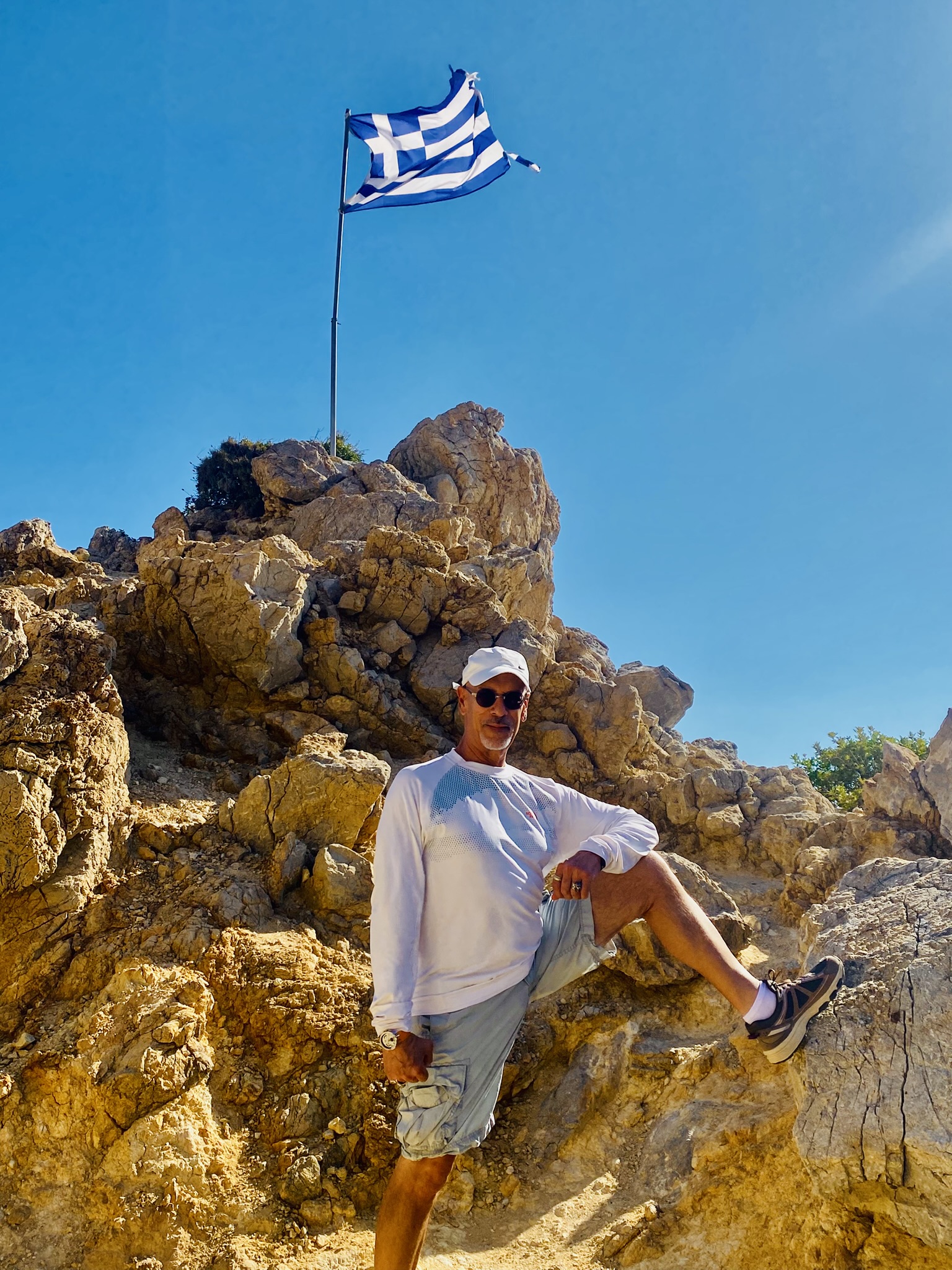
This is really my little paradise in the Aegean Sea…
CHEERS
Y la búsqueda también es arte…

IN YOUR EYES, I SEE In your eyes, bro, I see anger, despair, and determination.But please. Please do not approach the line any more. I don’t want to …
Featuring the Poetry of C. J. Anderson Wu – (editor Francisco Bravo Cabrera)
This is certainly not a top 5 for me at all, but it is a top 5 according to many sources in the current art world. So, if you ask me if I agree, I would say I did not, at least not entirely.
David Hockney (UK)
Hockney was born in Bradford, UK in 1937. His style is consistent, always with bright colours, emotional realism I would venture to say, and he also does a lot of iPad paintings, in other words digital art and exploration (I do a lot of that and I do like Hockney).
He matters because he is considered a modern master of perception and colour (by «experts»). He seems to be quite able to bridge classic British painting with a new digital optimism. His signature works: A Bigger Splash, Portrait of an Artist.
Jenny Saville (UK)
Saville was born in Cambridge in 1970. Her style is to create monumental figurative paintings of the human body. Her paintings are raw, visceral, unapologetic and quite impressive I may add. (This painter I do really admire).
She matters (and I agree) because she is one of the strongest contemporary voices in figurative painting today. She has reclaimed the human body in art and paints her subjects without objectification but with her own tenderness and visual force. Her signature works are Propped and Plan.
Cecily Brown (UK/US)
Brown was born in London in 1969. Her style is abstract expressionism with a merging of figuration, that also blends with movement, emotion, and sensual chaos. (Although I am not a fan, I do respect her work).
This artist does matter as she has become quite influential as an abstract painter, and many consider that she breaks new life into painting itself. (Not too sure about that last statement).
Njideka Akunyili Crosby (Nigeria/US)
Njideka was born in Nigeria in 1983. Her style is what is called layered portraits which combine painting with collage and photographic transfers. (I am not too thrilled with her work). However, she matters, I suppose, because “they” say she is a leading voice of global contemporary art, exploring identity, diaspora, and memory.
Kerry James Marshall (US)
Marshall, born in Alabama (US) in 1955, paints large, deeply narrative portraits of Black life and beauty. He matters because he is hailed as one of the most important American painters of our time; his work reshapes how history and presence are painted. (Not to me)
Well, next time I will do a full top 10, but now I want to know what you think. Do you agree with the «experts» or do you have your own opinions, or even agree with me? Let me know so that we can keep the conversation on art going.
CHEERS

 JaZzArt en València