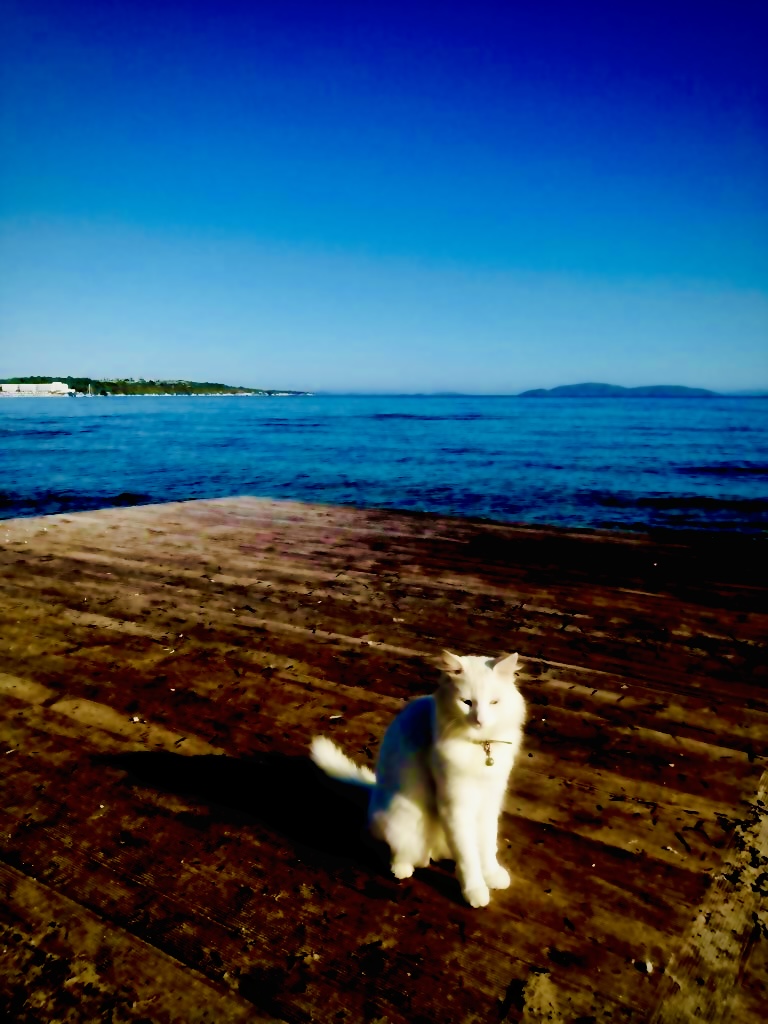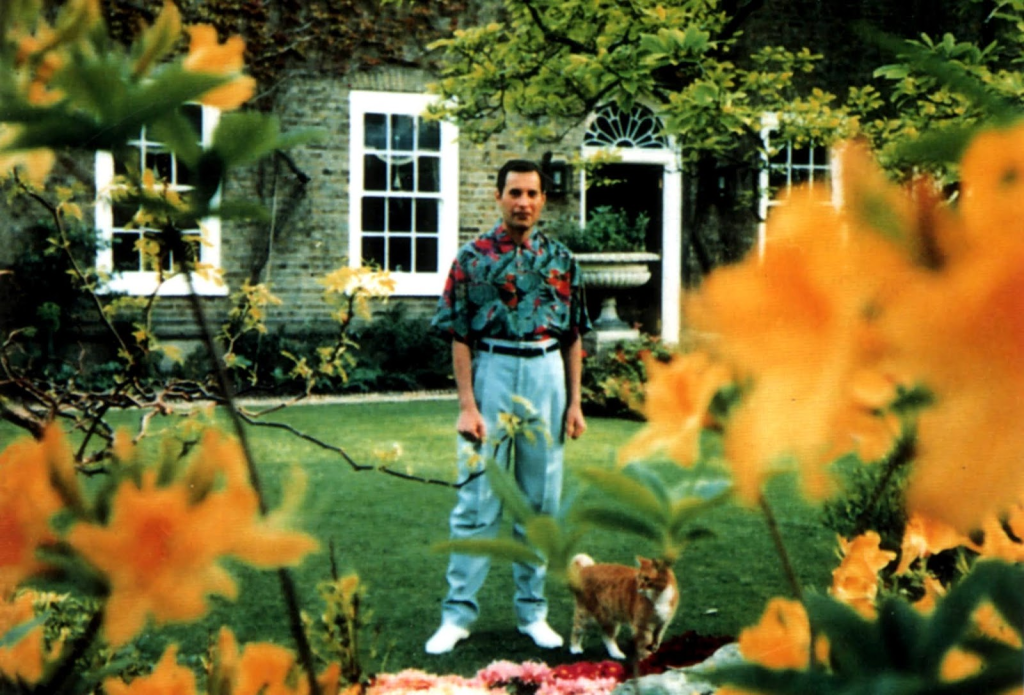
#art, «A Face in the Mirror» (Euro-Ku*)

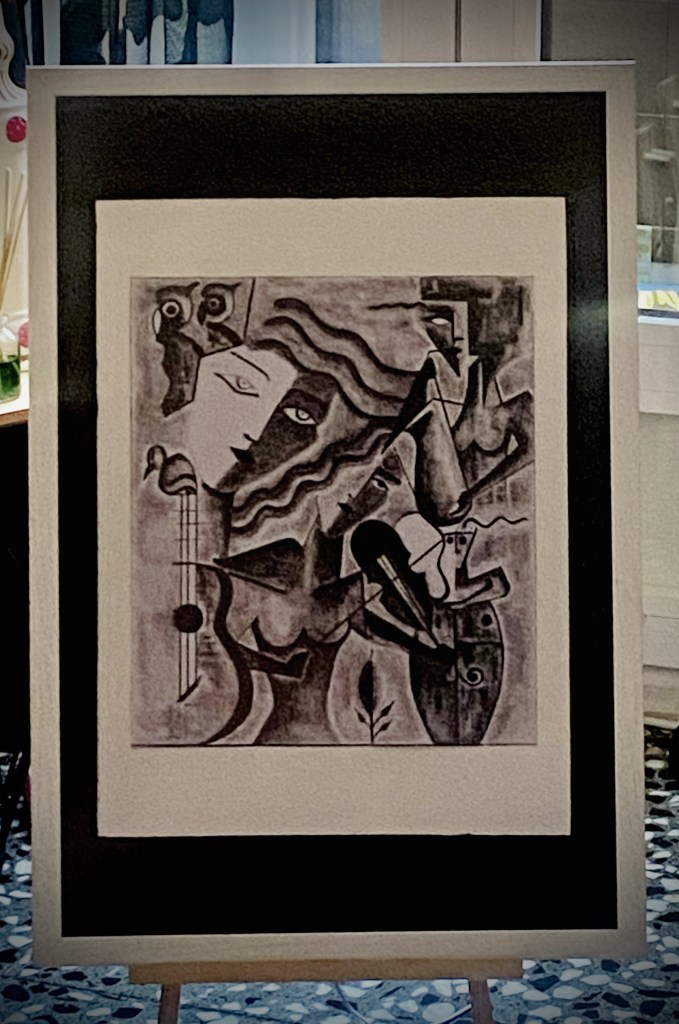
(Image property of FBC/Omnia Caelum Studios Valencia/All Rights Reserved)

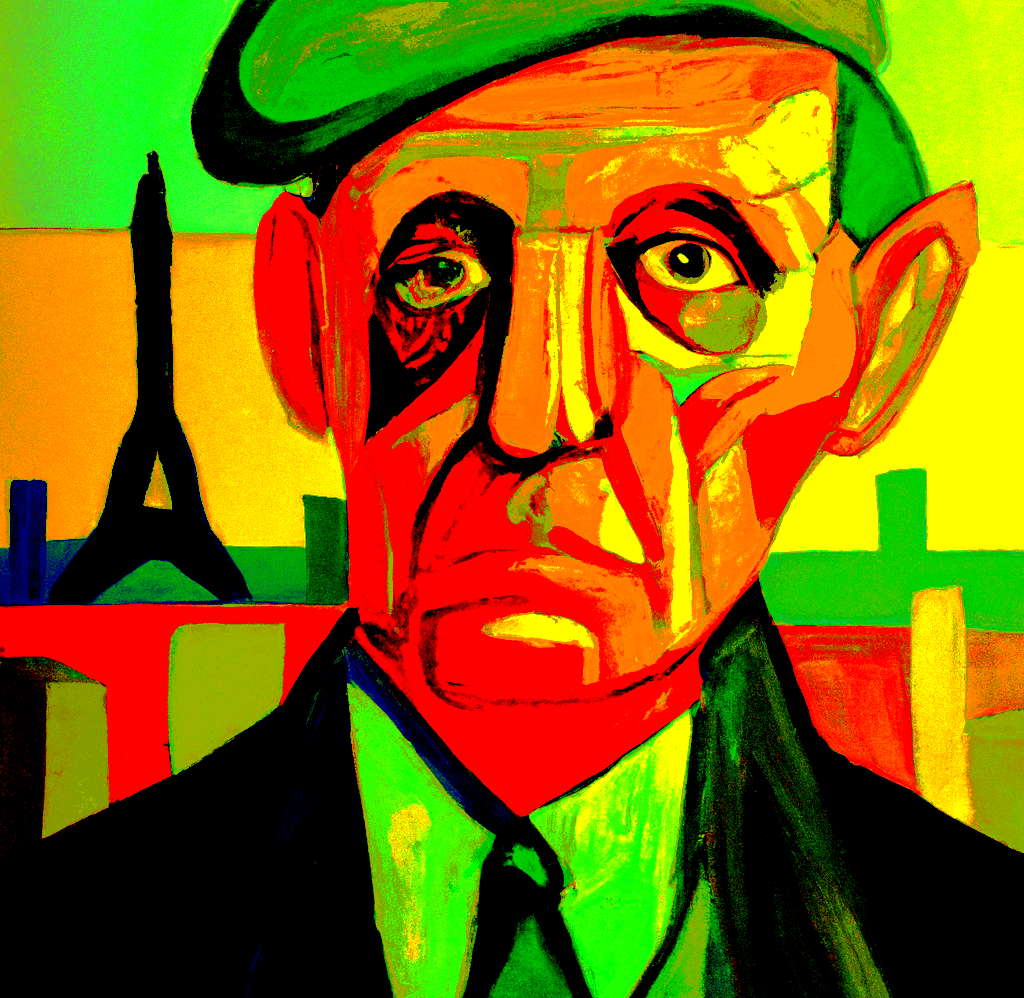
Is this your face that consoles me when I’m tired, that looks at me with loving eyes that give my weary soul the wings to fly out of this deep ravine, so damp and dark, where it now lives,

and is this your voice that calls me to attention, that orders me to listen, to be patient, and guides me to still waters to absorb their soothing calm,

and are these your thoughts that reach me, that teach me to understand and to accept, and is this your hand that heals the many wounds that life, unkind, has carved upon my skin?

C.2023, Francisco Bravo Cabrera, 03 APR 2023, València, España

+++

On the 9th of February, 2022, I published a post on my blog about a new poetic form that I had recently developed and called the «Euro-Ku» and since then I have been writing Euro-Ku in English and Spanish, and soon in Valencian. I have been thrilled by the reception the new form has received from wonderful poets/writers that I greatly admire and I would like to see more poets take the challenge and work the form. And if they are kind enough, I would greatly appreciate a mention as the inventor of the form.

The article says it all, but in synthesis I will only add that a Euro-Ku is an homage to the Japanese poem Haiku but done from a Western perspective, from a Western cultural position and experience, which can never be the same as that of the Eastern experience that created the Haiku. The Ameri-Ku, that my dear friend and incredible poet Joni Caggiano (see her work on Masticadores India and Masticadores USA as well as Spillwords) has developed, is equal to the Euro-Ku but reflects a unique American perspective, which is totally different from the European worldview.

So a Euro-Ku is a poem in three verses, without any syllabic count restriction and without needing any reference to weather or other things. However, it does require an original, unedited illustration (a photo/painting/drawing/engraving) which is the intellectual and artistic property of the author and which relates as a visual image to the written word. The three verses must be coherent, logical, flow one after the other to complete a phrase, an idea, a thought or a fancy. But the verses cannot be independent of each other or flow off into space as in Zen Haikus.

Hope you try…

Cheers…

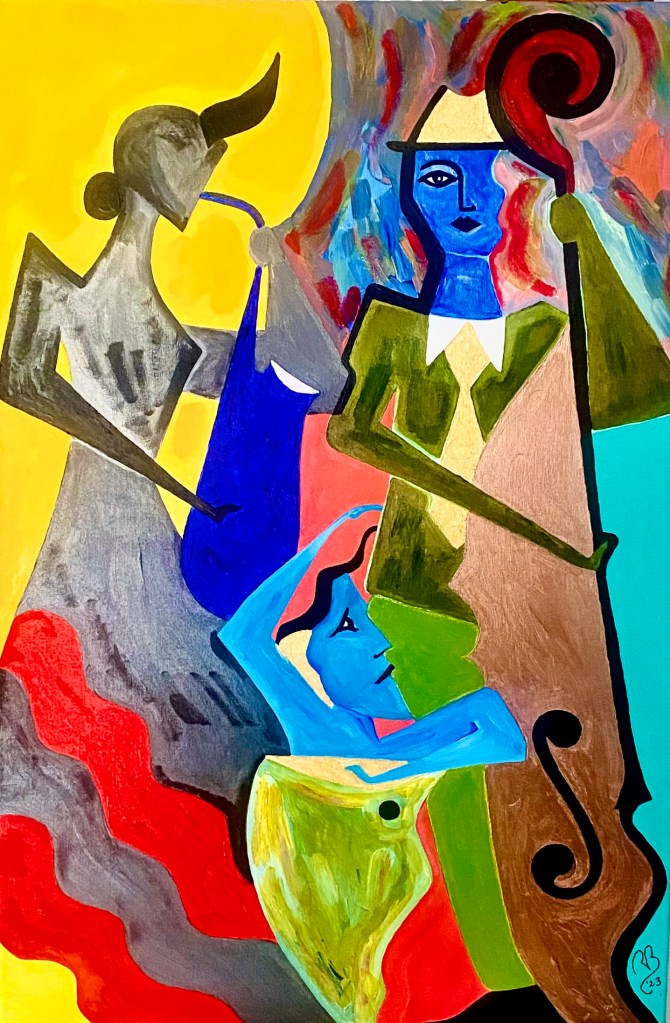
#art, «Sextus» now at Omnia Caelum Studios Valencia

(«Sextus» Image property of FBC/Omnia Caelum Studios Valencia/All Rights Reserved)

Este es mi nuevo cuadro. Se titula «Sextus» y lo he pintado con colores acrílicos sobre tela y mide 50x100cm. Esta hecho en el estilo que he venido desarrollando a poc a poc hace unos años, el surreal-expresionismo. Para mi pintar un cuadro es escribir un poema con imágenes compuestas sobre la tela que se identifican, se relacionan entre si y con vosotros, los que miráis el cuadro desde lejos. Un cuadro para mi es un tomo de filosofía, pero no de esas que hablan de los epicúreos o de los sofistas, si no de la filosofía actual de la vida que te dice que hay que comer, beber, ganar, luchar y descansar.

¿Que pensáis vosotros? Contestadme: ¿Los cuadros se comunican con vosotros? ¿Que hay en un cuadro que logra relatar una historia, escribir un poema, expandir la cultura, hacer filosofía, evocar emociones? Decidme, ¿Puede el arte hacer todo eso? ¿Lo logran hacer los cuadros? ¿Se puede equiparar el arte, o sea la pintura con la música? ¿Puede un cuadro transmitir emociones? ¿Sera todo esto arte o artesanía? ¿Serán los pintores artistas o artesanos? ¿Hace falta el mismo grado de perfección artística para componer una sinfonia como para pintar un cuadro? ¿Son mas sensuales los bailarines que los que forman parte de una composición en un cuadro? ¿Es un libro una obra mas completa que un cuadro?

¿Quien me responde? Espero que seas tu…

++++++++++++++++++++++++++++++++++++++++++++++++++

What makes a painting communicate? What makes a painting tell a story, become a poem, expand culture, philosophy, evoke emotions? Does art really do all of that? Is art the equivalency of music? Can a painting transmit feelings? Well is a painting art or artisanry? Are painters artists or artisans? Is the degree of art necessary to compose a symphony the same as what it would take to compose a painting? Is a dancer more sensual than a part of a painting’s composition? Is a book a more complete whole than a painting?

Who can answer all or any of these?

OMNIA CAELUM STUDIOS VALENCIA PRESENTS

(2023)

Gracias…

Cheers…

#poem, «En el campo y en el pueblo» (Euro-Ku)

(«Telarañas»/Foto de Francisco Bravo Cabrera/Derechos Reservados)

En el campo, donde el viento nos seca el sudor y el poniente no sofoca, nos ha llegado el momento de volar como un halcón y de anidar entre flores, que en otoño se durmieron y que ahora lucen sus colores,

mientras tanto allá en los pueblos ya los dientes no mastican carne sana, ni beben de la pasión olvidada entre dos sabanas, manchadas de orujo y hiel, hartadas de madrugadas, escondidas las heridas bajo tres sucias almohadas,

Pero el sol sigue su curso sin desviarse ni un paso y la luna, que refleja del halcón sus aletazos, nos mira y nos da un repaso, al campo también  y al pueblo, y a las aburridas almas que se comen a pedazos, sintiendo en hueso el calor, viviendo entre telarañas van lamiéndose el sudor…

El Euro-Ku lo desarrollé en febrero de 2022 para hacerle justicia al tradicional Haiku desde mi punto de vista, mi cultura, mis experiencias y mis historia, ya que he nacido en occidente pero admiro el arte y la filosofía del oriente. Se compone un Euro-Ku con una foto inédita propiedad del mismo autor, tres estrofas, de cualquier cantidad de silabas que se unen para formar un entero lógico y coherente. En mi blog, VALENCIARTIST (www.paintinginvalencia.com) he publicado varios, en castellano y en inglés.

Gracias…

.

#art, El faraón de plata – The Silver Pharaoh

(Foto/Photo Ancient-Egypt.com.uk)

¿Sabíais vosotros que la plata en el antiguo Egipto era mas preciosa y valiosa que el oro? Pues lo era y este faraón, que para mi es un total misterio y me tiene flipando, mandó a que le hicieran un sarcófago de plata solida que pesaba toneladas…

Y, ¿De donde ha salido este gran rey de la antigüedad? ¡Resulta que hallaron su tumba en 1940! Y estaba intacta. Se llamaba Psusenes I, de la dinastía XXI y gobernó de 1039 a 991 a. C. y da la casualidad que su nombre, Pasebajaenniut Meryamon, significa «La estrella que aparece en la ciudad,» y también «amado de Amón.» (Amón es el dios de la creación).

Os dejaré algunas fotos para que flipéis también. Y os digo, no soy egiptólogo, pero como amante de la historia, que sí soy, siempre me interesó mucho el antiguo Egipto, y para mi, la única tumba que habían descubierto, casi entera y de mucha fama fue la del faraón Tutankamón. Ni en un curso de egiptología que hice en la Universidad Autónoma de Barcelona me hablaron de este gran señor.

¿Qué está pasando?

Y vosotros, ¿Conocíais a este faraón, el faraón de plata?

(Mascara funeraria de oro macizo/foto wikipedia commons)
(Foto Historic Mysteries)
(By Jerzy Strzelecki – Own work, CC BY-SA 3.0, https://commons.wikimedia.org/w/index.php?curid=3254717)

Gracias y espero vuestros comentarios…

Have You Ever Heard of the «Silver Pharaoh?»

(Photo Pinterest)

Well, I always thought that the greatest discovery had been the tomb of Tutankhamun, with all the items of gold, the chariot and that incredible funeral mask…

(Death Mask from innermost coffin, Tutankhamun’s tomb, New Kingdom, 18th Dynasty, c. 1323 B.C.E., gold with inlay of enamel and semiprecious stones (Egyptian Museum, Cairo) (photo: Roland Unger, CC BY-SA 3.0))

But wait, not so fast, there’s something strange about this death mask as well. I clearly see the goddesses Nekhbet and Wadjet on his brow. Nekhbet was the most important goddess of Upper Egypt, while Wadjet for Lower Egypt. This symbolised his reign over both. I could have sworn it was only the cobra that was on that death mask before…

In any event, freakier still is the appearance now of this «Silver Pharaoh.» Although I am no historian, and also not an Egyptologist, I’ve always loved the history of ancient Egypt and I did take a class at the Universidad Autónoma de Barcelona (Autonomous University of Barcelona) on Egyptology and no mention of this wonderful king was made.

In case you’ve never heard of him, well, the «Silver Pharaoh» is called the «silver pharaoh» because of his inner «silver coffin,» inlaid with gold. It is solid silver, a metal more rare than gold in ancient Egypt, and weighs tons.

(Photo Jerzy Strzelecki)

Allow me to introduce you to pharaoh Psusennes I, the third pharaoh of the XXIst Dynasty. He reigned between 1047 and 1001 BC. His original name was Pasibkhanu, which means «The Star Appearing in the City.» His tomb was «discovered» in 1940 and it is the only tomb, so far, discovered completely intact. Tutankhamun’s tomb had been robbed at least two times.

(Photo Wikipedia Commons)

This is his funerary mask, recovered intact. It is made of solid gold and lapis lazuli, with inlays of black and white glass for the eyes and eyebrows. Psusennes I’s death mask is one of the greatest masterpieces of the Cairo Museum.

Now, how did all of this get past us?

(Photo Pinterest)

Now I want to know what you think…

Cheers…

#music, A Song for a Saturday Afternoon

(The Kinks «Apeman»/Foto Facebook)

So we are so sophisticated and so civilised because we are Homo Sapiens? Bollocks! We’d be happier, freer, more peaceful and charming if we were swinging from the trees eating bananas all day… Well, at least that’s what Ray Davies says in «Apeman» a phenomenal song from the Kinks’ 1970 album Lola Versus Powerman and the Moneygoround, Part One.

«Apeman» was released in 1970, and although it did not do so great in the US, it did become a major hit in the UK. Some may think the references and even the way Davies sang the song may not be politically correct in these days of the new puritanism where everything has to be sanitised, but I say who cares, I am not a politician and I don’t have to act, think, or belief in any of the things that the Pharisees of our time think is proper.

«I’m an apeman, I’m an ape-ape man, oh I’m an apeman! I’m a King-Kong man, I’m a voodoo man, oh I’m an apeman, I’ll be your Tarzan and you be my Jane, we’ll sit in the trees and eat bananas all day, just like an apeman.»

(The Kinks in 1971/Photo Sounds of 71)

Cheers…

#art, Some Truths About Picasso…

(Picasso dancing in front of «Bathers at La Garoupe»/Cannes, La Californie/July 1957/photo by David Douglas Duncan/private collection/rtve)

Pablo Picasso, genius of art, genius of the XXth C. that opened art to distinct styles such as cubism and the inventor of the collage. The man with the golden touch that turned any painting into a wonder, a priceless wonder. It has been said that he was a prodigious child and that from the moment a pencil came into his hand he started creating masterpieces. Actually, the anecdote is that the first word he tried to pronounce was «piz» (or something like that) which was a request for a «lápiz» which means pencil in Spanish.

Then it is said that his first painting, the one below, was something incredible for a lad of nine. But is it really that great? And to judge we have to also add that during those first nine years little Pablo was exposed to drawing, painting and anything and everything related to art as his father was an artist and a professor of art.

(«El picador amarillo»

In any event, Pablo grew up in a pampered environment and with an artist father that was guiding him, teaching him and preparing him for the admission tests to the Academia de San Fernando, the most prestigious art school in the Kingdom of Spain. He finished all the requirements, i.e. the entrance examination, in one week. But not so fast, don’t be too fascinated.

First, let’s look at the background. His father, an artist and art professor, guided him, rented a private studio for him in Barcelona (which is where the family was living at the time), also used his influence and contacts to get Pablo to be allowed to take the entrance examinations and prepared him. I can tell you that if you attend a private academy, or if an artist prepares you, you can take the examination and finish it in a week as well. That is no mystery and I am sure that many others have done it as well.

(«Science and Charity» painted at age 16)

As far as his first exhibitions… Well, here again, his father helped him immensely and his talent, I do have to say that his work ethic, his untiring work paid off tremendously, making him a talented young artist. But that he was a genius or a super-gifted artist at that age, well, we just don’t know. It is impossible to know how Michelangelo or how da Vinci painted at the age of nine, or thirteen. There are many art students who can paint that way but they just didn’t have the luck Picasso had. And Picasso had plenty of good luck.

(«Portrait of Aunt Pepa» panted at 15 years of age)

Now, do not get me wrong, I am a great admirer of Pablo Picasso and the portrait above, of Tía Pepa, is a masterpiece, I mean she is there, she is alive…

So, Picasso was a great painter and for me an inspiration and a mentor. But we have to take all the hype and adulation with a grain of salt. He did great things in art, but it was not intuitive or anything like that. It was training, schooling, education and hard, very hard work. That is the road to success in art but if you do not have what Picasso surely had, luck, there is a chance that your genius will never be known…

Spotlight Art – Menage No.1 – A painting by Francisco Bravo Cabrera @ Rosa de Valencia Art — Art, Music, Photography, Poetry and Quotations

Originally posted on Rosa de Valencia Artist Representative: («Menage No.1» by Francisco Bravo Cabrera. Image property of FBC, Omnia Caelum Studios Valencia. All Rights Reserved) Surrealism is an art movement … Surreal-Expressionism

Spotlight Art – Menage No.1 – A painting by Francisco Bravo Cabrera @ Rosa de Valencia Art — Art, Music, Photography, Poetry and Quotations

#art, «Caras, abstraccion y el Jazz» – «Faces, Abstractions and Jazz»

(Morning coffee/All Rights Reserved)

Aquí en Omnia Caelum Studios no solo hacemos arte, pero estudiamos arte porque arte es filosofía, psicología y mucho mas… Yo lo veo así…

«La cara, el gran símbolo de nuestra existencia… La abstracción, la negación de la existencia… el Jazz, la síntesis.»

++++++++++++++++++++++++++++++++++++++++++++++++++

Here at Omnia Caelum Studios we not only do art but we study art. Art is philosophy, psychology and more… This is how I see it:

«The face, the great symbol of our existence… The abstract, the negation of existence… Jazz, the synthesis.»

OMNIA CAELUM STUDIOS PRESENTS

(2023)

Gracias…

Cheers…