Informando – Information announcement

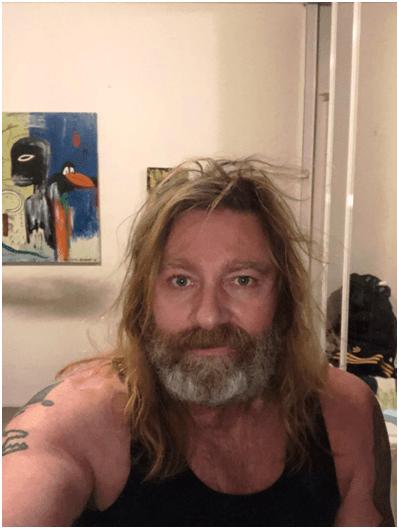
(Francisco/Bodo/Representado por un actor/Actor portrayal)

Os ruego me disculpéis por no atender VALENCIARTIST como de costumbre, pero estoy en una gira por el sur de mi país inspirándome en las montañas y los grandes valles y conociendo gente maja y divertida. He dejado a Omnia Caelum Studios Valencia en muy buenas manos pero son manos que no manejan el blog. Salud.

+++

Please forgive me for not attending to your likes and comments. I am on tour of the south of my country. Here I am seeking inspiration in the mountains and the valleys. Omnia Caelum Studios Valencia I have left in good hands that unfortunately do not blog. Cheers.

(Foto/Photo de/by Francisco Bravo Cabrera/Derechos Reservados/All Rights Reserved)

#art, Critico por excelencia – Critic per excellence…

(Reyner Banham – Foto/Photo National Portrait Gallery)

Inglés, nació en 1922, teorista y critico de arquitectura, murió en Londres en 1988… Muy conocido por dos libros que escribió: Theory and Design in the First Machine Age (1960) y el otro en 1971, Los Angeles: The Architecture of Four Ecologies. En este ultimo hace un análisis de la ciudad de Los Angeles y la identifica dividiéndola en cuatro modelos ecológicos: Surfurbia, las estribaciones, los llanos de Id, y la Autopía… Visitaba frecuentemente EEUU hasta que se trasladó a ese país en 1976… Comenzó sus estudios es su ciudad natal de Norwich y en 1949 ingresó en el Courtauld Institute of Art de Londres con profesores muy renombrados como Anthony Blunt, Sigfried Giedion y Nikolaus Pevsne… Comenzó de escritor con el Architectural Review en 1952… Banham fue profesor de la Bartlett School of Architecture, University College London de 1964 al 1976 y en la State University of New York (SUNY) Buffalo de 1976 a 1980) y durante la década de los 1980 en la University of California, Santa Cruz… Reconociendo que había que experimentar cada ciudad de la manera mas idónea y haciendo lo que mas la caracteriza, aprendió a conducir y sacó su permiso para conocer la originalidad de Los Angeles y así lo escribió en su libro sobre esa ciudad… Le hicieron un documental corto titulado Reyner Banham Loves Los Angeles (1972) dirigido por Julian Cooper… Le habían asignado una catedra en la Institute of Fine Arts, New York University, pero murió antes de llegar a ejercer en ella… Creo que para todo artista, arquitecto, o escritor, le seria interesante y útil conocer la historia de un hombre tan reconocido y renombrado como Reyner Banham. Os convido a ahondar mas en su obra y su vida…

+++

Reyner Banham was an English architectural theorist and critic. He was born in 1922 and passed away in London in 1988. Banham is well-known for two books he wrote: «Theory and Design in the First Machine Age» (1960) and «Los Angeles: The Architecture of Four Ecologies» (1971). In the latter, he analysed the city of Los Angeles and identified it with four ecological models: Surfurbia, The Foothills, The Plains of Id, and Autopia... Banham frequently visited the United States until he moved there in 1976. He began his studies in his hometown of Norwich and in 1949, he enrolled in the Courtauld Institute of Art in London, where he studied under renowned professors such as Anthony Blunt, Sigfried Giedion, and Nikolaus Pevsner. He began his writing career with the Architectural Review in 1952... From 1964 to 1976, Banham served as a professor at the Bartlett School of Architecture, University College London, and from 1976 to 1980, he taught at the State University of New York (SUNY) Buffalo. In the 1980s, he taught at the University of California, Santa Cruz. Recognizing the need to experience each city in its most authentic way, Banham learned to drive and obtained a driver’s license to get to know Los Angeles in its original, which he wrote about in his book about the cityA short documentary titled «Reyner Banham Loves Los Angeles» (1972), directed by Julian Cooper, was made about him. Although he had been appointed a professorship at the Institute of Fine Arts, New York University, he passed away before he could take up the position. Reyner Banham’s life and work are of great interest and value to artists, architects, and writers. I invite you to delve deeper into his oeuvre and his life.

GRACIAS – CHEERS – GRACIAS – CHEERS – GRACIAS – CHEERS – GRACIAS

Bona nit

Un tal P. Sánchez debe tatuarse eso en el antebrazo…

#art, #architecture, Let’s Talk a Bit of Pierre Koenig…

(Photo US Modernist)

Architect Pierre Koenig was a Californian, born in 1925 in San Francisco but relocated to the San Gabriel Valley in 1939… Koenig served in WWII and upon his return, with the aid of the GI Bill, he studied architecture at the University of Southern California and graduated in 1952… In 1957 he became a licensed architect and in 1961 began teaching at the University of Southern California and also had his private practise… Koenig is well known for his projects within the Case Study Houses, principally number 21, The Bailey House and number 22 the Stahl House, both built in spectacular locations where it was thought nothing could be built. Photographer Julius Shulman photographed the Stahl House for Arts & Architecture magazine. These houses are icons of Los Angeles for it almost seems as if Koenig had built them to include the incredible view of L. A. beneath and visible through a wall of glass… In 1983 he embarked upon his last project, the Gantert House, built for Michael Gantert, the developer. He built the house without modifying the location and as a result the house has the unique appearance of hanging on the side of the mountain. The south side of the house is made entirely of glass offering phenomenal views of the city below and the only window on the west side looks on to the Hollywood Bowl…

(Stahl House, Case Study House number 22 – by mbtrama from Upland, CA, USA/wikimedia commons)
(Stahl House Case Study number 22 – by mbtrama from Upland, CA, USA/Wikimedia commons)
(Bailey House Case Study number 21 – De Ilpo’s Sojourn/Wikimedia commons)

All of his houses, naturally had fabulous swimming pools a characteristic icon of Los Angeles… Koenig died in L. A. in 2004… This architect constructed some of the most iconic houses in Los Angeles, used in many series and movies and is a must for all art students, be they architecture majors or fine art. I would encourage you to delve deeper into his life an art.

(Pierre Koenig – photo Arquitectura Viva)

CHEERS

#travel, #video, Retro Miami Beach…

(Image Hotels.com)

I moved to Miami Beach in 1985 and it was totally a third world city, until the 90’s came and started turning it into «little SoHo» and later «SoBe» and those days I’ve captured in some interesting photographs…

(2022)

CHEERS – CHEERS – CHEERS

#art, #opinion, Querido diario, pagina 101 «La hora de la verdad»- Dear Diary, page 101″The hour of truth»

(«Art Digital-Castellfollit de la Roca» de/by Francisco Bravo Cabrera)

Oigo por aquí y por allá las voces que me repiten…ad nauseam…que el arte es subjetivo y que todo el mundo lo define a su manera; que cada quien tiene derecho a juzgar las obras de arte según sus gustos; que todos somos artistas etcetera etcetera etcetera.

Vale, que piensen lo que quieran, pero si el arte fuera subjetivo entonces ¿Cómo vamos a determinar si una pieza, digamos hecha sobre un lienzo, es una obra de arte o no? Lo subjetivo no tiene substancia asi que no, el arte no es subjetivo. Los gustos sí lo son.

El arte es totalmente objetivo. Se denominan objetos de arte porque tienen substancia, forma, color, intención y función. El objeto de arte existe, es parte de la realidad, y hecho para cumplir con el deseo del artista…

Si todos fuéramos artistas, como dicen algunos, entonces ninguno lo seriamos ya que no se sabría distinguir entre el arte y todo lo demás que nos rodea. Todos no somos artistas, pero todos sí todos somos creativos ya que la creatividad nos permite hacer muchísimas cosas, necesarias o frívolas, en nuestra vida…

Y finalmente lo que es arte y lo que no, no lo determinas tu ni yo. El «mundillo del arte», digamos, los «expertos», han decidido que las «verdades», la mayoría establecidas durante el auge de las vanguardias del Siglo XX, propusieron una solución, si un artista dice que esto, cualquier cosa, es arte, lo es y por ad infinitum lo será… Así que ponte al día y no repitáis las chorradas de esos que andan por ahí diciendo que tu, el espectador, la gente, el hampa, decide lo que es arte… Entonces reconoce que el urinal de Duchamp, «Fuente», la mierda de Piero Manzoni, «Merda d’Artista», y las «creaciones conceptuales» de Yoko Ono, (y de tantos otros «artistas conceptuales»), todas son obras de arte porque están hechas por artistas…

+++

I hear voices here and there repeating to me…ad nauseam…that art is subjective and that everyone defines it in their own way; that everyone has the right to judge works of art according to their tastes; that we are all artists, etcetera, etcetera, etcetera.

Fine, they can think whatever they want, but if art were subjective, then how would we determine whether a piece, let’s say made on a canvas, is a work of art or not? The subjective has no substance, therefore art is not subjective. Tastes are.

Art is completely objective. They are called art objects because they have substance, form, color, intention, and function. The art object exists, it is part of reality, and is made to fulfil the artist’s desire…

If we were all artists, as some people say, then none of us would be, because we wouldn’t know how to distinguish what is art from everything else that surrounds us. Not everyone is an artist, but everyone is creative since creativity allows us to do many things, necessary or frivolous, in our lives…

And finally, what is art or not is not determined by you or me. The «art world,» let’s say, the «experts,» have decided that the «truths,» mostly established during the heyday of the art vanguards of the 20th Century, taught us that if an artist says that this, anything, is art, it is and will be so ad infinitum… So get with the programme and don’t repeat the nonsense of those who go around saying that they decide what is and what is not art, because that is not determined by you, the viewer, the people, the mob… So Duchamp’s urinal, «Fountain», Piero Manzoni’s shit, «Merda d’Artista», and Yoko Ono’s «conceptual creations», (as well as the work of so many other «conceptual artists»), are all works art because they said so, and they are «artists»…

GRACIAS – CHEERS – GRACIAS – CHEERS – GRACIAS – CHEERS

#art, Retratos de El Greco – Portraits by El Greco

(«Domenikos» obra original de FBC/Derechos Reservados – Original work by FBC/All Rights Reserved)

Domḗnikos Theotokópoulos, mejor conocido como «El Greco» fue un gran maestro del renacimiento español. Este pintor del S. XVI nació en la isla de Creta. Hay que conocerlo bien y el vídeo te lo dirá todo. Disfrútalo…

+++

Domḗnikos Theotokópoulos, better known as «El Greco» was a great master of the Spanish Renaissance. This XVI Century painter was born on the island of Crete. You have to get to know him well and this video will guide you. Enjoy…

(2022)

Gracias…

Cheers…

#poem, «NEVER»

(Original Art Digital, «Henry In the Morning» by Francisco Bravo Cabrera/All Rights Reserved)

Never a look back

Never a step back

Never a thought of the past

Never a whisper of things left behind

Never a tear for a lost one

Never a smile to remember

Never a hint of nostalgia in your voice,

Never a shiver

Never a shake

Never a twist and shout

Never take

Never give

Never strive

Never forgive

Never forget

Never release your grip

Never remember

and never, ever

SURRENDER!

C.2024, Francisco Bravo Cabrera, 09 MAR 2024, Valencia, Spain

#art, #music, Saludos! Greetings!

(Francisco/Bodo, el verdadero Francisco/Bodo/the real Francisco/Bodo, en el estudio/in the studio/D.R./All Rights Reserved)

Muy buenos días a todos y os deseamos un feliz finde. Notareis que durante los próximos 15 días no vais a ver mucho de nosotros aquí en Omnia Caelum Studios Valencia (VALENCIARTIST), y es porque estamos inmerso en faena aquí en nuestros estudios de Valencia preparando nuevas exposiciones. Aún así, seguiremos en contacto. No perdáis la costumbre y estaremos al tanto de vuestros comentarios y participación con VALENCIARTIST, cosas que agradecemos grandemente. Gracias y os veremos muy pronto.

+++

Good morning everyone and we wish you a happy weekend. You will notice that for the next 15 days you won’t see much of us here at Omnia Caelum Studios Valencia (VALENCIARTIST), because we are immersed in work in our studios in Valencia preparing new exhibitions. Nevertheless, we will stay in touch. Don’t break the habit of dropping by. We will be aware of your comments and participation with VALENCIARTIST, and appreciate them and value them as always. Thank you and we will see you very soon.

DISFRUTAD DE LO NUEVO EN VALENCIARTIST

ENJOY WHAT IS NEW IN VALENCIARTIST

(2024)

GRACIAS – CHEERS