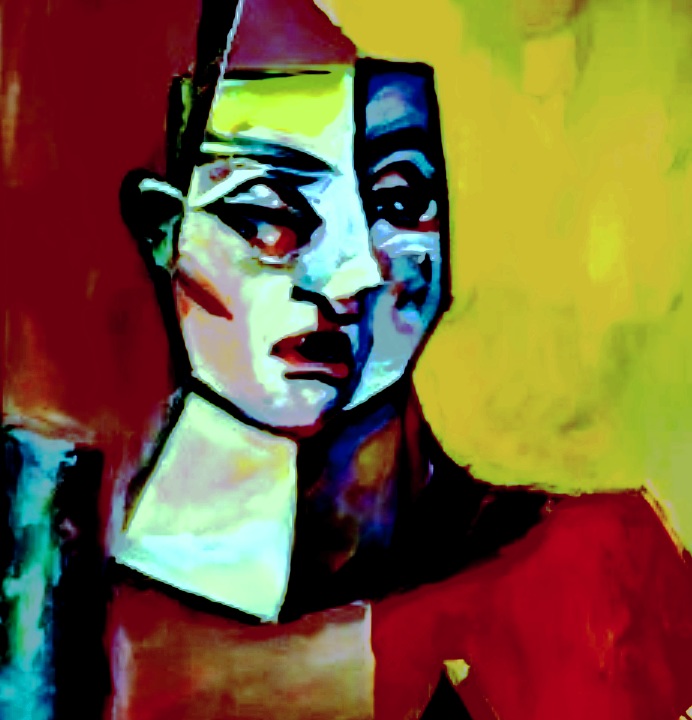
(«Self-Portrait No.33 In Summer»/Francisco Bravo Cabrera/All Rights Reserved)
I ask, «Are self-portraits important or meaningful?» And you might think, «hmm…» But I will tell you that self-portraits are very important to an artist in many ways. One, the obvious one is that it provides a great way to practice technique, composition and the dynamics of light and shadow and colour coordination that paintings need to be good. The other reason, not so obvious is that it provides sort of a psychological snap-shot of the artist. This he needs for self-knowledge and introspection. A self-portrait need not look like the subject, it needs to reflect his mood, feelings, temperament and the state of mental/physical affairs of the subject (you) at the moment the subject (you) paint it.
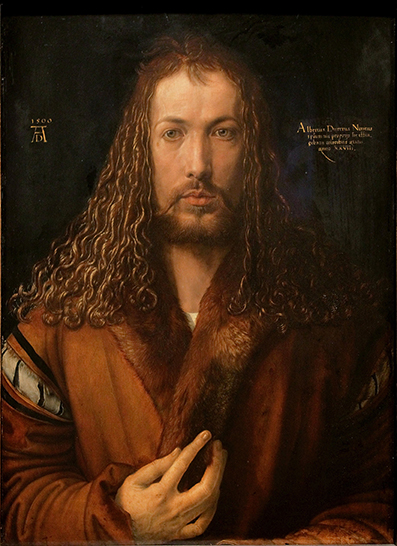
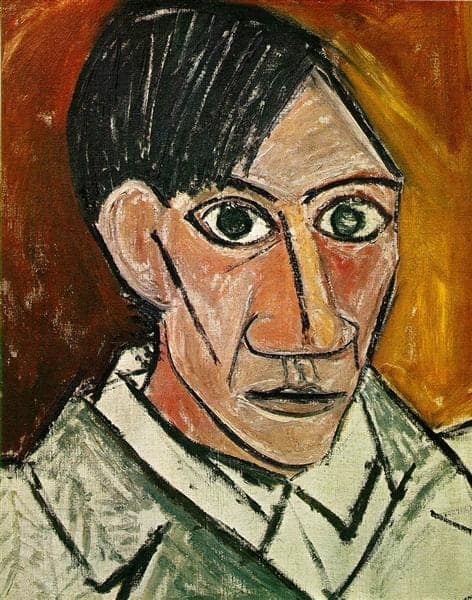
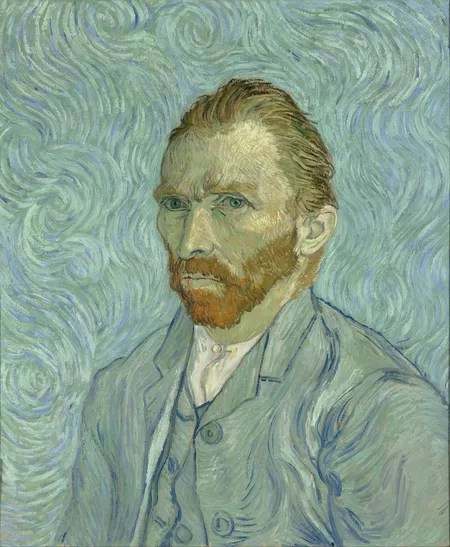
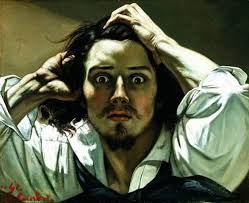
Here are some of the best self-portraits, of course in my humble opinion…
(All photos taken from the Public Domain, any authorship remains with the author)
Can you guess who these artists are? Below are the answers but don’t cheat…
ANSWERS:
Albrecht Dürer – Self-Portrait at 28 (1500)
Pablo Picasso (1907)
Van Gogh (1889)
Gustave Courbet – The Desperate Man (Self-Portrait) (1843-1845)
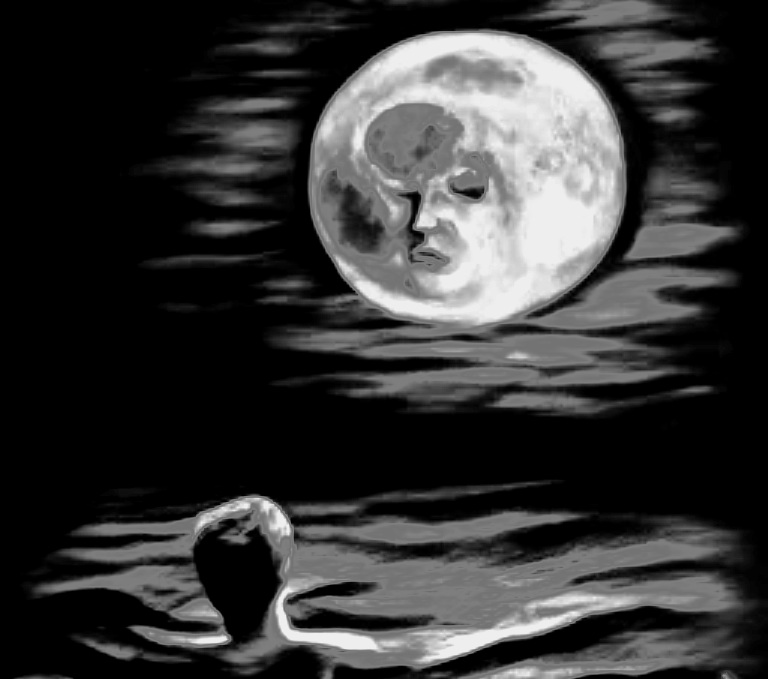
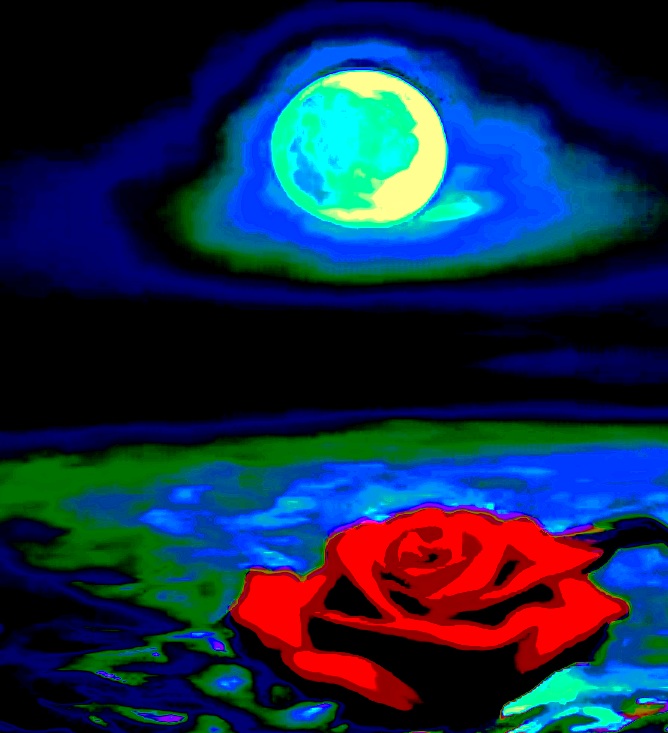
(«La luna de Ludovico»/»Ludwig’s Moon«/Francisco Bravo Cabrera/Derechos Reservados/All Rights Reserved)
For me, as a music lover…and I listen, explore and mostly enjoy all kinds of music…Ludwig van Beethoven is the ultimate composer, next to Lennon & McCartney, Jagger/Richards and Mozart. And now I have noticed that his name has changed. I have been listening to Beethoven’s music since I entered High School. I even went to a presentation of “Fidelio” his one and only opera! And I recall his name as Ludwig von Beethoven, (Is this a Mandela effect*?). Do you remember his name as “van” or “von”?
Anyway today I was listening to the soundtrack of Peaky Blinders…a fabulous series…and I noticed that they had included Beethoven’s 7th symphony, composed between 1811/12, and I realised that I had not featured music for a while, so I thought I would share it. It is a phenomenal symphony and apparently lends itself to movie/series soundtracks.
What do you think?
+++++++++++++++++++++++++++++++++
Yo, amante de la música, y te aseguro que lo escucho, exploro y disfruto todo tipo de música, Ludwig van Beethoven es mi preferido y lo coloco en la cima junto a Lennon & McCartney, Jagger/Richards y Mozart. Pero, jolines, me acabo de dar cuenta de que su nombre ya no es el mismo, mare meua, ha cambiado. He estado escuchando la música de Beethoven desde que entré al instituto, e incluso fui a ver una presentación de «Fidelio», su única ópera cuando apenas era un culicagao (si, aprendí esta palabra en Miami y significa un chavalillo), y recuerdo que su nombre era Ludwig von Beethoven, no van. (¿Es esto un efecto Mandela*?). Y tu, ¿Recuerdas su nombre como «van» o «von»?
De todos modos, hoy estaba escuchando la banda sonora de Peaky Blinders… una serie de puta madre…y noté que habían incluido la séptima sinfonía de Beethoven, compuesta entre 1811/12, y me di cuenta de que no había presentado música desde hace tiempo, así que pensé que la compartiría. Es una sinfonía fenomenal y al parecer se presta para bandas sonoras de películas/series.
¿Qué opinas?
+++
* A Mandela effect is a memory that many people throughout the world have of a thing, a name or an event in history which now has changed. It got the name because apparently many people, world wide, thought Nelson Mandela had died in a South African prison during the 1980’s but as it turned out they discovered he did not. He died in 2013 after having been president of his country.
+
El efecto Mandela se refiere a un recuerdo que muchas personas en todo el mundo tienen de algo, un nombre o un evento en la historia que ahora ha cambiado. Recibió el nombre porque aparentemente mucha gente en todo el mundo pensó que Nelson Mandela había muerto en una cárcel sudafricana durante la década de 1980, pero resultó que descubrieron que la historia no fue así,. Mandela murió en 2013 después de haber sido presidente de su país.
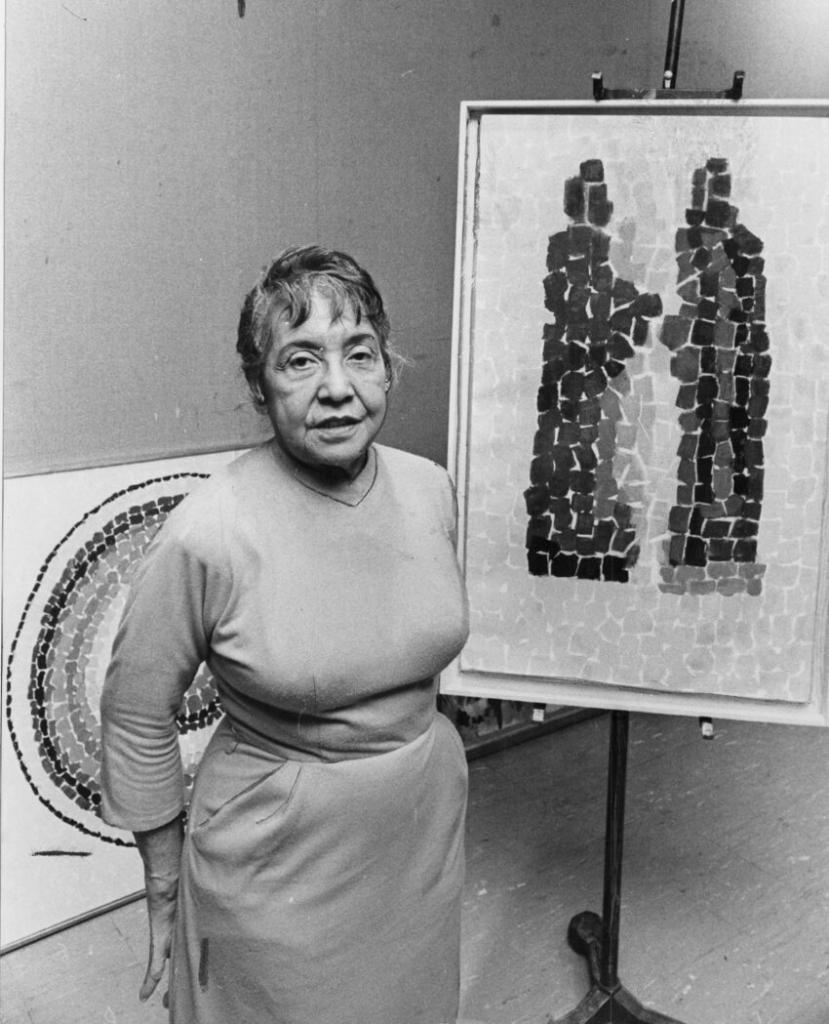
Alma Thomas started painting after a 35 year career teaching at Shaw Junior High in Washington, D.C. … She was an an expressionist painter considered part of the Washington Colour School, an art movement of abstract expressionists mostly existing from the 1950’s through the 1970’s.
She was born in Columbus, Georgia in 1891… She lived most of her life in Washington, D.C. as her family moved there in 1906 to escape the violence against Black people in Georgia… Although she did take art classes in High School, she chose to study at Miner Normal School and earned her teaching degree at University of the District of Columbia.
Despite suffering racist segregation and prejudice, Alma Thomas gained recognition as an African-American* female artist… In 1921 she started studying fine arts at Howard University (mostly sculpture) and gained her Bachelors of Science in Fine Arts in 1924. She could possibly have been the first woman in the US to gain a bachelor’s degree in art…
«Creative art is for all time and is therefore independent of time. It is of all ages, of every land, and if by this we mean the creative spirit in man which produces a picture or a statue is common to the whole civilized world, independent of age, race and nationality; the statement may stand unchallenged.» -Alma Thomas, 1970
In 1960, upon retiring from teaching, and at the age of 68/69, Alma Thomas became a full-time artist. Influenced by the abstract expressionists, she began to create colour field paintings… In 1963 she created «Watusi» based upon «The Snail«, a Matisse cut-out, but changing the order and the colours…
(Photo Smithsonian Institute)
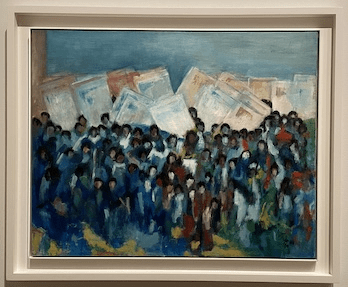
She was criticised for not following the trend of younger Black artists of the time who were creating protest art. Her reply was: «The use of color in my paintings is of paramount importance to me. Through color I have sought to concentrate on beauty and happiness in my painting rather than on man’s inhumanity to man.»… She walked on the March on Washington of 1963 and created a painting in 1964 titled «March on Washington» that hangs in the National Gallery of Art.
(photo by Laura Wheeler Waring/Public Domain/commons.wikimedia.org)
In 1966 she had her first exhibit at Howard University’s gallery of art… At age 81, in 1972, Alma Thomas became the first African-American female painter to have a solo exhibition at the Whitney Museum of American Art… She was labelled as an African-American artist, however, she denied labels placed on her as an artist or her identity as a black woman…
I am truly an admirer of this phenomenal woman and artist. I love to read about artists that in Art School they never mention, and it makes me despise formal art education even more. Although I do advocate technical education and art history for students of art, but students must choose wisely who they study and learn from. Alma Thomas painted in the salon of her home, or in her kitchen. She propped the canvases on her lap or against a coffee table. This resonated greatly with me for that is exactly what I used to do when I started and I still do that now when I paint «on location» in my summer place, away from my home studio in Spain.
Thomas lived all her life in her family’s home at 1530 15th Street, NW, Washington, D.C. She never married, declaring she was married to her art, and died in 1978.
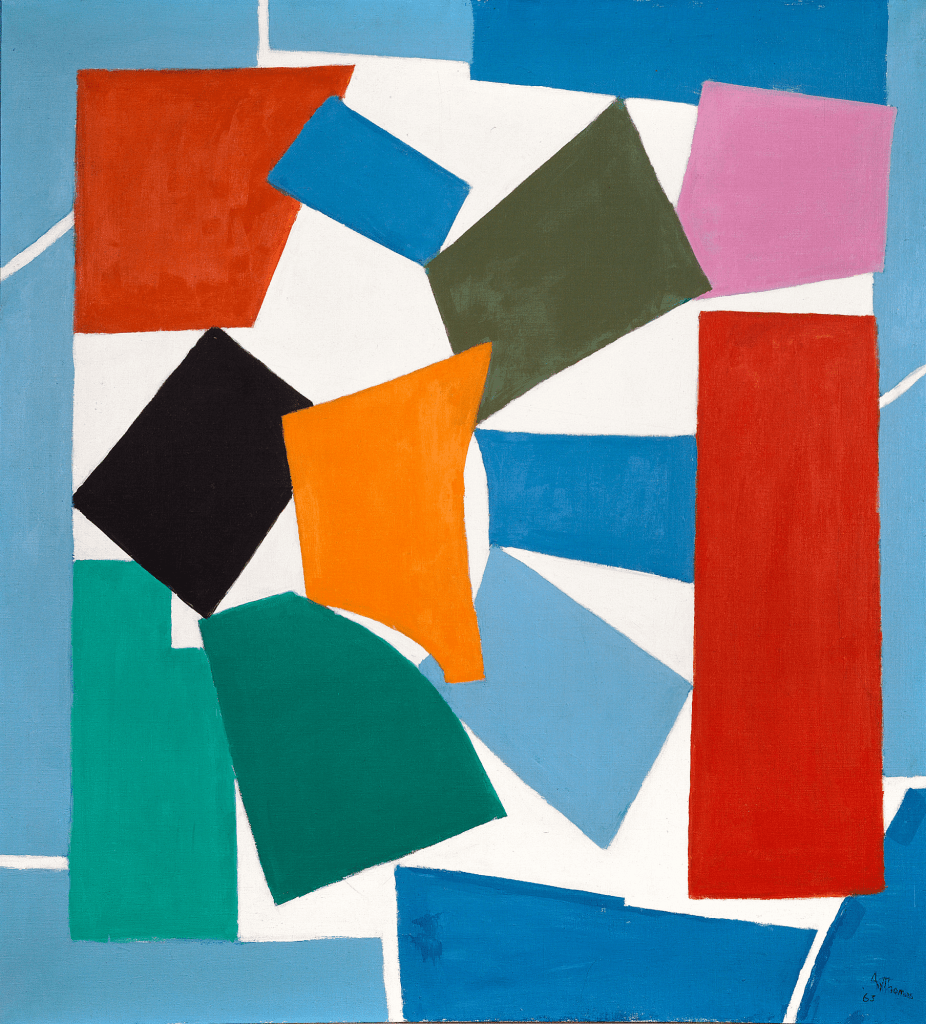
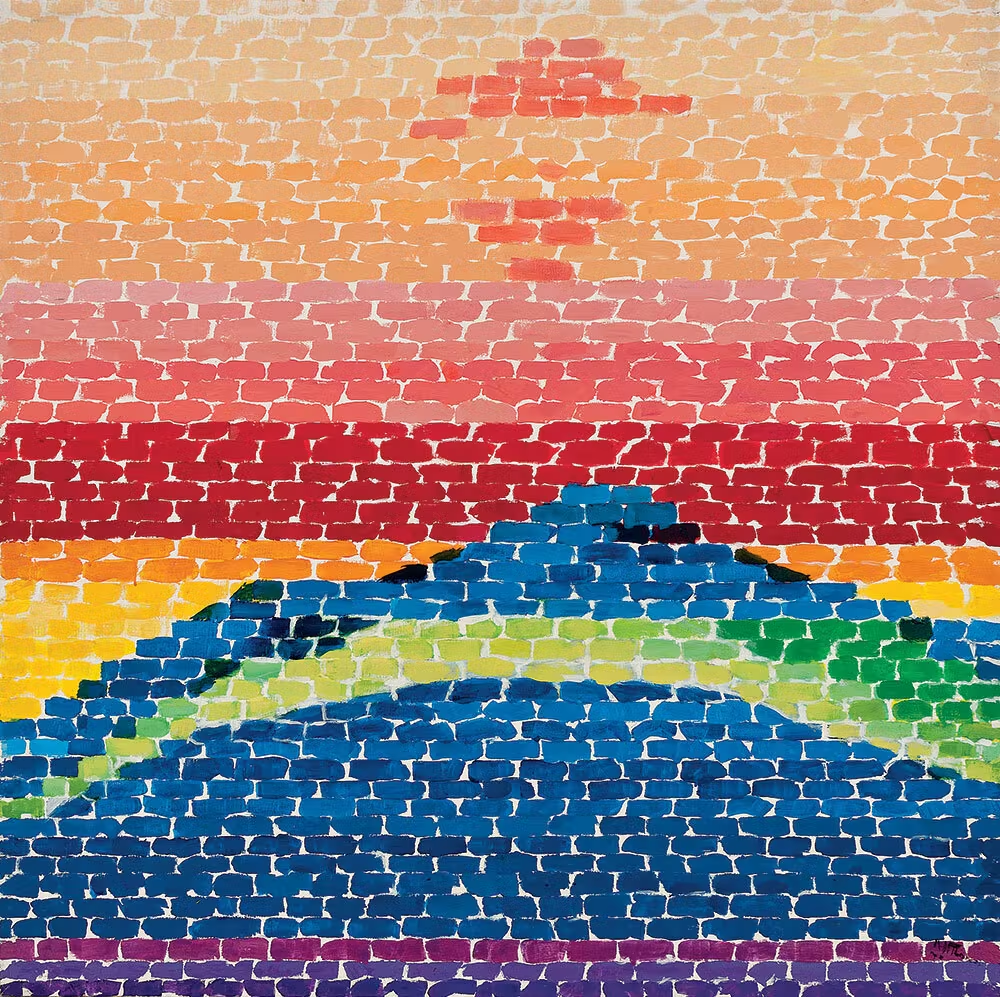
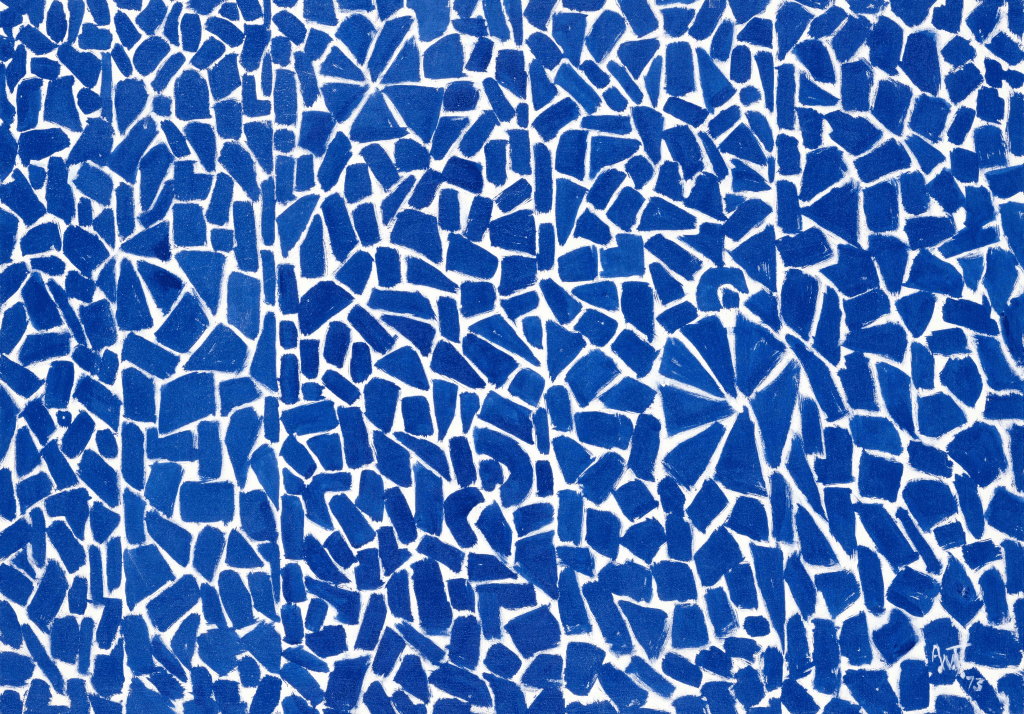
Here are some of her works:
(Photo Studio Museum in Harlem)
(Photo Whitney Museum of American Art)
(Denver Art Museum)
* NOTA BENE: Although I lived in the US many, many years, I could never understand this practice of categorising their citizens…and others…as either white, black, and now coloured. I thought it was offensive to call black people of the US «coloured folk»? Now they are using the term again. Why cannot they simply recognise human beings as human beings? Why create all these differences? Lamentably, something that had never been this way in Europe, many Europeans are imitating this ridiculous practice that can only lead to discrimination and prejudice. Just my thoughts…
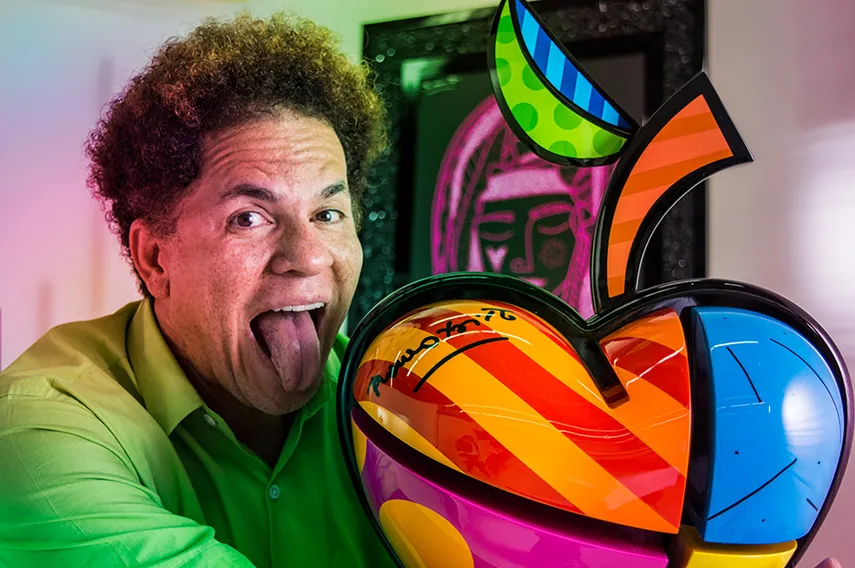
If you look for Romero Britto on Wikipedia you will find the following statements:
«Romero Britto (born October 6, 1963[1]) is a Brazilian artist, painter, serigrapher, and sculptor.[2] He combines elements of cubism, pop art, and graffiti painting in his work, using vibrant colors and bold patterns as a visual expression of hope, dreams, and happiness.«
Incredible! But none of that is true. I know. I lived in Miami when Britto began to climb his road to fame as a merchandiser, a businessman and an artisan. None of those functions that he carries out, majestically, makes him an artist, a painter or a sculptor. There is nothing related to cubism in his simple childish colouring book figures. Do any of them even come close to the shadow of Picasso or Braque? No…
His «paintings» have no composition. His colours are simple primary colours taken directly from the tubes. Comparing it to pop art? No way! His work is as far from pop art as he is from the artists that created the greatest pop art we can refer to. Artists like Peter Max, Warhol or Roy Lichtenstein. And related to graffiti? Not at all. Graffiti artists always have a message, and many of them are quite talented. In my opinion, Mr. Britto does not know how to draw and much less how to paint.
His biographer(s) claim that he was born a poor lad in Brasil who was able to go to Europe (1983) to «study» art and was greatly influenced by the works of Matisse and Picasso. And suddenly (1988) he pops up in Miami…like hundreds of thousands of others…he got the «commission» to decorate a bottle of Absolute Vodka and the rest is history. He became the most «successful» artist (read as merchandiser) in Miami. And soon he opened his gallery (store/shop) on Lincoln Road in Miami Beach. There he sells everything from trinkets to «paintings».
This is directly from his Wikipedia page:
«…In addition to his sculpture and fine art work, his designs have been used by Disney, BMW, IBM, Apple Computers, Grand Marnier, Pepsi, and Royal Caribbean Cruises, and been featured on a variety of consumer goods, such as Barbie dolls and pet collars.[4][3][5] According to a 2023 documentary about him, Britto is «the most collected and licensed artist in history.»[4] Some of his public art installations are at Hyde Park, London, the O2 Arena in Berlin, and the John F. Kennedy Airport.[5] He also designed a Miami water park.
This proves that he is no artist. He is an artisan who maybe sketches a few little hearts, faces of children and other little doodles and his staff «creates» the merchandise. Now, being «the most collected and licensed artist in art history» is total bull-shit. Do they mean to push this rubbish down our throat and tell us that he is more collected than Picasso, Dalí, or the queen of merchandising herself, Frida Kahlo? And I have seen his public installations in Miami and New York and I guarantee you they are nothing to get hung about.
He is also a big fan of Brasil’s Jair Bolsonaro and in 2020 he gifted him his portrait. Imagine that, a portrait made by Britto…
I am not going to waste my time putting here some of his artwork because frankly I do not consider him an artist nor his work art. Sorry. But if you are a fan, or are curious, you can look him up. But be careful, do not believe what they write about him as he is also part of his creation and he has specialists to promote him and his work.
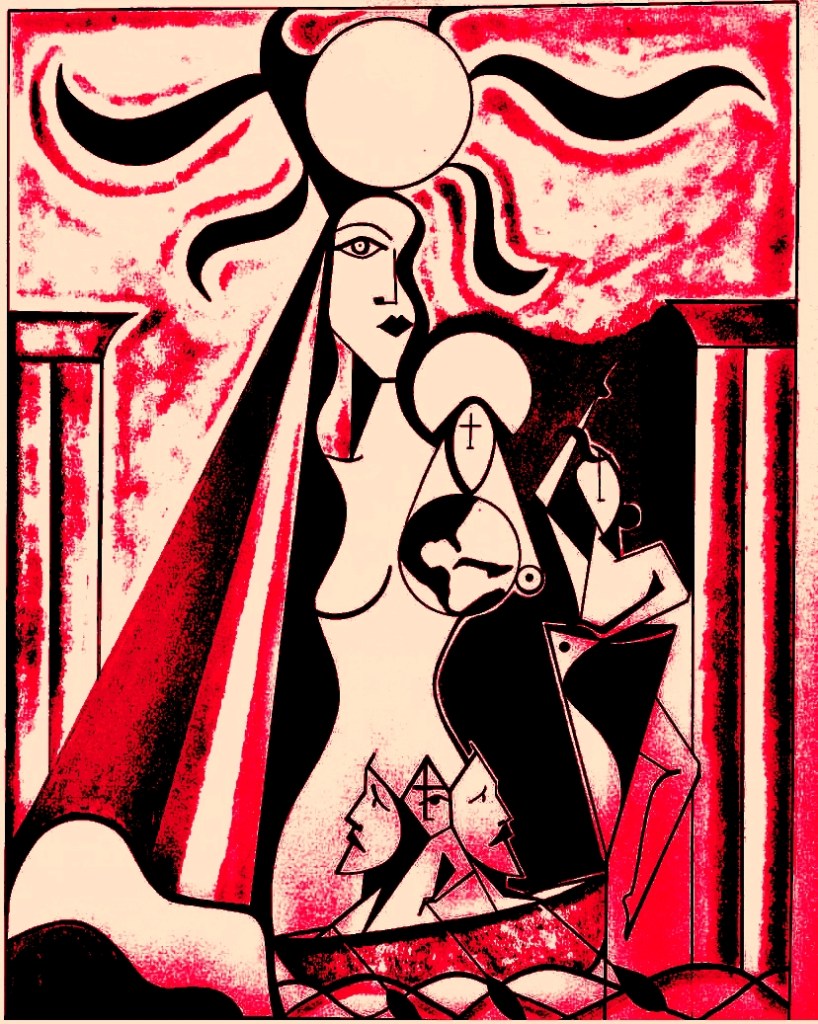
(Domine Caritas Dei Nostris/Francisco Bravo Cabrera/All Rights Reserved)
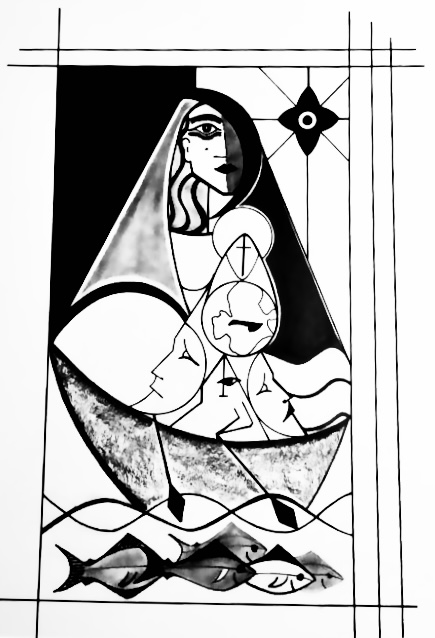
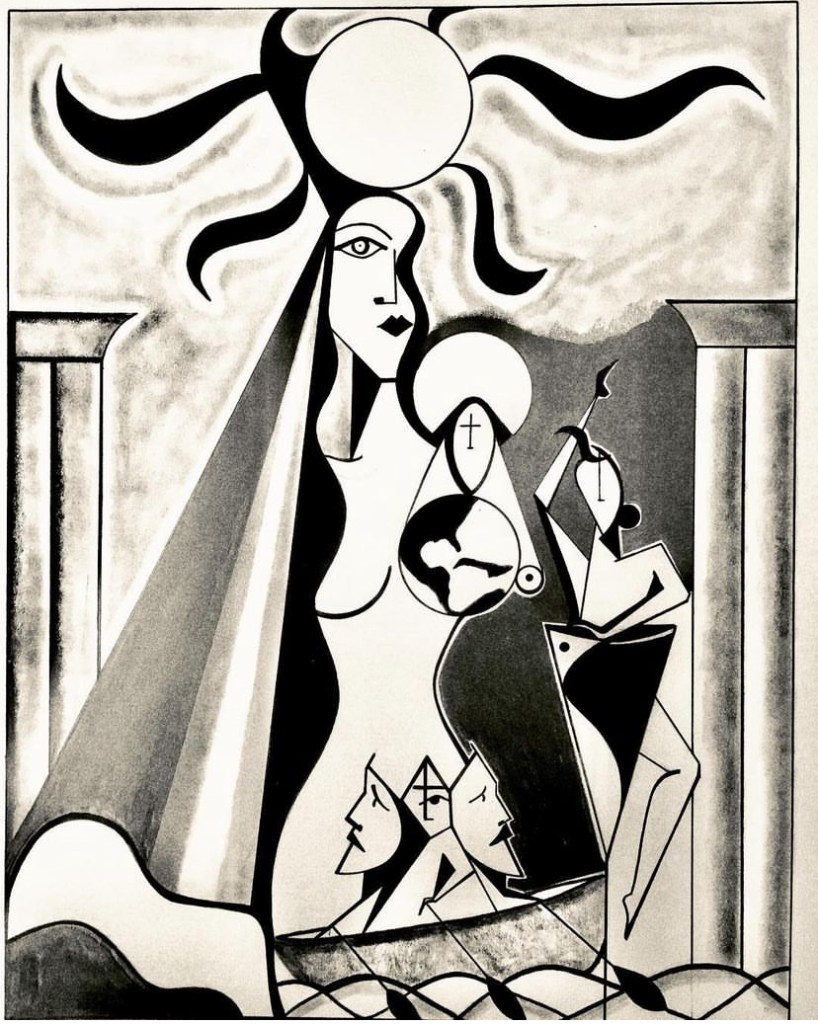
Estas son algunos de mis dibujos en honor a la Madre de Dios y Reina del Cielo, Nuestra Señora de la Caridad, patrona de Cuba… Y otros dibujos hechos con diferentes lápices y tinta china sobre cartulina.
+++++
These are some of my drawings in honour of the Mother of God and Queen of Heaven, Our Lady of Charity, Patroness of Cuba… And other drawings… All made with different graphite and China ink on artists paper…
(Obras originales de Francisco Bravo Cabrera/Derechos Reservados – Original artworks by Francisco Bravo Cabrera/All Rights Reserved)
(«La luna de Ludovico»/»Ludwig’s Moon«/Francisco Bravo Cabrera/Derechos Reservados/All Rights Reserved)
For me, as a music lover…and I listen, explore and mostly enjoy all kinds of music…Ludwig van Beethoven is the ultimate composer, next to Lennon & McCartney, Jagger/Richards and Mozart. And now I have noticed that his name has changed. I have been listening to Beethoven’s music since I entered High School. I even went to a presentation of “Fidelio” his one and only opera! And I recall his name as Ludwig von Beethoven, (Is this a Mandela effect*?). Do you remember his name as “van” or “von”?
Anyway today I was listening to the soundtrack of Peaky Blinders…a fabulous series…and I noticed that they had included Beethoven’s 7th symphony, composed between 1811/12, and I realised that I had not featured music for a while, so I thought I would share it. It is a phenomenal symphony and apparently lends itself to movie/series soundtracks.
What do you think?
+++++++++++++++++++++++++++++++++
Yo, amante de la música, y te aseguro que lo escucho, exploro y disfruto todo tipo de música, Ludwig van Beethoven es mi preferido y lo coloco en la cima junto a Lennon & McCartney, Jagger/Richards y Mozart. Pero, jolines, me acabo de dar cuenta de que su nombre ya no es el mismo, mare meua, ha cambiado. He estado escuchando la música de Beethoven desde que entré al instituto, e incluso fui a ver una presentación de «Fidelio», su única ópera cuando apenas era un culicagao (si, aprendí esta palabra en Miami y significa un chavalillo), y recuerdo que su nombre era Ludwig von Beethoven, no van. (¿Es esto un efecto Mandela*?). Y tu, ¿Recuerdas su nombre como «van» o «von»?
De todos modos, hoy estaba escuchando la banda sonora de Peaky Blinders… una serie de puta madre…y noté que habían incluido la séptima sinfonía de Beethoven, compuesta entre 1811/12, y me di cuenta de que no había presentado música desde hace tiempo, así que pensé que la compartiría. Es una sinfonía fenomenal y al parecer se presta para bandas sonoras de películas/series.
¿Qué opinas?
+++
* A Mandela effect is a memory that many people throughout the world have of a thing, a name or an event in history which now has changed. It got the name because apparently many people, world wide, thought Nelson Mandela had died in a South African prison during the 1980’s but as it turned out they discovered he did not. He died in 2013 after having been president of his country.
+
El efecto Mandela se refiere a un recuerdo que muchas personas en todo el mundo tienen de algo, un nombre o un evento en la historia que ahora ha cambiado. Recibió el nombre porque aparentemente mucha gente en todo el mundo pensó que Nelson Mandela había muerto en una cárcel sudafricana durante la década de 1980, pero resultó que descubrieron que la historia no fue así,. Mandela murió en 2013 después de haber sido presidente de su país.



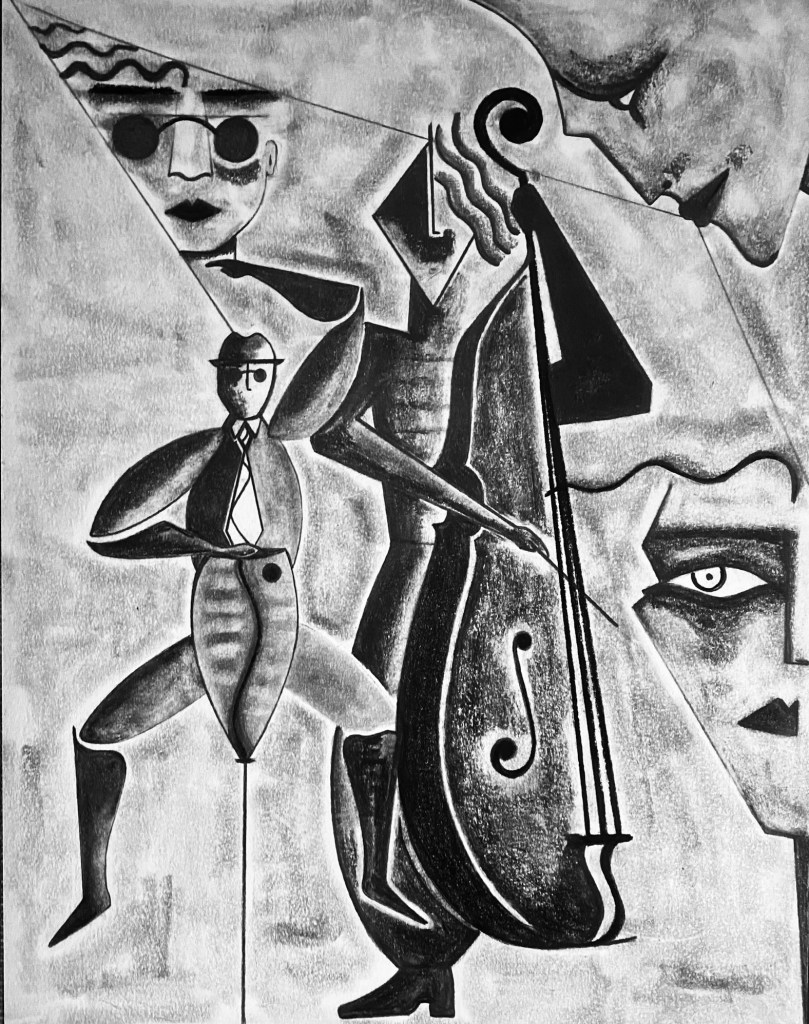
 JaZzArt en València