This is not a complete list by any stretch of the imagination. These are but a few. I really think that these women, as well as most women artists, need to be recognised fully and as equals of their male counterparts. When we think of Latin American art we usually think of the great artists like Diego Rivera (Mexico) and Wilfredo Lam (Cuba) and the only woman that comes to mind (to most people) is Frida Kahlo. But Frida was not a great artist, at least not in my appreciation, and much less when I compare her with some of these. Besides the idea that it is only Frida has to end and the sooner the better. I would encourage all art bloggers to blog about women artists from anywhere in the world.
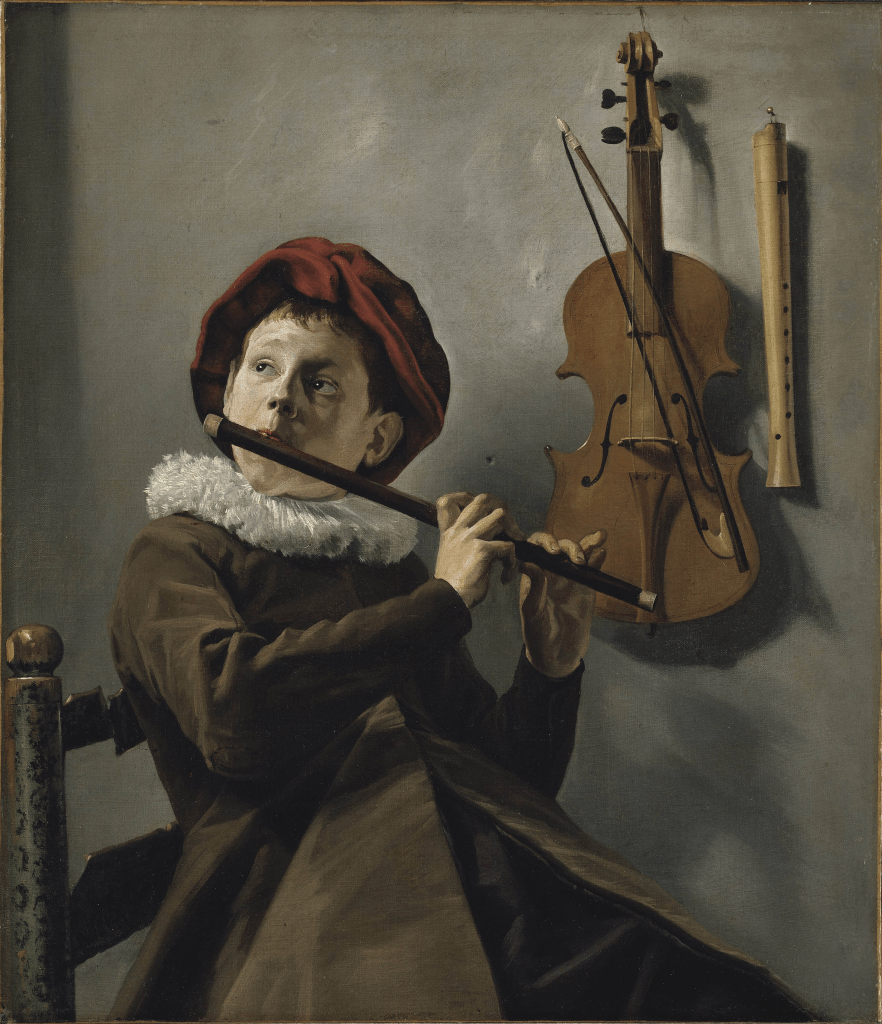
I must confess that I did not know much about this painter, mainly because they did not mention her at uni, but what I have discovered is incredible! Leyster, a Dutch artist from the Golden Age of Netherlander art, was not given credit for her work. Her works were attributed to Frans Hals, a baroque artist considered a master portrait painter, or to her husband, Jan Miense Molenaer, also a painter and engraver. In 1893 Cornelis Hofstede de Groot, a collector and curator, gave her the authorship of six paintings which carried her distinctive signature ‘JL’. It is incredible, but possibly because after her death many of her paintings were placed in inventory as simply being of the wife of Molenaer», and not as Judith Leyster.
She was born in Haarlem, on the 28th of July of 1609 and died in Heemstede, on the 10th of February of 1660. It is believed that her first signed commission was dated 1629. Four years later (1633), at the age of 24 years, she was admitted into the Guild of Saint Luke in Haarlem. She might have been the first female artist to be registered in the guild. But it might also have been another female artist (which we will feature here in the future) Sara van Baalbergen, who was registered, it is believed, in 1631. Judith was registered in the guild and recognised as an artist, not like many other women who were registered as embroiderers, ceramists or wood and metal workers. Some were added to the lists of the guild as the successors of their deceased artists husbands.
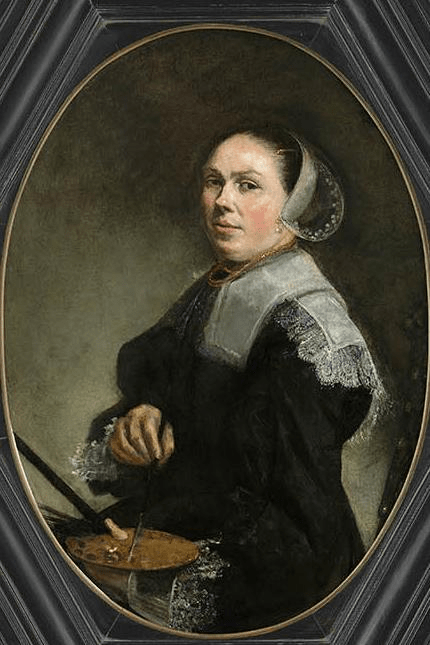
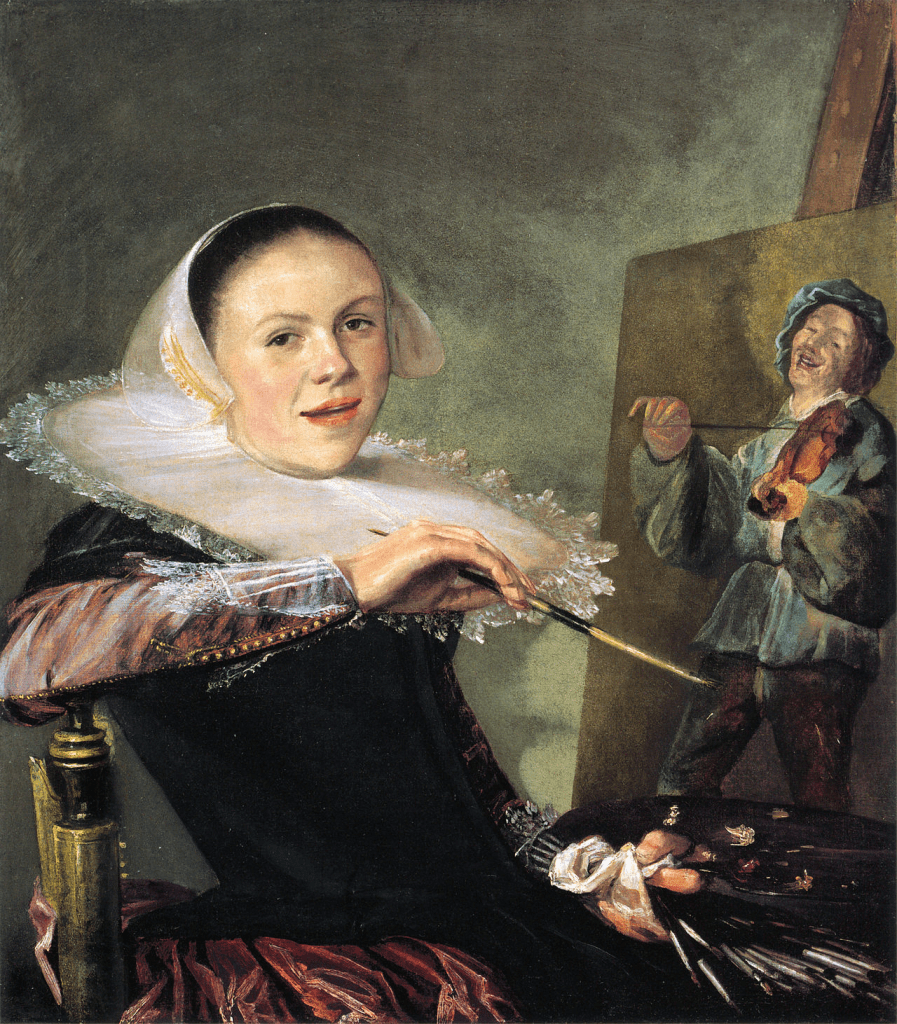
Her self-portrait of 1633 (see above) is considered her audition to the guild. The self-portrait definitely shows some historic changes in the style of portraits of women. Her pose is relaxed and dynamic in opposition to the style of the times. Her dress denotes her status and dignity. She presented herself as a lady of society and means. After all one can present themselves any way one wants in a self-portrait. She demonstrates the dignity of her profession.
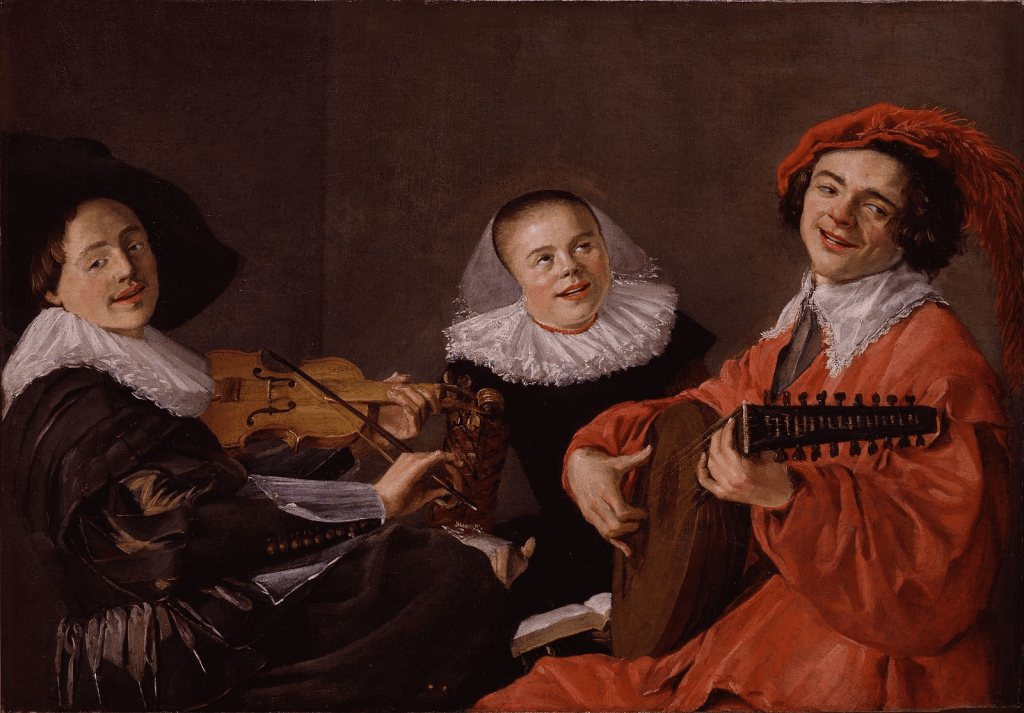
(The Concert/1631/Public Domain/Wikimedia Commons)
(Boy Playing the Flute/1630/Public Domain/Unknown author)
You can see some of her works in various museums: The Rijksmuseum of Ámsterdam; The Mauritshuis of The Hague; The Museum Frans Hals of Haarlem; The Louvre of Paris; The National Gallery of London and the National Gallery of Art of Washington D. C…
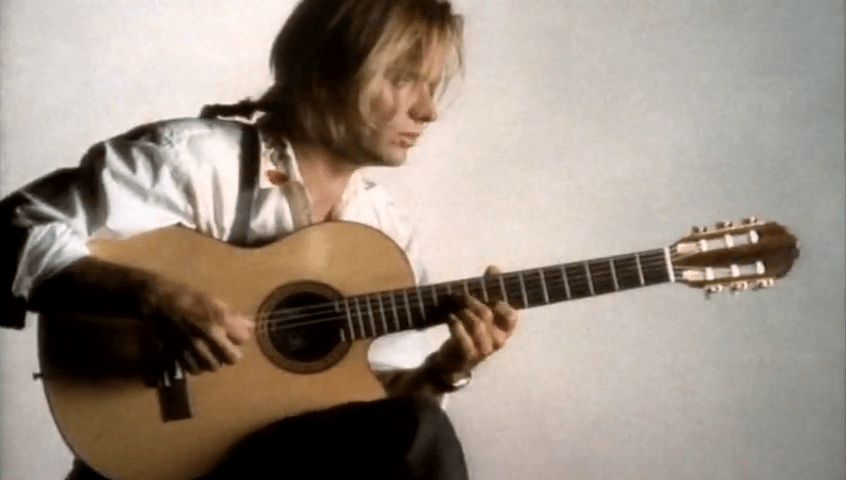
«Fragile» is from Sting’s second album Nothing Like the Sun. The song was released in the UK in 1988. He sang it also in Spanish titled «Fragilidad«…
This is a fabulous song for sure. Sting said he wrote it after the death of American engineer Ben Linder who was working on a hydroelectric project in Nicaragua (1987) and was killed by a rebel group. However the song can fit any occasion of violence and senseless killing.
At the opening ceremonies for the opening of the 2002 Winter Olympics Sting sang the song, performing with cellist Yo Yo Ma. There is a version sung with Julio Iglesias that is included on Sting’s Duets compilation album released in 2021.
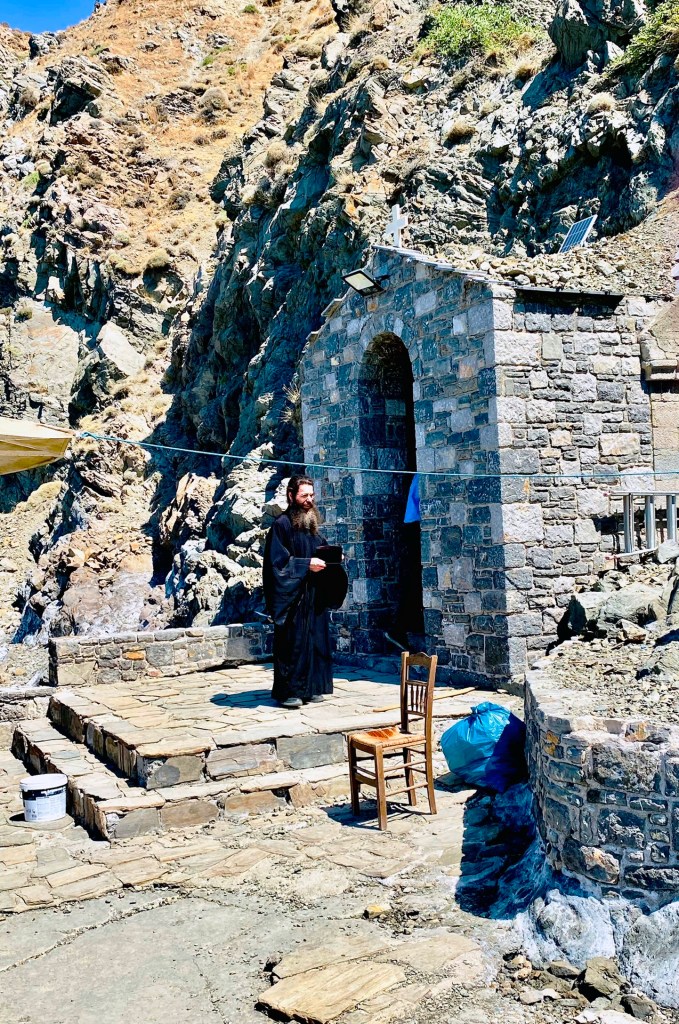
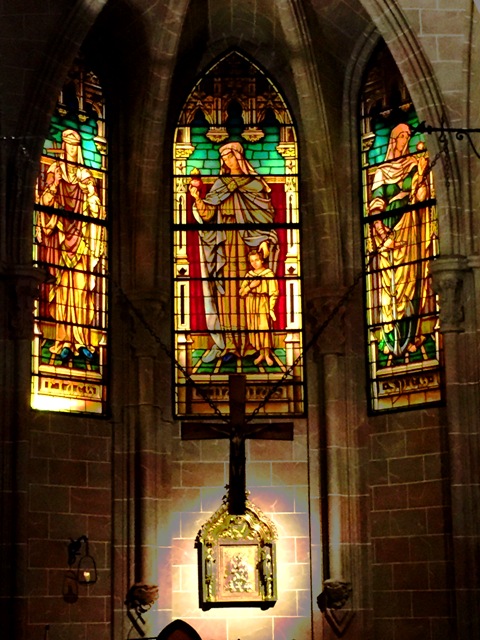
(Photo by Francisco Bravo Cabrera/Aya Markella Sanctuary, Chios, Greece/All Rights Reserved)
DEACON 11
“Prayer”
Is prayer important for one’s life, for one’s spirit, or is it a waste of mental energy? I truly looked forward to what he was about to say…
And he spoke:
Prayer is communication with God. Or is it? What is a prayer? This must be something unique to humans for I do not believe other sentient beings on Earth pray. Or do they? Perhaps prayer, as part of our religious practices is our connection between the profane and the divine. If that is so then we are accomplishing much with our life of prayer. If it is not, then we are gaining nothing.
Personally, I have learned that there are great benefits to prayer. Psychologically, it grounds us in the knowledge that, although we might think ourselves alone, we are not truly left cold and forgotten on this Earth. Conversation, through prayer, with a higher power, can sooth anxiety and can produce a sense of euphoria that can lead us away from the dangerous path of despair to instead allows us to recognise that we are children of a mighty God that will render aid because He loves us.
And how does one pray? What is the method? What words should one either memorise or read? Which prayers suit which situation or request? Christians have prayer books replete with prayers for all occasions. That might be a good start. But I do believe that the best prayer is the one you create yourself in your private conversation with the Divine.
The Sioux nation has a most beautiful prayer which I would like to share with you:
Oh Great Spirit, whose voice I hear in the winds, and whose breath gives life to all the world – hear me – I come before you, one of your children. I am small and weak. I need your strength and wisdom. Let me walk in beauty and make my eyes ever behold the red and purple sunset. Make my hands respect the things you have made, my ears sharp to hear your voice. Make me wise, so that I may know the things you have taught my People, the lesson you have hidden in every leaf and rock. I seek strength not to be superior to my brothers, but to be able to fight my greatest enemy, myself. Make me ever ready to come to you, with clean hands and straight eyes, so when life fades as a fading sunset, my spirit may come to you without shame.
These are words that can enrich one’s life and satisfy most of one’s yearnings. Analysing this phenomenal prayer I would say that it resembles, in many ways, the “Our Father” that we were taught as children in Catechism.
Our Father who art in Heaven hallowed be thy name. Thy Kingdom come. Thy will be doneon Earth as it is in Heaven. Give us this day our daily bread and forgive us our trespasses as we forgive those who trespass against us, and lead us not into temptation but deliver us from evil. (And in your mercy grant us peace in our day, for yours is the Kingdom and the Power and the Glory for ever and ever. Amen.
If one is humble, one prays for forgiveness and guidance, like the Lakota-Sioux prayer which states that one should seek strength not to be better than one’s brothers but to fight one’s greatest enemy, one’s self. That is the guidance that is sought by humble men and women. One seeks to better one’s self who is vain and narcissistic; that seeks power over others and that thinks the world revolves around him or her. In humility one knows to seek forgiveness and one realises that one is a child of a greater being from which one needs constant assistance, guidance and knowledge. God has scattered his wisdom all over the Earth we inhabit. It is wise to pray that we might find it.
Jesus said we should pray in private, conversing with our Heavenly Father. He said not to be ostentatious, like the hypocrites that pray in the public squares making a spectacle before others so that they can be thought of as pious men or women. Jesus taught compassion, and forgiveness. He taught us to be strong in our faith and faithful in our prayers but not in an arrogant manner. He taught us to ask God, our Father, to teach us to forgive and to lead us not into temptation but into the Kingdom. But what is the Kingdom?
The Kingdom, which Jesus said was amongst us, is a topic we shall soon discuss.
C.2025, Francisco Bravo Cabrera – 21 MAR 2025 – Valencia, España
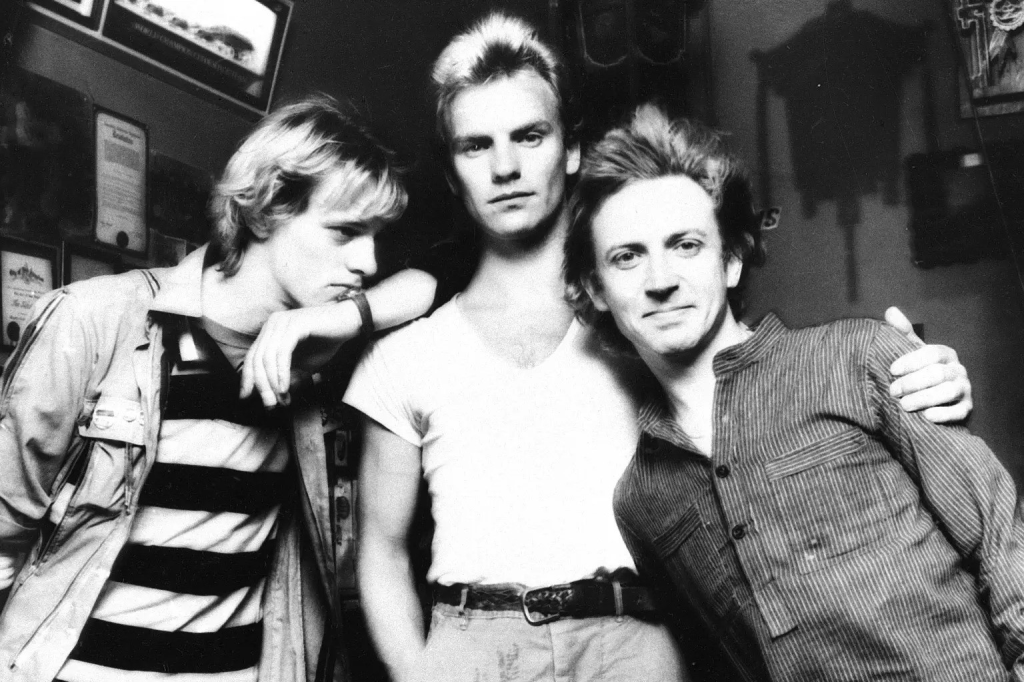
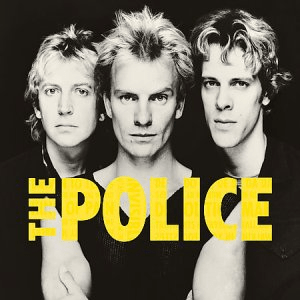
(Distributed by A&M Records/Public Domain/commons.wikimedia.org)
Their influences were punk, reggae and jazz and were super popular from the late 70’s through the 80’s and beyond… A great line-up including Sting, Andy Summers (guitar) and Stewart Copeland (the American, on drums/percussion). Have to say that I really liked this group back in those days, but most of their songs just don’t do it for me any more in these days. Yet, I do like some of their timeless hits like «Don’t Stand So Close to Me» and «Every Little Thing She Does is Magic«… But a phenomenal band nonetheless, they made history…
Beginning in 1979, The Police had four consecutive number 1 albums: Reggatta de Blanc (1979), with «Message in a Bottle» and «Walking on the Moon«; Zenyatta Mondatta (1980); Ghost in the Machine (1981), with «Don’t Stand So Close to Me» and «Every Little Thing She Does Is Magic«; Synchronicity (1983), which was also No. 1 in Canada, Australia, Italy and the US, selling over 8 million copies in the US. Its single «Every Breath You Take«, turned out to be their 5th UK number one, and only US number one song.
In the US The Police were thought of as the leading band of the Second British Invasion and Rolling Stone (1983) said they were «the first British New Wave act to break through in America on a grand scale, and possibly the biggest band in the world». Then in 1984 they broke up. But they do reunite every now and again…
(Photo by Francisco Bravo Cabrera/All Rights Reserved)
DEACON 11
“Prayer”
Is prayer important for one’s life, for one’s spirit, or is it a waste of mental energy? I truly looked forward to what he was about to say…
And he spoke:
Prayer is communication with God. Or is it? What is a prayer? This must be something unique to humans for I do not believe other sentient beings on Earth pray. Or do they? Perhaps prayer, as part of our religious practices is our connection between the profane and the divine. If that is so then we are accomplishing much with our life of prayer. If it is not, then we are gaining nothing.
Personally, I have learned that there are great benefits to prayer. Psychologically, it grounds us in the knowledge that, although we might think ourselves alone, we are not truly left cold and forgotten on this Earth. Conversation, through prayer, with a higher power, can sooth anxiety and can produce a sense of euphoria that can lead us away from the dangerous path of despair to instead allows us to recognise that we are children of a mighty God that will render aid because He loves us.
And how does one pray? What is the method? What words should one either memorise or read? Which prayers suit which situation or request? Christians have prayer books replete with prayers for all occasions. That might be a good start. But I do believe that the best prayer is the one you create yourself in your private conversation with the Divine.
The Sioux nation has a most beautiful prayer which I would like to share with you:
Oh Great Spirit, whose voice I hear in the winds, and whose breath gives life to all the world – hear me – I come before you, one of your children. I am small and weak. I need your strength and wisdom. Let me walk in beauty and make my eyes ever behold the red and purple sunset. Make my hands respect the things you have made, my ears sharp to hear your voice. Make me wise, so that I may know the things you have taught my People, the lesson you have hidden in every leaf and rock. I seek strength not to be superior to my brothers, but to be able to fight my greatest enemy, myself. Make me ever ready to come to you, with clean hands and straight eyes, so when life fades as a fading sunset, my spirit may come to you without shame.
These are words that can enrich one’s life and satisfy most of one’s yearnings. Analysing this phenomenal prayer I would say that it resembles, in many ways, the “Our Father” that we were taught as children in Catechism.
Our Father who art in Heaven hallowed be thy name. Thy Kingdom come. Thy will be doneon Earth as it is in Heaven. Give us this day our daily bread and forgive us our trespasses as we forgive those who trespass against us, and lead us not into temptation but deliver us from evil. (And in your mercy grant us peace in our day, for yours is the Kingdom and the Power and the Glory for ever and ever. Amen.
If one is humble, one prays for forgiveness and guidance, like the Lakota-Sioux prayer which states that one should seek strength not to be better than one’s brothers but to fight one’s greatest enemy, one’s self. That is the guidance that is sought by humble men and women. One seeks to better one’s self who is vain and narcissistic; that seeks power over others and that thinks the world revolves around him or her. In humility one knows to seek forgiveness and one realises that one is a child of a greater being from which one needs constant assistance, guidance and knowledge. God has scattered his wisdom all over the Earth we inhabit. It is wise to pray that we might find it.
Jesus said we should pray in private, conversing with our Heavenly Father. He said not to be ostentatious, like the hypocrites that pray in the public squares making a spectacle before others so that they can be thought of as pious men or women. Jesus taught compassion, and forgiveness. He taught us to be strong in our faith and faithful in our prayers but not in an arrogant manner. He taught us to ask God, our Father, to teach us to forgive and to lead us not into temptation but into the Kingdom. But what is the Kingdom?
The Kingdom, which Jesus said was amongst us, is a topic we shall soon discuss.
C.2025, Francisco Bravo Cabrera – 21 MAR 2025 – Valencia, España
(Photo A&M Records website, and intellectual property owned by A&M Records/Fair use)
Their influences were punk, reggae and jazz and were super popular from the late 70’s through the 80’s and beyond… A great line-up including Sting, Andy Summers (guitar) and Stewart Copeland (the American, on drums/percussion). Have to say that I really liked this group back in those days, but most of their songs just don’t do it for me any more in these days. Yet, I do like some of their timeless hits like «Don’t Stand So Close to Me» and «Every Little Thing She Does is Magic«… But a phenomenal band nonetheless, they made history…
Beginning in 1979, The Police had four consecutive number 1 albums: Reggatta de Blanc (1979), with «Message in a Bottle» and «Walking on the Moon«; Zenyatta Mondatta (1980); Ghost in the Machine (1981), with «Don’t Stand So Close to Me» and «Every Little Thing She Does Is Magic«; Synchronicity (1983), which was also No. 1 in Canada, Australia, Italy and the US, selling over 8 million copies in the US. Its single «Every Breath You Take«, turned out to be their 5th UK number one, and only US number one song.
In the US The Police were thought of as the leading band of the Second British Invasion and Rolling Stone (1983) said they were «the first British New Wave act to break through in America on a grand scale, and possibly the biggest band in the world». Then in 1984 they broke up. But they do reunite every now and again…
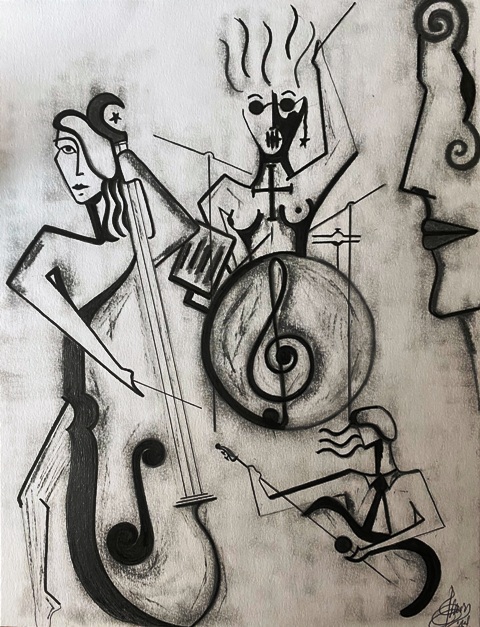
(«Jazz sin titulo»/Francisco Bravo Cabrera/Derechos Reservados/All Rights Reserved)
Si crees que el jazz que hablo es la verdad, ¿Lo escucharías?
Pues escucha y aunque te hayan dicho que no lo hagas, hazlo. Te han dicho que abras la boca pero que no hables; que oigas pero no escuches; además que no leas, que no busques…
Pero yo te digo que la búsqueda es el arte, asi que busca… Dentro de lo más profundo de tu mente encontrarás que eres un ser mágico.
Has recibido la cultura de Grecia y Roma y como en otrora, eres hombre y mujer del polis que pensando, buscando y aprendiendo has creado las bases de la verdadera democracia y el origen del gobierno. Pero no olvides que el poder lo tiene el pueblo.
Así que no me sigas porque llevo la boina al estilo del Ché, sino por lo que digo… Y si lo piensas, lo asimilas, y lo escudriñas, tu serás el revolucionario…
+++
If you think my jazz here speaks the truth, will you listen?
Listen… for although they have taught you not to look deep within, search… In the deepest recesses of your mind you will find you possess the freedom to choose. You decide…
You are the recipient of the culture of Greece and Rome who knew that the educated men and women of the polis could guide the people. They created democracy, meaning that the government, the crucial and necessary one only, belongs to the people, as all power in society does…
So… Do not praise me for because I wear a beret like “Ché Guevara», but instead listen to what I have to say. If I speak the truth believe it and admire my words. That alone takes courage, and you can then admire your willpower as well. In so doing you have become the revolutionary!
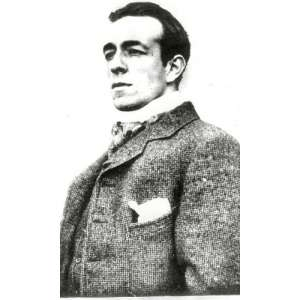
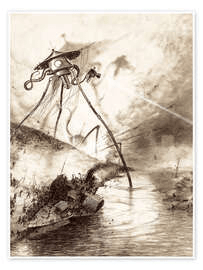
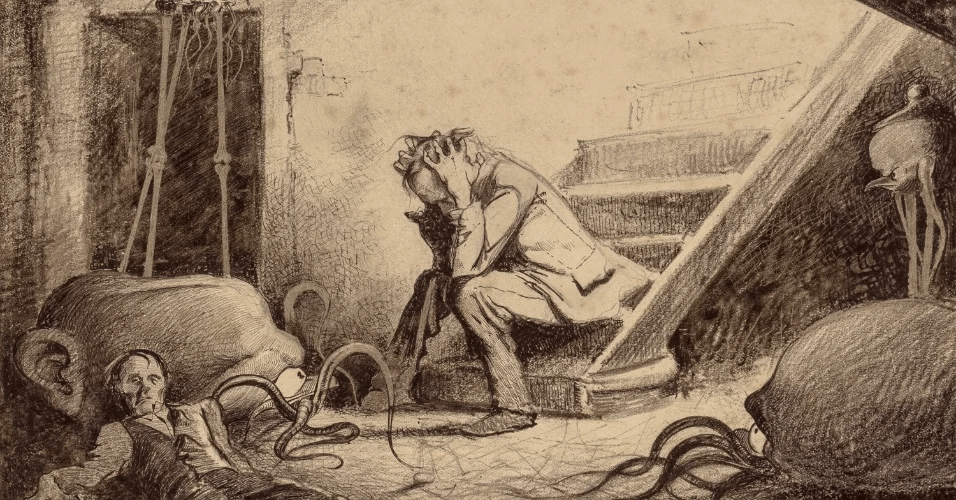
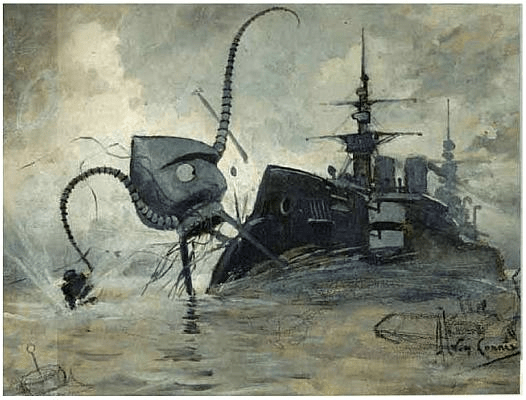
Este gran ilustrador brasileño se dedico a la ilustración de libros de ciencia y de guerra, o sea, todo lo militar. Su mas famosa obra fue la ilustración del libro «War of the Worlds» («Guerra de los Mundos«) de H. G. Welles escrita entre 1895 y 1897. Nació en Rio de Janeiro en 1876. En 1892 se fue a vivir a Europa. En 1903 hizo 132 ilustraciones que fueron insertadas en el libro de H. G. Welles, despues de que Corrêa le hubiera pedido permiso al autor para hacerlo. Tambien hizo muchas ilustraciones de la guerra Franco-Prusiana (1870-1871). En 1985 sus grabados de mujeres desnudas, violadas y victimas de abusos fueron incluidas en el libro Baco e Anas brasileira de la poeta Yêda Schmaltz. Alvim murió en Bruselas en 1910.
+++
This great Brazilian illustrator dedicated himself, mostly, to illustrating science and military books. His most famous work was the illustration of the book War of the Worlds by H. G. Wells, written between 1895 and 1897. He was born in Rio de Janeiro in 1876. In 1892, he moved to Europe. In 1903, he created 132 illustrations that were included in H. G. Wells’ book after Corrêa had asked the author for permission to do so. He also made many illustrations of the Franco-Prussian War (1870-1871). In 1985, his engravings of naked women, raped and victimized by abuse, were included in the book Baco e Anas brasileira by the poet Yêda Schmaltz. He died in Brussels in 1910.
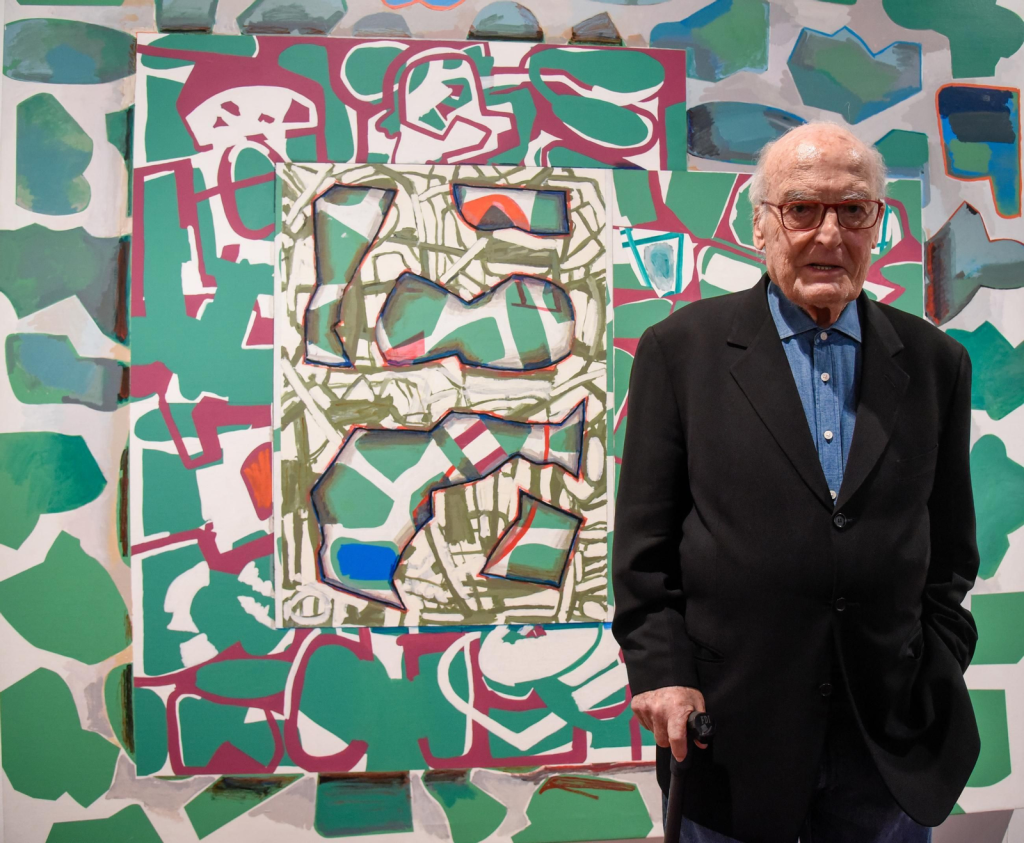
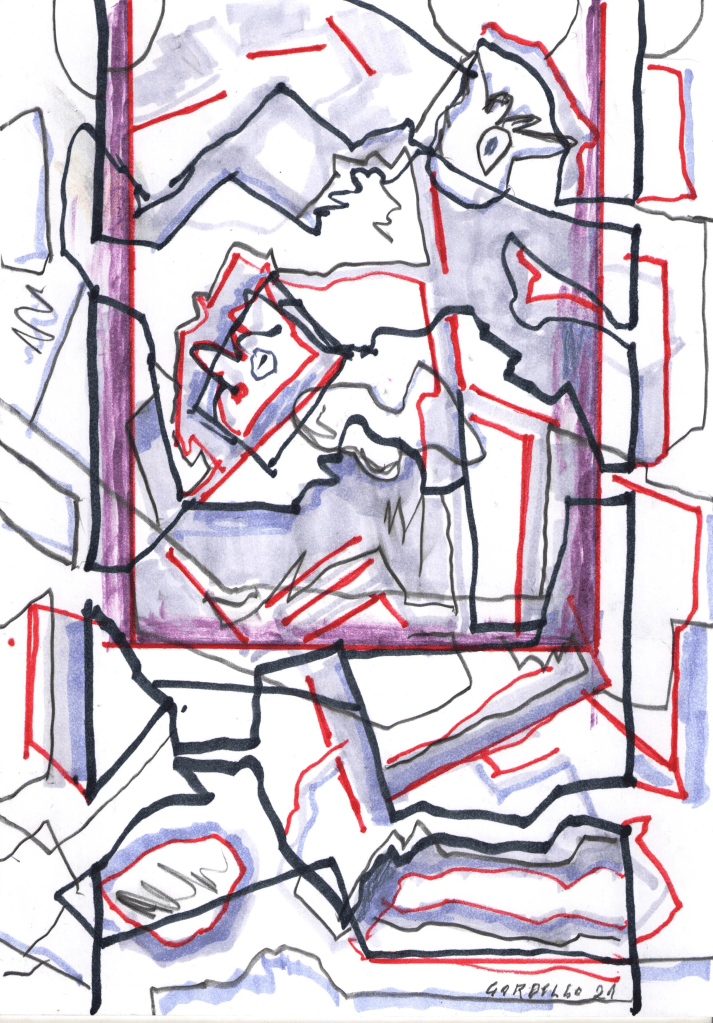
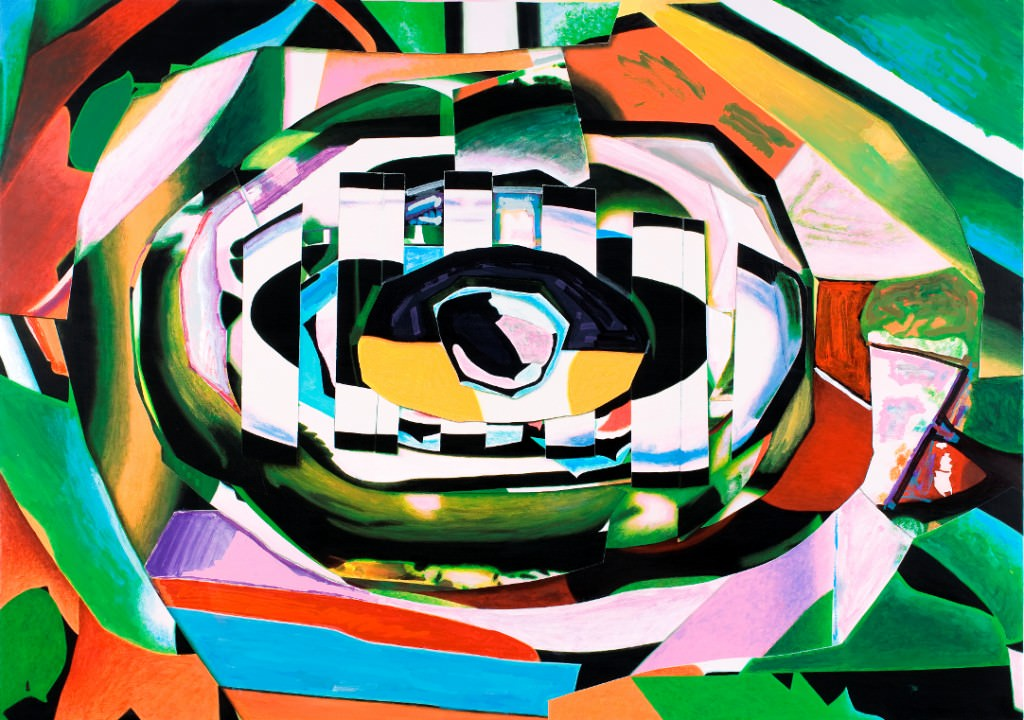
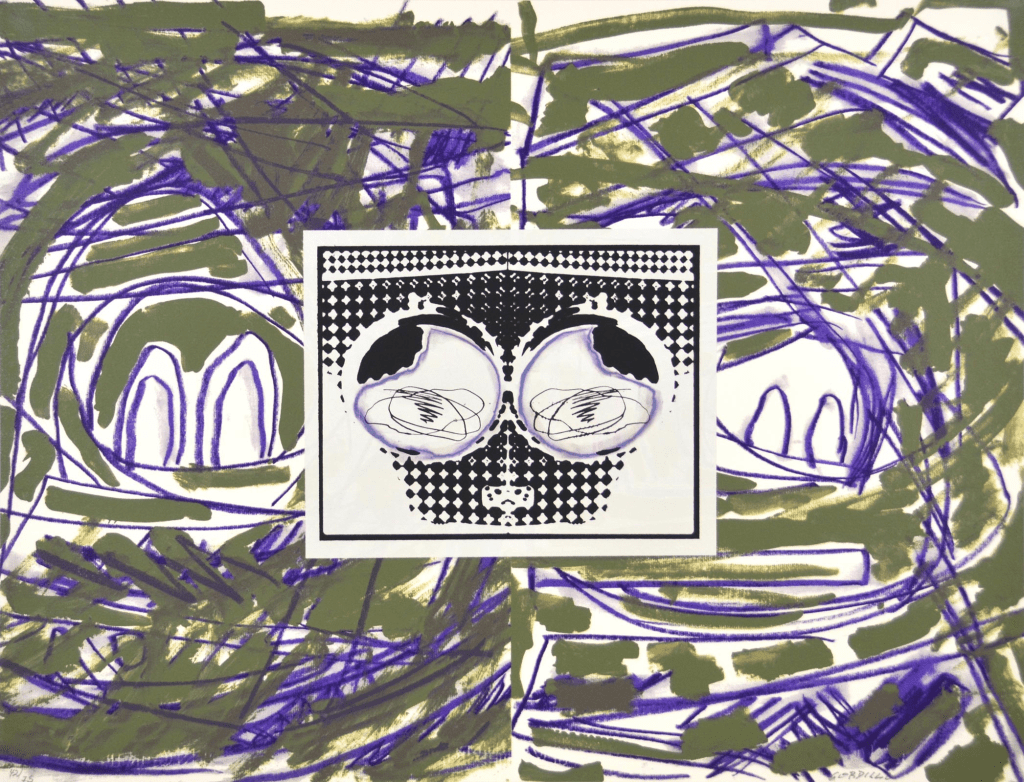
Uno de los grandes del arte abstracto español, Luis Gordillo nació en Sevilla en 1934. Sus obras están en los museos más grandes de Europa y Norteamérica. Gordillo estudió Derecho pero inmediatamente despues de terminar esa carrera comenzó la de Bellas Artes. A fines de los años cincuenta se marchó a París donde se inmerso en las vanguardias del arte del Siglo XX.
Trabajó el informalismo, o sea la version europea de lo que en America conocían como el expresionismo abstracto, siguiéndole los pasos a otro gran pintor español, Antoni Tàpies. Tambien hizo arte pop en los años sesenta. Gordillo, tras el descubrimiento y la práctica del psicoanálisis, mezcla en su obra simbología que procede del mundo del pensamiento, de la experiencia y el de la expresión estética.
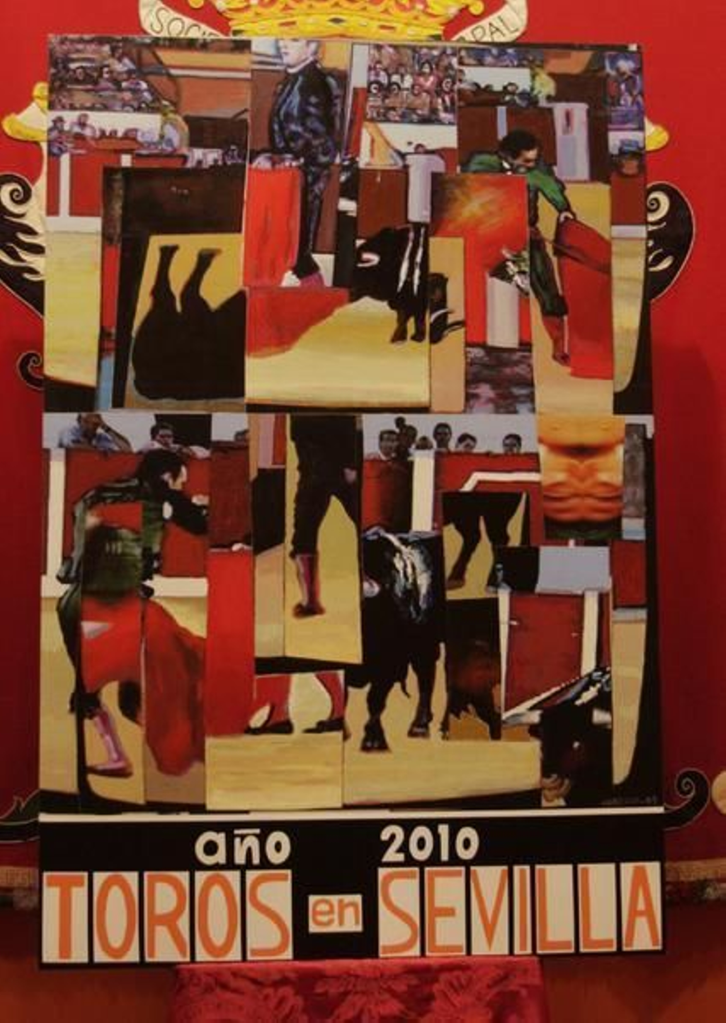
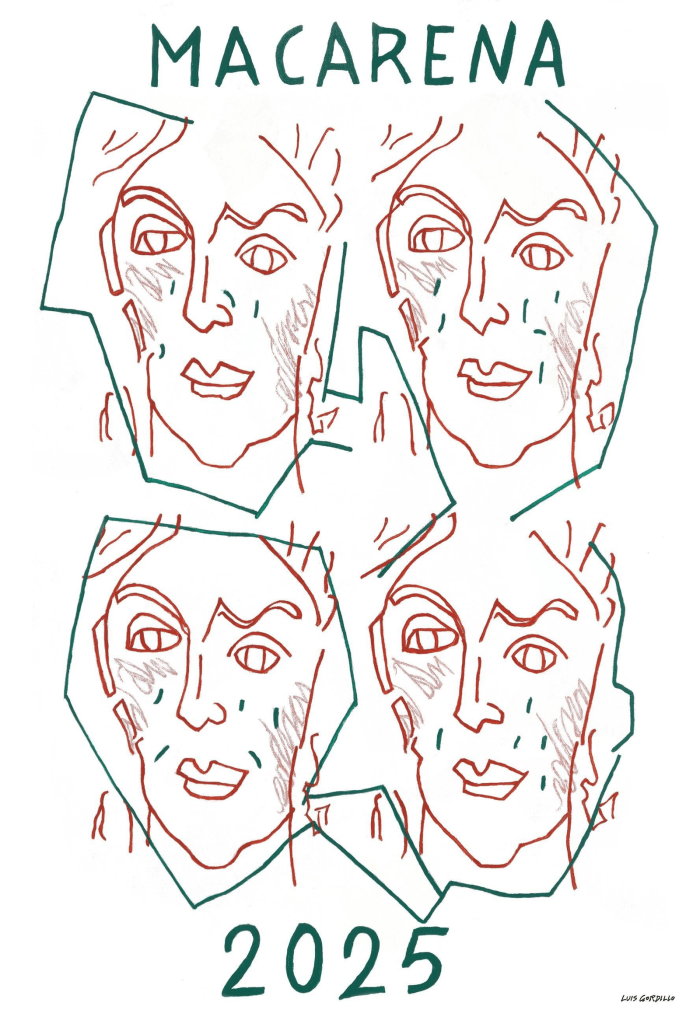
En 2010 se le encargó el diseño del cartel de la temporada taurina en la Real Maestranza de Caballería de Sevilla. En 2025 diseño el cartel de la Macarena de Sevilla que ha causado un tanto de controversia en Sevilla.