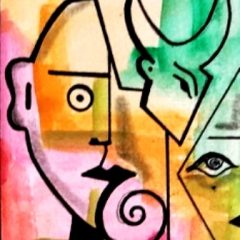
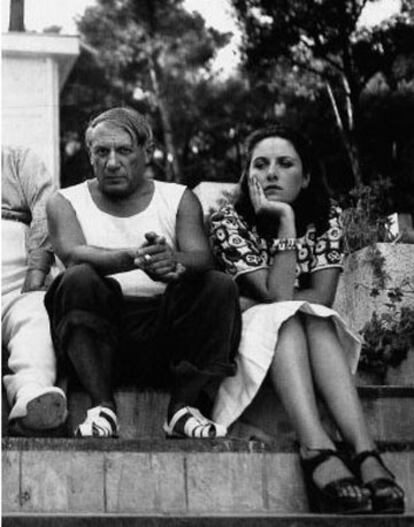
#art, Talking About Art, Chapter 2: Picasso and His Women

(Photo by Man Ray/1937/Photo Credits: Centre Pompidou, MNAM-CCI/Georges Meguerditchian/Dist. GrandPalaisRmn/detail)

Dora Maar

When we speak about Pablo Picasso and his relationship with women we should keep in mind that he was born in the XIXth Century (1881) and lived 73 years in the XXth. He died in 1973. He was not a man of our times or of our morality and beliefs…

But not surprisingly, in this age of pointing fingers to the past, he is now thought of an abuser, by some. Yet, not a single complaint about him was made by any of the women he supposedly abused. On the contrary, he kept them in the lap of luxury and made sure they were taken care of. And I am not saying that to lessen the impact of abuse, nor does that supplant the fact that it is evident that he mistreated many of the women in his life. But I am trying to explain, or mitigate, the charges by reminding one and all that he was a generous and giving person mostly liked by everyone, and never accused of domestic violence.

And yes, according to our standards, his treatment of women would be frowned upon today. But one cannot judge another time period with one’s own. Francoise Gilot said that to Picasso women were either goddesses or doormats. However, she proved that a woman could walk away from Picasso, should a woman want to. And she did. She did not allow him to bully her around and she left him. She was the only one among many. Did the act of leaving him make her a goddess? In any event, as we will see, the other women in his life adored him to the end.

One of the women in his life was Dora Maar. She was an artist, a photographer and a philosopher. Quite a match for Picasso. Being that she had been raised in Argentina, she spoke Spanish and I am sure they must have had brilliant conversations. She became his muse and he began to devour her. She suffered his infidelities and even his cruel treatments. Eventually he proclaimed that she was mad. He called her the crying woman and painted her in tears in many occasions.
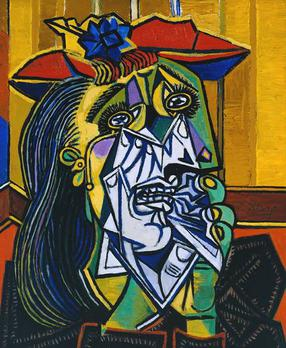
(Fair use/Pablo Picasso/Owners of this image are trustees of Picasso’s estate)

Eventually Picasso started painting the portraits of Dora Maar, the crying woman, wearing a hat. In Picasso’s iconography, the hat on the subject is a sign that the subject was crazy. When she saw herself painted in that manner she became greatly agitated and depressed. But to the end she remained absolutely faithful to Picasso, to the point of saying: “After Picasso only God.”
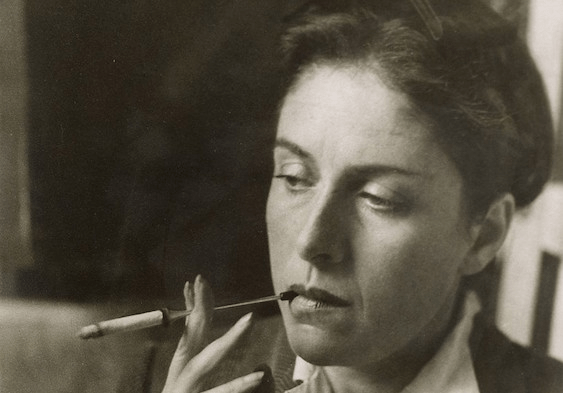
(Dora Maar/Izis/1946)

She was born Henriette Markovitch, on the 22nd of November 1907 in Paris. The Dora came perhaps from Theodora, a middle name? We do not know, but probably she added it later on in life. Her father was a Croatian architect and her mother was from Tours. She grew up in South America because of her father’s businesses. Her mother was strongly opposed to her relationship with Picasso. One day, while both women were in a violent phone discussion about the matter, her mother’s voice became absent. Because it was in Paris during the Nazi occupation Dora could not immediately go see what had happened, but the following morning she did go to her mother’s house and found her dead with the phone in her hand.
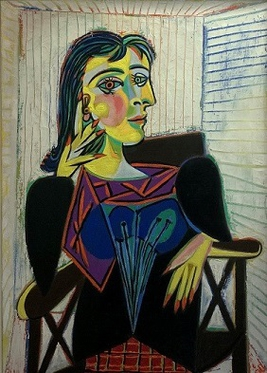
(Portrait of Dora Maar/Picasso/1937/Owners of this image are the trustees of Picasso’s estate)

Dora was a brilliant woman and artist. She was proud, elegant, silent and very intelligent. She had a distinct and complex personality that could have been formed by her sense of irony. And although she had impeccable taste in clothes, she liked to dress up in the fashion of past centuries. Was she trying to capture the essence and the spirit of those days?
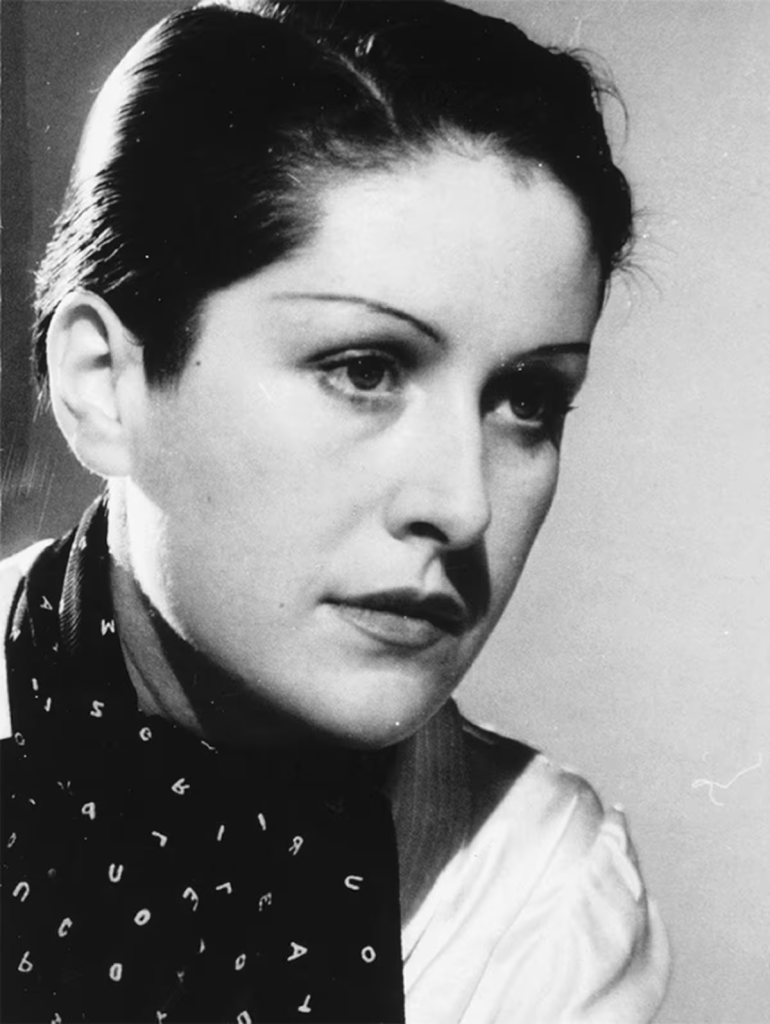
(Dora Maar circa 1930/Author unknown)

Pablo Picasso came into Dora Maar’s life in Paris, 1936. She was sitting at Les deux Magots, a Left Bank bar frequented by the cream of Paris’s artists and intellectuals. Picasso was there with friends and spotted her sitting alone and doing a most unusual thing. She had placed her gloved hand on the table and was plunging a knife between her fingers with fast motions, which resulted in sometimes cutting herself. Picasso supposedly walked up to her, introduced himself and asked for her blood-stained glove. At the time she was twenty eight years old and he was fifty four, and married to Olga Kocklova the Russian ballerina from the Ballets de Diaghilev, yet the attraction was there and the romance began.

It would be careless to say that their relationship was not explosive. It was passionate, violent, fulfilling, but completely destructive to Dora. Picasso at the time also had another mistress, Marie-Therese Walter, with whom he had a daughter, and by 1945 he had lost interest in Dora Maar. Of course that was when he met Françoise Gilot.

Dora’s mental health deteriorated quickly after that. She became reclusive and paranoid and eventually ended up committed to Saint-Anne’s hospital for the insane. There she was treated with electroshock therapy. It was not until Paul Éluard begged Picasso to take her out of there that she was released. It is no secret that Picasso mistreated and abused her. It was even said that he publicly beat her and that on one incident his driver said that he had placed her in the car unconscious after a beating.

After being released from the mental hospital Dora Maar cloistered herself in her apartment attempting to search for her inner self and the meaning of her life. She became a Catholic mystic, or perhaps even a fanatic. She painted and spent hours in solitary contemplation with only the company of few friends until her death in 1997.
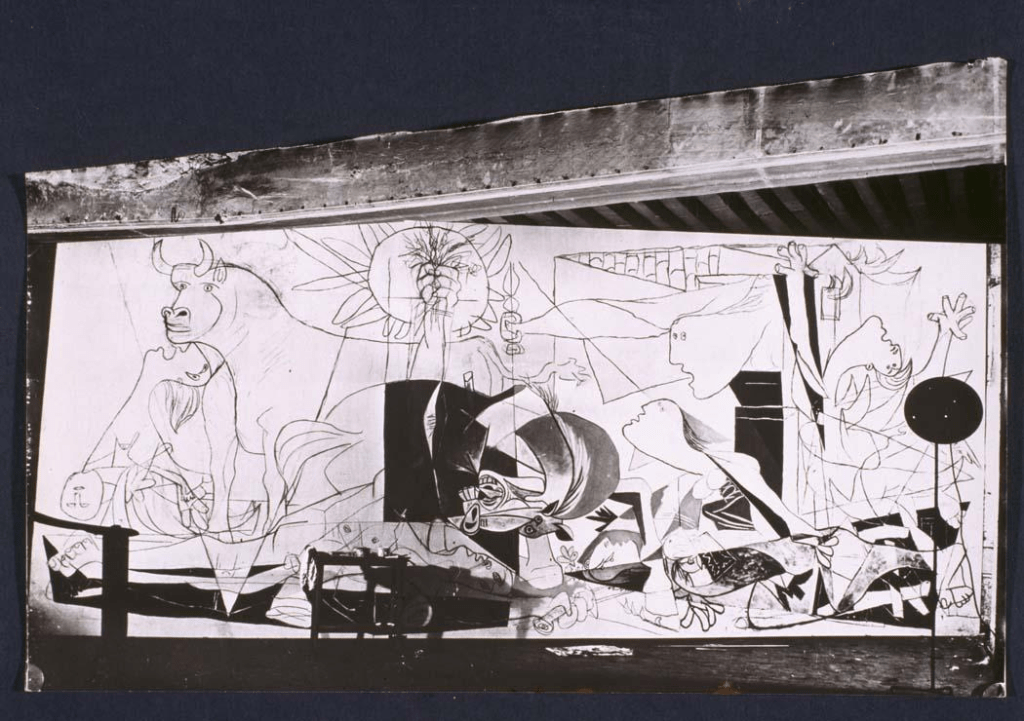
(Museo Nacional Centro de Arte Reina Sofia/photography by Dora Maar)

One of the most important things she ever did for Picasso was to photograph the development of Guernica. Her documentation of that process is a main attraction at the Reina Sofia Museum in Madrid which houses the painting. I would urge one and all to see it. I actually find the photographs of the process of Picasso creating that monumental work much more interesting than the painting itself. Although Guernica, because of its monumental size is amazing.

(Please don’t forget to like, comment and share)

CHEERS

#art, Street Art in Valencia…

(Photo by and property of Francisco Bravo Cabrera/artist unknown/All Rights Reserved)

This phenomenal piece of street art, on one of the old streets in the Russafa neighbourhood of L’Eixample of Valencia, caught mine eye and I wanted to share it to see if you could figure out what the hell it means!

I walk around this neighbourhood a lot and there is not much street art around. Not like in other sections of Valencia, like Ciutat Vella and El Carmen. But this one on this short, little and not too much transited street, is something of a work of art. I’ve no idea who painted it, but it was painted in the traditional style that one would create a mural. Nos stencils like the ones used by Banksy and his minions…

So, what do you think? What does it mean? Or does it mean nothing? I would like to know.

Here is some other ones (including some fallas) back from 2020…

(Please do not forget to like, comment and share)

CHEERS

#art, FEATURES by VALENCIARTIST: da-Al

(da-Al and her dog, photo courtesy and property of da-Al)

It was truly a pleasure to chat with da-Al and to discover her ideas on art and literature. My first interview with her was published in LatinosUSA (English Edition on Tuesday, 25.03.2025 titled Conversing With da-Al and today I present it, in full as a chapter of FEATURES by VALENCIARTIST. I hope you enjoy it as much as I did interviewing her.

IN HER OWN WORDS

Hi there! I’m da-AL, and since I learned to hold a pencil, I’ve been a writer. My journalism awards include an Emmy for Dark Waters and an earlier video, Homeless on the West Side, was nominated for an Emmy.

You can follow & share her blog about fun, love, & literature: HappinessBetweenTails.com

OUR CONVERSATION ABOUT ART AND WRITING

VALENCIARTIST: As a writer/novelist do you believe writers, and others in the arts, should publicly voice their opinions on politics and current affairs, not to preach but to inform?

da-AL: In the same way that conversations are influenced by the experiences of the speakers, stories can’t help but reflect their times of origin and the perspectives of those who weave them.

VALENCIARTIST: I see your future novels have titles that allude to music, Flamenco and the Tango. What does music do to inspire your creativity and are there other types of music that you like as well?

da-AL: My favourite thing is the uplift of dance which, of course, involves music. World music is especially thrilling, better yet, any dance my husband does with me. In ways that heal mind, body, and spirit, music and dance balance out my passions for writing and reading. For a long while I took flamenco classes, later Argentine tango classes (there are some videos of my honey and me tango-ing at my site), and now I’m beyond thrilled by the joy, health, and camaraderie of Zumba.

VALENCIARTIST: What is your opinion reference the use of AI in writing and in painting? And how do you see literature and the arts evolving?

da-AL: For non-writers who need to write business letters and the like, why not? It’s painful to see human jobs outsourced to machines, especially when only one person gets to amass incredible wealth. At the same time, it helps those who aren’t rich.

As for creative works, the question highlights how blurry the definition of art is.

When mainstream musicians incorporated electronic instruments, critics argued they weren’t making “real music.” Now people compose with a computer mouse and keyboard. The same apprehensions were voiced when computer video animation started to appear on big screens.

When it comes to painting, paints and brushes are involved. I’ve seen people sell paintings created by elephants and chimps. My local art store sells multiples that were surely painted by fancy printers. If those are “real paintings”, are they “real art”?

Now, when you ask about novels, that’s personal haha. If I guide an AI program to compose an entire book, I have to admit that it’s still a “real novel,” one needing the AI program’s by-line as much as mine. At this point, I doubt it would be fun to do and worthwhile to read. For sure, no agent or publisher would buy it from me, given how they state “no AI” on their guidelines.

New things, from art to how we treat each other, are often seen as radical. With time, the same people who initially balked will act as if those things are common sense. Since I can’t stop the evolution of literature and art, I resort to asking myself whether, case-by-case, I like it. Always, I’m intrigued by the electric passion that only a human can convey.

As for your question about how I think literature and the arts are evolving, we’re getting exponentially voracious for uniqueness and volume. Somewhere I read that music hardly changed for centuries until modern ideas of copyrights and ownership took hold. Before that, people sang and played tunes passed down for generation. Now everything is now about originality. We’re still human as ever, though. Always we’re guided by our thoughts and emotions, our need for survival, love, beauty, fun, well-being, and all the rest.

What works for me an artist is to look within, to continually find what inspires me and go with that.

Phenomenal! I thank you so much for your time and for your candid replies. I think we all would benefit greatly by going with what inspires us and searching for as one searches one finds…

+++

VALENCIARTIST: So is there anything you would like to say in closing da-AL?

da-AL: Yes, of course… Currently I am a novelist and formerly a journalist, and my awards include an Emmy for “Dark Waters: California Coastal Crisis.” Whether fictional stories or nonfiction for print, radio, TV, blogging, or podcasting, the writings that elicit the most reader response are my most intimate. I’m indebted to my multi-cultural grandmothers and to the care of strangers. In addition to my Iranian husband’s encouragement and my rescue pit-mix’s playfulness, which are everything to me.

At the moment, I’m querying for literary representation. My novel, «Flamenco & The Sitting Cat», is the story of Lali Catala’s love letter to all who feel too broken, too old, too young, or too whatever to not deserve happiness. Lali’s grandmother from Barcelona returns from the grave to challenge the 40-year-old cynic to do what she swore she never would—to shop for a husband. The resulting comedy of errors involving heart, career, and family teaches Lali that the richest love lies within us and that life is a series of coming-of-ages.

Across all my social media, 10,000 people follow my blog, HappinessBetweenTails.com and you can too. Thank you.

+++++

This has been a fun and enlightening interview with a very interesting and prolific writer. I wish to thank da-AL for taking the time to talk to us here at LatinosUSA. We certainly appreciate it. And we think you too have enjoyed out conversation with da-AL.

CHEERS

AND…

If you are a poet, writer, painter, musician or involved in any way with the fine arts, and you want to be a protagonist on FEATURES by VALENCIARTIST, all you have to do is reply to this post with your email address and we will contact you.

#art, Conoce a Pino – Meet Pino

(Image properly of Francisco Bravo Cabrera/All Rights Reserved)

“Pino” el percusionista… “Pino” the Percussionist

Ahora en Omnia Caelum Studios València – Now at Omnia Caelum Studios València

Síguenos en Instagram: @Francisco_Bravo_Cabrera

Follow us on Instagram: @Francisco_Bravo_Cabrera

+++

GRACIAS – CHEERS

#music, Great British Bands, Chapter 11: Pink Floyd

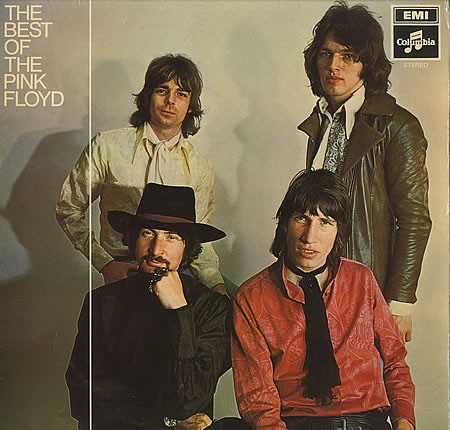
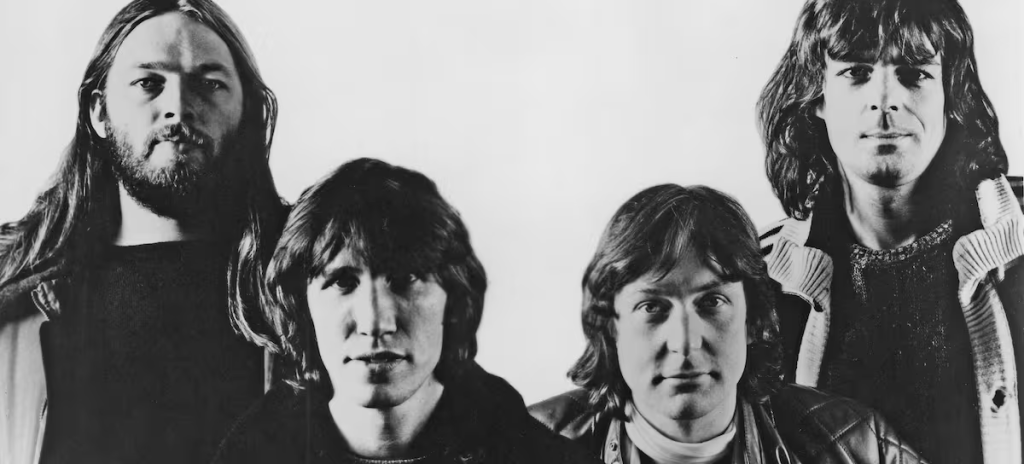
(EMI Records/unknown author)

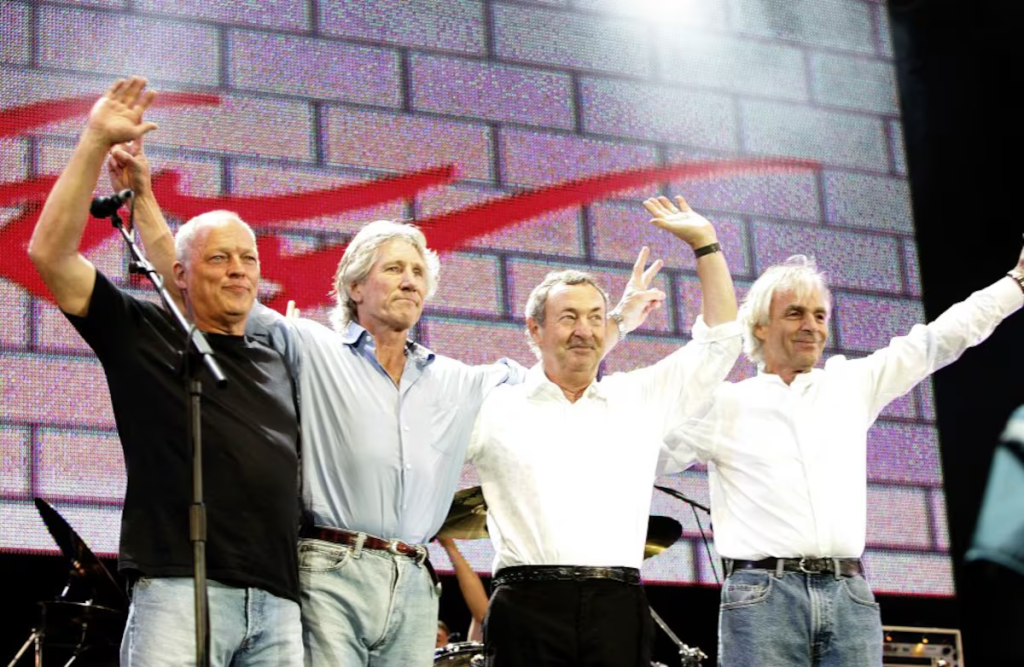
Most definitely one of Britain’s powerhouse groups and the creators of iconic songs and of one of the greatest albums in rock history, Dark Side of the Moon, we have the phenomenal Pink Floyd! They were formed in London in 1965. They did space rock, psychedelic rock, symphonic rock and progressive rock. They did it all and gained quite a following… Pink Floyd has sold over 280 million albums worldwide! When they first got together, the four above, they still called themselves (1964) the Tea Set Barrett but Syd Barret, leader of the group at the time, suggested The Pink Floyd, uniting the names of two blues musicians he admired: Pink Anderson y Floyd Council. «The» was utilised until 1968, although David Gilmour continued to refer to the group as The Pink Floyd until 1984.

David Gilmour, Roger Waters, Nick Mason y Rick Wright/London 2005/MJ Kim/GETTY IMAGES)

​But there is too much to say about one of the most influential groups in rock history, and I know you know it all anyways, so I will leave it there and let you enjoy their music…

CHEERS

#art, Conoce a Pino – Meet Pino

(Image properly of Francisco Bravo Cabrera/All Rights Reserved)

“Pino” el percusionista… “Pino” the Percussionist

Ahora en Omnia Caelum Studios València – Now at Omnia Caelum Studios València

Síguenos en Instagram: @Francisco_Bravo_Cabrera

Follow us on Instagram: @Francisco_Bravo_Cabrera

+++

GRACIAS – CHEERS

#music, Great British Bands, Chapter 11: Pink Floyd

(From left to right: David Gilmour, Roger Waters, Nick Mason y Richard Wright/Public Domain/Unknown author)

Most definitely one of Britain’s powerhouse groups and the creators of iconic songs and of one of the greatest albums in rock history, Dark Side of the Moon, we have the phenomenal Pink Floyd! They were formed in London in 1965. They did space rock, psychedelic rock, symphonic rock and progressive rock. They did it all and gained quite a following… Pink Floyd has sold over 280 million albums worldwide! When they first got together, the four above, they still called themselves (1964) the Tea Set Barrett but Syd Barret, leader of the group at the time, suggested The Pink Floyd, uniting the names of two blues musicians he admired: Pink Anderson y Floyd Council. «The» was utilised until 1968, although David Gilmour continued to refer to the group as The Pink Floyd until 1984.

David Gilmour, Roger Waters, Nick Mason y Rick Wright/London 2005/MJ Kim/GETTY IMAGES)

​But there is too much to say about one of the most influential groups in rock history, and I know you know it all anyways, so I will leave it there and let you enjoy their music…

CHEERS

#poem, «One Night I Danced on Bourbon Street»

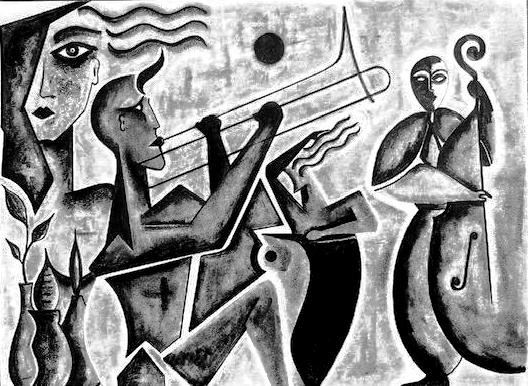
(«Jazz en la Calle de Borbón»/Ink on paper by Francisco Bravo Cabrera/All Rights Reserved)

ONE NIGHT I DANCED ON BOURBON STREET

One night I danced on Bourbon Street,
It was so very long ago,
and I realised the feet that danced there
deserved a place to go,
to find a sheltered hideaway
and refuge from the cold,
of stones that hold the dirt of years
and much, much more
I’m told.

I’m told that deep within the cracks
that urine, gin and rain have carved
upon this street of dancing hearts,
sleep ghosts, eternal madness,
who’ve hidden there the first few notes,
the chords that jazzmen
all are wondering
If they’ll ever hear at all.

But I heard them as I jumped and swayed,
the notes that they were seeking,
while voodoo priests and strippers
through hurricanes were speaking,
and little boys with tap shoes
went dreaming with their feet
and danced a soft shoe carefully
we do all need to eat.

I also heard the voices of the souls that wonder here,
some searching for the rising sun
some searching for a beer,
and I looked at them and smiled,
reminding them that some remember,
assuring them their time’s not ending.
And I danced all night on Bourbon Street
sparks and farewells sending…

C.2025, Francisco Bravo Cabrera, 25 MAR 2025, Valencia, España

#poem, «One Night I Danced on Bourbon Street»

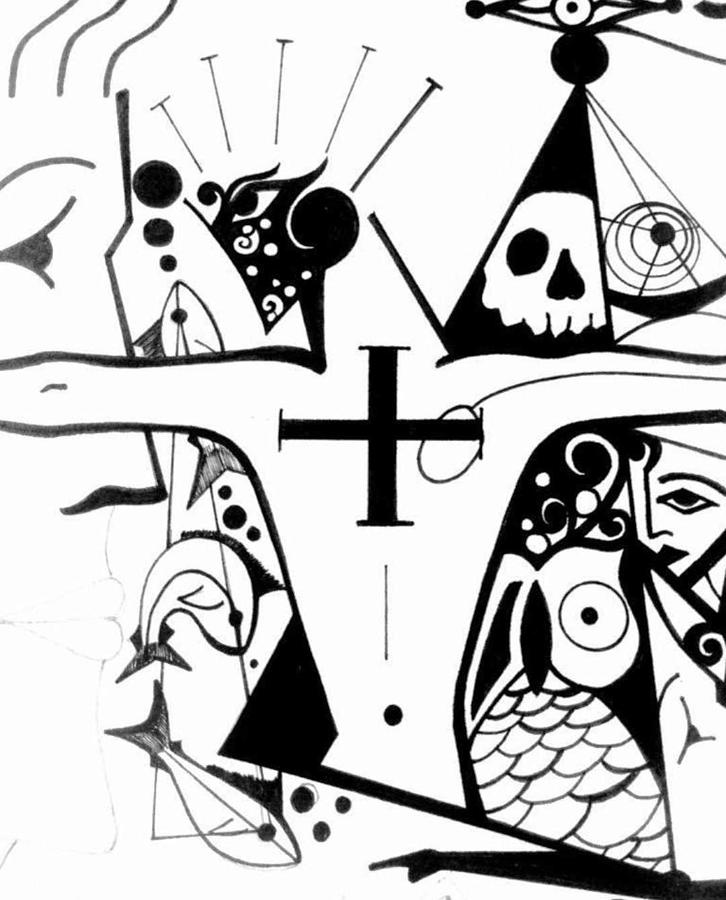
(«El bailarín de la Calle de Borbón»/Ink on paper by Francisco Bravo Cabrera/All Rights Reserved)

ONE NIGHT I DANCED ON BOURBON STREET

One night I danced on Bourbon Street,
It was so very long ago,
and I realised the feet that danced there
deserved a place to go,
to find a sheltered hideaway
and refuge from the cold,
of stones that hold the dirt of years
and much, much more
I’m told.

I’m told that deep within the cracks
that urine, gin and rain have carved
upon this street of dancing hearts,
sleep ghosts, eternal madness,
who’ve hidden there the first few notes,
the chords that jazzmen
all are wondering
If they’ll ever hear at all.

But I heard them as I jumped and swayed,
the notes that they were seeking,
while voodoo priests and strippers
through hurricanes were speaking,
and little boys with tap shoes
went dreaming with their feet
and danced a soft shoe carefully
we do all need to eat.

I also heard the voices of the souls that wonder here,
some searching for the rising sun
some searching for a beer,
and I looked at them and smiled,
reminding them that some remember,
assuring them their time’s not ending.
And I danced all night on Bourbon Street
sparks and farewells sending…

C.2025, Francisco Bravo Cabrera, 25 MAR 2025, Valencia, España

#art, Women in Art: Judith Leyster

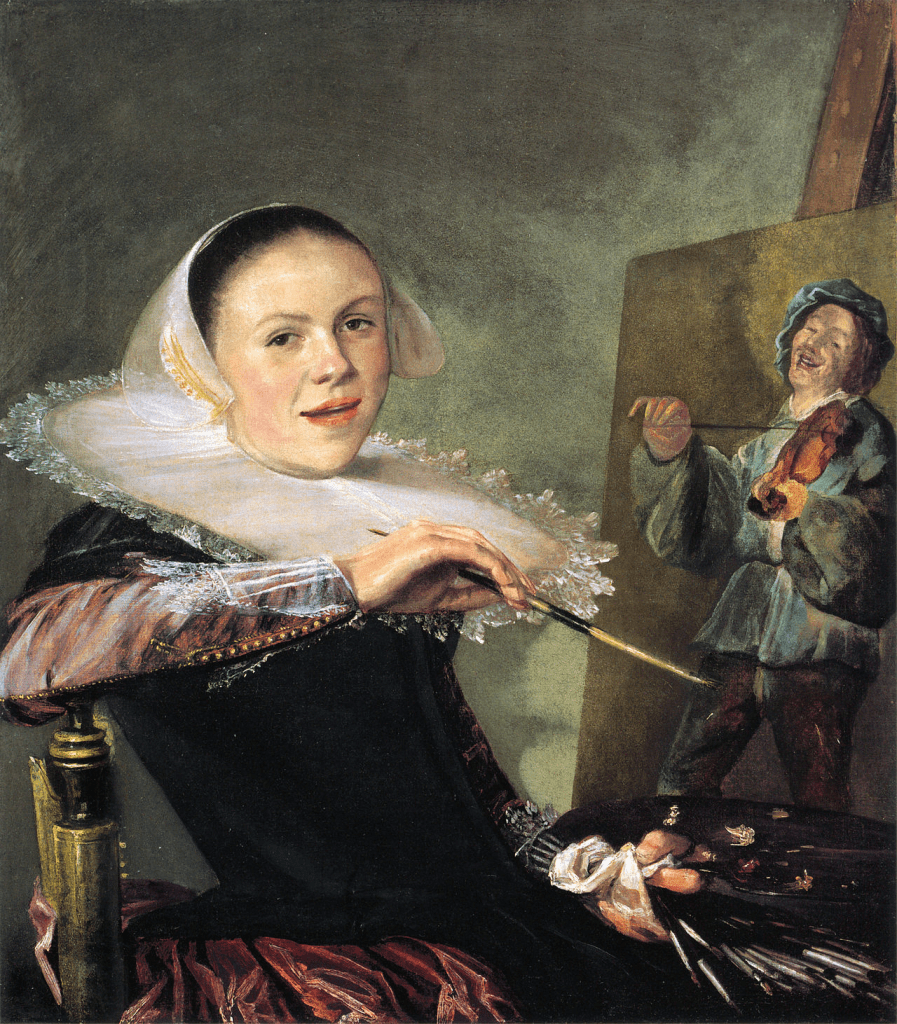
(Self-Portrait/1633/Public Domain/Wikimedia Commons)

I must confess that I did not know much about this painter, mainly because they did not mention her at uni, but what I have discovered is incredible! Leyster, a Dutch artist from the Golden Age of Netherlander art, was not given credit for her work. Her works were attributed to Frans Hals, a baroque artist considered a master portrait painter, or to her husband, Jan Miense Molenaer, also a painter and engraver. In 1893 Cornelis Hofstede de Groot, a collector and curator, gave her the authorship of six paintings which carried her distinctive signature ‘JL’. It is incredible, but possibly because after her death many of her paintings were placed in inventory as simply being of the wife of Molenaer», and not as Judith Leyster.

She was born in Haarlem, on the 28th of July of 1609 and died in Heemstede, on the 10th of February of 1660. It is believed that her first signed commission was dated 1629. Four years later (1633), at the age of 24 years, she was admitted into the Guild of Saint Luke in Haarlem. She might have been the first female artist to be registered in the guild. But it might also have been another female artist (which we will feature here in the future) Sara van Baalbergen, who was registered, it is believed, in 1631. Judith was registered in the guild and recognised as an artist, not like many other women who were registered as embroiderers, ceramists or wood and metal workers. Some were added to the lists of the guild as the successors of their deceased artists husbands.

Her self-portrait of 1633 (see above) is considered her audition to the guild. The self-portrait definitely shows some historic changes in the style of portraits of women. Her pose is relaxed and dynamic in opposition to the style of the times. Her dress denotes her status and dignity. She presented herself as a lady of society and means. After all one can present themselves any way one wants in a self-portrait. She demonstrates the dignity of her profession.

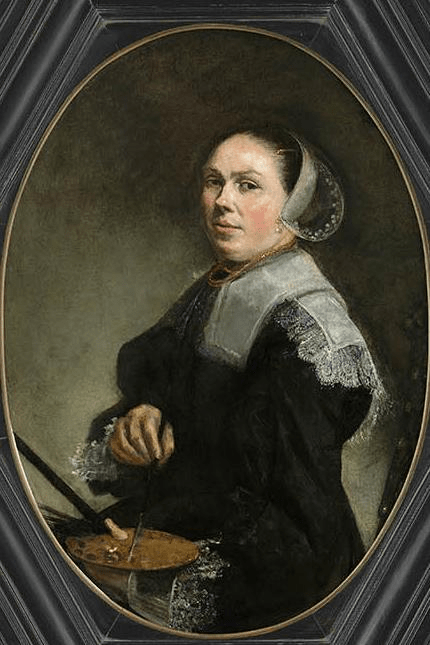
(Self Portrait/1630/Public Domain/Wikimedia Commons)
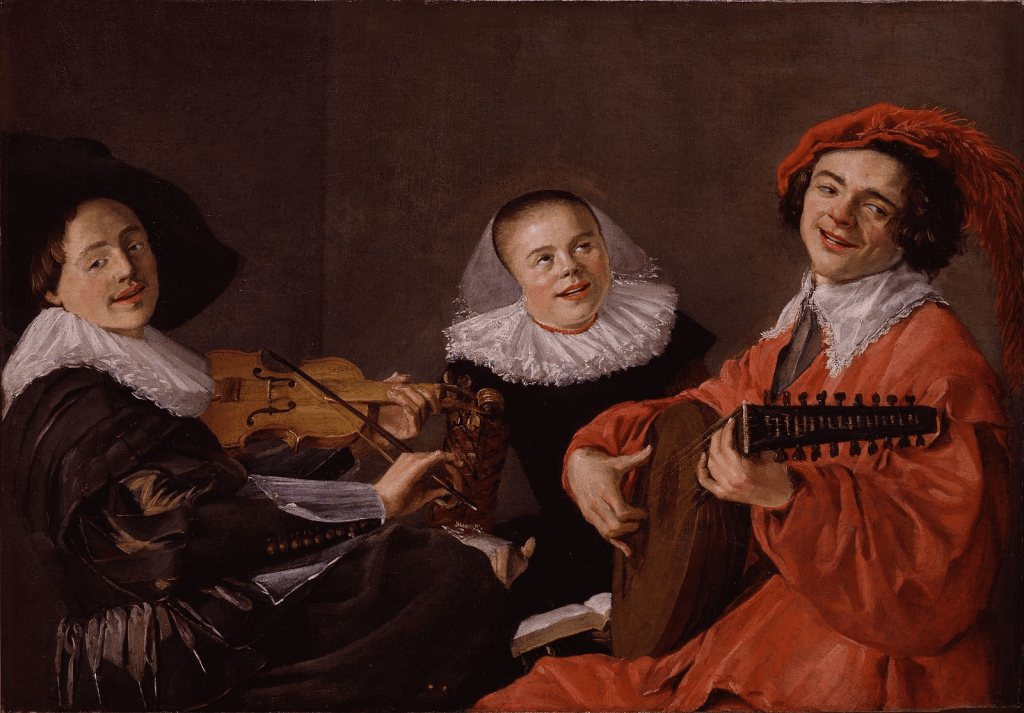
(The Concert/1631/Public Domain/Wikimedia Commons)
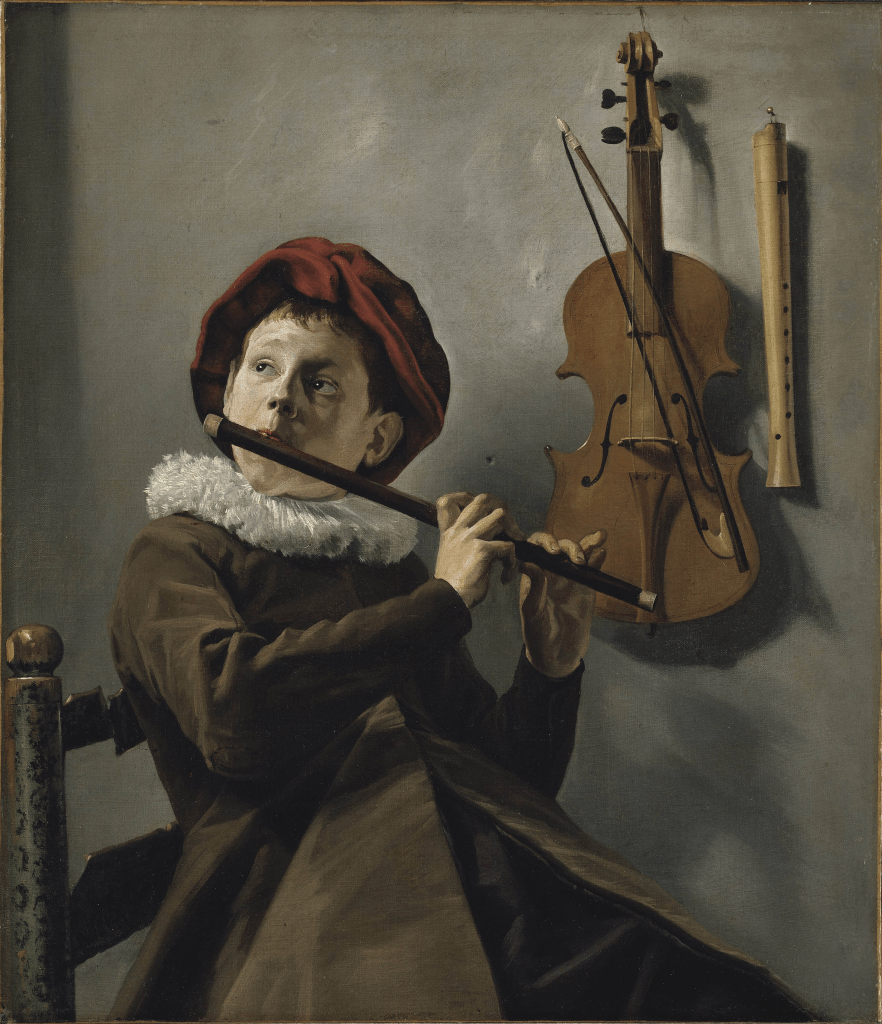
(Boy Playing the Flute/1630/Public Domain/Unknown author)

You can see some of her works in various museums: The Rijksmuseum of Ámsterdam; The Mauritshuis of The Hague; The Museum Frans Hals of Haarlem; The Louvre of Paris; The National Gallery of London and the National Gallery of Art of Washington D. C…

CHEERS