#art, A Page from Art History: Masaccio

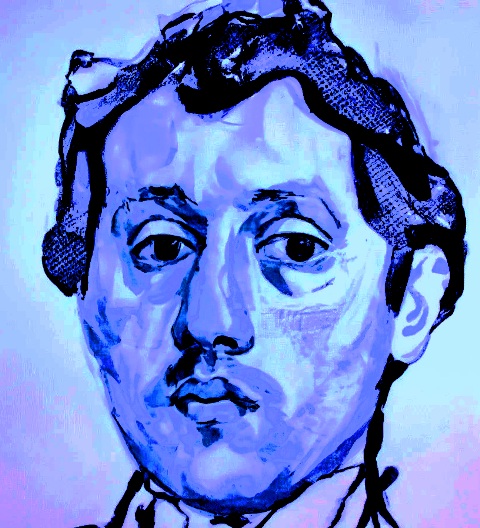
(«Retrato de Masaccio»/Francisco Bravo Cabrera/All Rights Reserved)

MASACCIO

Today I would like to talk to you about an Early Renaissance painter from Italia that no one talks about a lot but who is important for art history and I think you should know more about him, or if you do not know anything about him, you should…

Masaccio, born Tommaso di Ser Giovanni di Simone in 1401 in San Giovanni Valdarno, in the region of Tuscany. He died in Rome in 1428…

Masaccio was a painter of the Early Renaissance who, although he had a brief career, transformed the course of Western art. He was born near Florence, and he trained in Florence. Masaccio quickly gained recognition for his innovative use of perspective, naturalism, and light. He rejected the Gothic stylization which was still common in his time. Masaccio was a pioneer of a new visual language that emphasized three-dimensional space, volumetric figures, and psychological realism.

His most important works include the Brancacci Chapel frescoes in Santa Maria del Carmine, Florence, where scenes such as The Tribute Money and The Expulsion from the Garden of Eden demonstrate his mastery of perspective, emotion, and storytelling. He also collaborated with Masolino and may have been influenced by Brunelleschi and Donatello, as he shared with these Renaissance greats an interest in proportion and classical harmony.

Masaccio’s career was tragically short as he died when he was about 26 or 27 years of age. However, his innovations surely influenced later masters such as Fra Angelico, Filippo Lippi, and especially Michelangelo. It can be safely said that Masaccio’s work marks the true beginning of Renaissance painting, bridging the medieval and the modern.

I think you will agree with my assessment of this great Italian master.
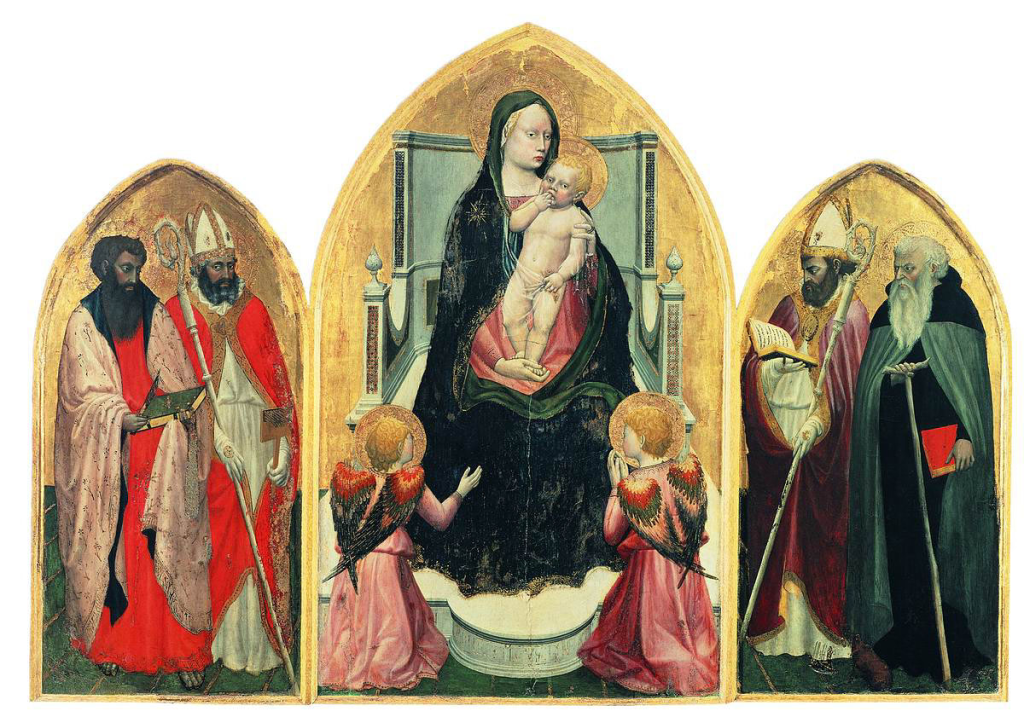

(San Giovenale Triptych/1422/Public Domain/Image source: Wikimedia Commons)
(Holy Trinity/1425/28/Public Domain/Image source: Wikimedia Commons)
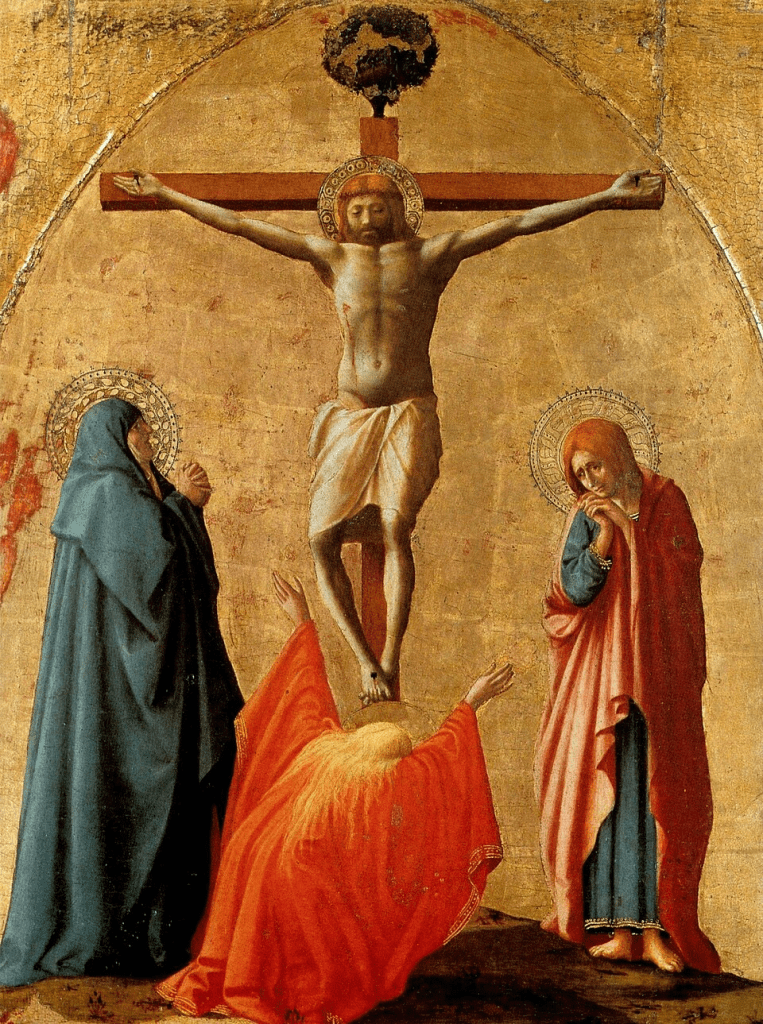
(Crucifixion/1426/Public Domain/Image source: Wikimedia Commons)

CHEERS

#art, #music, poetry, : «WINTER»

(Blizzard in Manhattan/foto by and property of Francisco Bravo Cabrera/All Rights Reserved)

WINTER SPEAKS
(Based on Vivaldi’s “Winter”)

The ground is frozen and still,
and the wind strikes hard,
the earth holds its breath,
as the air becomes a cutting sound.
Footsteps marking time in stinging air,
Cold fingers ache to feel the flames soft warmth,
while nature lies stripped,
bare,
laid fair.

While inside the flames resist the night,
snow taps glass with muted might.
Brandy’s comfort swirls in brilliant glass,
and hums in peace,
a sheltered space,
while storms patrol the world’s hard face.
Ice will soon betray the hurried step,
the sky releasing now what it has kept.
Winter speaks in steel and snow,
a trial endured, then let go.

Francisco Bravo Cabrera – 06 JAN 2026 – Valencia, España

+++

Brief Synopsis of “Winter” from The Four Seasons

“Winter” (L’Inverno), the final concerto of Antonio Vivaldi’s The Four Seasons (1725), depicts the harshness and stillness of winter through vivid musical imagery. The first movement portrays bitter cold, chattering teeth, and stamping feet against freezing winds. The slow second movement offers a moment of respite, suggesting warmth and shelter by the fire while rain falls gently outside. The final movement returns to tension and motion, evoking slipping on ice, cracking frost, and the relentless force of winter storms. Throughout, Vivaldi uses sharp contrasts, rhythmic urgency, and textural effects to create a highly programmatic depiction of the season.

Brief Biography of Antonio Vivaldi

Antonio Lucio Vivaldi (1678–1741) was an Italian Baroque composer, virtuoso violinist, and Catholic priest, born in Venice. Nicknamed Il Prete Rosso (“The Red Priest”) due to his red hair, Vivaldi composed hundreds of concertos, as well as operas, sacred music, and chamber works. He spent much of his career associated with the Ospedale della Pietà, a Venetian institution for orphaned and abandoned girls, where he trained and composed extensively for its renowned ensemble. Although celebrated during his lifetime, Vivaldi fell into obscurity after his death and was rediscovered in the early 20th century. Today, he is recognized as one of the most influential composers of the Baroque era.

CHEERS

Open Call: Poets, Writers, Artists, and All Engaged in the Fine Arts…

(Graphic design by Francisco Bravo Cabrera/All Rights Reserved)

We at LatinosUSA (English and Spanish Editions) are extending an open invitation to all who would like to see their works published in our online magazine. LatinosUSA is part of the great network of online magazines under the MASTICADORES seal. We publish every day and would like to have you join our extensive list of collaborators from all over the world.

All interested please email me, Francisco Bravo Cabrera, Poetry Editor at:

ArribaPamplona@gmail.com

CHEERS

UN LLAMADO A POETAS Y ESCRITORES: VENID…

(Diseño gráfico de Francisco Bravo Cabrera/Derechos Reservados_

Comenzamos el año, y la temporada 2026, de la revista online LatinosUSA (English/Español) que os invita a colaborar con nosotros. Somos parte de la gran red de revistas online bajo el sello de MASTICADORES, creada por nuestro editor y jefe, Juan Ré. Llamamos a poetas, escritores y artistas que participan en cualquiera de las bellas artes para invitaros a publicar en nuestra revista. Publicamos diariamente.

Y a ti, si te interesa, únete a nuestro extenso grupo de colaboradores del mundo entero. Mándame un email y te explicaré el proceso.

Francisco Bravo Cabrera, editor de poesía: ArribaPamplona@gmail.com

GRACIAS

Art History Part VI: Filippo Brunelleschi

(Brunelleschi)

Perhaps the creator of the Renaissance…

Filippo Brunelleschi (1377–1446), Italian architect and engineer, widely regarded as one of the key figures in the dawn of the Italian Renaissance. He is best known for his ground-breaking work in architecture, especially for designing the iconic dome of the Florence Cathedral (Santa Maria del Fiore), which became a symbol of Renaissance innovation and human achievement.

Brunelleschi was total genius. He started his career as a sculptor, then focused on architecture and engineering. In these fields he made his greatest contributions to history. He is often credited with developing the principles of linear perspective, which revolutionized the way space and depth were represented in art, influencing painters like Masaccio and later Renaissance artists.

MAJOR WORKS

The Dome of Florence Cathedral (Duomo di Firenze). This is his masterpiece. Brunelleschi developed an innovative solution to construct the massive dome without the use of scaffolding, creating a double shell structure that was both stable and aesthetically harmonious. The dome remains one of the largest and most impressive domes in the world.

The Pazzi Chapel (Basilica di Santa Croce). This chapel is a model of Renaissance architecture, featuring a balanced, harmonious design with classical elements like domes and arches. It exemplifies Brunelleschi’s mastery of space, geometry, and proportions.

Ospedale degli Innocenti. This hospital, in Florence, is another seminal work of Brunelleschi’s. It was one of the first buildings to incorporate the use of classical columns in a fully realized Renaissance style, blending classical forms with modern functionality.

WHY HE IS CONSIDERED THE CREATOR OF THE RENAISSANCE

Brunelleschi shifted the focus of architecture and engineering toward a renewed study of the classical past. This led to the Renaissance revival of ancient Roman and Greek principles, blending them with the new humanist ideals of the time. His mastery of perspective, both in art and architecture, also played a phenomenal role in the development of Renaissance visual culture.

Brunelleschi led the transition from medieval Gothic architecture to the balanced, proportioned, and rational designs that characterize Renaissance architecture. By combining art, mathematics, and engineering, he pushed the boundaries of what was thought possible in construction, influencing generations of architects and artists who followed.

In truth, Brunelleschi was more than just an architect; he was an inventor and a visionary, embodying the spirit of Renaissance innovation and exploration.

CHEERS