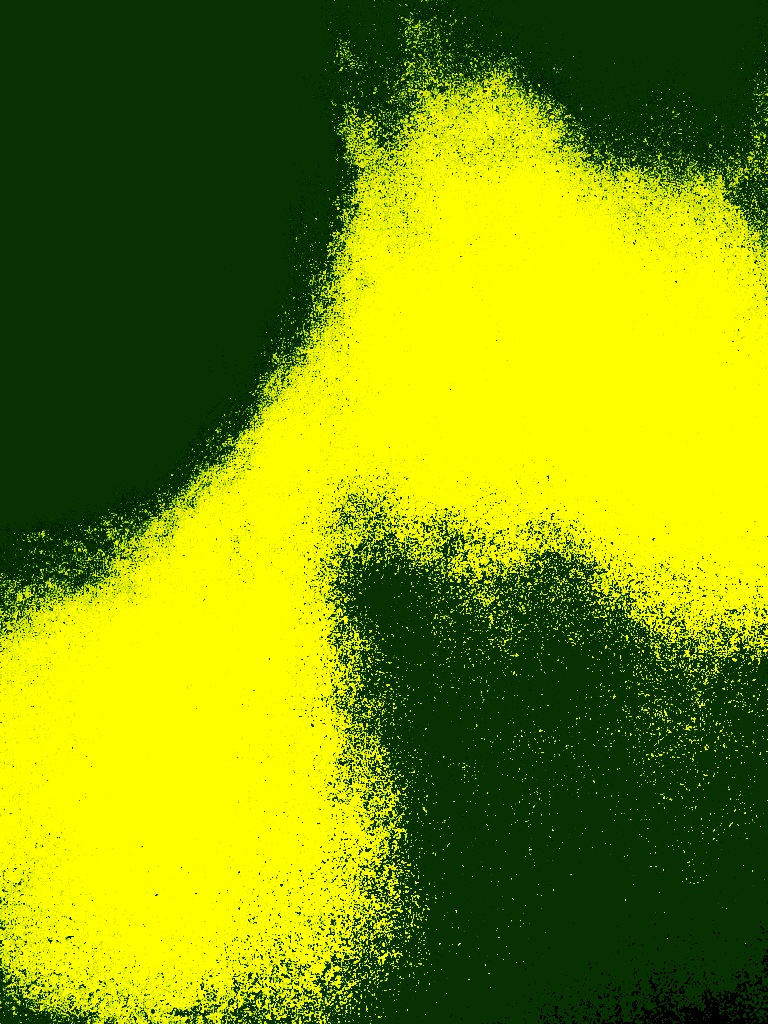
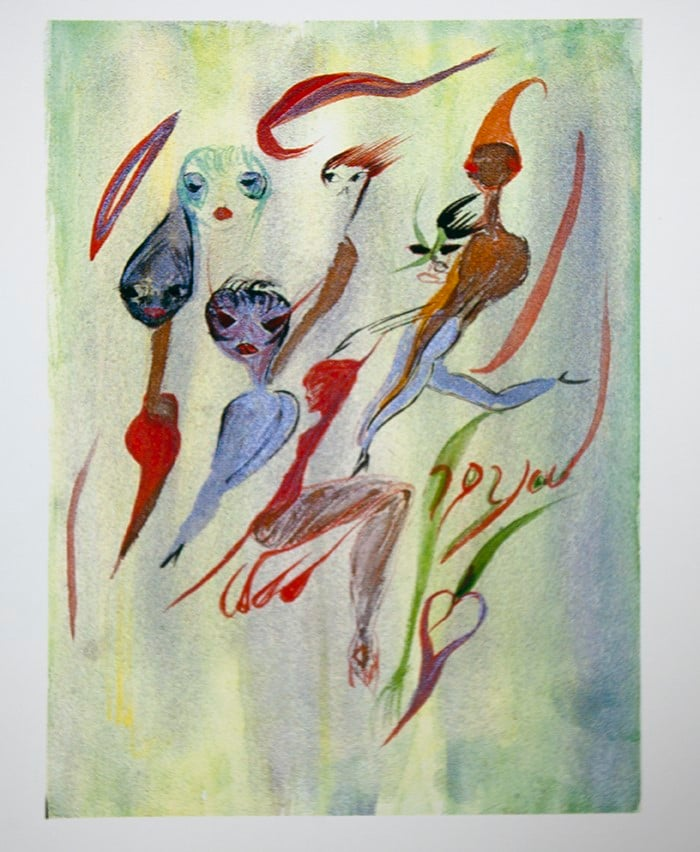
(«Leyenda» Francisco Bravo Cabrera/Derechos Reservados/All Rights Reserved)
I have talked about how important colours are in my work, now I am going to tell you why…
First, because colours help tell the story, and believe me, every painting tells one, either figuratively or abstractly. Colours elicit a psychological reaction in the observer; they focus attention on certain aspects of the composition more than others; establish the tone and atmosphere where the painting «lives», and highlight changes in the dynamics of the composition.
This is how colours are defined in art:
Monochromatic: A single colour with its nuances, shades and tones. A monochromatic work often serves well when one wants to harmonize the elements of the composition.
Complementary: These are the colours that are situated opposite to each other on the colour wheel. E.g., red and green. They are used to create unity and dynamics in the composition.
Analogous: Colours that are positioned close to or next to each other on the colour wheel. These help create a composition that is not very properly synchronized and perhaps even a little dystopic.
Triadic: This is the use of three colours that are located evenly spaced on the colour wheel. For example, red, yellow, and blue. Using triads achieves a changing appearance that can even escalate to a state of chaos.
It is important to keep in mind that colours are much more than decorative aspects. Colours narrate a story, guide your eyes, and reach into the depths of the soul.
(Please do not forget to like, comment and share, it is important)
(Artwork properly of Francisco Bravo Cabrera/All Rights Reserved)
Is a painting less than if it does not have color?
Do we all see the same colours?
What does colour do to a work of art?
Some paintings are composed of nothing but colour. These are abstract and need to rely on the power of colour. Kandinsky saw colours as sounds and separated them and identified them. That was how he began his abstract work. What do you think of abstract art?
What do colours say to you?
A favourite colour?
(Artwork property of Francisco Bravo Cabrera/All Rights Reserved)
(«YelloAbstrak»/Francisco Bravo Cabrera/Derechos Reservados/All Rights Reserved)
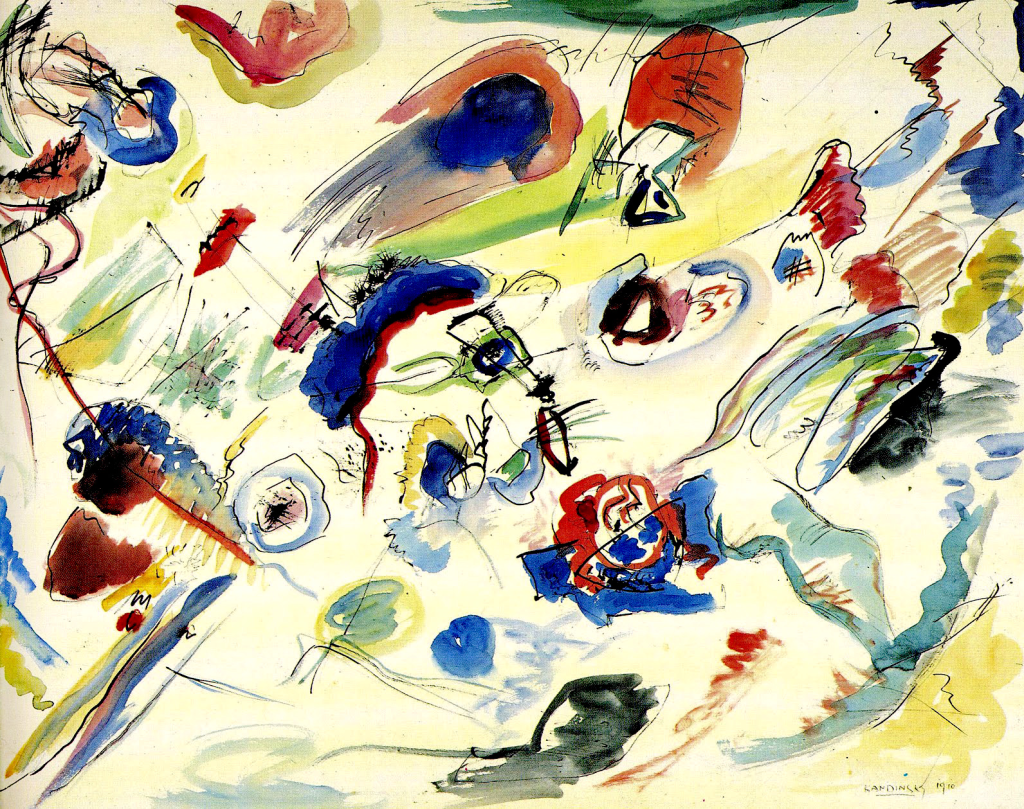
La abstracción es una de las vanguardias artísticas del Siglo XX. Segun la historia del arte Vassily Kandinsky había inventado el arte abstracto con su acuarela abstracta de 1910…
+++
Abstractart is one of the art vanguards of the XXth Century. According to art history, Vassily Kandinsky invented it when he created his 1910 watercolour…
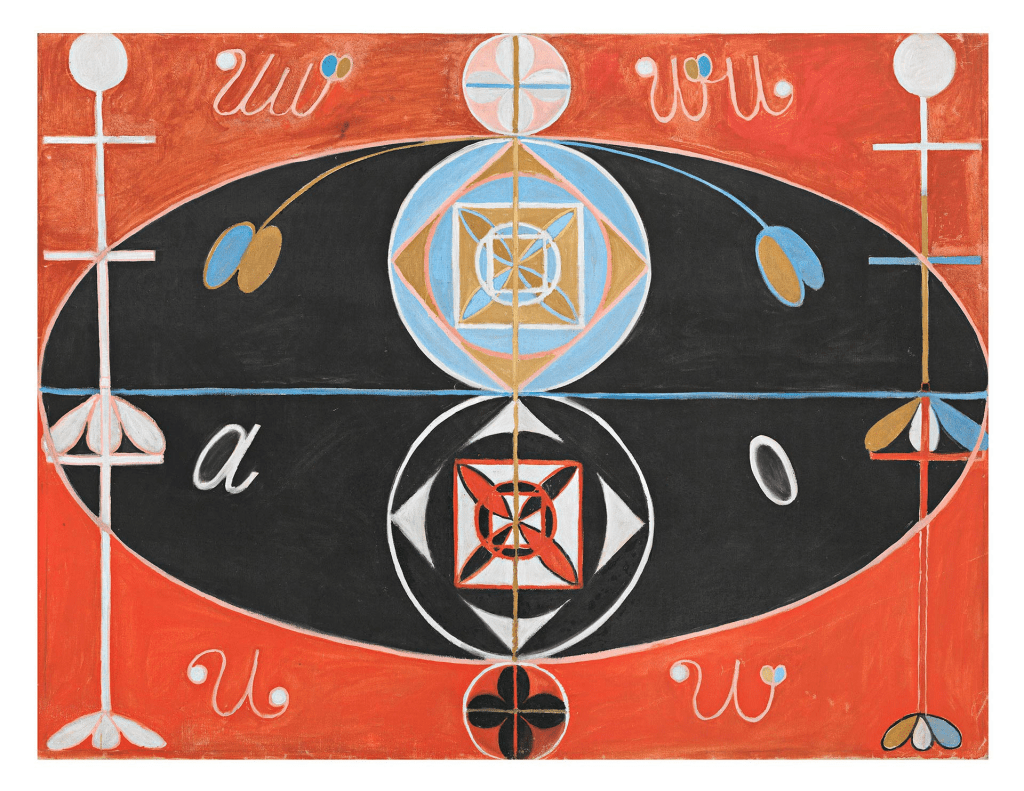
Ahora algunos dicen que no fue asi que la pintora…una mujer…Hilma af Klint fue la primera en pintar un cuadro abstracto, digamos, uno como este…
+++++
Now some say that it was not like that, that Hilma af Klint…a woman painter…had already been making abstract paintings, like this one:
(Abstraccion de Hilma af Klint/Abstract by Hilma af Klint)
Para estar claro, en el arte hay muchos diferentes estilos, muchas escuelas y muchas vanguardias, pero básicamente hay dos tipos de arte, el arte figurativo y el arte abstracto. ¿Como sabemos cual es cual? Yo te lo voy a decir y es simple. Si un cuadro, una pintura o un dibujo contiene elementos que fácilmente se identifican con cosas/personas de la vida real, el cuadro es figurativo, no importa lo distorsionado que estén las figuras ni lo surreal, ni lo cubista, ni expresionista que puedan ser. Si no tiene nada, ningún elemento de la vida real y esta compuesto por formas geométricas o por colores etcétera, el cuadro es abstracto. Simple, ¿No? Venga, no os vayáis a confundir porque por ahí, en algunos catálogos, ponen a Picasso como un artista abstracto y el tío jamás pinto una sola abstracción en su larga vida.
+++++++
To be clear, in art there are many different styles, many schools, and many vanguards, but basically there are only two types of art, figurative art and abstract art. How do we know which is which? I’m going to tell you, and it’s simple. If a painting or a drawing contains elements that are easily identified with things/human forms from real life the painting is figurative, no matter how distorted the figures may be, or how surreal, cubist, or expressionist they may be. If it has nothing, no element of real life, and is composed of geometric shapes or colours, etc., the painting is abstract. Simple, right? Come on, don’t get confusedbecause some catalogues even place Picasso as an «abstract artist» and he never painted an abstract in his long, and very fruitful, life.
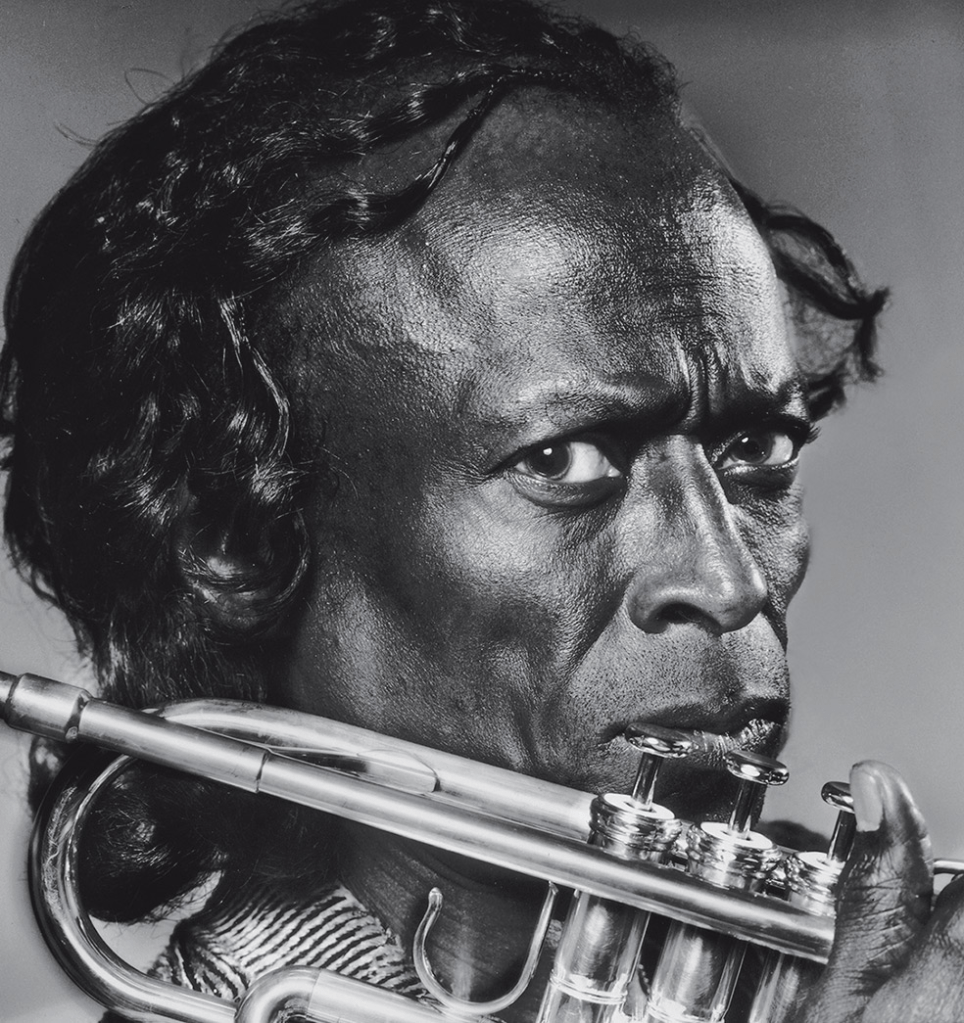
Venga, a que no sabías que Miles Davis, sí, el gran trompetista del bebop, del cool, del funk y del jazz psicodélico, progresivo, jazz-fusion, etcétera, era también un artista plástico fenomenal, sí, un pintor. Pues como no lo sabías, yo te lo voy a decir…
Miles Davis, (Miles Dewey Davis), nació en Illinois en 1926 y era un pijo… Se crió en East St. Louis y comenzó a tocar la trompeta a temprana edad. Luego ingresó en Julliard School of Music, pero se fugó de la institución en 1944 para tocar con banda de Billy Eckstine y tocó con Charlie Parker y Dizzy Gillespie, donde aprendió todo lo que habia de aprender del estilo bebop.
En 1948 se reunió con Bill Evans y comenzó su etapa del «Birth of the Cool», o sea, el nacimiento del «cool», un jazz más suave, más sutil y más parecido a la música del llamado «West Coast», la de los jazzistas de California… Tuvo grandes éxitos y grandes grupos, especialmente con otros grandes como John Coltrane, y así paso los años cincuenta y sesenta… Luego, hacia el final de su carrera (y su vida), en los años 80, penetra el «Jazz-Fusion» y gana varios Grammy Awards haciendo el repertorio de Michael Jackson y Cindi Lauper.
Entonces en 1991, en el Festival de Jazz de Montreux en 1991, Davis se unió al grupo de Quincy Jones e interpretó arreglos clásicos de Gil Evans de finales de la década de 1950.
Miles Davis murió en 1991 en Santa Monica, California, donde vivía. Nunca quiso volver a tocar sus grandes éxitos como Birth of the Cool o Kind of Blue. Siempre se reinventó durante su larga carrera…
Y también pintaba… En 1972 Davis sufrió un accidente automovilístico y de ahí surge su etapa de pintor. Se inmersó de lleno en la pintura, dándole la misma importancia que a su música, y dijo que “la pintura es terapia para mí y me mantiene la mente ocupada con algo positivo cuando no estoy haciendo música.” Le gustaba mucho pintar caras y sus referencias fueron Kandinsky, Picasso y las máscaras africanas, entre otros.
+++
I will bet you didn’t know that Miles Davis, yes, the great «Jazz Man», trumpet master of bebop, cool, funk, psychedelic jazz, progressive, jazz-fusion, etc., was also a phenomenal visual artist, yes, a painter. Well, since you didn’t know, I’m going to tell you…
Miles Davis (Miles Dewey Davis) hailed from Illinois. He was born in 1926 of an upper middle class family, and grew up in East St. Louis. Miles started playing the trumpet early in life. Later he attended Julliard School of Music but left it to play in Billy Eckstine’s band. With Eckstine’s band he played alongside Charlie Parker and Dizzy Gillespie. I reckon that there he learned all he needed to know of bebop.
In 1948, he met with Bill Evans and began the phase that led him to create the «Birth of the Cool,» that is, the birth of «cool jazz,» a smoother, subtler sound that resembled the music of «West Coast Jazz,» mostly played by musicians from California. He had great successes and collaborated with many influential artists, especially with other legends like John Coltrane. And thus he spent the fifties and sixties. Later, towards the end of his career (and his life), in the 1980s, he delved into «Jazz-Fusion» and won several Grammy Awards performing the repertoire of Michael Jackson and Cyndi Lauper.
In 1991, at the Montreux Jazz Festival, Davis joined Quincy Jones’ group and performed classic arrangements by Gil Evans from the late 1950s.
Miles Davis died from a cerebral haemorrhage in 1991 in Santa Monica, California, where he lived. He never wanted to play his greatest hits like «Birth of the Cool» or «Kind of Blue» again. He always reinvented himself throughout his long career…
(Este es el ultimo cuadro que pinto ya estando en sus ultimos dias en 1991/This is the last painting he did, already quite ill and in his last days in 1991) (Foto/Photo The Last Miles)
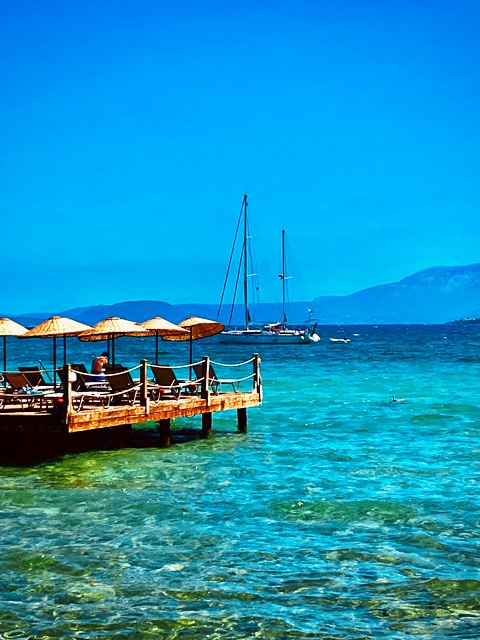
(Turkish Aegean coast by Francisco Bravo Cabrera/All Rights Reserved)
I don’t need to think when I’m close to the sea… Instead, I let her blue waters, creative and pure, fill my head with her blessings.
I don’t push away thoughts I just let them be, as my mind connects peacefully with her soft rolling waves, and my spirit renews with the sun’s holy rays.
On the shores stand the mountains misty and grey rising proud and majestic. And I listen as the voice of the wind whispers deep in my brain, I listen, I delight, and I pray.
I invented the Euro-Ku on 22 FEB 2022 because I wanted to write a Haiku that would make sense according to the ancient Japanese tradition but also to what I had to say as a Westerner. I found the rules of the traditional Haiku limiting when applied to my language and in no way suitable to my European way of thinking, history and culture. But I honour tradition and I do not think one should ignore it. So, to be faithful to the tradition, but also to my desire to express thoughts, messages and emotions through poetry, I decided I would create a new style that would render honour the traditional Haiku and would fit in well with the European mentality.
So the “rules” for the Euro-Ku are that you still produce a short poem with three verses, but there are no syllabic counts or restrictions. I think the syllabic count is suitable to the Japanese language, but it does not work well with English (or Spanish, my native toungue). Also the verses must flow one into the other without the words/thoughts floating off into outer space. And finally, the poem must be accompanied by a suitable image of the author’s creation.
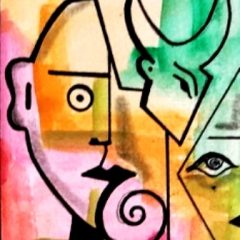
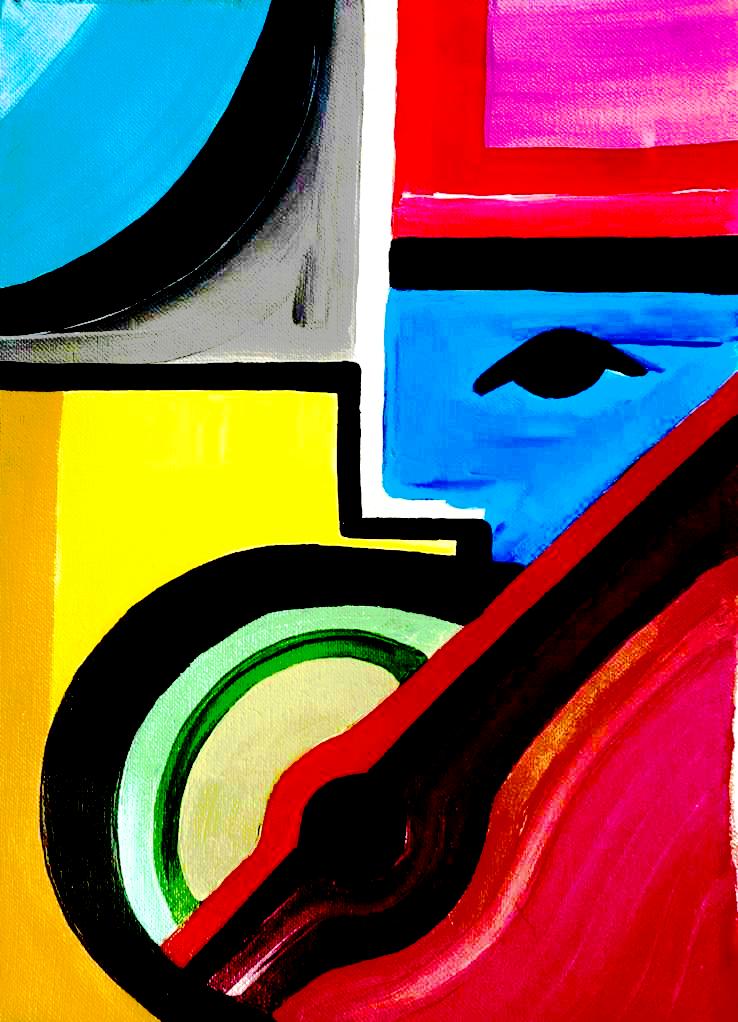
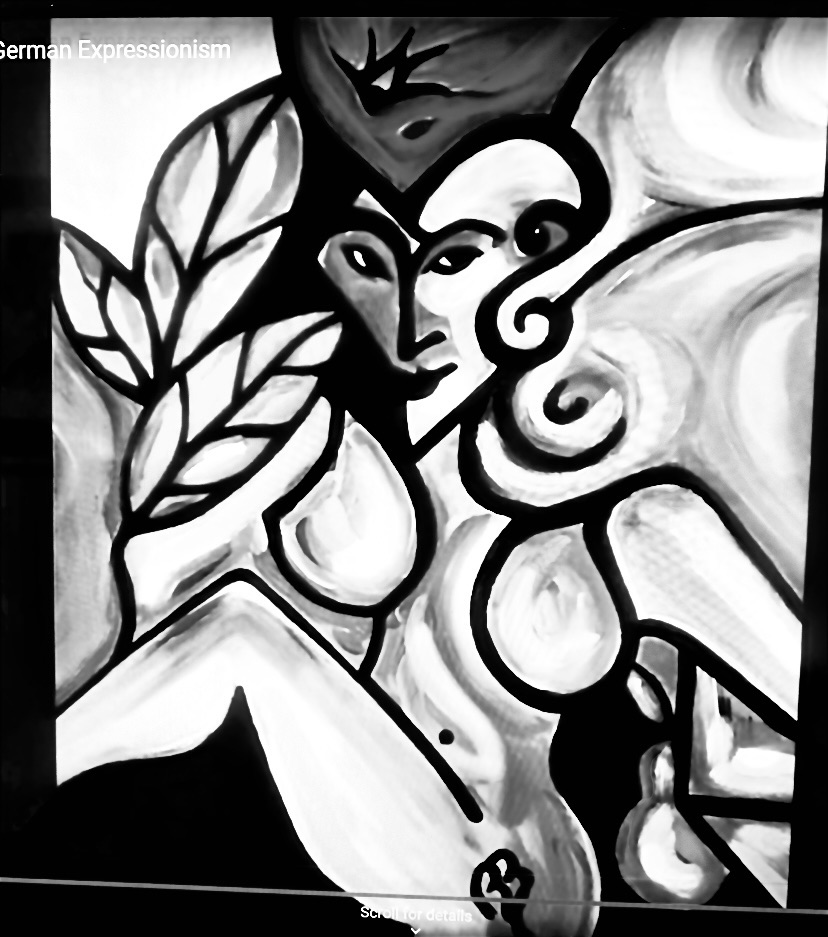
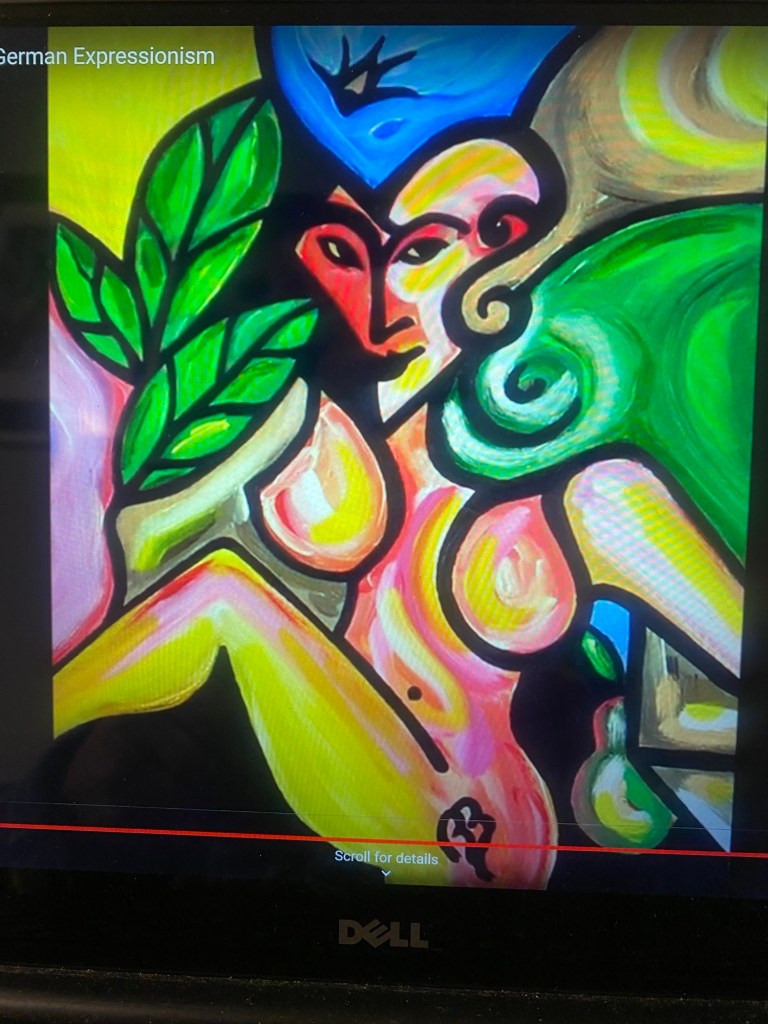
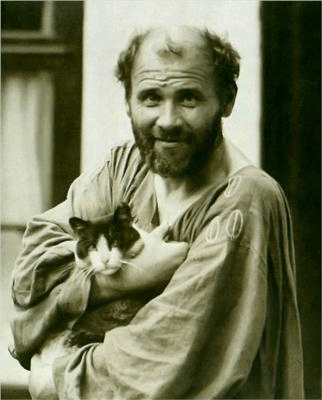
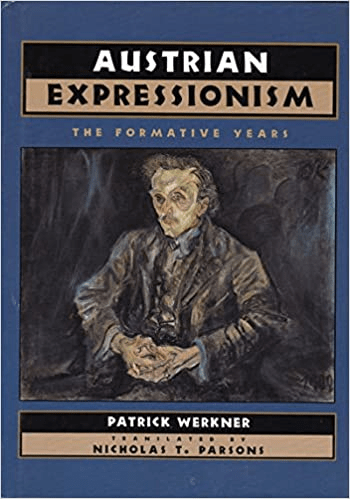
Continuing with Art History, I thought it would be a good idea to delve further into Expressionism and what better way than to bring you some of my favourites in the genre…



 JaZzArt en València