Así lo estamos viendo…
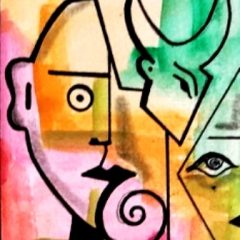
Faith saved us from the savages that we were, losing faith makes us savages again
Así lo estamos viendo…
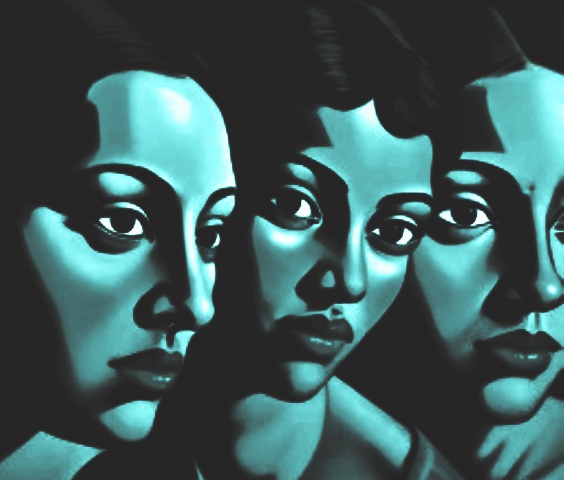
These three are very interesting and quite different in style and approach to their creative process. I think they are a great special edition to this series of «Art History in One Minute (videos)«.
CHEERS

The most famous painter in the world? I think so… But I will focus on some of his work from his early days in Paris, say 1906… I have filled this video with the pictures I took when I visited this exhibition at the Museo Reina Sofia of Madrid in 2024. This is considered Picasso’s Black Period, from 1906-1909.
+++
CHEERS

I chose this image because I believe this is how Yoko Ono likes to be seen and remembered because without John Lennon she would have been nothing, although she still would have been quite rich… This is a scene typical of their hypocritical position on things. They are doing a «bed-in for peace» and for the end of the Vietnam War, and where do they do it? At the Amsterdam Hilton! What you do not see in the photograph are the teams of maids and of food and drink deliveries to their «bed-in». How wonderful it is to be rich and famous and still think of oneself as an «activist» for peace…
In any event I am doing this entry into the series «Art History in One Minute (videos)» because, although in my opinion, Yoko Ono is no artist (unless making tons of money is an art), but since she has been exhibited at the MoMA and at the Guggenheim and a lot of other places, she is regarded as an artist. She’s a conceptual artist. To me she is nothing but a rich woman who knows that with a lot of money you can do, and be, whatever you want. If she is an artist, then she is the worst one I can ever imagine…
CHEERS
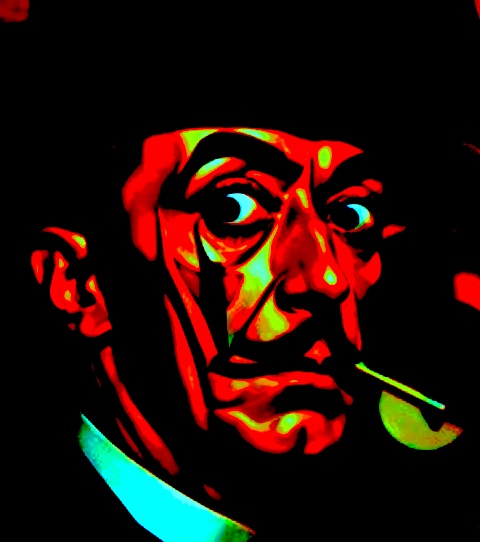
Welcome to part 10 of «Art History in One Minute (videos)» and on this one we are referring to an artist who, no one said was a genius, so he told everybody that he was… Salvador Dalí, the man who said that he was surrealism, is a great artist to many, not so much to me. Personally, I have read some of his books and I think he was a better writer…
Now I want to know what you think. Genius or bufoon?
CHEERS
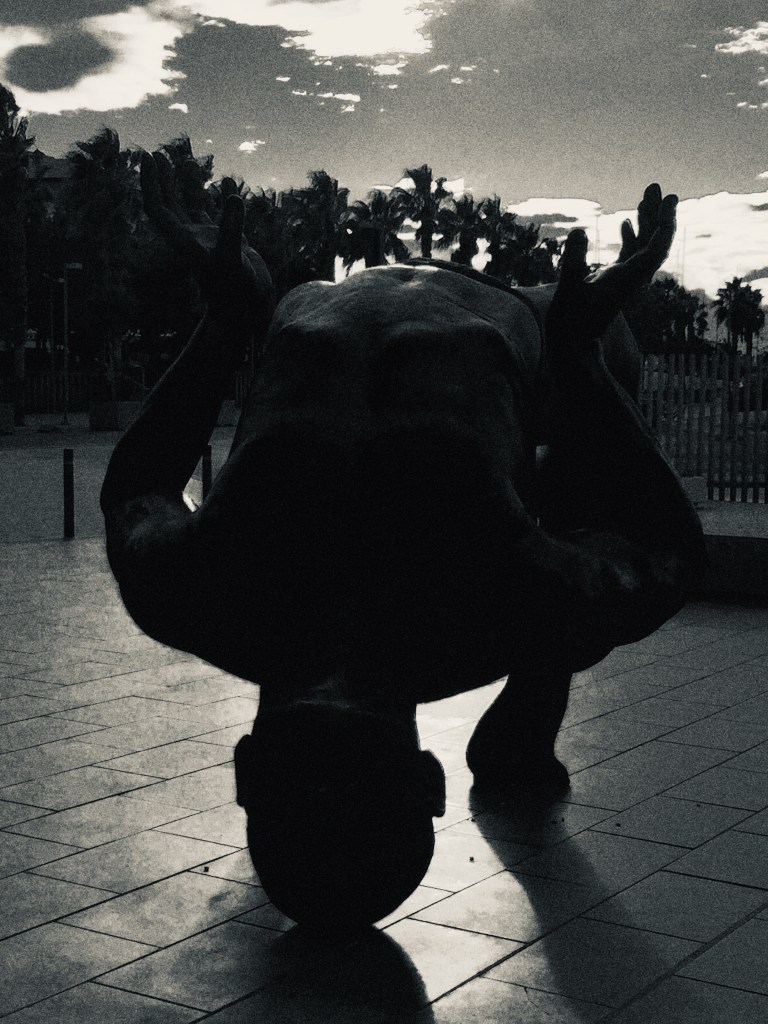
CADA DÍA
Un poco de ti,
un poco de mi.
Se desprende el sudor, se desprende el anís que bebimos pensando que ya éramos libres.
No fue luna de miel, pues bebimos un trago de hiel no champán.
Y no fue libertad, pues atado de manos y pies al altar nos llevó un militar con su capa de seda y su voz que nos hizo soñar…
Un pedazo de ti,
un pedazo de mi,
cada día sufrir más, cada día por vivir una breve caricia al llorar o reír.
Pues si de ti y de mi solo quedan las sombras, de mi y de ti no queda ya nada.
C.2021, Francisco Bravo Cabrera, 28 de noviembre 2021, València, España
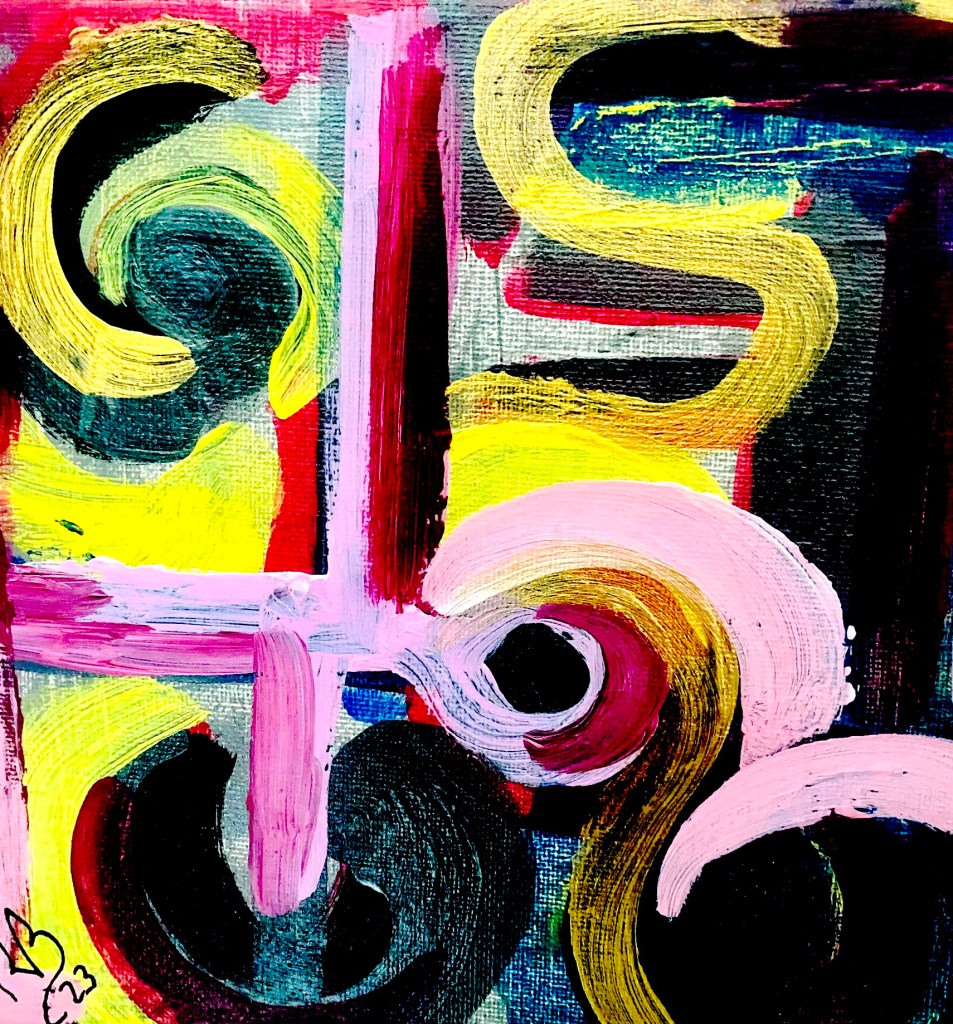
La abstracción, que dicen los libros que se debe a Kandinsky, quizá le precede ya que se ha descubierto la obra de Hilma af Klint. De igual manera es una de las vanguardias del Siglo XX, y diría una de las mas importantes que sigue causando furor, critica y polémica…
+++
Abstract art, which books say is attributed to Kandinsky, perhaps predates him now that the work of Hilma af Klint has been discovered. In any event, it is one of the vanguards of the 20th century, and I would say one of the most important ones. Abstract art continues to generate excitement, criticism, and controversy…
GRACIAS
CHEERS
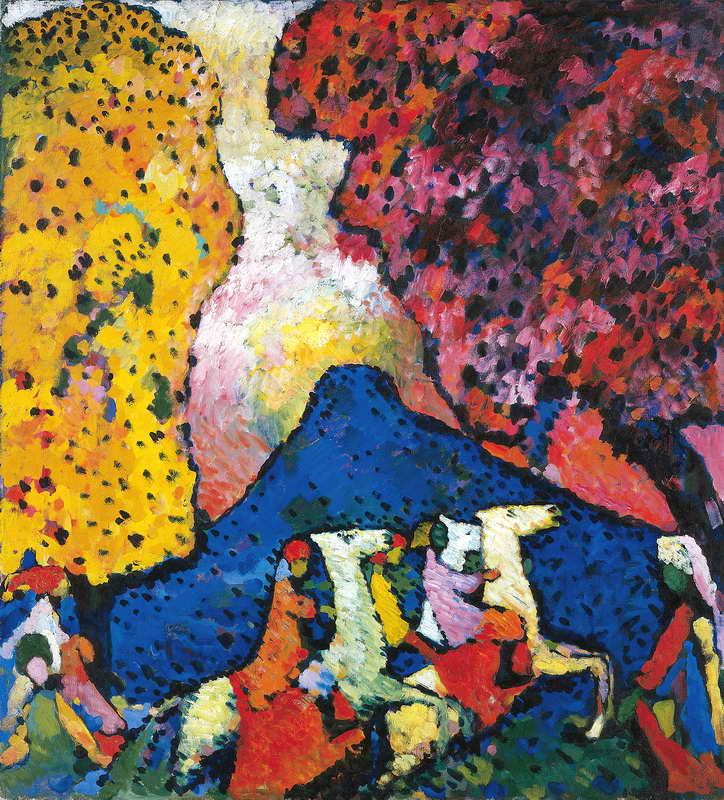
As I showed you yesterday, Kandinsky did not start off as a painter and when he did he did not start as an abstract painter. He started by painting fauve style landscapes. But little by little the power of the colour began to replace the need to be so figurative. «The Blue Mountain» begins to demonstrate that transition, if you will, from figurative to abstraction…
Wassily’s grandmother was from the aristocracy and Mongolian and his mother was from Moscow. His childhood was spent between Moscow and Odessa and in that city, where the moved to in 1871, he studied piano and cello…
In 1901, having moved to Munich, he founded the group Phalanx. This was basically a group of artists that had joined together to bring to Munich the vanguards of art from Paris. In 1902 he exhibits for the first time in Berlin. Then in 1904 he exhibited in the Salon d’Automne (an exhibition celebrated yearly in Paris since 1903).
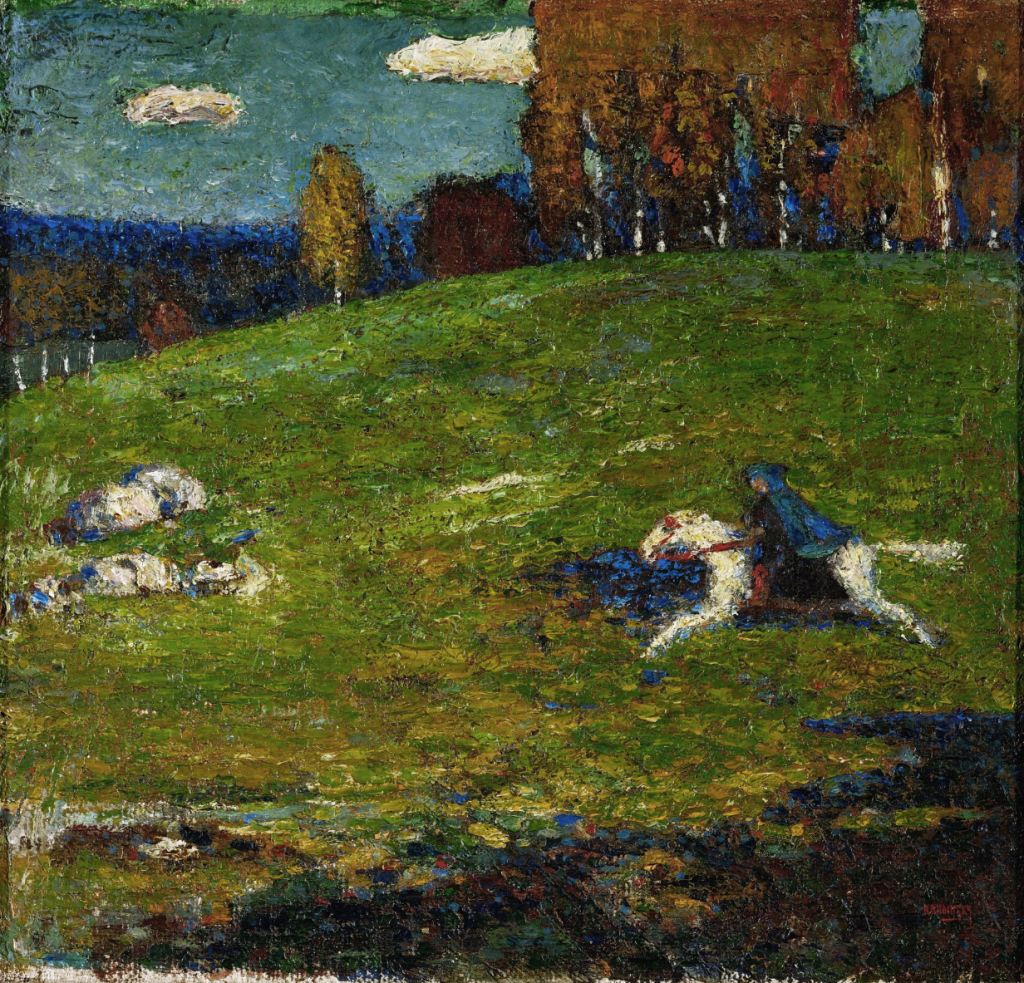
«The Blue Rider» was one of his most important paintings of the early part of the XXth Century. It is believed by some art historians that there is a second figure, perhaps a child, that the rider is holding tight. Or it could only be a shadow. But this intentional ambiguity, allowing the observer to actually complete the work, became something Kandinsky used in other works subsequently and which reached its peak in the abstract period of 1911-1914. As you might notice, the rider is nothing more than splotches of colour and lacks any specific details. This painting indicates the route Kandinsky would take with his art soon enough.
In 1911, together with Franz Marc and other artists, Kandinsky founded an expressionist/expressionism movement in Munich and called it Der Blau Reiter (The Blue Rider). This movement transformed German expressionism.
This is one of the fundamental parts of his career as a thinker and as a painter. For me it is one of the things that make him a reference as I consider myself an expressionist artist. The other is abstract art, which I love and which I am practicing to develop. In other words, Kandinsky is still teaching me to reach out and become a fuller, more complete artist. So his influence for me is dual, on the one side the study of colour and forms in the creation of abstract art and the other is the philosophical/spiritual aspects of art which to me are implacable and most needed.
PART THREE IS COMING IN THE NEXT EDITION OF ARTISTS SERIES
CHEERS…
I know there are many blogs dedicated to inform or to critique art, contemporary and/or historical and I do too, so let’s get into it…
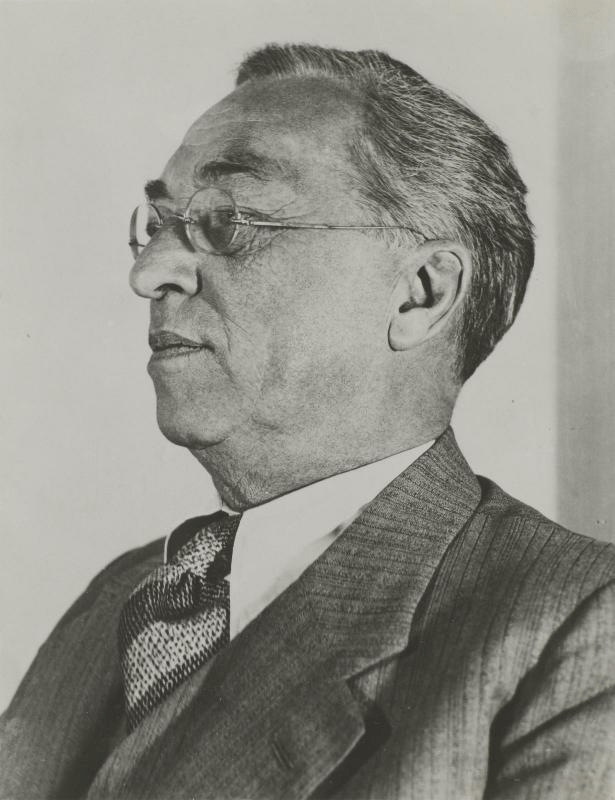
The «Artists Series» began yesterday with Robert Lenkiewicz, and continues today with an artist that I have always admired and who is one of my main references. Wassily Kandinsky, the creator of abstract art…erroneously…who was born in Russia en 1866. He did not start life as an artist but as a lawyer. He must have been a good one because he was offered a professorship at the University of Dorpat, the oldest law institution in Estonia. But he turned it down and turned to painting instead. He was thirty years old at the time.
He moved to Munich in 1896 where he studied at the Munich Academy of Fine Arts. But very soon (1914) the Great War broke out and he returned to Moscow. Shortly after, the Russian revolution took place and Kandinsky joined… more or less… Anatoli Lunacharski’s cultural administration (Commissioner of Education of Soviet Russia) and even helped to found the Museum of Culture of Painting.
However, his spiritual beliefs and his sense of realism did not fit with the materialism of the communists. After all, the communists do not allow the minds of their indoctrinated to be diluted with other ideologies. Kandinsky cleverly returned to Germany in 1920. He was a professor at the Bauhaus School (art and architecture) from 1922 until the Nazis closed it in 1933. In Germany, he created his best works…
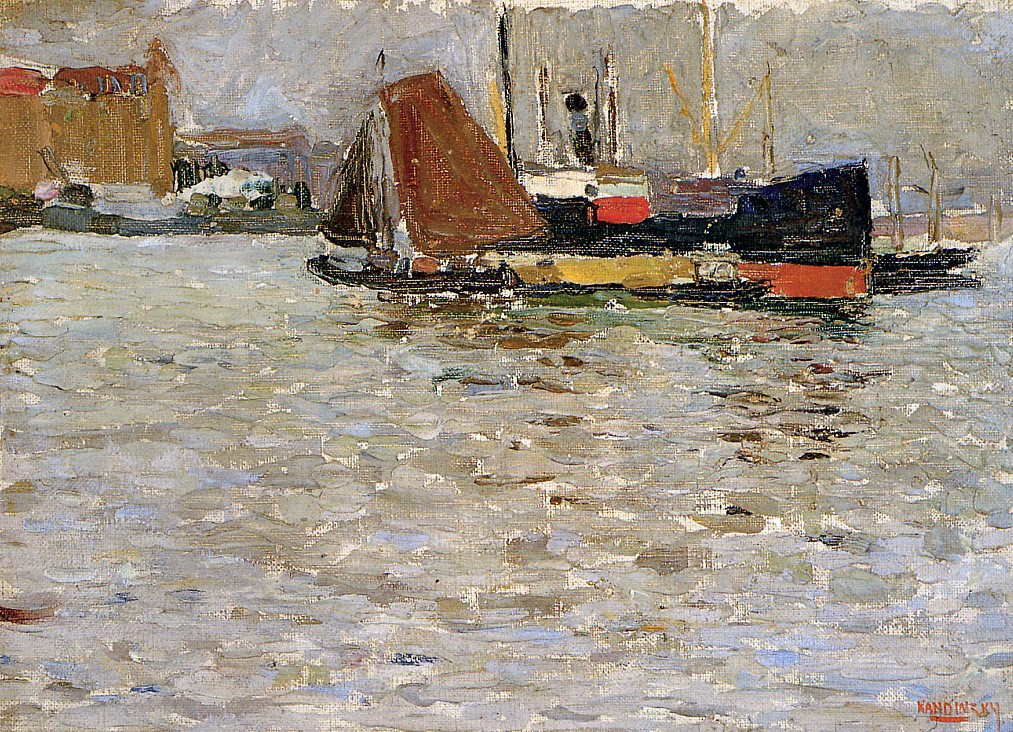
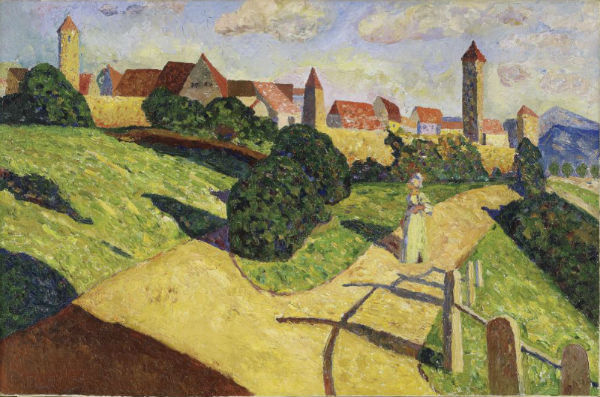
Here are some of his early works of figurative (landscape) art, probably from 1902 to 1909…


On our next programme, part 2 of Wassily Kandinsky…
Now watch this…
CHEERS…

 JaZzArt en València