#art, What is Art, part 2: «The Painter»…

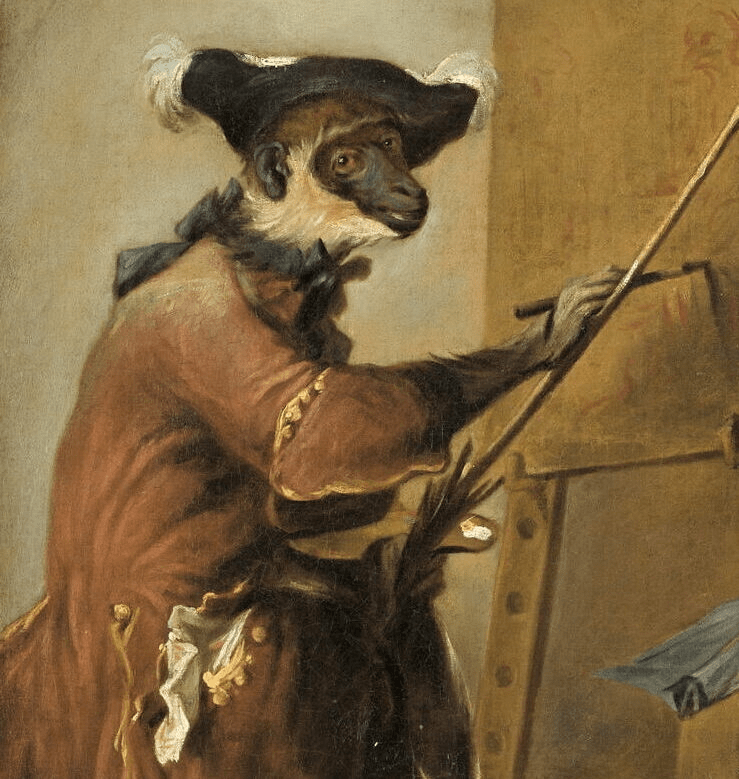
(Jean Baptiste Chardin)

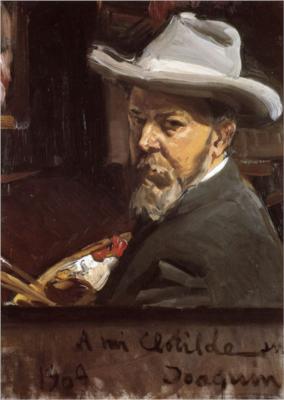
The painter… Now it is the «artist»…

Back in the time of the great Renaissance masters, painters like Michelangelo, Botticelli, Leonardo and the rest of the gang, did not call themselves artists. They thought of themselves as trained artisans. Highly skilled craftsmen that had studied and mastered the craft of painting. And paintings also were not regarded as art. During those times artists did not walk into their studios, picked up a canvas and thought of what they were going to paint on it. In those times painters painted what was commissioned from them. Their greatest patrons were the Church and the nobility, along with some rich merchants as well. They did not choose their topics, they were told what to paint.

Of course that sounds quite unlike our modern concept of art. We think of an artist as someone who creates. And his creations come from so deep within his knowledge, his creativity, his innermost mind that some might even believe it came from his very profound, immortal soul. I call bollocks on that one…

Art is still a business. Paintings are mostly for decorative purposes. And artists should still be trained, skilled and dedicated professionals with good taste and a rounded off and complete education. Art does not necessarily have to be that esoteric, mystical form of expression that rises from the spirit to convey a transcendental message of intense and extraordinary beauty and importance. Art is the result of the work of a craftsman who paints/sculpts (etcetera) in his quest to make a living. In other words a painter/artist works for money, just like Michelangelo and Leonardo did.

There is nothing mystical or phenomenal in the work of the artist. Art has many functions and they are all in need of art and the artist is in need of making a living. Art is not done for the love of art. An artist is not a romantic dreamer standing in front of a muse who directs him to paint an extraordinary work called a masterpiece. No, an artist gets up, and using only his well-learned disciplinary habits, enters his studio and begins to work. He does not have to be original as there is nothing original under the sun. An artist only has to be true to himself in the knowledge that he is creating something using his learned abilities and guided by his good taste.

Stay tuned for part 3 coming soon and I will continue with these chapters if you let me know, in the comments below, that you are interested and want to participate in this dialogue.

(2012/Please do not forget to «like» and thank you)

CHEERS

#art, Drawings from Bodoland (My head)…

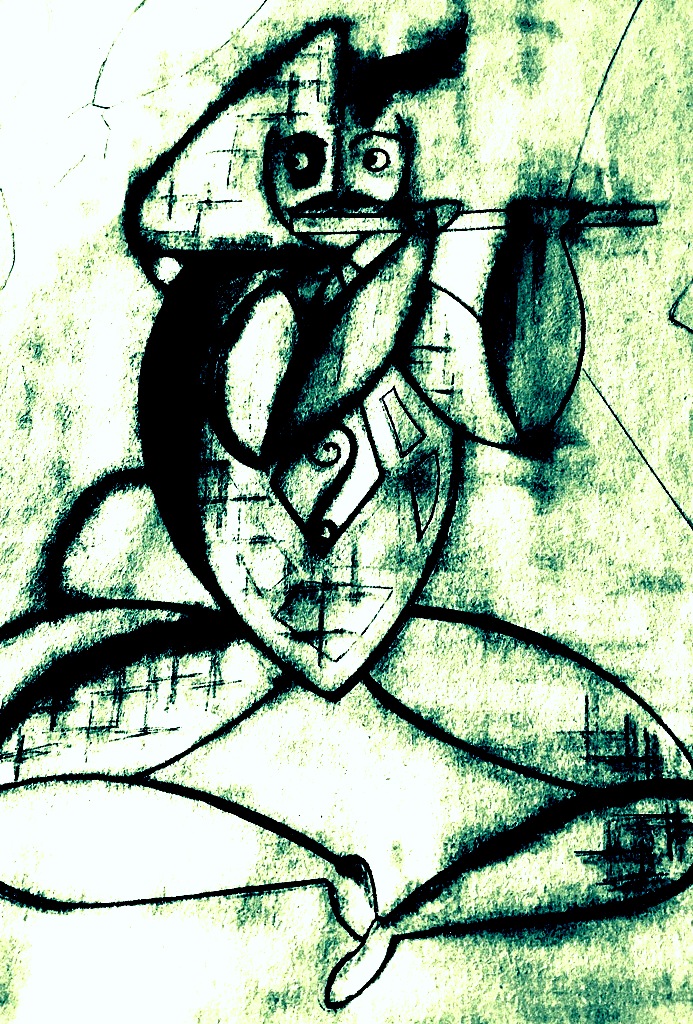
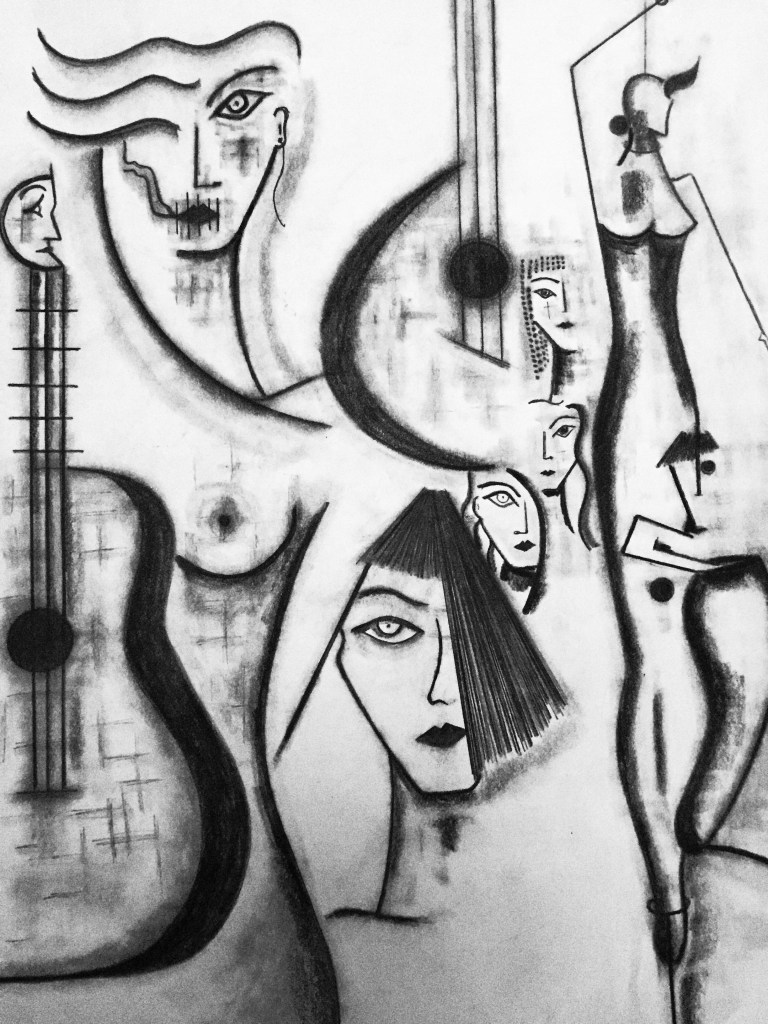
(«Flauta-Man»/graphite on paper/Francisco Bravo Cabrera/All Rights Reserved)

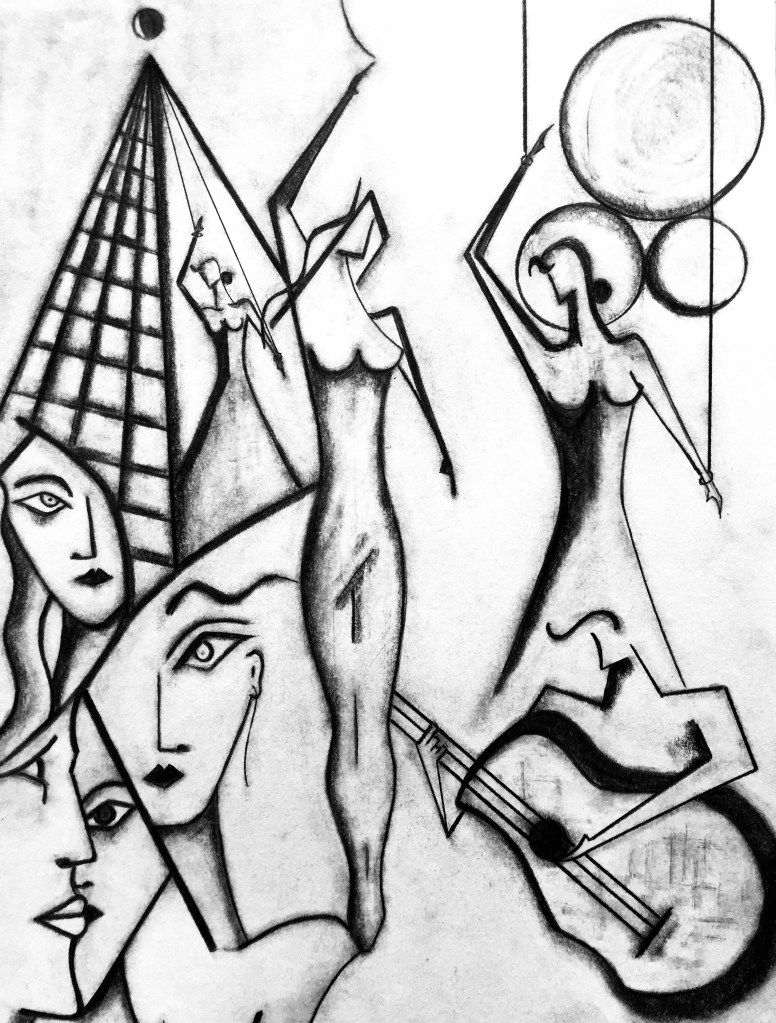
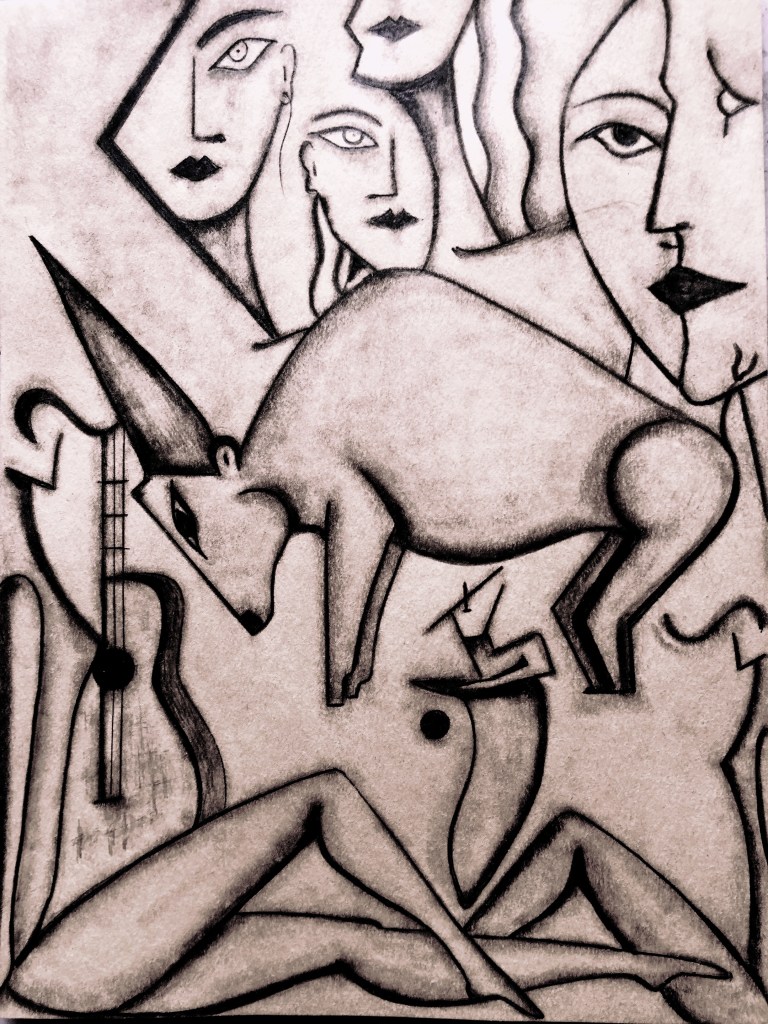
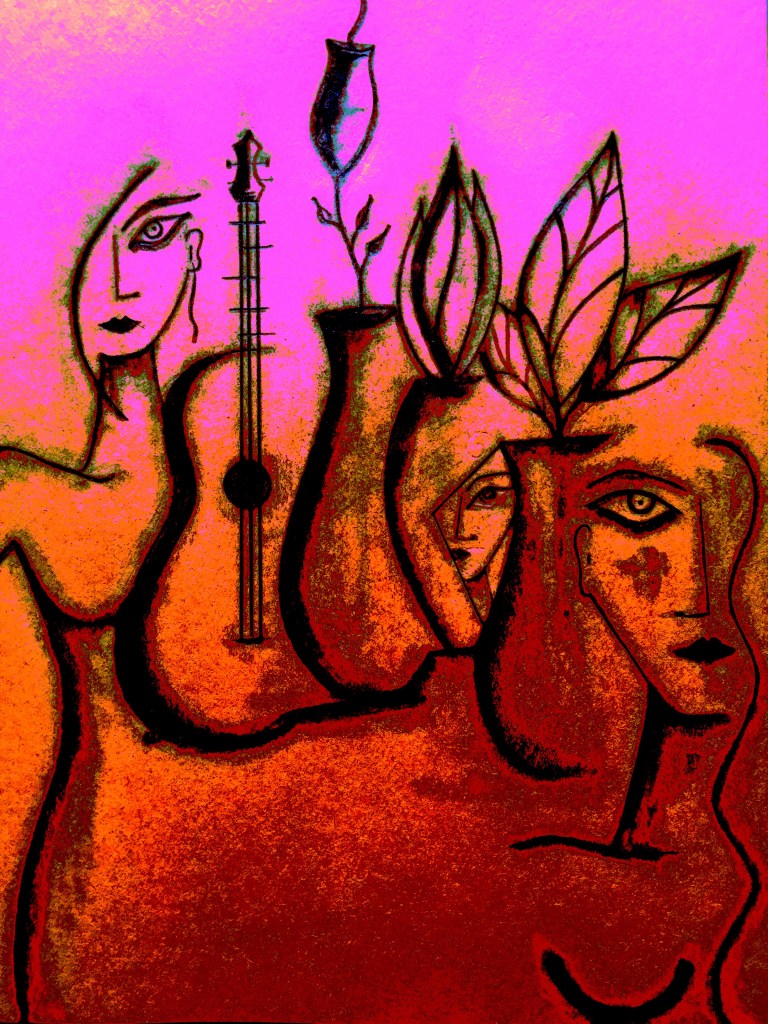
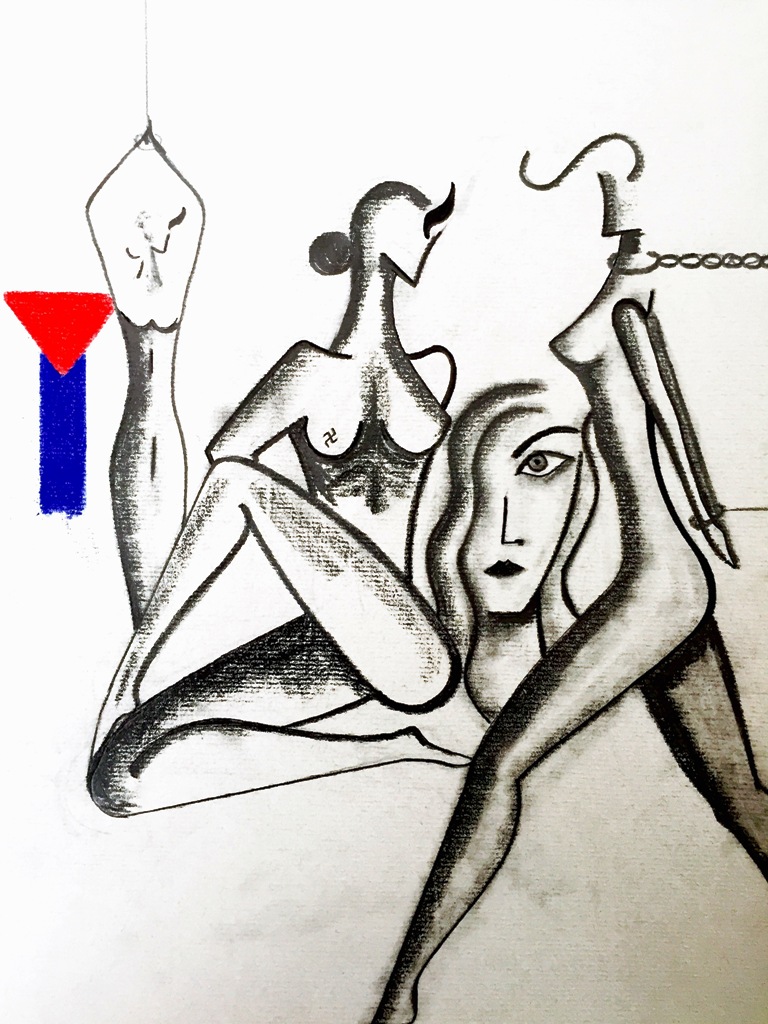
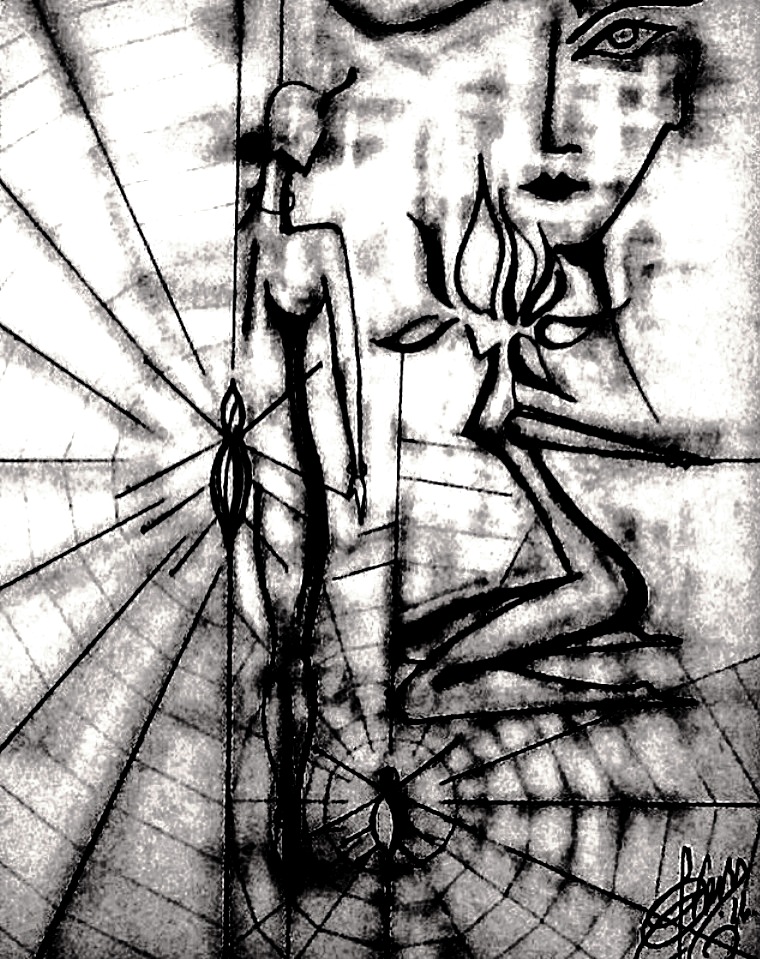
Drawing is something that I love. As an artist some of my greatest moments came while drawing and some of my greatest successes have been with and due to drawings. In all the years that I have been in this profession, the years I spent drawing, and I mean only drawing, were some of my most fructiferous and exiting. I stopped painting in 2008 and took up the pencils and the pens, replaced the canvas for artists paper and began to develop my skills as an illustrator. My peak year was 2017, but by 2016 I had started painting once more… Here are a few of the drawings from that period. They are all from Omnia Caelum Studios Miami and done in my studios overlooking the Atlantic Ocean in Miami Beach…

I am happy to say that the majority of the drawings, (all originals, no prints), especially from 2017, now hang in private collections throughout the world.

CHEERS

#artvideo, Mujeres en el arte, las grandes artistas olvidadas – Women in Art, the Great Artists Forgotten

(Fernande Olivier)

Si, fue la primera mujer de Picasso en Paris, pero era una artista y aunque aprendió mucho de Pablo, tenia el temperamento y el deseo de crear. No se le debe recordar solo como una de las mujeres de Picasso, sino por su arte.

+++

Yes, she was Picasso’s first love (and woman) in Paris, but she was an artist and although she may have learned much from Picasso, she had the artistic temperament and the will to create. She should not be remembered only as one of Picasso’s women, but instead for her art.

(Si te ha gustado por favor dale el «like», gracias/If you liked it please give it a «like», thank you)

Gracias…

Cheers…

#art, Mujeres artistas (la serie): Ana Mendieta -Women Artists Series: Ana Mendieta

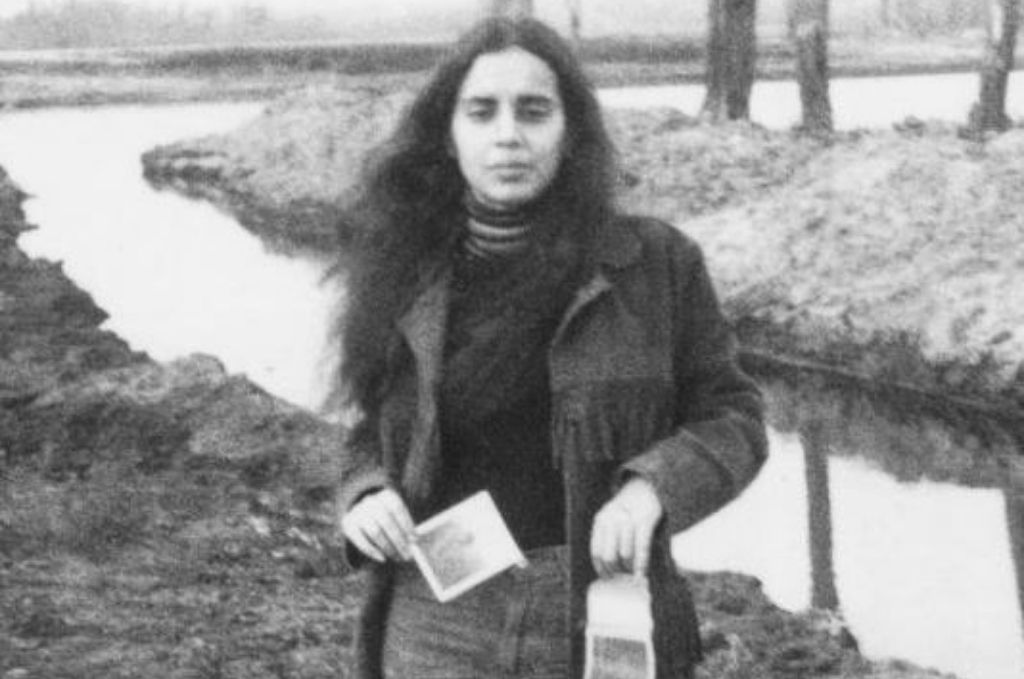
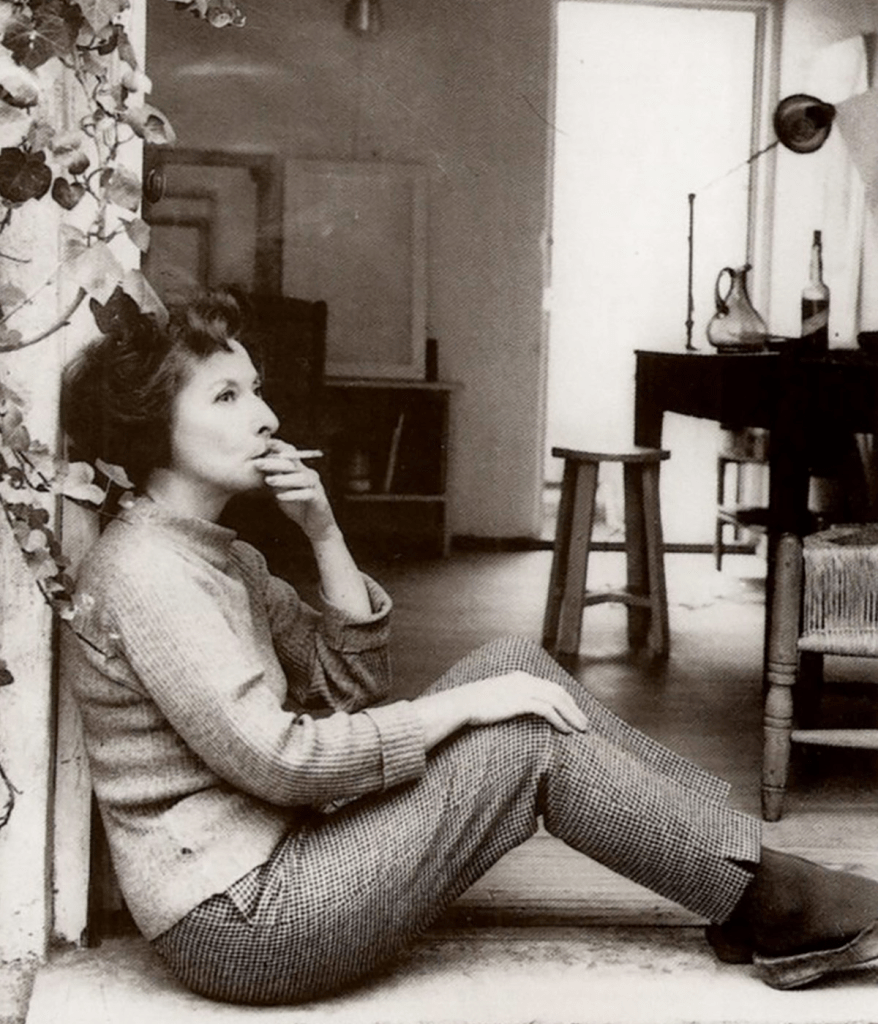
(Ana Mendieta/Foto/Photo La Rueda Suelta)

LA MUJER Y EL MISTERIO

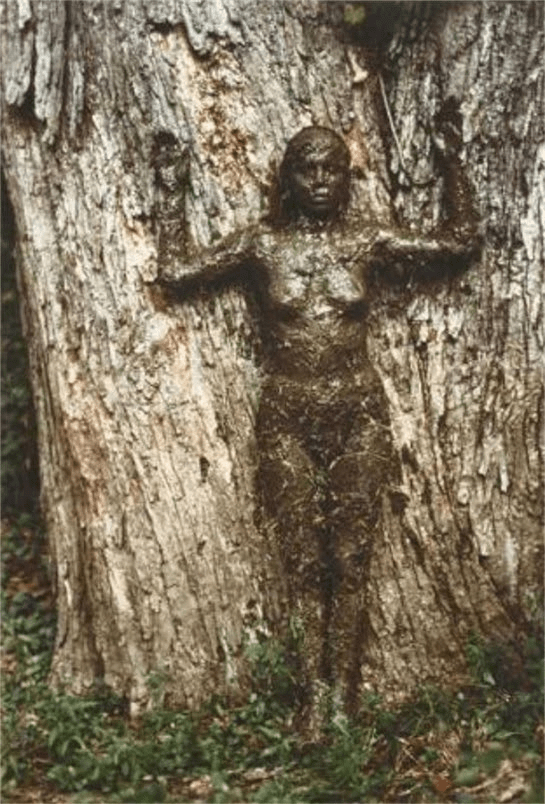
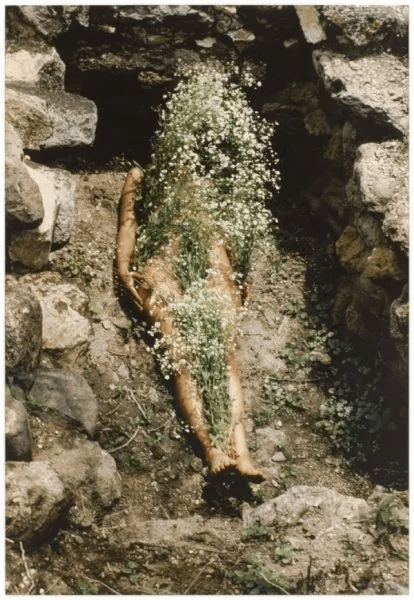
Artista conceptual cubana comprometida con el arte, con el desarrollo del mismo, con la libertad, con el feminismo y con la vida… Nació en La Habana en 1948. Emigró a Estados Unidos para salvarse de vivir bajo la dictadura de Fidel Castro. A través del programa «Pedro Pan» (para salvar a los menores de edad del comunismo) Ana llegó al estado de Iowa en EEUU en 1960. En 1966 se pudo reunir otra vez con su madre y el 1979 con su padre que había sido encarcelado en Cuba comunista por haber sido parte de la Brigada 2506 que hizo un intento por liberar a Cuba de la tiranía de los hermanos Castro. Mendieta estudió arte en la University of Iowa, y sus obras se centraban en los hechos violentos que sufrían las mujeres. Se interesó, además, por la espiritualidad, la religion y por rituales primitivos. Después del post-grado se mudó a Nueva York. Su obra se centraba en el feminismo, en la violencia contra las mujeres y en el hecho de tener que vivir separada de su tierra por culpa de los comunistas. Ana Mendieta usaba la tierra misma para crear. Os urjo que busquéis mas sobre esta impresionante artista que murió joven, trágicamente y misteriosamente el 8 de septiembre de 1985 en Nueva York. Mendieta calló de una ventana en el piso 34 de un edificio en Greenwich Village (Manhattan), situado en el numero 300 de Mercer Street. Allí vivía con su esposo, el también artista Carl Andre, que fue quien pudo haberla lanzado por la ventana pues poco antes de caer los vecinos la oyeron gritar ¡No! Pero Carl Andre quedó absuelto ya que no hubieron testigos, aunque a Andre se le vieron varias rasguñas en la cara.

+++

THE WOMAN AND THE MYSTERY

This Cuban conceptual artist was committed to art, to its development, to freedom and with feminism, throughout her short life… She was born in La Habana in 1948. She emigrated to the US to save herself from living under the dictatorship of Fidel Castro. She came to the US, in 1960, via a special programme for minors called «Pedro Pan»* and was sent to live in Iowa. In 1966 she was reunited with her mother and in 1979 with her father who had been held prisoner in Cuba for being part of the Brigada 2506 who spearheaded an invasion to rid Cuba of the brothers Castro. Mendieta studied art at the University of Iowa. Her work centred on violence done to women. She also became interested in spirituality, religion and in primitive rituals. After graduate school she relocated to New York. The body of her work dealt with feminism, violence against women and in the suffering of those who are forced to live away from their native soil because of communism. Ana Mendieta therefore used soil itself to create art. I urge you to look for more about this impressive woman artist who died young and tragically (and mysteriously) on the 8th of September, 1985 in New York. Mendieta fell out of the window of her 34th floor flat in Greenwich Village (Manhattan) whose address was 300 Mercer Street. She lived there with her artist husband Carl Andre, who might have been the one to throw her out the window as seconds before she fell neighbours heard her shout «No!» But Carl Andre was acquitted as there were no witnesses, although his face was quite scratched up at the time.

(Foto/Photo Ana Mendieta, «Sin título»/«Untitled» (de la serie Mujer de arena/from the series woman of sand), 1983. Cortesía de/Courtesy of The Farber Collection)
(Nombre y fotografo desconocido/Unknown name and photographer)
(«Imagen de Yagul»/de la serie Siluetas/»Image of Yagul»/from the series Silueta Works/Mexico 1973-1977, 1973)

OMNIA CAELUM STUDIOS VALENCIA PRESENTA/PRESENTS

Gracias…

Cheers…

#art, Remedios Varo – Women Artists Series

This is one of my favourites women artists. She was born in Catalunya but mostly made a name for herself while in Mexico. They say she is a surrealist but I think she was more of a fantasy/literature oriented artist creating her own style… Anyways, here, in this video, you will get a good introduction and I urge you to look for more (especially exhibitions) about the art and the life of this artist.

(2023/Please do not forget to «like»)

CHEERS

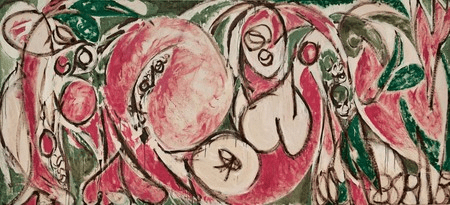
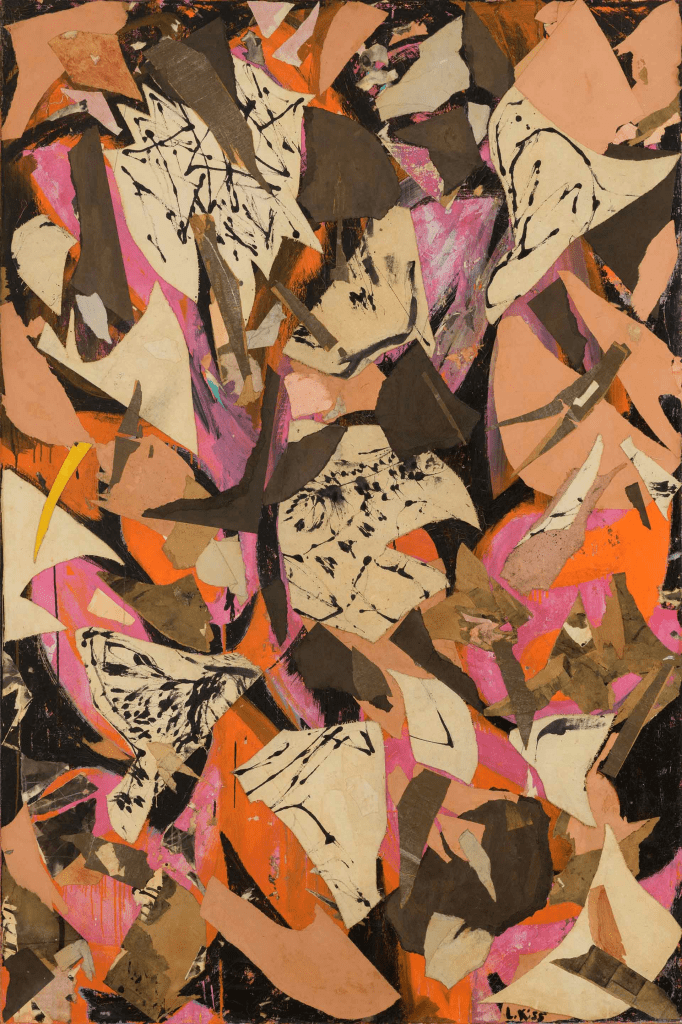
#art, Lee Krasner in the 2025 Women’s Artists Series

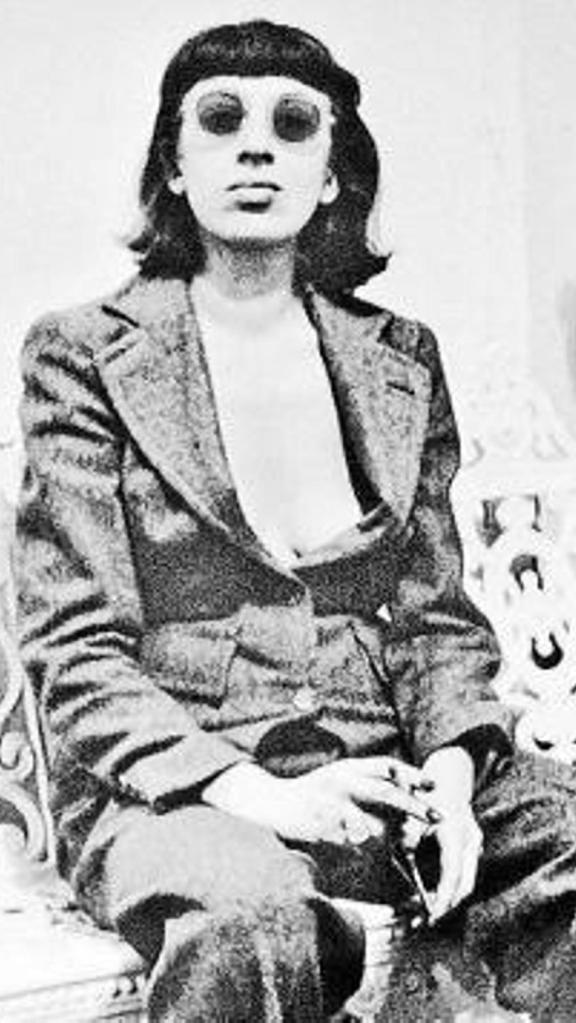
(Lee Krasner/foto/photo Noticias de Gipuzkoa)

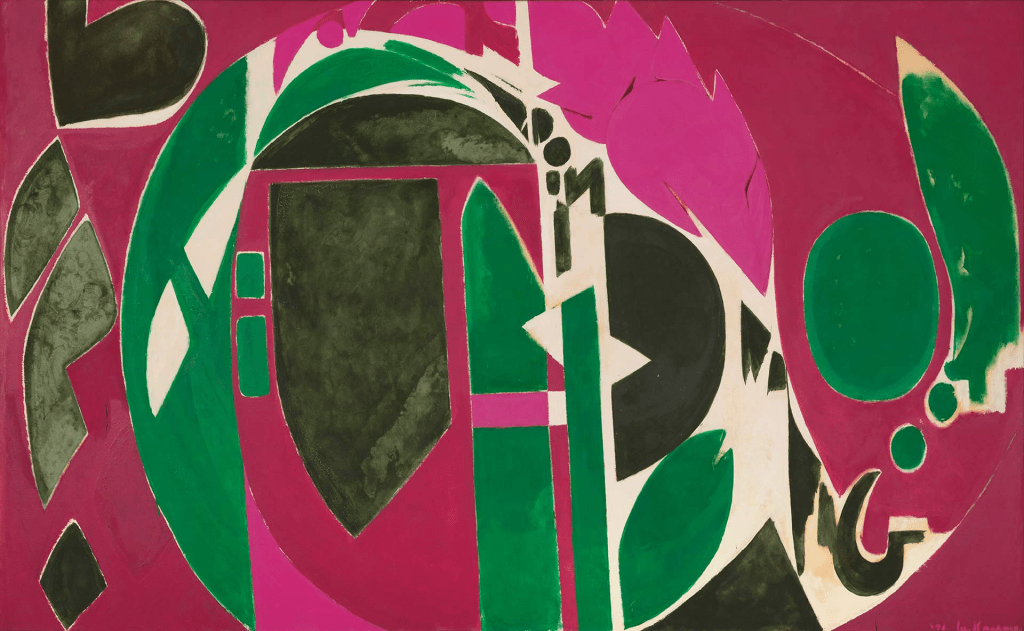
Fue la mujer de Jackson Pollock, y como los dos hacían «abstract-expressionism», o sea, expresionismo abstracto, el inicialmente le robo la fama. Pero sus pinturas, a mi juicio, son superiores a las de Pollock. Creo que Krasner era, y es, mucho más artista que Jackson Pollock y que él se benefició grandemente teniéndola de compañera, pues pudo así nutrirse bien de su obra… Krasner nació en Brooklyn (NY) en 1908… En 1937 comenzó a estudiar en el estudio del pintor alemán Hans Hofmann, y fue este el que le presentó el cubismo en la obra de Picasso, además el fauvismo de Matisse y las obras de otros pintores, los que hacían la abstracción europea… Krasner comenzó a exponer en 1940, estableciendo el expresionismo abstracto en EEUU y en 1945 se casó con Jackson Pollock, en esos momentos líder de los expresionistas abstractos de EEUU… Lee Krasner murió en Nueva York en 1984. Ahora dime lo que piensas de esta gran pintora…

+++

She was the wife of Jackson Pollock, and as both practiced abstract expressionism, he initially stole the spotlight from her. However, in my opinion, her paintings are superior to Pollock’s. I believe Krasner was, and is, a much greater artist than Jackson Pollock, and he greatly benefited from having her as a partner, as he was able to draw inspiration from her work… Krasner was born in Brooklyn, NY, in 1908… In 1937, she began studying in the studio of the German painter Hans Hofmann, who introduced her to cubism in Picasso’s work, as well as the fauvism of Matisse and the works of other painters who were creating European abstraction… Krasner started exhibiting in 1940, establishing abstract expressionism in the U.S., and in 1945 she married Jackson Pollock, who was at that time the leader of abstract expressionists in the U.S…. Lee Krasner passed away in New York in 1984. Now tell me what you think of this great painter…

+++++

(Museo Guggenheim Bilbao)
(Xataca)
(Museo Guggenheim Bilbao)

GRACIAS – CHEERS

#poem, Mememto Mori, Memento Vivire…

(Illustration in graphite and ink by Francisco Bravo Cabrera/All Rights Reserved)

Hoy es el dia de bailar en el parque, cantar en la playa, beberte una copa de vino de más y decirle a las nubes que bañen tus campos con agua bendita, para que tú, sin paraguas, te empapes de sueños, te envuelvas en gotas y te sientas tan vivo como las olas del mar. Hoy es el día, no lo dejes pasar, pues acuérdate siempre de que un día morirás.

+++

Today is the day that we dance in the park, that we sing by the seashore, that we take one more glass of that fine red, red, wine, and then ask gentle clouds to pour rain on our pastures, so that we, sans umbrellas, can get soaked with the raindrops and feel as alive as the waves of the sea. Today is the day, do not let it pass you by, for you can always be certain that one day you will die.

(Illustration by Francisco Bravo Cabrera/All Rights Reserved)

C.2025 – Francisco Bravo Cabrera – 12 APR 2025 – Valencia, España

GRACIAS – CHEERS

#art, «Art and the Artist»

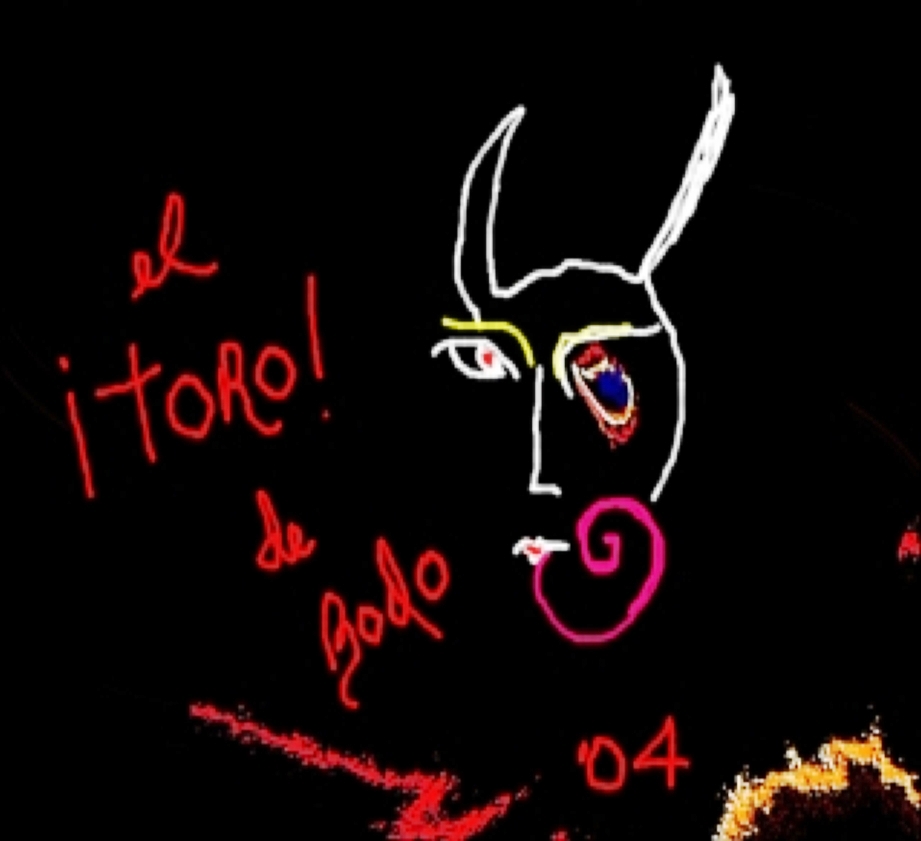
(«El Toro de Bodo ’04″/Francisco Bravo Cabrera/All Rights Reserved)

ART AND THE ARTIST

(Francisco Bravo Cabrera, while listening to the Sonata no. 9 by Beethoven)

Well, maybe I should rather say ART AND LIFE or THE ARTIST AND LIFE, something like that, I don’t know, I think it may have been a better title, but no, the one I’ve chosen I like…

Life, what is life? José Saramago in his book All the Names said: “Life is like paintings; it’s best to look at them four steps back.” Four steps… phenomenal.

The distinguished writer, whom I admire very much, has told us what life is similar to, but he has not told us what life actually is, nor why he relates it to paintings. Well, could it be that paintings are similar to life? I don’t think so, but anything is possible.

Paintings are representations. Nothing that is portrayed on the canvas, wood, or whatever surface the painter uses is truth. Moreover, I remind you that nothing in art is reality. The closest it comes is to a reflection, if the artist does it well, and if you immerse yourself in the painting, you may see something in it that you associate with real life. But you won’t find reality in any painting. However, if you’re lucky, you’ll see how the author has perceived it. A painting, like a movie, a play, or a ballet, lies. Finally, don’t delude yourself into thinking that you’ll find sincerity in art. Perhaps art is the most cynical thing on the face of the earth. Don’t doubt it.

And why do I tell you this? Because I am an artist. My professional and academic training taught me that reality is not art. Art feeds on reality, uses it, embellishes or tarnishes it, but always changes it. The actor does not feel what you think he is feeling when you see him in the theater or in a movie. Neither does the painter nor the poet. Yes, we all play with emotions, but as the great director and co-founder of the Moscow Art Theatre, Konstantin Stanislavski, said, “Raw emotion (human) is not art.” We play with real emotions, but the ones we represent are artistic creations, period.

So, why take four steps back? Frankly, I don’t know. Looking for a better perspective? Maybe…

But well, let’s see, what is an artist? The great masters of the European Renaissance did not consider themselves artists. They viewed themselves as craftsmen, men (and women) who had learned their trade well and had also been trained in other disciplines. Moreover, they painted not what they wanted, but what was commissioned by their great patrons, who were the church, royalty, nobility, and to some extent, the emerging bourgeois class.

It may have been Michelangelo who first considered himself an artist, but that’s debatable. The thing is that artisans and craftsmen began to turn into artists. Once they were artists, they could choose the themes they were going to paint, and the subject matter shifted from biblical scenes and portraits of kings to something more casual, everyday, and completely secular. Art began to gain value, and collectors emerged. Then came the museums, and with them, art history started to be written. In 1793, the Louvre Museum was founded in Paris, the Prado Museum opened its doors in Madrid in 1819, and the Metropolitan Museum of Art in New York in 1870.

That’s how things began to change. The avant-gardes of the 20th century came along, and art took on previously unthinkable directions, causing artists to evolve. But now, after the great artistic milestones of geniuses like Picasso and Matisse, artists no longer know what to do. They seek to experiment, draw attention, shock, alarm, scandalize, and even offend. They also enjoy making people think they are exceptional beings with almost supernatural abilities. But don’t you dare believe that; it’s all nonsense.

Artists today are neither geniuses nor avant-garde. Everything has already been done, so don’t think that for art to be good it has to be original because nothing is original anymore in art. A good artist, as Picasso said, imitates, but a brilliant artist steals. However, what they have stolen is transformed into something better. And I remind you that we create art for only one reason: to earn a living. Nobody enters a studio for ten hours a day, painting like a madman, for the love of art. We do it because we want to sell our work. And if they talk to you about inspiration, don’t believe it either. It’s a myth, nonsense, a fairy tale, a con trick. The artist works and dedicates themselves to their craft not because a muse with magical powers has inspired them, but because they are hungry.

Perhaps a better title would have been The Great Deception

DEACON 11: Karma

(Photo by and property of Francisco Bravo Cabrera/All Rights Reserved)

DEACON 11
Karma

He said this would be the final teaching and when I found out it was about karma, I understood the reason why…

“In the Holy Bible it says God makes sure that whatever one sows that will he also reap. One can find such a statement in the epistles of St. Paul, (Galatians 6:7). In the Old Testament, i.e. Job 4:8, it is written that those who plough iniquities and sow trouble will reap the same. And although Jesus did not look at the world through the optics of karma, it is something that we must address. If God will let you sow iniquities from the troubles you ploughed, then there is something to karma after all.

“So, what is karma? It is a Sanskrit term, and belief, that deals with the consequences of actions and their intentions. If an action is good and done with good intentions, one will receive good karma. If the opposite is done, e. g. with evil or bad intent, then the results will likely be bad. It sounds simple enough. But is it? What can make an action to cause a good or bad reaction according to the intention? Is it God, as we are told by Saint Paul (Galatians 6), who will not be mocked by those committing evil deeds? If God makes sure that people reap what they sow, then karma is real. Be careful.

“In India’s sacred texts, the Upanishads, one can see that karma is clearly linked to causality. Take these verses from Brihadaranyaka Upanishad 4.4.5-6, that tell us: A a man is one way or another according to how he behaves. If he is a man of good actions he will become a good man; if he is a man of bad actions he will become a bad man. One becomes pure from good actions and bad from bad actions.

“I believe this is a universal belief that we all can agree with. No? We do agree that good actions lead to good results, like positive thinking leads to positive things? No? And we can agree that the opposite is also true. No? Yet, are we free from the consequences of our actions? If we blame our actions on bad karma is that a legitimate defence? Is it an excuse? And on the other hand should we suppose that our triumphs and successes are merely the product of good luck? Or of good karma? I leave that up to you. We have free will to believe whatever we want. But bear in mind that the more good actions you accumulate in your life, the more good things you will receive, either in the short or the long road.»

And then he paused and took a glass of water in his hand, had a good, long drink and looked, with a saddened expression, right at me.

“And you who are chasing evil doers and those you perceive as evil men, will you stop to think of such things as karma? Will you not even stop to think that perhaps the greatest thing that Jesus taught and stressed, was that we should not judge others? ‘Judge not, and you will not be judged.’ So says Saint Luke (6:37). And Saint Matthew (7:1-2) says: ‘Do not judge, or you too will be judged. For in the same way you judge others, you will be judged, and with the measure you use, it will be measured to you‘. Does judging others produce of bad karma? I believe it does and perhaps that is why Jesus strongly commanded against it.

“And I have finished my work here. I understood there was a huge need as a voice guided me here to teach. I know many have heard these words, though few have listened. Yet I know that the one for whom these principles were laid out has listened and understood. This allows me to move on to someplace else where I may be needed with the same urgency as I was here.

“But before I finish I would like to remind you of what Jesus said were the two greatest commandments. The first is: ‘Hear, O Israel: the Lord is our God, the Lord is one; you shall love the Lord your God with all your heart, and with all your soul, and with all your mind, and with all your strength. The second is this, You shall love your neighbour as yourself. There is no other commandment greater than these‘. (St. Mark 12-28-31). And we find that in the Gospel according to Saint Matthew (22:36-40), Jesus completes the statement with: ‘On these two commandments hang all the law and the prophets.

“So who are you chasing my son? Do not chase shadows, or much less your tail, should you end up like Ouroboros eating its own tail and a symbol of constant cycles. Or have you fallen? Let go and let God. Only He can raise you.

C.2025, Francisco Bravo Cabrera – 11 APR 2025 – Valencia, España

+++

This concludes the limited series DEACON 11

CHEERS