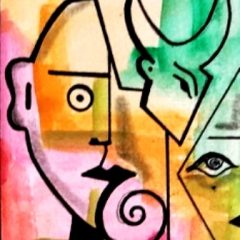

Art is objective, do not doubt it. Art possesses inherent qualities: form, structure, composition, skill, harmony and originality. These qualities can be judged independently of personal taste. I do not argue with taste. Individual likes and dislikes are subjective,. But the value of art is rooted in these objective elements that give it enduring power and universal resonance, and this goes way beyond the shifting opinions of art lovers.
To say “art is subjective” is making of art a non-standardised, non-professional endeavour and it is a refuge for people unwilling to face standards. Taste, for sure is subjective, and people can still have good or bad taste, and not just in their breath. Art is not like that. A painting or a symphony is not a matter of preference in the same way as choosing vanilla or chocolate. Works of art embody objective qualities: proportion, rhythm, innovation, mastery of medium, coherence of vision. These are measurable and comparable, regardless of whether one “likes” them.
To reduce art to opinion is ridiculous and to distorts the difference between genius and banality. It’s like saying Mozart’s music is equal to elevator music, or that a Rembrandt is equal to child’s doodle. The serious study of art, as an academic pursuit and as a profession, recognizes that, although taste fluctuates, the core of art does not and it endures based upon objective principles. Without them even the word art would lose its meaning.
CHEERS
COMING SOON
Part 2: Art can only be divided into GOOD and BAD art.
Part 3: Good and bad artists and art
 JaZzArt en València
This is a sharp, confident, and wonderfully uncompromising take on art. You lay out your argument with precision and flair, making a strong case for the objective foundations beneath artistic mastery. I love how you separate taste from value and defend standards without apology — it gives the piece both authority and personality.
Your examples land perfectly, and the tone strikes that rare balance between intellectual seriousness and witty edge. A bold, engaging reflection that invites deeper conversation. Looking forward to Parts 2 and 3!
Me gustaLe gusta a 2 personas
Thank you so much Sir! I truly appreciate your commentary and the analysis you have made of my article.
Me gustaLe gusta a 1 persona
The same is true of writing. In technical terms, writing might be good or bad. Bad grammar, spelling, poor word choices etc. And that’s pretty much objective. Whether the plot appeals is pretty much subjective. You need to tick both boxes to have something which is successful. I reckon that’s true for any form of creativity. Music, too, for example.
Me gustaLe gusta a 3 personas
So true Mister Bump, most everything in life is ruled by objectivity and subjectivity. In art, there is the objective, which could be good or bad (in accordance to accepted norms which apply to all the arts), and then there’s the individual (subjective) taste of the observer, collector or gallerist. But one thing must remain clear, in all the arts, there are standards to measure good and bad. Thank you so much Sir and a grand day to you!
Me gustaLe gusta a 1 persona
Fascinating perspective. I appreciate how clearly you separate art from taste—it’s a distinction many avoid. Your argument for objective elements like form, mastery, and coherence is compelling, and it definitely challenges the usual ‘all art is subjective’ stance. Looking forward to Part 2
Me gustaLe gusta a 3 personas
Thank you so much. I have never understood when people repeat «all art is subjective» because we have always referred to art as objects of art, so, logically, one would assume, people in general would accept art as objective, which it is. Thank you Sir, very much for your reply.
Me gustaMe gusta
Absolutely—I completely agree with you. I think the distinction between art as an object with measurable qualities and taste as a personal response is often overlooked. Recognizing art’s objective elements doesn’t diminish personal enjoyment; it simply allows us to appreciate the craft and mastery behind it. Thank you for articulating this so clearly—it’s refreshing to see such clarity on the subject.
Me gustaMe gusta
Thank you so much. I always appreciated the quote by Duke Ellington who said, after he was asked about the different types of music, «there is only two, good and bad…» I feel the same way about art. All the best to you!
Me gustaLe gusta a 1 persona
You make a good argument. I do think that art is open to interpretation by the audience, regardless of the form, but there is a very distinct difference between Art and non-Art (as you describe, Muzak and children’s doodles).
Me gustaLe gusta a 3 personas
Absolutely, and the audience is guided by their taste (mostly), so they judge a piece in accordance to how they like it, not necessarily on the quality of the painting. Thank you!
Me gustaLe gusta a 2 personas