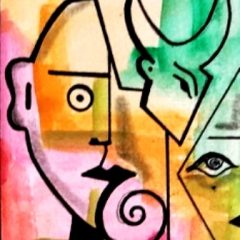
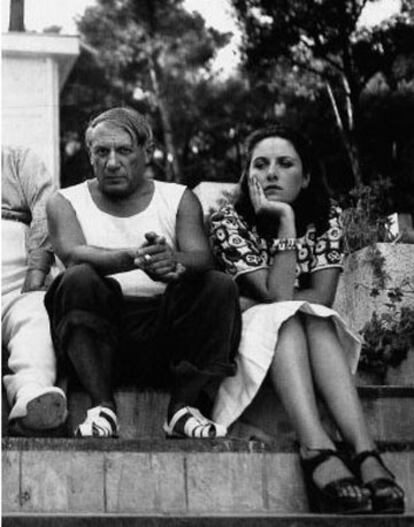
Dora Maar
When we speak about Pablo Picasso and his relationship with women we should keep in mind that he was born in the XIXth Century (1881) and lived 73 years in the XXth. He died in 1973. He was not a man of our times or of our morality and beliefs…
But not surprisingly, in this age of pointing fingers to the past, he is now thought of an abuser, by some. Yet, not a single complaint about him was made by any of the women he supposedly abused. On the contrary, he kept them in the lap of luxury and made sure they were taken care of. And I am not saying that to lessen the impact of abuse, nor does that supplant the fact that it is evident that he mistreated many of the women in his life. But I am trying to explain, or mitigate, the charges by reminding one and all that he was a generous and giving person mostly liked by everyone, and never accused of domestic violence.
And yes, according to our standards, his treatment of women would be frowned upon today. But one cannot judge another time period with one’s own. Francoise Gilot said that to Picasso women were either goddesses or doormats. However, she proved that a woman could walk away from Picasso, should a woman want to. And she did. She did not allow him to bully her around and she left him. She was the only one among many. Did the act of leaving him make her a goddess? In any event, as we will see, the other women in his life adored him to the end.
One of the women in his life was Dora Maar. She was an artist, a photographer and a philosopher. Quite a match for Picasso. Being that she had been raised in Argentina, she spoke Spanish and I am sure they must have had brilliant conversations. She became his muse and he began to devour her. She suffered his infidelities and even his cruel treatments. Eventually he proclaimed that she was mad. He called her the crying woman and painted her in tears in many occasions.
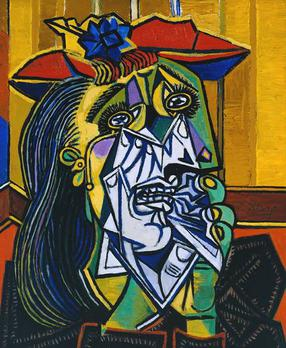
Eventually Picasso started painting the portraits of Dora Maar, the crying woman, wearing a hat. In Picasso’s iconography, the hat on the subject is a sign that the subject was crazy. When she saw herself painted in that manner she became greatly agitated and depressed. But to the end she remained absolutely faithful to Picasso, to the point of saying: “After Picasso only God.”
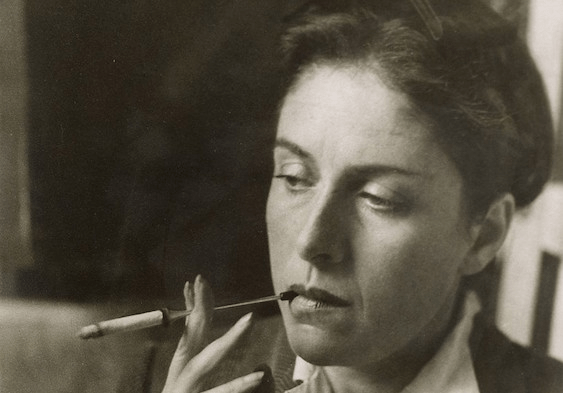
She was born Henriette Markovitch, on the 22nd of November 1907 in Paris. The Dora came perhaps from Theodora, a middle name? We do not know, but probably she added it later on in life. Her father was a Croatian architect and her mother was from Tours. She grew up in South America because of her father’s businesses. Her mother was strongly opposed to her relationship with Picasso. One day, while both women were in a violent phone discussion about the matter, her mother’s voice became absent. Because it was in Paris during the Nazi occupation Dora could not immediately go see what had happened, but the following morning she did go to her mother’s house and found her dead with the phone in her hand.
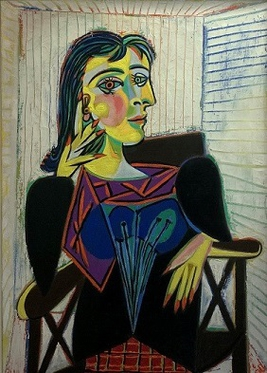
Dora was a brilliant woman and artist. She was proud, elegant, silent and very intelligent. She had a distinct and complex personality that could have been formed by her sense of irony. And although she had impeccable taste in clothes, she liked to dress up in the fashion of past centuries. Was she trying to capture the essence and the spirit of those days?
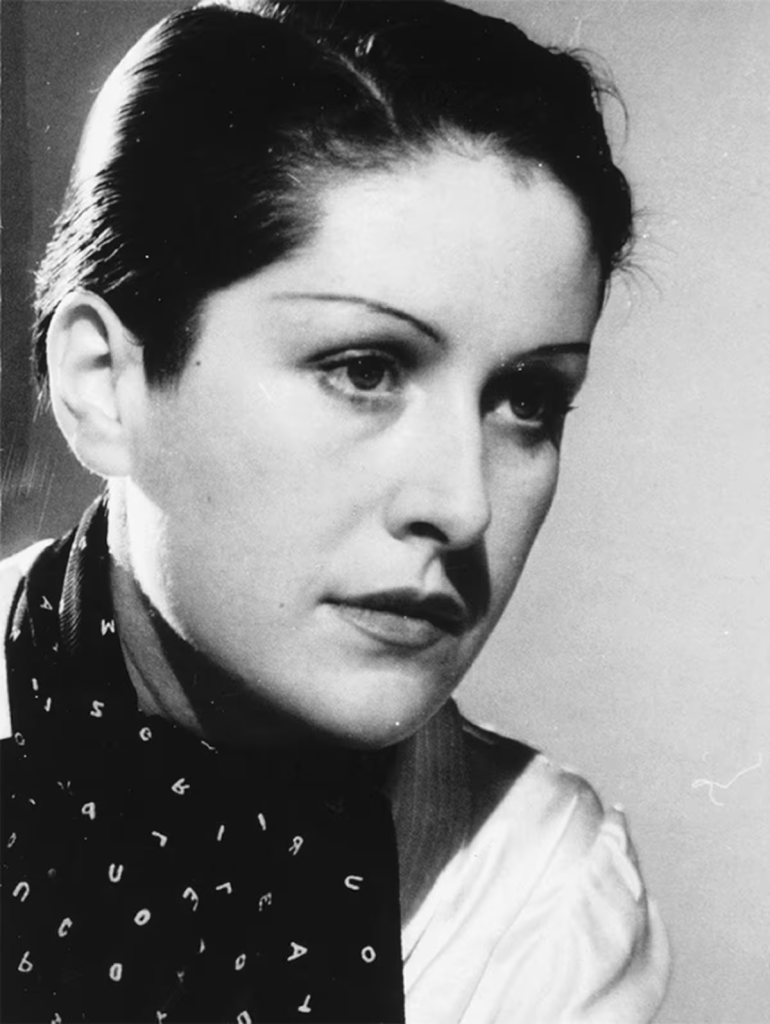
Pablo Picasso came into Dora Maar’s life in Paris, 1936. She was sitting at Les deux Magots, a Left Bank bar frequented by the cream of Paris’s artists and intellectuals. Picasso was there with friends and spotted her sitting alone and doing a most unusual thing. She had placed her gloved hand on the table and was plunging a knife between her fingers with fast motions, which resulted in sometimes cutting herself. Picasso supposedly walked up to her, introduced himself and asked for her blood-stained glove. At the time she was twenty eight years old and he was fifty four, and married to Olga Kocklova the Russian ballerina from the Ballets de Diaghilev, yet the attraction was there and the romance began.
It would be careless to say that their relationship was not explosive. It was passionate, violent, fulfilling, but completely destructive to Dora. Picasso at the time also had another mistress, Marie-Therese Walter, with whom he had a daughter, and by 1945 he had lost interest in Dora Maar. Of course that was when he met Françoise Gilot.
Dora’s mental health deteriorated quickly after that. She became reclusive and paranoid and eventually ended up committed to Saint-Anne’s hospital for the insane. There she was treated with electroshock therapy. It was not until Paul Éluard begged Picasso to take her out of there that she was released. It is no secret that Picasso mistreated and abused her. It was even said that he publicly beat her and that on one incident his driver said that he had placed her in the car unconscious after a beating.
After being released from the mental hospital Dora Maar cloistered herself in her apartment attempting to search for her inner self and the meaning of her life. She became a Catholic mystic, or perhaps even a fanatic. She painted and spent hours in solitary contemplation with only the company of few friends until her death in 1997.
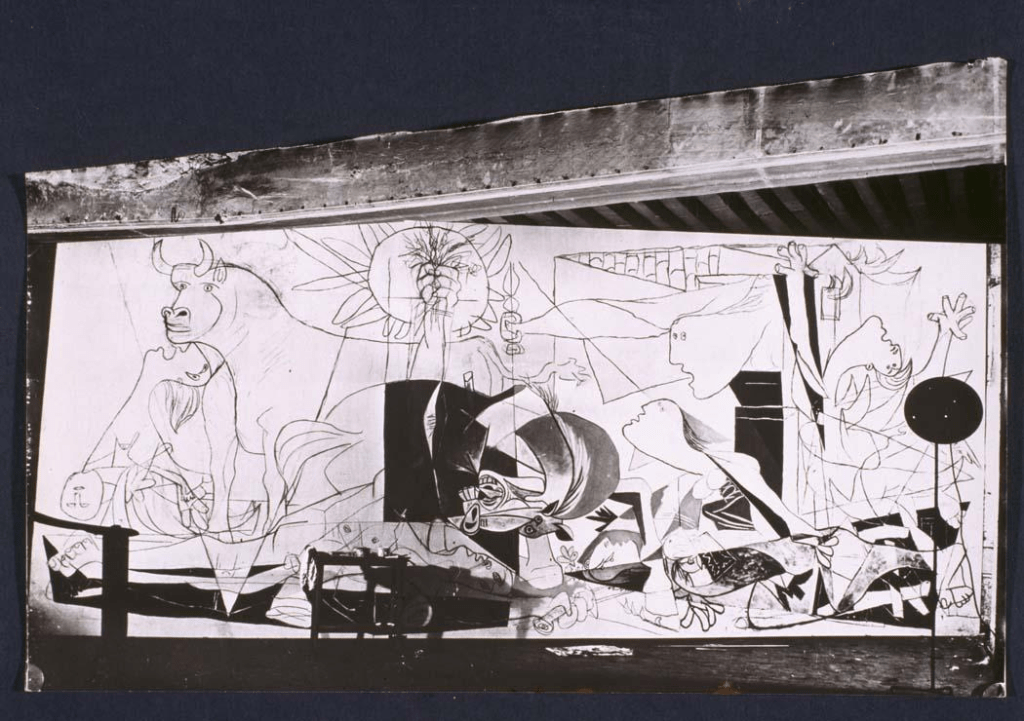
One of the most important things she ever did for Picasso was to photograph the development of Guernica. Her documentation of that process is a main attraction at the Reina Sofia Museum in Madrid which houses the painting. I would urge one and all to see it. I actually find the photographs of the process of Picasso creating that monumental work much more interesting than the painting itself. Although Guernica, because of its monumental size is amazing.
CHEERS
 JaZzArt en València
❤
Me gustaLe gusta a 2 personas
🙏🏻🙏🏻🙏🏻
Me gustaMe gusta
He was quite a terror to his kids and wives
Me gustaLe gusta a 1 persona
He was also generous and caring…
Me gustaLe gusta a 1 persona
Of course, one thing does not lessen the degree of the other, but I think that today everything gets exaggerated and judging people of the past is never good as one never really gets an accurate account. It is all heresay. Thanks so much da-Al. All the best to.
Me gustaLe gusta a 1 persona
Since the 70s everything I’ve heard about him was terrible. His crying painting speaks volumes, including that he boldly painted without sympathy. I imagine he was charming at times in the way that any abuser gives their prey enough rope to hang themselves with. My mother is from Argentina and father was from Spain. Much like Picasso he was awful to her and their children, yet to her he could do no wrong, even if it was at the expense of the kids. The culture then was all about men, marrying, having children, and staying married against all odds. Women were said to want to be dominated and were raised to strive to become martyred saints for their husbands. The more punishment they endured without complaining, the more they were praised.
Me gustaLe gusta a 1 persona
I agree, but it wasn’t the norm, however it was prevalent. Thankfully in our times things are different and those days are coming to an end. However, I do not think we can judge men, or women, of other times with the knowledge, advancement and morality of our times. Picasso might have been a cruel man, but bringing that out now is useless. What is important is that awareness be brought forth of abusers today, like the ones that follow certain musical styles and culture that demean women and continue to stereotype women and advocate that they only serve some very limited purposes. It is certainly wonderful to speak to you about such important topics and that the conversation continues with others so that awareness can be spread. Thank you so much da-Al and all the best to you.
Me gustaLe gusta a 1 persona