#music, Music for a Wednesday Morning in August: Mozart’s Magic Flute (By Special Request)

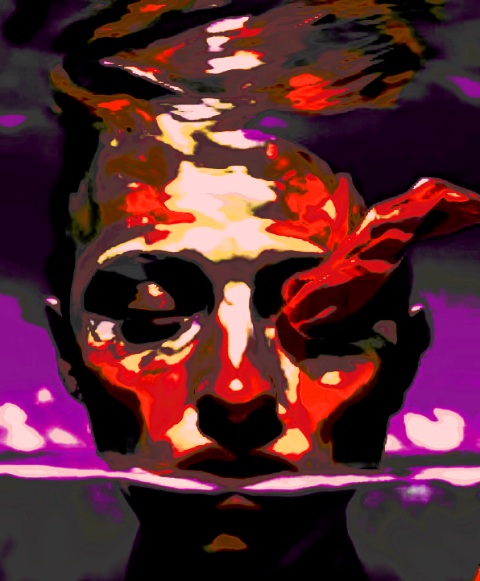
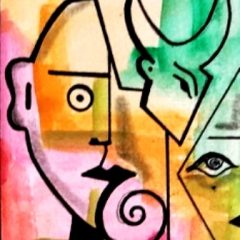
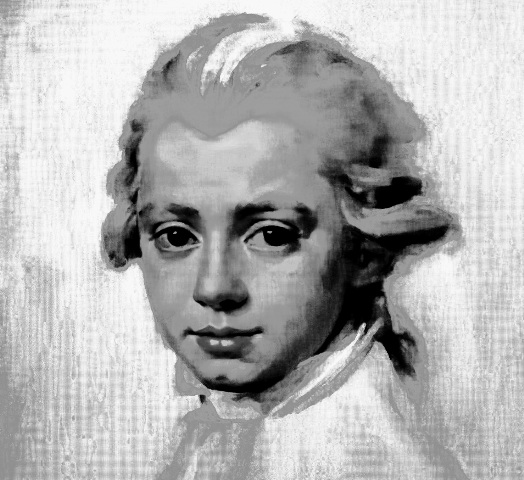
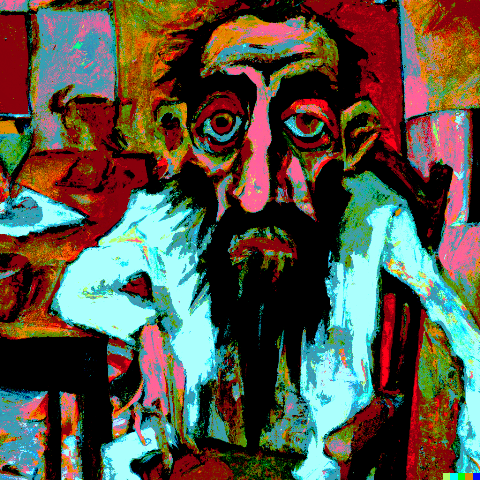
(«Wolfgang»/Francisco Bravo Cabrera/All Rights Reserved)

Today Featuring The Magic Flute

Mozart’s The Magic Flute (Die Zauberflöte) is a two-act opera blending magical fantasy, Enlightenment ideals, and Masonic symbolism. Which equals phenomenal! The story follows Prince Tamino, who is tasked with rescuing Princess Pamina, daughter of the Queen of the Night, from the high priest Sarastro. Alongside the comical bird-catcher Papageno, Tamino undergoes a series of spiritual and moral trials to prove his worthiness. Ultimately, the opera reveals that Sarastro represents wisdom and light, while the Queen embodies darkness and deceit. Love, virtue, and enlightenment triumph as Tamino and Pamina are united, and order is restored. Isn’t that wonderful?

I have seen various versions and interpretations of this opera, which is my second favourite from Mozart (who is my favourite classical composer), the first one is Don Giovanni. And one of my favourite versions was the one by Ingmar Bergman as a film adaptation from 1975…

Mozart’s Life and Works

Wolfgang Amadeus Mozart (1756–1791) phenomenal Austrian composer of the Classical era. He was extremely talented even at a very young age. A child prodigy, and a genius. At the age of five he began composing and performing across Europe guided by his father, Leopold. Mozart was a master of all genres existing in his time, and composed over 600 works that include symphonies, concertos, operas, chamber music, and sacred pieces. His most famous works include The Marriage of Figaro, Don Giovanni, Symphony No. 40, Requiem, and of course, The Magic Flute. Despite his musical genius, Mozart struggled financially and died at 35, leaving behind a legacy that continues to shape Western music. The true sign of genius.

I hope you enjoy this rendition of The Magic Flute arranged for strings.

CHEERS
#art, The Highest Priced Painting in the World Today…

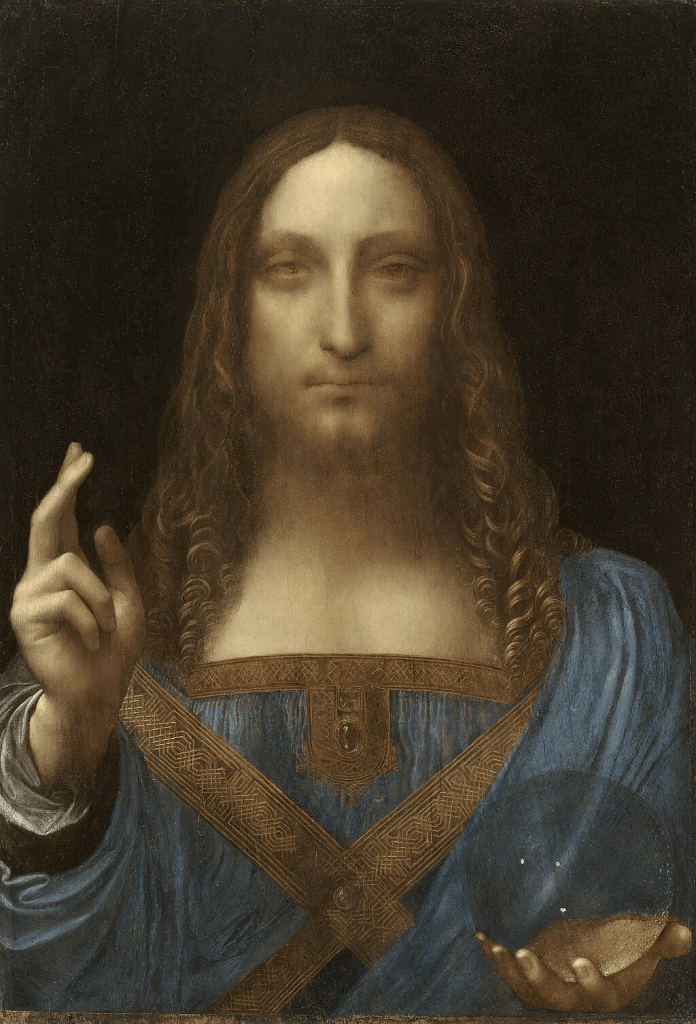
(Image Source: Wikimedia Commons/Public Domain)

Ok, I will begin by saying that the painting was acquired at auction and the current owner of Salvator Mundi is believed to be Crown Prince Mohammed bin Salman of Saudi Arabia. At the November 2017 Christie’s auction, the buyer was officially Prince Badr bin Abdullah Al Saud, acting as an agent—reportedly on behalf of Abu Dhabi’s Department of Culture and Tourism or possibly for Mohammed bin Salman himself. Since 2017, the painting has not been publicly displayed. It was reportedly kept aboard Mohammed bin Salman’s yacht Serene until late 2020 and is now believed to be in storage in Saudi Arabia, potentially awaiting the opening of a new museum in Al‑‘Ula or Riyadh.

Why is this painting so expensive and/or important? First I do not believe it to be that important and I am not too impressed with it. It’s history, if it really was painted by Leonardo da Vinci, say circa 1500, is long and enduring. It was, supposedly, at one time found in a rubbish bin in New Orleans and then sold, re-sold, restored, re-sold ad infinitum until if finally reached Christi’s where supposed «experts» (here we go!) attributed the painting to Leonardo. Then the Arab sheik bought it for a bit over 400 million US dollars. Then he tried to get «experts» from the Louvre to agree with the previous experts, but they said no, that they did not believe it was a Leonardo and refused to hang it (the Sheik was willing to lend it) next to the Mona Lisa, or at all in the museum. Such is the work of «experts».

I think, if it really is from 1500, that it could have been painted by Leonardo, or by any other artist from the times.

What do you think? Is it worth 400 million bucks?

CHEERS

#opinion, Dear Diary, Page 81: «Experts» (Good grief!)

(«Mr. Experto»/Francisco Bravo Cabrera/All Rights Reserved)

Experts are not sages, they are functionaries. They sit on panels, write in journals no one reads, and speak in tongues of jargon to preserve their own mystique. They are gatekeepers of knowledge, not its liberators. And that is being quite generous because in truth I do not believe that «experts» (with the exception of those in the medical field) have any truth or any knowledge. They are full of hot air, inflated, ego-centric, narcissistic little balloon heads.

The expert thrives on authority, not truth. Their credentials are their armour, their institutions their fortress, their arrogance their weapon. When challenged, they don’t debate — they dismiss. “Unqualified,” they say, as if wisdom required a certificate. And that is not even saying that their points of view are tainted with the tunnel vision they possess.

But history is littered with the corpses of expert consensus. The experts once told us the earth was flat, (that could still be right), that bleeding the sick would heal them, that heavier-than-air flight was impossible, that cigarettes were harmless. Again and again, the experts were wrong — and again and again, they wrapped their failures in the cloak of respectability. Art «experts» rave about the greatness of the ones they like and dismiss the ones they don’t as not being relevant or important. I remember being taught that Joan Miró was important and that Yoko Ono was a genius…

Here are the masterpieces of Joan Miró:

(Image source: The Guardian)

And here is the genius of Yoko Ono:

Why do I despise «experts»? Because experts are not seekers of truth. An expert is a careerist. He bows to the funding body, the political regime, the corporate sponsor. He does not ask dangerous questions, because dangerous questions cut off grants, silence invitations, kill reputations. Better to preach what is safe, what flatters power, what maintains the illusion of control. That is why in the art world they taught me that one of the greatest references was Andy Warhol. And yes, I know he is an institution to many, but, really?

This is one of Warhol’s great movies:

If you were able to watch 8 hours of the Empire State Building and find redeeming art in that then you should continue to follow the experts, they love people like you…

But I tell you…and I know you know it is true…the true discoveries, the revolutions, the leaps forward, they do not come from «experts». These great advances to humanity, science, art, and the society as a whole, do not come from the experts. This comes from the outsiders, the heretics, the tinkerers, the obsessives who refuse to genuflect before the altar of authority. Progress has always been made by those too stubborn, too naïve, or too free to care about what the experts decreed.

So, dear diary, I will…figuratively…knock. with a perfect scissors kick, the crown of the big head of the nearest expert and feel good. The crown was false anyways. Let us remember that knowledge is a gift that God has spread all over the universe (and the multiverse), as is wisdom. And truth? Truth is a concept that can be moulded to one’s beliefs and belongs to no guild. Let us stop worshipping experts, and start demanding honesty, humility, and courage. And start doing.

The world does not need more experts.
The world needs more thinkers.

CHEERS

#music, Music for a Wednesday Morning in August: Mozart’s Magic Flute (By Special Request)

(«Wolfgang»/Francisco Bravo Cabrera/All Rights Reserved)

Today Featuring The Magic Flute

Mozart’s The Magic Flute (Die Zauberflöte) is a two-act opera blending magical fantasy, Enlightenment ideals, and Masonic symbolism. Which equals phenomenal! The story follows Prince Tamino, who is tasked with rescuing Princess Pamina, daughter of the Queen of the Night, from the high priest Sarastro. Alongside the comical bird-catcher Papageno, Tamino undergoes a series of spiritual and moral trials to prove his worthiness. Ultimately, the opera reveals that Sarastro represents wisdom and light, while the Queen embodies darkness and deceit. Love, virtue, and enlightenment triumph as Tamino and Pamina are united, and order is restored. Isn’t that wonderful?

I have seen various versions and interpretations of this opera, which is my second favourite from Mozart (who is my favourite classical composer), the first one is Don Giovanni. And one of my favourite versions was the one by Ingmar Bergman as a film adaptation from 1975…

Mozart’s Life and Works

Wolfgang Amadeus Mozart (1756–1791) phenomenal Austrian composer of the Classical era. He was extremely talented even at a very young age. A child prodigy, and a genius. At the age of five he began composing and performing across Europe guided by his father, Leopold. Mozart was a master of all genres existing in his time, and composed over 600 works that include symphonies, concertos, operas, chamber music, and sacred pieces. His most famous works include The Marriage of Figaro, Don Giovanni, Symphony No. 40, Requiem, and of course, The Magic Flute. Despite his musical genius, Mozart struggled financially and died at 35, leaving behind a legacy that continues to shape Western music. The true sign of genius.

I hope you enjoy this rendition of The Magic Flute arranged for strings.

CHEERS
Quote of the day…

(Image source: Instagram site of Spainsays and Padrogaduratu)

«Our Spanish siesta laughs her head off at the American dream!»

#art, Traditional Art vs Conceptual Art

(«Qué»/Francisco Bravo Cabrera/All Rights Reserved)

When I started uni as a Fine Arts major conceptual art, in other words, performance art, was pretty strong. We had the performances of Marina Abramović and Ulai as well as of others. And of course we all knew about the conceptual «art» of Yoko Ono. But in our art school we had no classes, nor where we ever led towards that branch of «art.» And even when I switched to the Theatre Arts Department, the university did not consider teaching classes on how to be a performance artist. And I think they had the right approach. To me, in my opinion, performance art is more akin to theatre than to art, and conceptual art is more akin to nothing. I’ve no use for it. It is simply a way for talentless «artists» to «create» art that no one understands and that says nothing important. And do not forget, these are my personal feelings and opinions. Yours might be different and I will respect them.

So, here is a comparison:

AspectTraditional ArtConceptual Art
Primary FocusSkill, technique, and aesthetics (form, color, composition, craftsmanship)Idea, concept, or social statement; the concept is often more important than the execution
Materials/ExecutionPaint, marble, bronze, canvas, musical instruments—mediums require masteryAnything: instructions, text, objects, performance, ephemeral materials; mastery of medium is often secondary
Immediate ImpactOften visually or emotionally striking; can communicate without explanationOften obscure; may require reading instructions or context to understand the meaning
AccessibilityEasily appreciated by general audiences; universal visual or auditory appealOften appeals to a niche audience familiar with art theory*; can feel confusing or silly to outsiders
LongevityObjects are permanent or durable; intended to last for centuriesOften ephemeral, performative, or instructional; may exist only as documentation or memory
Emotional EngagementDirect: beauty, awe, empathy, or emotional resonanceIndirect: intellectual engagement, provocation, or philosophical questioning*.
Risk of MisunderstandingLower: people “get it” on sightHigh: without explanation, work may seem meaningless or trivial
Evaluation CriteriaTechnical skill, composition, beauty, originalityOriginality of idea, conceptual clarity, provocation, challenge to norms
Famous ExamplesMichelangelo, Rembrandt, Vermeer, Monet, Beethoven, StravinskyYoko Ono, Fluxus artists, Duchamp, Sol LeWitt, Abramović
CriticismCan be conservative or formulaic; sometimes prioritizes aesthetics over ideasCan appear pretentious, naive, or inaccessible; sometimes “idea-heavy” and lacking sensory impact

* I strongly disagree as I think it is pretentious, naive, meaningless and a useless experiment in elitism displayed as mediocrity. It might be interesting for the performer or the conceptual «artist» but pure rubbish to the rest of us.

What they teach at uni (nowadays) is that traditional art emphasises skill, execution and sensory impact (and I agree). And that conceptual art emphasises ideas and provocation, often at the cost of immediate clarity or beauty. Well, only very few of them bring forth ideas or provocation, some are just self-indulging machinations by talent-less «artists» having us all on.

Bon dia!

No creo que se le deba añadir nada más…

#art, Art History in One Minute (videos): Three Women…

(«Three Women No. 2″/Francisco Bravo Cabrera/All Rights Reserved)

These are three contemporary women artists that really have contributed much to the history of art. I find them quite interesting and important.

Tell me what you think…

(Please do not forget to like, comment, share and subscribe)

CHEERS

#art, Art History in One Minute (videos): Francis Bacon

(«Francis»/Francisco Bravo Cabrera/All Rights Reserved)

Francis Bacon is one of the most important artists of the 20th Century. For me a favourite.

Tell me what you think…

(Please do not forget to subscribe, like, comment and share)

CHEERS