#art, A Good Soldier is Not an Angry Man…

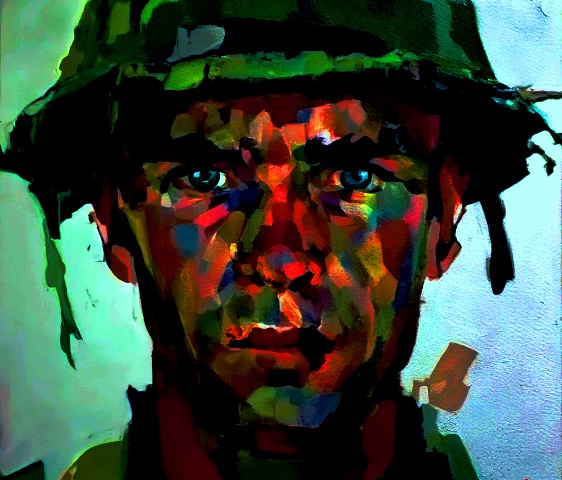
(«Coming Back-Self Portrait»/Francisco Bravo Cabrera/All Rights Reserved)

Well, Lao Tzu might not have said it exactly as in the translation above, but he did say that an excellent soldier is not a furious man. This could also mean that the «accomplished person is not an aggressive person». In any event it means that one must not confuse anger and violent tendencies from the work that one does, even if that work is the work and the duty of the soldier. I was glad to have learned that (as I did study the Tao) early in life before joining the military…

So I thought we could talk a bit about Lao Tzu and the Tao Te Ching

Lao Tzu, although I believe he was real, is thought of as a semi-legendary Chinese philosopher believed to have lived in the 6th century B.C. (of course some «experts» place him later). He is traditionally regarded as the founder of Taoism (Daoism) and the author of its foundational text, the Tao Te Ching. His name is also a title which means «Old Master,» and much of his life remains shrouded in myth. Legend says he was an archivist in the imperial court and when he retired and left China a border guard asked him to to write down his wisdom. His wisdom became the Tao Te Ching.

Tao Te Ching means The Book of the Way and Its Virtue which is composed of short, poetic texts that explore the nature of the Tao, which is The Way, the fundamental, and ineffable force that underlies all existence. It emphasizes themes such as:

Non-action (wu wei): acting in harmony with the natural flow rather than through force or struggle

Simplicity and humility: embracing a quiet, modest life

Balance and duality: recognizing the interplay of opposites (yin and yang)

Inner wisdom: valuing intuitive understanding over rigid logic or ambition

The Tao Te Ching has had a profound influence on Chinese philosophy, religion, politics, and art. It is a cornerstone of philosophical Taoism, and its teachings also shaped Chinese Buddhism, Confucianism, and various martial and meditative traditions.

Both Lao Tzu and the Tao Te Ching continue to inspire people around the world seeking a life of balance, peace, and alignment with nature.

CHEERS

LOOK FOR US IN OUR SOCIAL MEDIA

YouTube: www.YouTube.com/@FranciscoBravoCabrera

Instagram: @Francisco_Bravo_Cabrera

X: @Euskadi_Bakero

Artist Representative: «By Guloshka»

E-Mail: guloshka404@gmail.com

Instagram: @guloshka

Quote of the day…

(“Alejandra”/Francisco Bravo Cabrera/All Rights Reserved)

“Keep your eyes wide open, like a judge that never sleeps.” (Francisco Bravo Cabrera)

#art, Gothic and Gothic-Like Statues…

(«Gótica»/Francisco Bravo Cabrera/All Rights Reserved)

Here is what is important about gothic and gothic-style statues all around the world…

(We ask you kindly to please like, comment, share and subscribe to our channel as this helps us)

CHEERS

#art, On Andy Warhol and Frida Kahlo (part 2/conclusions)

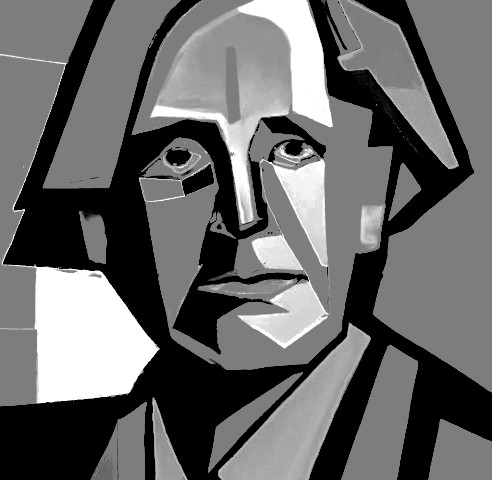
(«Andy»/Francisco Bravo Cabrera/All Rights Reserved)

Andy Warhol (Pittsburgh, PA 1928-1987) supposedly a leading figure in Pop Art. But I’ve some serious criticisms and I can explain them and support my view that he is unimportant in art history.

Shallow or Commercial: Warhol’s repetition of mass-produced images (Campbell’s Soup cans, Marilyn Monroe) are empty and purely commercial. It is banal, lacks depth and relies…totally…on shock or novelty.

Factory Production: The only way he could mass produce was through the use of employees, operators in his studio called “The Factory”. There is as much authenticity to his work as there is in the Chinese trinquetes sold on Canal Street in Manhattan. Is that what it means to be an “artist”? I would reduce his art to branding.

Cultural Critique or Capitalist Embrace?: While some see Warhol as satirizing consumer culture, I think he wasn’t critiquing it at all. He was profiting from it. That ambiguity makes his legacy controversial.

So Why Are They Still Considered Important?

Despite these critiques, «experts» (good grief!) still think that both of these artists made significant contributions. Kahlo brought…in a very mediocre way…Mexican culture and what some think are feminist themes into the global art narrative in a deeply personal way.

Warhol, they think, redefined art in the 20th century by…supposedly…blurring the lines between commercialism and fine art. Experts and fans think he was challenging the art world’s elitism.

Personally I don’t subscribe to any of these justifications. Everyone knows my views on «experts» and I know that the art world/art business moves on what sells and what the big boys…dealers/collectors/gallerists…can sell to the new art collectors that cannot purchase the classical art that now is unavailable.

What do you think?

CHEERS

#art, On Warhol and Frida Kahlo (parts 1 and 2)…

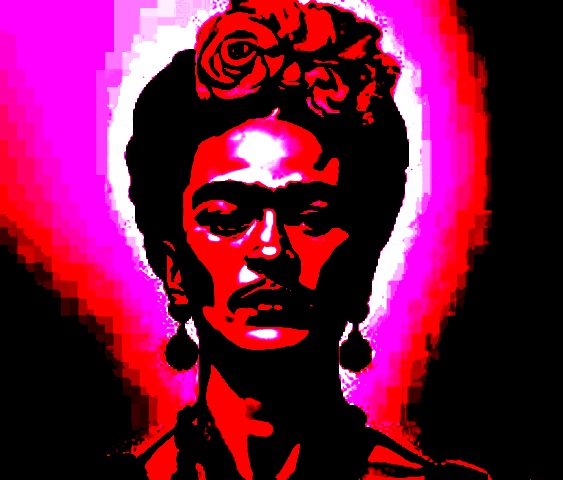
(«Frita»/Francisco Bravo Cabrera/All Rights Reserved)

Frida Kahlo (Coyoacán, Mexico City, Mexico 1907-1954) is widely respected for her deeply personal and symbolic self-portraits, but I do not believe it and I can argue my point that she is not a valuable addition to art history with critical perspectives on her legacy:

Limited Formal Innovation: Her technique was not particularly ground-breaking…far from it…in terms of formal or technical development. Her style was rooted in Mexican folk art and a sort of surrealism-light that did not innovate in terms of form, compared to…dare I…contemporaries like Picasso or Kandinsky, which were real artists in every sense of the word. For me Picasso and Kandinsky were the greatest innovators of the 20th Century and true geniuses. Kahlo does not fit in that company.

Overemphasis on Personal Suffering: Her fame leans too heavily on her personal story—her chronic pain, relationship with Diego Rivera, and her political identity—rather than on the artistic merit of her works themselves. And of course, she was a martyr and martyrs sell and are well accepted by the general public.

Cult of Personality: Her image (iconic unibrow, flower crown, traditional Tehuana dress) has become commodified to the point that she’s more famous for being Frida Kahlo the icon than Frida Kahlo the painter. She…and this was through no fault of her…became the queen of merchandising. I mean even little girls for Halloween dress up like Frida Kahlo. And pop stars, beginning with Madonna, have also dressed like her to capitalise on the image. But that says nothing about artistic significance…

#art, There Are Only Good and Bad Artists – Bodo’s Philosophy of Art (Part 3)

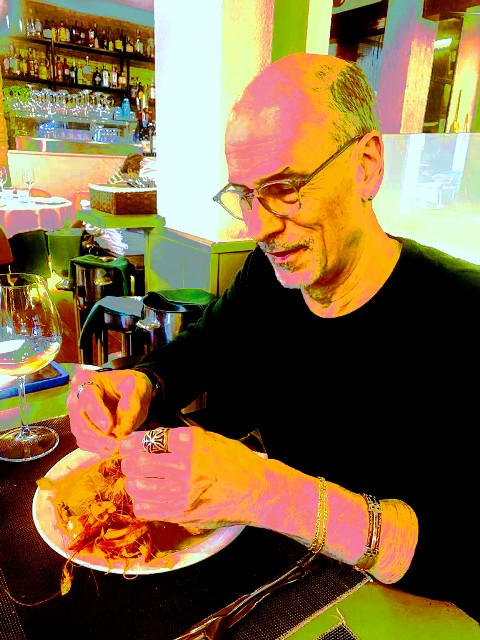
(Bodo eats shrimp for its philosophical value/actor portrayal/All Rights Reserved)

So, I have philosophised about the objectivity…versus subjectivity…of art and as well brought forth my philosophy on the fact that art is categorised as being either good or bad. Those are elemental truths that one is taught in art school and in the school of life as one works one’s way up the professional chain and gains experience both in life and in art. It is impossible to think of these things when one is very young.

So, what is «bad art»? My reply is that “bad art”, seriously speaking, is art that pretends to be profound but is hollow, or art that substitutes shock, gimmick, or self-promotion for vision and craft. And I am referring to both, traditional art and conceptual art or experimental.

With that said, here are some examples often cited as bad, being bad artists producing bad art (in the sense above):

Jeff Koons – His balloon dogs and stainless-steel kitsch may fetch millions, but they’re little more than oversized novelties. They dazzle with spectacle, not substance.

Damien Hirst – Famous for pickled sharks and diamond-encrusted skulls, his work often leans more on PR stunts and shock value than on artistic depth.

Tracey Emin – Her “My Bed” (an unmade bed with personal detritus) is often held up as a symbol of art reduced to autobiography and raw display without transformation. And in very bad taste I would add.

Thomas Kinkade – Marketed as the “Painter of Light,” his sugary, mass-produced cottage scenes are technically slick but conceptually empty—art reduced to calendar kitsch.

AI-generated kitsch flooding social media – Endless pretty-but-empty images with no inner necessity, no artist’s hand, just algorithmic pastiche.

Each of these examples is “bad” not because someone dislikes them, but because they lack the enduring qualities of good art: invention, vision, mastery, depth. They survive on hype, sentimentality, or branding, and on the bad art professors that try to drive them into the heads of gullible and young art students who will later realise how they had been manipulated, controlled, brainwashed and misguided.

CHEERS

#art, Art Can Only Be Good or Bad – Bodo’s Art philosophy (part 2)

(Bodo drinks beer for it’s philosophical content/actor portrayal/All Rights Reserved)

Do not be afraid to do it and say it loud. Art is either good or bad because art, like music, divides first only into two categories: good and bad. And please, this is not a matter of taste but of truth. Good art shows mastery of ideas, technique, reference, experience, depth, and coherence. Bad art demonstrates a lack of professional approach bordering on laziness, emptiness, or mere gimmickry.

One may dislike Bach, yet Bach remains good, outstanding I would say. One may enjoy a jingle, yet the jingle remains bad. Taste does not rewrite reality. To collapse all art into “subjective preference” is to pretend that a child’s scribble equals Giotto, or that noise equals a symphony. The fact is simpler, harsher, and liberating: art is either good or bad. Everything else is commentary. And that is true because your taste…or mine…does not define art. Art is an academic subject matter and a profession. And although many people think of it as a pastime, it is definitely not. An artist does not work to pass the time but works for money, to sell a professional finished product.

So, just to recap, art, like music, is judged by one, and only one major law: it is either good or bad. Your taste may wander, and you may like this or that, but your taste does not define quality nor does it judge art. It is merely your taste (or mine) and we can have, like so many people we see «out there», bad taste. And taste, good taste, is an important attribute that an artist must have. To deny this is to confuse noise with music, scribble with painting, accident with creation. And bear in mind that the process of creating art is not intuitive. It is contrived, developed, refined, reworked and polished. Although it still can be a complete and total mystery.

CHEERS

Part 3 coming up…

#art, Art is Objective; Taste is Subjective – Art Philosophy by Bodo

(Bodo eating ice cream for it’s philosophical value/actor portrayal/All rights Reserved)

Art is objective, do not doubt it. Art possesses inherent qualities: form, structure, composition, skill, harmony and originality. These qualities can be judged independently of personal taste. I do not argue with taste. Individual likes and dislikes are subjective,. But the value of art is rooted in these objective elements that give it enduring power and universal resonance, and this goes way beyond the shifting opinions of art lovers.

To say “art is subjective” is making of art a non-standardised, non-professional endeavour and it is a refuge for people unwilling to face standards. Taste, for sure is subjective, and people can still have good or bad taste, and not just in their breath. Art is not like that. A painting or a symphony is not a matter of preference in the same way as choosing vanilla or chocolate. Works of art embody objective qualities: proportion, rhythm, innovation, mastery of medium, coherence of vision. These are measurable and comparable, regardless of whether one “likes” them.

To reduce art to opinion is ridiculous and to distorts the difference between genius and banality. It’s like saying Mozart’s music is equal to elevator music, or that a Rembrandt is equal to child’s doodle. The serious study of art, as an academic pursuit and as a profession, recognizes that, although taste fluctuates, the core of art does not and it endures based upon objective principles. Without them even the word art would lose its meaning.

CHEERS

COMING SOON

Part 2: Art can only be divided into GOOD and BAD art.

Part 3: Good and bad artists and art

#art, There Are Only Good and Bad Artists – Bodo’s Philosophy of Art (Part 3)

(Bodo eats shrimp for its philosophical value/actor portrayal/All Rights Reserved)

So, I have philosophised about the objectivity…versus subjectivity…of art and as well brought forth my philosophy on the fact that art is categorised as being either good or bad. Those are elemental truths that one is taught in art school and in the school of life as one works one’s way up the professional chain and gains experience both in life and in art. It is impossible to think of these things when one is very young.

So, what is «bad art»? My reply is that “bad art”, seriously speaking, is art that pretends to be profound but is hollow, or art that substitutes shock, gimmick, or self-promotion for vision and craft. And I am referring to both, traditional art and conceptual art or experimental.

With that said, here are some examples often cited as bad, being bad artists producing bad art (in the sense above):

Jeff Koons – His balloon dogs and stainless-steel kitsch may fetch millions, but they’re little more than oversized novelties. They dazzle with spectacle, not substance.

Damien Hirst – Famous for pickled sharks and diamond-encrusted skulls, his work often leans more on PR stunts and shock value than on artistic depth.

Tracey Emin – Her “My Bed” (an unmade bed with personal detritus) is often held up as a symbol of art reduced to autobiography and raw display without transformation. And in very bad taste I would add.

Thomas Kinkade – Marketed as the “Painter of Light,” his sugary, mass-produced cottage scenes are technically slick but conceptually empty—art reduced to calendar kitsch.

AI-generated kitsch flooding social media – Endless pretty-but-empty images with no inner necessity, no artist’s hand, just algorithmic pastiche.

Each of these examples is “bad” not because someone dislikes them, but because they lack the enduring qualities of good art: invention, vision, mastery, depth. They survive on hype, sentimentality, or branding, and on the bad art professors that try to drive them into the heads of gullible and young art students who will later realise how they had been manipulated, controlled, brainwashed and misguided.

CHEERS