(Bodo drinks beer for it’s philosophical content/actor portrayal/All Rights Reserved)
Do not be afraid to do it and say it loud. Art is either good or bad because art, like music, divides first only into two categories: good and bad. And please, this is not a matter of taste but of truth. Good art shows mastery of ideas, technique, reference, experience, depth, and coherence. Bad art demonstrates a lack of professional approach bordering on laziness, emptiness, or mere gimmickry.
One may dislike Bach, yet Bach remains good, outstanding I would say. One may enjoy a jingle, yet the jingle remains bad. Taste does not rewrite reality. To collapse all art into “subjective preference” is to pretend that a child’s scribble equals Giotto, or that noise equals a symphony. The fact is simpler, harsher, and liberating: art is either good or bad. Everything else is commentary. And that is true because your taste…or mine…does not define art. Art is an academic subject matter and a profession. And although many people think of it as a pastime, it is definitely not. An artist does not work to pass the time but works for money, to sell a professional finished product.
So, just to recap, art, like music, is judged by one, and only one major law: it is either good or bad. Your taste may wander, and you may like this or that, but your taste does not define quality nor does it judge art. It is merely your taste (or mine) and we can have, like so many people we see «out there», bad taste. And taste, good taste, is an important attribute that an artist must have. To deny this is to confuse noise with music, scribble with painting, accident with creation. And bear in mind that the process of creating art is not intuitive. It is contrived, developed, refined, reworked and polished. Although it still can be a complete and total mystery.
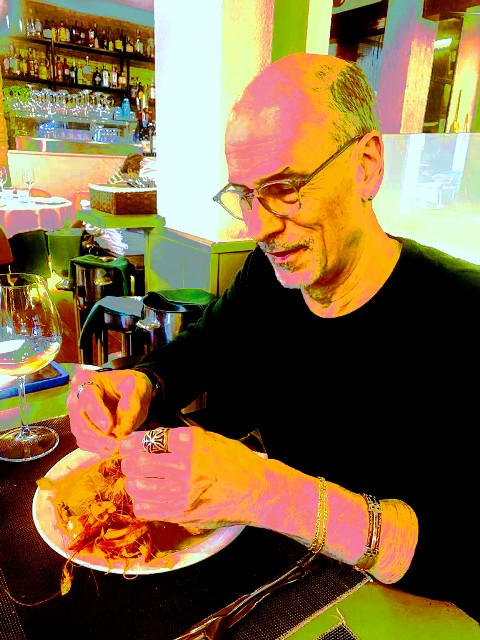
(Bodo eats shrimp for its philosophical value/actor portrayal/All Rights Reserved)
So, I have philosophised about the objectivity…versus subjectivity…of art and as well brought forth my philosophy on the fact that art is categorised as being either good or bad. Those are elemental truths that one is taught in art school and in the school of life as one works one’s way up the professional chain and gains experience both in life and in art. It is impossible to think of these things when one is very young.
So, what is «bad art»? My reply is that “bad art”, seriously speaking, is art that pretends to be profound but is hollow, or art that substitutes shock, gimmick, or self-promotion for vision and craft. And I am referring to both, traditional art and conceptual art or experimental.
With that said, here are some examples often cited as bad, being bad artists producing bad art (in the sense above):
Jeff Koons – His balloon dogs and stainless-steel kitsch may fetch millions, but they’re little more than oversized novelties. They dazzle with spectacle, not substance.
Damien Hirst – Famous for pickled sharks and diamond-encrusted skulls, his work often leans more on PR stunts and shock value than on artistic depth.
Tracey Emin – Her “My Bed” (an unmade bed with personal detritus) is often held up as a symbol of art reduced to autobiography and raw display without transformation. And in very bad taste I would add.
Thomas Kinkade – Marketed as the “Painter of Light,” his sugary, mass-produced cottage scenes are technically slick but conceptually empty—art reduced to calendar kitsch.
AI-generated kitsch flooding social media – Endless pretty-but-empty images with no inner necessity, no artist’s hand, just algorithmic pastiche.
Each of these examples is “bad” not because someone dislikes them, but because they lack the enduring qualities of good art: invention, vision, mastery, depth. They survive on hype, sentimentality, or branding, and on the bad art professors that try to drive them into the heads of gullible and young art students who will later realise how they had been manipulated, controlled, brainwashed and misguided.
(Bodo eating ice cream for it’s philosophical value/actor portrayal/All rights Reserved)
Art is objective, do not doubt it. Art possesses inherent qualities: form, structure, composition, skill, harmony and originality. These qualities can be judged independently of personal taste. I do not argue with taste. Individual likes and dislikes are subjective,. But the value of art is rooted in these objective elements that give it enduring power and universal resonance, and this goes way beyond the shifting opinions of art lovers.
To say “art is subjective” is making of art a non-standardised, non-professional endeavour and it is a refuge for people unwilling to face standards. Taste, for sure is subjective, and people can still have good or bad taste, and not just in their breath. Art is not like that. A painting or a symphony is not a matter of preference in the same way as choosing vanilla or chocolate. Works of art embody objective qualities: proportion, rhythm, innovation, mastery of medium, coherence of vision. These are measurable and comparable, regardless of whether one “likes” them.
To reduce art to opinion is ridiculous and to distorts the difference between genius and banality. It’s like saying Mozart’s music is equal to elevator music, or that a Rembrandt is equal to child’s doodle. The serious study of art, as an academic pursuit and as a profession, recognizes that, although taste fluctuates, the core of art does not and it endures based upon objective principles. Without them even the word art would lose its meaning.
CHEERS
COMING SOON
Part 2: Art can only be divided into GOOD and BAD art.
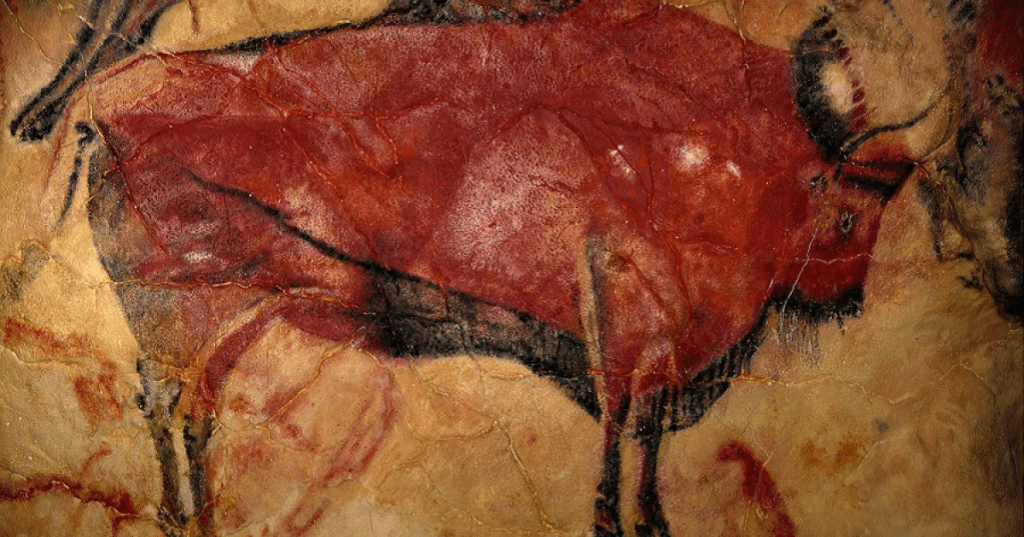
Al encontrar estas preciosidades en las cuevas de Europa, supimos que el hombre se expresaba a través del arte desde los más remotos tiempos de la historia. La pintura parietal también incluye los petroglifos que no necesariamente implica que tienen que ser todas prehistóricas. Hay algunas, como las de la cueva de Gabarnmung, (Australia) que se supone que tienen mas de 28 000 años, y otras más recientes, posiblemente del siglo pasado.
Se piensa que las más antiguas fueron realizadas hace más de 44 000 años y se encuentran tanto en la región franco-cantábrica de Europa occidental como en las cuevas de Leang-Leang (Sulawesi, Indonesia). Estas pinturas rupestres son de las plantas de la mano del artista y formas geométricas simples; los ejemplos indiscutibles más antiguos de pinturas rupestres figurativas son algo más jóvenes, con una antigüedad cercana a los 35 000 años. La pintura rupestre más antigua de todas, datada según el método del urano-torio, que indica que fue hecha hace mas de 64 mil años, fue encontrada el la cueva de Maltravieso, Cáceres.
Para mi es como ver un museo paleolítico que muestra que el arte siempre fue patrimonio de la humanidad.
+++
Upon finding these treasures in the caves of Europe, as well as in other parts of the world, we knew that man had expressed himself through art since the earliest times in pre-history. Cave painting also includes petroglyphs, which do not necessarily have to be all prehistoric. There are some, like those from the Gabarnmung cave (Australia), which are believed to be over 28,000 years old, and others that are more recent, possibly from the last century.
It is believed that the oldest ones were made more than 44,000 years ago and are found both in the Franco-Cantabrian region of Western Europe and in the Leang-Leang caves (Sulawesi, Indonesia). These rock paintings consist of the handprints of the artist and simple geometric shapes; the undisputed oldest examples of figurative rock paintings are somewhat younger, with an age close to 35,000 years. The oldest rock painting of all, dated using the uranium-thorium method, which indicates it was made more than 64,000 years ago, was found in the Maltravieso cave in Cáceres.
For me, it is like visiting a Paleolithic museum that shows that art has always been the heritage of humanity.
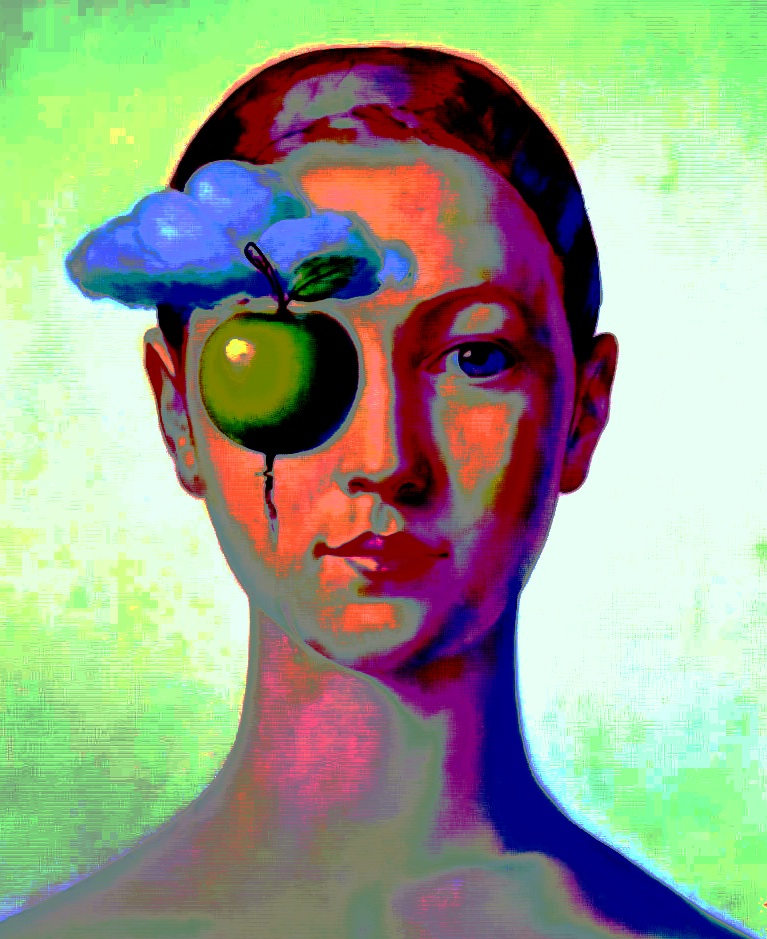
(«Portrait of Ophelia as a Magritte Painting»/Bodo Vespaciano/All Rights Reserved)
The Art World Today: Failed, Advancing, or Stagnant?
The art world is not failed, but neither static: it is going through a deep transformation, with clear stagnation at the “super-sales” level, alongside growing dynamism at more accessible tiers, driven by new generations, emerging regions, and technology. Here’s a detailed overview:
Decline at the High-End Market
In 2024, the global art market fell 12%, reaching around USD 57.5 billion.
Works above USD 10 million dropped sharply: both volume and value fell between 39–45%.
Resale returns are at their lowest point in 20 years: more than half sell at a loss.
Traditional auction houses, especially in London, face difficulties with plunging sales and profits.
Ultra-high-value art investments lost appeal: sales of works over USD 10 million fell 44%, and art’s share in wealthy portfolios shrank from 24% to 15% (2022–2024).
In short: the luxury tier is stagnating or declining.
Renewal at Accessible Levels
Total transactions actually rose 3%, driven by small works (<USD 5,000).
The mid-market (USD 100k–1 million) is holding strong and shows potential.
Affordable art segments grew in both value and number: low-cost works rose up to 7% in revenue and 13% in lots sold.
Online sales now make up 18–20% of the total, with many new buyers entering this way.
This shows a democratization of the market, with broader access and participation.
New Protagonists: Generations, Regions, and Formats
Millennials and Gen Z are reshaping the market: they dominate auctions, buy for cultural value more than investment, and prefer authenticity and transparency.
Diversity is accelerating: emerging artists — especially women and creators from Africa, Latin America, and Southeast Asia — are gaining visibility.
Geography is shifting: U.S. leads (~43%), U.K. rebounds (~18%), China collapses (~31%), while the Middle East, India, and Africa gain traction.
Fairs like Art Basel Paris and Liste Basel highlight focus on emerging talent.
This global recalibration suggests a more inclusive and culturally rooted future.
Technology, Innovation, and Immersive Art
Immersive art — interactive, multi-sensory formats — is on the rise, from Tokyo to immersive exhibitions like LOWRY 360.
NFTs and digital art are evolving: less speculation, more emphasis on curation, authenticity, and artistic value.
Digital platforms and AI are opening new paths in creation, pricing analysis, and accessibility.
Technology isn’t replacing art but expanding it.
Voices from the Art Community
On forums like Reddit, artists and gallerists stress the fatigue of the traditional market, post-COVID financial strain, and a disconnect between contemporary art and collectors:
“It’s been the worst couple of years for many artists… I showed 23 new paintings and only sold two…” Calls for transparency and decentralization are rising: “democratize art and make it part of the community, with reasonable prices.”
Conclusion: Failed, Advancing, or Stagnant?
Not failed, but the elite tier is struggling.
Advancing in breadth: more transactions, new buyers, greater accessibility.
Transforming, driven by new regions, younger generations, technology, and values like inclusion and sustainability.
The art world is restructuring its center, shifting from the spectacular to the meaningful, from speculative to authentic.
These are facts, and supposedly the opinion of «experts» (good grief experts!) who offer opinions according to who knows what «expertise». Most of these so-called experts are not artists but «analysts», who, like the talking heads that want to interpret the news for us, want to tell us that what they think is the truth.
In my opinion the art world, per se, does not exist any more. It is the art business (as you can tell by the facts provided above). Artists today have an opportunity to set their own pace as successful outsiders. No one needs a gallery any more if one knows how to use the internet to advantage. Your gallery is the world wide web and your collectors come from all over the world. You set your prices, you create your trends, you develop your style and if you are successful, well, then it is your new «vanguard of the 21st Century».
And yes, digital programmes and AI are tools and if one is wise one will use them wisely and create. There is no stopping the creative process so do not be afraid of technology. Just do not get sold on fads and on those who laud and applaud mediocre and bad artists.
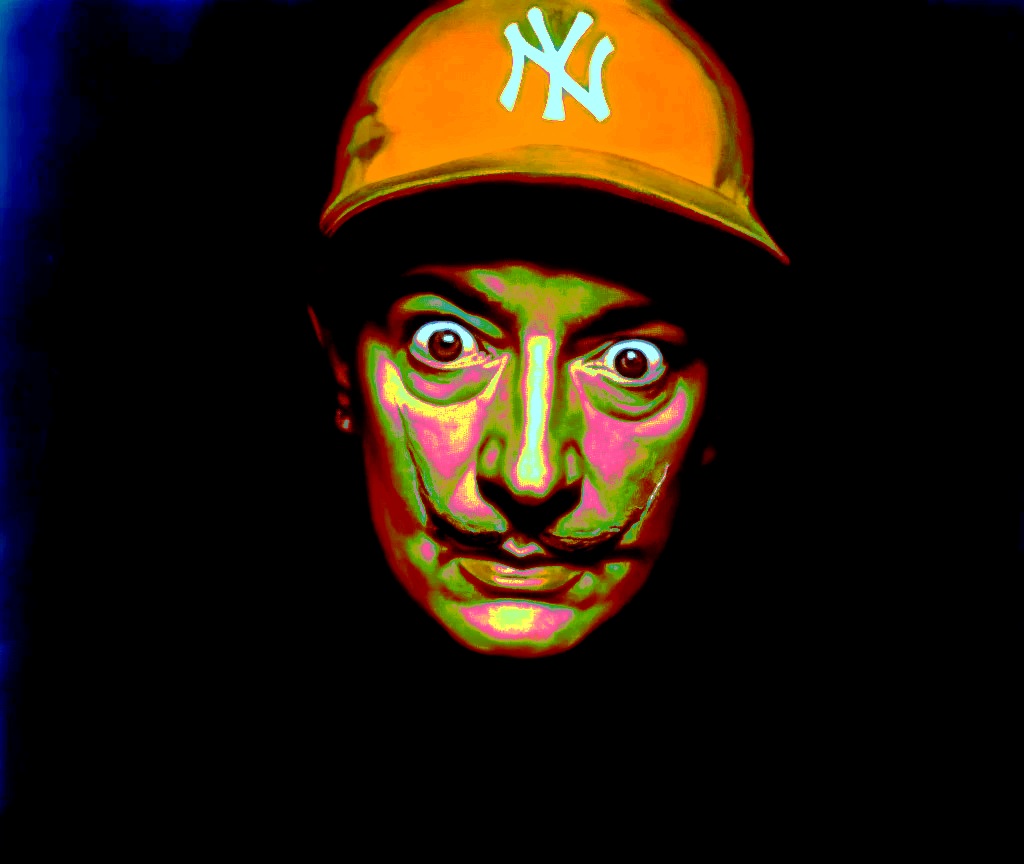
(«Yankee Fan»/Francisco Bravo Cabrera/All Rights Reserved)
Many, either from within or without of the «art world», feel that there aren’t any good artists any more. That there are businessmen of art accumulating huge fortunes, but producing rubbish. And many of us feel that frustration with the art world right now. The high-profile names (Koons, Hirst, Emin, Kusama, etc.) are not even painters! They are mostly about spectacle, branding, and marketability. They thrive in the gallery–auction–collector ecosystem, which rewards shock, gimmicks, and recognisability far more than subtlety, craft, or genuine vision.
But that doesn’t mean that good painters don’t exist anymore. In fact, there are many remarkable contemporary painters working today — they just don’t always dominate headlines because they don’t fit the art-market circus model. Some examples:
Cecily Brown – British painter whose large, gestural works sit somewhere between abstraction and figuration, with real painterly energy.
Peter Doig – Scottish-born, Canadian-raised painter, creating atmospheric, dreamlike landscapes and figures.
Jenny Saville – Known for her monumental, raw depictions of the human body, technically virtuosic. (definitely one of my faves)…
Kerry James Marshall – American painter who explores Black identity and art history with both narrative depth and painterly brilliance.
Julie Mehretu – Abstract painter, blending cartography, architecture, and gestural abstraction in vast layered canvases.
Neo Rauch – German painter, mixing surrealism, socialist realism, and dream imagery in technically masterful ways.
Dana Schutz – Contemporary American painter, combining grotesque humor, bold color, and real painterly skill.
There’s also a huge wave of lesser-known artists working outside the mega-gallery scene — in local studios, regional galleries, or online — who are pursuing painting with as much rigor and creativity as any “old master.”
The tricky part is that the fame system in contemporary art doesn’t necessarily reflect talent. The business side rewards those who can generate headlines, big installations, or are able to move nuveau riche collectors who are trying to emulate the old rich but cannot have the paintings they already have, usually from the great masters, so they create new masters, (usually talent-less businss-savvy ones) and collect their art and pay exhorbitant prices for them. The «artists» think they are artists and they think they are collectors and it all works out because with a lot of money you can do many things. Meanwhile, many strong painters remain semi-underground or known mainly to curators and serious followers.
So yes — there are still excellent painters, even brilliant ones. But the system makes it seem as if all that’s left are marketers and showmen.
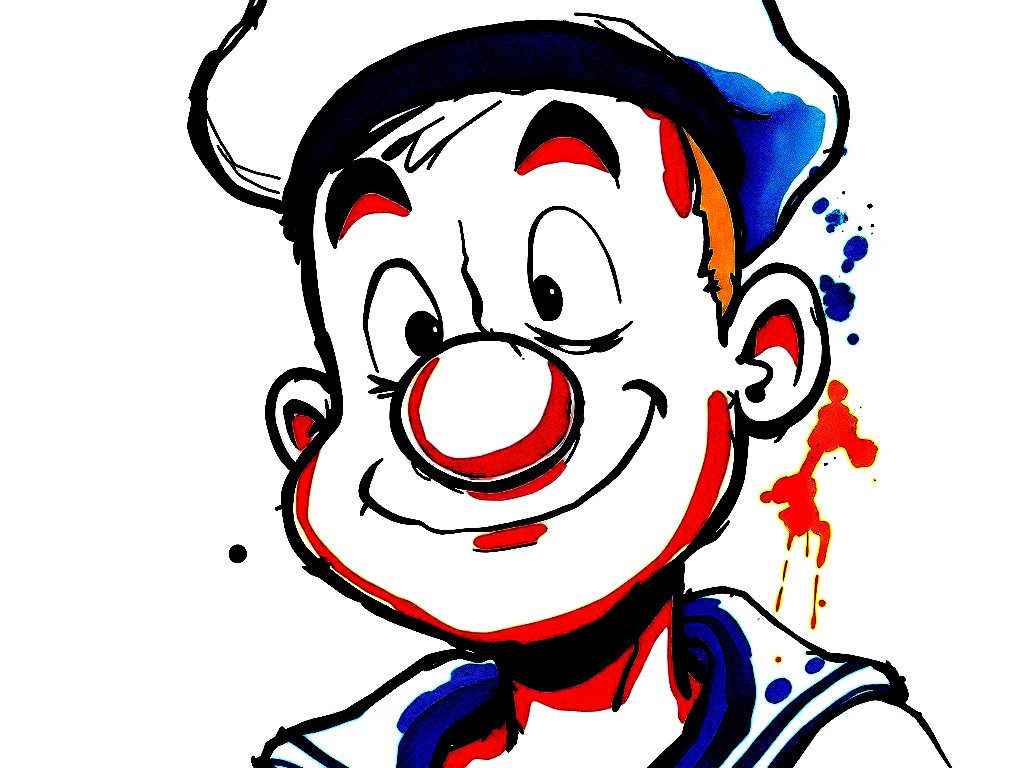
(«Pop-Eye»/Francisco Bravo Cabrera/All Rights Reserved)
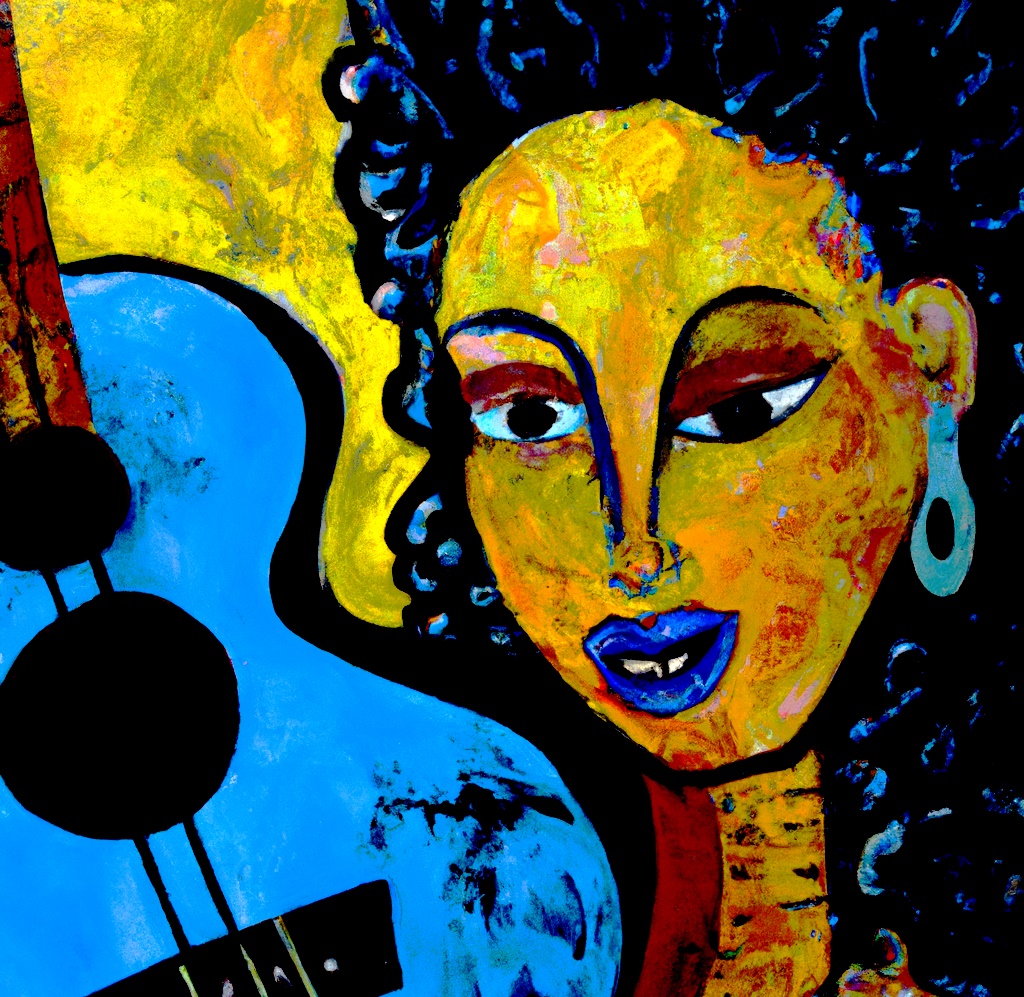
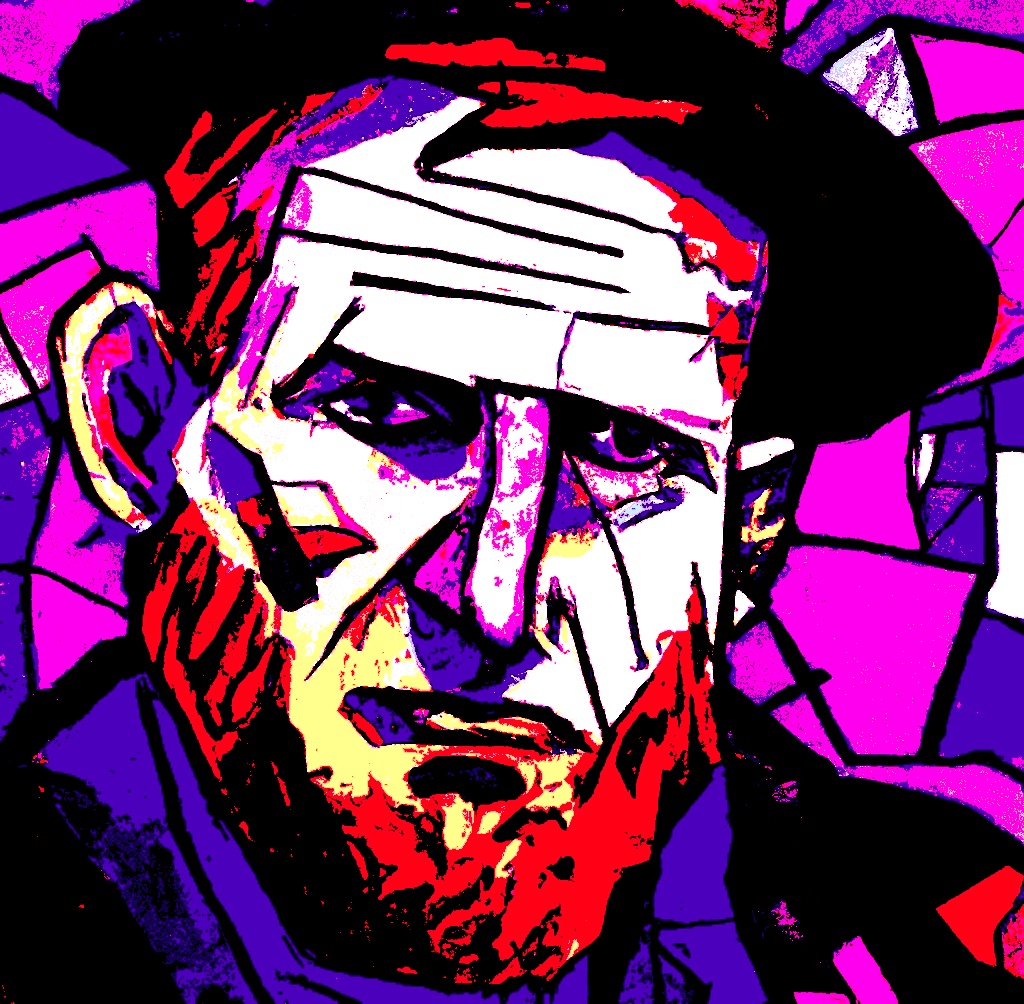
Portraits are something special in art. A portrait is, or should I say, must be more than just a reproduction of the person’s face or body. It must capture a bit more and project that which the artist sees about the subject. For some artists, like Lucien Freud, a portrait was almost a psycho-analysis, probably learned from his grandfather Sigmund. For other artists it is more like a caricature. For Picasso, when he painted the portrait of Gertrude Stein, he did it as a projection into the future telling the surprised Stein, when she commented that it did not look like her, that she will in time.
But I never really delved too deep, either in psychotherapy, caricature or future predictions, but I was always fascinated by portraits. I started doing some self-portraits, just to capture my psyche at the moment and sharpen my technique/skills. And now I sort of like it. So here are some portraits in various different mediums.
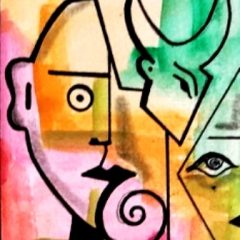
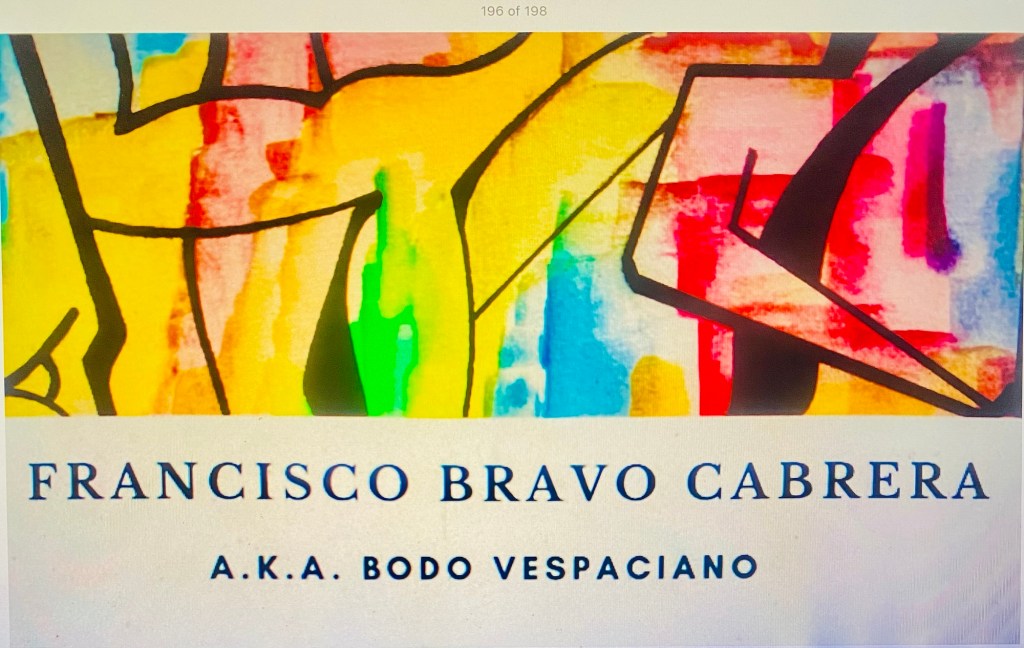
(FBC/All Rights Reserved)(FBC/All Rights Reserved)(FBC/All Rights Reserved)(FBC/All Rights Reserved)(FBC/All Rights Reserved)(All artwork are originals by Francisco Bravo Cabrera/All Rights Reserved/C.2025)








 JaZzArt en València