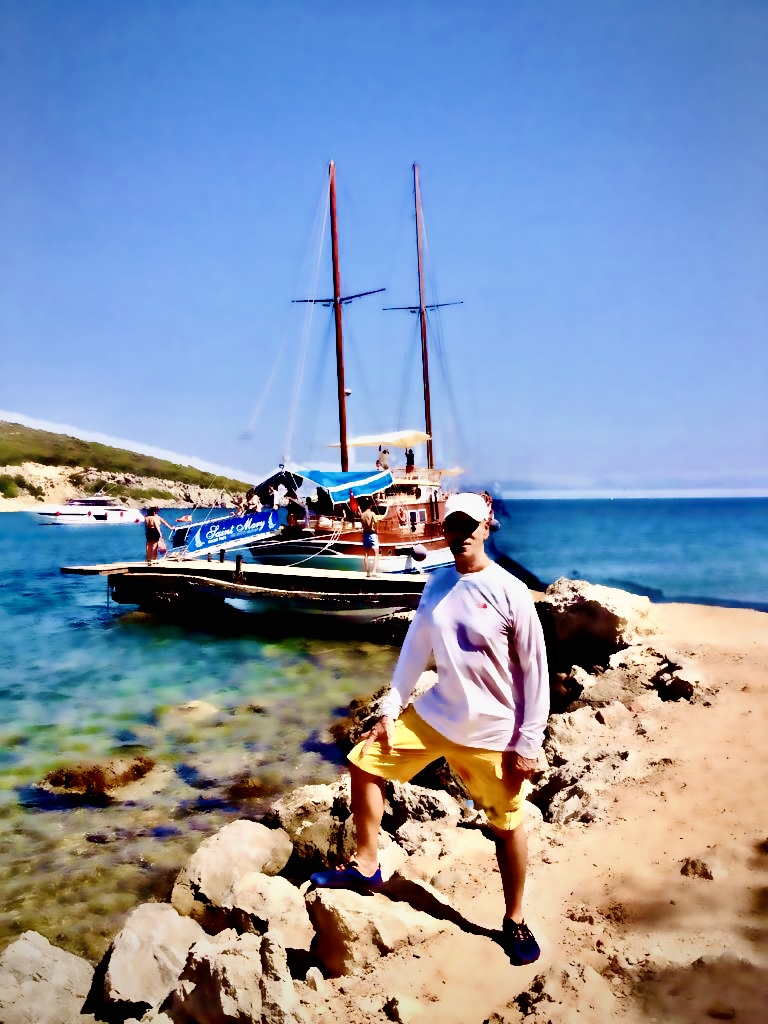
(Bodo Vespaciano/representado por un actor en las costas del Mar Egeo/Derechos Reservados)
YA SE ACABÓ EL VERANO
Ya recogieron las tumbonas, y la última gota de ron se la bebió aquel cabrón sentado en la esquina del bar…
Las aves veraniegas han marcado casi a ciegas el camino de regreso tirándonos cuatro besos…
El chiringuito ya no ofrece pescaditos fritos con sal y pimienta, ahora la soledad revienta…
Pero el calor sigue azotando, y los ánimos corren por el salón de bailar, y la orquesta ya no sabe que tocar…
Prefiero el son del verano a las sinfonías de otoño. Prefiero el calor del sol, coño, al Halloween tan cercano…
Recogieron las tumbonas, las sillas, los flotadores. Ya no tocan los tambores ni tampoco los trombones, los de la banda del club como hacían todas las noches cuando evitando el reproche invitaba yo a bailar a la chica más preciosa aquí mismo frente al mar.
Ahora todo recogido, ya no hay bailes a las nueve, se acabó lo que se daba, el otoño es el relieve del verano juguetón a la orilla de esta playa.
Ahora a comerse un marrón a las seis de la mañana, a currar como el vecino que me da su mano franca, y a tragarse aquellas ansias, de seguir viviendo idilios, si la vida es como un lirio, y el verano un girasol, y esta vida es un coñazo, así que, y por si acaso, cargaré con la añoranza de en casa seguir la danza…
Francisco Bravo Cabrera – 10 de septiembre de 2025 – Esmirna, Turquía
(«Frita»/Francisco Bravo Cabrera/All Rights Reserved)
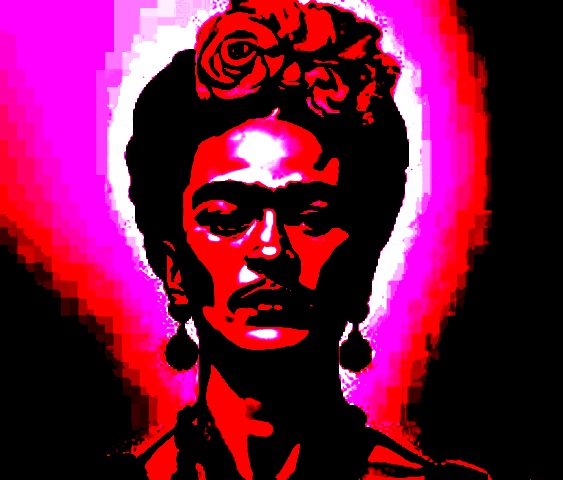
Frida Kahlo (Coyoacán, Mexico City, Mexico 1907-1954) is widely respected for her deeply personal and symbolic self-portraits, but I do not believe it and I can argue my point that she is not a valuable addition to art history with critical perspectives on her legacy:
Limited Formal Innovation: Her technique was not particularly ground-breaking…far from it…in terms of formal or technical development. Her style was rooted in Mexican folk art and a sort of surrealism-light that did not innovate in terms of form, compared to…dare I…contemporaries like Picasso or Kandinsky, which were real artists in every sense of the word. For me Picasso and Kandinsky were the greatest innovators of the 20th Century and true geniuses. Kahlo does not fit in that company.
Overemphasis on Personal Suffering: Her fame leans too heavily on her personal story—her chronic pain, relationship with Diego Rivera, and her political identity—rather than on the artistic merit of her works themselves. And of course, she was a martyr and martyrs sell and are well accepted by the general public.
Cult of Personality: Her image (iconic unibrow, flower crown, traditional Tehuana dress) has become commodified to the point that she’s more famous for being Frida Kahlo the icon than Frida Kahlo the painter. She…and this was through no fault of her…became the queen of merchandising. I mean even little girls for Halloween dress up like Frida Kahlo. And pop stars, beginning with Madonna, have also dressed like her to capitalise on the image. But that says nothing about artistic significance…
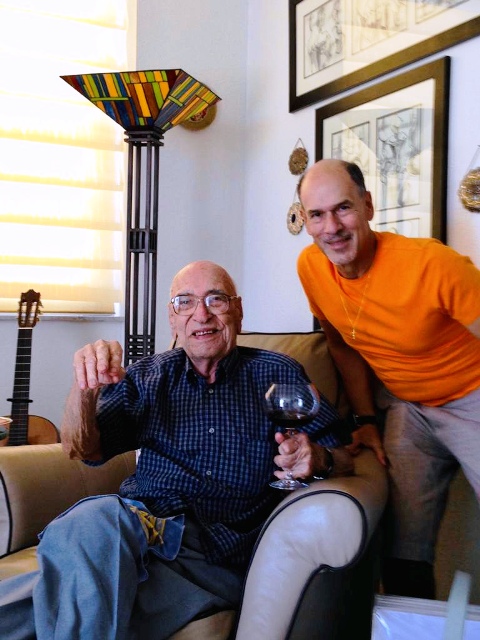
Nunca me fijé en el día en que naciste, ni tu hablabas de eso mucho, y la verdad que los cumpleaños para mí no representaban tanto, ni pienso que debo alzarlos a una altura que quizá ni se merezcan.
Pero ahora van tres años en que no estas, y hoy es tu cumpleaños, y te envió con estas letras un saludo y un abrazo, un buen vino, una cerveza como los que compartíamos antes.
Así que alzaré mi copa a tu salud celestial, ¡Feliz día! Y ¡Enhorabuena! Allá en el cielo Papá.
Francisco Bravo Cabrera – 11 de septiembre de 2025 – Esmirna, Turquía
(Bodo Vespaciano at work/Actor portrayal/All Rights Reserved)
“Painting sessions are always very gratifying and almost a sort of meditation where you disconnect from the everyday world and tune into an inner world where your mind captures images and colours and transfers them into energy that flows from the synapses in your brain to your fingertips that hold the brush, allowing you to create wonderful things on canvas that an only artist (you) can imagine.” (Francisco Bravo Cabrera)
(From 1888/90/Image source: Wikimedia Commons/licensed under the Creative Commons Attribution-Share Alike 4.0 International license)
Samuel Jessurun de Mesquita (1868–1944) was born in Amsterdam. He was an artist and printmaker. He is known for his intricate etchings, woodcuts, and lithographs that often featured animals, botanical forms, and fantastical or symbolic imagery. De Mesquita was a Sephardic Jew who was largely self-taught. But he became a prominent figure in Dutch graphic art during the early 20th century. He was a bold and visionary printmaker from whom Escher learned much.
His work is influenced by Art Nouveau and Symbolism, and his prints often explore themes of nature, mortality, and mysticism. He taught at the Rijksnormaalschool voor Teekenonderwijzers (a teacher training school for drawing), where one of his most famous students was M.C. Escher, who credited de Mesquita as a major influence on his artistic development.
Samuel Jessurun de Mesquita were murdered by the Nazis in the Auschwitz concentration camp in 1944. After the war, Escher and others helped preserve and promote de Mesquita’s artistic legacy. Today, he is recognized as a master printmaker whose work bridges naturalism and the fantastical, and whose influence extends well beyond his lifetime.
(Image source: Instagram of ngadc)
The above image «Evil Speaking Little Women» contains the Nazi boot print. Escher saved this etching, along with many of his teacher’s works, from the hands of the Nazi destructors.
(Image source: The OPEC Fund for International Development)
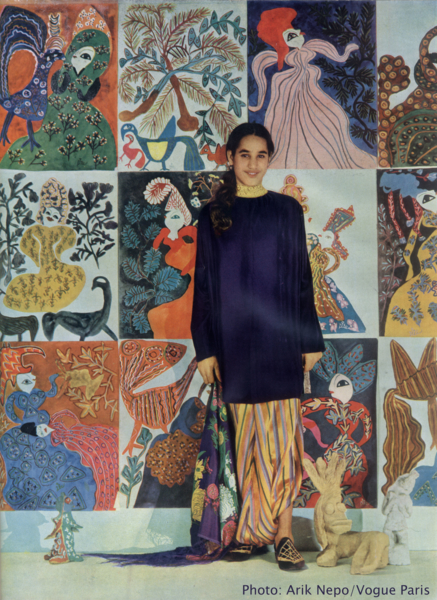
Baya Mahieddine, known in the art world as Baya, was born in Bordj El Kiffan, Algiers in 1931. She was an artist celebrated for her quite vibrant, dreamlike paintings that blend elements of folk art, fantasy, and North African culture. She began painting as a teenager and gained international recognition at just 16 years old when she held her first solo exhibition in Paris in 1947, curated by the influential French art dealer Aimé Maeght.
André Breton, the «Father of Surrealism» was a bit captivated by Baya’s paintings and thought that she was truly creating a pure form of Surrealism. Yet she did not become formally associated with the Surrealists or with any other art movement. Her compositions are very colourful and depict women in lush, decorative environments, surrounded by birds, plants, and musical instruments. Her paintings then evoke themes of femininity, freedom, and joy. Despite their apparent innocence, her works carry an undercurrent of resilience and cultural identity, reflecting her experiences growing up in French-colonized Algeria.
During her marriage to the musician El Hadj Mahfoud Mahieddine, Baya took a break from art and painting. She returned to her art in the 1960s and continued to exhibit her work in Algeria and abroad until her death.
Today, although not in most art schools at uni, Baya is recognized as a pioneering figure in modern North African art. Her legacy continues to inspire generations of artists, especially women working within postcolonial and diasporic contexts. She is a female artist, successful and recognised that we all must come to know better and appreciate more. Baya died in Algeria in 1998.
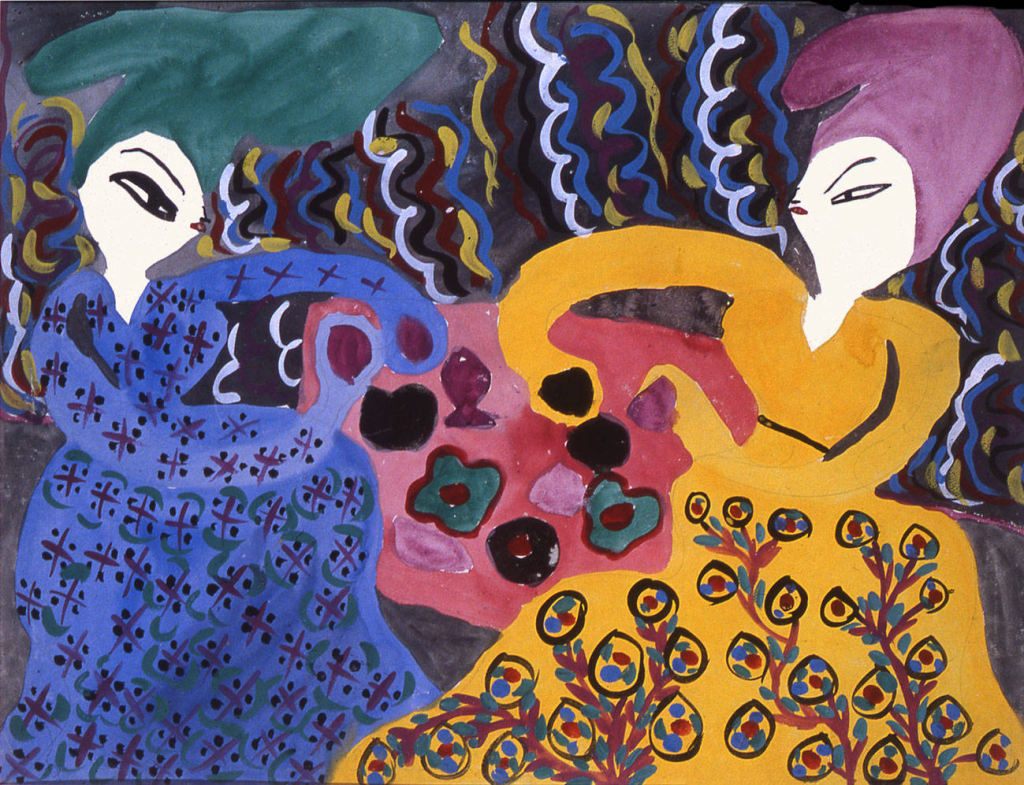
(«Two Women with Vase and Yellow Background»/1997/Photo: Mansour Dib; courtesy of Ramzi and Saeda Dalloul Art Foundation/Image source: The Art Newspaper)
(«Grande viole entre deux bouquets»/1966/Courtesy: Musée Cantini, Musées de Marseille/RMN Grand Palais/David Giancatarina/Image source: Kunstkritikk Nordic Art Review)






 JaZzArt en València