#art, Two Important French Artists: Marie and Felix Bracquemond…

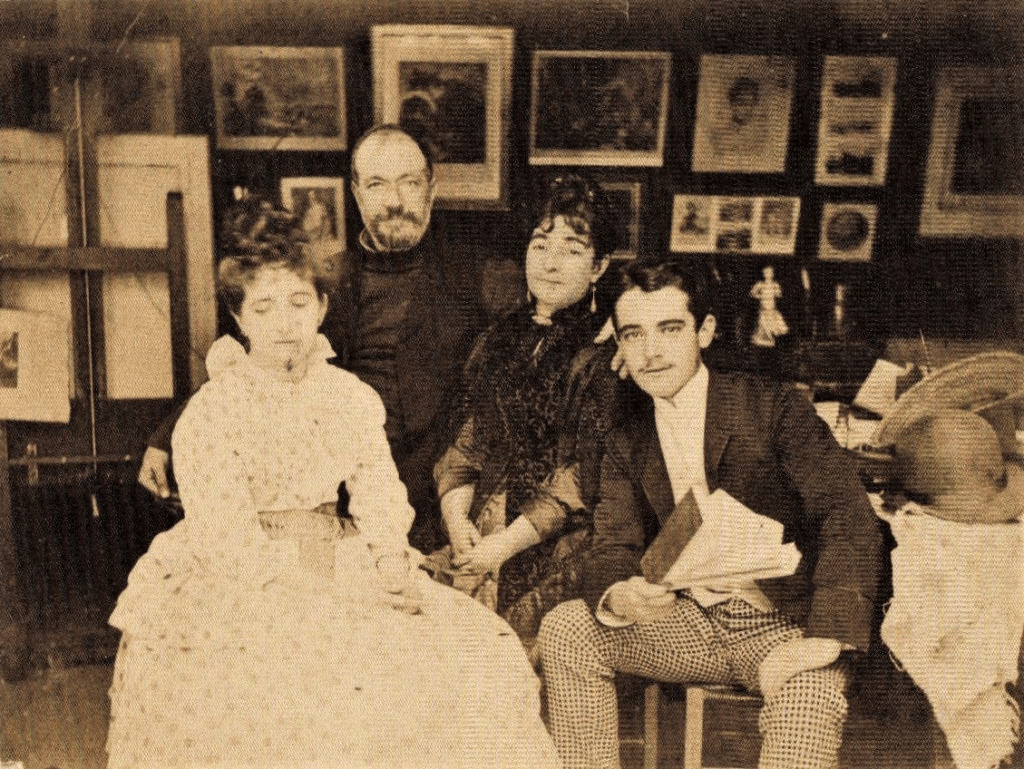
(The Bracquemond family circa 1886/Image source: Impressionism)

Well, let us begin with Marie Bracquemond (1840–1916)

(Marie Bracquemond/1886/Image source: Impressionism)

Marie Bracquemond, born in Landunvez, Finisterre, France, was an Impressionist painter whose work was long overshadowed, and ignored by her male contemporaries, as was usual in the art world. She was a trained artist, however, her training was informal but good enough to be exhibited at the Paris Salon in the 1860s. She later became influenced by Impressionist painters like Monet and Degas and adopted their emphasis on light and color in her own work. Her paintings often featured domestic scenes, portraits, and outdoor settings with rich color and delicate brushwork.

Marie had to struggle against the society and her husband, Félix Bracquemond, who did not support her involvement with Impressionism. Because of these injustices her work was totally forgotten but has, as of lately, begun to receive the recognition it deserves, positioning her as a significant—if underappreciated—figure among the Impressionists.

(«Three Ladies with Unbrellas»/c.1880/Image source: Impressionism)
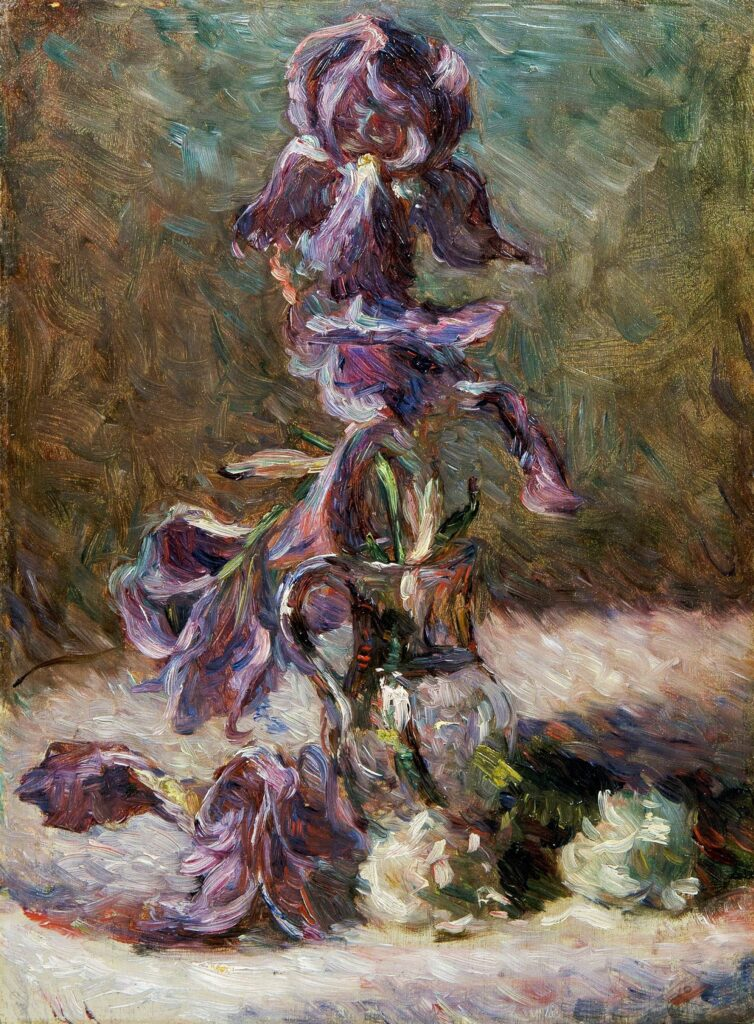
(«Iris in the Vase»/c.1886/Image source: Impressionism)
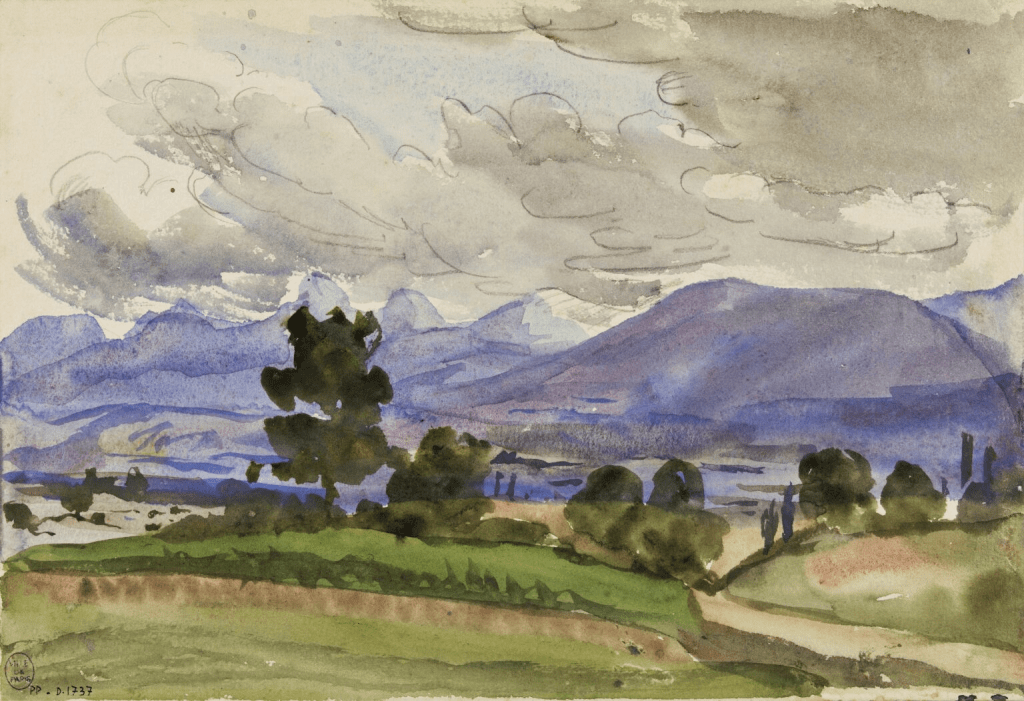
(«Landscape of Divonne»/1890/Image source: Impressionism)

Félix Bracquemond (1833–1914)

(Felix Bracquemond/1865/Image source: Wikimedia Commons/Public Domain)

Félix Bracquemond was born in Paris. He was a painter, etcher, and ceramic designer. He is best recognised for his contributions to the Etching Revival in 19th-century France and for his role in introducing Japanese art (Japonisme) into European decorative arts. He was a prolific printmaker and collaborated with many well-known artists of his time, including Manet and Degas. Félix was also artistic director at the Haviland porcelain factory, where he helped popularize Japanese motifs in French ceramics.

Though Félix was a phenomenal artist and sought fame and recognition, he did not think his wife, Marie, deserved the same so he undermined her art and artistic ambitions. But yet we must not ignore that his influence on the decorative arts and his championing of etching and Japanese aesthetics mark him as a key figure in 19th-century French art.

Here are some of his etchings…
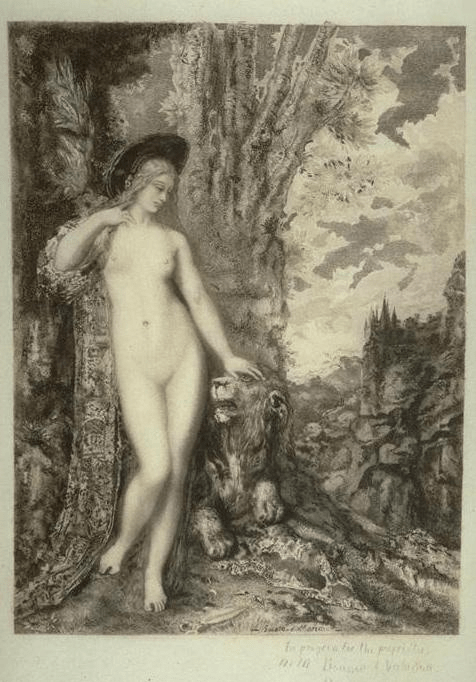
(«Le lion amoureux»/1886/Image source: Wikimedia Commons/Public Domain)
(Terrace of the Villa Brancas in Sèvres, near Paris). Marie Bracquemond is seated on the right, her sister on the left/1876/Image source: Wikimedia Commons/Public Domain)
French sculptor, painter and art critic Zacharie Astruc/1835-1907/from 1865/Image source: Wikimedia Commons/Public Domain)

CHEERS

#poem, «One Day» (Francisco Bravo Cabrera)

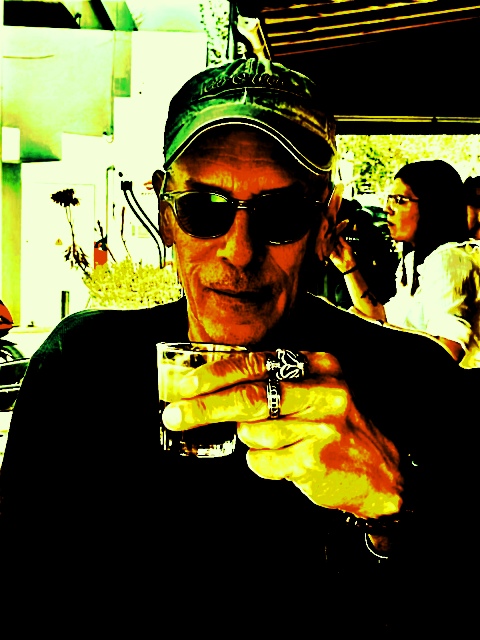
(Francisco Bravo Cabrera/actor portrayal)

ONE DAY

One day when I am old and mad,
like a useless worn-out prostitute,
conversing with the cat…

Illuminated by a single ray of light,
as the afternoon recedes and fades,
I’m comfortable in my chair next to the window,
watching the world spinning away.

All things are complicated that once were simple…

I think I’ll take a walk down to the bar,
to grab a handful of potato crisps
and a glass of Irish “wine”.
I look around with wild intentions,
are those old friends,
or figments of my imagination?

But I must dance,
and dance I will,
though now alone,
my glass half filled,
the dance floor’s empty,
so are the eyes
of laughing ghosts whose envy
has kept them so far from the sky.

The train has gone,
it’s steam still clinging to my skin,
I don’t travel anymore,
I just watch trains as a whim.

Sitting by my window,
I curiously take a peek
as the carnival is leaving
with its elephants and freaks.

My loved ones,
not so many,
hold a lantern in a storm,
afraid of me receding into madness all alone.
But like an old retired prostitute,
I wonder through the yard,
throwing corn flakes to the chickens
and reciting like a bard.

In truth I’m a survivor,
I’ve toasted every scar,
my tears are made of broken glass,
that broke through those nostalgic thoughts
I launched one day quite far.

The stormy seas can’t drown the music
that I play with my guitar,
so my bones will one day witness
the changing of the guard.

I’ve tasted bitter apples,
I’ve danced with girls sublime,
and a few quite ugly too
I’ve danced with over time.
But surprisingly enough,
I’ve lived to tell the tale,
of this old raging sycophant
that’s ordered one more ale.

One day I’ll be alone and old,
haunting these old hallways,
in a pose somehow unthinkable,
upside down like I’ve been always.

Francisco Bravo Cabrera – 8 SEP 2025, Izmir, Türkiye

«One Day» is another example of my «Jazz Poetry» from my upcoming book. The rhythm does not change, but the time does. Improvisation guides the strength of the story as it would a ghost who walks about just looking for a place to haunt…

CHEERS

#art, Get to Know the Artists Featuring: Baya Mahieddine (Baya)…

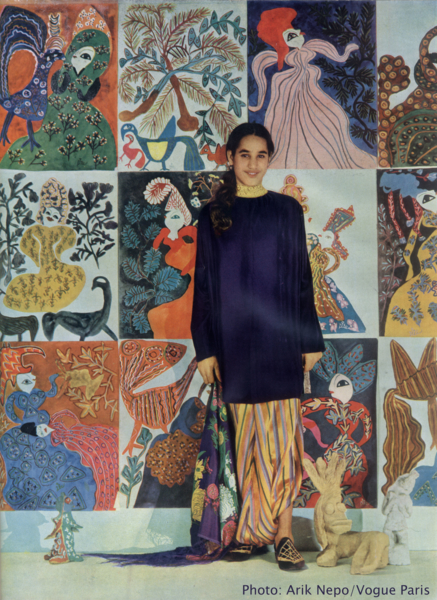
(Image source: The OPEC Fund for International Development)

Baya Mahieddine, known in the art world as Baya, was born in Bordj El Kiffan, Algiers in 1931. She was an artist celebrated for her quite vibrant, dreamlike paintings that blend elements of folk art, fantasy, and North African culture. She began painting as a teenager and gained international recognition at just 16 years old when she held her first solo exhibition in Paris in 1947, curated by the influential French art dealer Aimé Maeght.

André Breton, the «Father of Surrealism» was a bit captivated by Baya’s paintings and thought that she was truly creating a pure form of Surrealism. Yet she did not become formally associated with the Surrealists or with any other art movement. Her compositions are very colourful and depict women in lush, decorative environments, surrounded by birds, plants, and musical instruments. Her paintings then evoke themes of femininity, freedom, and joy. Despite their apparent innocence, her works carry an undercurrent of resilience and cultural identity, reflecting her experiences growing up in French-colonized Algeria.

During her marriage to the musician El Hadj Mahfoud Mahieddine, Baya took a break from art and painting. She returned to her art in the 1960s and continued to exhibit her work in Algeria and abroad until her death.

Today, although not in most art schools at uni, Baya is recognized as a pioneering figure in modern North African art. Her legacy continues to inspire generations of artists, especially women working within postcolonial and diasporic contexts. She is a female artist, successful and recognised that we all must come to know better and appreciate more. Baya died in Algeria in 1998.

Here are some of her works…

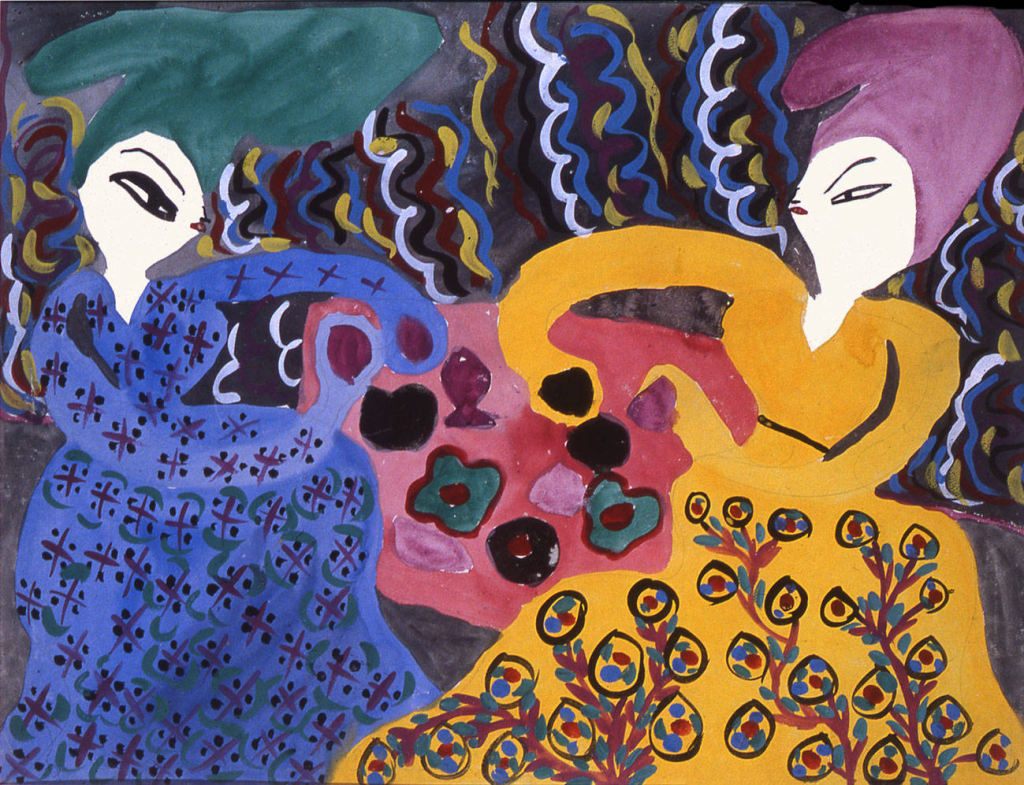
(«Femmes Attablees/1947/Image source: OPEC Foundation)
(«Two Women with Vase and Yellow Background»/1997/Photo: Mansour Dib; courtesy of Ramzi and Saeda Dalloul Art Foundation/Image source: The Art Newspaper)
(«Grande viole entre deux bouquets»/1966/Courtesy: Musée Cantini, Musées de Marseille/RMN Grand Palais/David Giancatarina/Image source: Kunstkritikk Nordic Art Review)

CHEERS

We invite you to follow us on social media:

YouTube: http://www.YouTube.com/@FranciscoBravoCabrera

Instagram: @Francisco_Bravo_Cabrera

X: @Euskadi_Bakero

Artist Representative: «By Guloshka»

E-Mail: guloshka404@gmail.com

Instagram: @guloshka

#art, Getting to Know the Artists – Featuring: Samuel Jessurun de Mesquita…

(From 1888/90/Image source: Wikimedia Commons/licensed under the Creative Commons Attribution-Share Alike 4.0 International license)

Samuel Jessurun de Mesquita (1868–1944) was born in Amsterdam. He was an artist and printmaker. He is known for his intricate etchings, woodcuts, and lithographs that often featured animals, botanical forms, and fantastical or symbolic imagery. De Mesquita was a Sephardic Jew who was largely self-taught. But he became a prominent figure in Dutch graphic art during the early 20th century. He was a bold and visionary printmaker from whom Escher learned much.

His work is influenced by Art Nouveau and Symbolism, and his prints often explore themes of nature, mortality, and mysticism. He taught at the Rijksnormaalschool voor Teekenonderwijzers (a teacher training school for drawing), where one of his most famous students was M.C. Escher, who credited de Mesquita as a major influence on his artistic development.

Samuel Jessurun de Mesquita were murdered by the Nazis in the Auschwitz concentration camp in 1944. After the war, Escher and others helped preserve and promote de Mesquita’s artistic legacy. Today, he is recognized as a master printmaker whose work bridges naturalism and the fantastical, and whose influence extends well beyond his lifetime.

(Image source: Instagram of ngadc)

The above image «Evil Speaking Little Women» contains the Nazi boot print. Escher saved this etching, along with many of his teacher’s works, from the hands of the Nazi destructors.

Here are some of his works…

(«Heron»/1878/Image source: Wikimedia Commons/Public Domain)
(Front cover of Dutch art magazine Wendingen/1931/Image source: Wikimedia Commons/Public Domain)
(Cover of the magazine Wendingen/1929/Image source: Wikimedia Commons/Public Domain)

CHEERS

YOU CAN ALSO FOLLOW US ON SOCIAL MEDIA

Instagram: @Francisco_Bravo_Cabrera

YouTube: www.YouTube.com/@FranciscoBravoCabrera

X: @Euskadi_Bakero

Artist Representative: «By Guloshka» guloshka404@gmail.com

Instagram: @guloshka

#art, «In Mind and Spirit» by Bodo Vespaciano…

(Bodo Vespaciano/actor portrayal/All Rights Reserved)

Your art must possess the spirit of the times, the culture and the history you are now living, the one prevalent during its creation; your mind must be willing to travel to times not yet seen to capture images, thoughts and ideas which will infuse your art with rhythm, colour and meaning.» (Bodo Vespaciano)

(Kindly requesting that you like, comment, share and subscribe as this helps our channel)

CHEERS

#art, There Are Only Good and Bad Artists – Bodo’s Philosophy of Art (Part 3)

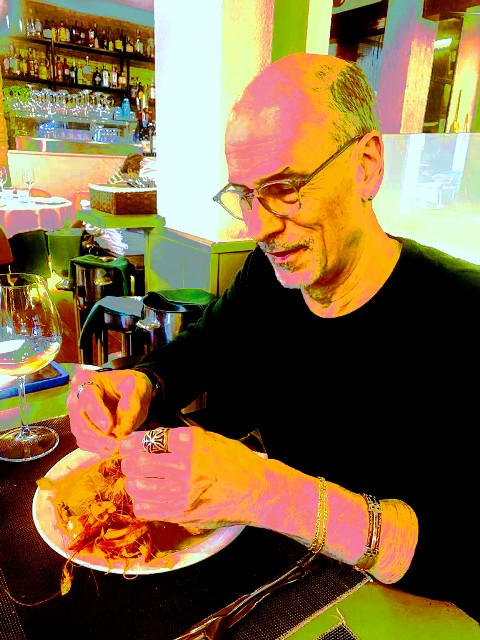
(Bodo eats shrimp for its philosophical value/actor portrayal/All Rights Reserved)

So, I have philosophised about the objectivity…versus subjectivity…of art and as well brought forth my philosophy on the fact that art is categorised as being either good or bad. Those are elemental truths that one is taught in art school and in the school of life as one works one’s way up the professional chain and gains experience both in life and in art. It is impossible to think of these things when one is very young.

So, what is «bad art»? My reply is that “bad art”, seriously speaking, is art that pretends to be profound but is hollow, or art that substitutes shock, gimmick, or self-promotion for vision and craft. And I am referring to both, traditional art and conceptual art or experimental.

With that said, here are some examples often cited as bad, being bad artists producing bad art (in the sense above):

Jeff Koons – His balloon dogs and stainless-steel kitsch may fetch millions, but they’re little more than oversized novelties. They dazzle with spectacle, not substance.

Damien Hirst – Famous for pickled sharks and diamond-encrusted skulls, his work often leans more on PR stunts and shock value than on artistic depth.

Tracey Emin – Her “My Bed” (an unmade bed with personal detritus) is often held up as a symbol of art reduced to autobiography and raw display without transformation. And in very bad taste I would add.

Thomas Kinkade – Marketed as the “Painter of Light,” his sugary, mass-produced cottage scenes are technically slick but conceptually empty—art reduced to calendar kitsch.

AI-generated kitsch flooding social media – Endless pretty-but-empty images with no inner necessity, no artist’s hand, just algorithmic pastiche.

Each of these examples is “bad” not because someone dislikes them, but because they lack the enduring qualities of good art: invention, vision, mastery, depth. They survive on hype, sentimentality, or branding, and on the bad art professors that try to drive them into the heads of gullible and young art students who will later realise how they had been manipulated, controlled, brainwashed and misguided.

CHEERS

Bon dia!

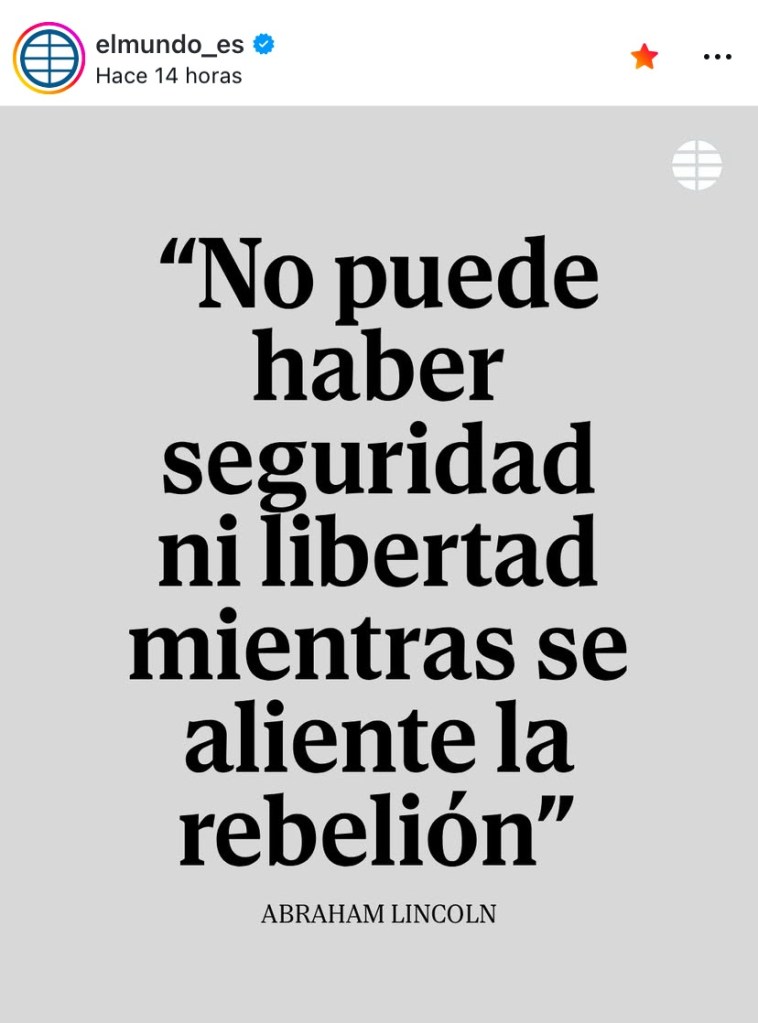
Los presidentes y los miembros del gobierno tienen que ser los primeros que aprendan esto. Si no lo aprenden no son ni serán buenos para el pueblo…

La cita del dia y algo más – The Quote of the Day And a Little More…

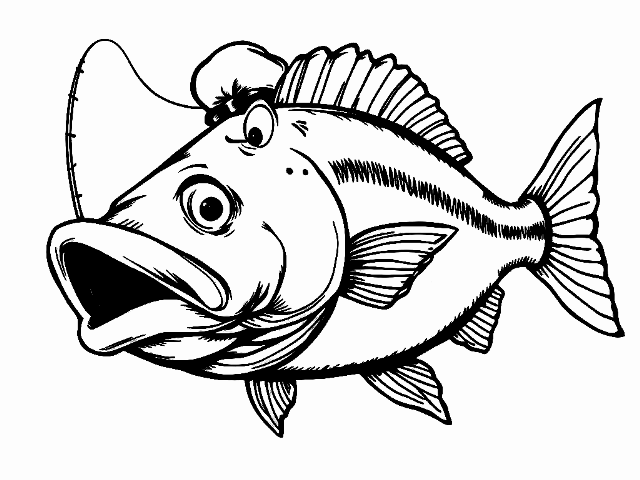
(«El peix pescador»/Francisco Bravo Cabrera/Derechos Reservados/All Rights Reserved)

¿Qué pasaría si los peces pescaran? Bueno, ni puta idea, pero creo que eso sería más bien un síntoma de lo mal que están las cosas. Y las cosas estan bastante jodidas, no solo en España, pero en el mundo entero. Y me pregunto ¿Por qué? Y esto sí que lo sé…

Las cosas están jodidas porque nos gastamos un chorro de euros para mantener zoquetes que viven de los problemas que crean y luego se la quieren dar de progresistas. No fotis…

Banderas palestinas, que significa que apoyas a Hamas tío, no te las pases, jodiendo las carreras be bicicletas, (y fíjate en quien está detrás de esa), tratando de imponer menos horas laborales, (y detrás de esta), sabiendo que eso va a dañar el comercio y la industria y sin comercio no funciona el país, coño, y jode a los obreros. Pero es que esta gente no quiere resolver ni arreglar las cosas, lo que quieren es que las cosas se vayan a la mierda con la velocidad de un pedo…

Mare meua! Y por el otro lado los rusos siguen bombardeando a civiles en Ucrania, y parece que a los amantes de Hamas esa gente no les importa, solo viven por apoyar a los gazatís…

Si siguen así las cosas nos iremos al carajo en una cesta de flores…

«Cuando estes de acuerdo con el presidente y el congreso, rectifica»

Francisco Bravo Cabrera – En algún lugar del Mar Egeo, hoy 14 de septiembre del 2025

+++

What would happen if fish fished? No idea. But I think that would be more of a symptom of how bad things are. And things are pretty messed up, not only in Spain but all over the world. And I wonder why? Well this I do know…

Things are fecked up because we spend a whole lot of money supporting all these scoundrels that live off of creating problems and later say that they are the «progressives» of the land. Bullshite!

Flying Palestinian flags, and that means you support Hamas buddy, don’t think it doesn’t or that we are stupud. Interrupting bicycle races (and check out who is behind that one). Trying to lower the work week (and behind this one), knowing that it goes in detriment of commerce, and without commerce the country cannot progress, and this ultimately damages workers. But, the truth is that these people do not want to solve problems or help anyone. All they want is to destroy society, as we know it, as quickly as possible so that they can repair it their way. And that is not going to be good for anybody but themselves.

Good gried! And on the other side of our Europe, the Russians continue to bombard civilian targets killing innocents. But these killings do not matter to the supporters of Hamas as they live only to support the ones from Gaza.

If things go on like this we are going to hell in a hand basket…

«When you find yourself agreeing with the Executive and the Congress, it is time to re-consider, re-think, and re-evaluate your positions.»

Francisco Bravo Cabrera – Somewhere on the Aegean Sea, today the 14th day of September of 2025