
Bon dia!
Faith saved us from the savages that we were, losing faith makes us savages again

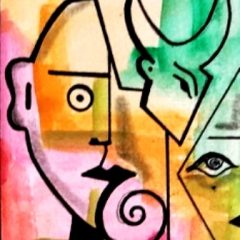
When I started uni as a Fine Arts major conceptual art, in other words, performance art, was pretty strong. We had the performances of Marina Abramović and Ulai as well as of others. And of course we all knew about the conceptual «art» of Yoko Ono. But in our art school we had no classes, nor where we ever led towards that branch of «art.» And even when I switched to the Theatre Arts Department, the university did not consider teaching classes on how to be a performance artist. And I think they had the right approach. To me, in my opinion, performance art is more akin to theatre than to art, and conceptual art is more akin to nothing. I’ve no use for it. It is simply a way for talentless «artists» to «create» art that no one understands and that says nothing important. And do not forget, these are my personal feelings and opinions. Yours might be different and I will respect them.
So, here is a comparison:
| Aspect | Traditional Art | Conceptual Art |
|---|---|---|
| Primary Focus | Skill, technique, and aesthetics (form, color, composition, craftsmanship) | Idea, concept, or social statement; the concept is often more important than the execution |
| Materials/Execution | Paint, marble, bronze, canvas, musical instruments—mediums require mastery | Anything: instructions, text, objects, performance, ephemeral materials; mastery of medium is often secondary |
| Immediate Impact | Often visually or emotionally striking; can communicate without explanation | Often obscure; may require reading instructions or context to understand the meaning |
| Accessibility | Easily appreciated by general audiences; universal visual or auditory appeal | Often appeals to a niche audience familiar with art theory*; can feel confusing or silly to outsiders |
| Longevity | Objects are permanent or durable; intended to last for centuries | Often ephemeral, performative, or instructional; may exist only as documentation or memory |
| Emotional Engagement | Direct: beauty, awe, empathy, or emotional resonance | Indirect: intellectual engagement, provocation, or philosophical questioning*. |
| Risk of Misunderstanding | Lower: people “get it” on sight | High: without explanation, work may seem meaningless or trivial |
| Evaluation Criteria | Technical skill, composition, beauty, originality | Originality of idea, conceptual clarity, provocation, challenge to norms |
| Famous Examples | Michelangelo, Rembrandt, Vermeer, Monet, Beethoven, Stravinsky | Yoko Ono, Fluxus artists, Duchamp, Sol LeWitt, Abramović |
| Criticism | Can be conservative or formulaic; sometimes prioritizes aesthetics over ideas | Can appear pretentious, naive, or inaccessible; sometimes “idea-heavy” and lacking sensory impact |
* I strongly disagree as I think it is pretentious, naive, meaningless and a useless experiment in elitism displayed as mediocrity. It might be interesting for the performer or the conceptual «artist» but pure rubbish to the rest of us.
What they teach at uni (nowadays) is that traditional art emphasises skill, execution and sensory impact (and I agree). And that conceptual art emphasises ideas and provocation, often at the cost of immediate clarity or beauty. Well, only very few of them bring forth ideas or provocation, some are just self-indulging machinations by talent-less «artists» having us all on.

This time it is my holiday… I will try to read all your posts but I may not have time to comment… The gang at Omnia Caelum Studios València will be back late august after FBC’s show at the Sala d’Exposicions de Ciutat Vella in València (09-19 OCT 2025). Until then, we do have some pretty cool posts scheduled.
ALL THE BEST!
CHEERS
Así perdemos la libertad, la justicia y la patria…

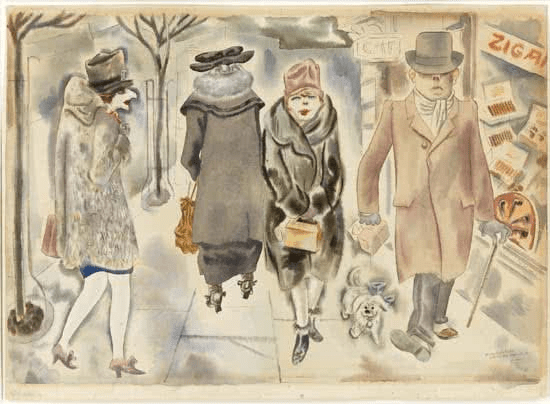
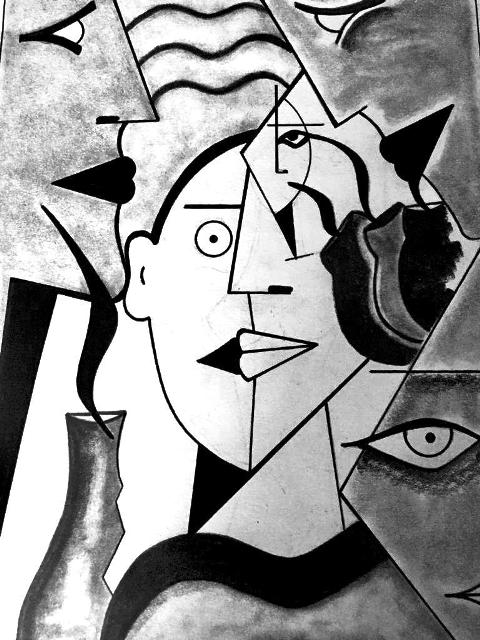
George Grosz, Berlin (1893–1959): Painter, caricaturist, and key figure of the Berlin Dada and New Objectivity movements. He studied at the Dresden Academy of Fine Arts and later in Berlin. Grosz became known for his biting, satirical depictions of German society during the Weimar Republic, often exposing the corruption, decadence, and brutality of the bourgeoisie, military, and ruling classes. His sharp line drawings and grotesque caricatures conveyed both anger and dark humor, making him one of the fiercest social critics of his time.
In 1932, as the Nazis gained power, Grosz emigrated to the United States, where he taught at the Art Students League in New York. His later work moved away from biting satire toward more romantic and expressive styles, though he remained deeply engaged with political and humanist themes. Grosz died in 1959 in West Berlin, leaving behind a legacy as one of the most incisive visual chroniclers of modern German history.
+++


CHEERS

¡Ahora sí que estoy de vacaciones! Y aunque trataré de leer vuestros posts, quizá no pueda comentar… el equipo de VALENCIARTIST regresará a finales de octubre, después de la exhibición de Francisco en el Salon d’Exposicions de Ciutat Vella en València (del 9 al 19 de octubre).
Cíao y un fuerte abrazo!
GRACIAS
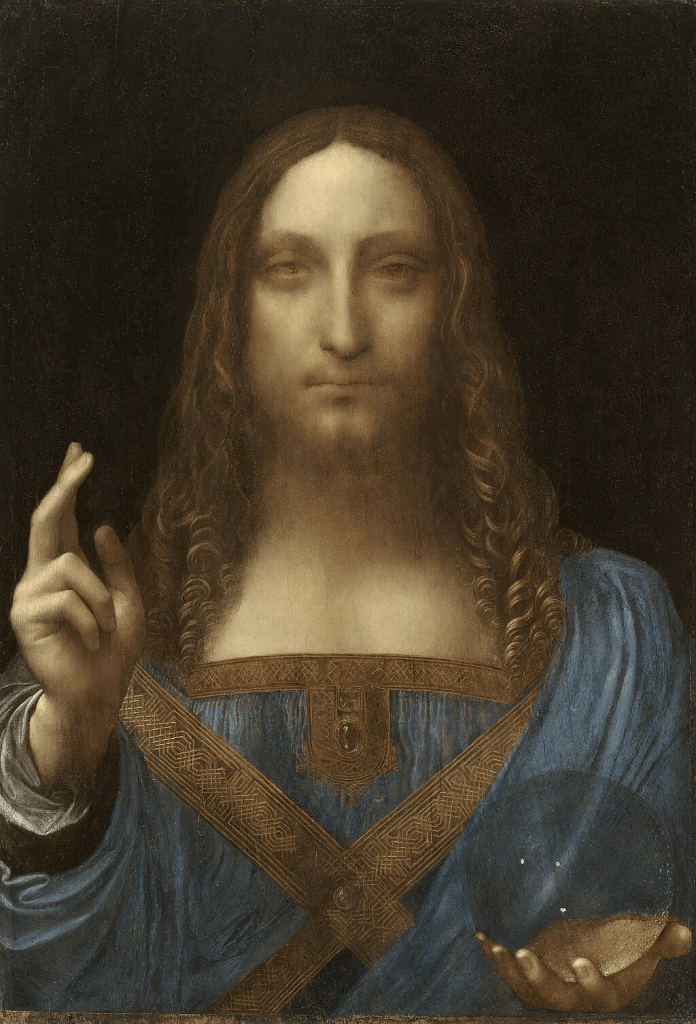
Ok, I will begin by saying that the painting was acquired at auction and the current owner of Salvator Mundi is believed to be Crown Prince Mohammed bin Salman of Saudi Arabia. At the November 2017 Christie’s auction, the buyer was officially Prince Badr bin Abdullah Al Saud, acting as an agent—reportedly on behalf of Abu Dhabi’s Department of Culture and Tourism or possibly for Mohammed bin Salman himself. Since 2017, the painting has not been publicly displayed. It was reportedly kept aboard Mohammed bin Salman’s yacht Serene until late 2020 and is now believed to be in storage in Saudi Arabia, potentially awaiting the opening of a new museum in Al‑‘Ula or Riyadh.
Why is this painting so expensive and/or important? First I do not believe it to be that important and I am not too impressed with it. It’s history, if it really was painted by Leonardo da Vinci, say circa 1500, is long and enduring. It was, supposedly, at one time found in a rubbish bin in New Orleans and then sold, re-sold, restored, re-sold ad infinitum until if finally reached Christi’s where supposed «experts» (here we go!) attributed the painting to Leonardo. Then the Arab sheik bought it for a bit over 400 million US dollars. Then he tried to get «experts» from the Louvre to agree with the previous experts, but they said no, that they did not believe it was a Leonardo and refused to hang it (the Sheik was willing to lend it) next to the Mona Lisa, or at all in the museum. Such is the work of «experts».
I think, if it really is from 1500, that it could have been painted by Leonardo, or by any other artist from the times.
What do you think? Is it worth 400 million bucks?
CHEERS
This time it is my holiday… I will try to read all your posts but I may not have time to comment… The gang at Omnia Caelum Studios València will be back late august after FBC’s show at the Sala d’Exposicions de Ciutat Vella in València (09-19 OCT 2025). Until then, we do have some pretty cool posts scheduled.
ALL THE BEST!
CHEERS
I LIVE ALONE WITHOUT A MASTER
Watching,
waiting…
To the 90th minute,
zero – zero,
no goals,
bad luck wearing number 10,
tried again and again
but nothing…
A thought of you,
the one who fills my dreams,
especially when I’m with another,
so that when I’m with you
I dream of all those others…
A house is just a labyrinth
constructed caresses and decorated with kisses,
not for me, I’m a cat that loves the rooftops
the city’s home and I live alone,
without a master.
And come the weekend:
bars and clubs filled with gals and fellows
that look like they belong in a wax museum.
Intoxicated by the kisses that I get
from those who share with me
their precious souls filled with bitterness,
I offer one a gladiolus
for solace.
Another I offer a yellow rose,
and urge her to grab it by the thorns,
so that her fingers bleed,
I need fresh blood to penetrate this suburban purgatory
where I’ve made a place for weekends.
It’s a dungeon, but who wants to roam free
when one could be wrapped in these chains of misery…
But come Monday,
we again begin the story
of the daily litany,
the cold war over coffee,
the insipid fall from grace,
forty eight hours of heaven,
and now a phone,
a desk,
this place
where fluorescence tortures my retina,
and blue ink drains my brain.
And when I’m with another I think of you,
and when I’m with you,
with all the others…
C.2025, Francisco Bravo Cabrera – 06 SEP 2025 – Izmir, Türkiye

CENTRAL PARK
Who can change the course of history?
Who can stop the wheels of time?
Think you can?
Think they can?
Who is they?
And who are you to presume?
History is a mystery
Questions like these and many more,
bounce off the thin layer of surface water
that fills the depths of the reservoir in Central Park.
While it is quite necessary to investigate the lectionary,
Never should one doubt,
there are absolutes,
there are unchanging laws.
There‘s right and wrong,
there’s Ten Commandments,
miraculously carved in stone.
There’s the way of light and the way of darkness,
and you’re free to choose,
take your pick,
light or dark,
or take from both.
But human souls need human comforting,
We’ve all wandered far from home…
On a rotting bench, close to Central Park West,
sitting proper is Rosemary a retired secretary.
Her mind races from through to thought,
used to precision, speed and so forth.
But now quite old she’s not as bold and not as fast,
so when Augusts’ nights shine bright with Augusts’ lightning,
she still sits alone under the rain and
through her ears travels the rhythm and the cadence
of an old, old song, always the same.
I stood one clear January morning
near The Castle in Central Park,
and snow covered the ground,
I thought of summer
and not a question crossed my mind.
C.2021, Francisco Bravo Cabrera, 20 NOV 2021/30 AUG 2025, València, Spain/Izmir, Türkiye

 JaZzArt en València