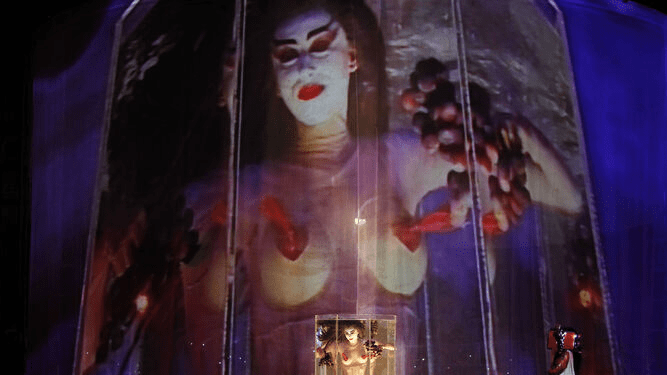
#culture, #music, #art, CARMINA BURANA

(Photo Granada Hoy)

The Codex Buranus – The chants of the Beuern Monastery

The Codex Buranus, also known as the Carmina Burana, is a medieval manuscript that contains a collection of poems and songs. It was created in the early 13th century by the monks of the Benedictine monastery of Beuern (modern-day Benediktbeuern) in present-day Germany.

The codex consists of 254 parchment leaves and contains a total of 315 songs, written in Latin and Middle High German. The content covers a wide range of topics, including love, springtime, gambling, and the fickleness of fate.

The collection is known for its lively and often satirical nature, as well as its frank and sometimes explicit language. The songs express a range of emotions, from joy and celebration to sorrow and longing.

One of the most famous pieces from the Codex Buranus is «O Fortuna,» a powerful and dramatic hymn that has been widely performed and adapted in popular culture.

The Codex Buranus is an important source for understanding medieval music and poetry. It provides valuable insights into the cultural and artistic expressions of the time and continues to captivate audiences with its timeless themes and captivating melodies.

In 1847, Johann Andreas Schmeller gave the title Carmina Burana to the manuscripts. Carl Orff, a German neoclassical composer born in Munich (1895), chose 24 of the songs to compose the homonymous cantata. Carl Orff’s Carmina Burana premiered in Frankfurt in 1937.

I had the opportunity two years ago to attend a performance of Carmina Burana here in my city by a very strong and excellent company La Fura dels Baus. It was truly an enjoyable event. I would urge you, if you like opera-style musical theatre that you do not miss it if a performance comes to your town.

Here is «O Fortuna» for you… Not only is it performed and played by classical music groups, but, as you will hear here, by Therion, the Swedish symphonic metal band. Enigma also interpreted it and in 1981 it was used in the movie Excalibur.

CHEERS
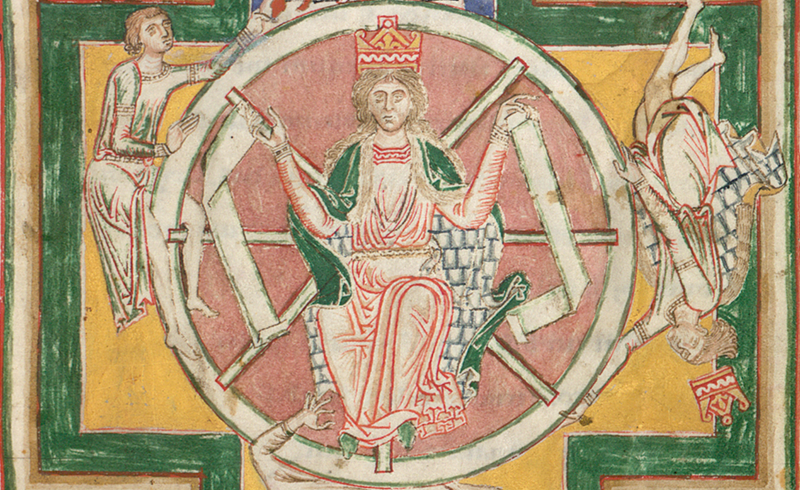
#music, #theatre, #art, CARMINA BURANA

(Foto/Photo Houston Symphony)

El Códex Buranus – Los canticos del monasterio de Beuern

Un grupo de clérigos vagabundos, escritores, estudiantes y predicadores, que en la edad media le llamaban los goliardos, probablemente fueron los autores de los cantos y los poemas de lo que hoy se conoce como Carmina Burana… Los manuscritos, que incluyen los cantos y poemas, son del Siglo XII y XIII y fueron encontrados en el Siglo XIX… Carmina Burana, en latín, significa Canciones de Beuern, pues un Carmĕn es un poema o un canto y Burana, adjetivo gentilicio, indica que es de Bura, o sea, el nombre latino de Benediktbeuern, un pueblo alemán y el monasterio donde fueron hallados.

Johann Andreas Schmeller, en 1847, le dio el titulo de Carmina Burana a los manuscritos. Carl Orff, compositor alemán neoclásico, nacido en Múnich (1895), eligió 24 de las canciones para componer la cantata homónima. La Carmina Burana de Carl Orff se estrenó en Fráncfort en 1937.

Desde el 8 de noviembre al 19, aquí en Valencia, en el Teatro Olympia, se presentará el Carmina Burana de La Fura dels Baus, y yo iré a verla, si Dios quiere, y prepararé una reseña de la presentación.

Aquí os dejo «O Fortuna«… Que no solo es interpretada y tocada por grupos de música clásica, si no, como escuchareis aquí, por Therion, la agrupación metal-sinfónica sueca. Enigma tambien la interpretó y en 1981 fue utilizada en la pelicula Excalibur

GRACIAS

#art, Just Stop What? STOP them!

(Photo by Alisdare Hickson, CC BY-SA 2.0, https://commons.wikimedia.org)

What right do these self-proclaimed «activists» have to interfere with people’s daily lives? Worse even, what right do they have to attempt against art? How can we tolerate these terrorist actions? These bullies, terrorists, useful idiots are going into museums to attempt to destroy works of art and the authorities must take actions against them. Their actions are not the actions of activists for a worthy cause. Their actions are vandalism and cannot be tolerated. How can anyone in their right mind advocate to stop oil? Most everything they use in their daily lives is a petroleum derivative or has used oil even in indirect fashion. So on top of all their vandalism/terrorism, their actions are hypocritical for they use oil as much as anyone else.

On the 6th of November two of these vandals went into the National Gallery in London, with hammers, and smashed the glass protecting a Velazquez. I’ve two questions to the National Gallery: 1) How the hell did these two clowns get into the museum with hammers; 2) What charges have been brought against them. In my opinion they should be charged with crimes against the state and against private property.

I am not going to put here any images as I do not want to popularise or provide free promotions to these people who I strongly disapprove of, but I do want you to comment. Please tell me what you think of this and what can we all do to stop this crime against all.

CHEERS

#art, Bartolomé Bermejo

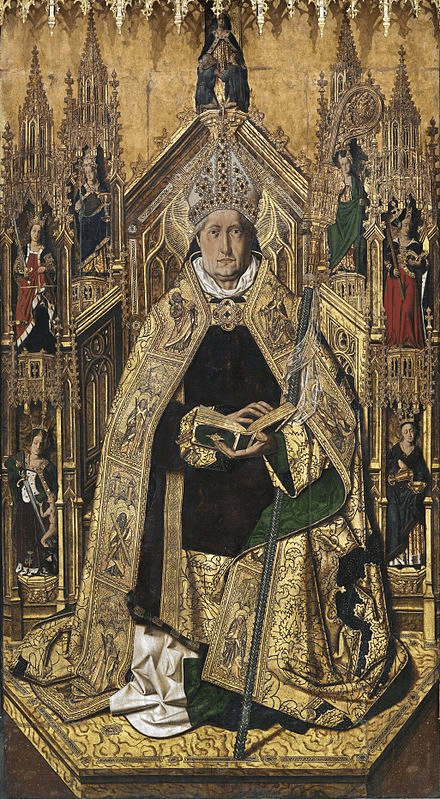
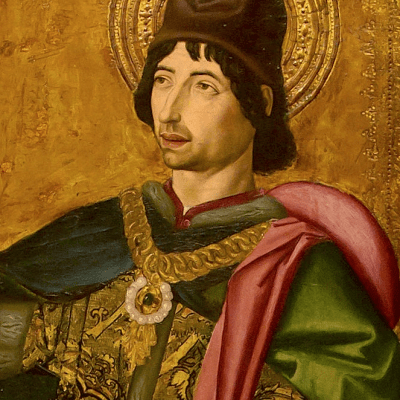
Santo Domingo de Silos entronizado como obispo» Bartolomé Bermejo – Museo del Prado)

His name was Bartolomé de Cárdenas, but he preferred to be known as Bartolomé Bermejo, perhaps because he was redhead… He was a Spanish Gothic painter born in Córdoba in 1440. Not much is known about this painter whose work belongs to the Hispano-Flemish style (1469-1516) and who spent most of his life painting within the lands of the Crown of Aragon. His work was always very detailed and bordering on realism. Of course, due to the time he lived in, his painting is religious. He started in Valencia, but worked more in Zaragoza and Barcelona.

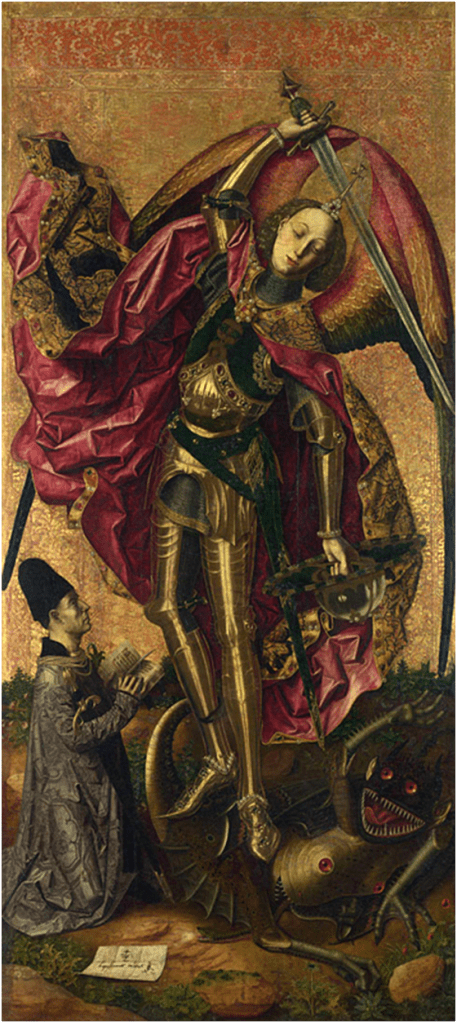
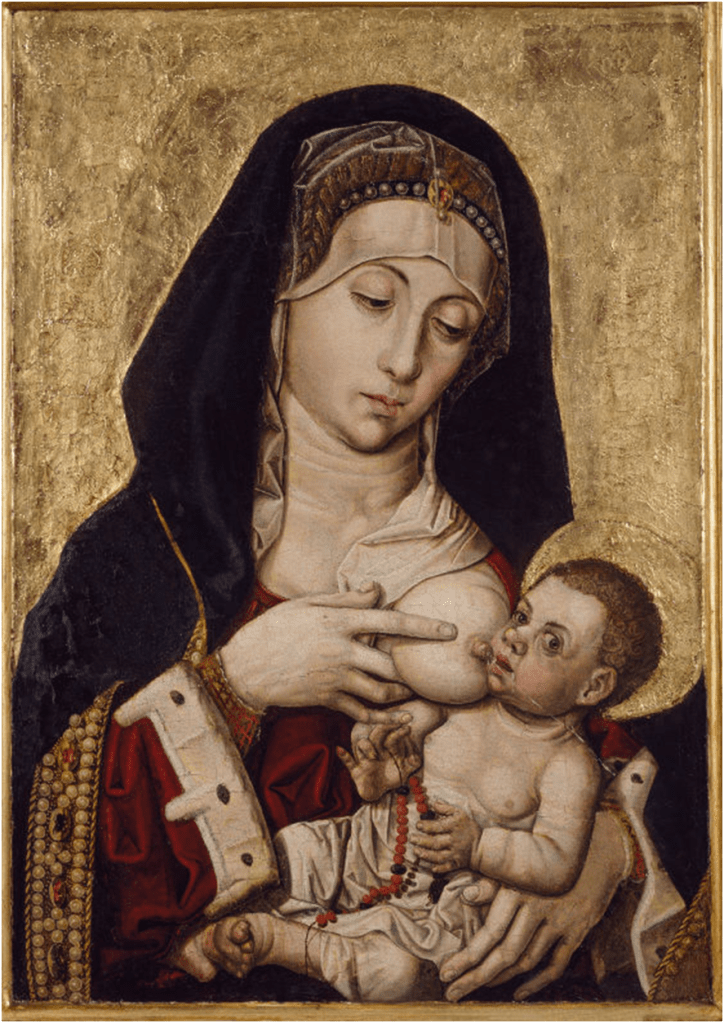
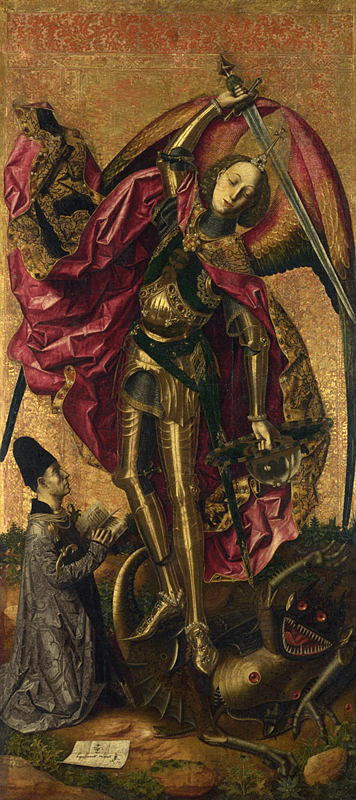
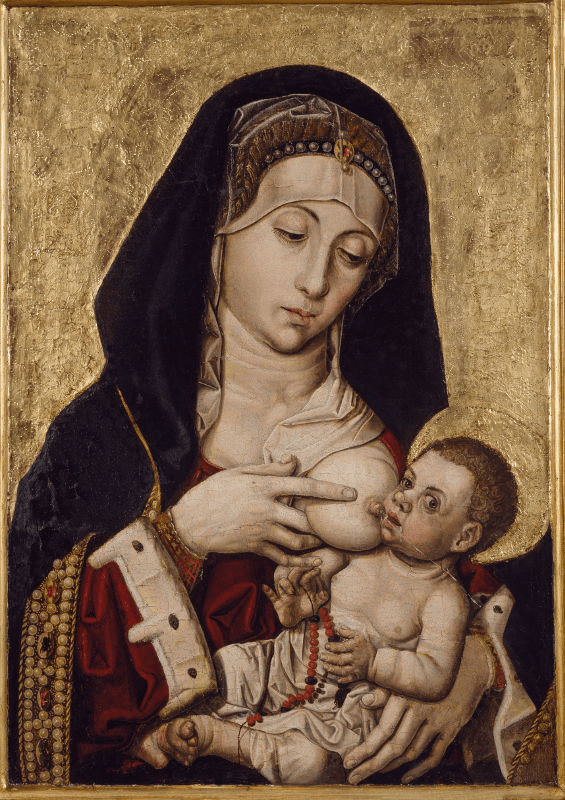
I think that these two I’ve selected are worth a good look, not just at the religious theme, which of course is prevalent, but at the detail and spirituality that it carries relative to its time, which can still be felt.

(Photo Public Domain)

«St. Michael Triumphs over the Devil» is from 1468. It is conserved at the Louvre museum in Paris.

(photo Generalitat de Valencia)

This painting, «Maria Lactans» or «Virgo Lactans» is part of an altar piece dedicated to the Lactating Madonna and it is from the Church of the Convent of Santo Domingo of València. It dates from 1465-1470.

CHEERS

#art, Bartolomé Bermejo

Se llamaba Bartolomé de Cárdenas, pero prefirió ser conocido como Bartolomé Bermejo, quizá porque era pelirrojo… Fue un pintor gótico español nacido en Córdoba en 1440. No se conoce mucho de este pintor cuya pintura pertenece al estilo hispano-flamenco (1469-1516) y que pasó casi toda su vida realizando su pintura dentro de las tierras de la Corona de Aragón. Su obra siempre fue muy detallada y hasta tirando al realismo. Claro, debido a la época que le tocó vivir, su pintura es religiosa. Comenzó en Valencia, pero trabajo mas en Zaragoza y Barcelona.

Creo que estas, entre sus tantas, merece la pena un vistazo critico, no solo a la temática, religiosa, por supuesto, pero al detalle y a la espiritualidad que carga relativa a su tiempo pero que aún se nota.

(«San Miguel triunfa sobre el diablo» Foto Dominio Público)

Esta pintura, también titulada «San Miguel triunfa sobre el demonio» es de 1468…

(«Virgen de la Leche» Foto Generalitat Valenciana)

Esta pintura «Virgen de la Leche«, (Maria Lactans o Virgo Lactans) es parte de un retablo dedicado a la Virgen de la Leche en la iglesia del convento de Santo Domingo de València. Data de 1465-1470.

GRACIAS

#art, CHARDIN

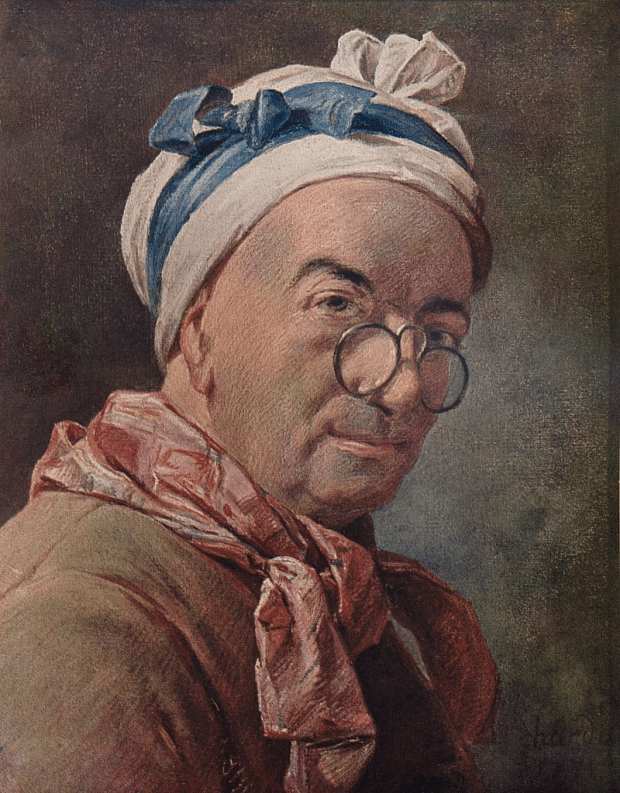
(Chardin, «Self-Portrait»)

Jean Siméon Chardin

French painter of the 18th century, born in Paris on November 2, 1699, is considered one of the masters of still life. In his works, you can see how he carefully balanced the composition, diffused the light, softly and to a good extent, and find in his paintings a granulated texture, almost like impasto on the surface…

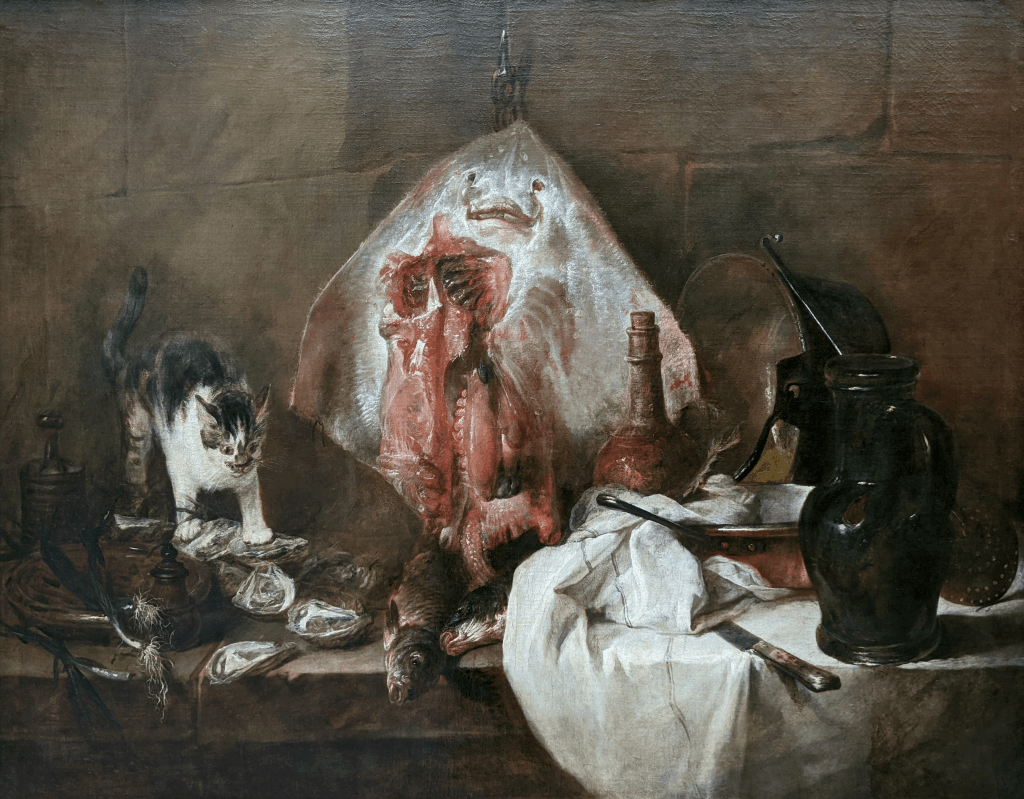
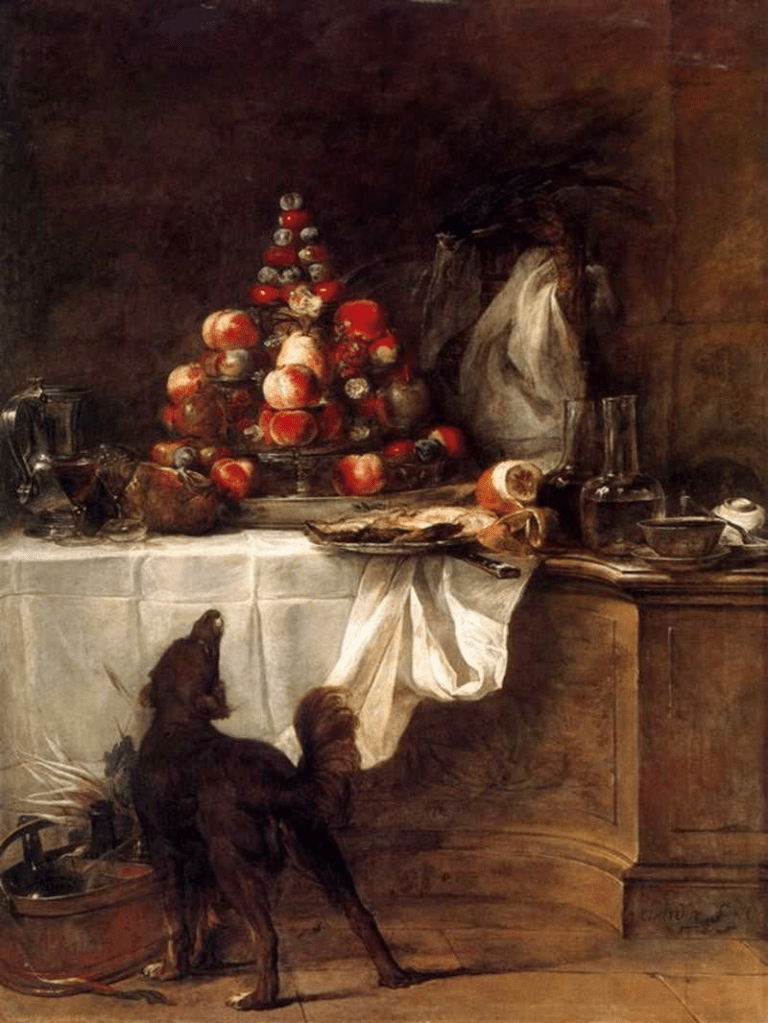
«La Raie» was exhibited at the Exposition de la Jeunesse of 1728 alongside «Le Buffet» as a test for entry into the Royal Academy of Painting and Sculpture.

(«La Raie»/»The Ray»-1728- photo Public Domain)

The importance of Chardin in modern art is significant and widely recognized in the works of great artists such as Édouard Manet and the still life paintings of Paul Cézanne. Additionally, Henri Matisse considered him one of his favourite painters and even copied several of Chardin’s works that hang in the Louvre. Georges Braque also sought inspiration from his paintings, as did Lucian Freud.

(«Le Buffet»/»The Buffet» -1728-Photo Public Domain)

Chardin passed away in Paris in 1779. He is undoubtedly one of the painters that one must know in art history, especially for scholars of history and aspiring painters.

CHEERS