El asesino más bárbaro de America fue Fidel Castro Ruz, dictador de Cuba, aferrado al poder por muchas décadas que tuvo els collons (la desvergüenza) de «dejar» a su hermanito, Raúl, en el «trono» de su partido comunista cubano (que desgobierna Cuba) cuando se «retiró» en el 2006. Este hombre, que Dios lo tenga lejos de la gloria, fue el responsable de la destrucción completa de Cuba, desde la economía, la sociedad, la cultura y hasta la arquitectura, en fin, todo. Impuso la dictadura comunista, la más atroz y retrograda del mundo, sobre un pueblo que cada vez más y más escalaba la cima del desarrollo y dejaba el sub-desarrollo atrás a gran velocidad. Tambien carga la sangre de miles y miles de cubanos…y de otros que vivían tranquilamente en Cuba…que perecieron en sus cárceles inmundas y el el mar tratando de escapar de sus garras nefastas… Uno de sus hijos se hizo fotógrafo famoso y le ha hecho muchísima propaganda y, sin querer hacerle alguna, os traigo sus fotografías a ver que pensáis…
+++
The worst murderer of America was Fidel Castro Ruz, the Cuban dictator who spent decades as absolute ruler of the island and who had the bloody balls to «appoint» his little brother Raúl as his «successor» as leader of the Cuban Communist Party, therefore, de facto leader of the government, when he «retired» in 2006. This man, and may God keep him far from Heaven, was responsible for the total destruction of Cuba, destroying the economy, the society, the culture and even the architecture. Basically everything. He imposed his communist dictatorship upon a people that had been quickly rising through the ranks of the industrially developed world and leaving underdevelopment far behind. He is also stained forever with the innocent blood of thousands upon thousands of Cubans who he killed in his diabolical prisons and of those who died at sea attempting to escape his grasp. But one of his sons became a «famous» photographer and has done a lot of propaganda work in favour of his father’s ambition. I hope I am not furthering that horrible task, but in any event, here are his photographs…
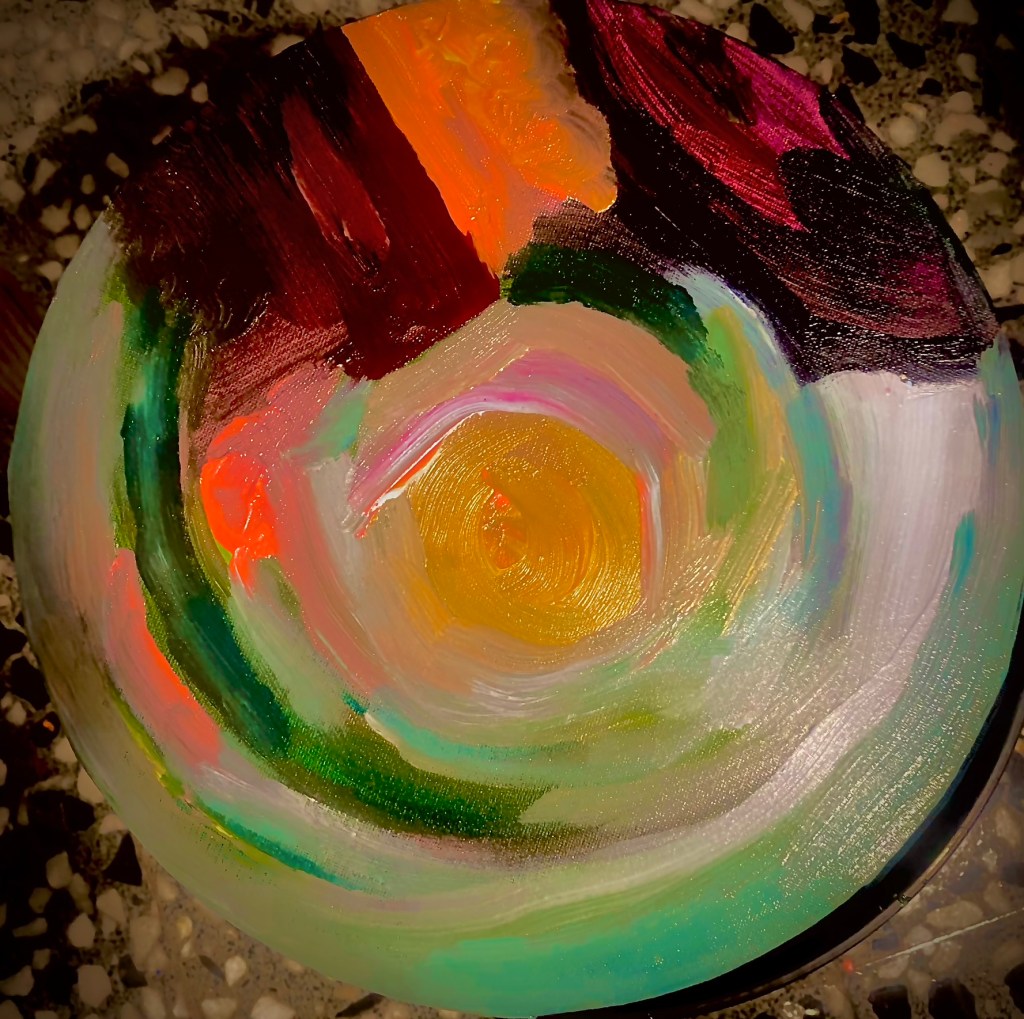
(«Dentro de la luz» – «Within the Light» – De/By Francisco Bravo Cabrera/Derechos Reservados/All Rights Reserved)
Kandinsky, in his book «Concerning the Spiritual in Art» poses the idea that art must reflect its own time. To make art that seeks to emulate or copy, say the art of the ancient Egyptians is to make art, like he said, that is a baby dead before birth. Or to paint like a monkey. Ridiculing those who simply copy, as would a monkey, the gestures of a human, but without any real thought or intention behind the gestures. For art to have spirit, for a painting to become «immortal», it has to have spirit and intention, and not simply technical perfection. Technical perfection will create a painting that says nothing, that does not elicit a visceral and intellectual reaction in the viewer.
Art is complex. Art is philosophy in colour, movement and style. A painting is not art everlasting if it does not carry with it the spirit of the time in which it was painted and the culture which it represents…
In the painting «Within the Light» (see above), an abstract painted with acrylics on canvas, I have chosen to represent the «idea» of «light» by creating light with an optical illusion created by colour. Colour is energy. Colour is light refracted in such a way as to make the human eye see different shades and tones, even though, technically (meaning physiologically) there are only three. The rest of the colours are brought to our senses with the help of light.
Colour is also sound. Kandinsky (again) referred to the sounds of colours to create his symphonies on canvas or paper. There are people with a specific disorder that makes them hear colour, so perhaps Kandinsky was not so far off the mark with that idea. In any event colour is a source of power as colours are linked to emotions, feelings, and ideas.
When an artist paints an abstract piece the reference may be completely lost to the viewer. There is not a direct relationship between the painting and the observer and the observer may simply stand in front of the painting and wonder what it is, or ask the artist or curator. But the artist must have a definite and precise reference for his work, be it abstract or figurative (the only two types of art there is). This identification with the reference and representing it in an abstract work unites the artist with the piece and gives it spirit. The spirit of the times when it was painted which in turns makes the painting eternal, powerful, meaningful and capable of eliciting emotions from the observer.
(«Cuadro abstracto No. 44» Francisco Bravo Cabrera/All Rights Reserved)
I know I have talked a lot about abstract art, and I am not even an abstract artist, but there is so much to say about this vanguard art movement of the XXth Century that I had to break it up into separate segments. Well, like I said many times before, there are basically only two types of art: Figurative and Abstract. So abstract art is everything that figurative is not and figurative is everything that abstract isn’t. Right?
Wrong…
Abstract art is that art which has no resemblance whatsoever to anything pertaining to the natural world we inhabit. But it does not mean that it cannot resemble all that we can imagine exists in our world or others. Abstract art cannot have anything in the composition that resembles a figure, if it does, it is not abstract. There are many paintings which appear to be abstract and perhaps confuse many people into thinking they are abstract but they are just figurative paintings that are stylised, surreal, expressionistic or whatever the artist wanted to do with them, but as long as they have a figure or something akin to one, they are not abstract.
Now, for today I just wanted to add that for me, as well as for many other figurative painters, abstract art has taught me how to create figurative art in a much wider fashion. It has taught me how to appreciate the great figurative masters of art history. If you stand before a masterpiece by El Greco, Velázquez, Van Gogh, Rembrandt or any other, you will see, sometimes hidden, but mostly openly, in their compositions a lot of abstract art.
Take a look. Look at the backgrounds. Look at the way some of the clothing is created. Look at the parts that are not figurative and you will see so much abstract art that if they would just take that out and create a new painting, they would have invented abstract art in the XVIIth Century.
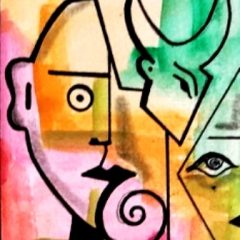
(«The Traveller» original acrylic on glass by FBC/Omnia Caelum Studios Valencia/All Rights Reserved)
Wassily Kandinsky, even though we now know that he was not the inventor of abstract art, we do understand that he was one of the first, together with Piet Mondrian, to theorise about this art form. Abstract art was one of the art vanguards of the XXth Century. It was, or is, I would say, the most successful one.
In any event here is what Kandinsky had to say:
«Colour is a power which directly influences the soul.»
«The deeper the blue becomes, the more strongly it calls man towards the infinite, awakening in him a desire for the pure and, finally, for the supernatural… The brighter it becomes, the more it loses its sound, until it turns into silent stillness and becomes white.«
«Every work of art is the child of its age and, in many cases, the mother of our emotions. It follows that each period of culture produces an art of its own which can never be repeated.«
I think this last quote is a very interesting and important one for artists, and generally for lovers of art. Art is and has to be a child of its age. All art is at one time contemporary and it must reflect the reality of that age, the thinking and the styles common to that age. After all this the age wherein the artist lives, and where he understands better the feelings, emotions and the events that transpire and make history. Copying from another age might lead to technical perfection but without soul. The soul, the true spirit of art which renders it eternal comes from it being a child of its age, as Kandinsky so well said.
Of course there have been many other artists in art history who have theorised about art, abstract art as well. Let us see what Mark Rothko had to say:
«We assert that the subject is crucial and only that subject matter is valid which is tragic and timeless.»
«Art to me is an anecdote of the spirit, and the only means of making concrete the purpose of its varied quickness and stillness.«
«I insist upon the equal existence of the world engendered in the mind and the world engendered by God outside of it. If I have faltered in the use of familiar objects, it is because I refuse to mutilate their appearance for the sake of an action which they are too old to serve, or for which perhaps they had never been intended. I quarrel with surrealists and abstract art only as one quarrels with his father and mother; recognizing the inevitability and function of my roots, but insistent upon my dissent; I, being both they and an integral completely independent of them.»
In this last quote Rothko, a very spiritual artist indeed, speaks of surrealism and abstract art as being the «father and mother» of his work. Rothko traversed many types of art until he finally settled upon abstract. In his abstract art, huge canvases of colour, only colour, he placed all his philosophy, intention, theories and spirituality. And they are good. And as he himself said, «There is no such thing as a good painting about nothing.»
I am not an abstract artist, however, I do study the style, the genre and I find it to be very difficult indeed. Abstract art is not splashing paint on canvas, or anything else and then calling it a painting. Mark Rothko also enumerated, in 1958, what is necessary in a painting:
«There must be a clear preoccupation with death—intimations of mortality … Tragic art, romantic art, etc., deals with the knowledge of death. Sensuality. Our basis of being concrete about the world. It is a lustful relationship with things that exist. Tension. Either conflict or curbed desire. Irony, This is a modern ingredient—the self-effacement and examination by which a man for an instant can go on to something else. Wit and play … for the human element. The ephemeral and chance … for the human element. Hope. 10% to make the tragic concept more endurable. I measure these ingredients very carefully when I paint a picture. It is always the form that follows these elements and the picture results from the proportions of these elements.«
To create an abstract painting one must face the same problems as one would in painting a figurative one. There are issues of technique, form, style, composition, colour, size, et cetera et cetera et cetera… Art is not intuitive. It is a philosophical process that must be developed, cooked over a slow fire and allowed to simmer, then cool before spreading it on a surface.
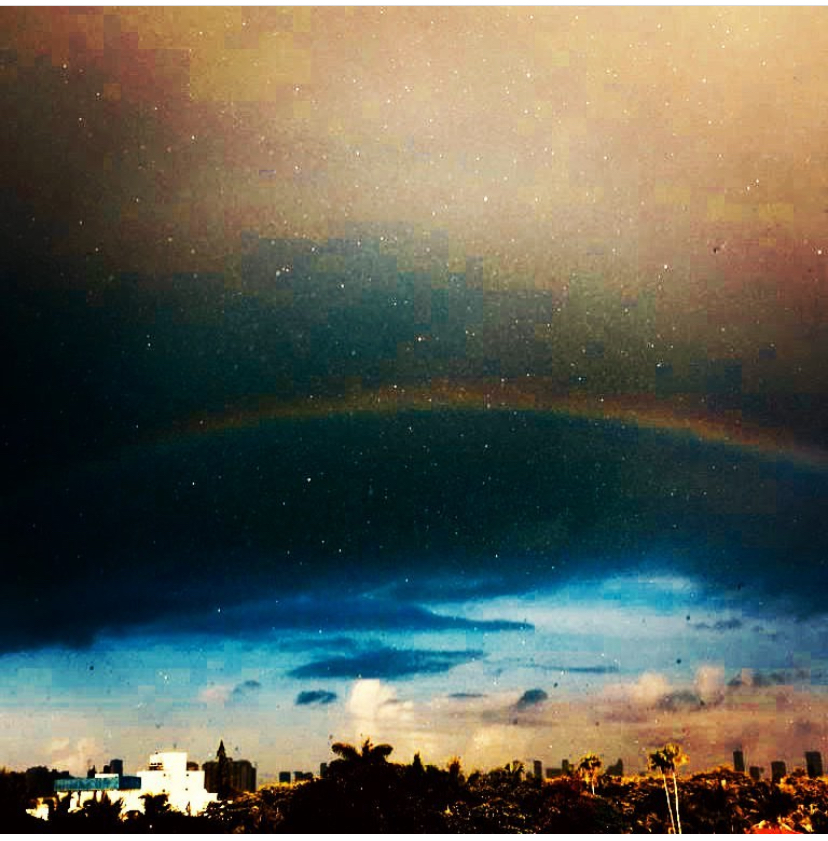
(Foto de un atardecer en Miami, mirando desde Miami Beach hacia el oeste/de Francisco Bravo Cabrera/Derechos Reservados)
En Miami me empapé de la cultura de Cuba, de la verdadera Cuba, la española, la libre, la prospera, la que construyó un país que en la década de los años 50 tenía una economía igual a la de Italia y muy superior a la española. Un país que tenía una capital, La Habana, que fue considerada entre las cinco ciudades más bellas del mundo…
En Miami los cubanos hicieron todo lo que en Cuba el régimen le negaba a sus súbditos. Progresaron, crecieron, hicieron de un pueblo de campo una megalópolis internacional que hoy es una de las ciudades más grandes de EEUU y un hub internacional para deportes, cultura, política y economía. Eso es Miami…
Pero mi Miami fueron los recuerdos del Colegio Belén de los Jesuitas (claro, todos españoles) y de la buena gente que me hicieron sentir como en casa, o mejor. De criarme en Coral Gables y en Miami Beach, de estudiar, de hacer arte, de casarme, tener hijos, de vivir con aquellos iguales a mí que querían lo mismo, que amaban a su patria pero que sabían que la patria que anhelaban ya no existía…
Por esto, y por mucho mas, digo, junto a Willy Chirino (ese gran orgullo de Miami): “Yo Soy Cubano.”
(Image property of Francisco Bravo Cabrera/All Rights Reserved)
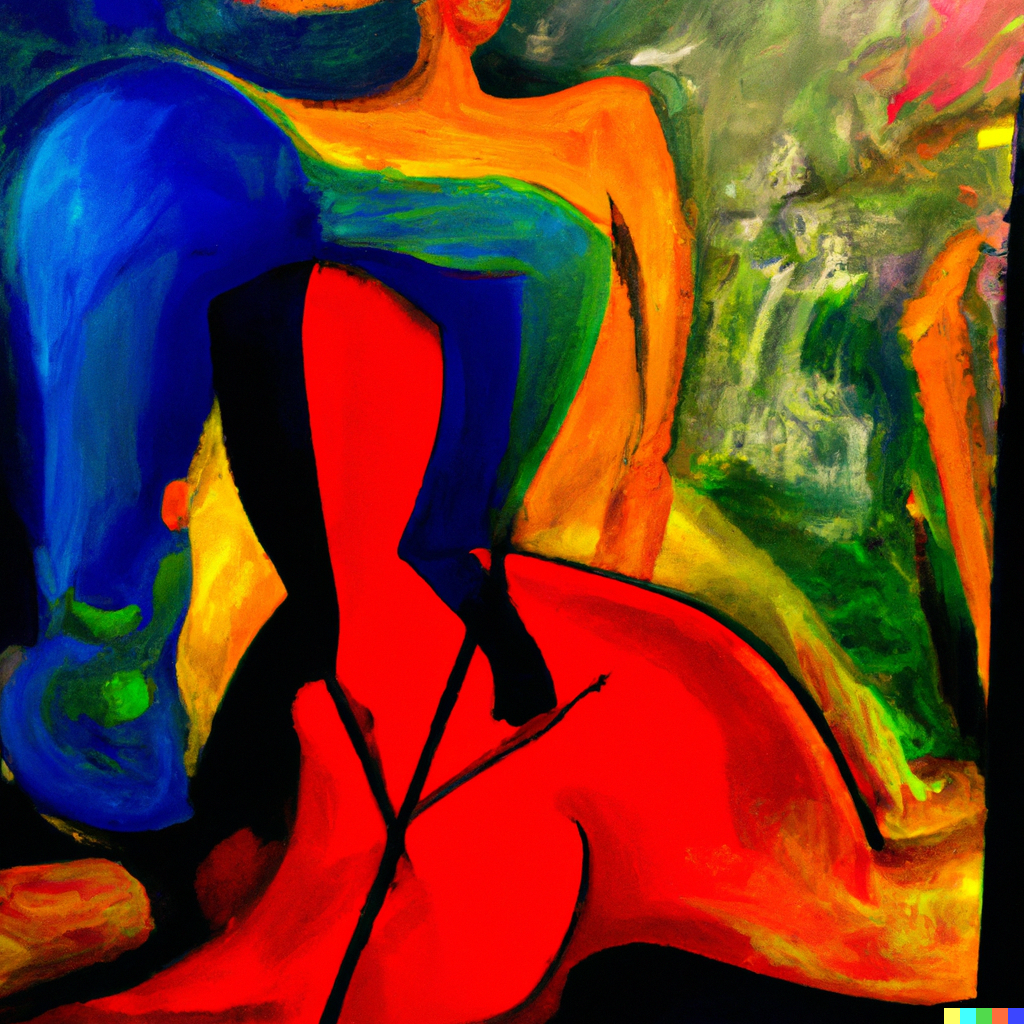
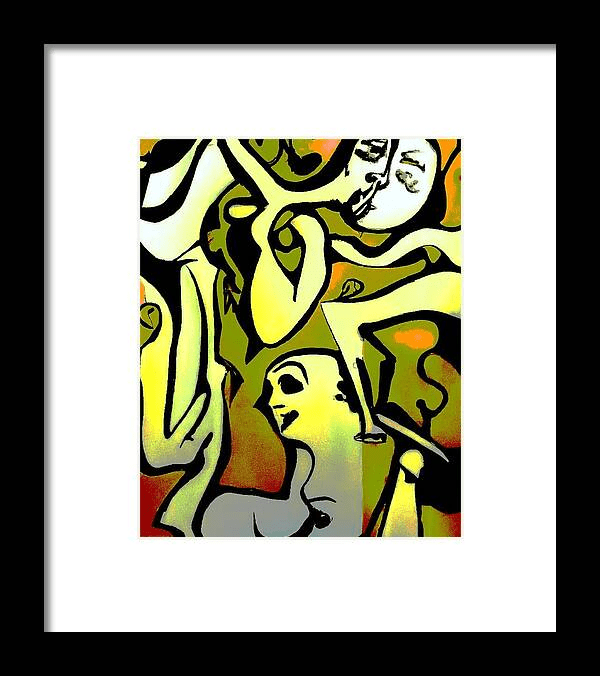
You can get «Jazzy Scandals,» as seen above is in the form of a Framed Print, a Fine Art Print created for my artwork only through Fine Art America. Follow this link to my gallery at Fine Art America and support original art.
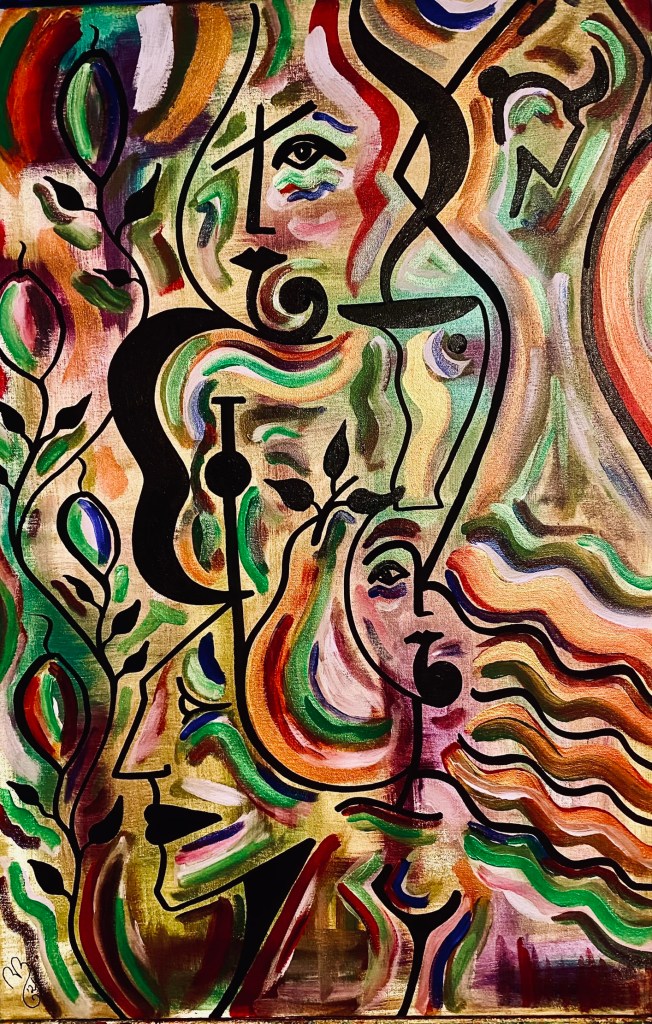
(«Sonitus» by Francisco Bravo Cabrera/All Rights Reserved)
«Sonitus» is the Latin term from which Spanish gets «sonido» and English «sounds»… It is a very important aspect of our life as our life exists in the light and in the dark in silence and in sounds. The preponderance of sounds create the interpretation we make of our world. Sounds exist everywhere in our Earth, even far down in the depths of the seas… Without sounds how would we know we could dance, sing, or play an instrument?
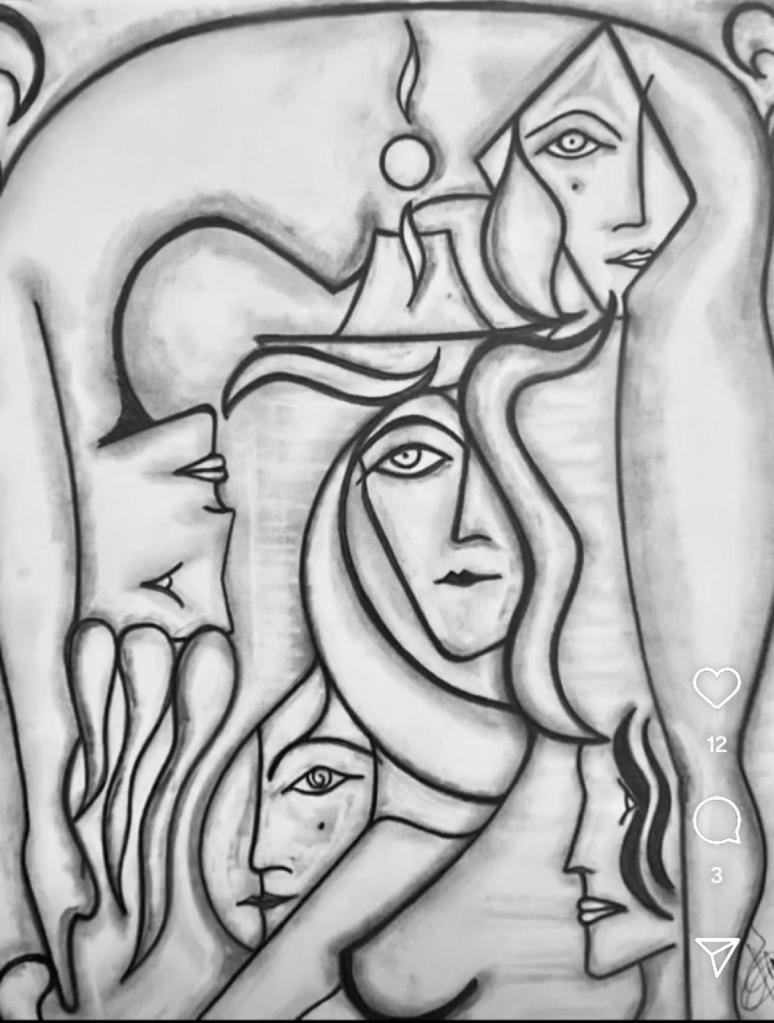
This new painting is now available through my agent: «By Guloshka» (Instagram @guloshka).

 JaZzArt en València