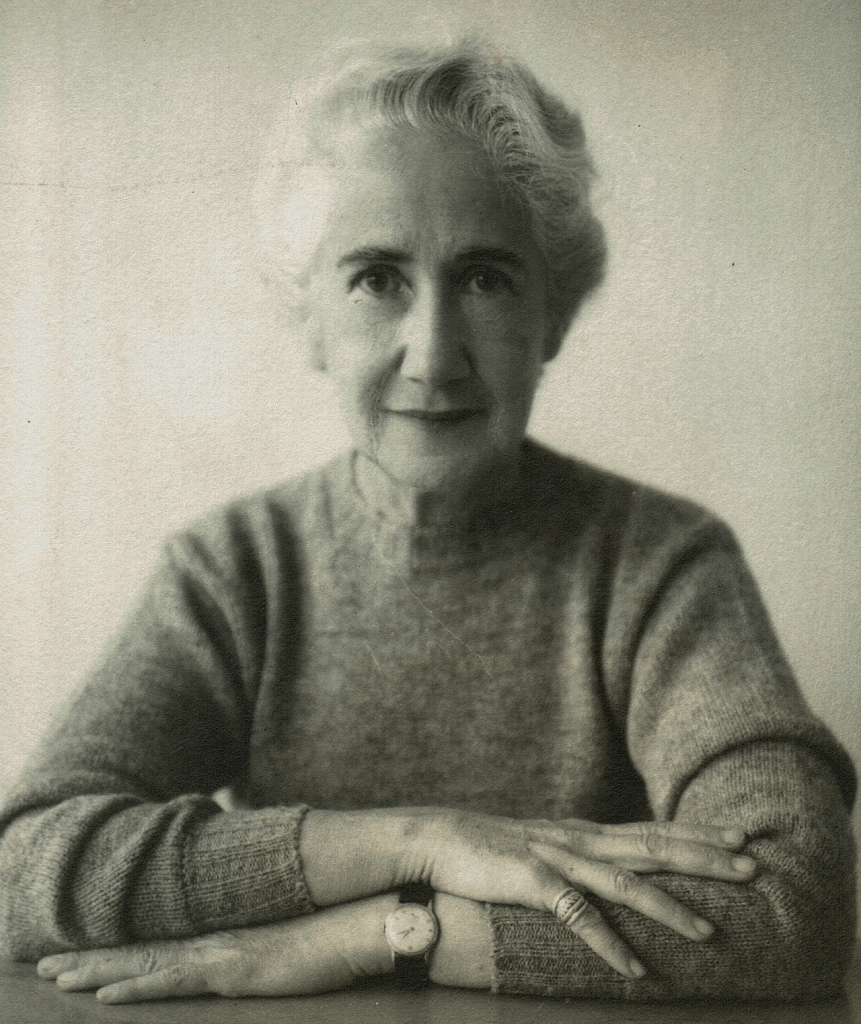
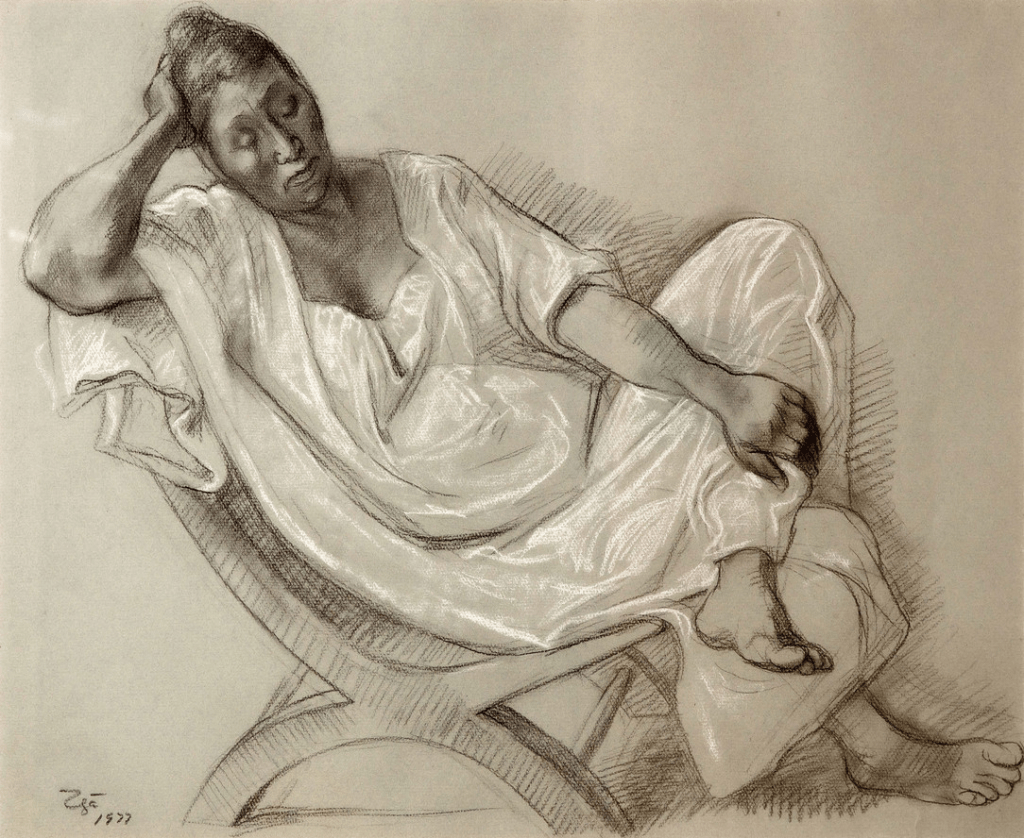
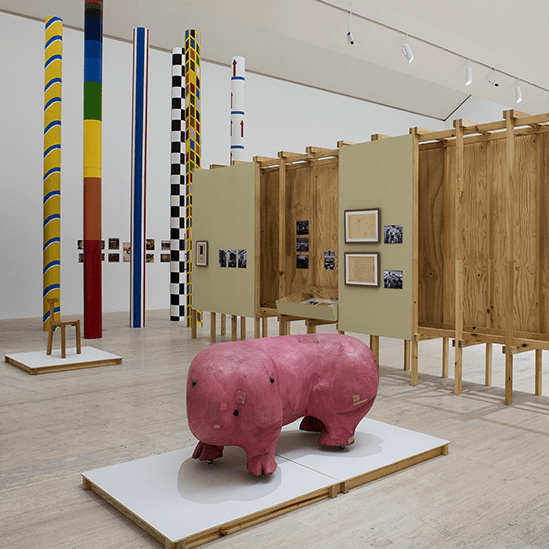
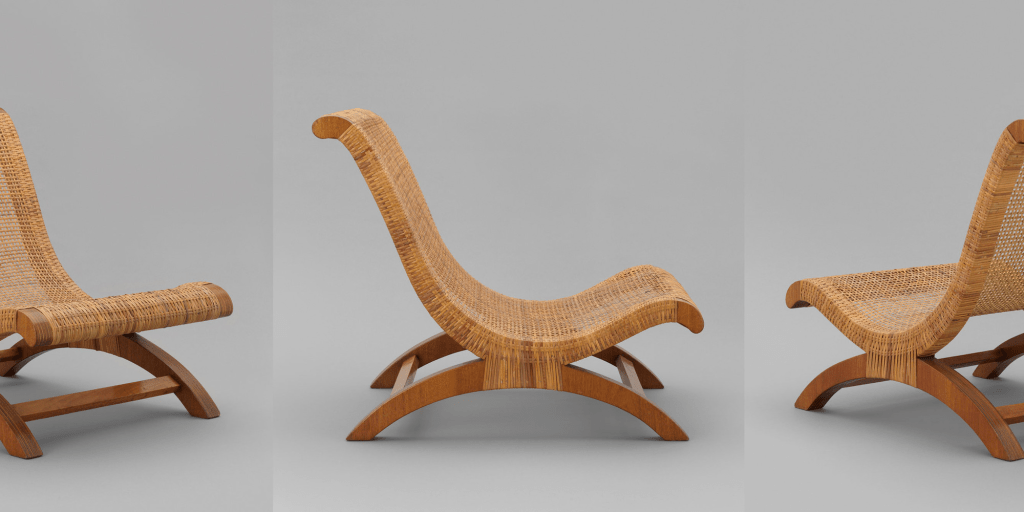
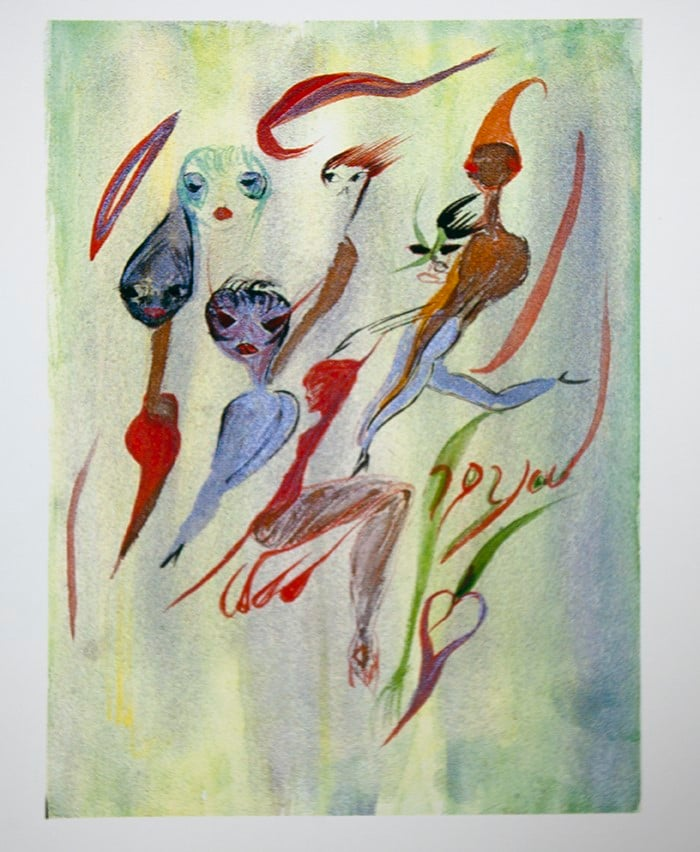
Clara Porset Dumas, nacida en Matanzas, Cuba en 1895, fue arquitecta, diseñadora y pintora, su esposo fue Xavier Guerrero, muralista mexicano… Hizo sus estudios secundarios en Nueva York, como su bachillerato en Artes de la Universidad de Columbia (1925). En París estudio arquitectura en la École de Beaux Arts, de Estética en la Sorbona, además de cursos de Arte en el Museo del Louvre. Regresó a Cuba donde diseñó muebles, pero sus ansias de buscar, descubrir y encontrar la llevaron a hacerse alumna del que habia sido profesor de la Bauhaus, Josef Albers, en Black Mountain College en Carolina del Norte, EEUU… Clara siempre pensó que no debía haber distinción alguna entre las bellas artes y las artes utilitarias… En 1936 fija su residencia en México pero viajó constantemente a Cuba y a Nueva York… En México fue profesora de la Universidad Autónoma de México… Clara Porset murió a los 86 años (1981), en México y deseó donar sus bienes, no al Castro-comunismo imperante en Cuba, si no a la biblioteca de la Facultad de Arquitectura de la Universidad Autónoma de México. (bien hecho Clara).
+++
Clara Porset Dumas, born in Matanzas, Cuba in 1895, was an architect, designer, and painter; her husband was Xavier Guerrero, a Mexican muralist… She completed her secondary education in New York, as well as her Bachelor’s degree in Arts from Columbia University (1925). In Paris, she studied architecture at the École de Beaux Arts, aesthetics at the Sorbonne, and took art courses at the Louvre Museum. She returned to Cuba where she designed furniture, but her desire to seek, discover, and find led her to become a student of Josef Albers, who had been a professor at the Bauhaus, at Black Mountain College in North Carolina, USA… Clara always believed that there should be no distinction between fine arts and utilitarian arts… In 1936, she established her residence in Mexico but travelled frequently to Cuba and New York… In Mexico, she was a professor at the National Autonomous University of Mexico… Clara Porset died at the age of 86 (1981) in Mexico and wished to donate her belongings, not to the prevailing Castro-communism in Cuba, but to the library of the Faculty of Architecture at the National Autonomous University of Mexico. (Well done, Clara).
“I have so many things to do today, I dare not ignore my Time With God.” – Martin Luther
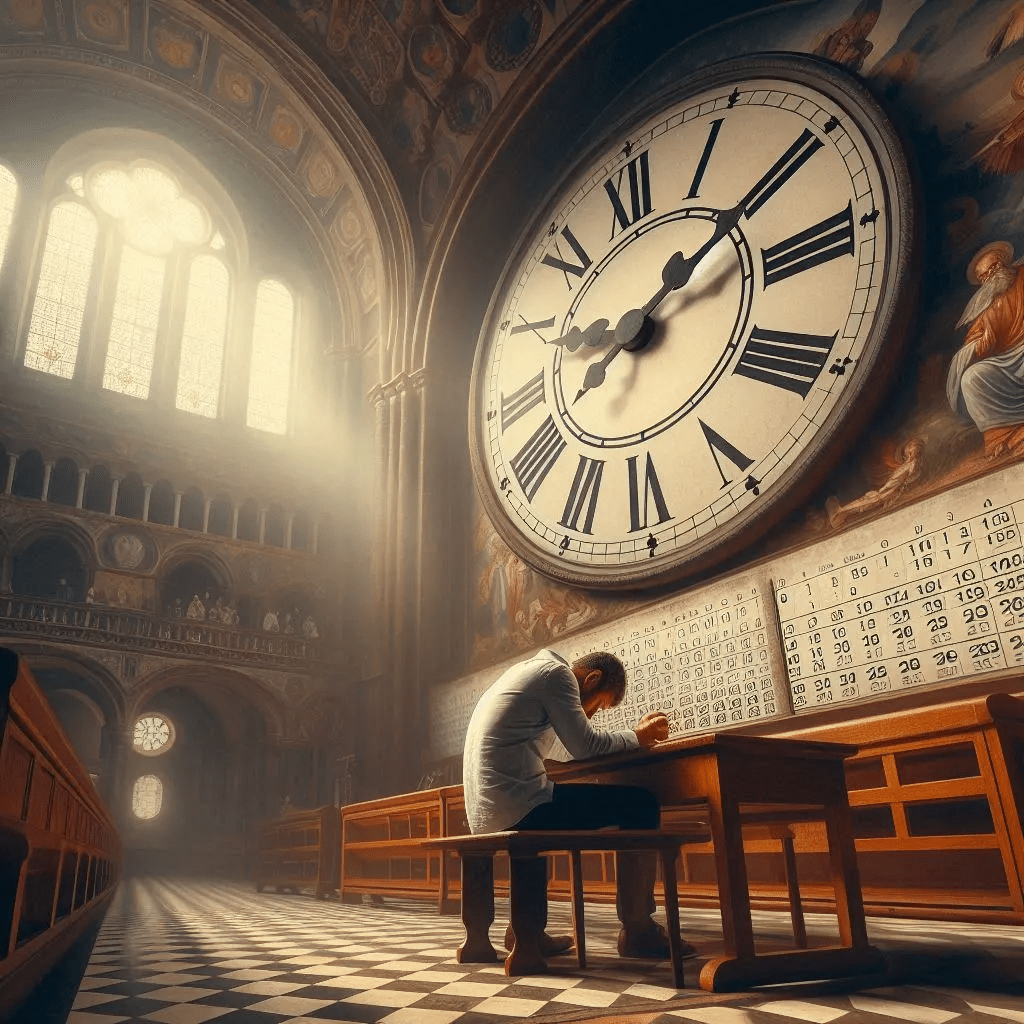
We live in a world of time, with 60 minutes in an hour, 24 hours in a day, 7 days in a week, 28-31 days in a month, and 12 months in a year. God has given us so much time, and we should use it to our best advantage. With so much time given to us, how much of it are we spending with the Lord? We should be grateful for the time that we are able to spend with Him and for the blessings, answered prayers, and the relationship He has given us.
(Image by Willie Torres/All Rights Reserved)
Do you find yourself eagerly anticipating your Time With God? Do you take the time to pause and just focus on Him, free from distraction?
The Bible makes it clear that we should take time to be still and just recognize God’s presence in our lives. In Psalm 46:10,it says, “Be still, and know that I am God.” This verse is a reminder of how important it is to take time to be still and recognize God’s greatness.
Are you still? Are you taking the time to devote yourself to Him? Do you truly understand how great our God is, or are you going through life without Him, without any kind of relationship?
(Image by Willie Torres/All Rights Reserved)
It is important to remember that God is not only our creator but also our friend, He is there waiting for us to turn to Him and develop a relationship. It is only then that we can begin to understand the depths of His greatness and the power of His love. He is a loving God, and He desires for us to have a relationship with Him. Let us all take the time to pause and reflect on the greatness of our God, and to develop a meaningful relationship with Him.
(Image by Willie Torres/All Rights Reserved)
Nehemiah 1:5 – New International Version Then I said: “Lord, the God of heaven, the great and awesome God, who keeps his covenant of love with those who love him and keep his commandments.”
Many of us are planners, and it’s important to plan the time and place for our Time With God. Setting aside a time for prayer and reflection can be a powerful way to connect to our Heavenly Father. It can be a special moment each day, where we know that it’s time to pause and talk to God. No matter where we are, we can find a quiet place to talk to God and feel His presence. By setting aside a specific time and place for prayer, we create a dedicated space for our conversations with God. Let’s remember to plan ahead and make Time With God a regular part of our lives.
(image by Willie Torres/All Rights Reserved)
When we are at our lowest points in life and feel like we have nowhere else to turn, we often cry out to the Lord. We are not ashamed to pray and plead, hoping that He will hear our desperate cries. We know that He understands our pain and sorrow, and that He can help us to bear it. In these moments, we can feel His presence and love, knowing that He will never leave us or forsake us. He is our refuge in times of trouble and our hope in times of despair. He is our rock, our fortress, and our deliverer. When we are hurting, we can always turn to Him and He will be there for us.
(Image by Willie Torres/All Rights Reserved)
Psalm 5:3 — Good News Translation You hear my voice in the morning; at sunrise I offer my prayer and wait for your answer.
No matter what difficulties life throws our way, we must always remember to take a moment to appreciate the good days and recognize that they are a gift. We should be grateful for the days of joy and peace, the days of blessings and love, the days when everything seems to be going right. We often forget that all the moments of our life that we take for granted – the early mornings when we wake up, the afternoons when we are at work, school, having lunch, or out shopping – are all blessings from God. He has gifted us with these moments, yet we forget to recognize them.
(Image by Willie Torres/All Rights Reserved)
We enjoy life without burdens, without worries, and without fears, but we should not forget that these moments have been provided to us by our Creator. We must take a moment to appreciate these blessings and thank God for them. Taking time to recognize and appreciate the blessings He has given us is essential to living a life of gratitude and being mindful of the blessings we have.
So, let us not forget to take a moment to appreciate the good days, to recognize the blessings that come along with them, and to be thankful to God for the beauty of life.
In the evenings, when we are at home, we can find moments of peace and contentment. We can enjoy dinner with our families, watch TV together, spend time with our children, or simply relax and read a book. It is during these times that we can find solace in our homes, our lives, and our hearts. For those of us who are looking for something even deeper, we can turn to the Good Book – The Bible – for further spiritual insight and guidance. The Bible contains wisdom and teachings that can help us to build a strong foundation of faith and understanding of the world around us. So, when we are looking for peace and contentment in the evenings, let us turn to the Good Book for a little extra guidance and insight.
Psalm 1:2 — New American Standard Bible But his delight is in the law of the Lord, And in His law he meditates day and night.
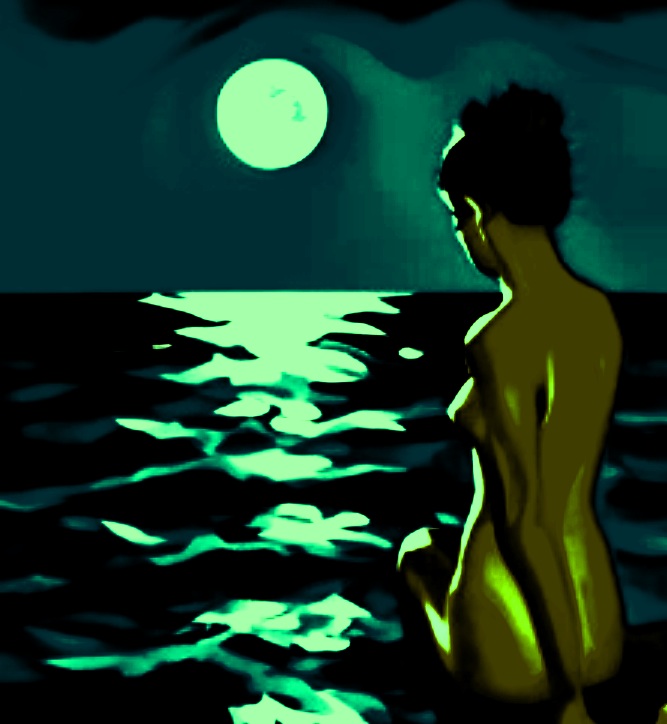
(«The Gift of Peaceful Moments»/Image by Willie Torres/All Rights Reserved)
+++++++++
We at DEACON 11 would like to thank Willie Torres from the bottom of our hearts for such a lovely article. For his words of inspiration and the inspirational as well images. Many blessings Brother Willie and all the best!
+++++++++++
DEACON 11 welcomes entries from anyone who has a word of peace in their heart to teach to others. If you are interested please reply to this post with your email address and we will send you the pertinent information.
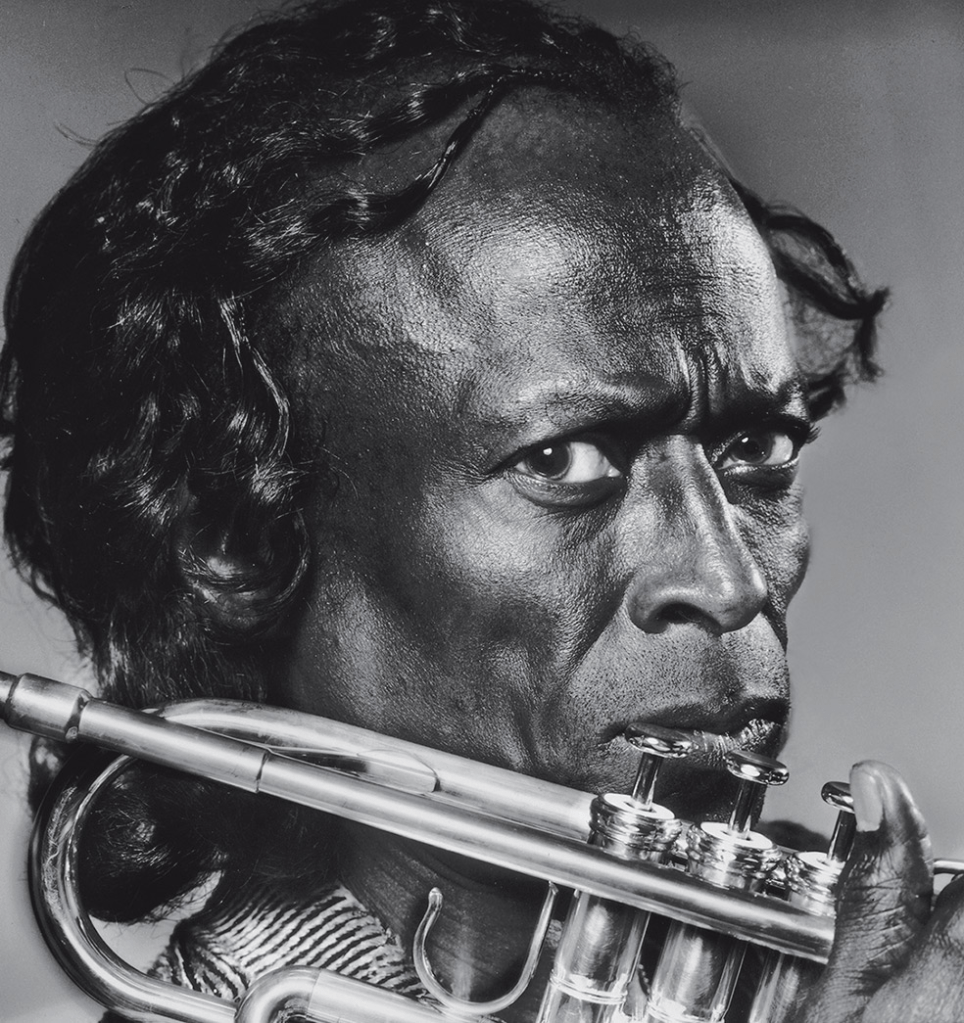
Venga, a que no sabías que Miles Davis, sí, el gran trompetista del bebop, del cool, del funk y del jazz psicodélico, progresivo, jazz-fusion, etcétera, era también un artista plástico fenomenal, sí, un pintor. Pues como no lo sabías, yo te lo voy a decir…
Miles Davis, (Miles Dewey Davis), nació en Illinois en 1926 y era un pijo… Se crió en East St. Louis y comenzó a tocar la trompeta a temprana edad. Luego ingresó en Julliard School of Music, pero se fugó de la institución en 1944 para tocar con banda de Billy Eckstine y tocó con Charlie Parker y Dizzy Gillespie, donde aprendió todo lo que habia de aprender del estilo bebop.
En 1948 se reunió con Bill Evans y comenzó su etapa del «Birth of the Cool», o sea, el nacimiento del «cool», un jazz más suave, más sutil y más parecido a la música del llamado «West Coast», la de los jazzistas de California… Tuvo grandes éxitos y grandes grupos, especialmente con otros grandes como John Coltrane, y así paso los años cincuenta y sesenta… Luego, hacia el final de su carrera (y su vida), en los años 80, penetra el «Jazz-Fusion» y gana varios Grammy Awards haciendo el repertorio de Michael Jackson y Cindi Lauper.
Entonces en 1991, en el Festival de Jazz de Montreux en 1991, Davis se unió al grupo de Quincy Jones e interpretó arreglos clásicos de Gil Evans de finales de la década de 1950.
Miles Davis murió en 1991 en Santa Monica, California, donde vivía. Nunca quiso volver a tocar sus grandes éxitos como Birth of the Cool o Kind of Blue. Siempre se reinventó durante su larga carrera…
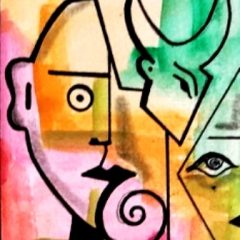
Y también pintaba… En 1972 Davis sufrió un accidente automovilístico y de ahí surge su etapa de pintor. Se inmersó de lleno en la pintura, dándole la misma importancia que a su música, y dijo que “la pintura es terapia para mí y me mantiene la mente ocupada con algo positivo cuando no estoy haciendo música.” Le gustaba mucho pintar caras y sus referencias fueron Kandinsky, Picasso y las máscaras africanas, entre otros.
+++
I will bet you didn’t know that Miles Davis, yes, the great «Jazz Man», trumpet master of bebop, cool, funk, psychedelic jazz, progressive, jazz-fusion, etc., was also a phenomenal visual artist, yes, a painter. Well, since you didn’t know, I’m going to tell you…
Miles Davis (Miles Dewey Davis) hailed from Illinois. He was born in 1926 of an upper middle class family, and grew up in East St. Louis. Miles started playing the trumpet early in life. Later he attended Julliard School of Music but left it to play in Billy Eckstine’s band. With Eckstine’s band he played alongside Charlie Parker and Dizzy Gillespie. I reckon that there he learned all he needed to know of bebop.
In 1948, he met with Bill Evans and began the phase that led him to create the «Birth of the Cool,» that is, the birth of «cool jazz,» a smoother, subtler sound that resembled the music of «West Coast Jazz,» mostly played by musicians from California. He had great successes and collaborated with many influential artists, especially with other legends like John Coltrane. And thus he spent the fifties and sixties. Later, towards the end of his career (and his life), in the 1980s, he delved into «Jazz-Fusion» and won several Grammy Awards performing the repertoire of Michael Jackson and Cyndi Lauper.
In 1991, at the Montreux Jazz Festival, Davis joined Quincy Jones’ group and performed classic arrangements by Gil Evans from the late 1950s.
Miles Davis died from a cerebral haemorrhage in 1991 in Santa Monica, California, where he lived. He never wanted to play his greatest hits like «Birth of the Cool» or «Kind of Blue» again. He always reinvented himself throughout his long career…
And he also painted. And how did this start? Well, in 1972, Davis was in a car accident and that marked the beginning of his painting phase. He became fully immersed in painting, giving it the same importance as his music. He once said that «painting is therapy for me and keeps my mind engaged with something positive when I’m not making music.» He particularly enjoyed painting faces, and his references included Kandinsky, Picasso, and African masks, among others.
+++++
(Este es el ultimo cuadro que pinto ya estando en sus ultimos dias en 1991/This is the last painting he did, already quite ill and in his last days in 1991) (Foto/Photo The Last Miles)
(Image by Francisco Bravo Cabrera/All Rights Reserved)
Incredible that this WP keeps «updating» and changing the way things get done within the system! I find these new changes intolerable, stupid and unnecessary! Do you?
What do their IT people think? That we should all be computer programmers to write a fecking blog? Well we do not!
The way it was before these recent changes seemed to be the best way, but now I reckon their engineers need to justify their existence. And their help section (AI bot) only suggests the same thing for everything and then tells you that if you look for this command, then follow it to another one and then you stand on your head, you can find the link to your post!
I say the changes are rubbish and I demand they change them back, if not, as soon as my subscription date arrives I am cancelling! I do not need to pay for something that works so bloody terrible!
WHAT DO YOU THINK? SHOULD NOT WE, EN MASSE, DEMAND THAT THEY UNDO THESE RIDICULOUS CHANGES?
Venga, a que no sabías que Miles Davis, sí, el gran trompetista del bebop, del cool, del funk y del jazz psicodélico, progresivo, jazz-fusion, etcétera, era también un artista plástico fenomenal, sí, un pintor. Pues como no lo sabías, yo te lo voy a decir…
Miles Davis, (Miles Dewey Davis), nació en Illinois en 1926 y era un pijo… Se crió en East St. Louis y comenzó a tocar la trompeta a temprana edad. Luego ingresó en Julliard School of Music, pero se fugó de la institución en 1944 para tocar con banda de Billy Eckstine y tocó con Charlie Parker y Dizzy Gillespie, donde aprendió todo lo que habia de aprender del estilo bebop.
En 1948 se reunió con Bill Evans y comenzó su etapa del «Birth of the Cool», o sea, el nacimiento del «cool», un jazz más suave, más sutil y más parecido a la música del llamado «West Coast», la de los jazzistas de California… Tuvo grandes éxitos y grandes grupos, especialmente con otros grandes como John Coltrane, y así paso los años cincuenta y sesenta… Luego, hacia el final de su carrera (y su vida), en los años 80, penetra el «Jazz-Fusion» y gana varios Grammy Awards haciendo el repertorio de Michael Jackson y Cindi Lauper.
Entonces en 1991, en el Festival de Jazz de Montreux en 1991, Davis se unió al grupo de Quincy Jones e interpretó arreglos clásicos de Gil Evans de finales de la década de 1950.
Miles Davis murió en 1991 en Santa Monica, California, donde vivía. Nunca quiso volver a tocar sus grandes éxitos como Birth of the Cool o Kind of Blue. Siempre se reinventó durante su larga carrera…
Y también pintaba… En 1972 Davis sufrió un accidente automovilístico y de ahí surge su etapa de pintor. Se inmersó de lleno en la pintura, dándole la misma importancia que a su música, y dijo que “la pintura es terapia para mí y me mantiene la mente ocupada con algo positivo cuando no estoy haciendo música.” Le gustaba mucho pintar caras y sus referencias fueron Kandinsky, Picasso y las máscaras africanas, entre otros.
+++
I will bet you didn’t know that Miles Davis, yes, the great «Jazz Man», trumpet master of bebop, cool, funk, psychedelic jazz, progressive, jazz-fusion, etc., was also a phenomenal visual artist, yes, a painter. Well, since you didn’t know, I’m going to tell you…
Miles Davis (Miles Dewey Davis) hailed from Illinois. He was born in 1926 of an upper middle class family, and grew up in East St. Louis. Miles started playing the trumpet early in life. Later he attended Julliard School of Music but left it to play in Billy Eckstine’s band. With Eckstine’s band he played alongside Charlie Parker and Dizzy Gillespie. I reckon that there he learned all he needed to know of bebop.
In 1948, he met with Bill Evans and began the phase that led him to create the «Birth of the Cool,» that is, the birth of «cool jazz,» a smoother, subtler sound that resembled the music of «West Coast Jazz,» mostly played by musicians from California. He had great successes and collaborated with many influential artists, especially with other legends like John Coltrane. And thus he spent the fifties and sixties. Later, towards the end of his career (and his life), in the 1980s, he delved into «Jazz-Fusion» and won several Grammy Awards performing the repertoire of Michael Jackson and Cyndi Lauper.
In 1991, at the Montreux Jazz Festival, Davis joined Quincy Jones’ group and performed classic arrangements by Gil Evans from the late 1950s.
Miles Davis died from a cerebral haemorrhage in 1991 in Santa Monica, California, where he lived. He never wanted to play his greatest hits like «Birth of the Cool» or «Kind of Blue» again. He always reinvented himself throughout his long career…
And he also painted. And how did this start? Well, in 1972, Davis was in a car accident and that marked the beginning of his painting phase. He became fully immersed in painting, giving it the same importance as his music. He once said that «painting is therapy for me and keeps my mind engaged with something positive when I’m not making music.» He particularly enjoyed painting faces, and his references included Kandinsky, Picasso, and African masks, among others.
+++++
(Este es el ultimo cuadro que pinto ya estando en sus ultimos dias en 1991/This is the last painting he did, already quite ill and in his last days in 1991) (Foto/Photo The Last Miles)
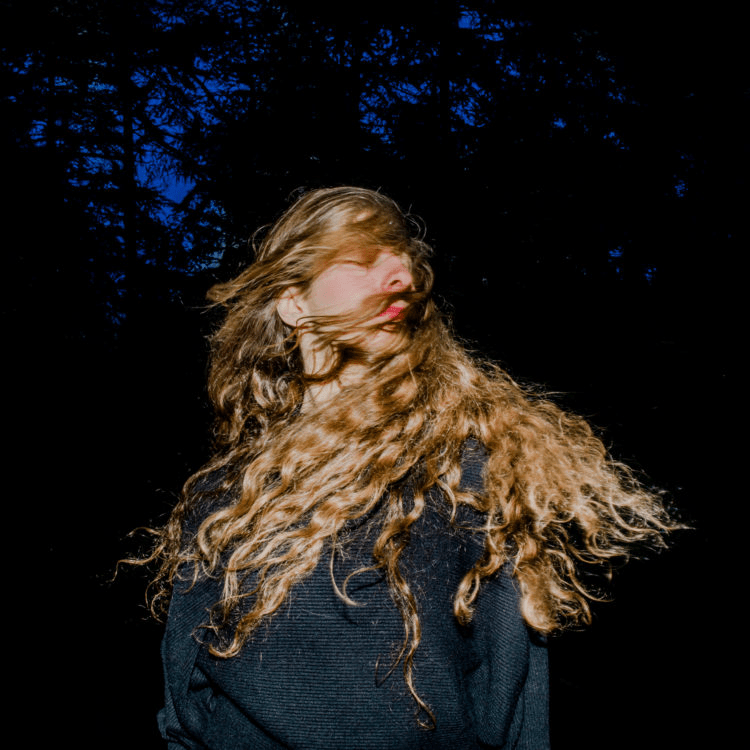
No se porque nadia me habia hablado de esta encantadora fotografa. Myriam Boulos, libanesa, nacio en 1992 en Beirut y sus fotografias han salido en las revistas Vogue y Vanity Fair. Pertenece a The Gemini Collective junto a ilustradores, otros fotografos y la psicologa Laura-Joy Boulos. Myriam colabora con la revista feminista Al Hayya, editada en Beirut. Hay que conocerla.
+++
I don’t know why no one told me about this wonderful photographer. Myriam Boulos, Lebanese, was born in 1992 in Beirut. Her photography has appeared in magazines such as Vogue and Vanity Fair. She forms part of the Gemini Collective among illustrators, other photographers and the psychologist Laura-Joy Boulos. She is a collaborator with the Beirut based feminist magazine Al Hayya. We have to get to know her.
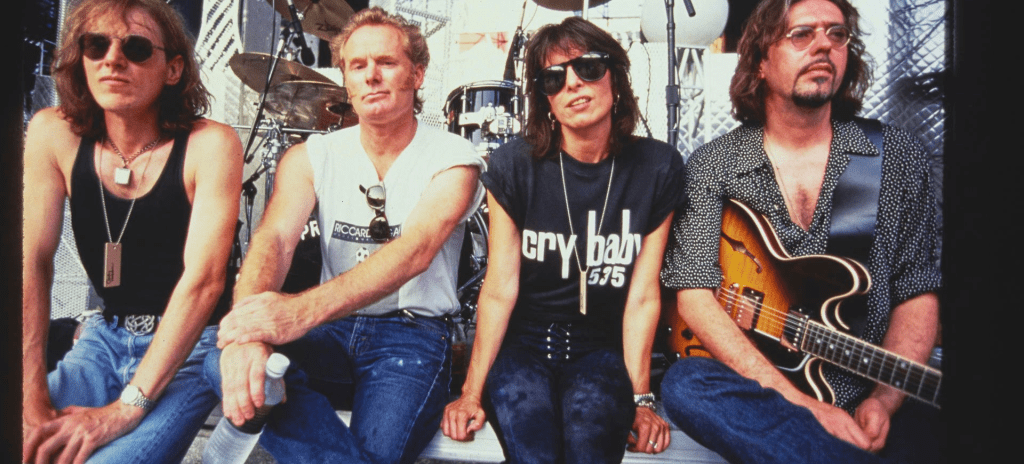
Ok so this band is classified as American-British, so what? Who makes the bloody rules? Anyways, Chrissie Hynde is from Ohio. In 1973 she moved to London and then, eventually, The Pretenders happened. I loved this band in the early 1980’s. Hits? Wow! They’ve a million! Some of my faves is «Back on the Chaingang» (1982); «Brass in Pocket» (1979)and «Don’t Get Me Wrong» (1986) and all the rest. I think you get it.
(Chrissie Hynde, photo: Thepretenders.com)
It was 1979 and the band released their first single, a Kink’s song «Stop Your Sobbing«, then «Kid» and in January 1980, (forty five years ago!) they had their first No. 1 (UK), «Brass in Pocket«, and number 14 on the Billboard Hot 100 (US).
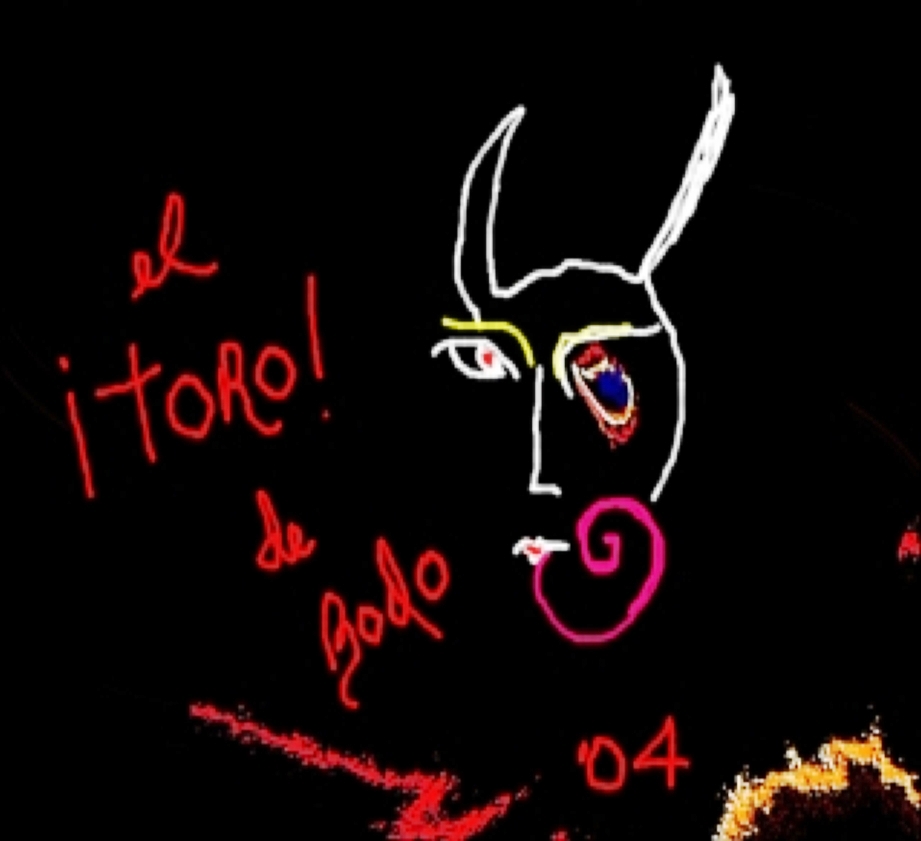
(«El Toro de Bodo ’04″/Francisco Bravo Cabrera/All Rights Reserved)
ART AND THE ARTIST
(Francisco Bravo Cabrera, while listening to the Sonata no. 9 by Beethoven)
Well, maybe I should rather say ART AND LIFE or THE ARTIST AND LIFE, something like that, I don’t know, I think it may have been a better title, but no, the one I’ve chosen I like…
Life, what is life? José Saramago in his book All the Names said: “Life is like paintings; it’s best to look at them four steps back.” Four steps… phenomenal.
The distinguished writer, whom I admire very much, has told us what life is similar to, but he has not told us what life actually is, nor why he relates it to paintings. Well, could it be that paintings are similar to life? I don’t think so, but anything is possible.
Paintings are representations. Nothing that is portrayed on the canvas, wood, or whatever surface the painter uses is truth. Moreover, I remind you that nothing in art is reality. The closest it comes is to a reflection, if the artist does it well, and if you immerse yourself in the painting, you may see something in it that you associate with real life. But you won’t find reality in any painting. However, if you’re lucky, you’ll see how the author has perceived it. A painting, like a movie, a play, or a ballet, lies. Finally, don’t delude yourself into thinking that you’ll find sincerity in art. Perhaps art is the most cynical thing on the face of the earth. Don’t doubt it.
And why do I tell you this? Because I am an artist. My professional and academic training taught me that reality is not art. Art feeds on reality, uses it, embellishes or tarnishes it, but always changes it. The actor does not feel what you think he is feeling when you see him in the theater or in a movie. Neither does the painter nor the poet. Yes, we all play with emotions, but as the great director and co-founder of the Moscow Art Theatre, Konstantin Stanislavski, said, “Raw emotion (human) is not art.” We play with real emotions, but the ones we represent are artistic creations, period.
So, why take four steps back? Frankly, I don’t know. Looking for a better perspective? Maybe…
But well, let’s see, what is an artist? The great masters of the European Renaissance did not consider themselves artists. They viewed themselves as craftsmen, men (and women) who had learned their trade well and had also been trained in other disciplines. Moreover, they painted not what they wanted, but what was commissioned by their great patrons, who were the church, royalty, nobility, and to some extent, the emerging bourgeois class.
It may have been Michelangelo who first considered himself an artist, but that’s debatable. The thing is that artisans and craftsmen began to turn into artists. Once they were artists, they could choose the themes they were going to paint, and the subject matter shifted from biblical scenes and portraits of kings to something more casual, everyday, and completely secular. Art began to gain value, and collectors emerged. Then came the museums, and with them, art history started to be written. In 1793, the Louvre Museum was founded in Paris, the Prado Museum opened its doors in Madrid in 1819, and the Metropolitan Museum of Art in New York in 1870.
That’s how things began to change. The avant-gardes of the 20th century came along, and art took on previously unthinkable directions, causing artists to evolve. But now, after the great artistic milestones of geniuses like Picasso and Matisse, artists no longer know what to do. They seek to experiment, draw attention, shock, alarm, scandalize, and even offend. They also enjoy making people think they are exceptional beings with almost supernatural abilities. But don’t you dare believe that; it’s all nonsense.
Artists today are neither geniuses nor avant-garde. Everything has already been done, so don’t think that for art to be good it has to be original because nothing is original anymore in art. A good artist, as Picasso said, imitates, but a brilliant artist steals. However, what they have stolen is transformed into something better. And I remind you that we create art for only one reason: to earn a living. Nobody enters a studio for ten hours a day, painting like a madman, for the love of art. We do it because we want to sell our work. And if they talk to you about inspiration, don’t believe it either. It’s a myth, nonsense, a fairy tale, a con trick. The artist works and dedicates themselves to their craft not because a muse with magical powers has inspired them, but because they are hungry.
Perhaps a better title would have been The Great Deception…