Ok, so I was not a real fan of this band, but I did like the singles they put out, especially my fave, «Sultans of Swing» (1978), one of the iconic rock songs of the seventies. Later «Money for Nothing» (1985) and «Walk of Life» (1985). Outside of those I really do not know much more about this band, which I do realise is one of the great British bands.
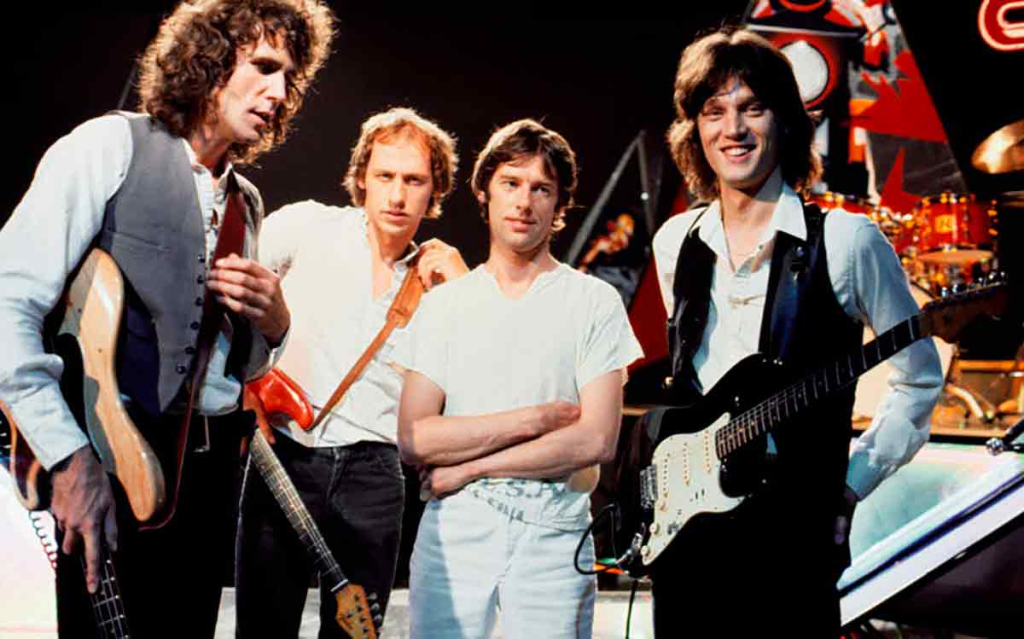
(Photo Globo.com/Dire Straits Legacy with some of the original members of Dire Straits/Foto: Divulgação)
Dire Straits was formed in London (1977) by Mark Knopfler (vocals and lead guitar), David Knopfler (rhythm guitar and backup vocals), John Illsley (bass and vocals) and Pick Withers (drums and percussion). They are definitely considered one of the most successful groups of the rock world. And they were active until 1995. After that Knopfler started his solo career which has also been quite successful indeed. Since they practically wrote the theme song for MTV (of the 80’s and early 90’s when they still played music), they won two MTV Music Awards and were inducted into the Rock and Roll Hall of Fame in 2018.
(Image property of FBC/OCS Valencia/All Rights Reserved)
Always loved art… Siempre me ha gustado el arte
Always loved the theatre… Siempre me ha gustado el teatro
Always loved music… Siempre me ha gustado la música
Always loved to write… Siempre me ha gustado escribir
Always loved to draw… Siempre me ha gustado dibujar
Always loved to paint… Siempre me ha gustado pintar
And I still do. And I still do all those things. But we go through stages in life where we learn and develop skills and fine tune our talent. Here are some of the things I did during a certain time in my career as an artist… Y todavia me gusta, y todavia hago todas esas cosas. Pero atravesamos etapas en la vida que nos valen para aprender y para desarrollar talento. Aqui os muestro las obras que hice durante un periodo en particular de mi carrera de artista…
(Please, do not forget to like, comment and share this video)
CHEERS
All artwork is for sale and if you are interested you can inquire here:
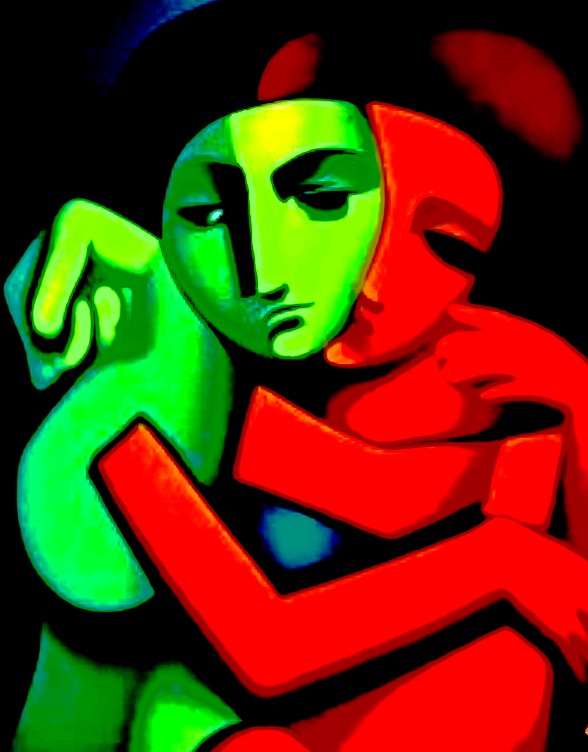
(«Forgive Forget No.2″/Francisco Bravo Cabrera/All Rights Reserved)
DEACON 11 Forgive and Forget
I was really getting closer and closer to him, to the Deacon. He spoke of things that I could relate to, that I needed to know and just when I thought there was nothing more, he concluded with a most important topic: Forgiveness…
«Saint Matthew the Evangelist, said (St. Matt. 6:14-15) that if we forgive men their trespasses, our Father in Heaven will forgive ours; if you do not forgive, you will not be forgiven. I am paraphrasing, but the idea, the teaching, is that we, as fallible human beings, will commit offenses for the which we need forgiveness. And we all need forgiving for something. We are not perfect.
«And the reason, in my opinion, that Saint Matthew stressed that, should we not forgive, we will not be forgiven, is because of the hearts of stone some of us have, We need to be reminded that holding grudges and trying to get even will only get us in deeper trouble and that it does not solve anything. Not even from a psychological point of view. It is easier, and more spiritually rewarding, to cleanse our consciousness by forgiving that, or those, who have offended us.
«But do we need to forget? Well Jesus said, according to Saint Matthew (Matt.18,21-35), that one must forgive not just seven times but seventy times seven times. But does that mean that we also forget? I do not know. You think for yourselves on that one. Personally, forgiving offenses committed against us is one thing; forgetting them is another. I think one does not need to forget them once one has forgiven.
The real problem is carrying the weight of the anger that one has developed from the offense and the desire for revenge. Lao Tzu, the Chinese philosopher and writer of the Tao Te Ching supposed that forgiveness allows us to proceed forward in life and achieve peace of mind. And naturally, one cannot have peace of mind if one is continually preoccupied thinking that someone has offended us and what will we do about it.
«The Lakota Indians, which have given us beautiful prayers and much spirituality, stress the need for forgiveness as well. «We have to forgive. Those of us who pray in traditional Lakota ceremony know that our prayers are greatly diminished when we choose to remain unforgiving. The level of our personal thought and inner emotion does affect the sacred energy we create in Lakota ceremony. So, because we pray with the Cannunpa and other sacred medicines, we have to forgive people who may have done great wrong to us or our family members. Forgiveness is the only way we are going to heal.» (*Vi Waln is an enrolled citizen of the Sicangu Lakota Nation and is nationally published journalist.)
«I will conclude by saying that even those who have committed grave injustices to others, to include homicide and murder must be forgiven. They have fallen under a dark cloud. Or they are evil people. But God makes it rain upon the just and the unjust and God’s sun shines on the good and the bad. We are not here to judge, revenge is the Lord’s. To be at peace one must forgive.»
(«El choque de manos»/Francisco Bravo Cabrera/Derechos Reservados)
DEACON 11 Forgive and Forget
I was really getting closer and closer to him, to the Deacon. He spoke of things that I could relate to, that I needed to know and just when I thought there was nothing more, he concluded with a most important topic: Forgiveness…
«Saint Matthew the Evangelist, said (St. Matt. 6:14-15) that if we forgive men their trespasses, our Father in Heaven will forgive ours; if you do not forgive, you will not be forgiven. I am paraphrasing, but the idea, the teaching, is that we, as fallible human beings, will commit offenses for the which we need forgiveness. And we all need forgiving for something. We are not perfect.
«And the reason, in my opinion, that Saint Matthew stressed that, should we not forgive, we will not be forgiven, is because of the hearts of stone some of us have, We need to be reminded that holding grudges and trying to get even will only get us in deeper trouble and that it does not solve anything. Not even from a psychological point of view. It is easier, and more spiritually rewarding, to cleanse our consciousness by forgiving that, or those, who have offended us.
«But do we need to forget? Well Jesus said, according to Saint Matthew (Matt.18,21-35), that one must forgive not just seven times but seventy times seven times. But does that mean that we also forget? I do not know. You think for yourselves on that one. Personally, forgiving offenses committed against us is one thing; forgetting them is another. I think one does not need to forget them once one has forgiven.
The real problem is carrying the weight of the anger that one has developed from the offense and the desire for revenge. Lao Tzu, the Chinese philosopher and writer of the Tao Te Ching supposed that forgiveness allows us to proceed forward in life and achieve peace of mind. And naturally, one cannot have peace of mind if one is continually preoccupied thinking that someone has offended us and what will we do about it.
«The Lakota Indians, which have given us beautiful prayers and much spirituality, stress the need for forgiveness as well. «We have to forgive. Those of us who pray in traditional Lakota ceremony know that our prayers are greatly diminished when we choose to remain unforgiving. The level of our personal thought and inner emotion does affect the sacred energy we create in Lakota ceremony. So, because we pray with the Cannunpa and other sacred medicines, we have to forgive people who may have done great wrong to us or our family members. Forgiveness is the only way we are going to heal.» (*Vi Waln is an enrolled citizen of the Sicangu Lakota Nation and is nationally published journalist.)
«I will conclude by saying that even those who have committed grave injustices to others, to include homicide and murder must be forgiven. They have fallen under a dark cloud. Or they are evil people. But God makes it rain upon the just and the unjust and God’s sun shines on the good and the bad. We are not here to judge, revenge is the Lord’s. To be at peace one must forgive.»
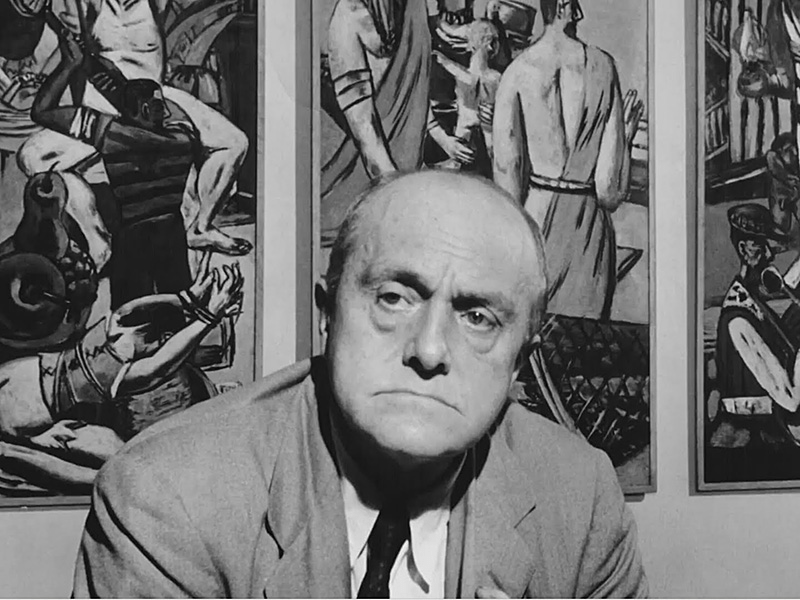
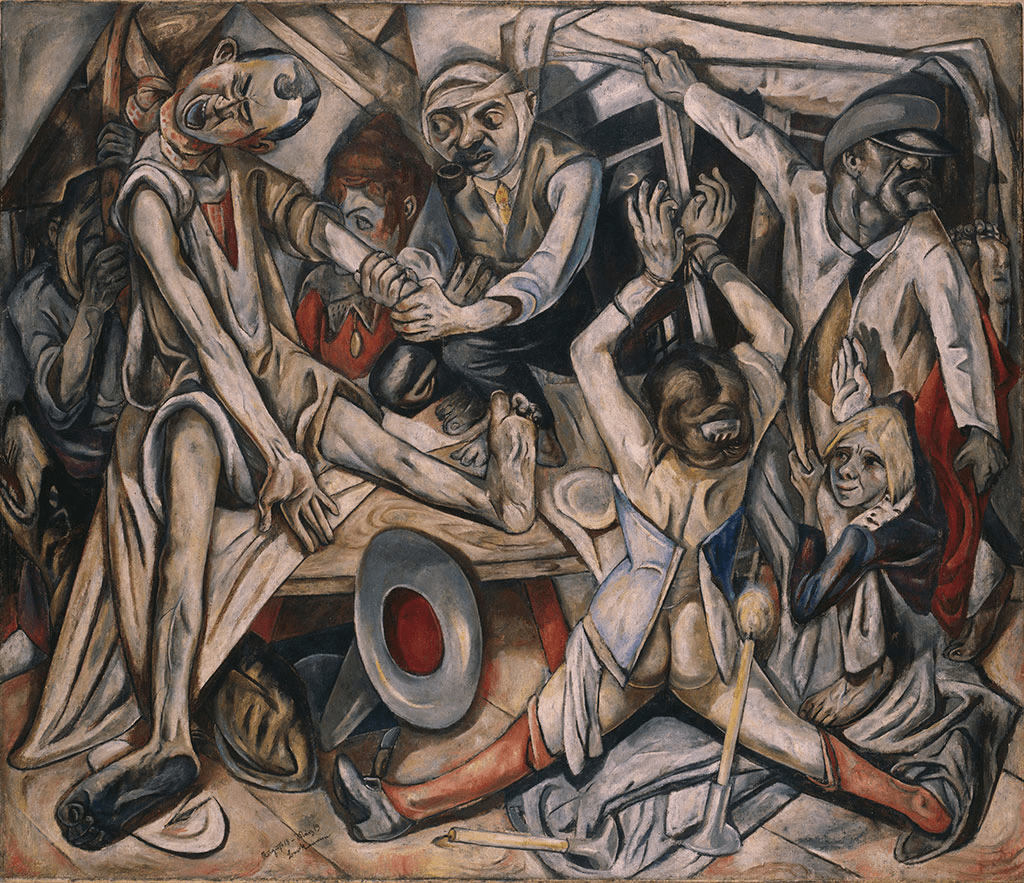
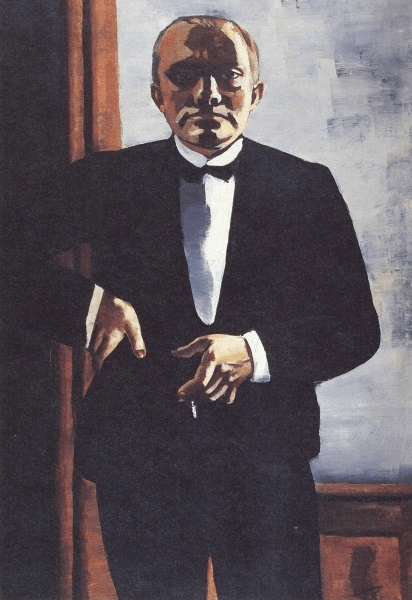
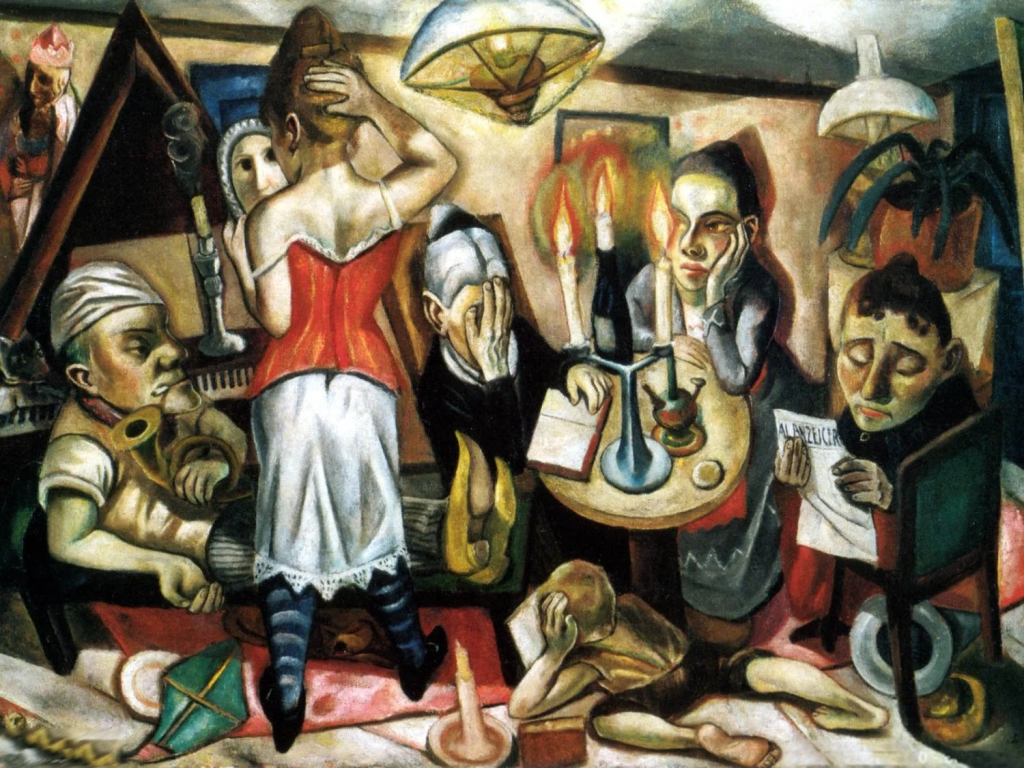
Uno de mis expresionistas preferido es el alemán Max Beckmann. Aunque el tio tenga cara de mala leche, creo que hubiera sido una experiencia agradable sentarme a tomarme un vino con el y hablar del expresionismo. Nació en Leipzig, en Sajonia en 1884 y fue uno de esos pintores que terminó refugiándose en Nueva York de los horrores que estaban causando los Nazis en Europa… Beckmann comenzó sus estudios de dibujo y pintura en 1900 en la Academia de Artes Weimar. En 1904 se establece con su mujer, la artista Minna Tube y su hijo Peter, en Berlin. Su primera exposición fue en Berlin en 1911 con cuadros aún influenciados por el impresionismo… Beckmann se incorporo al ejercito alemán durante la primera guerra mundial y sirvió de enfermero hasta que le dieron de baja tras sufrir una crisis nerviosa… Tras sus experiencias en el ejercito surgieron sus primeros cuadros expresionistas… Tras la llegada de los Nazis, que consideraron sus pinturas como arte degenerado, Beckmann se traslada a Amsterdam (1937). Pero sabemos que a esa ciudad llegaron los Nazis también y Beckmann se traslada a America en 1947. Lamentablemente, yendo camino al Museo Metropolitano para ver una exposición de su obra, muere de un ataque al corazón (1950)… Hay mucho que decir de este gran pintor expresionista y os urjo a que busquéis, acordaos que el arte es la búsqueda. Ahora os dejo con algunos de sus cuadros.
+++
One of my favorite expressionists is the German Max Beckmann. Although he may have a grumpy face, I believe it would have been an enjoyable experience to sit down with him, have a glass of wine, and talk about expressionism. He was born in Leipzig, in Saxony, in 1884 and was one of those painters who ended up seeking refuge in New York from the horrors the Nazis were causing in Europe… Beckmann began his studies in drawing and painting in 1900 at the Weimar Academy of Arts. In 1904, he settled in Berlin with his wife, the artist Minna Tube, and their son Peter. His first exhibition was in Berlin in 1911 with paintings still influenced by Impressionism… Beckmann joined the German army during World War I and served as a nurse until he was discharged after suffering a nervous breakdown… After his experiences in the army, his first expressionist paintings emerged… Following the arrival of the Nazis, who considered his works as degenerate art, Beckmann moved to Amsterdam (1937). But we know that the Nazis also arrived in that city, and Beckmann moved to America in 1947. Unfortunately, on his way to the Metropolitan Museum to see an exhibition of his work, he died of a heart attack (1950)… There is much to say about this great expressionist painter, and I urge you to seek out his work; remember that art is about the search. Now I leave you with some of his paintings.
+++++
(de autor desconocido y del dominio público/1911/By unknown author and in the public domain)
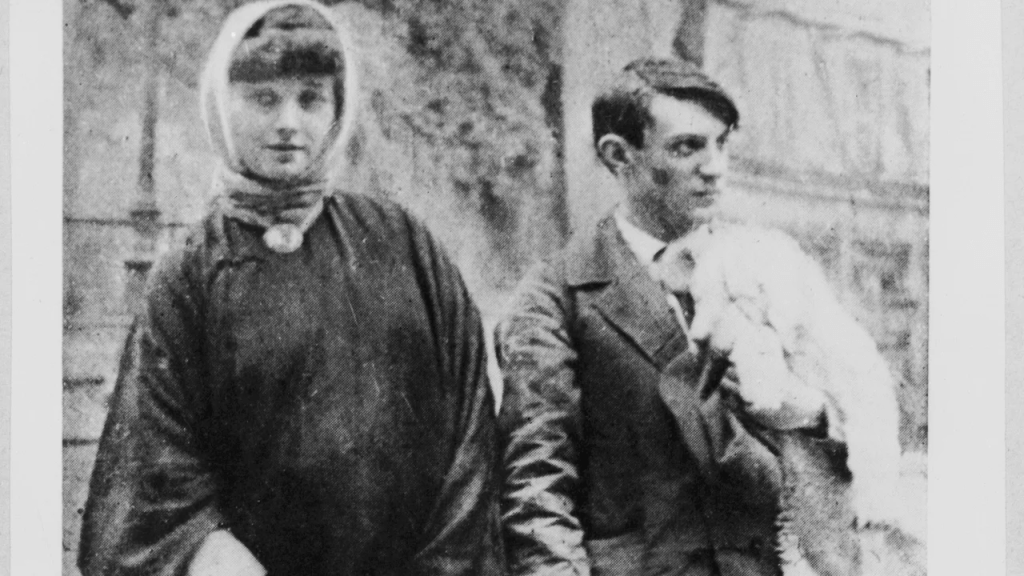
(Fernande and Picasso/Photo Picasso Museum Paris/unknown author)
CHAPTER 3 Fernande Olivier
I would consider Fernande Olivier to be the first woman, or first real relationship in Picasso’s life. He met her in Paris while living at the now famous Bateau Lavoir in Montmartre. This apartment building was baptised with the name Bateau Lavoir by Picasso and his cronies in 1904. They thought that its wooden structure made it look like the laundry boats moored on the River Seine. The name stuck with all the other artists, poets and members of the bohemian crowd prevalent in those years, mostly composed of young artists, very idealists and equally as poor.
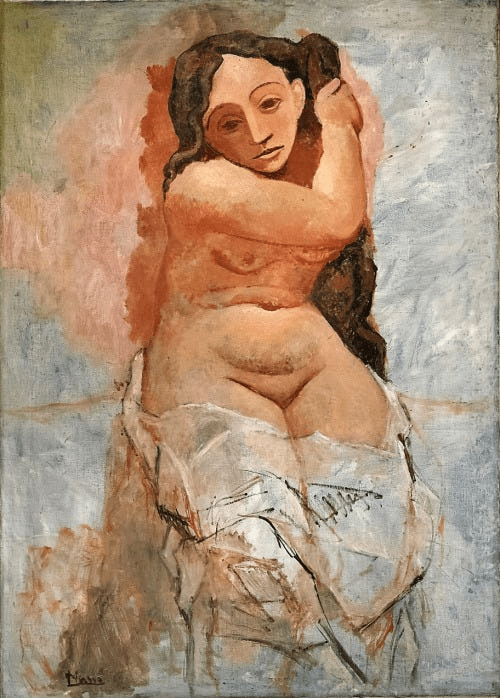
(«Woman»/1906)
In any event, Fernande, besides being Picasso’s first Parisian romance, was a model who also aspired to be an artist herself. She was born in Paris in 1881 and she did write her memoirs about her life with Picasso. The couple took up residence at the Bateau Lavoir in 1905. Their relationship lasted approximately seven years and it was not an easy-going relationship at all. Both of them were of the jealous type and given to bursts of violence.
(Head of a Woman/Metropolitan Museum of Art/1909)
One could say that she was the muse that inspired some of his phenomenal early works, including the sculpture, Head of a Woman (1909). It might have been Fernande who catapulted him into his rose period. And she might have also been one of the prostitutes painted in his seminal work Las Señoritas de Aviñón. All in all, she was the model for over fifty paintings from those early years in Paris.
(Las señoritas de Aviñón/1907)
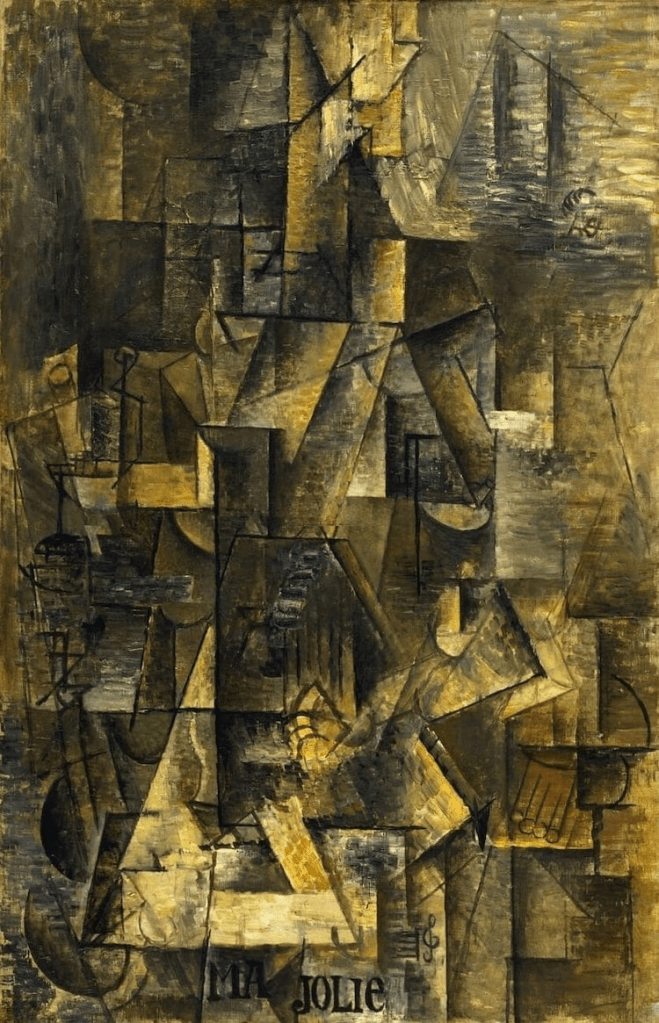
Yet, Picasso was moving on. By 1911, after having become a successful artist, Picasso began to consider her a reminder of harder times and lost interest in her. He left her and in 1912 found a new woman, a new muse, lover, obsession, whom he called ma jolie and whose name was Eva Guel. Eva was born in 1885, and probably, like Fernande, also in Paris. Eva was quite the opposite of Fernande. She was a petite woman of fine chiselled features and of mild temperament. However, the relationship was not to last as ma jolie succumbed to either cancer or tuberculosis and died in 1915. She was his inspiration, one could suppose, for the cubist period where in some of his work he wrote “ma jolie”.
(«Ma Jolie»/1911)
Picasso was very distraught by the death of Eva. He even said to Gertrude Stein that his life was hell. Yet, although ma jolie, the love of his life, his petite Eva, was sick and dying, Picasso was already shopping around for a replacement. By autumn of 1915 he had already met, and had a romantic interlude with, Gabrielle Lapeyre, and with several other young, beautiful women, including with Emilienne Pâquerette, the most sought after model of the time. This all happened between 1915 and 1917.
Even though I have stated that Fernande Olivier was Picasso’s first romance, to speak of, there had been others in Paris before Fernande. However, they were short-lived affairs mostly and really, with perhaps one exception that I will explain, had little to do with influencing the art of the great master.
The exception, in my opinion was Germaine Gargallo, née Laure Antoine, who later became Germaine Pichot, born in Paris in 1880. She had been the girlfriend of Carles Casagemas, Catalan artist and poet, good friend of Pablo Picasso, who committed suicide in France in 1901. Immediately following the death of Casagemas Germaina starts an affair with Picasso. In his painting Los dos saltimbanquis the two figures might just well be either him and Germaine or Germaine and Casagemas. That is the sum total, in my opinion, of Germaine’s influence in the emerging art of Picasso.
(Los dos saltimbanquis/1901)
Other women did form part of his life between 1900 and 1904, mostly art models. There was a model named Madeleine in early 1904 who might have become pregnant with Picasso’s child but who aborted. She could have been the model for a 1904 gouache on pulp board painting titled Woman with a Helmet of Hair, which is now in the Art Institute of Chicago.
(«Woman With a Helmet of Hair»/The Art Institute of Chicago/1904)
The next chapter will deal with a very important woman in Picasso’s life, Olga Kochlova. She would be his first wife and the woman who guided him into the realm of the rich and powerful, something that would turn his world around.