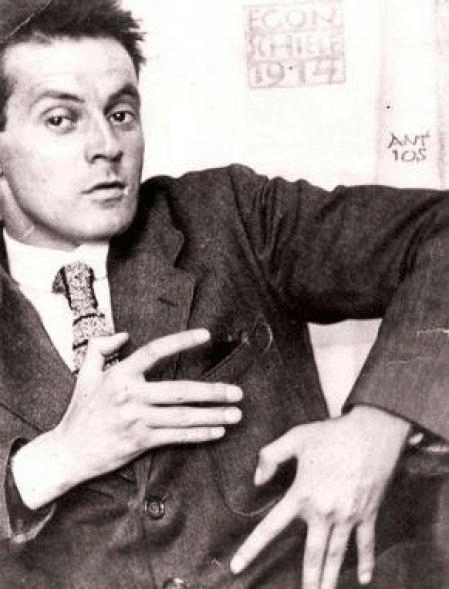
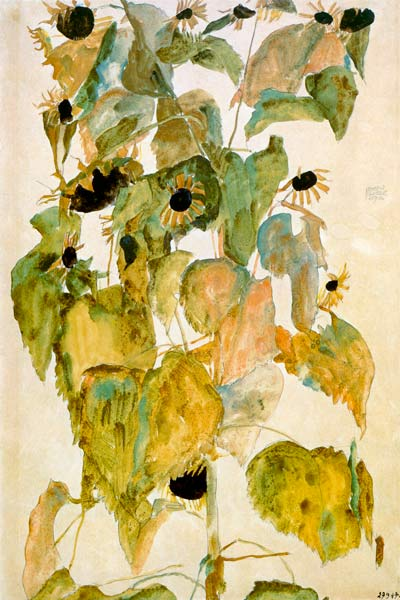
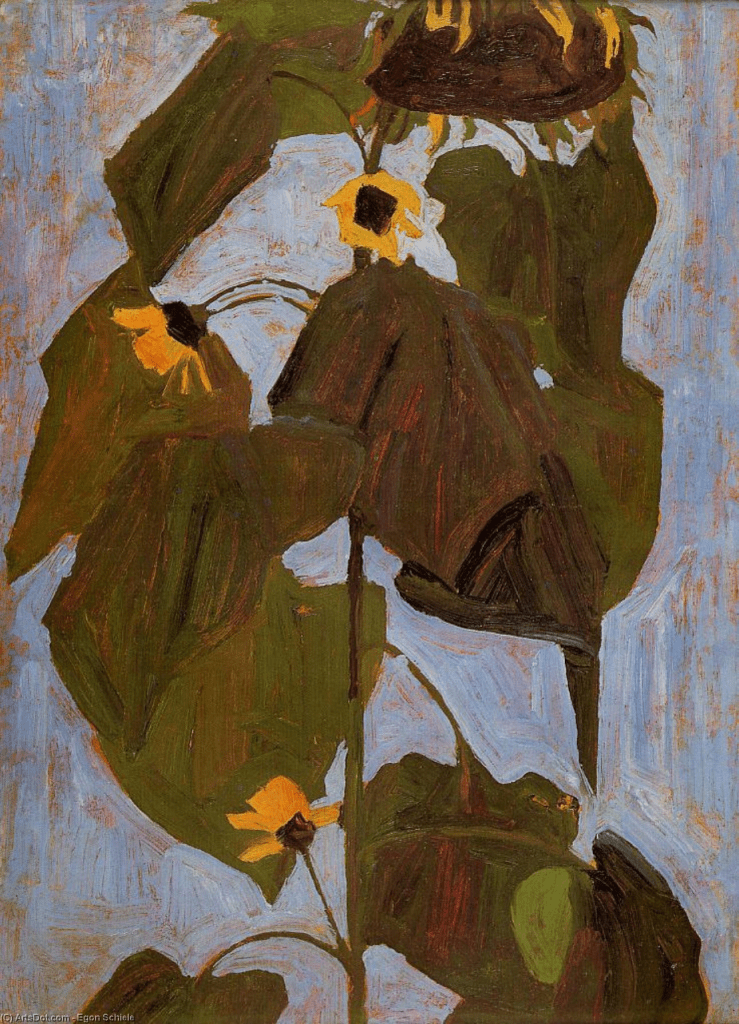
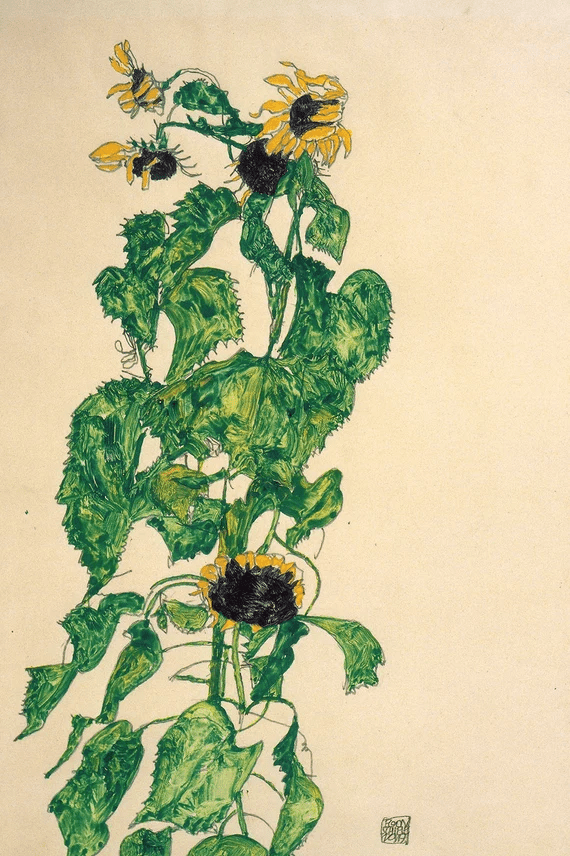
Claro, todo el mundo conoce los girasoles de Van Gogh, pero pienso que los de Egon Schiele son mucho más interesante y aquí te lo voy a ilustrar. Como sabras, Egon Schiele es uno de mis artistas favoritos. Sus dibujos y sus pinturas son fenómenos del arte moderno, y por supuesto que entre ellas estan los girasoles… Pero primero te dire que Schiele fue un pintor y grabador austriaco que nació en 1890. Fue discípulo de Klimt y uno de los grandes del expresionismo austriaco. Lamentablemente murió muy joven, victima de la pandemia de 1918. Ya de dejaré un vídeo con más sobre este artista tan extraordinario para que lo conozcas que te va gustar.
+++
Sure, everyone knows Van Gogh’s sunflowers, but I think Egon Schiele’s are much more interesting, and here I will illustrate that for you. As you may know, Egon Schiele is one of my favorite artists. His drawings and paintings are phenomena of modern art, and of course, among them are the sunflowers… But first, let me tell you that Schiele was an Austrian painter and printmaker born in 1890. He was a disciple of Klimt and one of the greats of Austrian Expressionism. Unfortunately, he died very young, a victim of the 1918 pandemic. I will leave you a video with more about this extraordinary artist so you can get to know him; I think you will like it.
(No olvides darle el «like»/Don’t forget to like)
(2022/No olvides darle el «like»/Don’t forget to like)
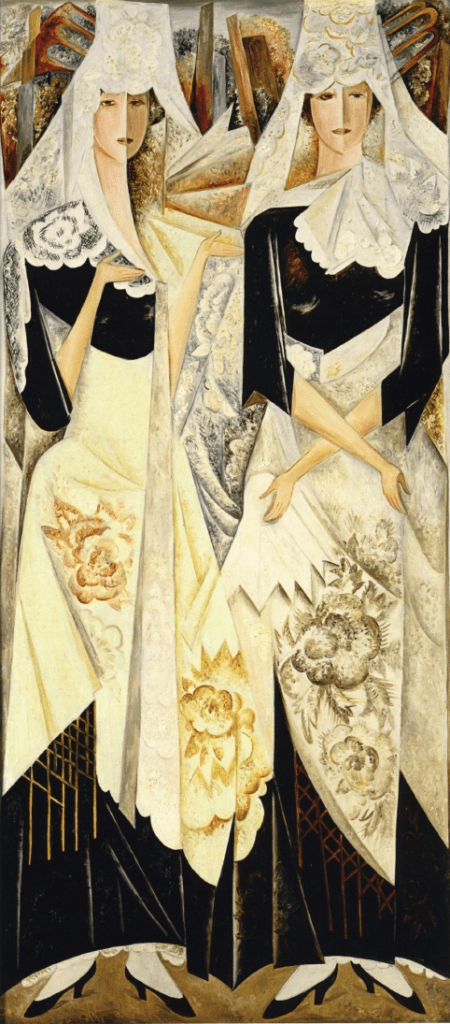
Esta artista, Natalia Goncharova, comenzó a pintar en 1904 después de estudiar pintura, arquitectura y escultura en Moscú… Aunque sus obras fueron inicialmente influenciadas por el arte folclórico, se intereso por el arte de los fovistas, Paul Cezanne y el cubismo también… En 1910 fue una de las fundadoras del grupo Sota de Diamantes, una agrupación de artistas que buscaban algo más, algún estilo diferente pero basado principalmente en sus re-interpretaciones de las obras de Cezanne y Matisse… Goncharova nació en Nagaevo-Karbonier, Rusia (1881)… Con el otro vanguardista ruso, Mijaíl Lariónov, organizan la exposición La cola del burro (1912) en Múnich. En esa monumental e histórica exposición también expusieron Kazimir Malécih, Marc Chagall y los que formaban parte del grupo Der Blaue Reiter (fundado por Kandinsky en Munich, 1911). Con La cola del burro, rompían filas con el arte europeo estos artistas rusos queriendo desarrollar un estilo artístico único y una escuela rusa e independiente, aunque Gonchova seguía siendo influenciada por el futurismo ruso, los iconos y el rayonismo… En 1913 presento una gran exposición de 800 cuadros en Moscú y el año se marchó a París… Natalia Goncharova murió en Francia en 1962… Fue pintora y diseñadora de los ballets y teatro…
+ + + + +
Artist, Natalia Goncharova, began painting in 1904 after studying painting, architecture, and sculpture in Moscow… Although her works were initially influenced by folk art, she became interested Fauvism, the work of Paul Cezanne, and Cubism as well… In 1910, she was one of the founders of the Jack of Diamonds group, an association of artists seeking something more, some different style but mainly worked on their reinterpretations of the works of Cezanne and Matisse… Goncharova was born in Nagaevo-Karbonier, Russia (1881)… Along with the another Russian avant-garde artist, Mikhail Larionov, she organized the Donkey’s Tail exhibition (1912) in Munich. In that monumental and historic exhibition, Kazimir Malevich, Marc Chagall, and those who were part of the Der Blaue Reiter group (founded by Kandinsky in Munich, 1911) also exhibited. With the Donkey’s Tail, these Russian artists broke ranks with European art, aiming to develop a unique artistic style and an independent Russian school, although Goncharova continued to be influenced by Russian Futurism, icons, and Rayonism… In 1913, in Moscow, she presented a major exhibition of 800 paintings and the following year she moved to Paris… Natalia Goncharova died in France in 1962… She was a painter and designer for ballets and theater…
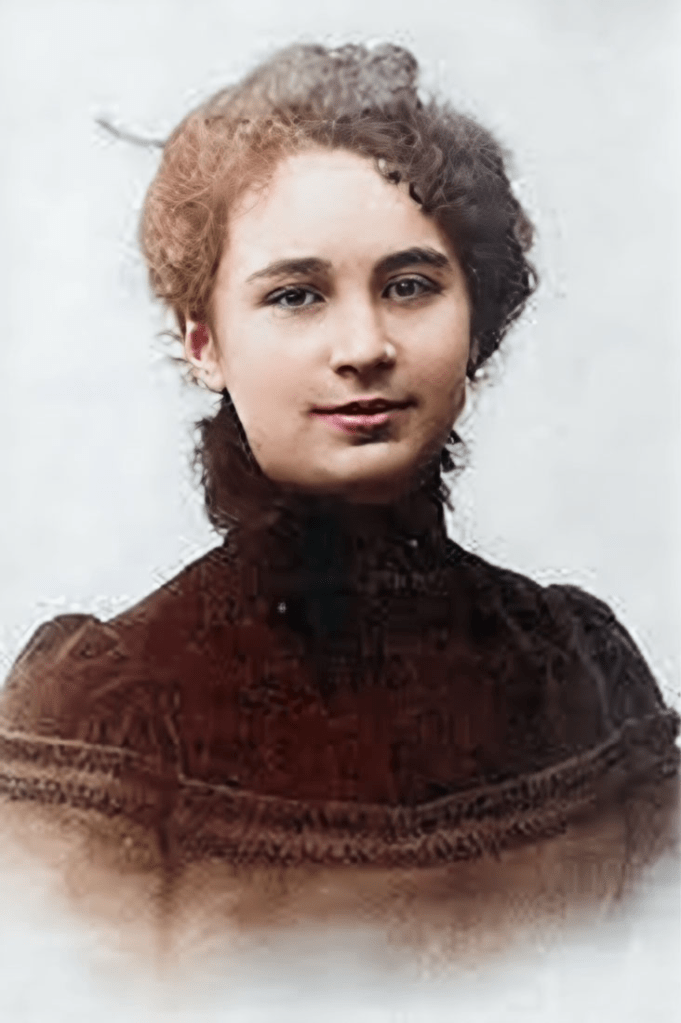
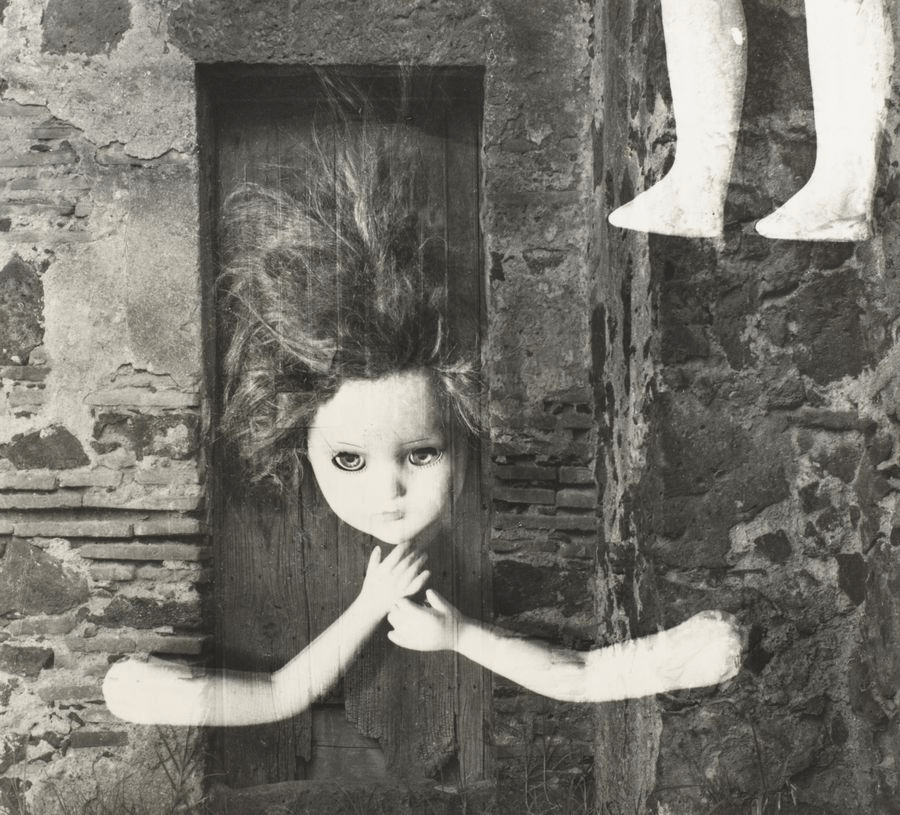
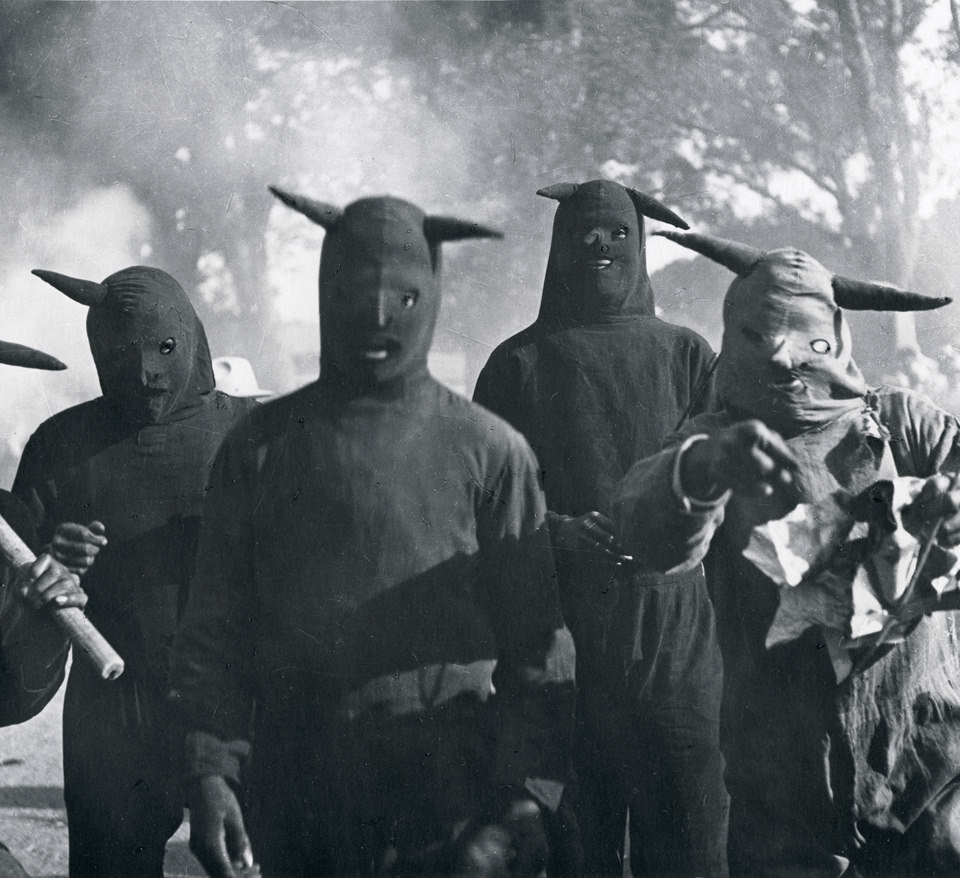
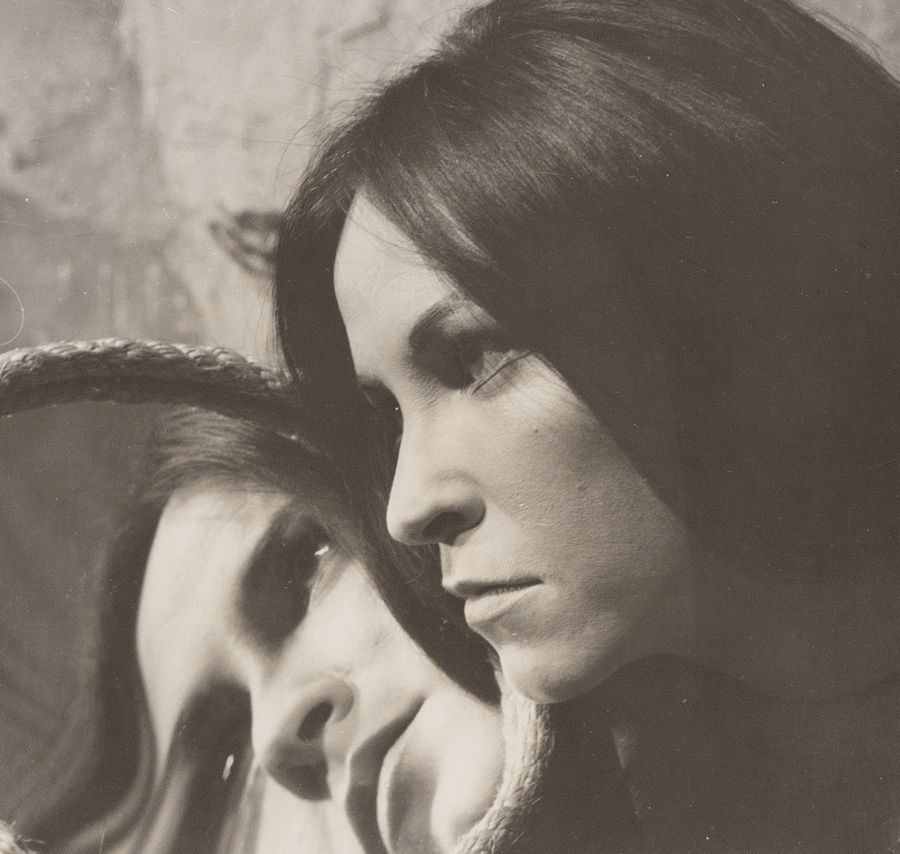
Kati Horna, fotógrafa surrealista que se unió con otras dos fenomenales artistas, Leonora Carrington y Remedios Varo, todas exiliadas en México. Nació en Budapest en el 1912, de familia judía y es reconocida como una de las artistas influyentes de su época siendo fotógrafa anarquista Húngaro-Mexicana. Durante la guerra civil española, en el año 1937, Kati se trasladó a Barcelona y viviendo allí el gobierno republicano le pidió que documentara con fotografías la vida en las comunidades de Aragón, Valencia, Madrid, y Lleida, todas en el frente de la guerra. Sus imágenes reflejaban la brutalidad y el horror de la guerra y como afectaba a la población civil. Horna llegó a México en 1937 cuando tenia solo 27 araños y declaró que México sería su única patria. Allí permaneció hasta su muerte en el 2000.
Amigos, hay que conocer a estas grandes mujeres del arte, bien sea de la fotografía como de la pintura o la escultura. No todo lo hicieron los hombres. Ayudadme a que esto lo sepan todos compartiendo este articulo.
+++
Kati Horna was a surrealist photographer who joined forces with two other phenomenal artists, Leonora Carrington and Remedios Varo, all exiled in Mexico in the 1930’s. Born in Budapest in 1912 to a Jewish family, she is recognized as one of the influential artists (photographer) of her time. She always considered herself a Hungarian-Mexican anarchist photographer. During the Spanish Civil War, in 1937, Kati moved to Barcelona, and while living there, the Republican government asked her to document life in the communities of Aragón, Valencia, Madrid, and Lleida, all on the front lines of the war, through photographs. Her images reflected the brutality and horror of the war and how it affected the civilian population. Horna arrived in Mexico in 1937 when she was only 27 years old and declared that Mexico would be her only homeland. She remained there until her death in 2000.
Friends, we need to get to know these great women of art, whether it be in photography, painting, or sculpture. Not everything was done by men. Help me to spread the word by sharing this article.
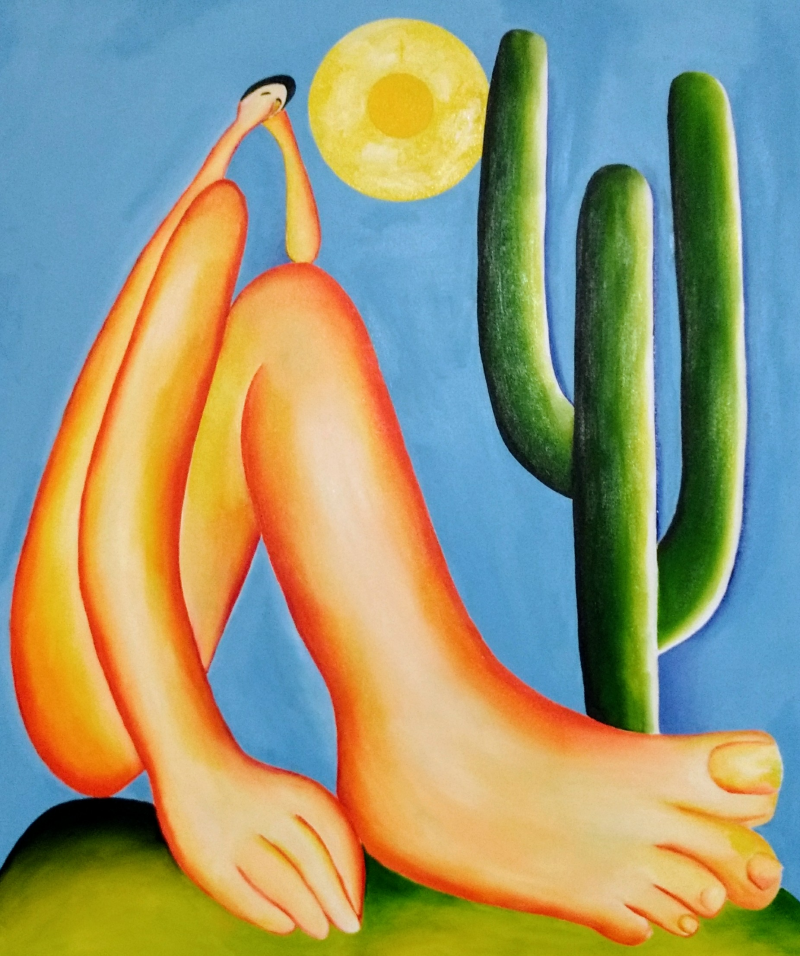
El cuadro Abaporu (1928) de Tarsila do Amaral dio pie al Movimiento Antropofágico para los pintores de Brasil… Estudio arte y pintura con grandes pintores en Brasil y luego en París… Tarsila nació en São Paulo, Brasil en 1886 y murió en la misma ciudad 86 años después… Se le reconoce como una artista modernista… Ha expuesto su obra en Europa y en las bienales de São Paulo y el MoMA expuso su obra siendo Tarsila la primera mujer artista latinoamericana y la octava retrospectiva a nivel latinoamericano después de Diego Rivera, Cándido Portinari, Roberto Matta, Manuel Álvarez Bravo, Armando Reverón, José Clemente Orozco y Joaquín Torres García.
+ + + + +
The painting Abaporu (1928) by Tarsila do Amaral gave rise to the Anthropophagic Movement for Brazilian painters… She studied art and painting with great artists in Brazil and later in Paris… Tarsila was born in São Paulo, Brazil in 1886 and passed away in the same city 86 years later… She is recognized as a modernist artist… She exhibited her work in Europe and in the São Paulo biennials, and her work was displayed at MoMA, making Tarsila the first Latin American woman artist to have a retrospective at that level, following Diego Rivera, Cândido Portinari, Roberto Matta, Manuel Álvarez Bravo, Armando Reverón, José Clemente Orozco, and Joaquín Torres García.
(«The Painter on the High Seas»/by Francisco Bravo Cabrera/All Rights Reserved)
Art is an international language, and that is something that no one doubts or disputes. Painters, sculptors, musicians, poets, and all those involved in the «fine arts» use what we call «art» to express the philosophy that motivates them, their creativity, and the talent they have developed through effort. I say effort…read as hard work…because that is the only way to develop talent.
The artist who seeks communion with the spiritual clings to his time, his place, and his moment in history. Not only to the history of art, but especially he has to cling to the history that is being made moment by moment. It is the only way to make the work vibrate with true energy and convey its message. The artist’s message to the observer, and here I speak specifically of the painter, sometimes comes through the colours or through the shapes and figures… if he is a figurative artist… that he has captured on the canvas.
I am not an artist attached to a particular style or school. In fact, although I live the spirituality of my contemporaneity, I do not create installations, video art, or performances, which seem to…unfortunately…define today’s art. I do not like them and I do not work any of those three «things!. I am a lone wolf that has separated from that pack and follows his own path in figurative and abstract art. But for me art will remain within the realms of painting and sculpting. The wider definition of «the arts» encompasses the rest of the fine arts..
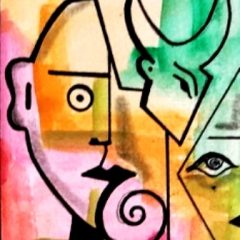
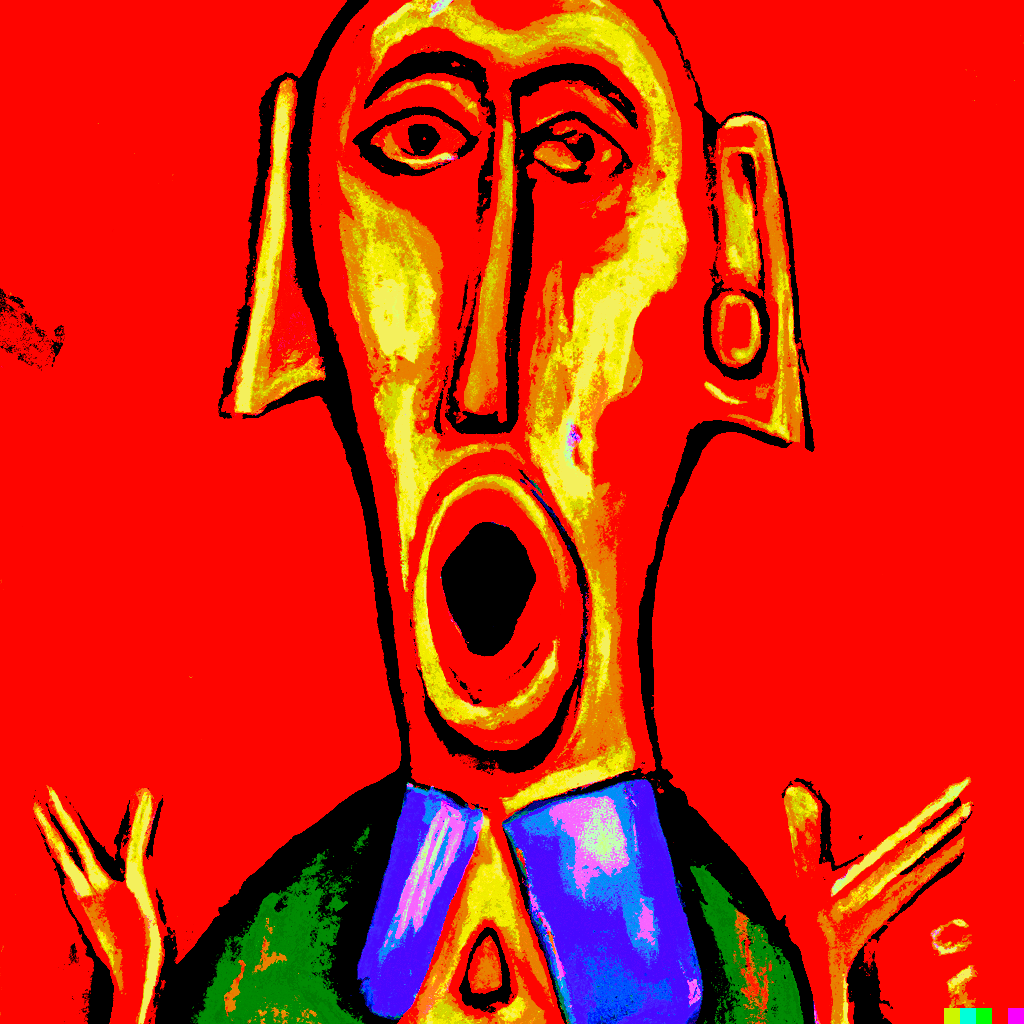
My college training was, like that of almost everyone in the 1980s, classical. You have to know the basics, color theory, the rules of composition, in short, all the rules that…academically…define art. When I finished my bachelor’s degree in fine arts, I decided to forget everything I was taught and start creating. I did it my way, and still do, through my unique style, surreal-expressionism. I also work on abstraction since the idea of the abstract intrigues me and the style allows me to have a different dialogue with the public. Moreover, this way I stick it to those critics who seek to interpret my work and perhaps pigeonhole me into a style.
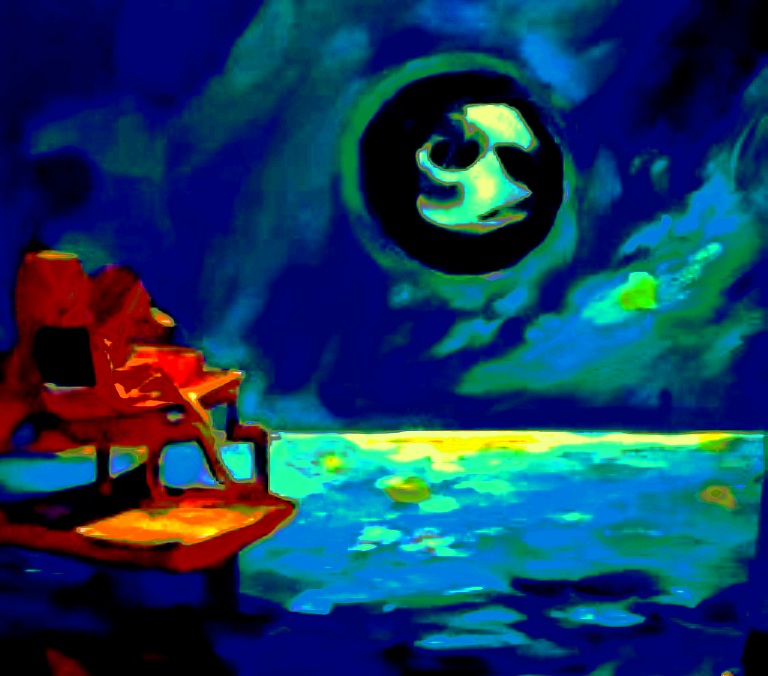
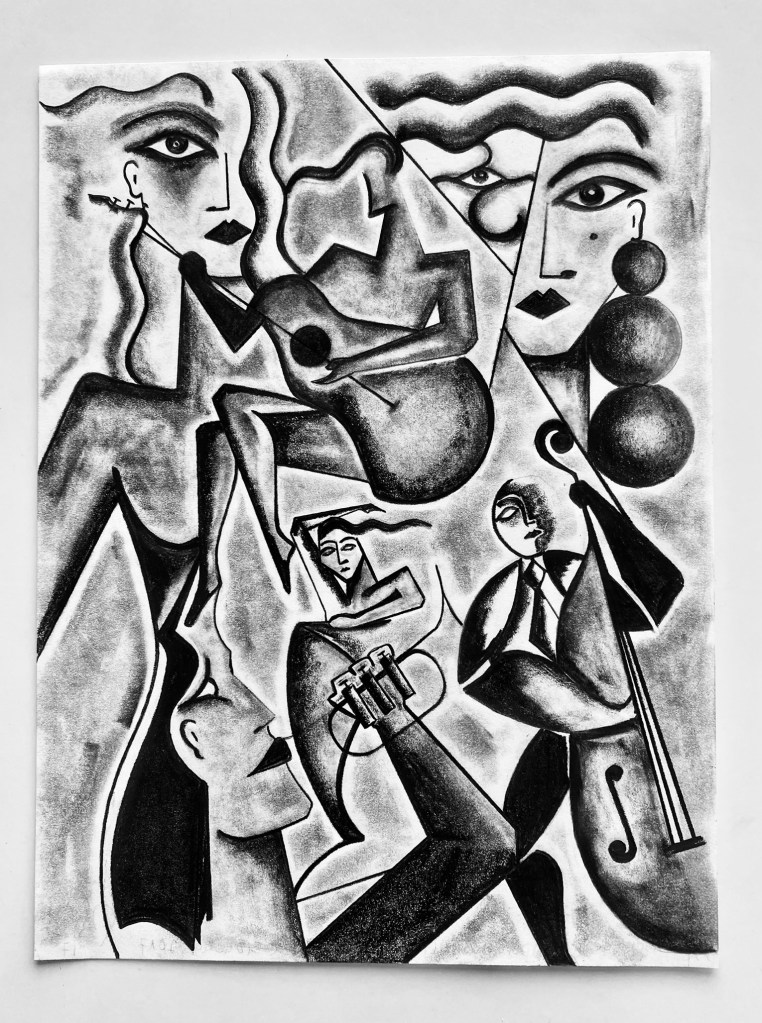
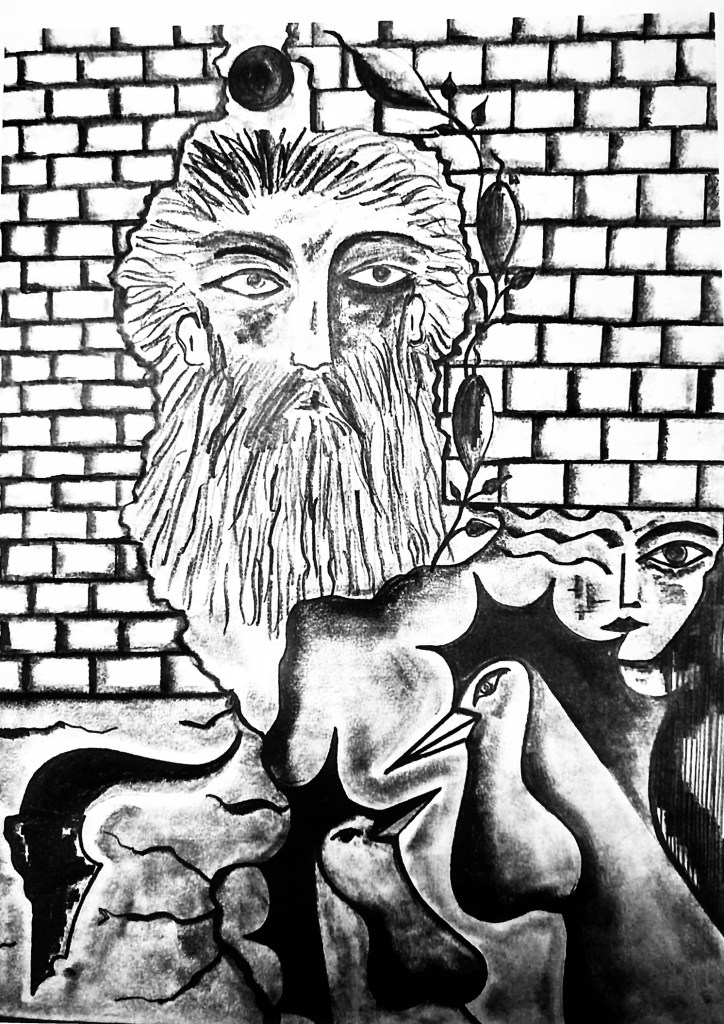
But even though my works are surreal-expressionist, many of them have an intrinsic and inexorable rhythm, difficult to define and even more to ignore. These are based on the principles that define Jazz music, in other words, classic North American music. I call these paintings «JaZzArT».
In conclusion, I would say that drawing is the most accurate and boldest way to express artistic creativity. Throughout art history, I have admired many artists who were also great draftsmen and who have left us phenomenal drawings. Artists like M. C. Escher, Egon Schiele, Picasso, Dürer, Michelangelo, Leonardo da Vinci, and many more. Matisse said that a drawing was a painting with fewer elements, perhaps because they don’t have paint. But, forgive me Henri, you’re wrong, or your statement is incomplete, it’s because drawing doesn’t follow the same path as a painting. Drawing uses the magic of the black line, which although it also works in paintings, in drawing ot stands out as an overwhelming force that gives it spirit.
(2012/Please do not forget to like)
+++
(JaZzArT by Francisco Bravo Cabrera/All Rights Reserved)
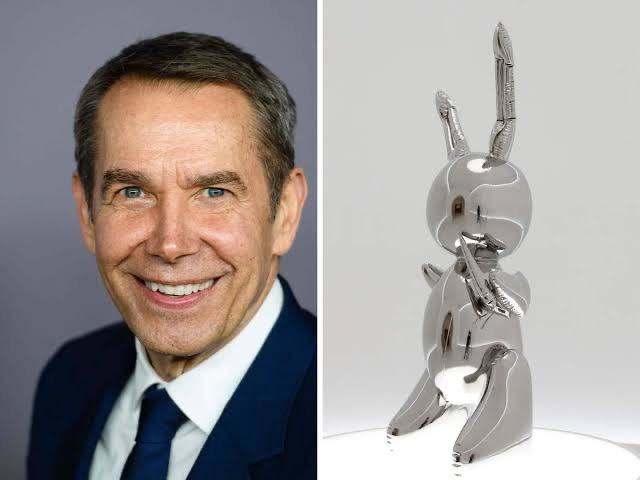
(Jeff Koons/one more for the list/Foto The Economic Times)
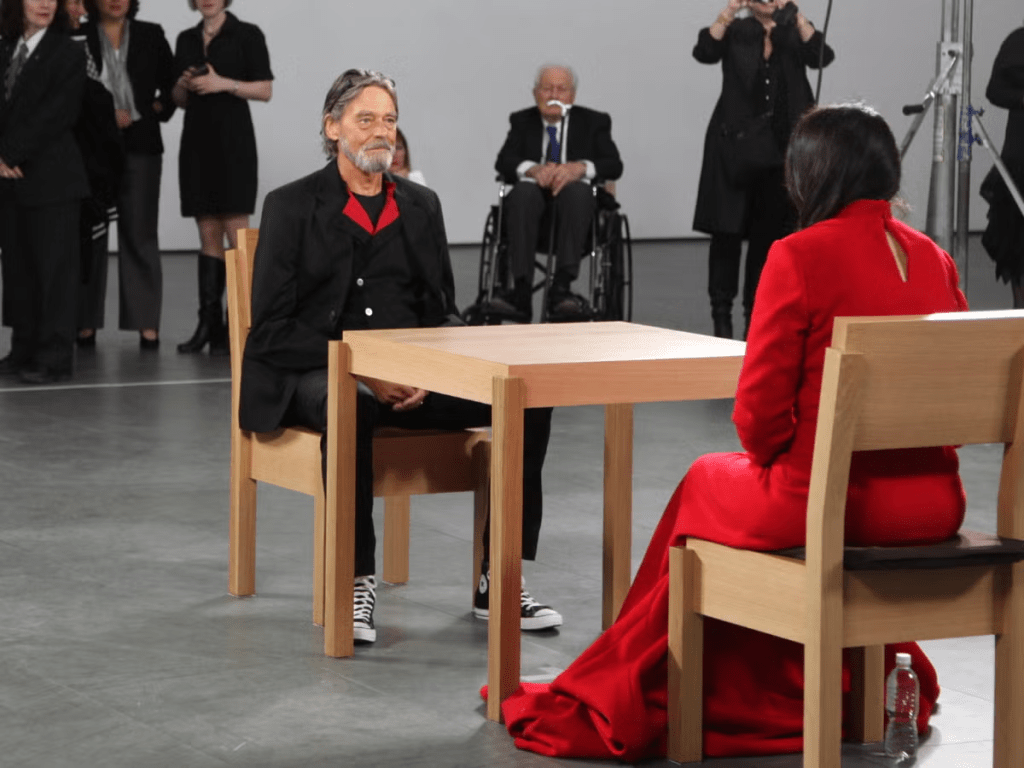
7) Marina Abramović. The «grandmother» of performance «art». Frankly speaking I didn’t always feel the same way about this grandmother, but once her complete life of «art» played out I saw that she was no artist that I could call valuable or useful to art history. The way she uses people is akin to abuse and the way she manipulates the observers (or admirers) is a total farce. Her supposed «chance» meeting with Ulay, her one time partner, was contrived. And contriving art is okay by me, but don’t pass it off as real. Therefore she makes my list. Perhaps I am not as disgusted with her as I am with many of the others that populate this top ten, but…
(ELLE Decor)
8) Tracy Emin. Let’s start by saying that her claim to fame came when her «Bed» became a work of art. Frankly it is a disgusting piece and it may just show how untidy and unclean she could be or could have been. I don’t know, I’ve never met her. At least if she did sleep on such a bed. The bed is surrounded with vodka bottles, used condoms and all manner of rubbish. Whatever it is, if art it is, it is bad, useless art. She cannot draw or paint, as you can plainly see in the photograph below. Yet, she is held as one of the great artists of the UK.
(Magazine Artsper)
9) Fernando Botero. The painter of volume, as he calls himself. But those silly little fat figures that he paints are not representative of volume. If you want volume look at the figures of Rubens or the portraits by Jenny Saville. Botero’s do not even represent cartoons. Everything he paints is the same. All the figures have the same blank or withdrawn expression. There is no magic, no power, no charm in his work, therefore he is most definitely in my list.
(Galeria Duque Arango)
10) Keith Haring. This artist and social activist made it to the top of the art world by making doodles. Yes, similar to the ones we all made in our high school notebooks when we were bored in class. There is no aesthetics in his work, and absolutely no rhyme or reason. They could have easily been made by a seven year old. And for a seven year old they might have seemed like art, but really, it is not good art at all for someone that considers himself an artist. He started out making these doodle on or close to galleries. Why didn’t he make them on truck stops on an interstate highway?
(Financial Times)
Well here it is my top 10 most useless artists. I can re-arrange them as they are all really number one. And please understand that my words (passionate as they might be) are not meant to cast any aspersions on the artists themselves. I dislike their work. I do not know them, never met any of them and do not know anything about their lives or personalities. This is for sure not an attack ad hominem. It is an attack on their supposed «art».
.jpg)




 JaZzArt en València