
THE LAST DOOR Doctors distant as the citydoes not mean illness will not visitor ignore any door left openby a lifetime taken for granted. Medicine is…
Featuring the Poetry of Ken Gierke (editor Francisco Bravo Cabrera)
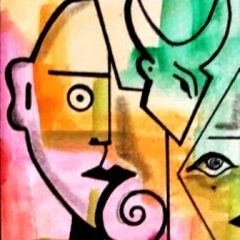
Faith saved us from the savages that we were, losing faith makes us savages again
THE LAST DOOR Doctors distant as the citydoes not mean illness will not visitor ignore any door left openby a lifetime taken for granted. Medicine is…
Featuring the Poetry of Ken Gierke (editor Francisco Bravo Cabrera)

Hotel By Masticadores Proudly Announces Its Nominees for the 2026 Best of the Net Hotel By Masticadores is thrilled to announce its nominations for …
Hotel By Masticadores Proudly Announces Its Nominees for the 2026 Best of the Net
Please click the link to see who the nominees are.
CHEERS

Forests in the Blackness of Silence
Space unravels like salt spilling from a shaker
someone knocked off the kitchen counter,
and the salt that spilt is a reminder
of little stars of white
that shine in forests in the blackness of silence.
Reality floats like trees without roots,
tanning their leaves
in the bright midnight sun
made of honey and flour.
Discarded thoughts travel sideways along the Milky Way,
combining intention and starlight into tangled braids.
Wishes drift in flocks migrating through colourful streets
toward the forest in the blackness of silence.
Planets pretend to exist,
black holes hum lullabies
to lull in restless dreamers,
as meteors brush past
like moths too shy to burn.
Perhaps we are just players
in a matrix filled with light,
our earth, our bones, our daydreams,
created to arouse the sleeping prophet dreaming
that holds us in his arms.
In the end,
there is no end.
only more of the beginning,
multiplying silence to the nth degree,
turning infinity into
the salt shaker of absurdity.
A forest in the blackness of silence
is a song composed of smoke
that fills the empty hours…
C.2025 – Francisco Bravo Cabrera – 21 SEP 2025 – Chios, Greece

(Image by and property of Francisco Bravo Cabrera/All Rights Reserved)
Spillwords.com presents: Surfeando con Carlotas, a poem by Francisco Bravo Cabrera, a poet who uses words, music and paints on a canvas …
Origen: Surfeando con Carlotas
(Pinchad el enlace para leer el poema)
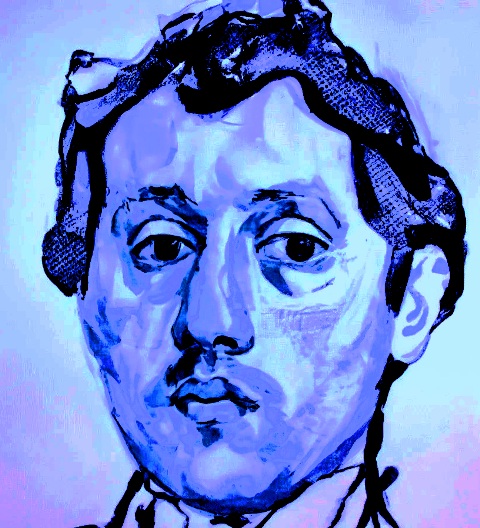
MASACCIO
Today I would like to talk to you about an Early Renaissance painter from Italia that no one talks about a lot but who is important for art history and I think you should know more about him, or if you do not know anything about him, you should…
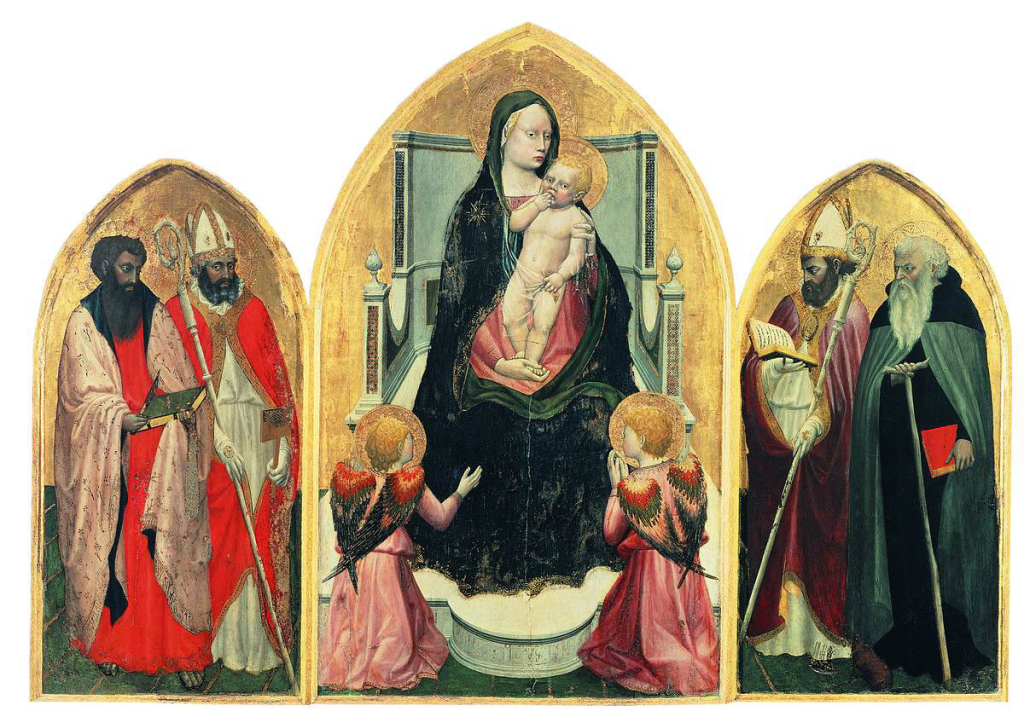
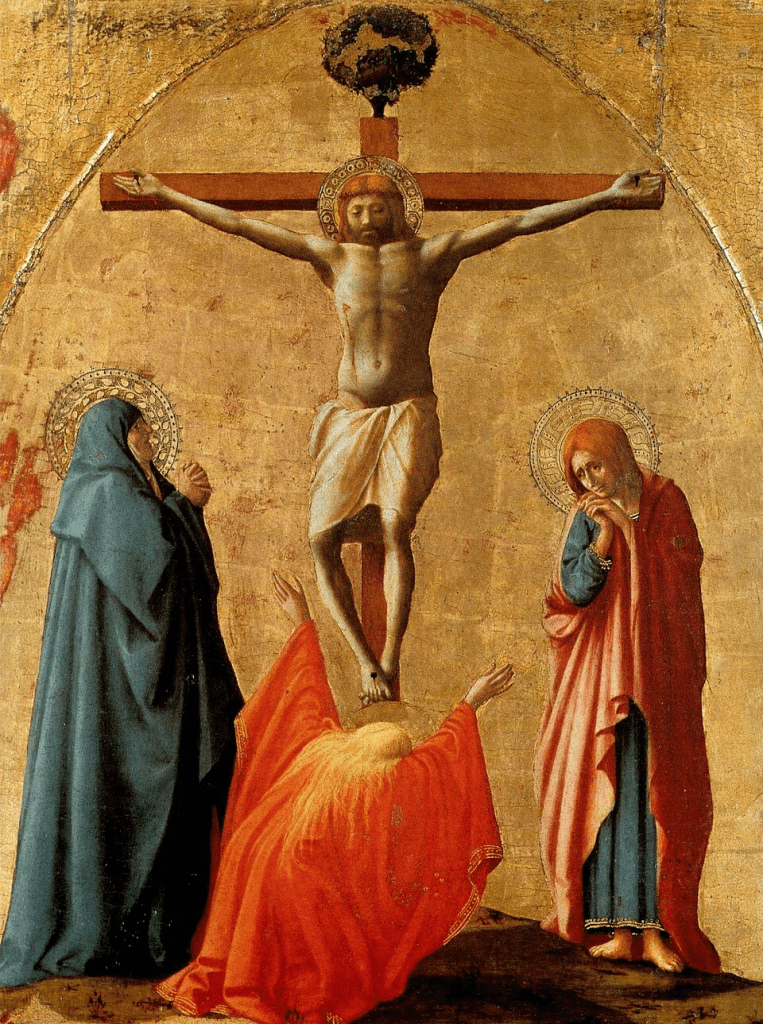
Masaccio, born Tommaso di Ser Giovanni di Simone in 1401 in San Giovanni Valdarno, in the region of Tuscany. He died in Rome in 1428…
Masaccio was a painter of the Early Renaissance who, although he had a brief career, transformed the course of Western art. He was born near Florence, and he trained in Florence. Masaccio quickly gained recognition for his innovative use of perspective, naturalism, and light. He rejected the Gothic stylization which was still common in his time. Masaccio was a pioneer of a new visual language that emphasized three-dimensional space, volumetric figures, and psychological realism.
His most important works include the Brancacci Chapel frescoes in Santa Maria del Carmine, Florence, where scenes such as The Tribute Money and The Expulsion from the Garden of Eden demonstrate his mastery of perspective, emotion, and storytelling. He also collaborated with Masolino and may have been influenced by Brunelleschi and Donatello, as he shared with these Renaissance greats an interest in proportion and classical harmony.
Masaccio’s career was tragically short as he died when he was about 26 or 27 years of age. However, his innovations surely influenced later masters such as Fra Angelico, Filippo Lippi, and especially Michelangelo. It can be safely said that Masaccio’s work marks the true beginning of Renaissance painting, bridging the medieval and the modern.
I think you will agree with my assessment of this great Italian master.

CHEERS

CENTRAL PARK
Who can change the course of history?
Who can stop the wheels of time?
Think you can?
Think they can?
Who is they?
And who are you to presume?
History is a mystery
Questions like these and many more,
bounce off the thin layer of surface water
that fills the depths of the reservoir in Central Park.
While it is quite necessary to investigate the lectionary,
Never should one doubt,
there are absolutes,
there are unchanging laws.
There‘s right and wrong,
there’s Ten Commandments,
miraculously carved in stone.
There’s the way of light and the way of darkness,
and you’re free to choose,
take your pick,
light or dark,
or take from both.
But human souls need human comforting,
We’ve all wandered far from home…
On a rotting bench, close to Central Park West,
sitting proper is Rosemary a retired secretary.
Her mind races from through to thought,
used to precision, speed and so forth.
But now quite old she’s not as bold and not as fast,
so when Augusts’ nights shine bright with Augusts’ lightning,
she still sits alone under the rain and
through her ears travels the rhythm and the cadence
of an old, old song, always the same.
I stood one clear January morning
near The Castle in Central Park,
and snow covered the ground,
I thought of summer
and not a question crossed my mind.
C.2021, Francisco Bravo Cabrera, 20 NOV 2021/30 AUG 2025, València, Spain/Izmir, Türkiye
Forests in the Blackness of Silence
Space unravels like salt spilling from a shaker
someone knocked off the kitchen counter,
and the salt that spilt is a reminder
of little stars of white
that shine in forests in the blackness of silence.
Reality floats like trees without roots,
tanning their leaves
in the bright midnight sun
made of honey and flour.
Discarded thoughts travel sideways along the Milky Way,
combining intention and starlight into tangled braids.
Wishes drift in flocks migrating through colourful streets
toward the forest in the blackness of silence.
Planets pretend to exist,
black holes hum lullabies
to lull in restless dreamers,
as meteors brush past
like moths too shy to burn.
Perhaps we are just players
in a matrix filled with light,
our earth, our bones, our daydreams,
created to arouse the sleeping prophet dreaming
that holds us in his arms.
In the end,
there is no end.
only more of the beginning,
multiplying silence to the nth degree,
turning infinity into
the salt shaker of absurdity.
A forest in the blackness of silence
is a song composed of smoke
that fills the empty hours…
C.2025 – Francisco Bravo Cabrera – 21 SEP 2025 – Chios, Greece

Os brindo un bello poema de un poeta e ingeniero mexicano… En sus propias palabras: Soy Isai Martínez, nací en Guadalajara el 27 de mayo de 1980. …
Un bello poema “Tú” de Isai Martínez – (editor Francisco Bravo Cabrera)
Pincha el enlace para leer el poema entero.
GRACIAS

Escuchando el concierto de piano numero 15 de W. A. Mozart, K 450) Vivimos en el planeta Tierra, supuestamente, y en un mundo dominado por la …
AL PAN PAN Y AL VINO VINO (No.2) By Francisco Bravo Cabrera
Pincha el enlace para leer el artículo entero
GRACIAS

When I started uni as a Fine Arts major conceptual art, in other words, performance art, was pretty strong. We had the performances of Marina Abramović and Ulai as well as of others. And of course we all knew about the conceptual «art» of Yoko Ono. But in our art school we had no classes, nor where we ever led towards that branch of «art.» And even when I switched to the Theatre Arts Department, the university did not consider teaching classes on how to be a performance artist. And I think they had the right approach. To me, in my opinion, performance art is more akin to theatre than to art, and conceptual art is more akin to nothing. I’ve no use for it. It is simply a way for talentless «artists» to «create» art that no one understands and that says nothing important. And do not forget, these are my personal feelings and opinions. Yours might be different and I will respect them.
So, here is a comparison:
| Aspect | Traditional Art | Conceptual Art |
|---|---|---|
| Primary Focus | Skill, technique, and aesthetics (form, color, composition, craftsmanship) | Idea, concept, or social statement; the concept is often more important than the execution |
| Materials/Execution | Paint, marble, bronze, canvas, musical instruments—mediums require mastery | Anything: instructions, text, objects, performance, ephemeral materials; mastery of medium is often secondary |
| Immediate Impact | Often visually or emotionally striking; can communicate without explanation | Often obscure; may require reading instructions or context to understand the meaning |
| Accessibility | Easily appreciated by general audiences; universal visual or auditory appeal | Often appeals to a niche audience familiar with art theory*; can feel confusing or silly to outsiders |
| Longevity | Objects are permanent or durable; intended to last for centuries | Often ephemeral, performative, or instructional; may exist only as documentation or memory |
| Emotional Engagement | Direct: beauty, awe, empathy, or emotional resonance | Indirect: intellectual engagement, provocation, or philosophical questioning*. |
| Risk of Misunderstanding | Lower: people “get it” on sight | High: without explanation, work may seem meaningless or trivial |
| Evaluation Criteria | Technical skill, composition, beauty, originality | Originality of idea, conceptual clarity, provocation, challenge to norms |
| Famous Examples | Michelangelo, Rembrandt, Vermeer, Monet, Beethoven, Stravinsky | Yoko Ono, Fluxus artists, Duchamp, Sol LeWitt, Abramović |
| Criticism | Can be conservative or formulaic; sometimes prioritizes aesthetics over ideas | Can appear pretentious, naive, or inaccessible; sometimes “idea-heavy” and lacking sensory impact |
* I strongly disagree as I think it is pretentious, naive, meaningless and a useless experiment in elitism displayed as mediocrity. It might be interesting for the performer or the conceptual «artist» but pure rubbish to the rest of us.
What they teach at uni (nowadays) is that traditional art emphasises skill, execution and sensory impact (and I agree). And that conceptual art emphasises ideas and provocation, often at the cost of immediate clarity or beauty. Well, only very few of them bring forth ideas or provocation, some are just self-indulging machinations by talent-less «artists» having us all on.
¿Tienes una cuenta de WordPress.com? Accede ahora.

