Buenos días
Faith saved us from the savages that we were, losing faith makes us savages again
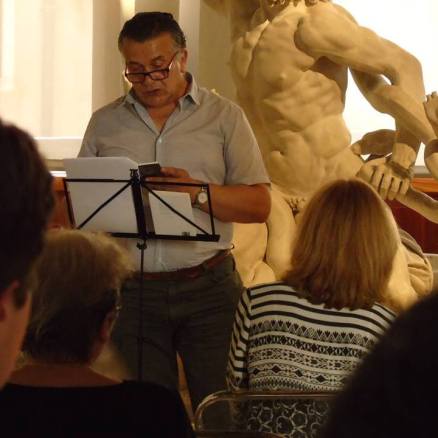
Sto parlando di Flavio Almerighi
Ci sono molti modi per conoscere un artista, quindi penso che con queste tre domande conosceremo tutti un po’ meglio questo poeta, un poeta fenomenale.
FLAVIO NELLE SUE PAROLE
VALENCIARTIST: Sei un poeta, pensi che poeti, scrittori, artisti e altri coinvolti nelle belle arti dovrebbero esprimere pubblicamente le loro opinioni sulla politica e sul comportamento di coloro che solitamente occupano posizioni di governo?
FLAVIO: Lo scrittore, ma soprattutto il poeta, è quel tipo di artista che ha una vita “altra” e ne fa opera d’arte. Poi ci sono gli scultori, i pittori, i grandi fotografi, i cineasti, gli artisti multimediali, quelli di strada, i musicisti: ognuno col suo modo di esprimersi e la sua capacità di “saper dare” al contesto umano. Non mi piace definirlo “pubblico” perché è qualcosa di indistinto e impersonale. Io sono fermamente convinto che l’artista abbia il diritto/dovere attraverso le proprie opinioni e la propria arte di esprimersi pubblicamente e di obiettare verso coloro che non si occupano con serietà della cosa pubblica. Garcia Lorca, Neruda, e altri sono stati uccisi o limitati nella loro libertà personale o esiliati proprio per essersi opposti, per avere rappresentato una voce scomoda che i potenti vogliono zittire.
VALENCIARTIST: Come vedi il progresso delle arti? Pensi che la letteratura e la poesia siano all’altezza dei tempi e che possano sopravvivere a quest’era di grandi progressi tecnologici come l’Intelligenza Artificiale (AI)?
FLAVIO: Sono fermamente convinto che le arti, per dimostrarsi tali e non essere mero artigianato, debbano sfidare i secoli senza averne paura. Pensiamo ai greci, agli egizi o alle grandi cattedrali. L’arte in questo mondo usa e getta assume un ruolo importante e identitario. L’abbraccio con il progresso tecnologico e/o con l’intelligenza artificiale le sarebbe fatale. L’intelligenza artificiale può compilare un’ottima lista della spesa, ma non potrà mai fare Poesia. Mi torna in mente l’unico viaggio in Spagna che feci una quindicina di anni fa, quando tra gli altri luoghi visitai la basilica di Toledo. Dentro questo tempio non c’è soltanto oro, ma anche una splendida sagrestia dove sono custodite, tra le altre, quindici opere di El Greco. El Greco rifiutò i principi classicisti come misura e proporzione. Credeva che la grazia fosse l’obiettivo principale dell’arte, io non credo che l’intelligenza artificiale possa concepire la creatività come conseguenza dello spirito perché non ha un’anima., è soltanto industria. Letteratura e poesia sono all’altezza dei tempi, basta non fermarsi al mainstream.
VALENCIARTIST: Se dovessi stilare una top 3 dei grandi artisti (di tutti i generi) chi includeresti e perché?
FLAVIO: Il primo artista che voglio citare è Pasquale Panella, poeta e paroliere, figura unica nel panorama musicale italiano: il cantautore Lucio Battisti deve ai suoi testi la sua seconda giovinezza musicale. È un istrione magnifico. Il secondo artista che voglio citare è un pittore veneto del Rinascimento Italiano Giorgio Barbarella meglio noto come il Giorgione. Trovo il suo quadro La Tempesta unico e affascinante, mi fermerei ore a osservarlo, e ogni volta svela un particolare nuovo, magnifico. L’ultimo ma non ultimo che voglio ricordare è Omero il leggendario autore di Iliade e Odissea, tutto l’Occidente deve qualcosa a questi poemi, lessi l’Odissea nel 1976, non per obbligo scolastico, e mi sono avvicinato alla scrittura grazie a esso.
+++
Flavio Almerighi è nato a Faenza il 21 gennaio 1959. Sue le raccolte di poesia Allegro Improvviso (Ibiskos 1999), Vie di Fuga (Aletti, 2002), Amori al tempo del Nasdaq (Aletti 2003), Coscienze di mulini a vento (Gabrieli 2007), Durante il dopocristo (Tempo al Libro 2008), Qui è Lontano (Tempo al Libro, 2010), Voce dei miei occhi (Fermenti, 2011) Procellaria (Fermenti, 2013), Caleranno i Vandali (Samuele, 2016). Storm Petrel (edizione bilingue di Procellaria, Xenos Books Los Angeles 2017), Cerentari (antologia fuori commercio Tempo al Libro 2017), Isole (Ensemble 2018), Ignoti (e book gratuito Collana Lotta di Classico a cura di Massimo Sannelli 2018), Lettere (Macabor, 2021), Risorgive (Macabor, 2022).
+++++
Da VALENCIARTIST, felicissimi di chiacchierare con Flavio, esprimiamo i nostri più sinceri ringraziamenti e gli mandiamo un grande abbraccio dalla Spagna.
Per seguire il blog di Flavio, clicca su questo link.
GRAZIE

A look of anger at the shadows that dance around her room.She longs for the embrace that hangs quietly the air.Patient…like a saint…she looks outside…
“And Shadows?” by Francisco Bravo Cabrera
Please click on the link to read the poem.
CHEERS
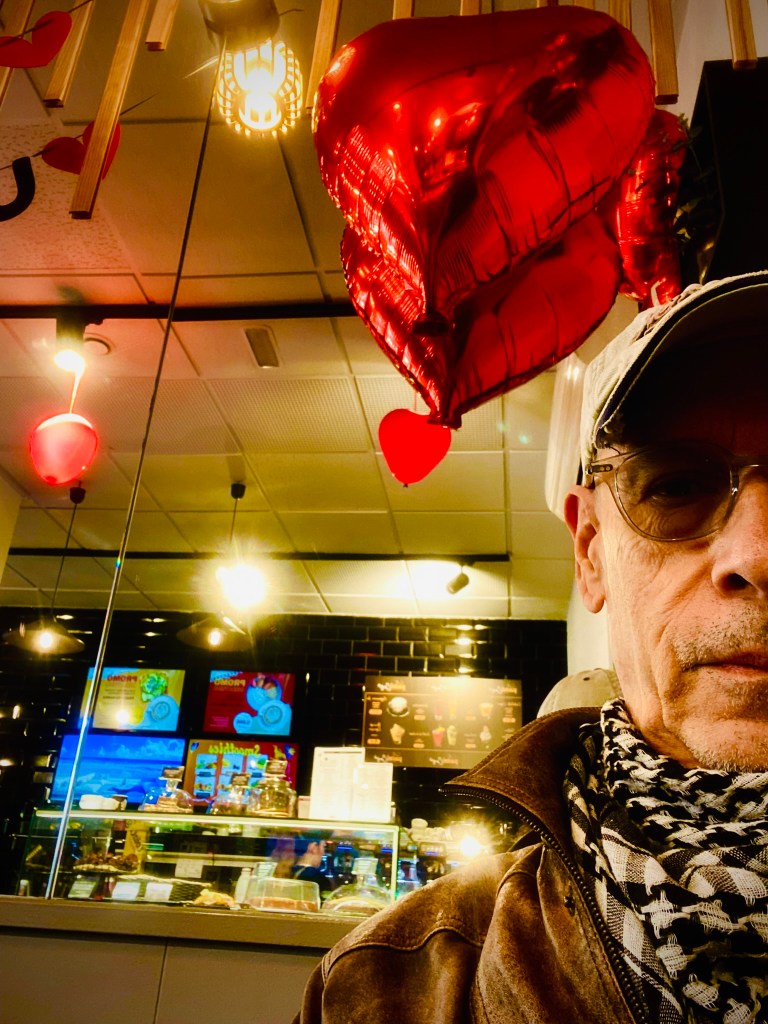
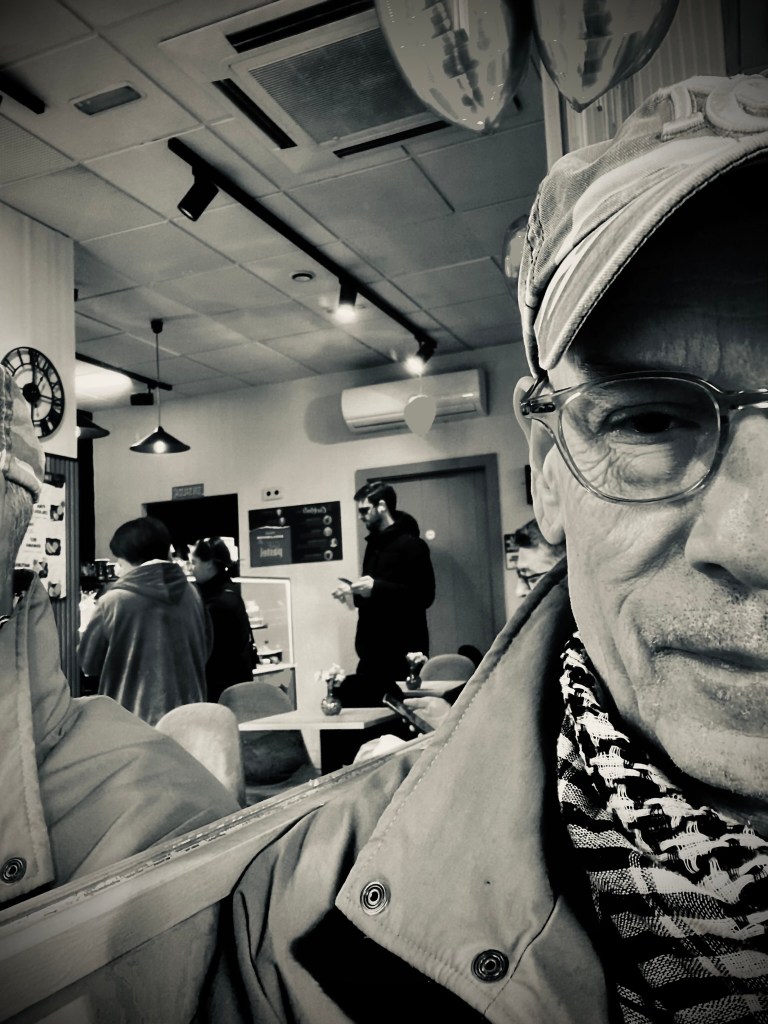
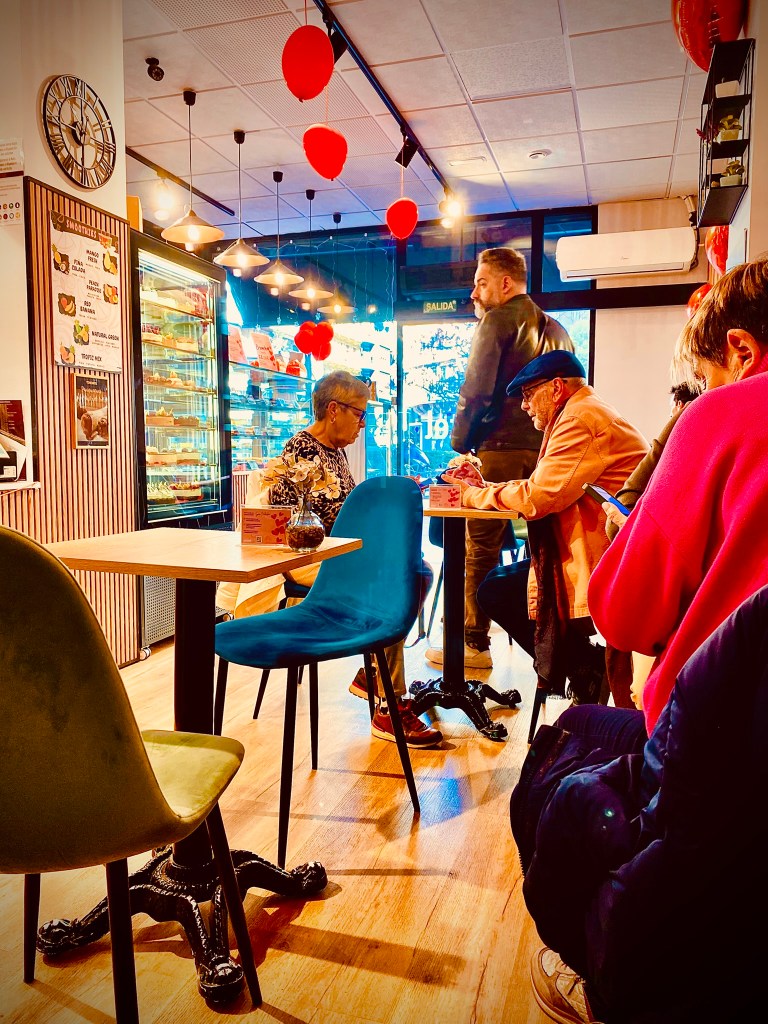
Com tots els dies, comencem amb un cafe al meu bar preferit…
+++
Like I do everyday, I start the day off with coffee at my favourite bar…
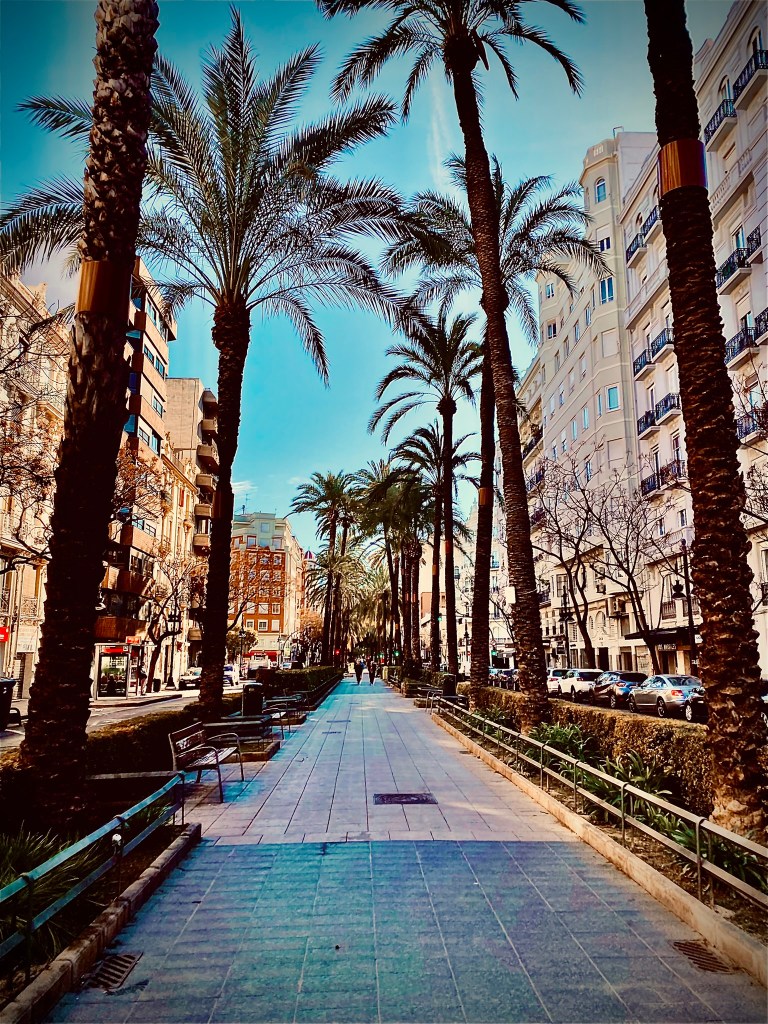
I del bar a fer una volta per la ciutat de les arts i les ciències al riu… bé, el que anomenem el riu, era el riu, però ara és un gran parc, els jardins del Túria…
+++++
And from the bar I take a walk to the City of Arts and Sciences on the River, well, at least it used to be the River and now it is a huge park called The Gardens of the Turia…

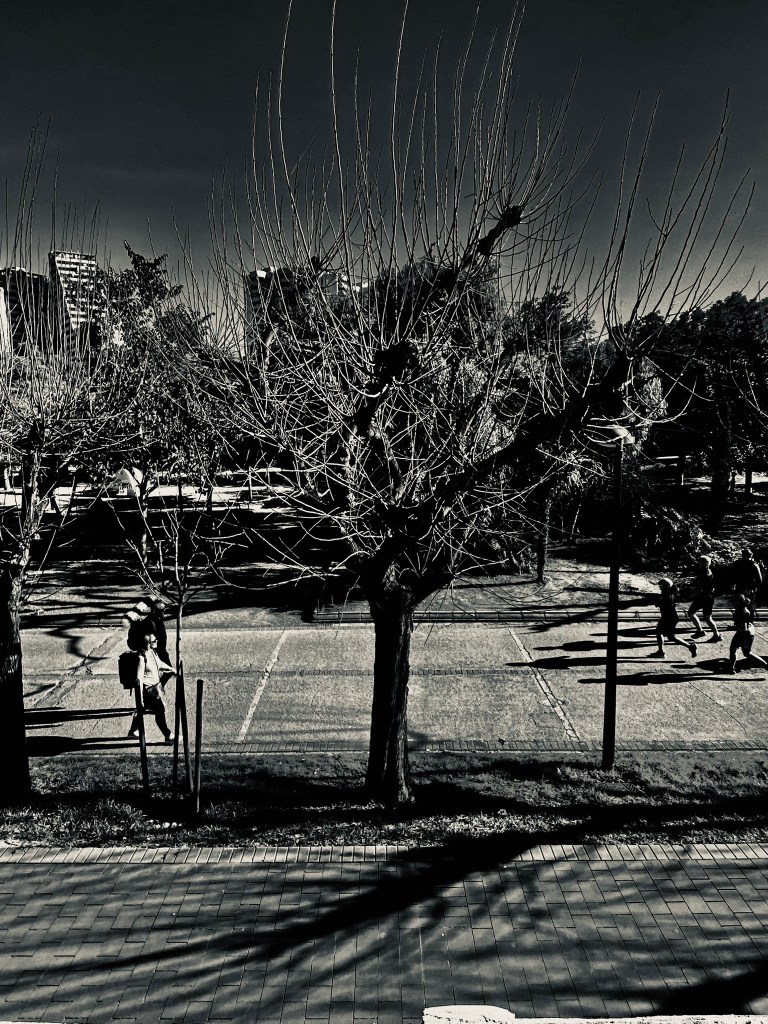
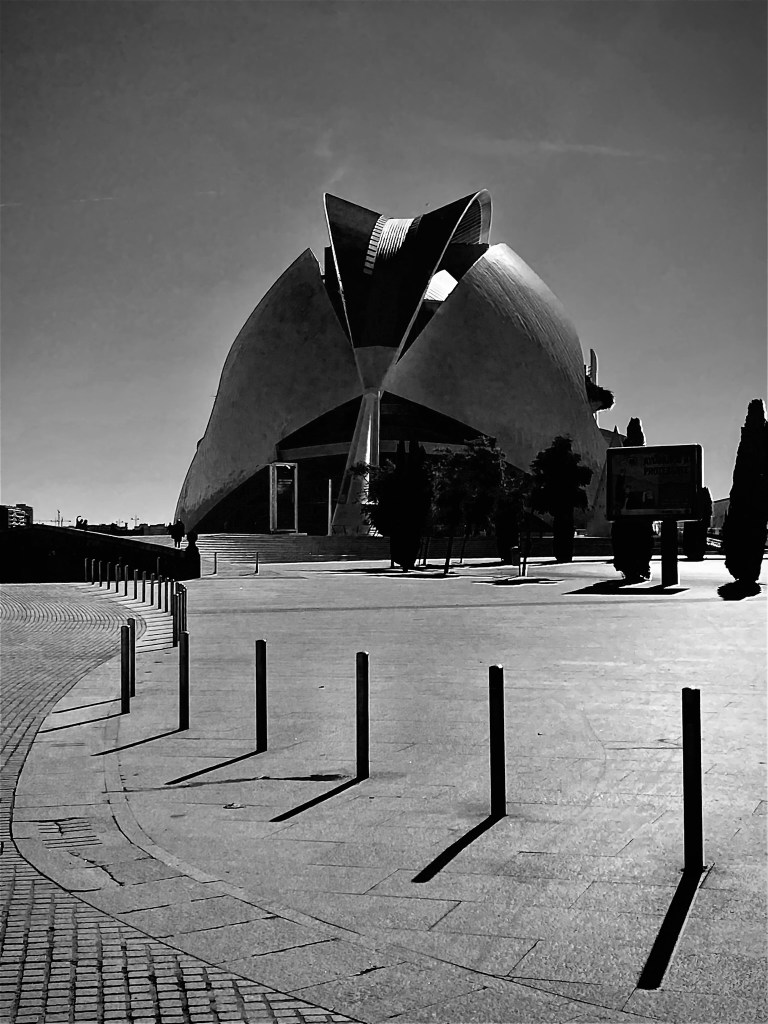

+++++++
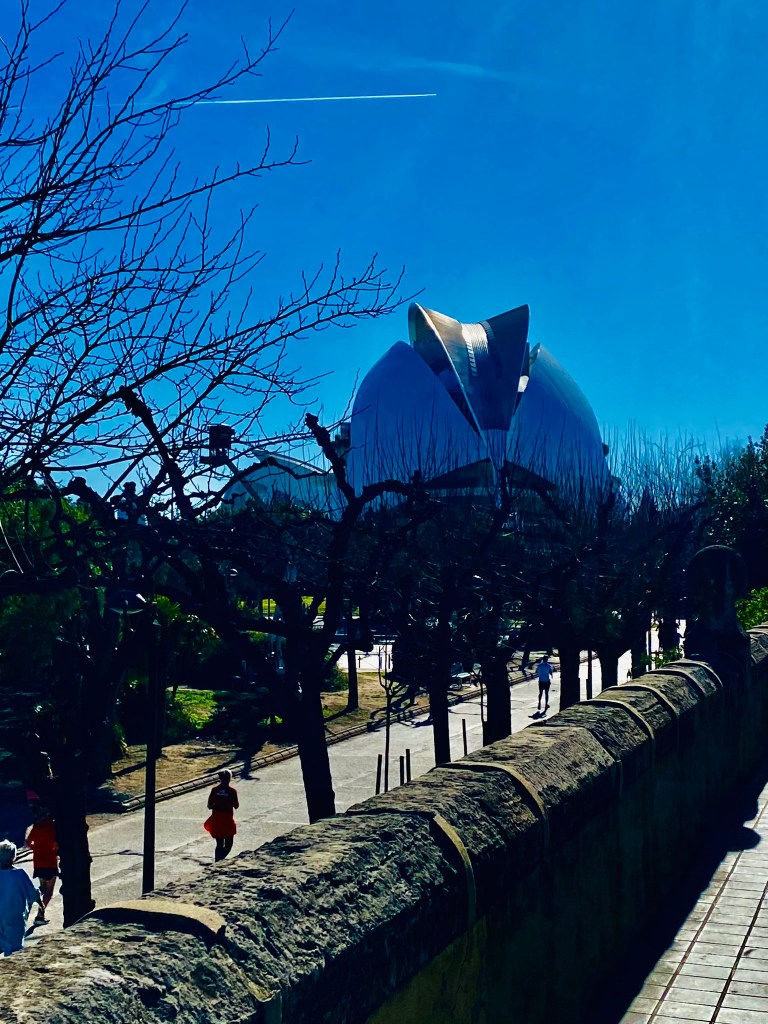
La ciutat de les arts i les ciències, construïda el 1996, és un enorme complex de museus i teatres dissenyats per l’arquitecte valencià Santiago Calatrava.
+++++++++
The City of Arts and Sciences, constructed in 1996, is a huge complex of museums, gardens, an opera house and theatres. It was designed by a Valencian architect, Santiago Calatrava.

GRÀCIES – CHEERS
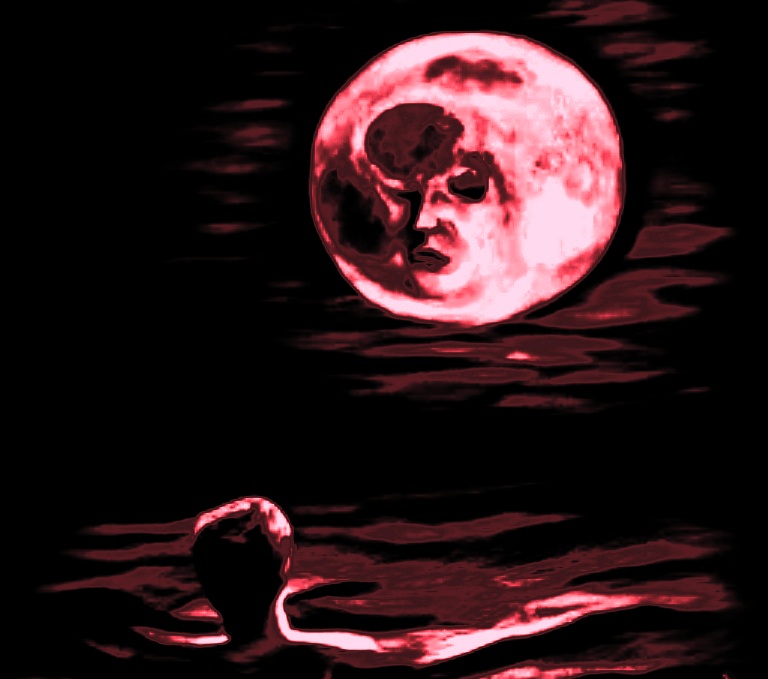
“What is Truth”
Johnny Cash wrote “And the lonely voice of youth cries what is truth?” (“What is Truth”/Album Starportrait 1971)…
John Lennon wrote «I’ve had enough of watching scenes of schizophrenic, ego-centric, paranoiac, prima-donnas. All I want is the truth now, just gimme some truth…» («Gimme Some Truth» from Imagine 1971).
Both of these powerful songs (among many, many more) were written in those years. I reckon those were the years when values had value…
But the youth are not the only ones asking that question. And neither are the angry people. As we get older…and older…truth becomes more of a memory, or a metaphor. Its borders grow more porous and porous as the years go by because truth is slowly being replaced with memories and memories get edited and changed as the years advance. After all, is not remembering a mental editing process?
But getting deeper into the subject one can read in the New Testament of the Holy Bible that when Jesus was brought before Pontius Pilot, Pilot also asked “What is truth?” Was that because he was doubtful of his own power, or of Jesus’s power? I do not know…
So I must conclude that truth is important, but illusive. It’s one of those «somethings» that people cannot easily understand or define. History shows us that truth, as a principle, is not something that people will always readily adhere to. But I ask, can it be that we ask such a question to justify our position regarding such a quest, the quest for truth? I do not know. We may think we are in the truth. Or we may know we are lying, cheating bastards as far away from the truth as one can get. But we question, “what is truth?”, so that we can remain at peace with ourselves hoping that someone will come up with a definition that might clear us of our guilt.
Jesus also said “I am the way, the truth and the life…”. And what exactly does that mean? The way? The way towards Heaven? The truth? The same truth that will “set us free”? The life? A meaning a fruitful, happy existence in peace? Perhaps…
But people do demand truth. The truth they demand is a political concept, or think of it as a social construct. People want truth to be incorporated into justice. This is the truth that seals a social contract between governments and the people guaranteeing a dignified life for all. Truth is a demand for rights, for opportunities and for freedom.
After all we live in a world where there are so many that are oppressed by governments have reduced them to merely existing, not living as dignified human beings. We live in a world where many countries willingly and openly violate Human Rights. The people suffering these atrocities demand freedom, justice, and the truth that will deliver them from oppression, the truth that will set them free. The truth they seek is truth as the opposite of hypocrisy, chauvinism, manipulation and lies.
But still there is no truth for many. Twenty-one centuries of civilization and there is still no universal “truth” out there that can save the people from suffering tyrannical regimes. For those people truth is not an honourable concept, it is a joke. When Jesus said that he was the way, the truth and the life, he referred to a spiritual concept. Perhaps he had those people in mind, those that can more easily appreciate his words for they are lost, manipulated, enslaved.
When a man is in that situation the thought acquires a much stronger meaning because even suffering the strongest bonds of a brutal dictator, a man’s mind can be at peace. This is the life. When there is nothing to lose one loses the fear of losing anything, even one’s life. That is the way. When one confronts the mind games and manipulations, they no longer are powerful repressive techniques. One is at peace. That is the truth. One suffering thus knows that the tyrant will destroy his body but only God can take his soul. That is the way of life and of truth. That is the door to deliverance.
So no matter how many voices of lonely youth cry out “what is truth?” or how many angry men demand (from someone) “give me some truth”, truth remains a relatively harmless issue for debates. But when it is a matter of life and death, truth becomes an imperative and a way towards God.
+++
*”What is Truth”/written by Johnny Cash from the album Starportrait, 1971.
*”Gimme Some Truth”/written by John Lennon from the album Imagine, 1971.
C.2025, Francisco Bravo Cabrera/10 FEB 2025/Valencia, España
CHEERS
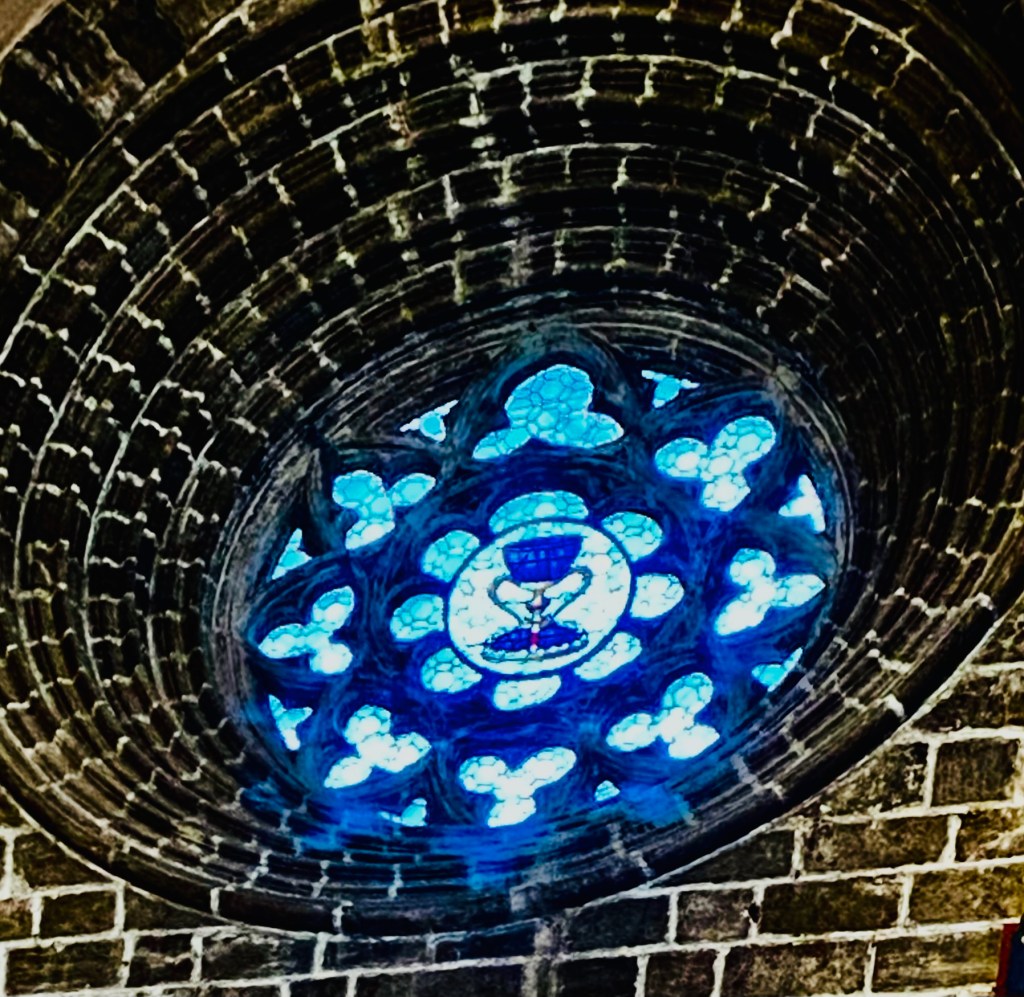
“What is Truth”
Johnny Cash wrote “And the lonely voice of youth cries what is truth?” (“What is Truth”/Album Starportrait 1971)…
John Lennon wrote «I’ve had enough of watching scenes of schizophrenic, ego-centric, paranoiac, prima-donnas. All I want is the truth now, just gimme some truth…» («Gimme Some Truth» from Imagine 1971).
Both of these powerful songs (among many, many more) were written in those years. I reckon those were the years when values had value…
But the youth are not the only ones asking that question. And neither are the angry people. As we get older…and older…truth becomes more of a memory, or a metaphor. Its borders grow more porous and porous as the years go by because truth is slowly being replaced with memories and memories get edited and changed as the years advance. After all, is not remembering a mental editing process?
But getting deeper into the subject one can read in the New Testament of the Holy Bible that when Jesus was brought before Pontius Pilot, Pilot also asked “What is truth?” Was that because he was doubtful of his own power, or of Jesus’s power? I do not know…
So I must conclude that truth is important, but illusive. It’s one of those «somethings» that people cannot easily understand or define. History shows us that truth, as a principle, is not something that people will always readily adhere to. But I ask, can it be that we ask such a question to justify our position regarding such a quest, the quest for truth? I do not know. We may think we are in the truth. Or we may know we are lying, cheating bastards as far away from the truth as one can get. But we question, “what is truth?”, so that we can remain at peace with ourselves hoping that someone will come up with a definition that might clear us of our guilt.
Jesus also said “I am the way, the truth and the life…”. And what exactly does that mean? The way? The way towards Heaven? The truth? The same truth that will “set us free”? The life? A meaning a fruitful, happy existence in peace? Perhaps…
But people do demand truth. The truth they demand is a political concept, or think of it as a social construct. People want truth to be incorporated into justice. This is the truth that seals a social contract between governments and the people guaranteeing a dignified life for all. Truth is a demand for rights, for opportunities and for freedom.
After all we live in a world where there are so many that are oppressed by governments have reduced them to merely existing, not living as dignified human beings. We live in a world where many countries willingly and openly violate Human Rights. The people suffering these atrocities demand freedom, justice, and the truth that will deliver them from oppression, the truth that will set them free. The truth they seek is truth as the opposite of hypocrisy, chauvinism, manipulation and lies.
But still there is no truth for many. Twenty-one centuries of civilization and there is still no universal “truth” out there that can save the people from suffering tyrannical regimes. For those people truth is not an honourable concept, it is a joke. When Jesus said that he was the way, the truth and the life, he referred to a spiritual concept. Perhaps he had those people in mind, those that can more easily appreciate his words for they are lost, manipulated, enslaved.
When a man is in that situation the thought acquires a much stronger meaning because even suffering the strongest bonds of a brutal dictator, a man’s mind can be at peace. This is the life. When there is nothing to lose one loses the fear of losing anything, even one’s life. That is the way. When one confronts the mind games and manipulations, they no longer are powerful repressive techniques. One is at peace. That is the truth. One suffering thus knows that the tyrant will destroy his body but only God can take his soul. That is the way of life and of truth. That is the door to deliverance.
So no matter how many voices of lonely youth cry out “what is truth?” or how many angry men demand (from someone) “give me some truth”, truth remains a relatively harmless issue for debates. But when it is a matter of life and death, truth becomes an imperative and a way towards God.
+++
*”What is Truth”/written by Johnny Cash from the album Starportrait, 1971.
*”Gimme Some Truth”/written by John Lennon from the album Imagine, 1971.
C.2025, Francisco Bravo Cabrera/10 FEB 2025/Valencia, España
CHEERS

Barbara Harris Leonhard is a phenomenal writer and also editor of MasticadoresUSA. Let me say that Barbara Leonhard’s poetry is curated in various …
Talking to Barbara (by Francisco Bravo Cabrera)
Please follow the link to the article.
CHEERS
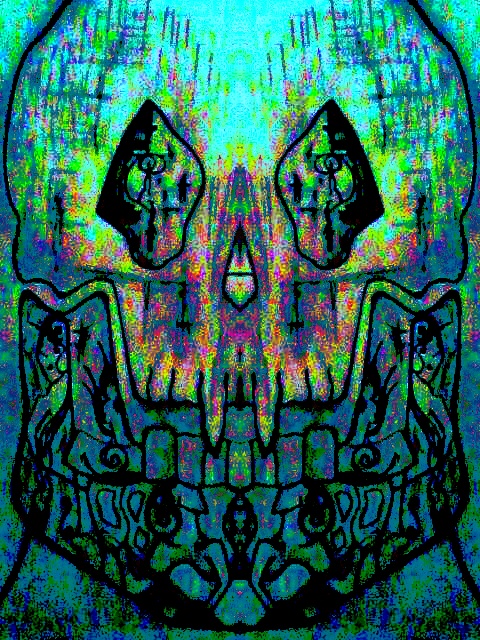
Vivimos en una época donde quieren esconder los huesos pero quieren pintarlos. Se contradicen, sin dudas. Pero eso no importa porque el objetivo, el fin, es confundir. Se proclaman las libertades para los grupos sociales que se han auto titulados, pero nos quitan las libertades a todos poquito a poco, gota a gota para que no nos demos cuenta. Pero somos muchos los que nos hemos dado cuenta, nos hemos despertado del sueño bobo que soñábamos despues de habernos tomado los miles de fármacos, y otros soporíficos, que nos metieron por la garganta. Y cuando abrimos los ojos lo que hemos visto es la escoria y no el acero.
Éramos acero, lleno de fuerza, vida, vitalidad, energía, pensamientos creativos, música con sentido espiritual, social, politico etcétera. Luchamos por un mundo libre donde, respetando los derechos ajenos, nos pudiéramos manifestar como nos diera la gana. El amor era libre, el sexo no era tabú y las relaciones las vivíamos libres de las ordenes dictadas por las iglesias o por los juzgados. La revolución cultural nos dio gran fuerza y marcó las pautas para los años venideros…
Pero ahora somos la escoria. Nos gobiernan, nos manipulan, nos tergiversan las palabras, nos soslayan las intenciones, nos meten imbeciles en la política y nos dicen que son lideres. Y lo peor de todo es que los que más nos gobiernan y nos limitan son los algoritmos que controlan todos nuestros medios sociales, nuestras supuestas redes sociales «libres». Que sí, que empezaron como redes libres, pero que hoy están todas controladas. Ya no existe nada, la realidad es una ficción que fabrican las élites para hacernos pensar que vivimos en países democráticos.
Los hipócritas son ahora los sabios, las elites son ahora los sacerdotes y los reyes son ahora los magos, que igual que el gran mago de Oz, se esconden tras las cortinas para que no veamos lo enano que son. Se han soltado los caballos; se han soltado los dementes, y la policía, ¿Donde está?
Dime lo que piensas…
GRACIAS
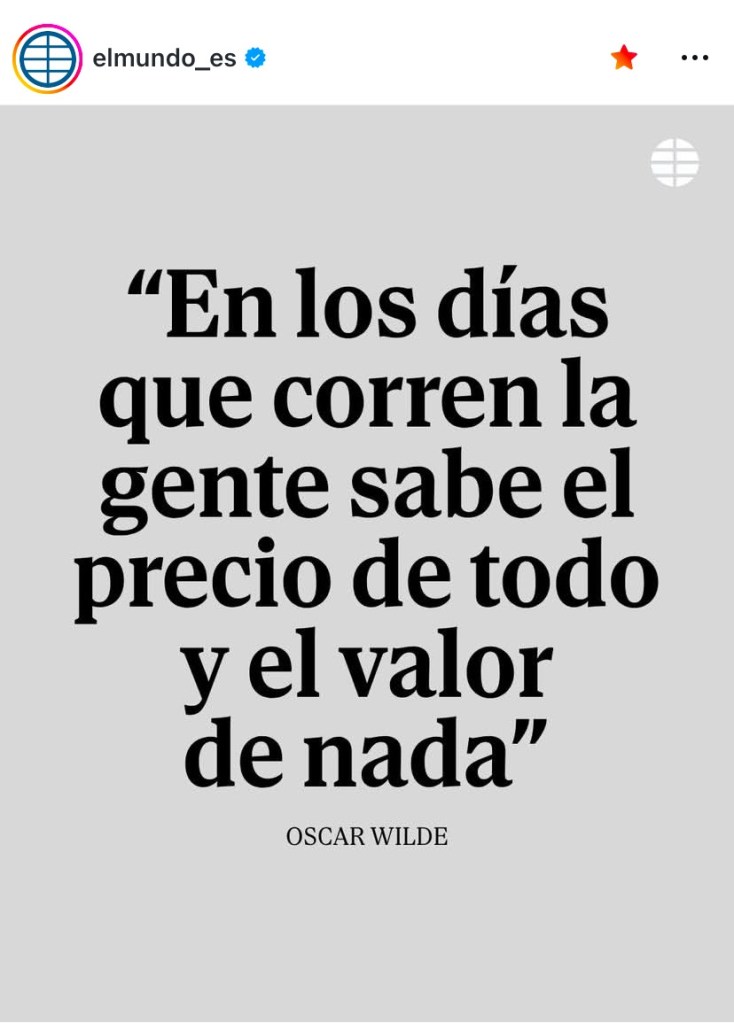
¿Valores? ¿Hoy en día?
KNOW THYSELF
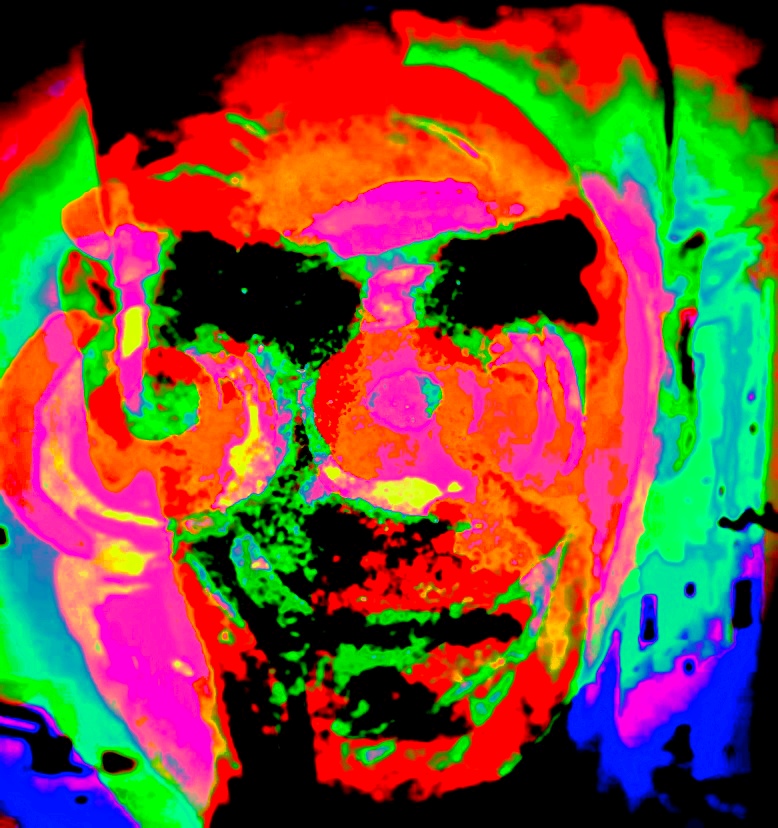
Know Thyself… The quest to know one’s self must have begun as a concept, but once in a while we allow it to become a festering thought or a perhaps a sandstorm that races across our thoughts and fills our head with sand. It is a subject that one cannot truly fathom and that one tends to push aside to think on another day. But what day? When? We, the collective “I” simply does not know. I’ve no idea, perhaps never.
Well, like it or not I will refer to this ancient aphorism that throughout history has been thought about and transmitted, generation to generation, expressed in one way or another. But then I ask myself, what the hell for? Sadly, I don’t know. My conclusion is that it could be something valuable or merely rubbish.
But since this aphorism, supposedly, comes from Ancient Greece it should be something important for us. After all Ancient Greece is the cradle of our Western civilization, no? Well, in my country there’s also an old saying: The devil is wise not because he is the devil but because he is old. So old things are wise? Then if we have been told, since ancient times, that we must know ourselves, then the thought is more than an ancient aphorism it is an imperative. It must be considered. It must be analised. It must be studied. Or not.
But, caveat emptor, if you do decide to look inside and search through your inner self, lookout. Be aware that the results may not really make you happy, or enlighten you in any way. You see, you may discover that you are a worthless cretin, or an idiot. And it is also quite possible that the devil is not wise because he is old but because he is the devil. Since we do not know, then everything is possible, no?
In any event, psychological experts (good grief experts!) say that we must be conscious and well aware of what we are and who we are. And to know that we must endeavour to search diligently and bravely. That whatever the results of the search may be, we must accept it. But The Beatles, much more important to me than psychological experts, said, to let it be. What is the purpose if the results can lead us directly to a loony bin? So who the hell wants to dive into the abyss of the psyche…as the Ancient Greeks called the soul…and discover who we are?
Can this be the real meaning/purpose of life, to know ourselves?
Personally, after analysing this aphorism from various angles, instead of searching within myself, I prefer to instead ask myself, what is it good for? I do not believe that such a “psychological” epiphany will lead me to greater riches, fame or make me more good looking. And if it does not serve these purposes, or do these things which are crucial for modern life, then what is it good for? Well, guess what, I cannot answer that question either. I just do not know. All I know is that it may lead to a discovery that I may find atrocious, or one that I may find glorious? Hmm…
Now, since we are told (by experts in history!) that ancient philosophers were wise men, we confront our modern life with their “wise sayings” and try to live according to their ideals. Their ancient words are considered valuable. Our modern society venerates them to the point of practically considering them infallible truths.
And not only old sayings, we also value very highly what we consider to be a classical education. Our culture, after all, comes from Ancient Greece and Rome. We show off uttering something in Latin or Greek (or Chinese, Hindi, Hebrew or Arabic) even if we really don’t know what it means. To be consequential with how sophisticated and cultured we think we are, we attend concerts of classical music, sonatas, cantatas, opera. We sit in the theatre as the music flows through our bored out ears, but steadfast we remain to the final curtain. We stroll through museums admiring statues of Ancient Greeks and Romans standing there naked defying our new puritanical ways. We rummage through archaeological ruins et cetera et cetera.
But when we return home, tired of so many music conservatories, theatres, museums and archaeological sites, the only thing we want is a cold beer or a glass of Rioja, and perhaps, if you are Spanish, accompany our wine with chorizo, Iberian ham and Manchego cheese. No?
So, in my humble opinion, I would rather not know any more about myself and stay as I am. I am happy in my ignorance. And I think I’ve a point as there is another old saying (at least in my country) that says that better to stick to the evil known than look for the good to be discovered. So, since I think like this, I am willing to leave my interior self wandering through the depths of my soul, at least for the time being. I don’t care to make its acquaintance. I do not know about you, but I like the “me” I live with.
Francisco Bravo Cabrera – 04 DEC 2024 – Valencia, España

 JaZzArt en València