#art, On Andy Warhol and Frida Kahlo (part 2/conclusions)

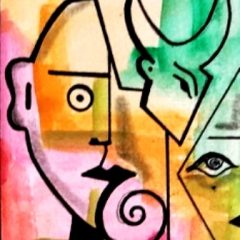
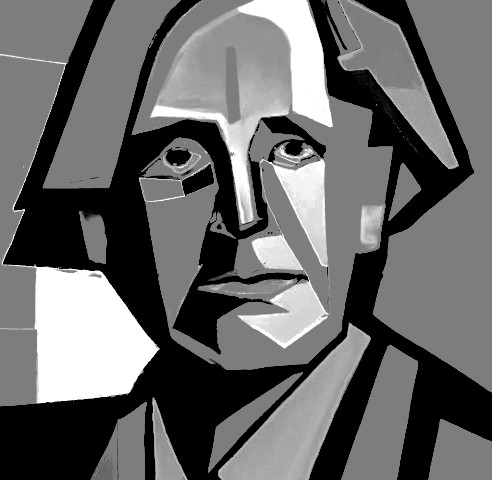
(«Andy»/Francisco Bravo Cabrera/All Rights Reserved)

Andy Warhol (Pittsburgh, PA 1928-1987) supposedly a leading figure in Pop Art. But I’ve some serious criticisms and I can explain them and support my view that he is unimportant in art history.

Shallow or Commercial: Warhol’s repetition of mass-produced images (Campbell’s Soup cans, Marilyn Monroe) are empty and purely commercial. It is banal, lacks depth and relies…totally…on shock or novelty.

Factory Production: The only way he could mass produce was through the use of employees, operators in his studio called “The Factory”. There is as much authenticity to his work as there is in the Chinese trinquetes sold on Canal Street in Manhattan. Is that what it means to be an “artist”? I would reduce his art to branding.

Cultural Critique or Capitalist Embrace?: While some see Warhol as satirizing consumer culture, I think he wasn’t critiquing it at all. He was profiting from it. That ambiguity makes his legacy controversial.

So Why Are They Still Considered Important?

Despite these critiques, «experts» (good grief!) still think that both of these artists made significant contributions. Kahlo brought…in a very mediocre way…Mexican culture and what some think are feminist themes into the global art narrative in a deeply personal way.

Warhol, they think, redefined art in the 20th century by…supposedly…blurring the lines between commercialism and fine art. Experts and fans think he was challenging the art world’s elitism.

Personally I don’t subscribe to any of these justifications. Everyone knows my views on «experts» and I know that the art world/art business moves on what sells and what the big boys…dealers/collectors/gallerists…can sell to the new art collectors that cannot purchase the classical art that now is unavailable.

What do you think?

CHEERS
#art, On Warhol and Frida Kahlo (parts 1 and 2)…

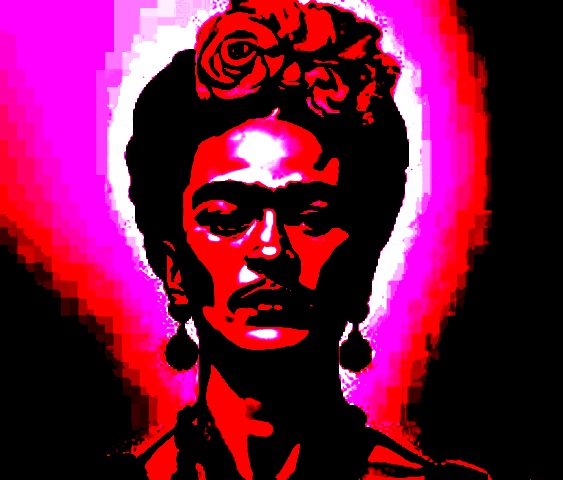
(«Frita»/Francisco Bravo Cabrera/All Rights Reserved)

Frida Kahlo (Coyoacán, Mexico City, Mexico 1907-1954) is widely respected for her deeply personal and symbolic self-portraits, but I do not believe it and I can argue my point that she is not a valuable addition to art history with critical perspectives on her legacy:

Limited Formal Innovation: Her technique was not particularly ground-breaking…far from it…in terms of formal or technical development. Her style was rooted in Mexican folk art and a sort of surrealism-light that did not innovate in terms of form, compared to…dare I…contemporaries like Picasso or Kandinsky, which were real artists in every sense of the word. For me Picasso and Kandinsky were the greatest innovators of the 20th Century and true geniuses. Kahlo does not fit in that company.

Overemphasis on Personal Suffering: Her fame leans too heavily on her personal story—her chronic pain, relationship with Diego Rivera, and her political identity—rather than on the artistic merit of her works themselves. And of course, she was a martyr and martyrs sell and are well accepted by the general public.

Cult of Personality: Her image (iconic unibrow, flower crown, traditional Tehuana dress) has become commodified to the point that she’s more famous for being Frida Kahlo the icon than Frida Kahlo the painter. She…and this was through no fault of her…became the queen of merchandising. I mean even little girls for Halloween dress up like Frida Kahlo. And pop stars, beginning with Madonna, have also dressed like her to capitalise on the image. But that says nothing about artistic significance…

#art, Art Can Only Be Good or Bad – Bodo’s Art philosophy (part 2)

(Bodo drinks beer for it’s philosophical content/actor portrayal/All Rights Reserved)

Do not be afraid to do it and say it loud. Art is either good or bad because art, like music, divides first only into two categories: good and bad. And please, this is not a matter of taste but of truth. Good art shows mastery of ideas, technique, reference, experience, depth, and coherence. Bad art demonstrates a lack of professional approach bordering on laziness, emptiness, or mere gimmickry.

One may dislike Bach, yet Bach remains good, outstanding I would say. One may enjoy a jingle, yet the jingle remains bad. Taste does not rewrite reality. To collapse all art into “subjective preference” is to pretend that a child’s scribble equals Giotto, or that noise equals a symphony. The fact is simpler, harsher, and liberating: art is either good or bad. Everything else is commentary. And that is true because your taste…or mine…does not define art. Art is an academic subject matter and a profession. And although many people think of it as a pastime, it is definitely not. An artist does not work to pass the time but works for money, to sell a professional finished product.

So, just to recap, art, like music, is judged by one, and only one major law: it is either good or bad. Your taste may wander, and you may like this or that, but your taste does not define quality nor does it judge art. It is merely your taste (or mine) and we can have, like so many people we see «out there», bad taste. And taste, good taste, is an important attribute that an artist must have. To deny this is to confuse noise with music, scribble with painting, accident with creation. And bear in mind that the process of creating art is not intuitive. It is contrived, developed, refined, reworked and polished. Although it still can be a complete and total mystery.

CHEERS

Part 3 coming up…

#art, There Are Only Good and Bad Artists – Bodo’s Philosophy of Art (Part 3)

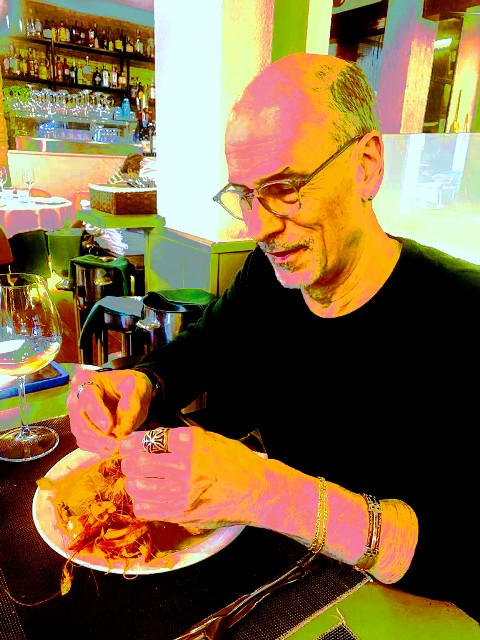
(Bodo eats shrimp for its philosophical value/actor portrayal/All Rights Reserved)

So, I have philosophised about the objectivity…versus subjectivity…of art and as well brought forth my philosophy on the fact that art is categorised as being either good or bad. Those are elemental truths that one is taught in art school and in the school of life as one works one’s way up the professional chain and gains experience both in life and in art. It is impossible to think of these things when one is very young.

So, what is «bad art»? My reply is that “bad art”, seriously speaking, is art that pretends to be profound but is hollow, or art that substitutes shock, gimmick, or self-promotion for vision and craft. And I am referring to both, traditional art and conceptual art or experimental.

With that said, here are some examples often cited as bad, being bad artists producing bad art (in the sense above):

Jeff Koons – His balloon dogs and stainless-steel kitsch may fetch millions, but they’re little more than oversized novelties. They dazzle with spectacle, not substance.

Damien Hirst – Famous for pickled sharks and diamond-encrusted skulls, his work often leans more on PR stunts and shock value than on artistic depth.

Tracey Emin – Her “My Bed” (an unmade bed with personal detritus) is often held up as a symbol of art reduced to autobiography and raw display without transformation. And in very bad taste I would add.

Thomas Kinkade – Marketed as the “Painter of Light,” his sugary, mass-produced cottage scenes are technically slick but conceptually empty—art reduced to calendar kitsch.

AI-generated kitsch flooding social media – Endless pretty-but-empty images with no inner necessity, no artist’s hand, just algorithmic pastiche.

Each of these examples is “bad” not because someone dislikes them, but because they lack the enduring qualities of good art: invention, vision, mastery, depth. They survive on hype, sentimentality, or branding, and on the bad art professors that try to drive them into the heads of gullible and young art students who will later realise how they had been manipulated, controlled, brainwashed and misguided.

CHEERS

#art, Art is Objective; Taste is Subjective – Art Philosophy by Bodo

(Bodo eating ice cream for it’s philosophical value/actor portrayal/All rights Reserved)

Art is objective, do not doubt it. Art possesses inherent qualities: form, structure, composition, skill, harmony and originality. These qualities can be judged independently of personal taste. I do not argue with taste. Individual likes and dislikes are subjective,. But the value of art is rooted in these objective elements that give it enduring power and universal resonance, and this goes way beyond the shifting opinions of art lovers.

To say “art is subjective” is making of art a non-standardised, non-professional endeavour and it is a refuge for people unwilling to face standards. Taste, for sure is subjective, and people can still have good or bad taste, and not just in their breath. Art is not like that. A painting or a symphony is not a matter of preference in the same way as choosing vanilla or chocolate. Works of art embody objective qualities: proportion, rhythm, innovation, mastery of medium, coherence of vision. These are measurable and comparable, regardless of whether one “likes” them.

To reduce art to opinion is ridiculous and to distorts the difference between genius and banality. It’s like saying Mozart’s music is equal to elevator music, or that a Rembrandt is equal to child’s doodle. The serious study of art, as an academic pursuit and as a profession, recognizes that, although taste fluctuates, the core of art does not and it endures based upon objective principles. Without them even the word art would lose its meaning.

CHEERS

COMING SOON

Part 2: Art can only be divided into GOOD and BAD art.

Part 3: Good and bad artists and art

Quote of the day…

(All Rights Reserved)

I was taught to act as a wise and prudent man, so I sharpened my ear and searched for knowledge.” Francisco Bravo Cabrera

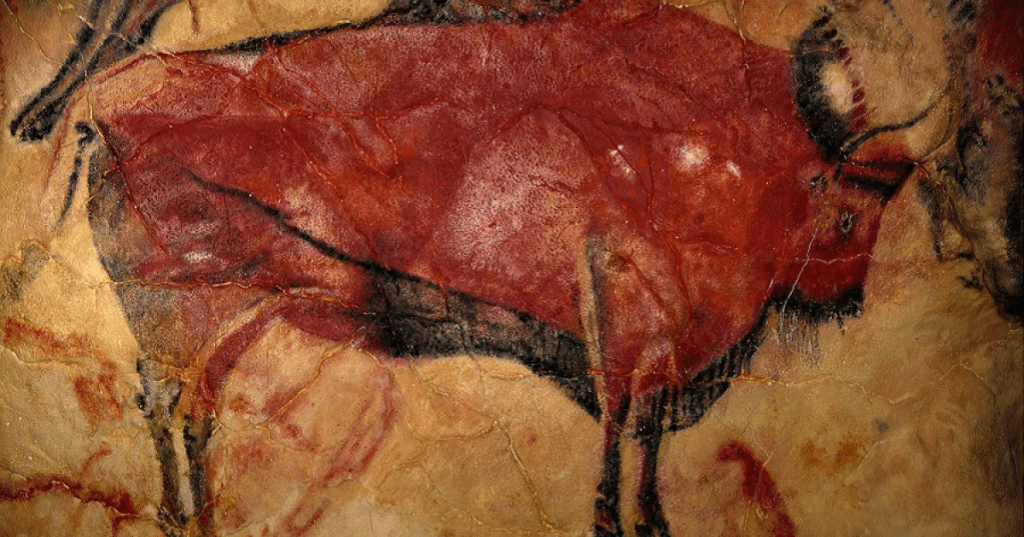
#art, Pinturas rupestres – Cave Paintings

(image source: Psicología y Mente)

Al encontrar estas preciosidades en las cuevas de Europa, supimos que el hombre se expresaba a través del arte desde los más remotos tiempos de la historia. La pintura parietal también incluye los petroglifos que no necesariamente implica que tienen que ser todas prehistóricas. Hay algunas, como las de la cueva de Gabarnmung, (Australia) que se supone que tienen mas de 28 000 años, y otras más recientes, posiblemente del siglo pasado.

Se piensa que las más antiguas fueron realizadas hace más de 44 000 años y se encuentran tanto en la región franco-cantábrica de Europa occidental como en las cuevas de Leang-Leang (Sulawesi, Indonesia). Estas pinturas rupestres son de las plantas de la mano del artista y formas geométricas simples; los ejemplos indiscutibles más antiguos de pinturas rupestres figurativas son algo más jóvenes, con una antigüedad cercana a los 35 000 años. La pintura rupestre más antigua de todas, datada según el método del urano-torio, que indica que fue hecha hace mas de 64 mil años, fue encontrada el la cueva de Maltravieso, Cáceres.

Para mi es como ver un museo paleolítico que muestra que el arte siempre fue patrimonio de la humanidad.

+++

Upon finding these treasures in the caves of Europe, as well as in other parts of the world, we knew that man had expressed himself through art since the earliest times in pre-history. Cave painting also includes petroglyphs, which do not necessarily have to be all prehistoric. There are some, like those from the Gabarnmung cave (Australia), which are believed to be over 28,000 years old, and others that are more recent, possibly from the last century.

It is believed that the oldest ones were made more than 44,000 years ago and are found both in the Franco-Cantabrian region of Western Europe and in the Leang-Leang caves (Sulawesi, Indonesia). These rock paintings consist of the handprints of the artist and simple geometric shapes; the undisputed oldest examples of figurative rock paintings are somewhat younger, with an age close to 35,000 years. The oldest rock painting of all, dated using the uranium-thorium method, which indicates it was made more than 64,000 years ago, was found in the Maltravieso cave in Cáceres.

For me, it is like visiting a Paleolithic museum that shows that art has always been the heritage of humanity.

+++++

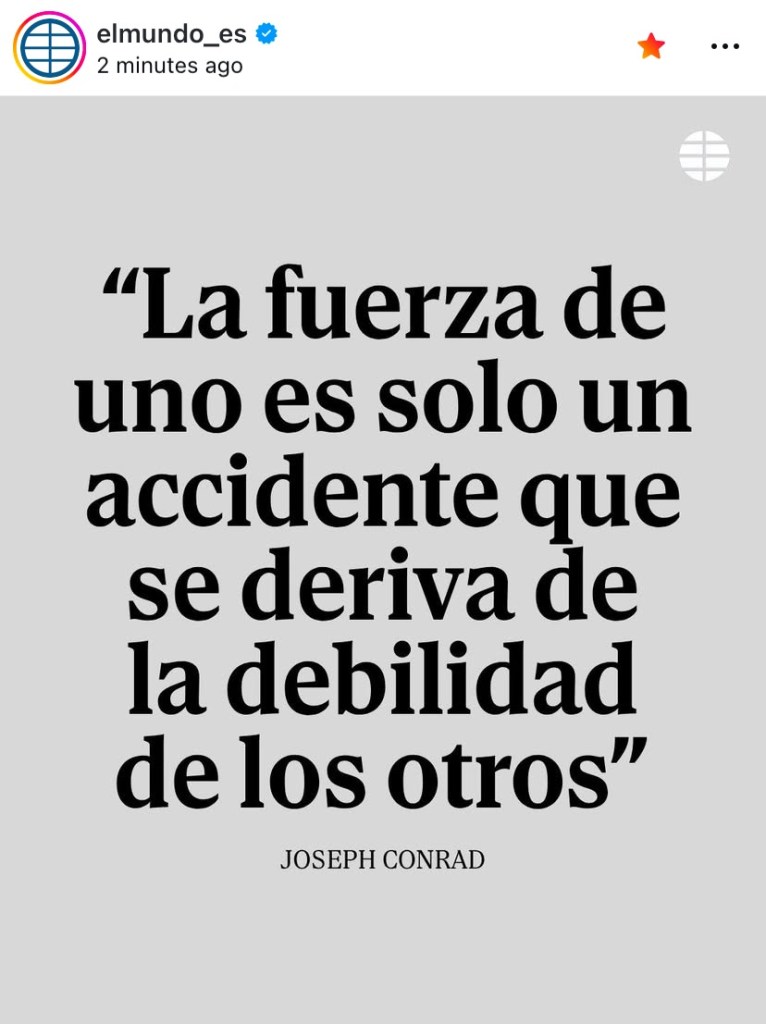
(Image source: El Mundo)
(Image source: El País)
(Image source: Wikimedia Commons/Public Domain)

GRACIAS – CHEERS